Blog

Explore expert tips and tricks to maximize your platform usage.
Thank you! Your submission has been received!
Oops! Something went wrong while submitting the form.
Ad Strategy
Ad Strategy
-
March 5, 2026

5 Instagram Reel Ads Examples to Try in 2026

Key Takeaways

  • Over half of all Instagram ads now run on Reels, making it the platform's fastest-growing ad placement for brands.
  • Polished, commercial-looking content consistently underperforms content that mirrors how real users create Reels.
  • Strong Reel ads are built around a three-part structure: a hook in the first one to three seconds, a clear message or demonstration, and a direct CTA.
  • UGC testimonials build trust, product demos drive consideration, and creator partnerships borrow credibility that branded content can't replicate on its own.
  • GetHookd lets you search 65M+ Meta ads to see which Reel ad styles are performing in your niche, then extract hooks and generate scripts, so every Reel you launch is backed by real data.

Why Instagram Reel Ads Matter in 2026

Reels consistently generate higher engagement than standard feed posts. For ecommerce brands, dropshippers, and media buyers, this changes how you should approach Instagram advertising.

Reels ads autoplay with sound, fill the entire screen, and sit between organic content. When done well, they feel like part of the feed rather than an interruption. When done poorly, users scroll past in under a second.

The brands getting the best from Reels are studying which ad styles, hooks, and formats are already performing, then producing their own versions. Below are Reel ad styles worth testing in 2026, each with a breakdown of what makes it effective.

GetHookd: Turn Competitor Intelligence Into Your Next Winning Ad

65M+ Ads Analyzed | 4.8★ G2 Rating | 4.5★ Trustpilot Rating

Stop Guessing. Start Scaling:

GetHookd reveals which ads your competitors are actively scaling—not just running. Spy on their best-performing creatives, landing pages, and traffic strategies, then turn proven concepts into testable campaigns in seconds with AI-powered script generation and creative cloning.

What You Get:
  • ✓ Brand Spy to decode competitor ad strategies in real-time
  • ✓ AI script generation and ad cloning for instant variations
  • ✓ Performance scoring based on actual ad behavior, not vanity metrics
  • ✓ Creative Analyzer to identify and scale your top performers
Replace guesswork with intelligence. Build profitable ads that actually convert.

5 Instagram Reel Ads Examples to Try in 2026

1. The UGC Testimonial
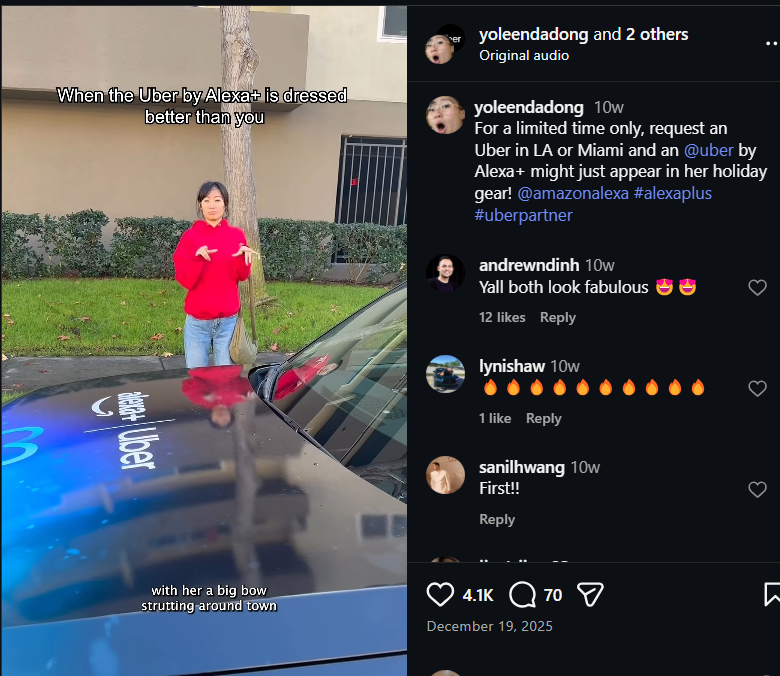
UGC-style Reel ads blend into the feed because they look like organic content. (Source: Instagram)

A customer or creator speaks directly to the camera about a product they've used, filmed on a phone in a natural setting. No studio lighting, no branded intro. 

Uber runs this format consistently with real drivers, passengers, and creators sharing genuine experiences. UGC ads look and feel like organic posts from someone you'd follow, not polished corporate messaging.

Why it works: Direct-to-camera testimonials carry inherent trust. The selfie-style format mirrors how people naturally create Reels, so it blends into the feed instead of triggering ad avoidance. The personal voice makes the product feel recommended rather than sold.

How to apply it: Source real customer clips or partner with micro-creators who already use your product. Let the person lead with a specific result or experience rather than a generic endorsement.

2. The Product Demo
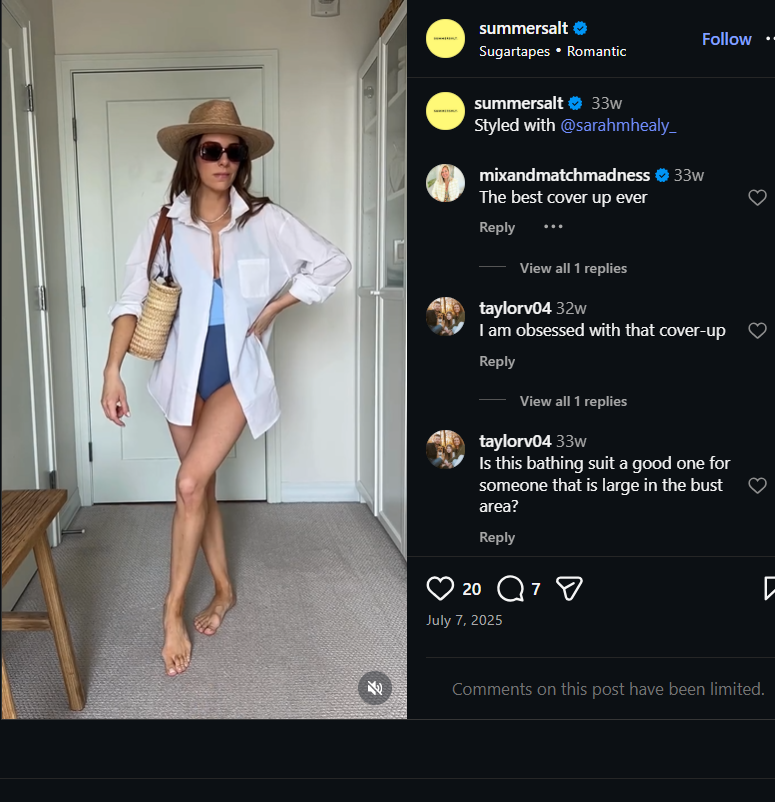
Product demo Reels let the product sell itself through styling and movement. (Source: Instagram)

A short clip showing the product in action. Summersalt's swimwear Reels are a strong example. Creators style and model the pieces in real settings, showing fit, movement, and versatility in under 15 seconds. 

Some use trending audio, others add a quick voiceover. Either way, the product sells itself visually without needing a hard pitch.

Why it works: Visual proof beats any written description. Quick cuts and motion take advantage of the Reels format by keeping energy high and watch time up. Viewers see the product doing what it's designed to do, which shortens the path from curiosity to consideration.

How to apply it: Film the product being used, worn, or applied. Lead with the most visually striking moment, not a logo or brand intro. Use bold text overlays to call out one or two key features.

3. The Before-and-After Transformation
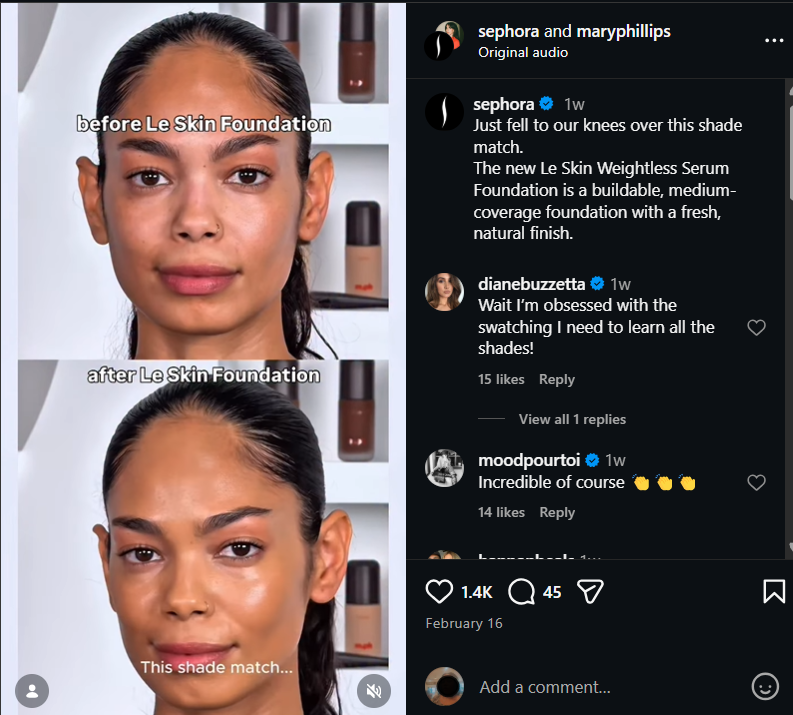
Before-and-after Reels let the visual contrast do the selling. (Source: Instagram)

A sequential or side-by-side reveal showing results. This format is especially common in skincare, fitness, and home improvement categories, where the visual contrast between a starting point and an end result tells the story instantly.

Why it works: Before-and-after creates a built-in curiosity gap. The viewer wants to see the transformation, which keeps them watching. The visual contrast also communicates the product's value instantly, with no copy needed to explain the benefit.

How to apply it: Show the starting state, the product or process, and the end result. Keep the reveal satisfying and fast.

4. The Trending Audio Hook

A Reel that uses a trending sound to stop the scroll, with product messaging layered on top through visuals and text overlays. Some brands pair a popular audio clip with a quick skit or visual gag that ties back to their product naturally. 

The content style mirrors TikTok natively, which resonates with Reels audiences who expect entertainment first and selling second.

Why it works: When Instagram detects a sound gaining traction, it pushes Reels using that audio to wider audiences. Pairing a trending sound with product-relevant content gives you an algorithmic boost while keeping the ad feeling organic rather than promotional.

How to apply it: Monitor trending audio weekly through the Instagram app's audio library. Choose sounds that fit your brand tone. Layer your product message through text overlays and visual storytelling rather than replacing the audio with a voiceover.

5. The Creator Partnership
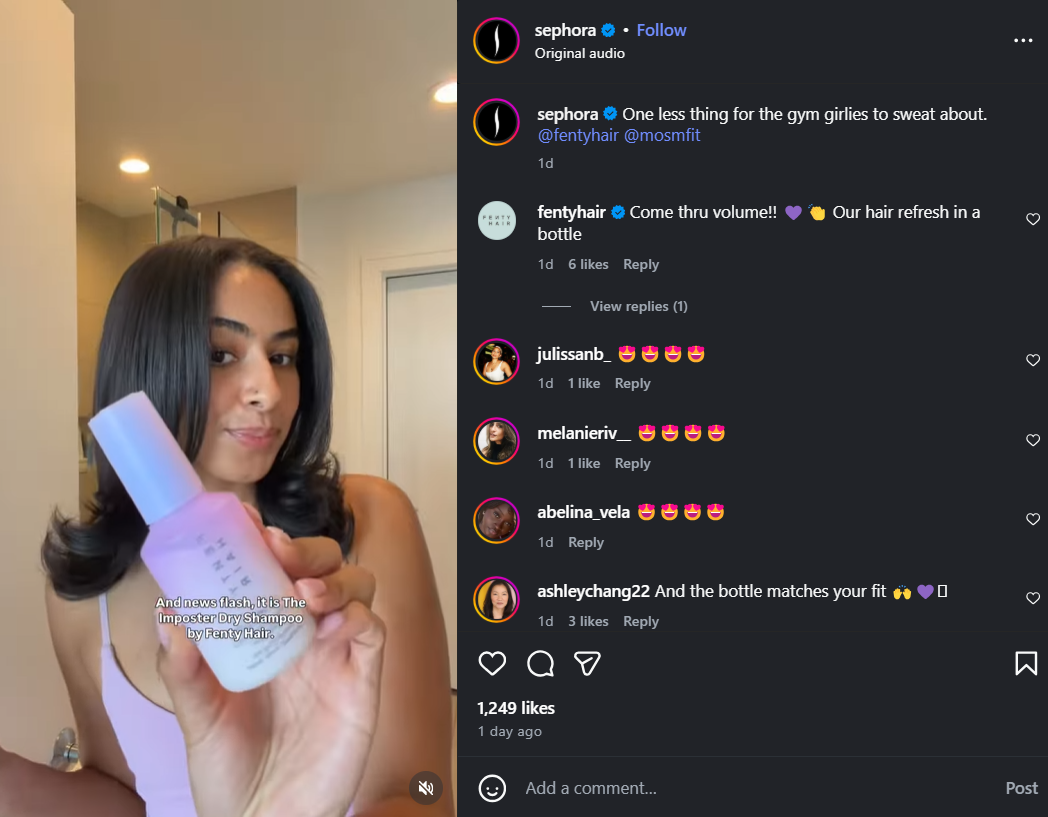
Creator partnership ads carry dual credibility by combining brand reach with a creator's authenticity. (Source: Instagram)

A branded content ad that features a creator's voice, style, and authenticity, whether it runs from the brand's account or the creator's own. The most effective versions feature creators giving genuine product reviews or demonstrations that are indistinguishable from their regular organic Reels. 

Why it works: Partnership ads carry dual credibility. The brand gets the reach and tracking of a paid ad, while the content carries the creator's credibility instead of a corporate tone.

How to apply it: Choose creators whose audience overlaps with your target customer, not just those with the highest follower count. Let them create in their own style. Use Meta's Partnership Ads format so the content runs natively from their account with full tracking and optimization.

5 Instagram Reel Ads Examples: Summary Table

Ad Style Core Tactic Best For
UGC Testimonial Selfie-style camera review from a real customer or creator Building trust and social proof with cold audiences
Product Demo Quick-cut video showing the product in use Driving consideration through visual proof
Before-and-After Sequential or side-by-side transformation reveal Communicating product results instantly
Trending Audio Hook Trending sound paired with product messaging Expanding reach through algorithmic boost
Creator Partnership Branded content featuring a creator's voice and style Borrowing credibility and increasing CTR

Find Winning Instagram Reel Ads with GetHookd

GetHookd’s Explore Ads feature opens up a database of 65M+ Meta ads, so you can identify exactly which Reel styles are gaining traction before you spend a dollar on production.

With Brand Spy, tracking individual competitor accounts over time is straightforward. You can see which Reel ads they're actively putting budget behind, how their creative direction shifts week to week, and which landing pages sit behind their top performers.

When a winning concept surfaces, Ads Transcription helps you dissect any competitor video ad, including the hook and copy, so you can adapt it for your own product. Our Video Scripts feature generates fresh Reel concepts directly from your product details, so you're never staring at a blank page when it's time to produce your next round of ads.

The faster you move from researching what works to launching your own version of it, the less budget you waste on Reels that never had a chance.

Start your GetHookd free trial today!

Frequently Asked Questions (FAQs)

What are Instagram Reel ads?

Instagram Reel ads are short-form vertical video ads that appear between organic Reels in the Instagram app. They autoplay with sound, fill the entire screen, and include a Sponsored label along with a CTA button. Viewers can like, comment, share, and save them just like any organic Reel.

What kind of ads work best on Instagram? 

Reel ads consistently outperform other Instagram formats. The strongest performers feel native to the feed. Think UGC testimonials, product demos, before-and-after reveals, and creator partnerships. Matching the ad style to your campaign goal matters more than production value.

What is a good ad reel copy? 

Good copy is short, specific, and front-loaded. The first line needs to earn attention, so lead with a bold claim, a question, or a direct callout to your audience. Keep on-screen text to one or two lines that reinforce the visual, and end with a clear CTA. 

GetHookd's Ads Transcription lets you extract the exact copy structure, hooks, and CTAs from competitor Reel ads that are already performing, so you can study what's working in your niche before writing a single line.

*Note: Pricing and/or product availability mentioned in this post are subject to change. Please check our website for current pricing and stock information before making a purchase.
Ad Strategy
Ad Strategy
-
March 4, 2026

Facebook Ad Creative Fatigue: Causes & Solutions

Key Takeaways

  • Facebook ad creative fatigue happens when your audience sees the same ad too many times, causing engagement to drop and costs to rise, but it's completely preventable.
  • Meta flags creative fatigue directly in the Delivery column of Ads Manager, labeling ads as "Creative Limited" or "Creative Fatigue" based on how much cost per result has increased.
  • The most common causes are running too few creatives per ad set, overexposing narrow audiences, and relying on a single ad format.
  • Small changes, such as swapping hooks, rotating formats, and expanding audiences, can extend the life of winning ads without rebuilding them from scratch.
  • GetHookd helps users stay ahead of Facebook ad creative fatigue by letting you research proven creatives, extract winning hooks, and generate fresh ad variations from a single platform.

What Is Facebook Ad Creative Fatigue?

Facebook ad creative fatigue happens when your target audience has seen the same ad creative so many times that they stop engaging with it.

When Meta detects declining performance tied to overexposure, you'll see one of two labels in the Delivery column: 

  • Creative Limited: Cost per result is higher than past ads but less than double. 
  • Creative Fatigue: Cost per result has at least doubled.

These labels are Meta's signal that more impressions won't fix the problem. The creative itself needs attention.

Creative fatigue is worth separating from two related concepts. Ad fatigue refers to a single ad losing effectiveness from being shown too many times, while audience fatigue means you've exhausted a specific segment, regardless of what creative you show them. 

Creative fatigue is about the visual, the message, or the format feeling stale through repetition, even across different ads. This distinction matters when deciding what to fix.

GetHookd: Turn Competitor Intelligence Into Your Next Winning Ad

65M+ Ads Analyzed | 4.8★ G2 Rating | 4.4★ Trustpilot Rating

Stop Guessing. Start Scaling:

GetHookd reveals which ads your competitors are actively scaling—not just running. Spy on their best-performing creatives, landing pages, and traffic strategies, then turn proven concepts into testable campaigns in seconds with AI-powered script generation and creative cloning.

What You Get:
  • ✓ Brand Spy to decode competitor ad strategies in real-time
  • ✓ AI script generation and ad cloning for instant variations
  • ✓ Performance scoring based on actual ad behavior, not vanity metrics
  • ✓ Creative Analyzer to identify and scale your top performers
Replace guesswork with intelligence. Build profitable ads that actually convert.

What are the Causes of Facebook Ad Creative Fatigue?

Creative fatigue doesn't happen randomly. It's the predictable result of specific campaign decisions.

1. Too Few Creatives Per Ad Set

Running a single ad creative for too long is the most common cause. When there's only one ad in an ad set, Meta has no choice but to keep serving it to the same people repeatedly. There's no variation and no rotation, so fatigue is practically guaranteed.

2. Narrow Audiences Without Frequency Controls

Overexposing a narrow audience compounds the problem. If you're targeting a tightly defined custom audience, say a retargeting list of 10,000 people, and running a single creative against it with no frequency controls, that audience will hit saturation quickly. 

Smaller audiences need more creative variety, not less, because there are fewer people to absorb the impressions.

3. Relying on a Single Ad Format

Advertisers who run only static images or only video give their audience no visual variety. Even if the message changes, the format staying the same creates a familiarity that breeds indifference. 

Mixing carousels, single images, short-form video, and UGC-style content keeps the experience from feeling repetitive even when the underlying offer stays consistent.

Solutions to Beat Facebook Ad Creative Fatigue Fast

Creative fatigue is one of the most fixable problems in paid social advertising. Once you know what's causing it, the solutions are concrete and don't require rebuilding your entire campaign from scratch.

1. Rotate & Refresh Creatives on a Regular Schedule

Set a regular cadence for reviewing and rotating your Facebook ad creatives. Smaller audiences fatigue faster and typically need weekly refreshes, while broader audiences can sustain creatives for two to three weeks. 

Don't wait for performance to drop before making a swap. Having two to four creative variations running simultaneously within each ad set gives Meta's algorithm options to work with, naturally distributing impressions and slowing the pace of fatigue across any single creative.

2. Update Hooks & Intros Without Rebuilding the Whole Ad

Your hook is the first one to three seconds of a video or the first line of ad copy, and it's the first thing your audience recognizes when they've seen the ad before. Changing just the hook can make a familiar ad feel completely new, even if everything that follows stays the same.

For video ads, re-record the opening five seconds with a different line, angle, or visual before cutting into your existing footage. For static ads, swap the headline or the first sentence of copy. The underlying offer, proof points, and call to action don't need to change.

Extract hooks and scripts from any high-performing ad with Ads Transcription.

GetHookd's Ads Transcription pulls the exact hooks, CTAs, and copy structure from any video ad that's currently scaling. Instead of guessing which new hooks to test, you can extract proven openers from ads that are already working in your niche and adapt them for your own creative.

3. Test Multiple Creative Formats

Running the same offer as a single image, a carousel, a short-form video, and a UGC-style testimonial simultaneously doesn't just reduce fatigue. It also reveals which format resonates most with different segments of your audience. 

Meta will naturally allocate more delivery to the best performer, but having multiple formats in rotation means no single creative gets overexposed quickly.

4. Expand or Rotate Your Target Audiences

If your audience is too small relative to your budget and impression volume, fatigue is almost inevitable, regardless of how good your creative is. When your daily spend is high, and your audience is narrow, the same people see your ads repeatedly. Expanding your audience or increasing your creative variety gives Meta more room to distribute impressions before saturation sets in.

Rotating audiences works alongside creative rotation to extend campaign life. Consider segmenting your targeting into separate ad sets for cold lookalike audiences, warm website visitors, and past purchasers, each with creative tailored to where those people are in the buying journey. This prevents any one segment from getting hammered with the same message while giving you cleaner data on what works at each stage of the funnel.

5. Build a Continuous Creative Testing Pipeline

The advertisers who never get blindsided by creative fatigue treat creative testing as an ongoing operation, not a one-time setup task. A healthy pipeline has one to two new concepts entering testing every one to two weeks. 

Use a dedicated testing campaign to evaluate new concepts before they're needed. When a current winner shows early signs of fatigue, you already have a tested replacement ready to scale.

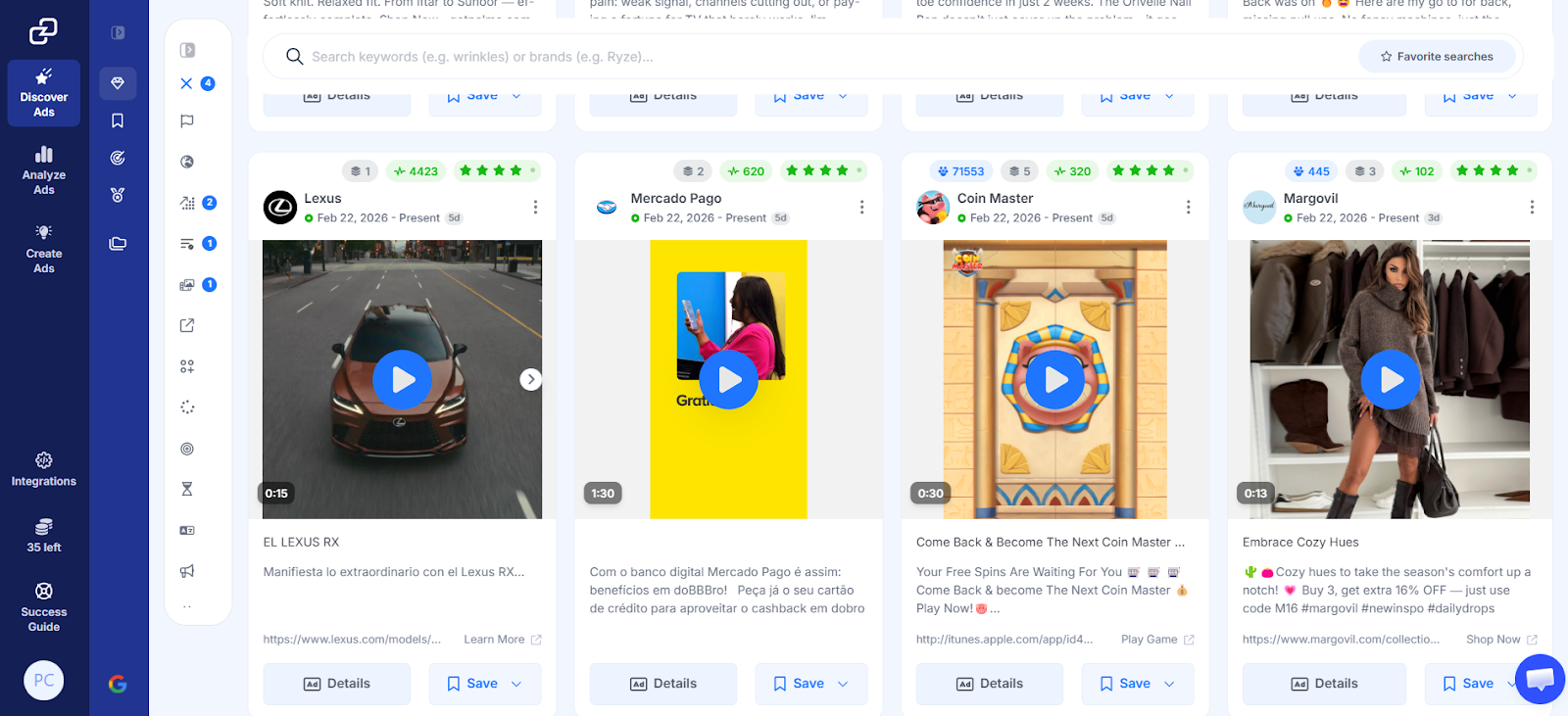
Use Explore to build a swipe file of proven concepts that feed your testing pipeline.

GetHookd's Explore Ads and Brand Spy give your pipeline a research layer. Instead of brainstorming concepts from scratch, you can filter 65M+ ads by niche, format, and performance signals to see what's already converting. 

Brand Spy shows which creatives your competitors are actively putting budget behind, so your next round of tests is grounded in real market data.

6. Set Frequency Caps to Limit Overexposure

Meta allows you to set frequency caps when using the Awareness objective with Reach optimization or the Reservation buying type. For other objectives, like conversions, frequency is controlled indirectly through audience size and budget. 

A common best practice is no more than two to three impressions per person per week for cold audiences, with slightly higher caps for warm retargeting audiences where repeated exposure can support conversion. 

7. Leverage User-Generated Content to Add Variety

UGC is one of the most effective tools for breaking creative fatigue because it looks and feels fundamentally different from polished brand creative, even when it delivers the exact same message. 

A smartphone-filmed testimonial, an unboxing video, or a customer review clip introduces variety that your audience doesn't immediately recognize as the same ad. UGC is also faster and cheaper to produce, so you can generate more variation without proportionally increasing your production budget.

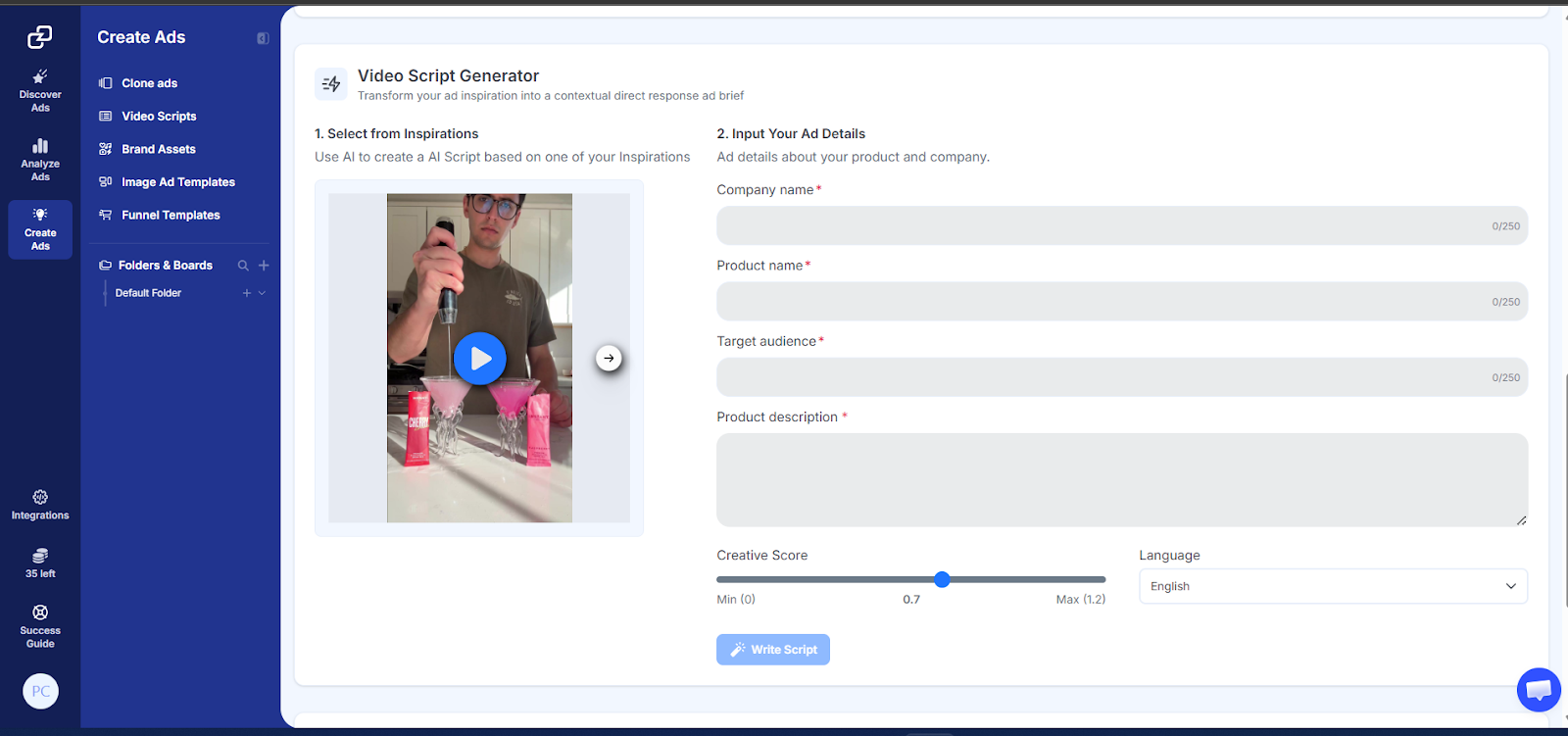
Generate fresh UGC scripts for your product details using Video Scripts.

GetHookd's ad database lets you filter by formats and style to see what's performing in your niche. From there, use Video Scripts to generate new hooks and scripts based on your product details. This gives you a repeatable system for keeping fresh UGC in rotation without starting from scratch each time.

8. Analyze Placement-Level Data to Find Where Fatigue Strikes First

Facebook Feed, Instagram Reels, Stories, and the Audience Network each have different content environments and user behaviors, which means a creative that's fatiguing on Facebook Feed might still perform well on Instagram Stories.

To access this data, use the Breakdown feature in Ads Manager and select By Delivery, then Placement. Look for placements where CTR is falling, and CPM is rising while others remain stable. 

In many cases, you don't need to replace the creative entirely. You just need to create a placement-specific version that resets the familiarity for that environment.

Build a Fatigue-Resistant Ad Strategy with GetHookd

The difference between advertisers who struggle with creative fatigue and those who stay ahead comes down to having a system that keeps fresh, proven creative flowing before performance drops.

We built GetHookd to give you that system. Explore Ads lets you research which creatives are gaining traction in your niche across 65M+ Meta ads, and Brand Spy shows which ones your competitors are actively scaling. 

When you find a winning concept, Ads Transcription breaks down the hooks, CTAs, and script structure so you can adapt what's working. You can also use our Video Scripts feature to generate fresh angles and complete scripts from your product details. For static creatives, Clone Ads produces AI variations of any winning ad, and Image Ad Templates gives you ready-to-use designs you can edit directly in Canva. 

You can connect Creative Analyzer to your Meta ad account to show which of your own creatives are driving results, so you know what to scale, what to refresh, and what to cut. That feedback loop keeps fresh creatives flowing, and your ad spend focused on what converts.

Improve your ad creative fatigue with GetHookd now!

Frequently Asked Questions (FAQs)

How do you see creative fatigue in Meta ads?

Check the Delivery column in Ads Manager. Meta labels affected ads as "Creative Limited" when cost per result exceeds past performance, or "Creative Fatigue" when it has at least doubled. You can also monitor for rising frequency alongside falling CTR and increasing CPM.

What is advertisement fatigue? 

Advertisement fatigue occurs when your audience has seen your ad so many times that they stop engaging with it. Performance metrics like click-through rates decline as costs rise, and the platform begins to limit delivery. 

It can happen at the creative level, the ad level, or the audience level, depending on the root cause.

How do you reduce creative fatigue in Meta ads? 

Run multiple creative variations per ad set and refresh hooks every one to two weeks. Use frequency caps where available, diversify your ad formats, and rotate your target audiences to spread impressions more evenly. 

Tools like GetHookd help by letting you research which creatives are already working in your niche. You can also generate fresh scripts and ad variations so your testing pipeline never runs dry.

*Note: Pricing and/or product availability mentioned in this post are subject to change. Please check our website for current pricing and stock information before making a purchase.
Ad Strategy
Ad Strategy
-
March 3, 2026

How to Improve CTR on Facebook Ads: Tips & Strategies

Key Takeaways

  • CTR directly influences your Engagement Rate Ranking in Meta's ad auction, meaning stronger rankings lower costs and improve delivery.
  • Cold, warm, and hot audiences need different creative approaches. Running the same ad to all three kills CTR.
  • Your opening line of copy and first three seconds of video do most of the work. If the hook fails, the rest never gets seen.
  • High CTR without post-click conversions is wasted budget. Track click depth, not just the raw number.
  • GetHookd lets you research which creatives are already earning clicks across 65M+ Meta ads, extract proven hooks, and produce fresh variations so every test is grounded in real data.

What Is CTR & Why Does It Matter?

CTR stands for Click-Through Rate. It measures the percentage of people who saw your ad and clicked on it. The formula is straightforward: (Total Clicks ÷ Total Impressions) × 100. If 10,000 people saw your ad and 200 clicked, your CTR is 2%.

CTR is more than a percentage. It's a performance signal that affects nearly every other metric in your campaign. When your CTR is high, Meta interprets that as a sign your ad is relevant to its audience. In return, you get lower Cost Per Click (CPC), more efficient delivery, and better distribution across placements. When CTR is low, you pay more for less.

Meta also evaluates your ads through Ad Relevance Diagnostics, which compares your ad against others competing for the same audience across three metrics: Quality Ranking, Engagement Rate Ranking, and Conversion Rate Ranking. 

CTR most directly influences your Engagement Rate Ranking. When that ranking is strong, your ad's total value in the auction increases, meaning you can win placements without having to outbid competitors on price alone.

GetHookd: Turn Competitor Intelligence Into Your Next Winning Ad

65M+ Ads Analyzed | 4.8★ G2 Rating | 4.4★ Trustpilot Rating

Stop Guessing. Start Scaling:

GetHookd reveals which ads your competitors are actively scaling—not just running. Spy on their best-performing creatives, landing pages, and traffic strategies, then turn proven concepts into testable campaigns in seconds with AI-powered script generation and creative cloning.

What You Get:
  • ✓ Brand Spy to decode competitor ad strategies in real-time
  • ✓ AI script generation and ad cloning for instant variations
  • ✓ Performance scoring based on actual ad behavior, not vanity metrics
  • ✓ Creative Analyzer to identify and scale your top performers
Replace guesswork with intelligence. Build profitable ads that actually convert.

Strategies for Improving CTR on Facebook Ads

There's no single lever that fixes a low CTR. It's a combination of creative decisions, targeting precision, copy strategy, and technical setup. 

1. Match Your Creative to the Right Audience Temperature

Audience temperature refers to how familiar someone is with your brand. Cold audiences have never heard of you. Warm audiences have visited your site or engaged with your content. Hot audiences have already purchased or are close to converting. 

Running the same creative to all three is one of the most common CTR mistakes advertisers make.

  • Cold audiences need pattern interruption and curiosity. Lead with a bold claim, a surprising statistic, or an emotionally resonant hook. 
  • Warm audiences respond better to social proof, urgency, and direct offers because trust has started to build. 
  • Hot audiences are close to a decision, so address objections, offer a direct incentive, or use testimonials that eliminate final hesitation.

2. Write Ad Copy That Stops the Scroll in the First Line

On Facebook, only the first one to two lines of your ad copy are visible before the "See More" prompt. If your opening line doesn't earn that tap, your CTR is already lost.

The strongest opening lines do one of three things: call out the audience directly ("If you're running Facebook ads and your CTR is below 1%..."), lead with a counterintuitive statement ("Your best-performing ad is probably killing your results."), or open a loop that can only be closed by reading further. 

Pair that with specificity. "Struggling to get results from your ads?" outperforms "Looking to improve your marketing?" every time because it speaks to a concrete pain point.

Use Ads Transcription to extract proven hooks and openers from competitor video ads.

GetHookd's Ads Transcription lets you extract the opening lines, hooks, and CTAs from competitor video ads scaling on Meta. Instead of writing hooks from scratch, you can study what's already earning clicks in your niche and adapt proven openers for your own creative.

3. Use Visuals That Earn the Click

Video ads consistently drive stronger CTR than static images when the first three seconds are compelling. Lead with movement, a surprising visual element, or someone speaking directly to the camera. 

Static images work best when they feature real people. Use bold contrast and minimal text, and avoid Facebook's native blue and white color scheme.

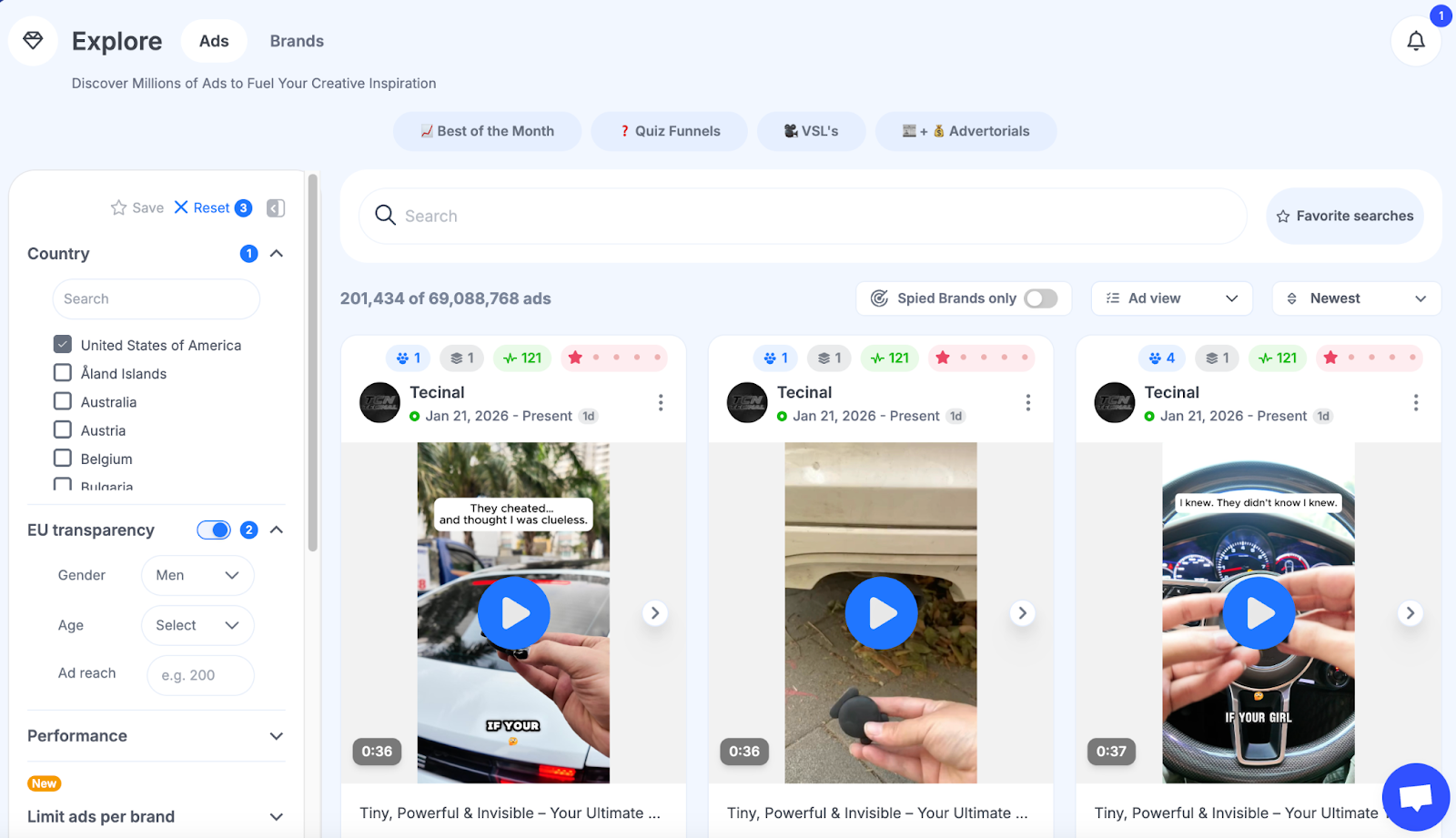
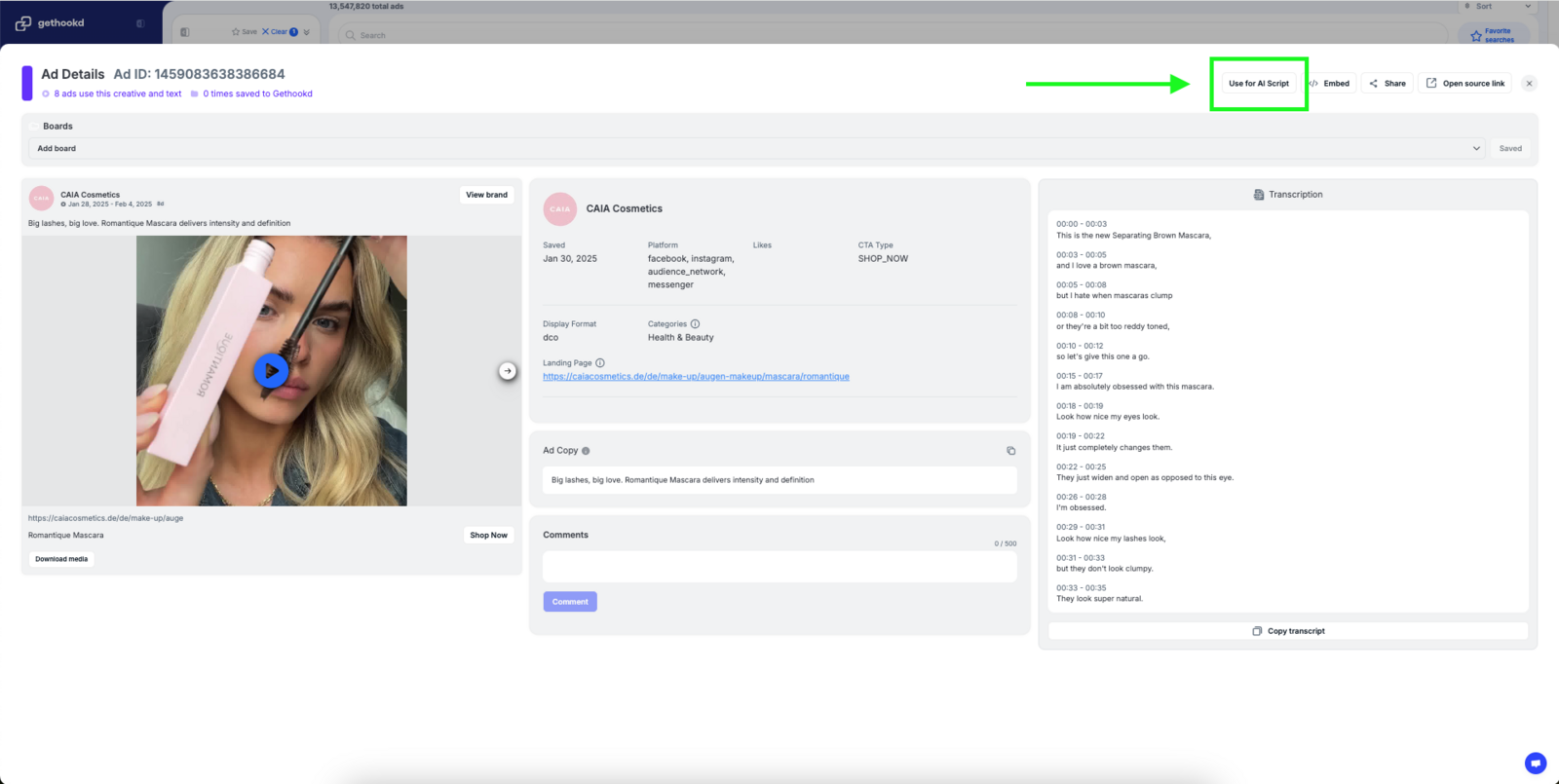
GetHookd Explore Ads dashboard.

GetHookd's Explore Ads lets you filter 65M+ Meta ads by format and niche to see which visual styles are performing right now. You can study the creative patterns driving engagement in your market before producing anything. 

GetHookd’s Image Ad Templates.

Image Ad Templates also gives you ready-to-use static ad designs across dozens of niches that you can edit directly in Canva.

4. Align Your Campaign Objective, Optimization Event, and CTA

When your campaign objective, optimization event, and CTA button are misaligned, you create friction that confuses both the algorithm and the user. Meta's delivery system optimizes to find people most likely to complete your chosen objective. If that objective doesn't match your actual desired action, you're feeding the algorithm the wrong signal.

For top-of-funnel CTR testing, run a Traffic objective optimized for Link Clicks or Landing Page Views, paired with a CTA like "Learn More." This tells Meta to find people who naturally click.

Landing Page Views is the stronger option of the two, since Meta only counts a view when the destination page actually loads, filtering out accidental or low-intent clicks.

Moving to a Sales objective too early narrows your audience and can suppress CTR even when your creative is strong. Once you've identified your highest-CTR creatives using a traffic-focused setup, migrate those winners into a Sales campaign optimized for conversions.

5. Test Smarter, Not More

Smart testing means isolating one variable at a time and letting each test reach statistical significance. Use Meta's A/B Test feature rather than duplicating ad sets manually, which causes audience overlap and contaminates results. 

Prioritize testing in this order for the fastest CTR gains: the opening hook, creative format (video vs. static vs. carousel), headline text, CTA button text, and visual style (UGC vs. branded vs. lifestyle).

6. Track Click Depth, Not Just CTR

A 4% CTR that sends users to a page they immediately bounce from is worth less than a 1.8% CTR that delivers visitors who convert. Use Meta Pixel event tracking and GA4 session data to understand post-click behavior.

If CTR is strong but conversions are low, the disconnect is almost always in one of three places: the landing page doesn't match the ad's promise, the audience clicking isn't the audience that buys, or the offer needs refinement. 

Connect your Meta ad account to GetHookd.

GetHookd's Creative Analyzer connects to your Meta ad account and shows which of your creatives are driving real results, so you can separate high-CTR winners from high-CTR vanity performers.

Improve Your Facebook Ad CTR with GetHookd

Higher CTR starts with understanding what's already earning attention in your market. Our Explore Ads tool gives you access to 65M+ Meta ads with granular filters, so you can pinpoint the creative patterns behind the strongest performers.

With Brand Spy, you can monitor the exact campaigns your competitors are investing in and monitor their strategies. Once you spot a high-performing concept, Ads Transcription breaks down the video ad into its component parts: the hook, the script flow, and the CTA, so you can see exactly what's driving clicks.

On the static side, Clone Ads lets you spin up multiple variations of a single winning creative in different colors, layouts, and styles, while Image Ad Templates provides professionally designed starting points across dozens of niches. 

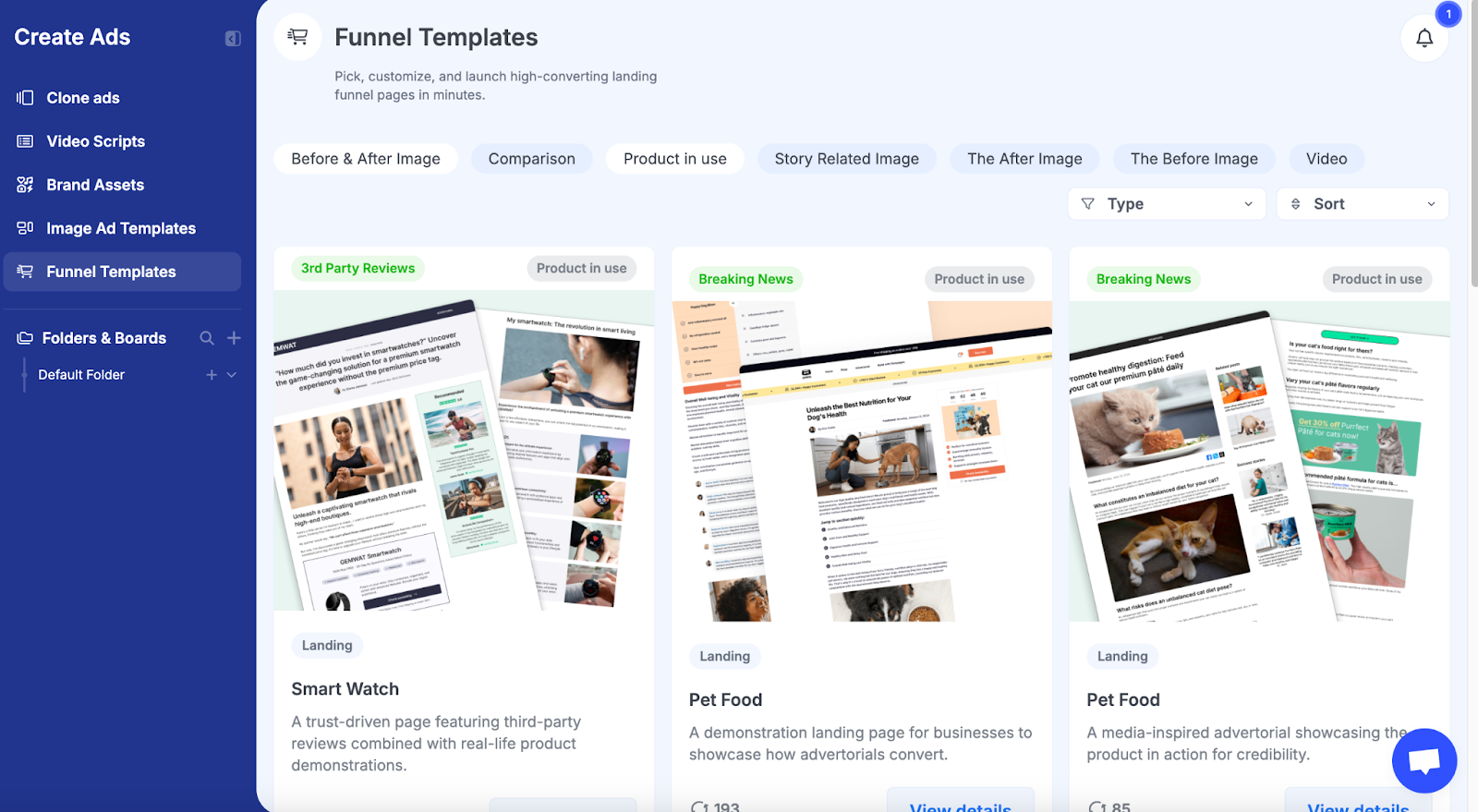
And because CTR only matters if it leads to conversions, our Funnel Templates give you pre-built landing pages modeled on high-converting DTC flows, so the traffic your ads earn lands somewhere built to close the sale.

Start your GetHookd free trial today!

Frequently Asked Questions (FAQs)

How do I improve CTR in Facebook ads? 

Start by matching your creative to your audience's level of awareness. Cold audiences need curiosity-driven hooks, while warm audiences respond to social proof and direct offers. 

From there, write opening copy that earns the "See More" tap, use scroll-stopping visuals, and make sure your campaign objective, optimization event, and CTA button are aligned so Meta delivers your ad to the right people.

What is the 3-2-2 method of Facebook ads? 

The 3-2-2 method is a dynamic creative testing framework where you combine three creative variations (images or videos), two primary text options, and two headlines in a single ad set. 

Meta's algorithm then mixes and matches these elements to find the best-performing combination for each user. It's a structured way to test multiple variables without creating dozens of separate ads or splitting your budget too thin.

What is a good CTR for Facebook ads?

A good CTR for Facebook ads depends on your campaign objective. Most marketers consider anything between 1% and 2% healthy, with 2.5% and above considered strong. 

The more useful benchmark is your own historical data. If your CTR is improving while cost per result stays flat or drops, your ads are moving in the right direction.

Can I use GetHookd to test and refresh ad creatives faster? 

Yes. GetHookd’s Video Scripts feature generates fresh hooks and complete scripts from your product details, so you always have new concepts to test. Clone Ads produces multiple AI variations of any winning static creative, and Image Ad Templates gives you ready-to-use designs across dozens of niches. 

You can also connect Creative Analyzer to your Meta ad account to see which creatives are driving results, so you know exactly when to refresh and what to replace.

*Note: Pricing and/or product availability mentioned in this post are subject to change. Please check our website for current pricing and stock information before making a purchase.
GetHookd Ads Library vs Facebook Ads Library
Gethookd vs Meta Ads Library
-
March 1, 2026

Atria vs Motion vs GetHookd for Creative Analytics: Pricing, Features & Reviews

Key Takeaways

  • GetHookd combines creative analytics with AI-powered ad production, so you can analyze what's performing and immediately create new variations without switching platforms.
  • Atria offers analytics and an ad library starting at $159/month, but its higher entry price and limited features are drawbacks for many teams.
  • Motion's $250/month starting price and lack of creative production tools mean teams need additional software to act on its insights; and it only serves high-spend advertisers.
  • For ecommerce brands, dropshippers, and agencies that need creative analytics and execution in one place, GetHookd delivers both starting at $19 per month.

Atria vs Motion vs GetHookd for Creative Analytics: An Overview

Atria is an ad research and analytics platform that combines a large ad library with creative reporting tools for Meta advertisers. Motion is a creative analytics platform focused on post-launch performance reporting, designed primarily for high-spend DTC and growth teams. 

GetHookd is a competitive ad research and creative intelligence platform that pairs analytics with AI-powered production tools, built for media buyers, ecommerce teams, and agencies who need to move from insight to execution fast.

Below, we break down each platform's features, pricing, and user reviews to help you determine which one fits your workflow and budget.

GetHookd: Turn Competitor Intelligence Into Your Next Winning Ad

65M+ Ads Analyzed | 4.8★ G2 Rating | 4.4★ Trustpilot Rating

Stop Guessing. Start Scaling:

GetHookd reveals which ads your competitors are actively scaling—not just running. Spy on their best-performing creatives, landing pages, and traffic strategies, then turn proven concepts into testable campaigns in seconds with AI-powered script generation and creative cloning.

What You Get:
  • ✓ Brand Spy to decode competitor ad strategies in real-time
  • ✓ AI script generation and ad cloning for instant variations
  • ✓ Performance scoring based on actual ad behavior, not vanity metrics
  • ✓ Creative Analyzer to identify and scale your top performers
Replace guesswork with intelligence. Build profitable ads that actually convert.

GetHookd Overview

GetHookd lets you filter 65M+ high-performing ads by niche, format, and scaling signals to surface what's converting right now. 

GetHookd is built for marketers and ecommerce brands who can't afford to separate research from production. Most creative analytics tools tell you what's working. Our platform helps you understand why it's working, then provides AI tools to generate new creatives based on those patterns.

The distinction matters because creative speed is a competitive advantage. The faster you can identify a winning angle and produce testable variations, the less budget you waste on underperforming ads. That end-to-end workflow, from discovery through analysis to ad creation, is what defines GetHookd.

Key Features of GetHookd

Creative Analyzer 

Creative Analyzer connects directly to your Meta Business Manager to analyze your own ad performance. Once synced, it helps you identify which ads to scale, which to cut, and where to focus your next round of testing.

Explore & Save Ads 

Our searchable database spans over 65 million ads across Meta. You can filter by niche, industry, ad format, and performance status to surface creatives that are relevant to your market. Save Ads permanently preserves any ad in your personal library, even after the original campaign ends.

Brand Spy 

Brand Spy helps you decode the creative strategies behind your competitors' highest-performing campaigns. 

Brand Spy reveals which Meta and Facebook ads a brand is actively budgeting for, how long their creatives have been running, and which landing pages are receiving traffic. The difference between seeing everything a competitor runs and knowing what they're scaling is critical for shaping your own strategy.

AI Script Generation 

Our AI Script Generation tool transcribes any video ad and produces new hooks, angles, and complete scripts tailored to your product. The copywriting framework behind it was developed by 8-figure direct-response marketers, so the output follows structures proven to drive conversions. You go from watching a competitor's winning creative to holding a ready-to-shoot script, without leaving the platform.

Clone Ads 

Clone Ads lets you produce visual variations of static image ads instantly. Swap colors, change avatars, and test different layouts without a designer or external editing software. This is especially useful for rapid A/B testing, where having multiple creative variations ready on the same day means you can start testing sooner.

Templates 

Browse ready-to-use image ad templates by category and style.

Image Ad Templates are professionally designed creatives that you can customize directly on Canva and launch the same day. Funnel Templates provide landing page templates designed around layouts proven to drive conversions, so you can launch post-click pages without building from scratch.

GetHookd Pricing Options

We offer tiered pricing with monthly and annual billing options, plus a 25% discount for annual billing. Every plan comes with a 7-day free trial.

  • The Launch plan ($19/month or $14.25/month billed annually) includes access to core features like Explore Ads, Save Ads, Brand Spy, Ads Transcription, and Video Scripts.
  • The Grow plan ($59/month or $44.25/month billed annually) is designed for teams ready to scale. It unlocks Clone Ads, Templates, and Product Assets.
  • The Scale plan ($149/month or $111.75/month billed annually) is built for agencies and advanced teams managing multiple brands. It includes premium 24/7 support and Slack access to our team.
  • Enterprise pricing is tailored and includes custom limits and dedicated support.

GetHookd Customer Reviews

GetHookd users regularly praise its ability to compress the creative workflow into a single platform. Reviewers running high ad budgets note that it keeps their creative testing disciplined and targeted, eliminating the need to blindly test new concepts. 

Multiple e-commerce brand owners highlight how quickly they can identify scaling patterns and move to execution. The onboarding experience and the interface's simplicity are also recurring themes, with several users noting they were operational within minutes.

GetHookd users consistently highlight the speed of finding winning angles, AI-powered production, and the interface's simplicity. 

Atria Overview

Atria combines an ad library with analytics and AI ideation tools. (Image source: Atria) Alt Text: Atria Radar interface showing ads with high potential for iteration.

Atria is an AI-powered creative advertising platform that brings ad research, analytics, and ideation tools into one interface. It offers a library of over 25 million ads and AI-driven reporting features, including automated creative tagging and performance recommendations through its Radar feature.

Key Features of Atria

  • Creative Analytics: Atria's analytics module connects to your ad accounts and provides reporting on creative performance. The Radar feature provides optimization recommendations based on your account data.
  • Ad Library & Research: The platform offers access to a large ad database with search filters for brand, theme, format, and industry. You can follow specific brands to receive updates on their latest creative work.
  • AI Ideation Tools: Atria includes script extraction, AI-powered copywriting, review mining for consumer insights, and URL analysis for generating landing page briefs.

Atria Pricing Options

Atria offers three tiers plus a custom Enterprise option, with a 7-day free trial. The Core plan starts at $159/month ($129/month annually) and is aimed at individuals or small teams getting started with ad research and analytics. The Plus plan at $329/month ($269/month annually) adds enhanced brand tracking, deeper review mining, and higher usage limits for growing teams. Business and Enterprise tiers are custom-priced for agencies and larger organizations.

Limitations of Atria

Atria's Core plan starts at $159/month, which is a significant financial commitment for solo marketers still validating product ideas. At that price point, you're paying roughly eight times as much as GetHookd's entry-level plan before you've even tested the platform's fit for your workflow.

Atria also lacks comprehensive AI features that speed up the path from research to live campaigns. Funnel templates are also absent, requiring teams to use separate tools to build post-click experiences that support their ads.

Atria Customer Reviews

At the time of writing, Atria has limited independent third-party reviews on major sites such as G2 and Trustpilot. However, general feedback from individual sites indicates that users appreciate Atria’s research and analytics features, while others question whether the $159/month entry price provides sufficient value for teams that aren't already managing large ad budgets. The limited AI creative tools also create a gap for users expecting an end-to-end workflow from a single tool.

Motion Overview

Motion's visual reports combine creative assets with performance metrics. (Image source: Motion) 

Motion is a creative analytics platform built for growth and performance marketing teams managing significant paid social budgets. It integrates with Meta, YouTube, and LinkedIn to pull campaign data into visual dashboards, helping teams understand which creatives drive results.

Key Features of Motion

  • Creative Analytics & Reporting: Motion's core strength is visual reporting. It groups creatives to reveal performance patterns, enabling teams to see which ad elements, formats, and styles are working across campaigns.
  • AI Tags & Tasks: The platform uses AI to automatically tag creative elements such as visual styles and editing approaches, enabling teams to filter and compare performance by specific attributes.
  • Competitor Research: Motion includes a competitor research feature that lets you save and analyze competitor ads. However, this is more of a supplementary feature than a dedicated competitive intelligence tool.

Motion Pricing Options

Motion offers three pricing tiers. The Starter plan costs $250/month for teams spending up to $50,000/month on ads. The Pro and Growth tiers are both custom-priced.  Pro is designed for teams exceeding $50k in monthly ad spend and adds personalized onboarding and attribution integrations, while Growth targets teams spending over $250k/month.

Limitations of Motion

Motion is strictly an analytics and reporting platform. Once you identify what's working, you still need separate software to act on those insights. GetHookd addresses this gap by bringing AI production tools and analytics together on the same platform, so you can move from analysis to execution without switching tools.

Motion Customer Reviews

Motion users appreciate the way it bridges communication between creative and performance teams. However, some Trustpilot reviewers note that the learning curve is steep and requires significant upfront investment. Teams at smaller scale levels have expressed that the pricing and minimum spend requirements make it difficult to justify.

Atria vs Motion vs GetHookd: Comparison Table

Feature GetHookd Atria Motion
Starting Price $19/month $159/month $250/month
Creative Analyzer Analyzes your own ad performance and identifies which creatives to scale, cut, or iterate on AI recommendations on connected accounts AI tags and creative grouping on connected accounts
Ad Database Size 65M+ ads 25M+ ads No proprietary ad database
AI Script Generation Transcribe ads and generate hooks, angles, and full scripts Script extraction Not available
Ad Cloning Create color, avatar, and format variations of static ads Image ad cloning Not available
Brand / Competitor Tracking Brand Spy shows which ads are actively scaling with landing page insights Follow up to 50–200 brands Save and analyze competitor ads
Funnel Templates Plug-and-play templates from 7–8 figure brands Not available Not available
Best For Ecommerce brands, dropshippers, and agencies that need research, analytics, and ad creation in one platform Mid-market teams focused primarily on creative strategy and reporting (no production tools) Agencies focused purely on post-launch analytics

Make Smarter Creative Decisions with GetHookd

Most creative workflows are scattered across multiple tools: one for research, another for analytics, and yet another for scripting. Every switch between platforms costs time and increases the chances of acting on outdated or incomplete information. GetHookd replaces that patchwork with a single workspace where research, analysis, and ad creation happen in one place.

Our platform is built around decision-making, not just inspiration. When you spot a winning pattern, you don't need to leave the platform to act on it. AI Script Generation turns top-performing ads into ready-to-shoot scripts. Clone Ads produces visual variations in seconds. Static ad and funnel templates provide proven starting points modeled on 7–8-figure brands. 

The result is a faster path from proven concept to a testable campaign, with less budget wasted along the way.

Start your GetHookd free trial today!

Frequently Asked Questions (FAQs)

What is Atria software used for? 

Atria is a creative advertising platform used for ad research, competitor tracking, creative analytics, and ideation. The platform is primarily designed for mid-market brands and agencies seeking to streamline creative strategy and reporting within a single interface.

What is the alternative to Motion creative analytics?

GetHookd is a strong alternative to Motion for teams that want creative analytics paired with the ability to actually produce ads on the same platform. Motion focuses on post-launch performance reporting for high-spend teams, but it doesn’t include script generation, ad cloning, or creative production tools. So, you’ll need additional software to act on its insights.

How is GetHookd different from Atria and Motion for creative analytics?

Atria and Motion focus primarily on analyzing creative performance. GetHookd includes creative analytics alongside AI-powered production tools, so you can act on your findings immediately. It's the difference between knowing what works and being able to produce more of it on the same platform.

*Note: Pricing and/or product availability mentioned in this post are subject to change. Please check our website for current pricing and stock information before making a purchase.
GetHookd Ads Library vs Facebook Ads Library
Gethookd vs Meta Ads Library
-
February 28, 2026

Revealbot (Birch) vs AdEspresso vs GetHookd: Features, Pricing & Reviews

Key Takeaways

  • Revealbot (Birch) automates live campaign management with rules-based logic, but provides no tools for ad research, competitor tracking, or creative production.
  • AdEspresso simplifies campaign setup with strong A/B testing, but caps ad spend at $1,000/month on its entry plan and lacks any AI-powered creative features.
  • GetHookd provides a 65M+ ad database with AI-powered creative and analytics tools, enabling teams to research, create, and optimize ads from a single workspace.

Revealbot (Birch) vs AdEspresso vs GetHookd: Overview

Running profitable ads requires more than just managing campaigns after they go live. You need to know what's already working in your market, produce creatives that match those patterns, and move fast enough to outpace competitors who are doing the same thing.

Revealbot (now rebranded as Birch) is a campaign automation tool designed to manage live ads across multiple platforms. AdEspresso, owned by Hootsuite, focuses on simplifying ad creation and split testing. GetHookd helps teams discover proven ad concepts, analyze creative performance, and generate new variations with AI before committing a single dollar of ad spend.

Each tool occupies a different stage of the advertising process. Here's how they compare on the features that actually matter.


GetHookd: Turn Competitor Intelligence Into Your Next Winning Ad


65M+ Ads Analyzed | 4.8★ G2 Rating | 4.4★ Trustpilot Rating

    
         Stop Guessing. Start Scaling:     

GetHookd reveals which ads your competitors are actively scaling—not just running. Spy on their best-performing creatives, landing pages, and traffic strategies, then turn proven concepts into testable campaigns in seconds with AI-powered script generation and creative cloning.

    What You Get:     
            
  • ✓ Brand Spy to decode competitor ad strategies in real-time
  •         
  • ✓ AI script generation and ad cloning for instant variations
  •         
  • ✓ Performance scoring based on actual ad behavior, not vanity metrics
  •         
  • ✓ Creative Analyzer to identify and scale your top performers
  •     
    Replace guesswork with intelligence. Build profitable ads that actually convert.     
        Unlock Winning Ads Now →     

GetHookd Overview

Filter 65M+ ads by niche, format, and performance signals to uncover what's driving results right now. 

GetHookd is an AI-powered ad research and creative intelligence platform built for agencies and media buyers that are actively running Meta ads. We designed this platform as a decision-support system that covers competitive research, creative production, and performance analysis.

Scaling ad spend without tanking your ROAS requires knowing what's already converting in your market before you commit budget. GetHookd surfaces winning creatives and provides AI tools to turn those proven concepts into your own testable campaigns.

Key Features of GetHookd

Explore Ads 

Search over 65 million high-performing ads across Meta with granular filters. The database is updated regularly to reflect current performance, not what was running six months ago.

Save Ads 

Every ad you find can be saved permanently in your personal swipe file, even after the original campaign stops running on Meta. Our 5-star rated Chrome extension lets you do this in one click without leaving your browser.

Brand Spy

Brand Spy reveals which creatives a competitor is investing in, how long they've been running, and which landing pages are capturing traffic. It shows you what brands are scaling, not just everything they've published.

Image Ad & Funnel Templates 

Access customizable image ad templates for use in campaigns. Funnel templates provide plug-and-play landing pages and checkout structures based on high-converting flows.

AI Script Generation 

Upload any video ad, and our AI transcribes the dialogue and extracts the hooks, copy structure, and CTAs that make it work. Instead of rewatching competitors' creatives, trying to catch every line, you get the raw components ready to adapt for your own campaigns.

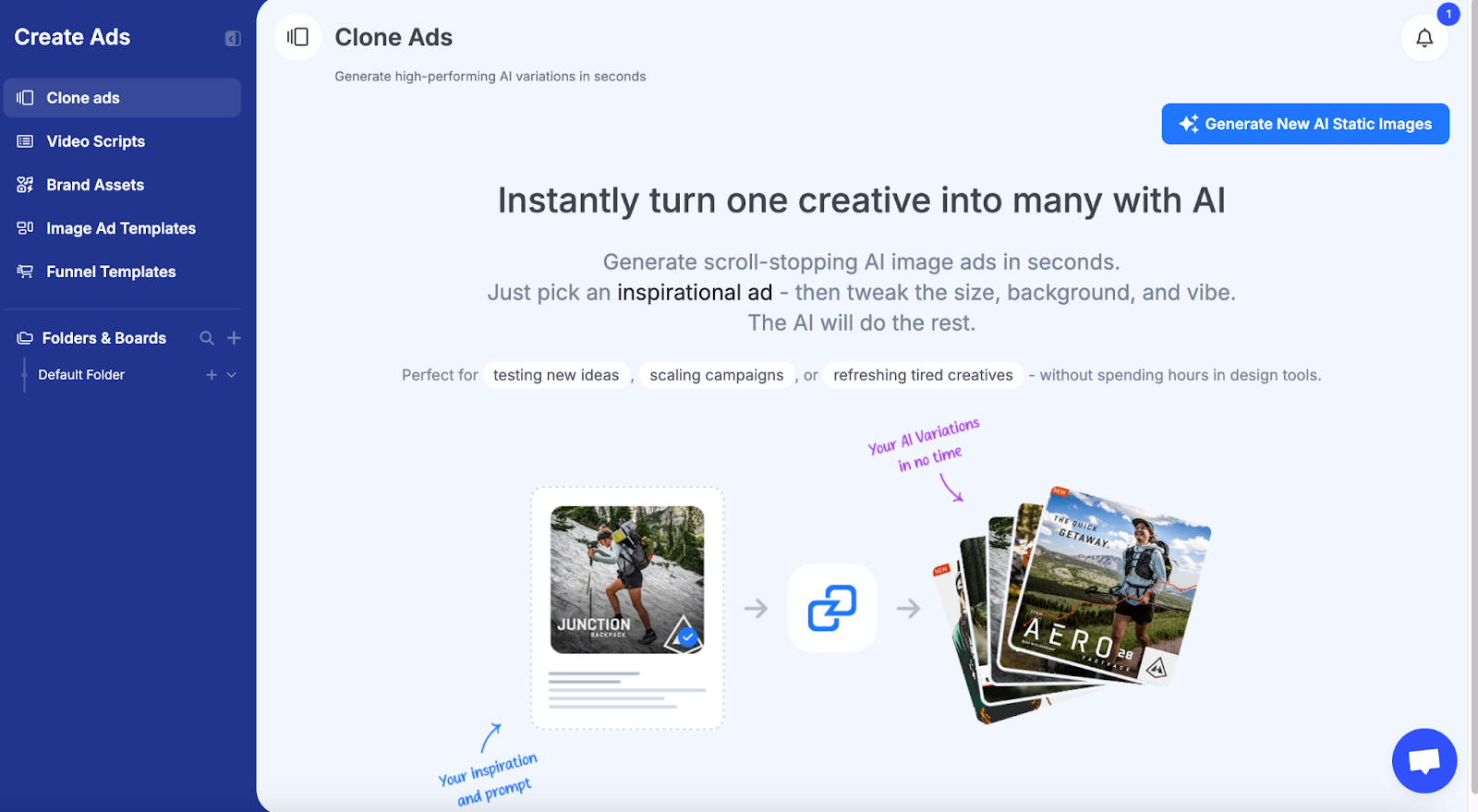
Clone Ads turns an inspirational ad into multiple ready-to-test variations in seconds.

Clone Ads 

Clone Ads produces multiple visual variations of any static creative within seconds. Adjust colors, layouts, and design elements without opening a separate editing tool. This is how high-output teams keep creative fresh and fight ad fatigue at speed.

Video Scripts 

Generate video ad scripts directly inside the platform. Add your product details, and the AI produces tailored scripts with hooks, body copy, and CTAs you can refine to match your brand voice. 

Creative Analyzer 

Creative Analyzer connects directly to your Meta account to surface performance data alongside creative breakdowns. This tool identifies which hooks, formats, and messaging patterns drive results, so you can scale smarter.

GetHookd Pricing Options

We offer four pricing tiers, all starting with a 7-day free trial and a 25% discount for annual plans. 

  • The Launch plan at $19/month is built for solopreneurs and early-stage brands. It includes 1 seat, full access to the 65M+ ad library, Brand Spy, AI script generation, and ad transcription. 
  • The Grow plan at $59/month includes 3 seats, Clone Ads, Static Ad Templates, Funnel Templates, and product assets. 
  • The Scale plan at $149/month provides up to 10 seats, priority support, and is designed for agencies and advanced teams managing multiple brands. 
  • The Enterprise plan is custom-priced for larger organizations that need tailored limits.

GetHookd Customer Reviews

Recurring praise centers on how GetHookd replaces hours of manual Ad Library browsing with organized, actionable competitor data. 

Reviewers also love the ability to see exactly how many creatives competitors are launching, what formats they're using, and where they're driving traffic. Advertisers managing $50K–$100K+ in monthly ad spend describe the tool as paying for itself by keeping creative testing sharp and intentional rather than based on guesswork. 

The Chrome Web Store extension also carries a 5-star rating, with users noting the convenience of saving ads directly from their browser in a single click.

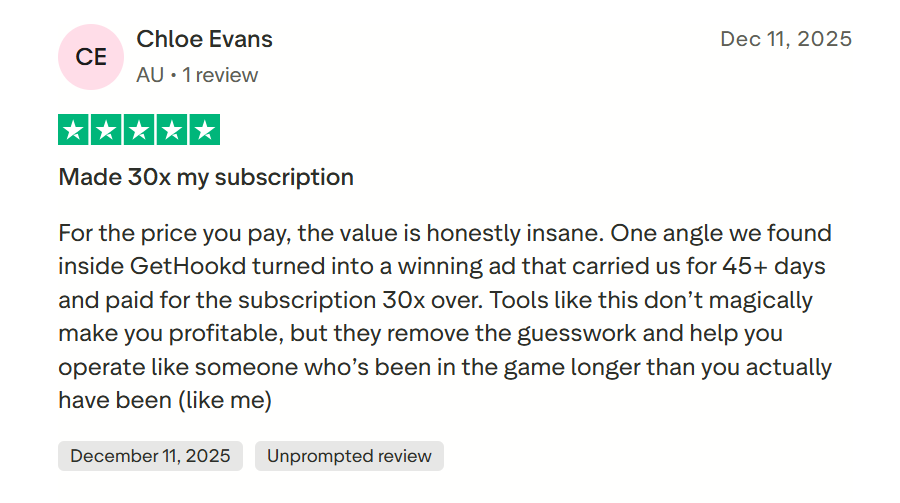
Our user reports a 30x return on their subscription from a single winning ad angle.

Revealbot (Birch) Overview

Birch automates ad management with rules-based logic. (Image source: Birch) 

Revealbot, now rebranded as Birch, is a cloud-based ad automation platform that covers Meta, Google, and other social networks. It specializes in rules-based campaign optimization, allowing advertisers to set conditions that automatically pause underperforming ads, scale winning campaigns, or adjust budgets based on real-time performance data.

Key Features of Birch

  • Automated Rules: Build conditional automations with nested AND/OR logic across campaigns, ad sets, and individual ads. Rules can execute as frequently as every 15 minutes.
  • Auto-Boosting: Automatically promote top-performing organic posts on Facebook and Instagram based on engagement thresholds you define.
  • Bulk Ad Creation: Launch multiple ad variations across Meta in a single workflow, saving time on manual setup when testing creative at volume.
  • Creative Insights: Birch flags fatigued ads that have lost performance over time and surfaces your top-performing creatives.

Limitations of Birch

Birch has no ad library, competitor tracking, or way to view what other brands are running. It manages your existing campaigns but offers zero visibility into what's working in your market.

Unlike GetHookd, it does not offer AI creative tools for producing new ad assets. Birch assumes you already know what top-performing creatives to run. Costs also increase as your connected ad spend grows. For agencies managing multiple high-spend accounts, the monthly fee can climb well beyond the listed base price.

Birch Pricing Options

Birch uses spend-based pricing tied to total monthly ad spend across connected accounts. The Essential plan starts at $49/month (at a $10K ad spend) and includes workspaces and post-boosting. Pro starts at $99/month (at the same spend level) and includes automated rules, custom metrics, and Audience Builder. There is also an Enterprise plan with custom pricing. Costs increase as your ad spend rises.

Birch Customer Reviews

Users on G2 like the time savings from automated rule execution and the reliability of budget controls. On Trustpilot, feedback is more mixed, with some users describing the tool as overpriced for what it delivers, while others report bugs that affect campaign launches and slow customer support response times. 

The most common complaint across platforms is the significant onboarding effort required. Reviewers consistently note that the rule-building interface is time-consuming to learn, particularly for teams without prior automation experience. 

AdEspresso Overview

AdEspresso streamlines Facebook ad creation and A/B testing. (Image source: AdEspresso) 

AdEspresso is a campaign management tool designed to make it easier to create, test, and optimize Meta Ads and Google Ads campaigns. Its core strength is simplifying split testing. It allows users to generate dozens of ad variations and identify top creative performers.

Key Features of AdEspresso

  • Split Testing: Create ad variations by mixing headlines, images, copy, and audience segments. AdEspresso automates the testing process and surfaces which combinations deliver the best results.
  • Bulk Ad Creation: Build and launch multi-page Facebook and Instagram campaigns at scale, reducing time spent on repetitive setup tasks.
  • Automated Post Promotion: Turn high-performing organic posts into paid ads based on custom engagement triggers.

Limitations of AdEspresso

The $49/month Starter tier limits total ad spend to $1,000/month. For any brand spending beyond that, which includes most serious advertisers, you're immediately pushed to the $99/month Plus plan or higher.

Also, there are no tools for researching competitor ads, browsing an ad database, or monitoring what's working in your niche. You're building campaigns without any pre-launch intelligence.

AdEspresso Pricing Options

AdEspresso offers three tiers. The Starter plan at $49/month covers unlimited ad accounts across Facebook and Instagram but caps ad spend at $1,000/month. The Plus plan at $99/month removes the spend cap, adds bulk creation, campaign approval workflows, and white-label reports. The Enterprise tier starts at $259/month.

AdEspresso Customer Reviews

AdEspresso users who appreciate the platform tend to highlight its beginner-friendly interface and the convenience of managing Facebook ads. On the other hand, criticism centers on pricing that gets expensive as ad spend scales, limited feature depth compared to native platforms, and support quality that multiple reviewers describe as inconsistent.

Revealbot (Birch) vs AdEspresso vs GetHookd: Comparison Table

Feature GetHookd Revealbot (Birch) AdEspresso
Ad Library / Database 65M+ ads across Meta Not available Not available
AI Script Generation Transcribe ads and generate hooks, angles, and complete scripts Not available Not available
Ad Cloning Clone Ads generates multiple visual variations ready for A/B testing Not available Not available
Competitor / Brand Tracking Brand Spy with landing page and scaling intelligence Not available Not available
Creative Analytics Creative Analyzer provides insight into ad performance and scaling opportunities Flags fatigued ads and surfaces top performers Inspector breakdown and split test analysis
Funnel Templates Plug-and-play templates from 7–8 figure brands Not available Not available
Starting Price $19/month $49/month (spend-based) $49/month ($1K spend cap)
Best Use Case Ad research, competitive intelligence, and AI-powered creative production for ecommerce brands and agencies focused on scaling profitably Post-launch campaign automation and rule-based optimization Campaign management and split testing

Find Winning Ads & Scale Faster with GetHookd

Birch and AdEspresso each solve a piece of the advertising puzzle: campaign automation and split testing, respectively. But neither addresses the creative bottleneck that tanks ROAS before a single dollar is spent. GetHookd picks up where both fall short, covering the research, production, and analysis that determine whether your ads perform in the first place.

If your team is spending more time managing campaigns than improving the creatives inside them, the problem isn't automation. It's what you're putting in front of audiences. GetHookd gives ecommerce brands, agencies, and media buyers everything they need to move from competitor insight to live ad in minutes, not days. 

Stop burning budget on unproven concepts and start your 7-day free trial today.

Start your GetHookd free trial today!

Frequently Asked Questions (FAQs)

What does AdEspresso do? 

AdEspresso simplifies the creation, management, and split testing of ad campaigns across Facebook and Google Ads. Core features include A/B testing for audiences, placements, and copy, bulk ad creation, and automated post promotion. It does not include an ad library, competitor research, or AI creative tools.

Can Birch (Revealbot) help me create ads? 

Birch can combine existing images and ad copy into multiple variations through Bulk Creation, but it does not generate new creative assets. If you need AI script generation, ad cloning, or image creation alongside your research workflow, GetHookd covers the full creative production process in one platform.

How does GetHookd improve ROAS? 

GetHookd reduces wasted spend by helping you build ads using proven data rather than guesswork. Brand Spy reveals which creatives your competitors are actively scaling, AI Script Generation produces hooks and scripts based on what's already converting, and ready-made templates give you tested starting points for ad creatives and landing pages. 

Does GetHookd require technical skills to get started?

No, you don't need technical skills to use GetHookd. We designed the platform for marketers, not developers. Our AI tools, Brand Spy, and template library require no coding or technical setup. Most users start producing creatives within minutes of signing up.

*Note: Pricing and/or product availability mentioned in this post are subject to change. Please check our website for current pricing and stock information before making a purchase.

GetHookd Ads Library vs Facebook Ads Library
Gethookd vs Meta Ads Library
-
February 27, 2026

Facebook Ad Library Scraper: How It Works & What Data Can You Get

Key Takeaways

  • A Facebook Ad Library scraper automates the collection of public ad data from Meta's Ad Library, saving hours of manual research time.
  • You can extract data such as creative assets, campaign details, platform distribution information, and targeting countries, but not performance metrics or audience details.
  • Using a scraper allows you to monitor competitor strategies, spot advertising trends, and build a database of proven ad concepts.
  • GetHookd turns Facebook Ad Library data into actionable competitor intelligence through AI-powered ad discovery, performance scoring, and creative analysis that the native library lacks.

What Is a Facebook Ad Library Scraper?

A Facebook Ad Library scraper is a tool that automatically collects publicly available ad data from Meta's Ad Library. Instead of manually scrolling through competitor ads one by one, a scraper pulls creatives, ad copy, landing page URLs, and campaign metadata into an organized, searchable format.

For media buyers, e-commerce operators, and agencies running ads at scale, this matters because competitor research is only useful if it's fast and repeatable. The Facebook Ad Library (also known as the Meta Ad Library) contains a massive amount of data, but browsing it manually is slow. There's no export function, and you can't track changes over time. A Facebook ad scraper solves that.

GetHookd: Turn Competitor Intelligence Into Your Next Winning Ad

65M+ Ads Analyzed | 4.8★ G2 Rating | 4.4★ Trustpilot Rating

Stop Guessing. Start Scaling:

GetHookd reveals which ads your competitors are actively scaling—not just running. Spy on their best-performing creatives, landing pages, and traffic strategies, then turn proven concepts into testable campaigns in seconds with AI-powered script generation and creative cloning.

What You Get:
  • ✓ Brand Spy to decode competitor ad strategies in real-time
  • ✓ AI script generation and ad cloning for instant variations
  • ✓ Performance scoring based on actual ad behavior, not vanity metrics
  • ✓ Creative Analyzer to identify and scale your top performers
Replace guesswork with intelligence. Build profitable ads that actually convert.

How Does a Facebook Ad Library Scraper Work?

At a high level, a Facebook Ad Library scraper connects to Meta's public ad database, collects the ad data you're looking for, and organizes it so you can search, filter, and analyze it efficiently.

When you use a scraper, whether it's a standalone tool or a platform like GetHookd, you typically search by brand name, keyword, or niche. The scraper then pulls all available ads associated with that search, including creative assets, copy, CTA buttons, destination links, and key metadata such as start dates and platform placements. The result is a structured library of competitor ads that you can browse in seconds rather than hours. 

What Data Can You Extract Using Facebook Ad Library Scraper?

Here's a breakdown of the data points available when scraping the Meta Ad Library.

Creative Assets

Every ad in the Facebook Ad Library includes its visual creative, whether that's a static image, video, or carousel. You also get the full ad body text, headline, and any link descriptions.

The Ad Library also shows which format each ad uses. This is useful for spotting patterns. If a competitor is running predominantly video ads or leaning heavily on carousels, that indicates what's working in your niche.

Campaign Details

Each ad displays its start date, active/inactive status, page name, and page ID. Long-running ads are a strong proxy signal. If a competitor has been running the same creative for weeks or months, it's likely performing well enough to keep spending on.

Platform Distribution

Another valuable data point available through Facebook Ad Library scrapers is platform distribution information. This indicates whether ads are running exclusively on Facebook or Instagram, or on both platforms simultaneously. In some cases, you can even see if ads are appearing in Stories, Feeds, or Marketplace placements.

Countries & Languages Targeted

The Facebook Ad Library also reveals geographic and linguistic targeting information that scrapers can collect. You can see which countries an ad is running in and what languages it's been created for, offering valuable insights into competitors' international strategies and market prioritization. 

Limitations of Facebook Ad Library Data

Facebook scrapers only collect public-facing data. Raw ad data is a strong starting point, but it has clear gaps that matter when making real media-buying decisions.

No Performance Metrics

The Facebook Ad Library shows you what ads exist, not how they perform. There's no click-through rate, no return on ad spend, no cost-per-acquisition, and no engagement breakdown.

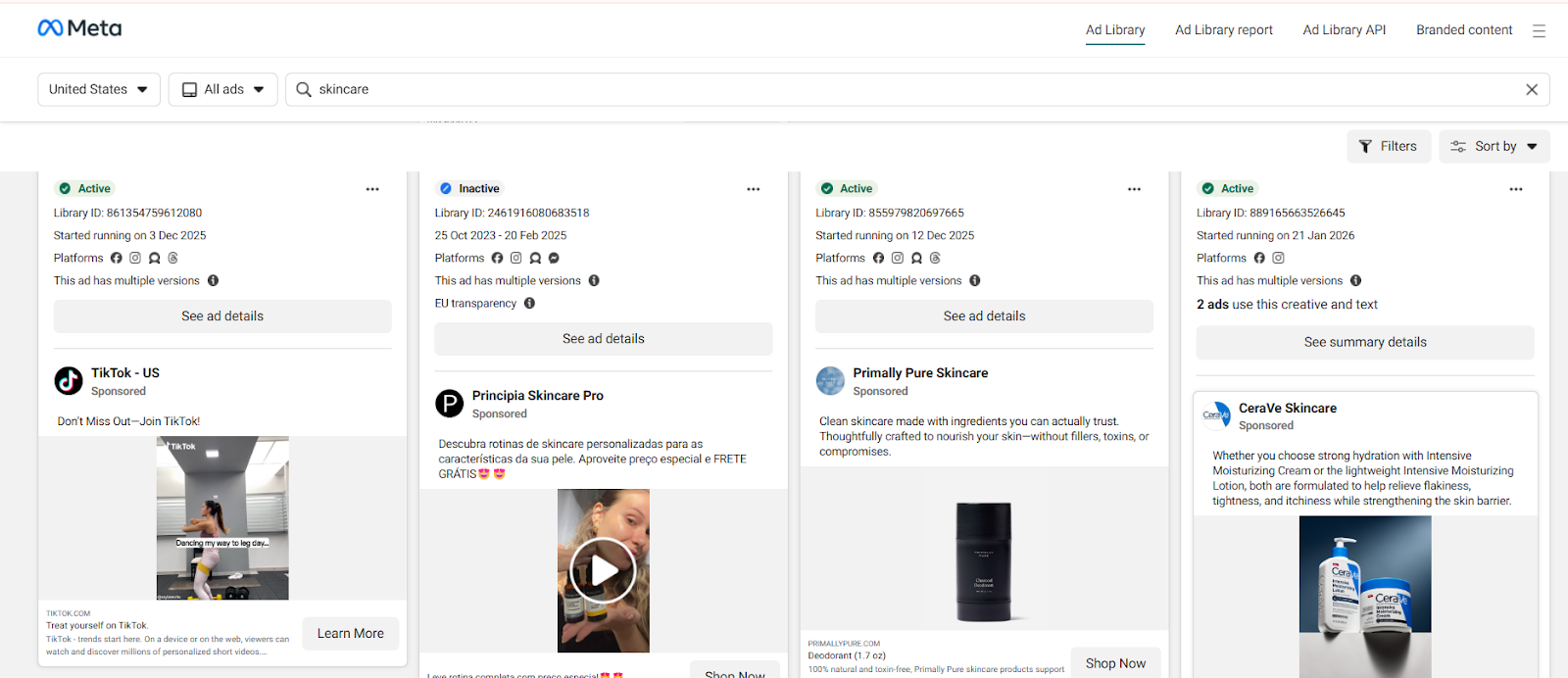
A search for "skincare" in Meta's Ad Library showing the data available on each ad card. (Image source: Meta Ad Library)

Two ads can sit side by side in the same library: one losing money, one increasing revenue, and there's nothing in the data to tell them apart. For media buyers allocating real budget, this is the single biggest limitation. You're seeing the creative output of a competitor's strategy, but you're blind to whether that strategy is actually working.

GetHookd lets you search millions of Meta ads with filters the native Ad Library doesn't offer, such as runtime and performance.

Audience Targeting Details Stay Private

You can see countries and platforms, but the audience architecture behind each ad is completely hidden. This means two ads with identical creative could be targeting entirely different segments, performing differently as a result, and the Meta Ad Library gives you no way to know. You're seeing only the surface of the campaign, without the underlying targeting logic.

Budget & Spend Information Is Unavailable

Outside of the limited EU transparency data (which only provides broad spend ranges for ads targeted within the European Union), there's no visibility into how much a competitor is spending on any given ad or campaign. 

You can't tell if an ad is backed by a serious budget or running on fumes. This makes it difficult to gauge competitive intensity in your niche or understand how aggressively a competitor is pushing a particular offer.

Ads Disappear When Campaigns Stop Running

Once an ad goes inactive, it eventually vanishes from the Meta Ad Library. There's no archive, no version history, no way to revisit a creative that was running three months ago. This is a real problem for teams doing seasonal research or quarterly competitive reviews. The ads you studied last month may not exist anymore. If you didn't save it at the time, it's gone.

No Landing Page Analysis or Archiving

You can see the destination URL on an ad card, but the Ad Library doesn't capture, archive, or analyze the actual landing page. You get the link, not the layout or the conversion flow. And once the campaign stops running, even that URL context fades. The ad-to-landing-page relationship is one of the most important signals in funnel analysis, and the Ad Library effectively ignores it.

No Creative Analysis or Hook Breakdown

The Ad Library displays the ad as-is, but offers no tools to analyze why it works. There's no hook extraction, no copy framework breakdown, no scoring of visual or structural elements. For video ads, in particular, the opening hook is often the single most important variable, and the Ad Library provides no way to isolate, transcribe, or compare hooks across competitors' campaigns. You're left doing that work manually, which doesn't scale.

GetHookd: Best Facebook Ad Library Scraper With Competitor Intelligence

GetHookd Explore dashboard showing 65 million Meta ads with filters.

These limitations are exactly what GetHookd is designed to solve. Powered by AI-driven ad discovery and creative analysis, we don't just collect ads, we turn competitor research into ready-to-launch campaigns.

With over 65 million ads across Meta, GetHookd gives media buyers, e-commerce brands, and agencies the competitive intelligence they need to make faster, smarter creative decisions.

Here's what we offer:

  • Explore Ads: Browse our full library of 65M+ high-performing meta ads, filtered by niche, format, and performance signals. Find what's working in your market in seconds. We score ads based on real behavioral signals so you can distinguish between a test and a proven winner. 
  • Save Ads: Build a permanent ad library organized by boards and folders. Ads stay saved forever, even after they stop running on Meta.
  • Brand Spy: Enter any competitor and see their complete ad strategy. Find out which ads they're actively scaling, the hooks they repeat, the landing pages driving traffic, and the formats they favor.
  • Ad Transcription: Automatically transcribe video ads to extract hooks, CTAs, and copy frameworks you can use immediately.
  • Video Scripts: Upload a winning ad, add your product details, and our AI generates new hooks, angles, and full scripts tailored to your brand in seconds.
  • Clone Ads: Take a top-performing image ad and generate dozens of variations. You can create new colors, layouts, avatars, and styles without opening separate design software.
  • Image Ad Templates: We include a library of ready-to-use static ad templates organized by niche. Each template is designed around proven ad frameworks from top-performing brands, and you can customize them. It's the fastest way to go from competitor insight to a polished creative ready for testing.
  • Funnel Templates: Our funnel templates let you pick, customize, and launch high-converting landing pages in minutes. When you pair ad creative with a proven funnel template, you're testing a complete system, not just a single asset.

The Facebook Ad Library provides a starting point for competitive research, but raw data alone won't help you launch better ads faster. The marketers winning right now are the ones turning competitor intelligence into tested, validated campaigns before their competition catches up. 

GetHookd brings research and execution into one platform, so you spend less time digging and more time scaling. 

Start your GetHookd free trial today.

Frequently Asked Questions (FAQs)

Is it legal to scrape Facebook ads library? 

The Meta Ad Library is a public database, and accessing it for competitive research is standard practice. Platforms like GetHookd handle data collection cleanly, so you don't need to worry about compliance or technical setup on your end.

How often should I scrape competitor ads? 

The optimal frequency for scraping competitor ads depends on your industry's pace and competitive intensity. Fast-moving e-commerce or retail sectors benefit from weekly or even daily updates to capture rapidly evolving promotional strategies and seasonal campaigns. For industries with longer sales cycles, such as B2B services, biweekly or monthly scraping typically provides sufficient competitive intelligence.

Do I need technical skills to scrape Facebook ads?

No, you don’t. User-friendly platforms like GetHookd offer intuitive interfaces where you simply enter competitor pages or keywords to monitor, then receive organized data without handling any code. These specialized marketing tools handle all technical complexities, including proxy management, request throttling, and data normalization.

How to find winning products in Facebook Ad Library?

Look for ads that have been running for several weeks or longer. Longevity is one of the strongest indicators that a product is converting well enough to justify continued spend. Pay attention to brands running multiple variations of the same product ad, as that signals active scaling and iteration. 

For a faster approach, GetHookd's Explore Ads lets you search across 65M+ ads, filtered by niche and performance signals, while Brand Spy reveals which products competitors are actively allocating budget to.

*Note: Pricing and/or product availability mentioned in this post are subject to change. Please check our website for current pricing and stock information before making a purchase.

Ad Strategy
Ad Strategy
-
February 26, 2026

6 Best SaaS Ad Examples in 2026

Key Takeaways

  • SaaS brands winning on Meta in 2026 aren't relying solely on product demos; they're using static-image ads built around curiosity, data, free resources, and personality to drive signups and downloads.
  • The strongest SaaS ads lead with a single, specific benefit or outcome rather than trying to explain the entire product in one frame.
  • Illustrated and branded visuals are outperforming generic stock photography in B2B campaigns, especially for brands competing in crowded categories.
  • Lead magnet ads that offer free templates, guides, or tools consistently deliver a lower cost-per-lead than direct signup campaigns in SaaS verticals.
  • GetHookd lets you track which SaaS ad creatives competitors are actively scaling across Meta, plus AI-powered creative tools, so you can study what's converting and recreate them in minutes.

SaaS Advertising on Meta in 2026: What's Actually Converting

Most people associate Facebook and Instagram ads with e-commerce, but SaaS brands are spending on Meta and seeing strong results. 

The strategy differs from physical product advertising. Software cannot rely on visual product appeal alone to capture attention in-feed. SaaS creatives must communicate outcomes, value, and transformation within seconds.

Below, we break down 6 real SaaS ad examples running on Meta right now, covering what makes each one work and how you can apply the same approach to your campaigns.

GetHookd: Turn Competitor Intelligence Into Your Next Winning Ad

65M+ Ads Analyzed | 4.8★ G2 Rating | 4.4★ Trustpilot Rating

Stop Guessing. Start Scaling:

GetHookd reveals which ads your competitors are actively scaling—not just running. Spy on their best-performing creatives, landing pages, and traffic strategies, then turn proven concepts into testable campaigns in seconds with AI-powered script generation and creative cloning.

What You Get:
  • ✓ Brand Spy to decode competitor ad strategies in real-time
  • ✓ AI script generation and ad cloning for instant variations
  • ✓ Performance scoring based on actual ad behavior, not vanity metrics
  • ✓ Creative Analyzer to identify and scale your top performers
Replace guesswork with intelligence. Build profitable ads that actually convert.

6 Best Ad Examples for SaaS in 2026

1. The Integration Showcase

Zapier borrows credibility from the tools you already use. (Image source: Facebook)

Zapier's ad doesn't try to explain how workflow automation works. Instead, it shows a cluster of recognizable app icons (OpenAI, Gmail, Slack) alongside the headline "Zapier + AI = even more possibilities." The message is instant: you already use these tools, and Zapier connects them.

This format works for SaaS brands that operate as connectors or platforms. Instead of explaining your product's functionality, you leverage the credibility of tools your audience already knows and trusts.

Why it converts: Showing familiar logos immediately establishes relevance. The viewer thinks "I use that" before reading the copy. The "Sign Up" CTA and the "Try Zapier and OpenAI for free" headline eliminate risk. There's nothing to lose, and the visual has already proven its relevance.

How to apply it: If your SaaS integrates with popular tools, lead with those logos. Don't bury integrations on a features page. The more recognizable the icons, the faster the connection happens.

2. The Bold Value Proposition

One bold claim, zero clutter. (Image source: Facebook)

Webflow runs with a single bold claim front and center: "You deserve a web platform that does it all." No product screenshots, no feature lists, no customer testimonials. Just a confident statement aimed directly at the pain of juggling hosting, CMS, SEO, and design in separate tools.

This approach works when your product solves a fragmentation problem: when your audience is tired of stitching together multiple solutions. The ad doesn't need to explain what Webflow does feature by feature. The value proposition alone qualifies the right viewer and repels the wrong one.

Why it converts: Bold, specific claims cut through feed noise faster than detailed explanations, and the dark background makes the white text pop on mobile screens. The "Learn More" CTA aligns with the awareness stage. This isn't a purchase request; it's an invitation to curiosity.

How to apply it: Distill your product's value into one sentence that your ideal customer would immediately agree with. Put it on a clean, high-contrast background with your logo. Test it against your more detailed creatives. You may be surprised how well simplicity performs.

3. The Curiosity Hook

Surfer teases just enough to make the click irresistible. (Image source: Facebook)

Surfer's ad teases content without giving it away: "Steal winning AI SEO tips →" with a phone mockup showing a blurred list titled "2026 AI SEO todo: REVEAL THE LIST." Everything about this ad is designed to create an information gap that the viewer can only close by clicking.

This format is particularly effective for SaaS brands in content marketing, analytics, or any category where the audience is actively seeking tactical knowledge. You're not selling the product directly. Instead, you're offering valuable intel, and the product naturally becomes part of the conversation once they're on your page.

Why it converts: The blurred content creates genuine curiosity. The copy ("The world moved to AI-first search. Surfers moved faster.") positions the brand as ahead of the curve, which appeals to early-adopter SaaS buyers.

How to apply it: Package your best-performing content, internal data, or industry insights into a teaser format. Show enough to prove value, but blur or withhold the specifics. The click becomes irresistible because the viewer already believes the content is worth seeing.

4. The Lead Magnet

A free template does the selling with no demo required. (Image source: Facebook)

Deel offers a free competency-based performance review template, shown alongside a professional lifestyle image. Lead magnet ads consistently outperform direct signup campaigns in SaaS because they lower the barrier to commitment. The viewer is being offered something immediately useful for free. Once they download, they're in your funnel.

Why it converts: The offer is tangible and specific. It's not a vague "free guide." The lifestyle image humanizes a category (HR software) that often feels cold and corporate. The bullet-point structure makes the benefits easy to scan.

How to apply it: Identify the templates, checklists, or frameworks your target audience would actually use in their day-to-day work. Package them as a free download and run it as a lead gen campaign. Lead magnet ads are everywhere in SaaS right now, so differentiating on the quality of the offer matters. GetHookd's Brand Spy can show you exactly which lead magnet creatives your competitors are actively scaling, so you can study what's converting before you build your own.

5. The Data-Driven Proof

One stat. That's all Asana needs. (Image source: Facebook)

Asana leads with a single stat: "+57% more projects delivered on time." It's displayed in large type on a purple-branded background, with a simple bar chart visualization. Data-driven ads work in SaaS because the buying decision is rational rather than emotional. Your audience wants to know that your product delivers measurable results. A specific, credible number communicates more value in one second than a paragraph of copy ever could.

Why it converts: The stat is specific. The visual hierarchy is also flawless. You see the number before anything else. The purple background is distinctly Asana, reinforcing brand recognition. 

How to apply it: Pull your strongest outcome metric from customer data, case studies, or third-party research. Make it the entire ad: one number, one supporting line, one CTA. If the stat is genuinely impressive, it needs no decoration.

6. The Personality Play

Grammarly proves SaaS ads don't have to be boring. (Image source: Facebook)

Grammarly's ad opens with "Wanna wail in email?" — a playful hook that uses humor and emojis to make a productivity tool feel fun and relatable. The image shows a stylized email interface with floating emojis and a casual, conversational tone throughout.

Most SaaS ads default to a professional, polished tone. Grammarly goes the other direction, injecting personality into a category (writing tools) that could easily feel dry.

Why it converts: The humor elicits an emotional response that halts scrolling. The playful tone makes the product feel approachable rather than intimidating. The copy nails a relatable pain point (writing emails that sound too harsh or too casual). 

How to apply it: If your brand voice allows for humor, test it in your ads. The bar is low because so few SaaS brands try it. A genuinely funny or clever ad in a feed full of corporate messaging will naturally stand out. Just make sure the humor ties back to a real use case.

Top 6 SaaS Ad Examples: Summary Table

Ad Format Core Tactic Key Takeaway
Integration Showcase Borrowed credibility from recognizable app logos Lead with tools your audience already uses to create instant relevance
Bold Value Proposition Single confident claim on a clean, high-contrast background Distill your product into one sentence your ideal customer would agree with
Curiosity Hook Blurred content teaser that creates an information gap Withhold just enough to make the click irresistible
Lead Magnet Free template offer that lowers the barrier to commitment Offer something immediately useful to enter the funnel before the sale
Data-Driven Proof Single stat in large type on a branded background One credible number communicates more than a paragraph of copy
Personality Play Humor and emojis to stand out in a sea of corporate ads A genuinely fun ad in a serious feed will always stop the scroll

Find Winning SaaS Ads with GetHookd

Every ad style in this article is already being tested and scaled by SaaS brands across Meta. The challenge is finding the specific creatives that are working in your category right now.

That's where GetHookd comes in. Our platform tracks over 65 million ads across Meta and uses performance scoring to surface those with real traction. With our Brand Spy feature, you can monitor any SaaS competitor's ad account, see which creatives they're scaling, and study the landing pages they're driving traffic to. 

Once you find an ad worth replicating, our Clone Ads feature lets you replicate it for your service. With over 100 static ad templates, you can produce high-performing creatives in minutes without starting from scratch.

We built GetHookd to close the gap between seeing what competitors run and knowing what actually works. The faster you move from research to testable creative, the less budget you waste on unproven concepts.

Start your GetHookd free trial today!

Frequently Asked Questions (FAQs)

Do Facebook ads work for SaaS companies?

Yes. Meta's targeting capabilities and creative flexibility make it one of the strongest platforms for driving signups, trial starts, and lead magnet downloads. The key is leading with outcomes and value rather than product features, since you're selling something people can't see or hold. Every brand featured in this article is currently running ads on Meta, which indicates the channel is delivering results worth scaling.

What are some popular SaaS ad examples?

The SaaS ads that perform best on Meta right now all have one thing in common. They sell a single, specific outcome rather than trying to explain the entire product in one frame. Whether that's a bold stat, a free resource, or a curiosity-driven hook, the creative focuses on one reason to click. Every example we've covered in this article follows that principle.

How do I find the SaaS ads my competitors are running?

GetHookd's Brand Spy tool lets you track any competitor's ad and see their full creative library. You can monitor which ads they're actively scaling, the hooks and copy angles they're using, and the landing pages behind them. It goes beyond showing you what's live and tells you what's actually performing, so you can study creatives worth replicating.

*Note: Pricing and/or product availability mentioned in this post are subject to change. Please check our website for current pricing and stock information before making a purchase.

Ad Strategy
Ad Strategy
-
February 25, 2026

Facebook Collection Ads: Examples, Cost & How to Create Them

Key Takeaways

  • Facebook collection ads combine a hero image or video with product tiles and a full-screen Instant Experience.
  • Collection ads use the same Meta ad auction as other formats, with average CPCs of around $0.87 and CPMs of around $16.06, though costs vary significantly by industry, objective, and seasonality.
  • The four template options (Instant Storefront, Lookbook, Customer Acquisition, and Storytelling) enable brands to tailor their approach to specific marketing goals.
  • GetHookd lets you search 65M+ Meta ads to find which collection ad concepts competitors are actively scaling, so you can build around proven ideas instead of guessing.

What Are Facebook Collection Ads?

Facebook collection ads are a mobile-first ad format designed to drive immediate action from product discovery. Unlike standard image or video ads that send users to an external landing page, collection ads keep the entire browsing experience inside Facebook or Instagram.

Every collection ad has three layers. The first is a hero creative: a single image or video at the top that grabs attention. Below that, a row of product tiles (four on Facebook, three on Instagram) pulled directly from your synced product catalog. When someone taps the ad, they enter a full-screen Instant Experience: a fast-loading, interactive storefront where they can browse more products, view details, and tap through to purchase without leaving the app.

This structure is what makes collection ads particularly effective for eCommerce brands and dropshippers. Instead of hoping users wait for your website to load on mobile, you give them a seamless, distraction-free path from interest to purchase.

GetHookd: Turn Competitor Intelligence Into Your Next Winning Ad

65M+ Ads Analyzed | 4.8★ G2 Rating | 4.4★ Trustpilot Rating

Stop Guessing. Start Scaling:

GetHookd reveals which ads your competitors are actively scaling—not just running. Spy on their best-performing creatives, landing pages, and traffic strategies, then turn proven concepts into testable campaigns in seconds with AI-powered script generation and creative cloning.

What You Get:
  • ✓ Brand Spy to decode competitor ad strategies in real-time
  • ✓ AI script generation and ad cloning for instant variations
  • ✓ Performance scoring based on actual ad behavior, not vanity metrics
  • ✓ Creative Analyzer to identify and scale your top performers
Replace guesswork with intelligence. Build profitable ads that actually convert.

Facebook Collection Ad Examples That Work

The best Facebook collection ads make deliberate creative decisions that guide users from curiosity to purchase. Here are four approaches worth studying.

A Facebook collection ad from Spruce; the video hero sets the mood, and the product tiles below make it shoppable.

1. Lifestyle Video Hero + Curated Product Grid

Fashion and beauty brands often lead with a short lifestyle video showing products in context, such as someone getting dressed, applying skincare, or styling an outfit. The product tiles below feature the exact items shown in the video. This works because the hero creates aspiration while the tiles make it immediately shoppable.

2. Sale-Driven Hero + Seasonal Tiles

During peak shopping periods, brands use collection ads with bold promotional messaging in the hero creative ("Up to 50% off") paired with product tiles featuring their top deals. The urgency in the hero drives taps, and the immersive experience lets users browse the full sale catalog without hunting through a website.

3. Monochromatic or Thematic Curation

Some of the strongest collection ads curate tightly around a single theme, color palette, or occasion. A swimwear brand showcasing only pink beach accessories, for example, creates visual cohesion, making the ad feel intentional rather than a random product dump. Tight curation signals that the brand has a point of view.

4. Lookbook-Style Aspirational Imagery

Brands selling premium or lifestyle products often use the Instant Lookbook template, pairing aspirational photography with tagged products. The hero might show a model in a complete outfit against a striking backdrop, with tiles breaking out the individual pieces. This approach works particularly well when the product is better sold through context than through a product-on-white image.

In every case, the pattern is the same: the hero asset tells the story, and the product tiles sell.

How Much Do Facebook Collection Ads Cost?

Collection ads don't have their own pricing tier. They use the same Meta ad auction as every other format. You're bidding on impressions alongside image, video, and carousel ads. That means your cost depends on the same variables: audience targeting, creative quality, industry competition, and seasonality.

On Facebook, CPCs average around $0.87, with CPMs around $16.06, though both figures shift significantly by industry and time of year. Traffic-optimized campaigns tend to run at lower cost, while competitive verticals and Q4 seasonality can push costs well above average.

How to Create Facebook Collection Ads (Step-by-Step)

To create Facebook Collection Ads, you’ll need a product catalog synced in Meta Commerce Manager, a Facebook Page, and optionally a connected Instagram account. You can then follow these steps. 

  1. Click + Create in Meta Ads Manager and choose a supported objective such as Awareness, Traffic, Engagement, Leads, or Sales.
  2. Set up your ad set by defining budget, schedule, audience, and placements.
  3. Select Collection as your ad format and connect your Facebook Page and Instagram account.
  4. Choose an Instant Experience template that fits your campaign goal.
  5. Select your products, either dynamically (recommended) or manually.
  6. Upload your hero image or video using the recommended specs.
  7. Write a concise primary text and headline, then add your landing page URL.
  8. Preview your ad across placements and publish.

Now, let’s see the process in detail.

Step 1: Start a New Campaign

Create a new campaign in Meta Ads Manager.

In Meta Ads Manager, click "+ Create" and choose a supported campaign objective. Collection ads work with Awareness, Traffic, Engagement, Leads, and Sales objectives. If you're focused on conversions, select Sales with Website or App as your conversion location.

Choose a campaign type in Meta Ads Manager.

Step 2: Configure Your Ad Set

Configure ad set settings, including budget and audience targeting.

Set your budget, schedule, audience targeting, and placements. Advantage+ placements are recommended for automated optimization, but you can also select placements manually. Remember that collection ads only serve on mobile.

Step 3: Select Collection as Your Format

Select Collection as the ad format in Meta Ads Manager.

In the Ad setup section, choose Collection. Connect your Facebook Page and Instagram account.

Step 4: Choose Your Instant Experience Template

Choose an Instant Experience template for a collection ad.

Meta offers four options. Instant Storefront is best for product-heavy catalogs and is the most common choice for eCommerce. Instant Lookbook is well-suited for lifestyle brands that showcase products in context. Instant Customer Acquisition functions like a mini landing page with a clear CTA. Instant Storytelling is built around video narratives.

Step 5: Select Your Products

Select products for a Facebook collection ad.

You can let Meta order products dynamically (recommended, as it shows the most relevant items to each user) or arrange them manually. Dynamic ordering tends to perform better because Meta's algorithm optimizes for purchase likelihood.

Step 6: Build Your Hero Creative

Upload a cover image or video with these recommended specs: 1:1 or 9:16 aspect ratio, minimum 1080 x 1080 pixels. Videos should be MP4 or MOV files, up to 4 GB in size. Images should be JPG or PNG, up to 30MB.

Step 7: Write Your Ad Copy

Keep primary text under 125 characters and headlines under 40 characters for best display across placements. Add your landing page URL.

Step 8: Preview and Publish

Use the Ad Preview tool to check how your ad looks across Feed, Stories, and Reels. Product images may be auto-adjusted to 1:1 or 4:5 depending on placement.

How to Find Winning Facebook Collection Ad Ideas With GetHookd

With 65M+ Meta ads, spot winning Facebook collection ad ideas before your competitors do.

With GetHookd's Explore feature, you can access over 65 million Meta ads, searchable by niche, format, country, and performance signals. Instead of guessing which hero creative or product theme to test, you can filter for what's actively running and showing strong engagement in your vertical.

Use Save Ads to organize winning collection ads by theme or format, even after they go offline. Brand Spy lets you track competitors’ active campaigns and landing pages. Once you spot a strong concept, Clone Ads creates variations, while Ads Transcription and Video Scripts extract hooks and generate ready-to-use scripts fast.

We built GetHookd to take the guesswork out of creative decisions. When it comes to Facebook collection ads, the format is straightforward. The real edge is knowing what to put inside it.

Start your GetHookd free trial today!

Frequently Asked Questions (FAQs)

What is a Facebook collection ad? 

A Facebook collection ad is a mobile-only ad format that combines a hero image or video with product tiles pulled from your catalog. When tapped, it opens a full-screen shopping experience within the app, allowing users to browse products and complete purchases without leaving Facebook or Instagram.

Do I need a product catalog to run Facebook collection ads? 

Yes. A product catalog synced through Meta Commerce Manager is required. Without it, the collection ad format won't be available in Ads Manager.

What's the best Instant Experience template for eCommerce? 

Instant Storefront is the most common choice for product-focused eCommerce campaigns. It displays products in a browsable grid layout optimized for purchase. Instant Lookbook is a strong alternative for lifestyle and fashion brands.

How to create a Facebook collection ad? 

Go to Meta Ads Manager, create a new campaign with a supported objective (Traffic, Sales, Engagement, Leads, or Awareness), and select Collection as your ad format. From there, choose an Instant Experience template, connect your product catalog, upload a hero image or video, and add your ad copy.

Can GetHookd help me create Facebook collection ad creatives?

Yes, once you've identified winning concepts using GetHookd’s Explore or Brand Spy tools, you can use Clone Ads to generate image variations and Video Scripts to produce new hooks and angles, all without needing design or copywriting skills.

*Note: Pricing and/or product availability mentioned in this post are subject to change. Please check our website for current pricing and stock information before making a purchase.
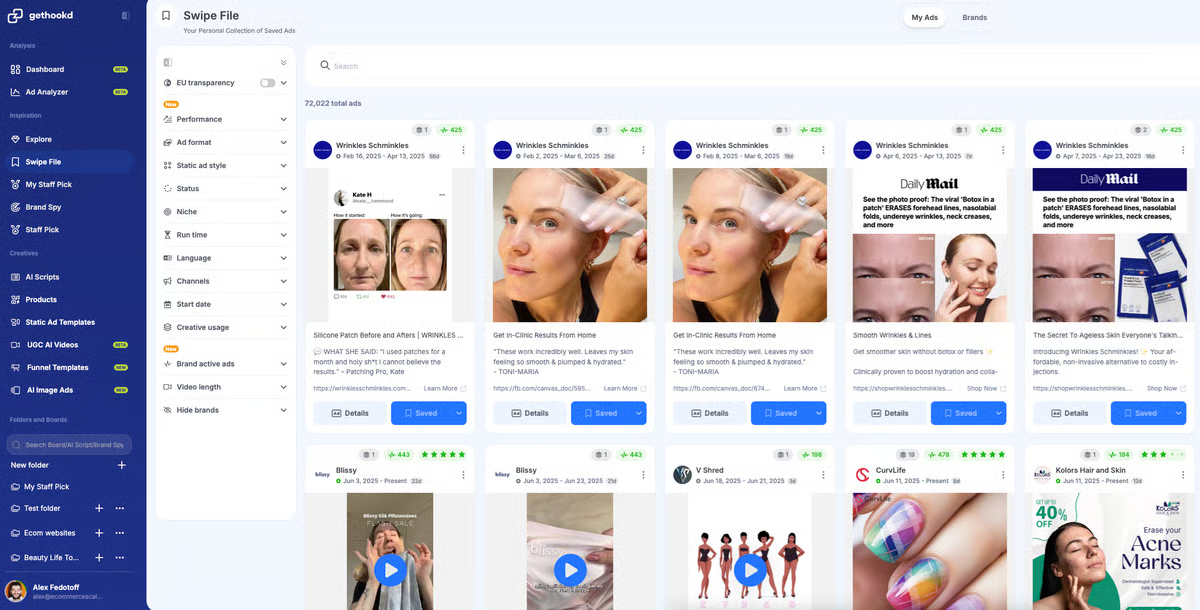
Ad Strategy
Ad Strategy
-
February 24, 2026

6 Best Facebook Image Ads Examples for 2026

Key Takeaways

  • Static image ads remain one of the most cost-efficient and high-performing formats on Meta in 2026, delivering low CPMs and strong click-through rates when executed well.
  • The best-performing Facebook image ads in 2026 share five traits: a scroll-stopping visual, a benefit-driven headline, a clear CTA, social proof, and authenticity over polish.
  • Meta's Andromeda algorithm now treats creative as the primary targeting signal. Diverse image ad formats feed the algorithm better than running the same visual with different copy.
  • Use the 4:5 vertical format (1080 x 1350 px) for feed image ads to claim maximum screen real estate on mobile. Square (1:1) remains a reliable fallback across all placements.
  • GetHookd lets you search over 65 million ads across Meta to find proven image ad concepts in your niche, then clone or remix them with AI in seconds.

Facebook Image Ads in 2026: What's Working Right Now

Video gets the headlines, but static image ads keep quietly delivering results on Facebook. They're fast to produce, cheap to test, and load instantly across every placement Meta offers. 

With Meta's Andromeda update now using your creative as the primary targeting signal, the brands winning in 2026 aren't the ones with the biggest budgets. They're the ones running diverse, high-quality image ads across proven formats: clean product shots, UGC testimonials, comparison layouts, and urgency-driven offers.

Below, we've broken down 6 of the best Facebook image ad styles currently working, each with a real-world example, an explanation of why it converts, and actionable tips you can apply today. 

GetHookd: Turn Competitor Intelligence Into Your Next Winning Ad

65M+ Ads Analyzed | 4.8★ G2 Rating | 4.4★ Trustpilot Rating

Stop Guessing. Start Scaling:

GetHookd reveals which ads your competitors are actively scaling—not just running. Spy on their best-performing creatives, landing pages, and traffic strategies, then turn proven concepts into testable campaigns in seconds with AI-powered script generation and creative cloning.

What You Get:
  • ✓ Brand Spy to decode competitor ad strategies in real-time
  • ✓ AI script generation and ad cloning for instant variations
  • ✓ Performance scoring based on actual ad behavior, not vanity metrics
  • ✓ Creative Analyzer to identify and scale your top performers
Replace guesswork with intelligence. Build profitable ads that actually convert.

6 Best Facebook Image Ads Examples for 2026

1. The Clean Product Shot

Allbirds keeps it minimal: one product, clean background, zero distractions. (Image source: Facebook)

Sometimes the product is the hero, and the smartest thing you can do is get out of its way. Allbirds regularly runs image ads featuring a single product on a clean, minimalist background, accompanied by a short headline and a "Shop Now" CTA.

This format works because it removes all friction from the buying decision. The viewer sees the product, understands the offer, and knows exactly what to do next. There's no competing message, no cluttered layout, no visual noise. For eCommerce brands with a strong product, this is the format to test first.

What Makes It Convert

  • High-quality product photography on a neutral or branded background. 
  • One clear value proposition in the headline (e.g., "Was $145 | Now $87"). 
  • Minimal text overlay so the visual does the work. 
  • Direct CTA button aligned with the campaign objective.

2. The UGC Testimonial Static

Wonderskin's selfie-style ad feels like a creator post, not a brand ad. (Image source: Facebook) 

The best-performing Facebook ads in 2026 are often the ones that don't look like ads at all. This Wonderskin ad is a perfect example. A selfie-style image of someone holding the product, text overlay that reads like a creator addressing their audience, and copy that leads with viral social proof ("the viral lip stain ALL over your TikTok feed"). It feels like a friend's recommendation, not a sponsored post.

What Makes It Convert

  • Authentic, selfie-style visuals that feel user-generated rather than studio-produced. 
  • Copy that references social proof or virality to build instant credibility. 
  • A clear offer or promotion layered in to convert the attention into action. 

3. The "Us vs. Them" Comparison

Huel's "Old me / New me" format turns a comparison ad into scroll-stopping meme content. (Image source: Facebook)

Comparison ads are among the oldest direct-response tactics, and they're still undefeated in 2026. Huel's Instant Meals Pot ad uses the trending "Old me / New me" meme format to position fast food side by side with its product. 

Burgers and fries on the left, a Huel pot on the right. No data tables, no nutrition labels. Just a visual that makes the upgrade feel obvious. The ad copy does the heavy lifting on specifics and benefits, while the creative stays clean and scroll-stopping. It's a comparison ad that doesn't feel like one.

What Makes It Convert

  • A clear visual split between the "before" (competitor or category alternative) and the "after" (your product). 
  • A meme-native format that blends into organic content instead of screaming "ad." 
  • Supporting copy that layers in the specific benefits without cluttering the image. 

If your product is an upgrade from a common alternative, this layout sells the transformation at a glance. Keep the image simple and let your primary text handle the details. 

Also, choose your comparison target carefully. Comparing against a generic category (fast food, old habits) is just as effective as naming a competitor and avoids potential issues.

4. The Multi-Product Grid

This grid format gives viewers multiple reasons to click. (Image source: Facebook)

A multi-product grid works because it increases the odds that at least one product catches the viewer's eye, while also communicating range and variety at a glance. Beauty brands, fashion retailers, and food and beverage companies use this format consistently because it mirrors how people browse, scanning options before zeroing in on one. 

A well-composed grid of your bestsellers or a curated collection can outperform a single hero product shot, especially in prospecting campaigns where you're reaching people who don't yet know your brand.

What Makes It Convert

  • A clean, balanced layout where each product has equal visual weight and breathing room. 
  • Consistent photography style across all items so the grid looks intentional, not thrown together. 
  • A unifying theme that ties the products together, whether that's a seasonal collection, a color palette, a "best sellers" grouping, or a bundle offer.

5. The Lifestyle-in-Use Shot

Maison Foufou lets the product do the talking. (Image source: Facebook)

Certain products sell themselves when you simply show them being worn, used, or experienced. This Maison Foufou ad does exactly that. A close-up of someone wearing layered gold jewelry in a natural, sun-lit setting. No text overlay on the image, no complicated messaging. The product is the entire ad, and the visual does all the selling.

This format dominates the fashion, beauty, and accessories verticals because purchase decisions are emotional, not logical.

What Makes It Convert

  • A real person wearing or using the product in a natural, aspirational setting. 
  • The product is clearly visible and central to the image, with zero text overlay competing for attention. 
  • Copy that reinforces the lifestyle angle. Maison Foufou's "Let your Foufou jewelry tell people your aesthetic" ties the product to identity, not just function.

Want to find which lifestyle ads are being scaled in your niche? GetHookd's Brand Spy shows you exactly that.

6. The Urgency-Driven Offer

Neven Eyewear's bold offer makes it impossible to scroll past without reading. (Image source: Facebook)

An image ad with a time-limited offer and a clear discount creates immediate purchase intent. This is a direct response at its most fundamental: give people a reason to buy now instead of later.

The most effective urgency ads in 2026 combine a strong visual of the product with a clear, prominent discount or deadline. Think bold text reading "Buy 1, Get Any 2 Pairs Free" overlaid on a lifestyle product image, paired with a "Shop Now" CTA.

What Makes It Convert

  • A specific, believable deadline (not vague "limited time" language). 
  • The discount or offer is prominently visible in the image itself, not just the copy. 
  • An action-oriented CTA that matches the urgency (e.g., "Shop Now" or "Claim Your Discount").

Top Examples of Facebook Image Ads: Summary Table

Ad Style Core Concept Why It Works
The Clean Product Shot Single product, minimal background, short headline, "Shop Now" CTA Removes friction, viewer sees product, understands offer, knows what to do next
The UGC Testimonial Static Selfie-style image, creator-tone text overlay, social proof copy Feels like a friend's recommendation, not a sponsored post
The "Us vs. Them" Comparison "Old me / New me" meme format, visual split between alternative and product Meme-native format makes the upgrade feel obvious at a glance
The Multi-Product Grid 2×2 grid of products with consistent photography style Increases odds of catching the viewer's eye; communicates range and variety
The Lifestyle-in-Use Shot Close-up of product being worn in natural, aspirational setting Triggers emotional purchase decisions; product is the entire ad
The Urgency-Driven Offer Bold discount/deadline overlaid on product image with action CTA Creates immediate purchase intent with a specific, believable deadline

Facebook Image Ad Quick Reference: Specs for 2026

Before you start designing, make sure your image ads meet Meta's current specifications. Getting this right prevents cropping issues, slow load times, and rejected ads.

Spec Feed (Recommended) Stories / Reels
Resolution 1080 x 1350 px (4:5) 1080 x 1920 px (9:16)
Aspect Ratio 4:5 (vertical) or 1:1 (square) 9:16 (full screen)
File Format JPG or PNG JPG or PNG
Max File Size 30 MB 30 MB
Primary Text 125 characters (visible before "See more") 125 characters max
Headline 40 characters (≈27 visible on smaller screens) 40 characters max

Find Winning Facebook Image Ads with GetHookd

Studying ad examples is a great starting point, but the real competitive advantage is knowing which ones are actually being scaled in your niche. The Meta Ad Library will show you what brands are running, but it won't tell you what's working. You're left scrolling through hundreds of ads, guessing which ones are winners and which ones got killed after two days of testing.

That's why we built GetHookd. Our platform analyzes over 65 million ads and surfaces those that show real performance signals. With Brand Spy, you can track any competitor's ad account and see which creatives they're actively spending on, their top-performing hooks, and the landing pages driving traffic. Its competitive intelligence tells you what's converting, not just what's live.

But where our platform really pulls ahead is the workflow from research to execution. Once you find a winning image ad, our Clone Ads feature lets you generate dozens of variations with new colors, styles, and formats in seconds. You can also choose from any of our ready-to-use static ad and funnel templates designed for quick ad launches. We built GetHookd to take you from spotting the best creative to launching your own testable version in minutes, not days.

Start your GetHookd free trial today!

Frequently Asked Questions (FAQs)

Are static image ads still effective on Facebook in 2026?

Yes. Static image ads remain one of the most efficient ad formats on Meta, delivering consistently low CPMs and strong performance in retargeting and direct-response campaigns. They're also faster and cheaper to produce than video, which means you can test more variations in less time.

What size should my Facebook image ads be?

For feed placements, use 1080 x 1350 pixels (4:5 aspect ratio) to maximize mobile screen space. For Stories and Reels placements, use 1080 x 1920 pixels (9:16). Square images (1080 x 1080) are supported across most feed-based placements, making them a safe universal fallback.

How do I find winning Facebook image ads in my niche?

The free Facebook Ad Library (Meta Ad Library) lets you see what brands are running, but it doesn't show performance data. For actual competitive intelligence, GetHookd's Explore feature lets you search over 65 million ads filtered by niche, format, and performance signals. Brand Spy shows which ads competitors are actively scaling, not just testing.

Do I need design skills to create quality Facebook image ads?

Many of the best-performing ad styles we've covered in this article require minimal design work. GetHookd's Clone Ads feature lets you upload any image ad, whether it's a competitor's top performer or one of your own, and generate dozens of variations with new colors, avatars, formats, and styles in seconds. On top of that, we offer 100+ ready-to-use static ad and funnel templates designed for quick launches, so even if you've never opened a design tool in your life, you can go from idea to testable image ad in minutes.

*Note: Pricing and/or product availability mentioned in this post are subject to change. Please check our website for current pricing and stock information before making a purchase.
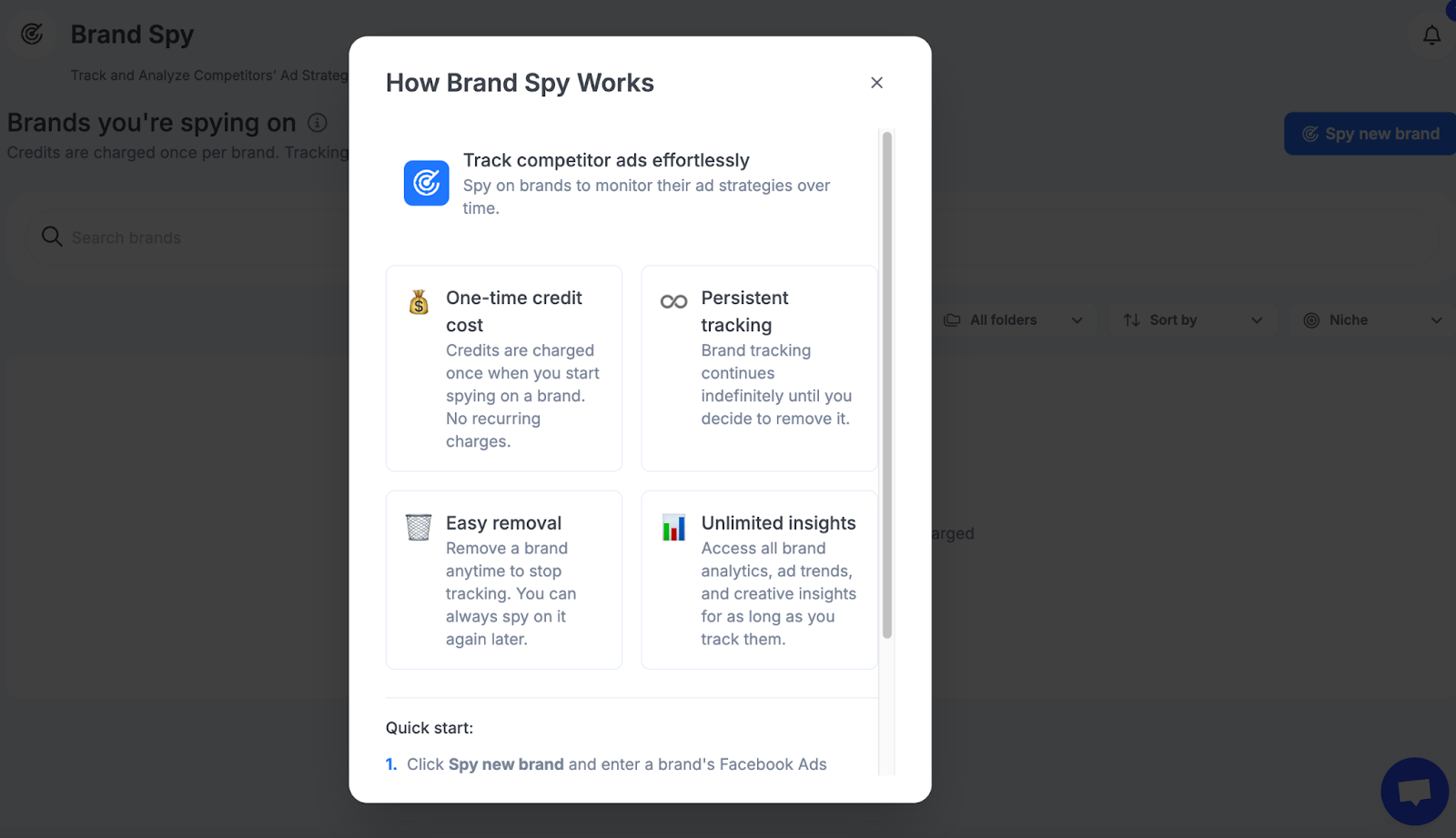
GetHookd Ads Library vs Facebook Ads Library
Gethookd vs Meta Ads Library
-
February 23, 2026

3 Best AdSpy Alternatives to Try in 2026

Key Takeaways

  • AdSpy offers deep Facebook and Instagram ad filtering, but its $149/month flat fee, lack of AI tools, and aging interface have pushed marketers toward more modern alternatives.
  • GetHookd pairs a 65M+ ad database across Meta with AI-powered creative analytics and production, including script generation, ad cloning, and ready-to-use templates, plus competitor tracking through Brand Spy.
  • Minea and PowerAdSpy offer alternative approaches, but neither bridges the gap between finding ads and creating them.
  • For performance marketers, agencies, and ecommerce brands looking to move beyond research into ad creation and optimization, GetHookd is the most comprehensive AdSpy alternative.

Where AdSpy Falls Short for Advertisers

AdSpy has a large searchable database of Facebook and Instagram ads with granular filters, but that's where it stops. It's a pure research tool: no AI creative features, no way to act on what you find, and a database padded with legacy ads that are no longer relevant. At $149/month for research alone, the gap between insight and execution adds up fast.

This guide reviews three AdSpy alternatives, GetHookd, Minea, and PowerAdSpy, and how each takes a different approach to helping you move from ad research to profitable creatives.

GetHookd: Turn Competitor Intelligence Into Your Next Winning Ad

65M+ Ads Analyzed | 4.8★ G2 Rating | 4.4★ Trustpilot Rating

Stop Guessing. Start Scaling:

GetHookd reveals which ads your competitors are actively scaling—not just running. Spy on their best-performing creatives, landing pages, and traffic strategies, then turn proven concepts into testable campaigns in seconds with AI-powered script generation and creative cloning.

What You Get:
  • ✓ Brand Spy to decode competitor ad strategies in real-time
  • ✓ AI script generation and ad cloning for instant variations
  • ✓ Performance scoring based on actual ad behavior, not vanity metrics
  • ✓ Creative Analyzer to identify and scale your top performers
Replace guesswork with intelligence. Build profitable ads that actually convert.

Best AdSpy Alternatives Compared

1. GetHookd

Filter 65M+ ads by country, demographics, engagement, and performance to find winning creatives in seconds.

AdSpy gives you a massive database and powerful filters, but once you find an ad worth studying, you're on your own. We built GetHookd to close that gap. 

Our platform pairs a searchable database of 65M+ high-performing Meta ads with AI creative tools that handle scripting, visual variations, and ad cloning, so you go from spotting a winning concept to producing a testable creative without leaving the platform.

The result: create winning ads up to 3x faster and stabilize ROAS as you scale, instead of watching it tank every time you increase spend. 

GetHookd Core Features

Launch high-converting landing pages in minutes with ready-made funnel templates.
  • Explore Ads: Search 65M+ Meta high-performing ads by niche, format, audience demographics, country, and engagement level to surface high-performing creatives in seconds.
  • Save Ads: Bookmark any ad into an organized swipe file by brand, client, or campaign type. Your saved library stays intact permanently, even after the original ad stops running elsewhere.
  • Funnel Templates: Pre-built landing page templates modeled after proven DTC conversion flows. Skip the wireframing and start testing immediately.
  • Brand Spy: Track individual competitor accounts to see which ads they're putting budget behind, what landing pages they're driving traffic to, and how their creative strategy shifts over time. AdSpy shows you ads in isolation; Brand Spy shows you the full picture behind a competitor's approach.
Browse ready-to-use static ad templates sorted by niche and edit directly in Canva.
  • Image Ad Templates: Professionally built static ad templates spanning dozens of niches, ready to customize and deploy in minutes.
  • Ads Transcription: Pull the exact hooks, CTAs, and copy frameworks from any video creative so you can study the structure behind what's converting and adapt it for your own products.
  • AI Script Generation: Turn winning ad concepts into fresh hooks, angles, and complete video scripts using AI trained on high-converting direct response frameworks. 
  • Clone Ads: Take any successful static creative and produce multiple testable variations without touching design software.
  • Creative Analyzer: Connect your Meta ad account to measure your own creative performance and identify which ads are worth scaling.

GetHookd Pricing

Where AdSpy charges $149/month for research alone, our pricing starts at $19/month and covers the full workflow. Every plan comes with a 7-day free trial and full feature access. Choosing the annual plans gives you 25% discount too. 

  • Launch ($19/month): Includes Explore Ads, Save Ads, Brand Spy, Ads Transcription, and AI Video Scripts. Best for solo marketers and dropshippers building a structured ad research and scripting workflow. 
  • Grow ($59/month): Everything in Launch, plus Clone Ads, Static Ad Templates, Funnel Templates, and Product Assets. Adds standard support. Best for growing brands and media buyers who need the full creative production toolkit alongside research.
  • Scale ($149/month): Everything in Grow, plus premium 24/7 support with direct Slack access to the GetHookd team.
  • Enterprise (Custom pricing): Tailored plans for larger organizations with specific workflow needs.

2. Minea

Minea's Ads Library with filters for engagement and audience targeting. (Image source: Minea) 

Minea is an ad spy and product research platform. It tracks ads across Facebook, Instagram, and Pinterest, a notable advantage over AdSpy's Meta-only coverage. The platform is designed to help users identify trending products by analyzing ad engagement, store performance, and cross-platform momentum.

Minea Core Features

  • Multi-Platform Ad Tracking: Browse ads across Facebook, Instagram, and other social networks with filters for engagement, format, country, and date range.
  • Product Research & Winning Products: Surface trending products based on ad engagement velocity, with AI-scored success ratings to help prioritize opportunities.
  • Shop Spy & Store Tracking: Monitor competitor Shopify stores to see product catalogs, estimated revenue, and newly added items.
  • Magic Search: Upload product image to find similar items being advertised, along with their associated ads and performance data.

Minea Pricing

Plans include monthly credits that are consumed as you search, filter, and access detailed ad data.

  • Starter ($49/month): Access to Meta ads with basic filters and AI tools
  • Premium ($99/month): Adds Pinterest ad tracking, Shopify store data, and the Competitor Finder tool.
  • Business ($399/month): Full feature access, including the Success Radar for identifying top product trends.

Minea Limitations

Minea is oriented toward product research rather than creative strategy. For performance marketers, agencies, and ecommerce brands that need to move from research into ad production and optimization, GetHookd provides the full workflow that Minea doesn't cover. 

3. PowerAdSpy

PowerAdSpy offers broad platform coverage, but access to most networks requires upgrading to higher-tier plans. (Image source: PowerAdSpy) 

PowerAdSpy positions itself as the widest-reaching ad spy tool on the market, covering 10+ ad networks, including Facebook and Instagram. The platform offers keyword and advertiser search, demographic filtering, engagement metrics, and the ability to bookmark ads for later reference. 

However, PowerAdSpy's tiered pricing structure means the broad platform coverage it advertises is only available on higher, significantly more expensive plans.

PowerAdSpy Core Features

  • Multi-Platform Ad Database: Search ads with filters for keywords, demographics, engagement, CTA type, and ad placement.
  • Geo-Targeting Insights: View geographic targeting data to see which regions competitors prioritize and where their audience engagement is highest.
  • Bookmark & Organize: Save ads for later reference and build a personal collection. Organization options are basic compared to dedicated swipe file tools.

PowerAdSpy Pricing

PowerAdSpy uses a six-tier pricing model based on platform access and feature availability:

  • Basic ($69/month): Facebook ads only with standard filters.
  • Standard ($129/month): Adds Instagram alongside Facebook.
  • Premium ($179/month): Expands to YouTube with advanced filtering.
  • Platinum ($279/month): Unlocks Google and Native ad networks.
  • Titanium ($349/month): Broader multi-platform access with expanded limits.
  • Palladium ($399/month): Complete feature suite with dedicated support.

PowerAdSpy Limitations

While PowerAdSpy is a good AdSpy alternative, it also shares its fundamental limitation: it’s purely a research-only tool. Once you identify a compelling ad, you're on your own to interpret what makes it work and recreate it from scratch. 

GetHookd eliminates that disconnect by letting you transcribe video ads, generate new hooks and scripts using AI, and clone static creatives into testable variations all within the same platform.

3 Best AdSpy Alternatives: Summary Table

Feature GetHookd Minea PowerAdSpy
Best For Ad research, competitor tracking, AI creative production, and campaign optimization Product discovery and multi-platform ad tracking Broad ad network coverage for cross-platform research
Starting Price $19/month $49/month $69/month
Free Trial 7-day free trial (full features) 200 free credits Limited free plan
Competitor Tracking Brand Spy with ads, landing pages, and traffic sources Store spy with revenue estimates and product tracking Advertiser search and bookmarking
AI Creative Tools Script generation, Clone Ads, image templates, funnel templates Limited (product research) Not available
Best Use Case Going from ad research to ready-to-test creatives and optimized campaigns Validating product ideas and spotting trends Surveying ad activity across networks

GetHookd: Strongest AdSpy Alternative for Performance Marketers

AdSpy gives you a large database with advanced filters. But research without action is just scrolling. You still need to figure out why an ad works, write your own script, design your own creative, and hope you got it right.

GetHookd eliminates that guesswork. With 65M+ Meta ads and AI-powered creative tools like Clone Ads, we help you go from finding a winning concept to producing a testable creative in minutes. Instead of cobbling together research tools, copywriters, and designers, everything lives on a single platform built for ecommerce brands, media buyers, and people actively running ads. 

The difference shows up where it matters most: your ad spend. With GetHookd, you launch ads grounded in what's already proven to convert and scale profitably rather than watching your ROAS drop every time you increase spend. And where AdSpy charges $149/month for research alone, GetHookd starts at $19/month for a complete research-to-creative workflow.

Try GetHookd Now →

Frequently Asked Questions (FAQs)

What is AdSpy used for? 

AdSpy is an ad intelligence tool for searching and filtering Facebook and Instagram ads. Marketers use it to research competitors' creative assets, analyze target demographics, track ad engagement, and identify trends.

Can ad spy tools help me create ads from scratch?

Most ad spy tools, including AdSpy, Minea, and PowerAdSpy, focus exclusively on research and discovery. They show you what's running but leave the creative work to you. GetHookd is different. Beyond ad research and competitor tracking, we include AI Script Generation to produce hooks and video scripts, and Clone Ads to generate visual variations of winning creatives. It's a complete system that covers research, creation, and optimization in one place.

Is AdSpy worth the cost? 

At $149/month, AdSpy gives you a large Meta ad database with advanced filters, but that's all you get. It's a research tool with no creative production features. GetHookd starts at $19/month and goes beyond research with AI script generation, ad cloning, and competitor tracking through Brand Spy, giving you the tools to find winning ads and create them in one place. 

How does GetHookd help reduce wasted ad spend?

Instead of guessing which creative direction to take, GetHookd lets you research what's already converting in your niche and generate your own AI-driven variations. You're launching ads based on proven concepts rather than starting from scratch, which means fewer failed tests, faster iterations, and more of your budget going toward creatives with a real chance of performing.

*Note: Pricing and/or product availability mentioned in this post are subject to change. Please check our website for current pricing and stock information before making a purchase.
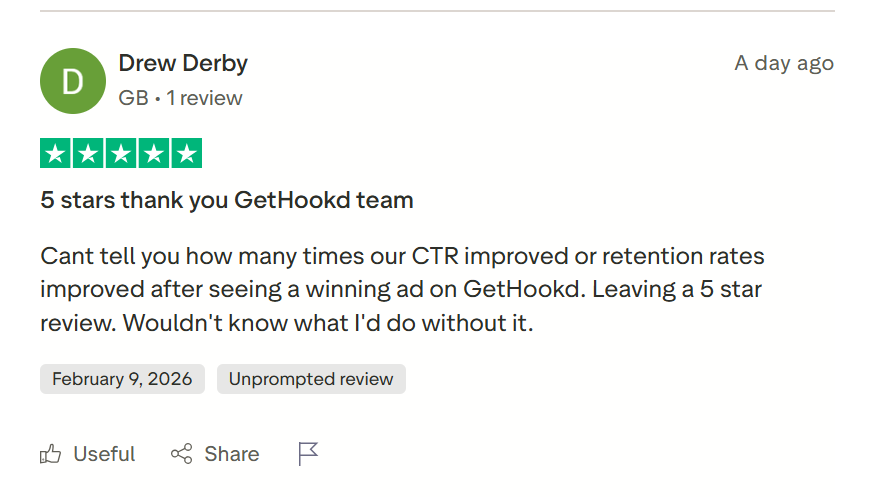
GetHookd Ads Library vs Facebook Ads Library
Gethookd vs Meta Ads Library
-
February 22, 2026

3 Best AdScale Alternatives in 2026

Key Takeaways

  • AdScale automates ad campaigns and budget allocation across Meta and Google, but it doesn't help you discover what creative to run next.
  • For teams that need to find proven ad concepts and turn them into new creatives fast, GetHookd is the best AdScale alternative.
  • Madgicx offers Meta ad management with automation and audience targeting, but users frequently report unreliable rules, technical bugs, and add-on costs that accumulate quickly.
  • Birch (Revealbot) provides rule-based ad automation across multiple platforms but lacks an ad library and creative production tools.
  • GetHookd gives ecommerce brands, agencies, and media buyers access to 65M+ winning ads across Meta, competitor tracking through Brand Spy, and AI creative tools that take you from research to ready-to-test ads in minutes.

Why Ecommerce Brands Are Exploring AdScale Alternatives

AdScale helps users automate campaign management across Meta and Google. But as brands scale, limitations surface. Users have flagged dashboard inconsistencies and pricing that climbs steeply as ad spend grows.

Additionally, while AdScale optimizes campaigns you've already built, it offers no support for researching competitors' scaling or generating new ad concepts. This guide breaks down the three best AdScale alternatives: GetHookd, Madgicx, and Birch (Revealbot). 

Madgicx and Birch (Revealbot) focus on ad management and automation. GetHookd addresses the gap most optimization tools skip: helping you determine what to run next and producing the creatives to test it.

GetHookd: Turn Competitor Intelligence Into Your Next Winning Ad

65M+ Ads Analyzed | 4.8★ G2 Rating | 4.4★ Trustpilot Rating

Stop Guessing. Start Scaling:

GetHookd reveals which ads your competitors are actively scaling—not just running. Spy on their best-performing creatives, landing pages, and traffic strategies, then turn proven concepts into testable campaigns in seconds with AI-powered script generation and creative cloning.

What You Get:
  • ✓ Brand Spy to decode competitor ad strategies in real-time
  • ✓ AI script generation and ad cloning for instant variations
  • ✓ Performance scoring based on actual ad behavior, not vanity metrics
  • ✓ Creative Analyzer to identify and scale your top performers
Replace guesswork with intelligence. Build profitable ads that actually convert.

Comparing the Top 3 AdScale Alternatives

1. GetHookd

Browse and filter ads by niche or performance signals, then save winning ideas for future campaigns.

We built GetHookd for ecommerce brands and agencies that need more than campaign automation. Our platform combines competitive ad research with AI-powered creative tools, so you're not just managing what's already running. You're also discovering what's working in your niche, understanding why it converts, optimizing your own creatives, and producing new variations in minutes. 

Core Features of GetHookd

Ad Discovery 

Our discovery tools give marketers and scaling teams immediate access to what's performing across their competitive landscape, without hours of manual scrolling through the Facebook Ad Library.

Filter 65M+ winning ads by country, demographics, engagement, and performance metrics.
  • Explore Ads: Search and filter 65M+ ads by niche, format, engagement, country, and demographics to quickly pinpoint creatives worth studying.

  • Brand Spy: Monitor competitor ad accounts to see which creatives they're investing behind, what landing pages they're driving traffic to, and how their strategies evolve over time.

  • Save Ads: Build a permanent swipe file organized by brand, client, niche, or campaign type. Every ad you save stays accessible even after it goes offline elsewhere.
Ad Analysis 

Spotting active ads is only part of the equation. Our analysis tools help media buyers and performance marketers decode the elements that make certain creatives outperform others, so you can replicate patterns instead of guessing.

Connect your Meta ad account to uncover which creatives are driving results and where to optimize. 
  • Creative Analyzer: Connect your Meta ad account to identify which of your own creatives are delivering results, broken down by format, style, and messaging patterns.

  • Ads Transcription: Convert any video ad into text to extract the exact hooks, CTAs, and copy frameworks that are driving engagement.
AI Creative Tools

Relying on design teams and copywriters for every iteration slows testing velocity and limits the number of concepts you can ship. Our AI tools transform research into launch-ready creatives without outsourcing or bottlenecks.

Go from competitor research to testable ad variations in minutes with AI-powered creative tools. 
  • Video Scripts: Produce fresh hooks, angles, and full video scripts grounded in proven 8-figure ad frameworks.

  • Clone Ads: Generate visual variations of any successful creative, adjusted for different colors, formats, and styles without opening a design tool.

  • Image Ad Templates: Access professionally designed static ad templates across dozens of niches, ready to customize and deploy.

  • Funnel Templates: Launch landing pages faster using plug-and-play templates modeled on high-converting funnels from top-performing DTC brands.

GetHookd Pricing

Every GetHookd plan includes a 7-day free trial with full feature access, and annual billing offers a 25% discount.

  • Launch ($19/month): Ideal for solo marketers and dropshippers beginning to build a structured research process.
  • Grow ($59/month): Built for active brands and media buyers who need expanded usage limits and full access to AI creative tools.
  • Scale ($149/month): Designed for agencies and teams managing multiple brands or producing creatives at high volume.
  • Enterprise (Custom pricing): Tailored solutions for larger organizations with specific requirements.

2. Madgicx

Madgicx offers AI-powered Meta ad management, but key features are locked behind add-ons. (Image source: Madgicx) 

Madgicx positions itself as an all-in-one Meta advertising tool that combines campaign automation, AI-driven optimization, and audience targeting. The platform's AI Marketer feature audits your ad account daily and surfaces recommendations for improving performance, while automation rules handle budget shifts and bid adjustments.

Core Features of Madgicx

  • AI Marketer: Analyzes your Meta ad account daily and delivers actionable recommendations, functioning as an AI-powered account auditor.

  • Automation & AI Bidding: Set rule-based automations for campaign management, paired with Madgicx's exclusive AI Bidding feature that optimizes budget allocation across audience segments within ad sets.

  • Ad Library & AI Ad Generator: Browse Meta ads for inspiration, then use generative AI to create new ad variations from text prompts or uploaded assets.

Madgicx Pricing

Madgicx's Pro Complete plan starts at $99/month, with pricing scaling based on your monthly Meta ad spend. However, several features are sold separately as add-ons: the Ad Library with AI Ad Generator costs an additional $29/month, Cloud Tracking runs $199/month, and professional creative design services (Briefs) are $333/month.

Madgicx Limitations

Madgicx targets a broader set of Meta ad management features than AdScale, but users have reported unreliable automation rules and recurring technical bugs that disrupt workflow. Its bigger limitation is the absence of meaningful competitor intelligence and AI creative tools. 

There's no way to track a specific brand's ad strategy or identify which creatives are receiving the most spend. GetHookd's Brand Spy and 65M+ searchable ad database address that gap directly.

3. Birch (Revealbot)

Birch (Revealbot) automates campaign management with rule-based actions, but offers no tools for ad research or creative production. (Image source: Birch)

Birch, formerly known as Revealbot, is a campaign automation platform built for performance marketers managing ads across Meta, Google, and other social networks. The platform's core value is in its rule builder, which lets you set conditional automations that adjust bids, pause underperformers, scale winners, and shift budgets.

Core Features of Birch (Revealbot)

  • Automated Rules & Strategies: Build conditional automations using custom metrics and timeframes, with scheduling intervals as frequent as every 15 minutes.

  • Bulk Campaign Creation: Launch multiple ad variations simultaneously using creative set components, with flexible scheduling and built-in validation.

  • Reporting & Slack Integration: Generate performance reports and receive real-time alerts in Slack channels based on rule triggers and campaign changes.

  • Custom Metrics & Audience Builder: Define custom KPIs by combining platform data with external sources, and build custom or lookalike audiences directly within the platform.

Birch (Revealbot) Pricing

Birch offers two main plan tiers, both based on your monthly ad spend. The Essential plan starts at $49/month (billed annually) and includes core features such as workspaces, post boosting, reports, and Slack integration. 

The Pro plan runs $99/month and unlocks the full automation suite, including the rule builder, campaign launcher, audience tools, and live chat support.

Birch (Revealbot) Limitations

Birch is an automation layer for teams that already have their creative strategy figured out. There's no ad library and no way to see what's performing in your market before you build a campaign. The platform assumes you already know what creatives to run. It just helps you manage them once they're live. There are also no tools for creating new ad concepts.

3 Best AdScale Alternatives: Summary Table

Feature GetHookd Madgicx Birch (Revealbot)
Best For Ad research, competitor tracking, and AI creative production Meta ad management and automation Rule-based ad automation
Starting Price $19/month $99/month $49/month
Free Trial 7-day free trial 7-day free trial 14-day free trial
Ad Library 65M+ ads across Meta Browsing-only ad library (add-on) Not available
Competitor Research Brand Spy with ads, landing pages, and traffic sources Not available Not available
AI Creative Tools Script generation, Clone Ads, image templates, funnel templates, creative analyzer AI ad generator (add-on), creative insights Not available
Best Use Case Finding winning ads and producing profitable creatives faster Automating and optimizing existing Meta campaigns Automating campaign management

GetHookd: The Smarter Alternative to AdScale

AdScale, Madgicx, and Birch all operate on the same premise: helping you manage and optimize existing campaigns. Each serves a role in campaign operations, but none answers the question that stumps most ecommerce brands: what should we be running in the first place?

We built GetHookd to address that exact challenge. Rather than optimizing campaigns after the fact, we help you identify what's already converting for competitors in your niche, break down the creative elements driving those results, and produce your own testable AI-generated variations. 

If your biggest bottleneck isn't bid management but knowing what ad to build next, GetHookd delivers the competitive intelligence and creative production tools that optimization platforms weren't designed to offer. 

Try GetHookd Now →

Frequently Asked Questions (FAQs)

What are the best alternatives to AdScale? 

The top AdScale alternatives in 2026 are GetHookd, Madgicx, and Birch (Revealbot). Madgicx and Birch focus on campaign automation and ad optimization, helping you manage ads you've already created. 

GetHookd takes a different approach by combining competitive ad research, Brand Spy competitor tracking, and AI creative tools to help you discover what's working in your niche and produce ready-to-test ads from a single platform.

How much does AdScale cost per month? 

AdScale's pricing for ecommerce stores starts at $149/month for ad management with up to $1,000 in monthly ad spend; costs increase as your ad spend grows. 

Additional modules for SMS marketing ($49/month) and email marketing ($49/month) are available separately.

What's the difference between ad optimization and ad research tools? 

Ad optimization tools like AdScale improve the campaigns you've already built on Facebook and Google. Ad research tools help you understand what's working before you build anything. 

With GetHookd, you can explore 65M+ ads, spy on competitors with Brand Spy, and use AI tools to generate scripts and clone winning visuals. Creative Analyzer also connects to your Meta account so you can pinpoint which of your own creatives are driving results and feed those insights into your next tests.

How does GetHookd work? 

GetHookd helps you research, analyze, and create ads on a single platform. Start by exploring our database of 65M+ high-performing ads across Meta to identify what's gaining traction in your niche. 

Use Brand Spy to monitor competitor ad accounts, including their top creatives, landing pages, and traffic sources. When you find a winning concept, use our AI tools to transcribe video ads, generate fresh scripts and hooks, or clone static creatives into multiple testable variations.

*Note: Pricing and/or product availability mentioned in this post are subject to change. Please check our website for current pricing and stock information before making a purchase.
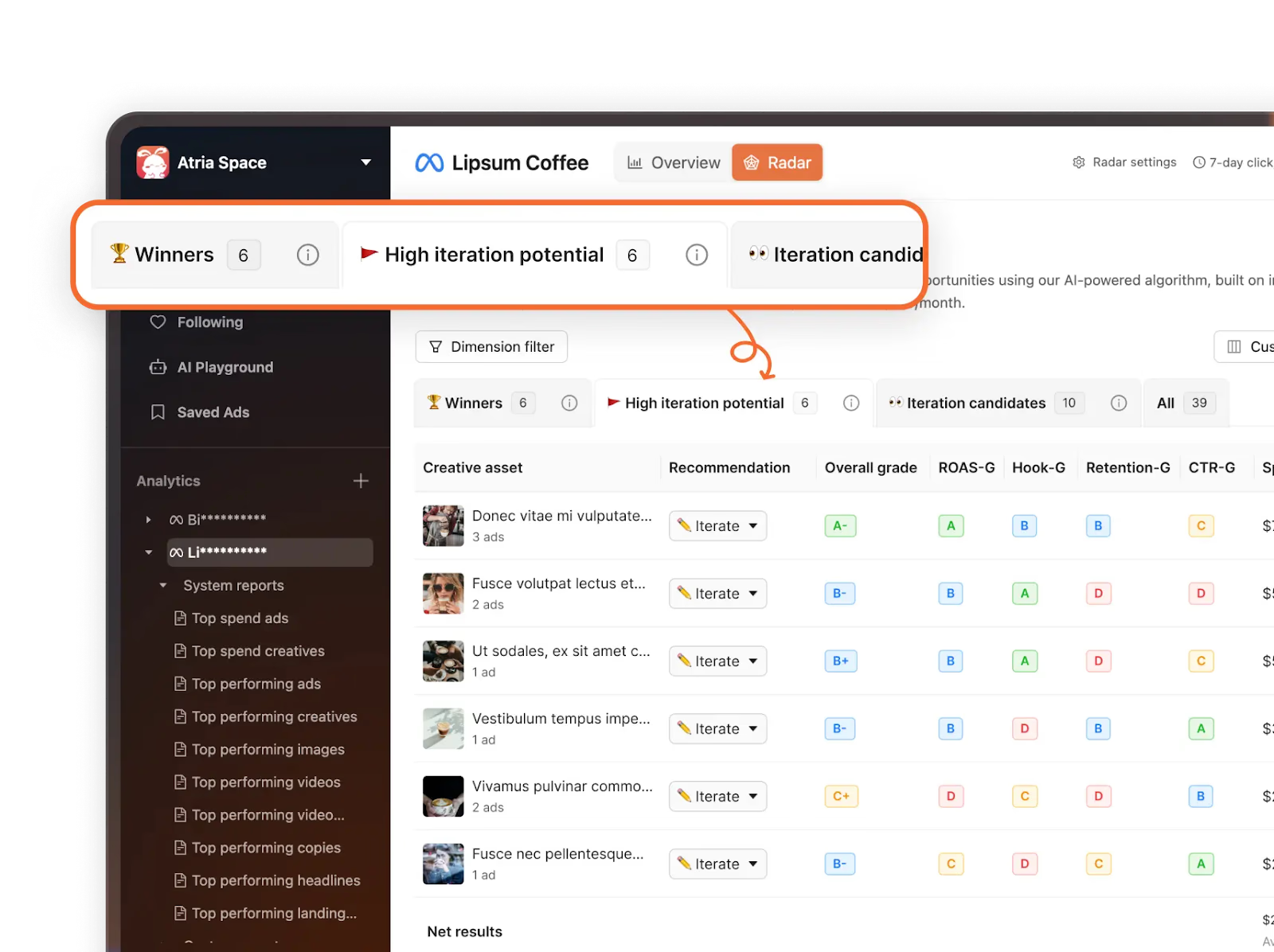
Ad Strategy
Ad Strategy
-
February 21, 2026

5 Best Facebook Carousel Ad Examples with Specs & Templates (2026)

Key Takeaways

  • Facebook carousel ads let you show 2–10 images or videos in a single ad unit, each with its own link and CTA.
  • The best Facebook carousel ad examples share common traits: a strong opening image, consistent visuals, and a clear progression toward action.
  • Match your carousel structure to your goal: product showcase, multi-product catalog, before/after, or social proof.
  • Stick to 1080 x 1080px, keep primary text under 125 characters (closer to 80 on mobile), and use 3–5 cards for optimal engagement.
  • GetHookd lets you find which Facebook carousel ads competitors are actively scaling, pull their hooks and copy structure, and launch your own variations, all without switching tools.

Facebook Carousel Ad Specs for 2026

Facebook carousel ads let you showcase 2–10 images or videos in a single swipeable ad unit, with each card linking to its own URL. They're a go-to format for e-commerce brands, product showcases, and sequential storytelling.

Below are the current specifications you need to set up your Facebook carousel ads correctly.

Image Specs

  • Recommended size: 1080 x 1080 pixels (1:1 square)
  • Aspect ratio: 1:1 (all cards must use the same ratio)
  • File types: JPG or PNG
  • Max file size: 30 MB per image

Video Specs

  • Recommended size: 1080 x 1080 pixels (1:1 square)
  • Aspect ratio: 1:1
  • File types: MP4, MOV, or GIF
  • Max file size: 4 GB
  • Length: Up to 240 minutes technically supported, but 15–30 seconds is recommended for engagement
  • Note: Videos autoplay muted, use captions or text overlays

Text Limits

  • Primary text: Up to 2,200 characters allowed, but only ~125 are visible before truncation on most placements (some marketers aim for ~60–90 to ensure full visibility on smaller screens)
  • Headline (per card): 40 characters max (25 recommended to avoid truncation)
  • Description (per card): 18–20 characters (often hidden on mobile)
  • Landing page URL: Required for each card

Carousel Card Limits

  • Minimum: 2 cards
  • Maximum: 10 cards
  • Best practice: 3–5 cards typically perform best

You can always check Meta's official ad guide for the most current requirements for carousel ads.

GetHookd: Turn Competitor Intelligence Into Your Next Winning Ad

65M+ Ads Analyzed | 4.8★ G2 Rating | 4.4★ Trustpilot Rating

Stop Guessing. Start Scaling:

GetHookd reveals which ads your competitors are actively scaling—not just running. Spy on their best-performing creatives, landing pages, and traffic strategies, then turn proven concepts into testable campaigns in seconds with AI-powered script generation and creative cloning.

What You Get:
  • ✓ Brand Spy to decode competitor ad strategies in real-time
  • ✓ AI script generation and ad cloning for instant variations
  • ✓ Performance scoring based on actual ad behavior, not vanity metrics
  • ✓ Creative Analyzer to identify and scale your top performers
Replace guesswork with intelligence. Build profitable ads that actually convert.
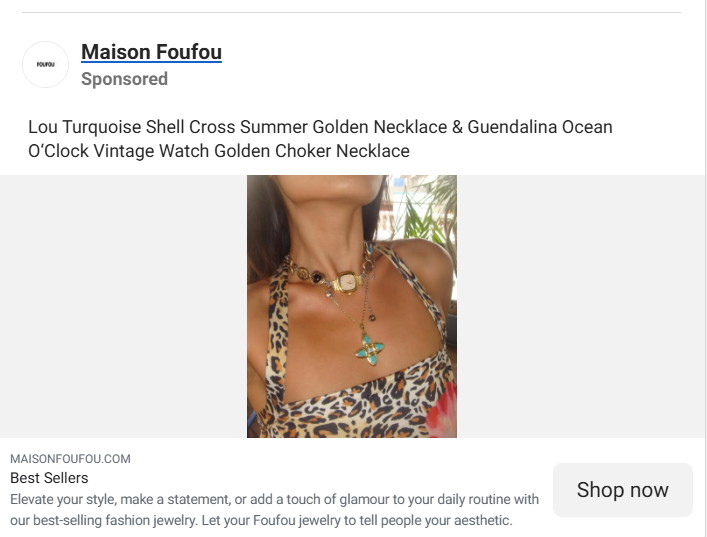
5 Facebook Carousel Ad Examples

1. Airbnb — Unique Property Showcase

Airbnb's Lucy the Elephant carousel. (Source: Facebook)

Airbnb uses the carousel format to showcase Lucy the Elephant, a quirky, one-of-a-kind rental in New Jersey. The first card grabs attention with the iconic elephant-shaped exterior, while the following cards take viewers inside to explore the unique living spaces.

The property sells itself, and the carousel lets it shine from every angle. Leading with the most striking image immediately hooks viewers, and interior shots satisfy their curiosity and build desire. It's a masterclass in letting your product do the talking.

2. Rare Beauty — Soft Pinch Tinted Lip Oil

Rare Beauty's Soft Pinch Tinted Lip Oil carousel. (Source: Facebook)

Rare Beauty uses the carousel format to introduce its new Soft Pinch Tinted Lip Oil. Each card showcases a different shade on a real person, letting shoppers see how the product looks on actual skin tones rather than just swatches.

The copy leads with personality ("It's a Soft Pinch world, and we're just living in it") before diving into product benefits: lightweight, hydrating, non-sticky. Tagging the model and matching her lip oil shade to the blush she's wearing creates a cohesive look shoppers can easily recreate.

3. Shein — Multi-Product Catalog

Shein's multi-product carousel. (Source: Facebook)

Shein uses the carousel format as a mini storefront, showcasing a variety of summer tops across multiple cards. Each card features a different style: lace, stripes, floral, gingham, giving shoppers plenty of options to browse in a single ad.

Featuring multiple products increases the chance that at least one catches the viewer's eye. The clean white backgrounds keep the focus on the clothes, making it easy for shoppers to scan and find something they like quickly.

4. Starbucks — Pricing-Led Product Pairings

Starbucks' Pairings Menu carousel. (Source: Facebook)

Starbucks uses the carousel format to promote its new Pairings Menu, featuring different drink-and-food combinations on each card. Each pairing has its own price point ($5, $6), making it easy for customers to see exactly what they'll pay before they click.

Leading with price works especially well for value-focused promotions. The consistent layout across cards, same background, same "Meet the Pairings Menu" headline, creates visual cohesion while letting each combo stand on its own. It's a simple, effective way to showcase multiple offers without overwhelming the viewer.

5. Nike — Multi-Angle Product Showcase

Nike's Kobe 9 Elite Low HTM carousel. (Source: Facebook)

Nike uses the carousel format to highlight the Kobe 9 Elite Low HTM from every angle. Each card shows the same sneaker from three perspectives: side view, top-down, and close-up, giving buyers a complete view of the design details.

The minimalist gray-on-gray aesthetic keeps the focus entirely on the shoe. By dedicating multiple cards to a single product, Nike lets viewers examine the craftsmanship without having to click away. It's a simple but effective approach for high-demand product drops.

Facebook Carousel Ad Templates for Different Use Cases

These card-by-card templates give you a proven structure to follow. Customize the visuals and copy to fit your brand while maintaining the flow. It's designed to guide viewers from attention to action.

1. Product Showcase Template

Best for: Hero product launches, high-AOV items, single-product stores

Card Visual Copy Focus
1 Hero product shot Primary benefit headline
2 Close-up of feature #1 Benefit, not spec
3 Close-up of feature #2 Benefit, not spec
4 Product in context/lifestyle Social proof or use case
5 Full product + price CTA: "Shop Now"

Pro tip: Keep lighting and background consistent across all cards so the product, not the photography, is what changes.

2. Multi-Product Catalog Template

Best for: General stores, fashion brands, seasonal collections, product variant testing

Card Visual Copy Focus
1 Best-seller or hero product Collection headline
2 Product option #2 Style/color/variant name
3 Product option #3 Style/color/variant name
4 Product option #4 Style/color/variant name
5 Collection overview or top pick CTA: "Browse All"

Pro tip: Lead with your strongest product: it's the hook that gets people swiping. Let Meta optimize card order after initial testing.

3. Before/After Template

Best for: Skincare, fitness, beauty, cleaning products, home improvement

Card Visual Copy Focus
1 "Before" state Problem headline
2 Transformation in progress How it works (optional)
3 "After" result Key outcome
4 Another "after" (different context) Reinforce versatility
5 Product shot + price CTA: "Get Yours"

Pro tip: Use identical framing and lighting for before/after shots so the transformation is the focal point, not the photography conditions.

4. Social Proof Carousel Template

Best for: Brands with strong reviews, UGC-heavy stores, retargeting campaigns

Card Visual Copy Focus
1 Product or brand hero shot Bold benefit statement
2 Customer photo + quote Specific result achieved
3 Different customer + quote Different use case or audience
4 Third customer + quote Reinforce credibility
5 Product + offer CTA: "See Why They Switched"

Pro tip: Feature customers from different segments so more viewers see themselves in the Facebook ad. Specific results beat generic praise: "cleared my acne in 2 weeks" wins over "love this product!"

Find Winning Carousel Ads Faster with GetHookd

GetHookd's Swipe File with filters for ad format, run time, and performance.

Building a high-converting carousel starts with data, not guesswork. Instead of scrolling endlessly through the Meta Ad Library, GetHookd lets you search over 65 million high-performing ads. You can filter by format, niche, or engagement signals to find proven carousel concepts in minutes. That way, you're making creative decisions based on what's actually scaling, not guessing from a static library.

Save any ad to your swipe file for later, or use Brand Spy to see which carousel ads your competitors are actively scaling. Our Performance Scoring highlights ads based on real engagement signals, so you know which creatives are actually driving results

Ready to create? Our Clone Ads feature lets you generate fresh image variations from ads you've saved, while Image Ad Templates give you ready-made layouts you can customize to match your brand. If you spot a video worth testing, the AI Ads Transcription tool pulls the hooks, CTAs, and copy structure, giving you a head start on your next winning ad.

You can research, create, and launch Facebook carousel ads, all without switching tools.

Try GetHookd Now →

Frequently Asked Questions (FAQs)

What is a carousel ad on Facebook?

A carousel ad is a Facebook ad format that lets you display 2 to 10 images or videos in a single ad unit. 

Each card can include its own headline, description, link, and CTA, allowing viewers to swipe through multiple products, features, or messages without leaving their feed.

How to make a good Facebook carousel ad?

Start with your strongest image first; it's the hook that stops the scroll. Keep visuals consistent (same lighting, backgrounds, or color scheme) so the carousel feels cohesive rather than chaotic. 

Each card should have a clear purpose, whether that's highlighting a feature, showing a product variant, or reinforcing social proof. End with a strong CTA that tells viewers exactly what to do next.

What do carousel ads look like?

Carousel ads appear in the Facebook feed as a row of swipeable cards. On mobile, users swipe left to see more cards; on desktop, they click arrows. Each card displays an image or video with a headline below, and the ad includes primary text above and a CTA button at the bottom.

Where can I find Facebook carousel ad examples?

You can browse the Facebook Ad Library for free, but it doesn't show you which ads are actually performing. Tools like GetHookd let you search millions of Facebook ads, filter by format, and see which carousel ads brands are actively scaling, so you can build a strategy from proven performers rather than passively browsing.

*Note: Pricing and/or product availability mentioned in this post are subject to change. Please check our website for current pricing and stock information before making a purchase.