Facebook Collection Ads: Examples, Cost & How to Create Them
Key Takeaways
- Facebook collection ads combine a hero image or video with product tiles and a full-screen Instant Experience.
- Collection ads use the same Meta ad auction as other formats, with average CPCs of around $0.87 and CPMs of around $16.06, though costs vary significantly by industry, objective, and seasonality.
- The four template options (Instant Storefront, Lookbook, Customer Acquisition, and Storytelling) enable brands to tailor their approach to specific marketing goals.
- GetHookd lets you search 65M+ Meta ads to find which collection ad concepts competitors are actively scaling, so you can build around proven ideas instead of guessing.
What Are Facebook Collection Ads?
Facebook collection ads are a mobile-first ad format designed to drive immediate action from product discovery. Unlike standard image or video ads that send users to an external landing page, collection ads keep the entire browsing experience inside Facebook or Instagram.
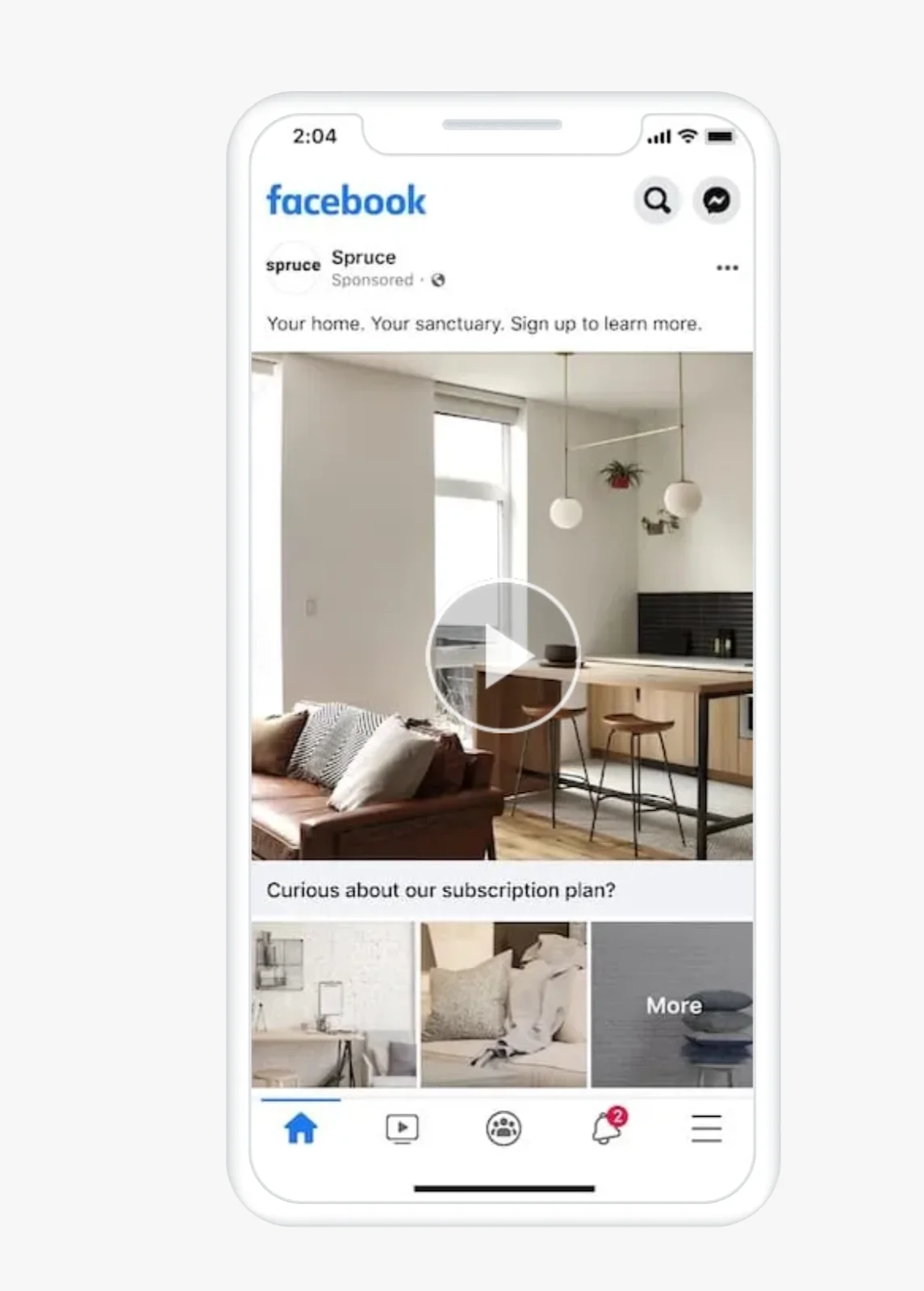
Every collection ad has three layers. The first is a hero creative: a single image or video at the top that grabs attention. Below that, a row of product tiles (four on Facebook, three on Instagram) pulled directly from your synced product catalog. When someone taps the ad, they enter a full-screen Instant Experience: a fast-loading, interactive storefront where they can browse more products, view details, and tap through to purchase without leaving the app.
This structure is what makes collection ads particularly effective for eCommerce brands and dropshippers. Instead of hoping users wait for your website to load on mobile, you give them a seamless, distraction-free path from interest to purchase.
GetHookd: Turn Competitor Intelligence Into Your Next Winning Ad
65M+ Ads Analyzed | 4.8★ G2 Rating | 4.4★ Trustpilot Rating

Stop Guessing. Start Scaling:
GetHookd reveals which ads your competitors are actively scaling—not just running. Spy on their best-performing creatives, landing pages, and traffic strategies, then turn proven concepts into testable campaigns in seconds with AI-powered script generation and creative cloning.
What You Get:
- ✓ Brand Spy to decode competitor ad strategies in real-time
- ✓ AI script generation and ad cloning for instant variations
- ✓ Performance scoring based on actual ad behavior, not vanity metrics
- ✓ Creative Analyzer to identify and scale your top performers
Facebook Collection Ad Examples That Work
The best Facebook collection ads make deliberate creative decisions that guide users from curiosity to purchase. Here are four approaches worth studying.
1. Lifestyle Video Hero + Curated Product Grid
Fashion and beauty brands often lead with a short lifestyle video showing products in context, such as someone getting dressed, applying skincare, or styling an outfit. The product tiles below feature the exact items shown in the video. This works because the hero creates aspiration while the tiles make it immediately shoppable.
2. Sale-Driven Hero + Seasonal Tiles
During peak shopping periods, brands use collection ads with bold promotional messaging in the hero creative (“Up to 50% off”) paired with product tiles featuring their top deals. The urgency in the hero drives taps, and the immersive experience lets users browse the full sale catalog without hunting through a website.
3. Monochromatic or Thematic Curation
Some of the strongest collection ads curate tightly around a single theme, color palette, or occasion. A swimwear brand showcasing only pink beach accessories, for example, creates visual cohesion, making the ad feel intentional rather than a random product dump. Tight curation signals that the brand has a point of view.
4. Lookbook-Style Aspirational Imagery
Brands selling premium or lifestyle products often use the Instant Lookbook template, pairing aspirational photography with tagged products. The hero might show a model in a complete outfit against a striking backdrop, with tiles breaking out the individual pieces. This approach works particularly well when the product is better sold through context than through a product-on-white image.
In every case, the pattern is the same: the hero asset tells the story, and the product tiles sell.
How Much Do Facebook Collection Ads Cost?
Collection ads don’t have their own pricing tier. They use the same Meta ad auction as every other format. You’re bidding on impressions alongside image, video, and carousel ads. That means your cost depends on the same variables: audience targeting, creative quality, industry competition, and seasonality.
On Facebook, CPCs average around $0.87, with CPMs around $16.06, though both figures shift significantly by industry and time of year. Traffic-optimized campaigns tend to run at lower cost, while competitive verticals and Q4 seasonality can push costs well above average.
How to Create Facebook Collection Ads (Step-by-Step)
To create Facebook Collection Ads, you’ll need a product catalog synced in Meta Commerce Manager, a Facebook Page, and optionally a connected Instagram account. You can then follow these steps.
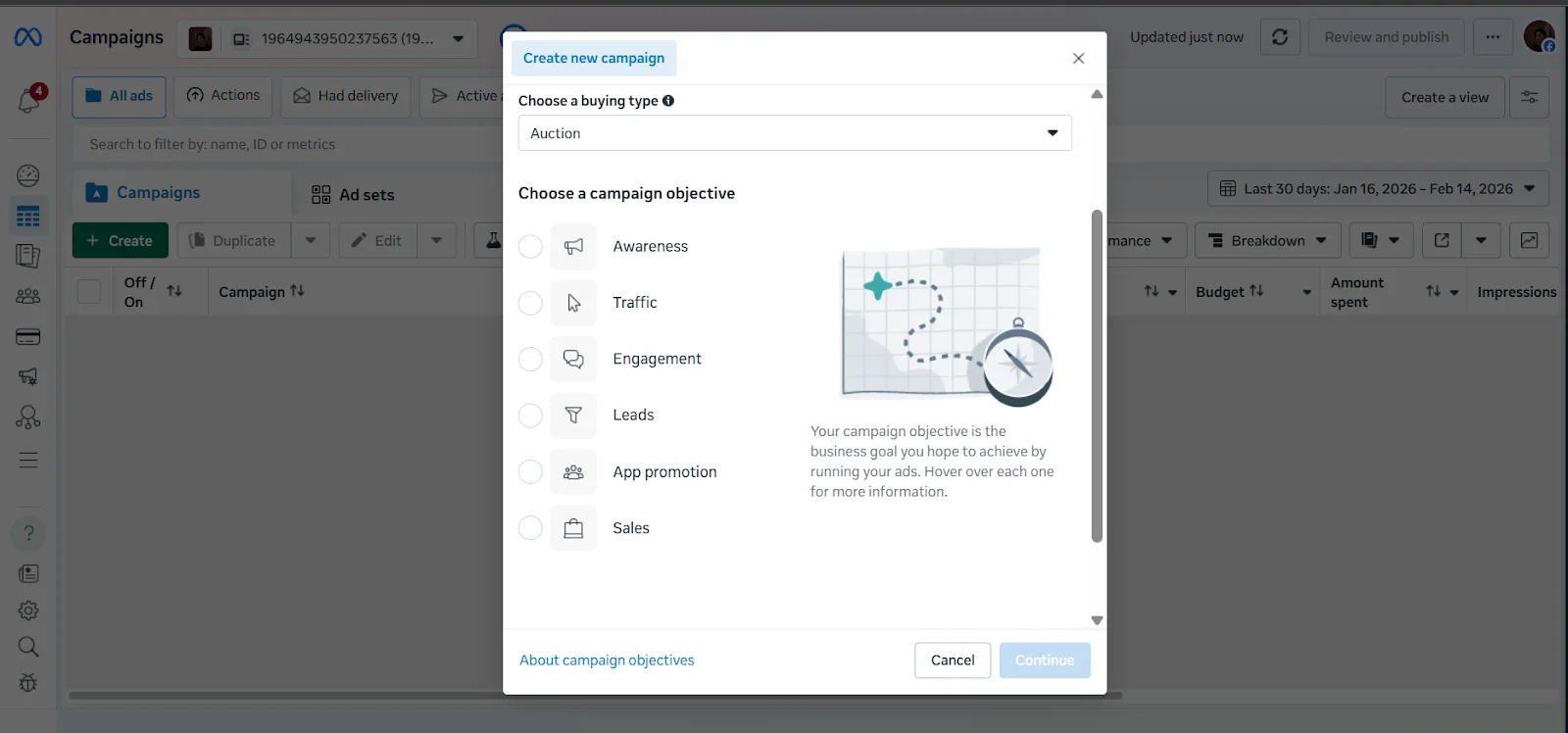
- Click + Create in Meta Ads Manager and choose a supported objective such as Awareness, Traffic, Engagement, Leads, or Sales.
- Set up your ad set by defining budget, schedule, audience, and placements.
- Select Collection as your ad format and connect your Facebook Page and Instagram account.
- Choose an Instant Experience template that fits your campaign goal.
- Select your products, either dynamically (recommended) or manually.
- Upload your hero image or video using the recommended specs.
- Write a concise primary text and headline, then add your landing page URL.
- Preview your ad across placements and publish.
Now, let’s see the process in detail.
Step 1: Start a New Campaign
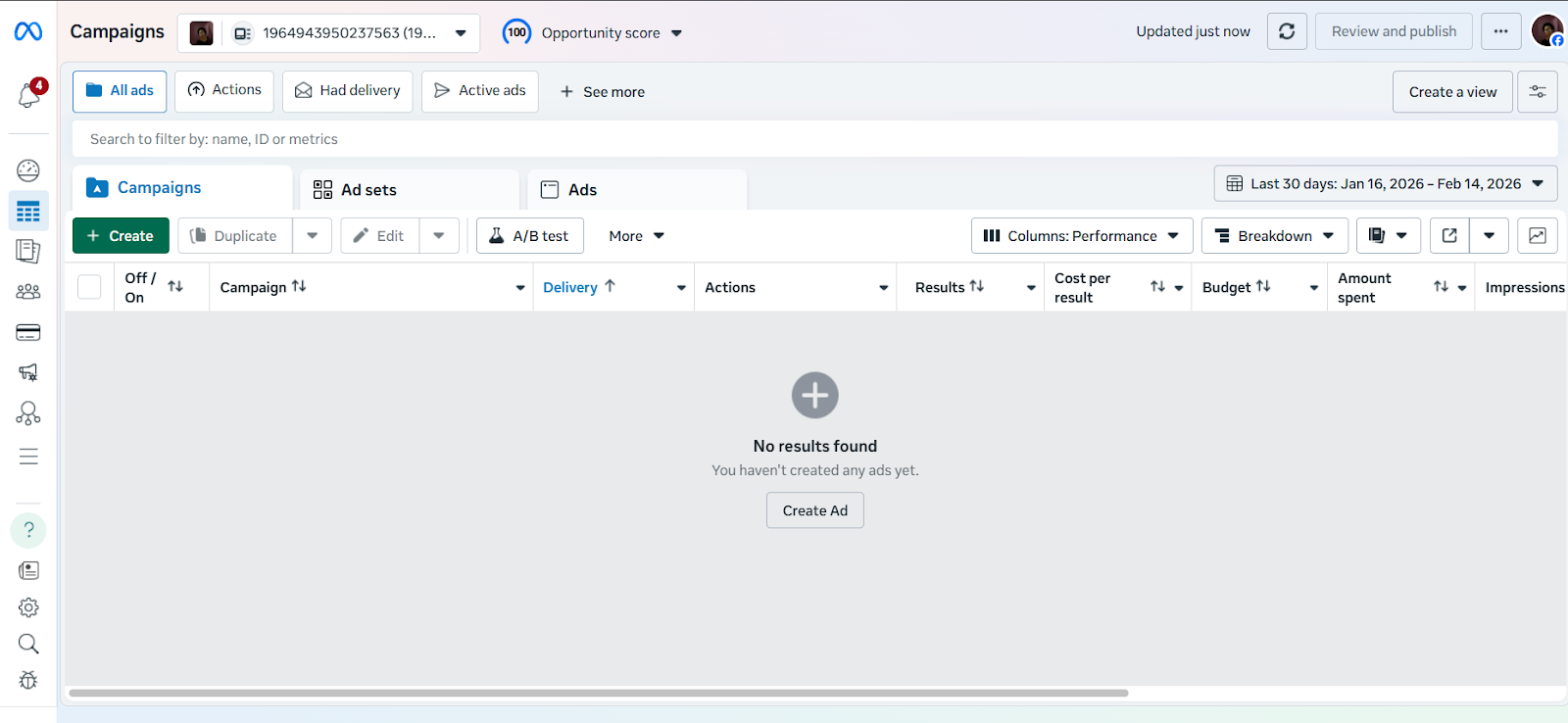
In Meta Ads Manager, click “+ Create” and choose a supported campaign objective. Collection ads work with Awareness, Traffic, Engagement, Leads, and Sales objectives. If you’re focused on conversions, select Sales with Website or App as your conversion location.
Step 2: Configure Your Ad Set
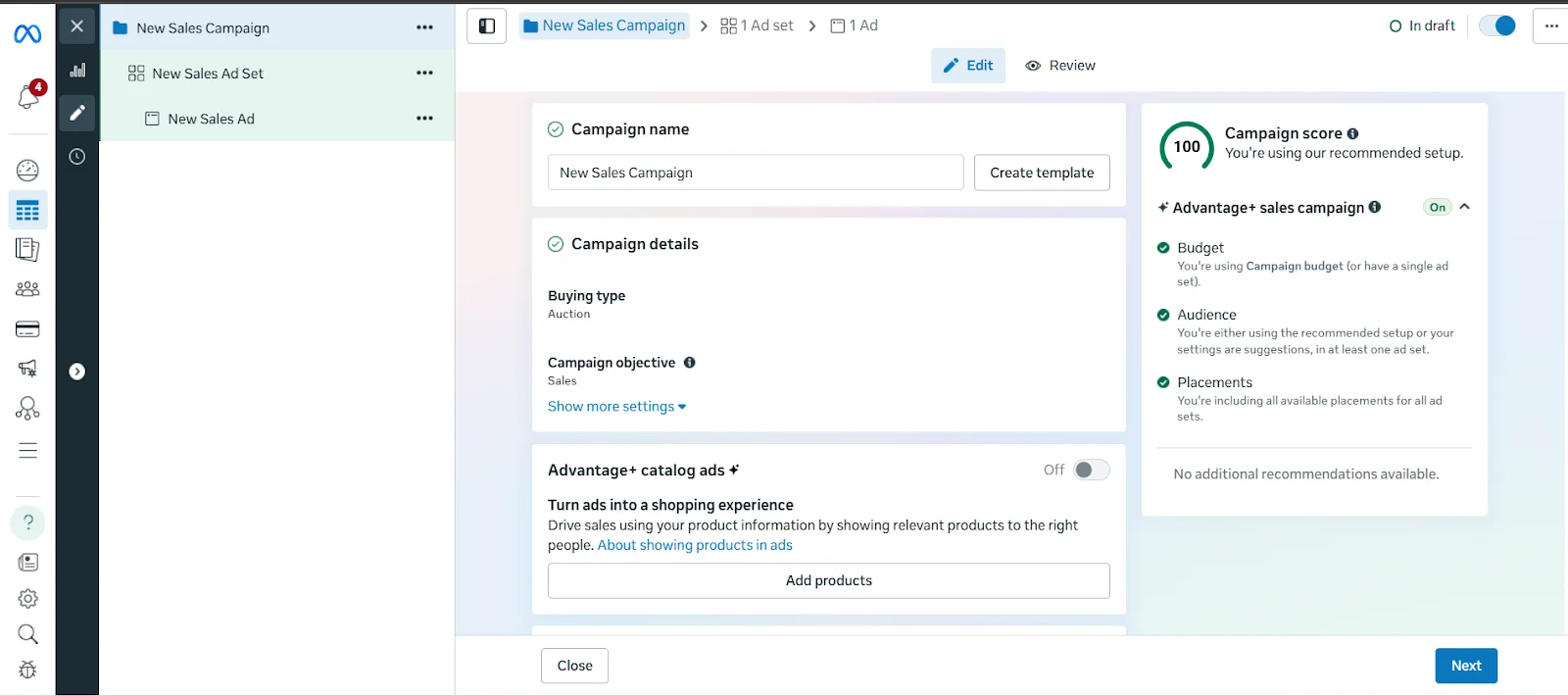
Set your budget, schedule, audience targeting, and placements. Advantage+ placements are recommended for automated optimization, but you can also select placements manually. Remember that collection ads only serve on mobile.
Step 3: Select Collection as Your Format
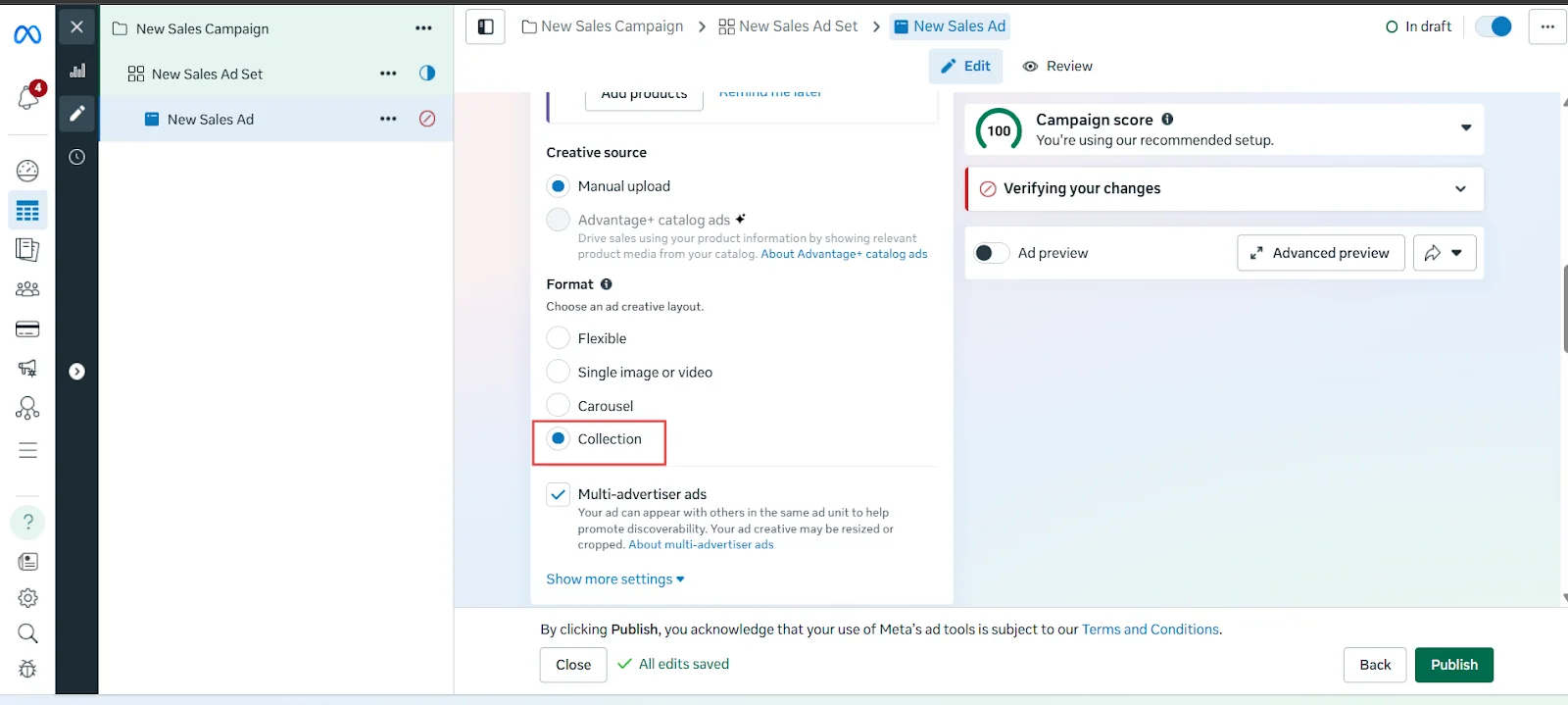
In the Ad setup section, choose Collection. Connect your Facebook Page and Instagram account.
Step 4: Choose Your Instant Experience Template
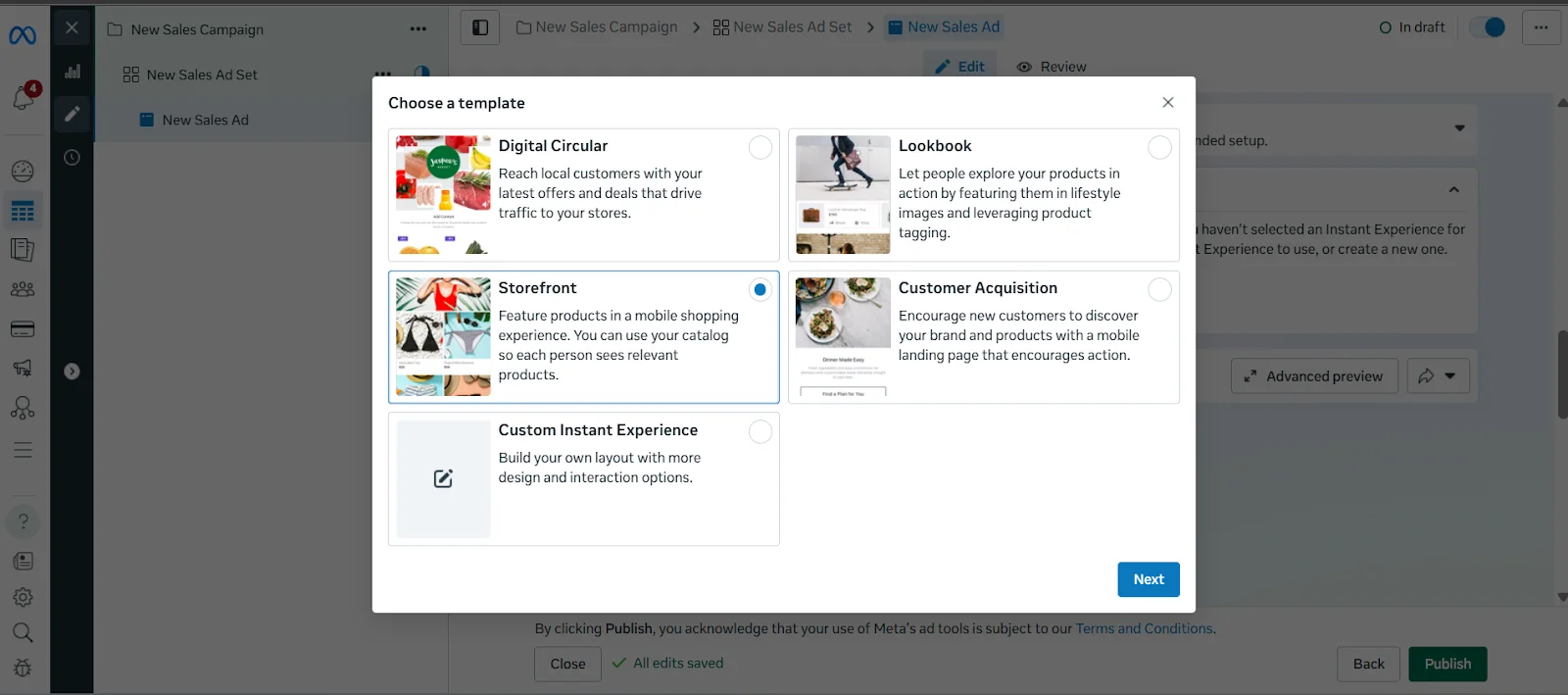
Meta offers four options. Instant Storefront is best for product-heavy catalogs and is the most common choice for eCommerce. Instant Lookbook is well-suited for lifestyle brands that showcase products in context. Instant Customer Acquisition functions like a mini landing page with a clear CTA. Instant Storytelling is built around video narratives.
Step 5: Select Your Products
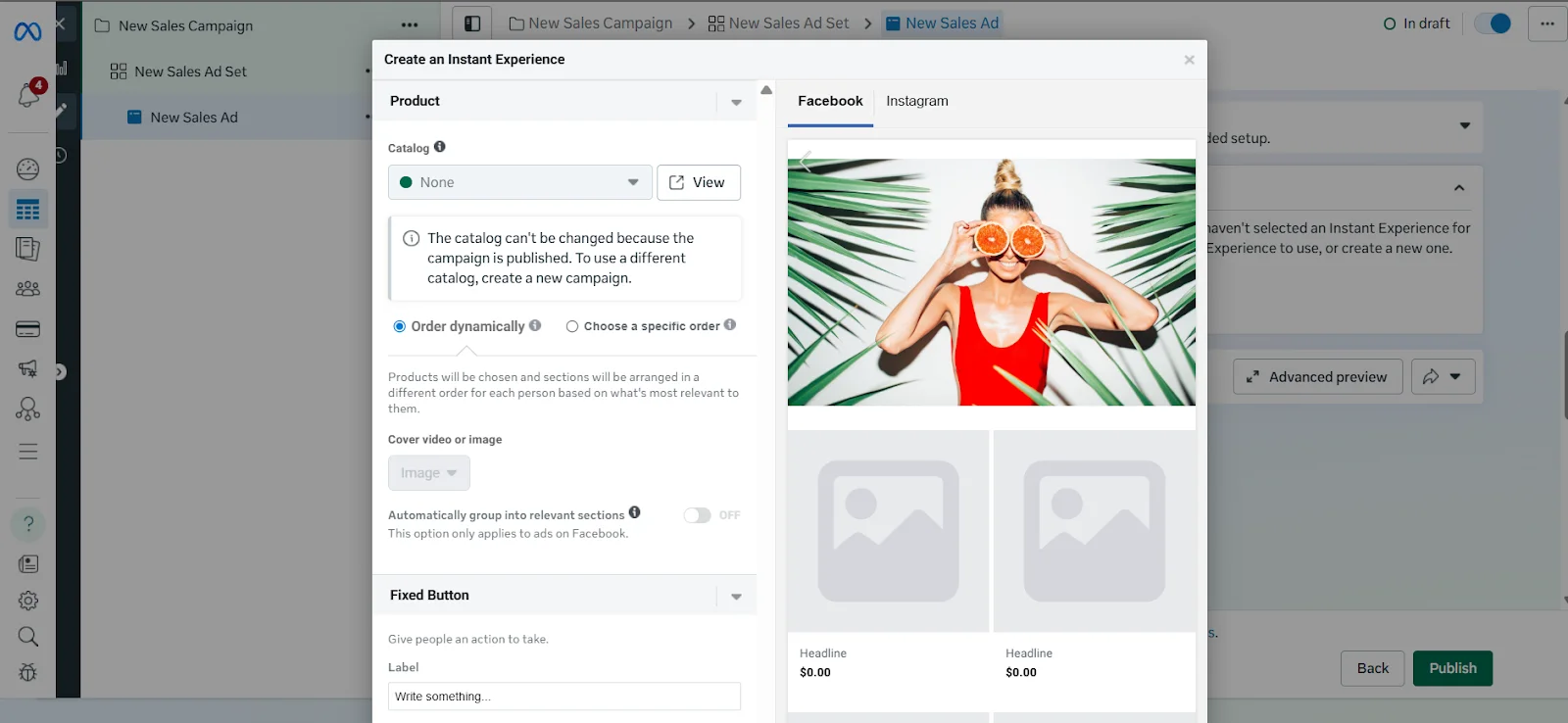
You can let Meta order products dynamically (recommended, as it shows the most relevant items to each user) or arrange them manually. Dynamic ordering tends to perform better because Meta’s algorithm optimizes for purchase likelihood.
Step 6: Build Your Hero Creative
Upload a cover image or video with these recommended specs: 1:1 or 9:16 aspect ratio, minimum 1080 x 1080 pixels. Videos should be MP4 or MOV files, up to 4 GB in size. Images should be JPG or PNG, up to 30MB.
Step 7: Write Your Ad Copy
Keep primary text under 125 characters and headlines under 40 characters for best display across placements. Add your landing page URL.
Step 8: Preview and Publish
Use the Ad Preview tool to check how your ad looks across Feed, Stories, and Reels. Product images may be auto-adjusted to 1:1 or 4:5 depending on placement.
How to Find Winning Facebook Collection Ad Ideas With GetHookd
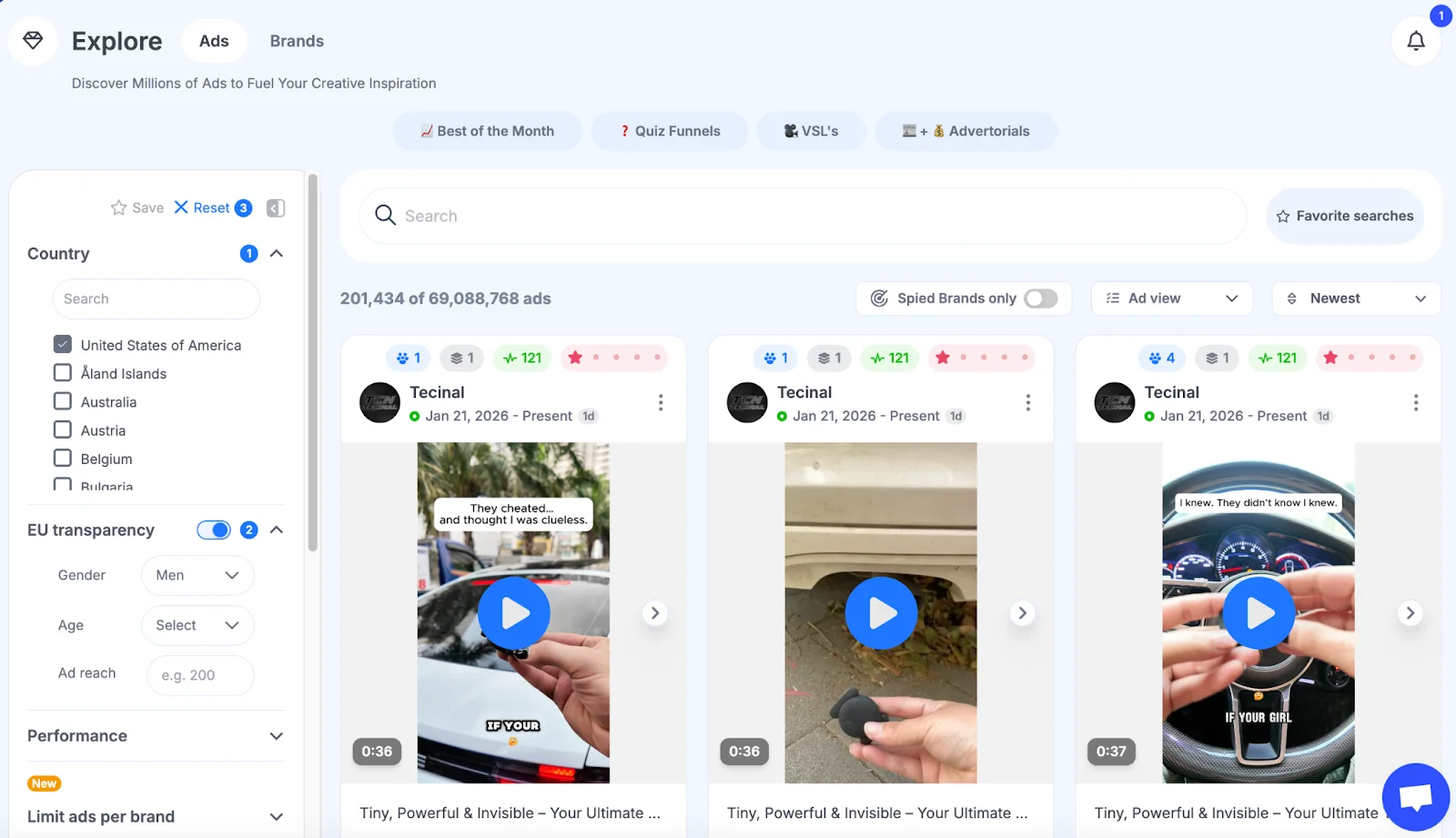
With GetHookd’s Explore feature, you can access over 65 million Meta ads, searchable by niche, format, country, and performance signals. Instead of guessing which hero creative or product theme to test, you can filter for what’s actively running and showing strong engagement in your vertical.
Use Save Ads to organize winning collection ads by theme or format, even after they go offline. Brand Spy lets you track competitors’ active campaigns and landing pages. Once you spot a strong concept, Clone Ads creates variations, while Ads Transcription and Video Scripts extract hooks and generate ready-to-use scripts fast.
We built GetHookd to take the guesswork out of creative decisions. When it comes to Facebook collection ads, the format is straightforward. The real edge is knowing what to put inside it.
Start your GetHookd free trial today!
Frequently Asked Questions (FAQs)
What is a Facebook collection ad?
A Facebook collection ad is a mobile-only ad format that combines a hero image or video with product tiles pulled from your catalog. When tapped, it opens a full-screen shopping experience within the app, allowing users to browse products and complete purchases without leaving Facebook or Instagram.
Do I need a product catalog to run Facebook collection ads?
Yes. A product catalog synced through Meta Commerce Manager is required. Without it, the collection ad format won’t be available in Ads Manager.
What’s the best Instant Experience template for eCommerce?
Instant Storefront is the most common choice for product-focused eCommerce campaigns. It displays products in a browsable grid layout optimized for purchase. Instant Lookbook is a strong alternative for lifestyle and fashion brands.
How to create a Facebook collection ad?
Go to Meta Ads Manager, create a new campaign with a supported objective (Traffic, Sales, Engagement, Leads, or Awareness), and select Collection as your ad format. From there, choose an Instant Experience template, connect your product catalog, upload a hero image or video, and add your ad copy.
Can GetHookd help me create Facebook collection ad creatives?
Yes, once you’ve identified winning concepts using GetHookd’s Explore or Brand Spy tools, you can use Clone Ads to generate image variations and Video Scripts to produce new hooks and angles, all without needing design or copywriting skills.
*Note: Pricing and/or product availability mentioned in this post are subject to change. Please check our website for current pricing and stock information before making a purchase.