Facebook Ad Library Scraper: How It Works & What Data Can You Get
Key Takeaways
- A Facebook Ad Library scraper automates the collection of public ad data from Meta’s Ad Library, saving hours of manual research time.
- You can extract data such as creative assets, campaign details, platform distribution information, and targeting countries, but not performance metrics or audience details.
- Using a scraper allows you to monitor competitor strategies, spot advertising trends, and build a database of proven ad concepts.
- GetHookd turns Facebook Ad Library data into actionable competitor intelligence through AI-powered ad discovery, performance scoring, and creative analysis that the native library lacks.
What Is a Facebook Ad Library Scraper?
A Facebook Ad Library scraper is a tool that automatically collects publicly available ad data from Meta’s Ad Library. Instead of manually scrolling through competitor ads one by one, a scraper pulls creatives, ad copy, landing page URLs, and campaign metadata into an organized, searchable format.
For media buyers, e-commerce operators, and agencies running ads at scale, this matters because competitor research is only useful if it’s fast and repeatable. The Facebook Ad Library (also known as the Meta Ad Library) contains a massive amount of data, but browsing it manually is slow. There’s no export function, and you can’t track changes over time. A Facebook ad scraper solves that.
GetHookd: Turn Competitor Intelligence Into Your Next Winning Ad
65M+ Ads Analyzed | 4.8★ G2 Rating | 4.4★ Trustpilot Rating

Stop Guessing. Start Scaling:
GetHookd reveals which ads your competitors are actively scaling—not just running. Spy on their best-performing creatives, landing pages, and traffic strategies, then turn proven concepts into testable campaigns in seconds with AI-powered script generation and creative cloning.
What You Get:
- ✓ Brand Spy to decode competitor ad strategies in real-time
- ✓ AI script generation and ad cloning for instant variations
- ✓ Performance scoring based on actual ad behavior, not vanity metrics
- ✓ Creative Analyzer to identify and scale your top performers
How Does a Facebook Ad Library Scraper Work?
At a high level, a Facebook Ad Library scraper connects to Meta’s public ad database, collects the ad data you’re looking for, and organizes it so you can search, filter, and analyze it efficiently.
When you use a scraper, whether it’s a standalone tool or a platform like GetHookd, you typically search by brand name, keyword, or niche. The scraper then pulls all available ads associated with that search, including creative assets, copy, CTA buttons, destination links, and key metadata such as start dates and platform placements. The result is a structured library of competitor ads that you can browse in seconds rather than hours.
What Data Can You Extract Using Facebook Ad Library Scraper?
Here’s a breakdown of the data points available when scraping the Meta Ad Library.
Creative Assets
Every ad in the Facebook Ad Library includes its visual creative, whether that’s a static image, video, or carousel. You also get the full ad body text, headline, and any link descriptions.
The Ad Library also shows which format each ad uses. This is useful for spotting patterns. If a competitor is running predominantly video ads or leaning heavily on carousels, that indicates what’s working in your niche.
Campaign Details
Each ad displays its start date, active/inactive status, page name, and page ID. Long-running ads are a strong proxy signal. If a competitor has been running the same creative for weeks or months, it’s likely performing well enough to keep spending on.
Platform Distribution
Another valuable data point available through Facebook Ad Library scrapers is platform distribution information. This indicates whether ads are running exclusively on Facebook or Instagram, or on both platforms simultaneously. In some cases, you can even see if ads are appearing in Stories, Feeds, or Marketplace placements.
Countries & Languages Targeted
The Facebook Ad Library also reveals geographic and linguistic targeting information that scrapers can collect. You can see which countries an ad is running in and what languages it’s been created for, offering valuable insights into competitors’ international strategies and market prioritization.
Limitations of Facebook Ad Library Data
Facebook scrapers only collect public-facing data. Raw ad data is a strong starting point, but it has clear gaps that matter when making real media-buying decisions.
No Performance Metrics
The Facebook Ad Library shows you what ads exist, not how they perform. There’s no click-through rate, no return on ad spend, no cost-per-acquisition, and no engagement breakdown.
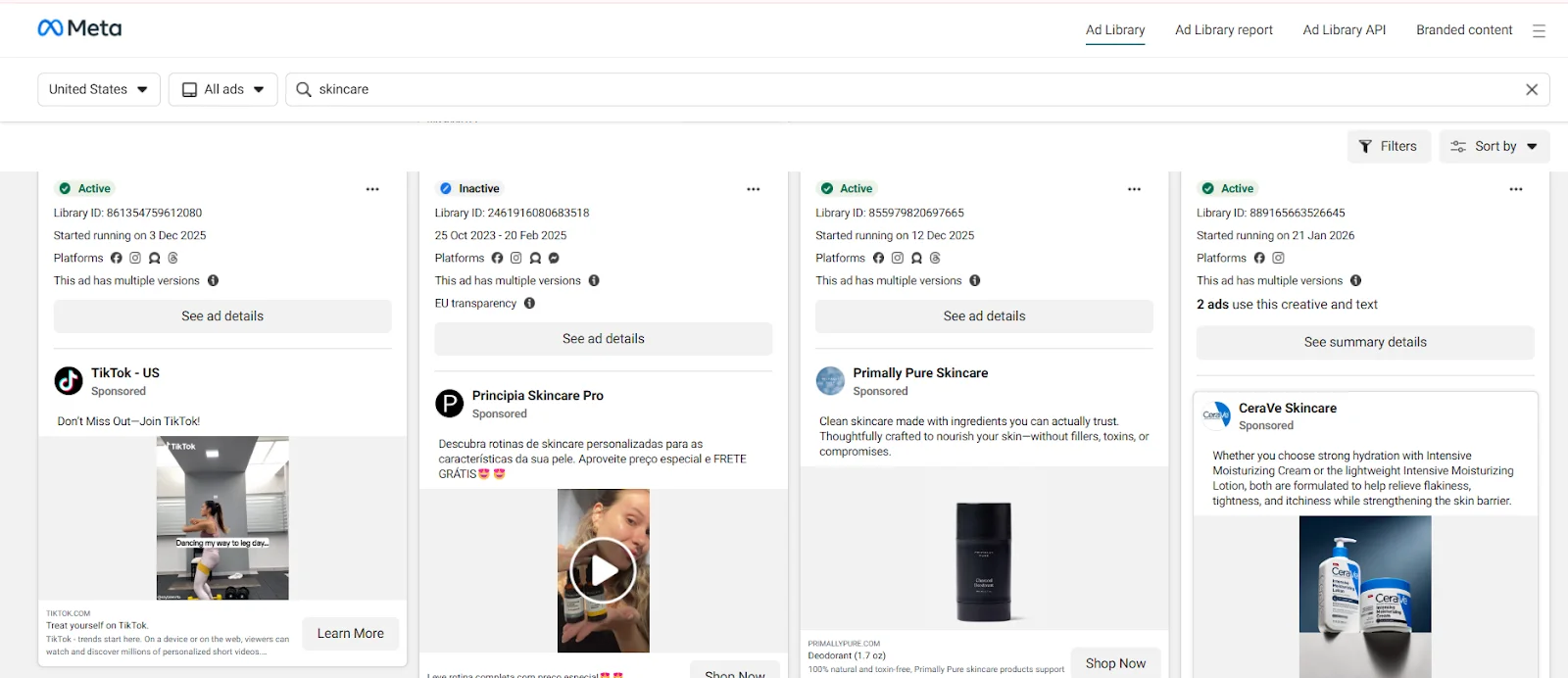
Two ads can sit side by side in the same library: one losing money, one increasing revenue, and there’s nothing in the data to tell them apart. For media buyers allocating real budget, this is the single biggest limitation. You’re seeing the creative output of a competitor’s strategy, but you’re blind to whether that strategy is actually working.
Audience Targeting Details Stay Private
You can see countries and platforms, but the audience architecture behind each ad is completely hidden. This means two ads with identical creative could be targeting entirely different segments, performing differently as a result, and the Meta Ad Library gives you no way to know. You’re seeing only the surface of the campaign, without the underlying targeting logic.
Budget & Spend Information Is Unavailable
Outside of the limited EU transparency data (which only provides broad spend ranges for ads targeted within the European Union), there’s no visibility into how much a competitor is spending on any given ad or campaign.
You can’t tell if an ad is backed by a serious budget or running on fumes. This makes it difficult to gauge competitive intensity in your niche or understand how aggressively a competitor is pushing a particular offer.
Ads Disappear When Campaigns Stop Running
Once an ad goes inactive, it eventually vanishes from the Meta Ad Library. There’s no archive, no version history, no way to revisit a creative that was running three months ago. This is a real problem for teams doing seasonal research or quarterly competitive reviews. The ads you studied last month may not exist anymore. If you didn’t save it at the time, it’s gone.
No Landing Page Analysis or Archiving
You can see the destination URL on an ad card, but the Ad Library doesn’t capture, archive, or analyze the actual landing page. You get the link, not the layout or the conversion flow. And once the campaign stops running, even that URL context fades. The ad-to-landing-page relationship is one of the most important signals in funnel analysis, and the Ad Library effectively ignores it.
No Creative Analysis or Hook Breakdown
The Ad Library displays the ad as-is, but offers no tools to analyze why it works. There’s no hook extraction, no copy framework breakdown, no scoring of visual or structural elements. For video ads, in particular, the opening hook is often the single most important variable, and the Ad Library provides no way to isolate, transcribe, or compare hooks across competitors’ campaigns. You’re left doing that work manually, which doesn’t scale.
GetHookd: Best Facebook Ad Library Scraper With Competitor Intelligence
These limitations are exactly what GetHookd is designed to solve. Powered by AI-driven ad discovery and creative analysis, we don’t just collect ads, we turn competitor research into ready-to-launch campaigns.
With over 65 million ads across Meta, GetHookd gives media buyers, e-commerce brands, and agencies the competitive intelligence they need to make faster, smarter creative decisions.
Here’s what we offer:
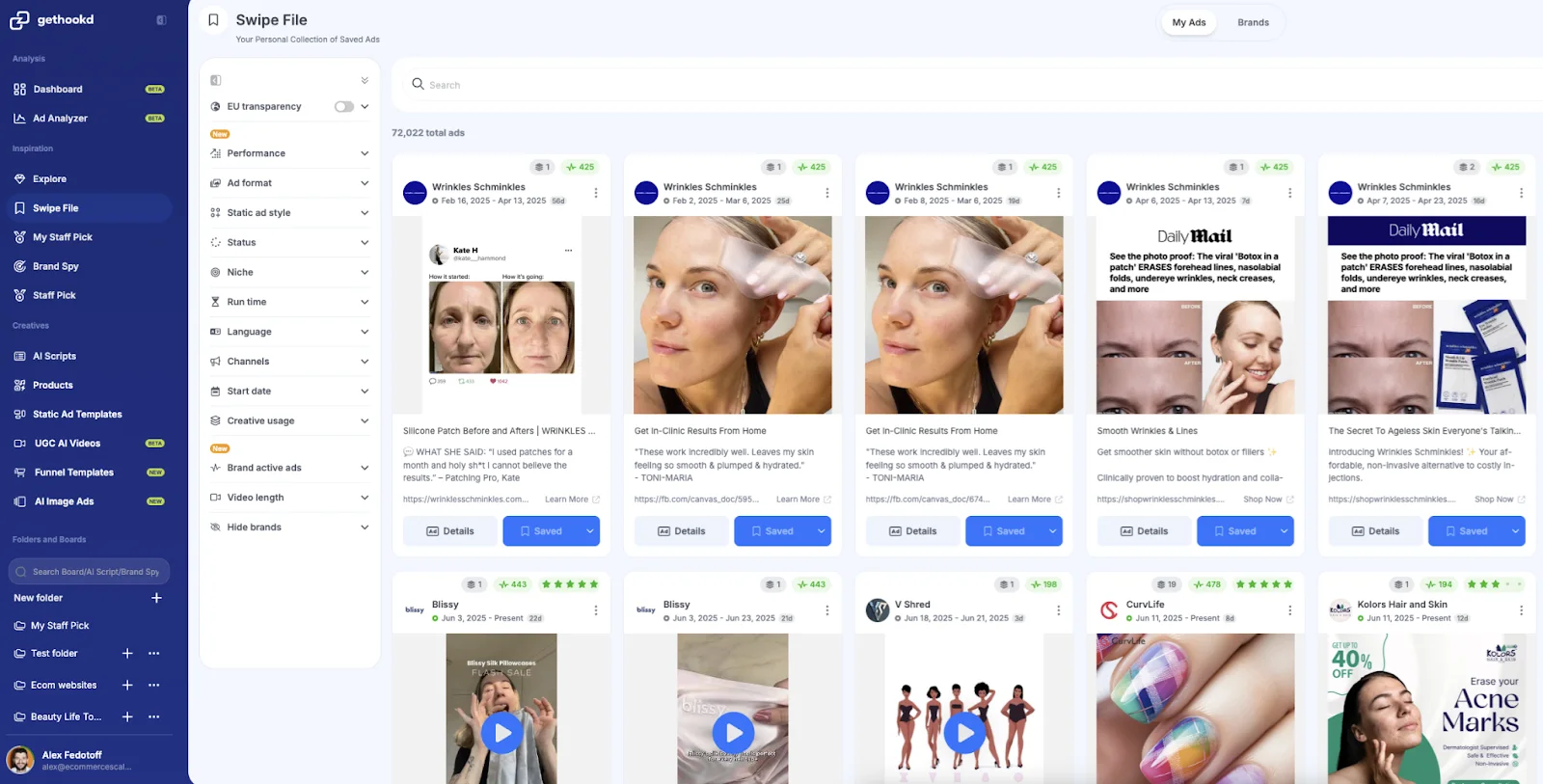
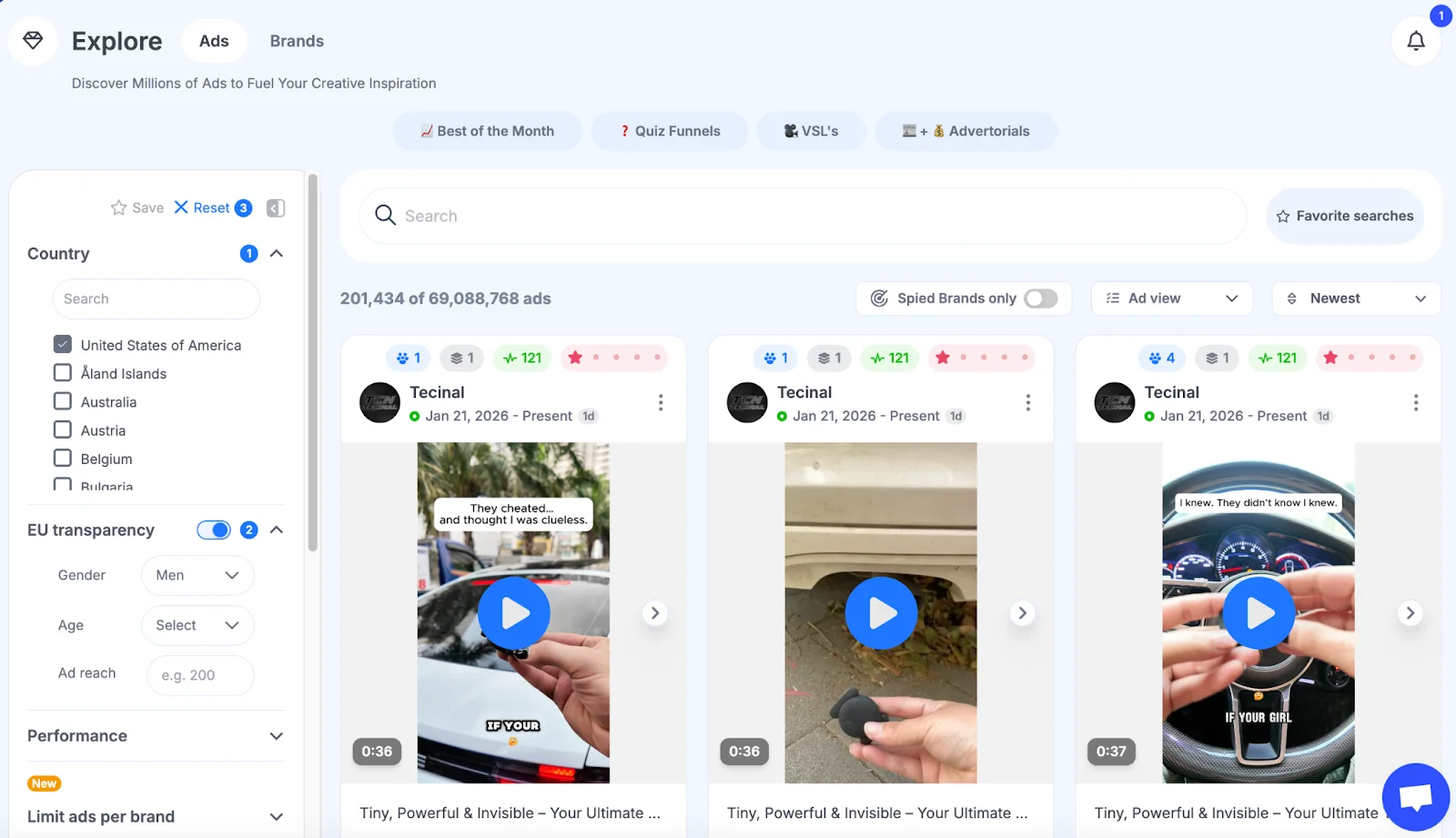
- Explore Ads: Browse our full library of 65M+ high-performing meta ads, filtered by niche, format, and performance signals. Find what’s working in your market in seconds. We score ads based on real behavioral signals so you can distinguish between a test and a proven winner.
- Save Ads: Build a permanent ad library organized by boards and folders. Ads stay saved forever, even after they stop running on Meta.
- Brand Spy: Enter any competitor and see their complete ad strategy. Find out which ads they’re actively scaling, the hooks they repeat, the landing pages driving traffic, and the formats they favor.
- Ad Transcription: Automatically transcribe video ads to extract hooks, CTAs, and copy frameworks you can use immediately.
- Video Scripts: Upload a winning ad, add your product details, and our AI generates new hooks, angles, and full scripts tailored to your brand in seconds.
- Clone Ads: Take a top-performing image ad and generate dozens of variations. You can create new colors, layouts, avatars, and styles without opening separate design software.
- Image Ad Templates: We include a library of ready-to-use static ad templates organized by niche. Each template is designed around proven ad frameworks from top-performing brands, and you can customize them. It’s the fastest way to go from competitor insight to a polished creative ready for testing.
- Funnel Templates: Our funnel templates let you pick, customize, and launch high-converting landing pages in minutes. When you pair ad creative with a proven funnel template, you’re testing a complete system, not just a single asset.
The Facebook Ad Library provides a starting point for competitive research, but raw data alone won’t help you launch better ads faster. The marketers winning right now are the ones turning competitor intelligence into tested, validated campaigns before their competition catches up.
GetHookd brings research and execution into one platform, so you spend less time digging and more time scaling.
Start your GetHookd free trial today.
Frequently Asked Questions (FAQs)
Is it legal to scrape Facebook ads library?
The Meta Ad Library is a public database, and accessing it for competitive research is standard practice. Platforms like GetHookd handle data collection cleanly, so you don’t need to worry about compliance or technical setup on your end.
How often should I scrape competitor ads?
The optimal frequency for scraping competitor ads depends on your industry’s pace and competitive intensity. Fast-moving e-commerce or retail sectors benefit from weekly or even daily updates to capture rapidly evolving promotional strategies and seasonal campaigns. For industries with longer sales cycles, such as B2B services, biweekly or monthly scraping typically provides sufficient competitive intelligence.
Do I need technical skills to scrape Facebook ads?
No, you don’t. User-friendly platforms like GetHookd offer intuitive interfaces where you simply enter competitor pages or keywords to monitor, then receive organized data without handling any code. These specialized marketing tools handle all technical complexities, including proxy management, request throttling, and data normalization.
How to find winning products in Facebook Ad Library?
Look for ads that have been running for several weeks or longer. Longevity is one of the strongest indicators that a product is converting well enough to justify continued spend. Pay attention to brands running multiple variations of the same product ad, as that signals active scaling and iteration.
For a faster approach, GetHookd’s Explore Ads lets you search across 65M+ ads, filtered by niche and performance signals, while Brand Spy reveals which products competitors are actively allocating budget to.
*Note: Pricing and/or product availability mentioned in this post are subject to change. Please check our website for current pricing and stock information before making a purchase.