Facebook Ad Creative Fatigue: Causes & Solutions
Key Takeaways
- Facebook ad creative fatigue happens when your audience sees the same ad too many times, causing engagement to drop and costs to rise, but it’s completely preventable.
- Meta flags creative fatigue directly in the Delivery column of Ads Manager, labeling ads as “Creative Limited” or “Creative Fatigue” based on how much cost per result has increased.
- The most common causes are running too few creatives per ad set, overexposing narrow audiences, and relying on a single ad format.
- Small changes, such as swapping hooks, rotating formats, and expanding audiences, can extend the life of winning ads without rebuilding them from scratch.
- GetHookd helps users stay ahead of Facebook ad creative fatigue by letting you research proven creatives, extract winning hooks, and generate fresh ad variations from a single platform.
What Is Facebook Ad Creative Fatigue?
Facebook ad creative fatigue happens when your target audience has seen the same ad creative so many times that they stop engaging with it.
When Meta detects declining performance tied to overexposure, you’ll see one of two labels in the Delivery column:
- Creative Limited: Cost per result is higher than past ads but less than double.
- Creative Fatigue: Cost per result has at least doubled.
These labels are Meta’s signal that more impressions won’t fix the problem. The creative itself needs attention.
Creative fatigue is worth separating from two related concepts. Ad fatigue refers to a single ad losing effectiveness from being shown too many times, while audience fatigue means you’ve exhausted a specific segment, regardless of what creative you show them.
Creative fatigue is about the visual, the message, or the format feeling stale through repetition, even across different ads. This distinction matters when deciding what to fix.

GetHookd: Turn Competitor Intelligence Into Your Next Winning Ad
GetHookd reveals which ads your competitors are actively scaling, not just running. Spy on their best-performing creatives, landing pages, and traffic strategies, then turn proven concepts into testable campaigns in seconds with AI-powered script generation and creative cloning.
What You Get:- ✓ Brand Spy to decode competitor ad strategies in real-time
- ✓ AI script generation and ad cloning for instant variations
- ✓ Performance scoring based on actual ad behavior, not vanity metrics
- ✓ Creative Analyzer to identify and scale your top performers
What are the Causes of Facebook Ad Creative Fatigue?
1. Too Few Creatives Per Ad Set
Running a single ad creative for too long is the most common cause. When there’s only one ad in an ad set, Meta has no choice but to keep serving it to the same people repeatedly. There’s no variation and no rotation, so fatigue is practically guaranteed.
2. Narrow Audiences Without Frequency Controls
Overexposing a narrow audience compounds the problem. If you’re targeting a tightly defined custom audience, say a retargeting list of 10,000 people, and running a single creative against it with no frequency controls, that audience will hit saturation quickly.
Smaller audiences need more creative variety, not less, because there are fewer people to absorb the impressions.
3. Relying on a Single Ad Format
Advertisers who run only static images or only video give their audience no visual variety. Even if the message changes, the format staying the same creates a familiarity that breeds indifference.
Mixing carousels, single images, short-form video, and UGC-style content keeps the experience from feeling repetitive even when the underlying offer stays consistent.
Solutions to Beat Facebook Ad Creative Fatigue Fast
Creative fatigue is one of the most fixable problems in paid social advertising. Once you know what’s causing it, the solutions are concrete and don’t require rebuilding your entire campaign from scratch.
1. Rotate & Refresh Creatives on a Regular Schedule
Set a regular cadence for reviewing and rotating your Facebook ad creatives. Smaller audiences fatigue faster and typically need weekly refreshes, while broader audiences can sustain creatives for two to three weeks.
Don’t wait for performance to drop before making a swap. Having two to four creative variations running simultaneously within each ad set gives Meta’s algorithm options to work with, naturally distributing impressions and slowing the pace of fatigue across any single creative.
2. Update Hooks & Intros Without Rebuilding the Whole Ad
Your hook is the first one to three seconds of a video or the first line of ad copy, and it’s the first thing your audience recognizes when they’ve seen the ad before. Changing just the hook can make a familiar ad feel completely new, even if everything that follows stays the same.
For video ads, re-record the opening five seconds with a different line, angle, or visual before cutting into your existing footage. For static ads, swap the headline or the first sentence of copy. The underlying offer, proof points, and call to action don’t need to change.
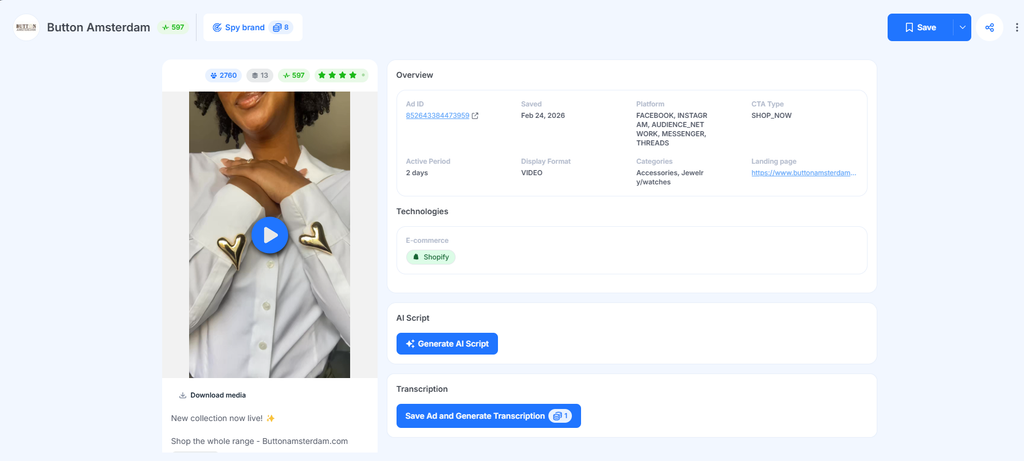
GetHookd’s Ads Transcription pulls the exact hooks, CTAs, and copy structure from any video ad that’s currently scaling. Instead of guessing which new hooks to test, you can extract proven openers from ads that are already working in your niche and adapt them for your own creative.
3. Test Multiple Creative Formats
Running the same offer as a single image, a carousel, a short-form video, and a UGC-style testimonial simultaneously doesn’t just reduce fatigue. It also reveals which format resonates most with different segments of your audience.
Meta will naturally allocate more delivery to the best performer, but having multiple formats in rotation means no single creative gets overexposed quickly.
For ecommerce teams managing large catalogs, Marpipe can turn one dynamic template into brand-consistent creative for each SKU, including product-level video generated from existing catalog images. That makes it easier to rotate formats and keep fresh variants in testing without producing every asset from scratch.
4. Expand or Rotate Your Target Audiences
If your audience is too small relative to your budget and impression volume, fatigue is almost inevitable, regardless of how good your creative is. When your daily spend is high, and your audience is narrow, the same people see your ads repeatedly. Expanding your audience or increasing your creative variety gives Meta more room to distribute impressions before saturation sets in.
Rotating audiences works alongside creative rotation to extend campaign life. Consider segmenting your targeting into separate ad sets for cold lookalike audiences, warm website visitors, and past purchasers, each with creative tailored to where those people are in the buying journey. This prevents any one segment from getting hammered with the same message while giving you cleaner data on what works at each stage of the funnel.
5. Build a Continuous Creative Testing Pipeline
The advertisers who never get blindsided by creative fatigue treat creative testing as an ongoing operation, not a one-time setup task. A healthy pipeline has one to two new concepts entering testing every one to two weeks.
Use a dedicated testing campaign to evaluate new concepts before they’re needed. When a current winner shows early signs of fatigue, you already have a tested replacement ready to scale.
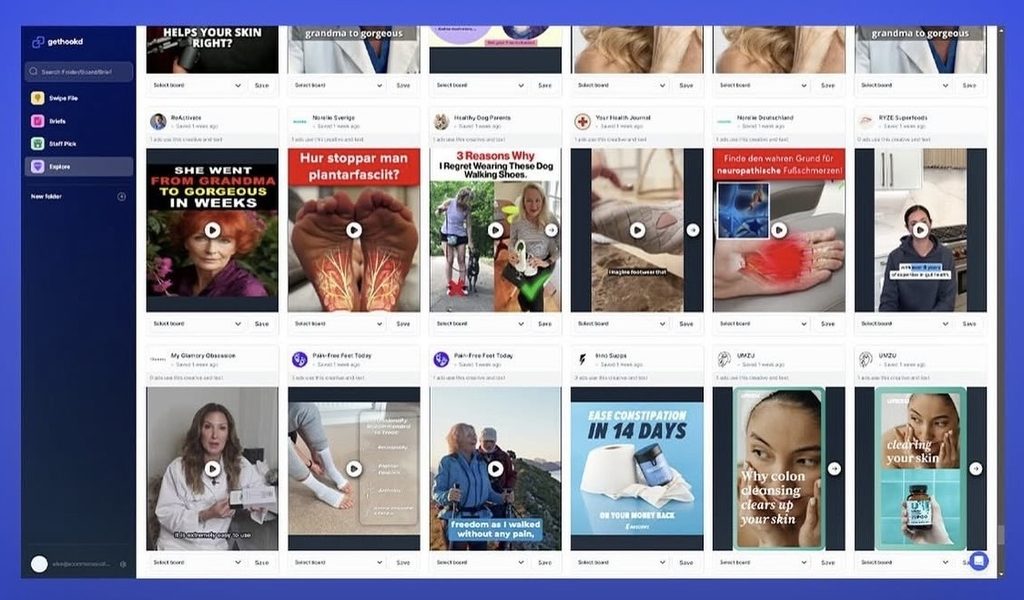
GetHookd’s Explore Ads and Brand Spy give your pipeline a research layer. Instead of brainstorming concepts from scratch, you can filter 65M+ ads by niche, format, and performance signals to see what’s already converting.
Brand Spy shows which creatives your competitors are actively putting budget behind, so your next round of tests is grounded in real market data.
6. Set Frequency Caps to Limit Overexposure
Meta allows you to set frequency caps when using the Awareness objective with Reach optimization or the Reservation buying type. For other objectives, like conversions, frequency is controlled indirectly through audience size and budget.
A common best practice is no more than two to three impressions per person per week for cold audiences, with slightly higher caps for warm retargeting audiences where repeated exposure can support conversion.
7. Leverage User-Generated Content to Add Variety
UGC is one of the most effective tools for breaking creative fatigue because it looks and feels fundamentally different from polished brand creative, even when it delivers the exact same message.
A smartphone-filmed testimonial, an unboxing video, or a customer review clip introduces variety that your audience doesn’t immediately recognize as the same ad. UGC is also faster and cheaper to produce, so you can generate more variation without proportionally increasing your production budget.
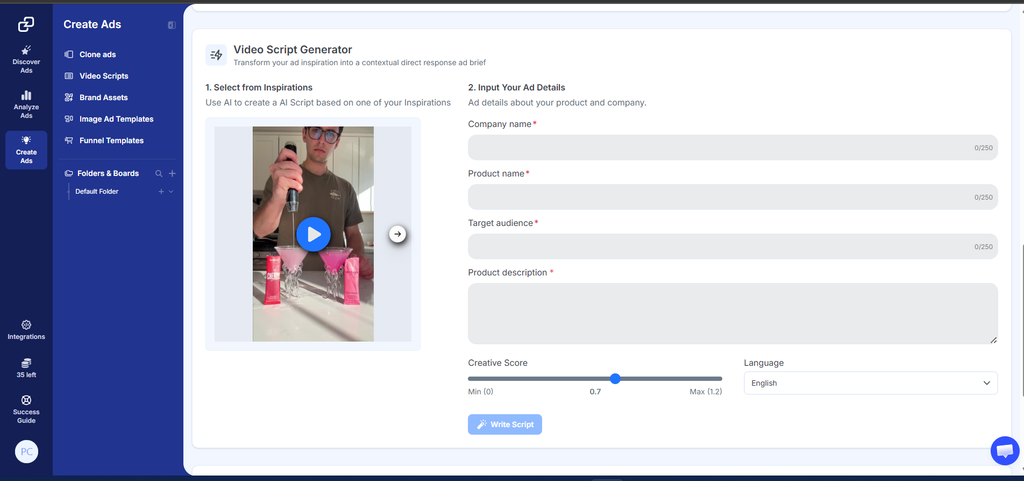
GetHookd’s ad database lets you filter by formats and style to see what’s performing in your niche. From there, use Video Scripts to generate new hooks and scripts based on your product details. This gives you a repeatable system for keeping fresh UGC in rotation without starting from scratch each time.
8. Analyze Placement-Level Data to Find Where Fatigue Strikes First
Facebook Feed, Instagram Reels, Stories, and the Audience Network each have different content environments and user behaviors, which means a creative that’s fatiguing on Facebook Feed might still perform well on Instagram Stories.
To access this data, use the Breakdown feature in Ads Manager and select By Delivery, then Placement. Look for placements where CTR is falling, and CPM is rising while others remain stable.
In many cases, you don’t need to replace the creative entirely. You just need to create a placement-specific version that resets the familiarity for that environment.
Build a Fatigue-Resistant Ad Strategy with GetHookd
Facebook ad creative fatigue is manageable when you treat creative testing as an ongoing process rather than waiting for performance to decline. Rotating formats, refreshing hooks, expanding audiences, and maintaining a steady pipeline of new concepts can help keep campaigns from becoming stale.
That process starts with better research. At GetHookd, we help you find creatives gaining traction, understand what competitors are scaling, and turn winning concepts into fresh scripts and ad variations. If you want to learn how to keep your creative pipeline fresh, explore GetHookd.
Frequently Asked Questions (FAQs)
How do you see creative fatigue in Meta ads?
Check the Delivery column in Ads Manager. Meta labels affected ads as “Creative Limited” when cost per result exceeds past performance, or “Creative Fatigue” when it has at least doubled. You can also monitor for rising frequency alongside falling CTR and increasing CPM.
What is advertisement fatigue?
Advertisement fatigue occurs when your audience has seen your ad so many times that they stop engaging with it. Performance metrics like click-through rates decline as costs rise, and the platform begins to limit delivery.
It can happen at the creative level, the ad level, or the audience level, depending on the root cause.
How do you reduce creative fatigue in Meta ads?
Run multiple creative variations per ad set and refresh hooks every one to two weeks. Use frequency caps where available, diversify your ad formats, and rotate your target audiences to spread impressions more evenly.
Tools like GetHookd help by letting you research which creatives are already working in your niche. You can also generate fresh scripts and ad variations so your testing pipeline never runs dry.
*Note: Pricing and/or product availability mentioned in this post are subject to change. Please check our website for current pricing and stock information before making a purchase.