

Key Takeaways
- Four Facebook dynamic product ads examples stand out for 2026: Sephora’s creator partnership ads, ONE BOY’s catalog product video, Ben & Jerry’s AI backgrounds, and Boden’s expanded product set.
- Sephora US paired creator partnership ads with Advantage+ catalog ads for 1.56x incremental omnichannel return on ad spend, the strongest result of the four but also the heaviest setup.
- ONE BOY uploaded video into its product catalog and reported 34% more purchases, 10% higher return on ad spend, and 11% lower cost per acquisition.
- Ben & Jerry’s used AI background generation for 7% more link clicks, while Boden added catalog products to a curated set for 24% lower cost per purchase.
- At GetHookd, we help you search 65M+ analyzed ads to find catalog setups that are already working in your niche, so your first test starts from something proven.
What Are Facebook Dynamic Product Ads?
Facebook dynamic product ads, now called Advantage+ catalog ads, automatically show products from your catalog to people based on how they have interacted with your website, app, or ads. Meta picks the product, the image, and the audience for each viewer, using purchase and browsing signals from your pixel or Conversions API. That automation is the appeal, since one campaign can promote thousands of products without a separate ad for each.
The catch is that automation only works with what you give it. Meta controls who sees which product, so your results depend on the few inputs you still own: the creative format, the product set, and the quality of your catalog feed. A weak setup gets repeated across every product at once, which is why small changes to those inputs can move purchases and costs so noticeably.
You can find catalog ads in the Meta Ad Library (still widely called the Facebook Ad Library), but it won’t show you which setups a brand keeps funding. GetHookd layers performance signals over 65M+ analyzed ads, so you can see which setups are being scaled and start from proven inputs.

GetHookd: Turn Competitor Intelligence Into Your Next Winning Ad
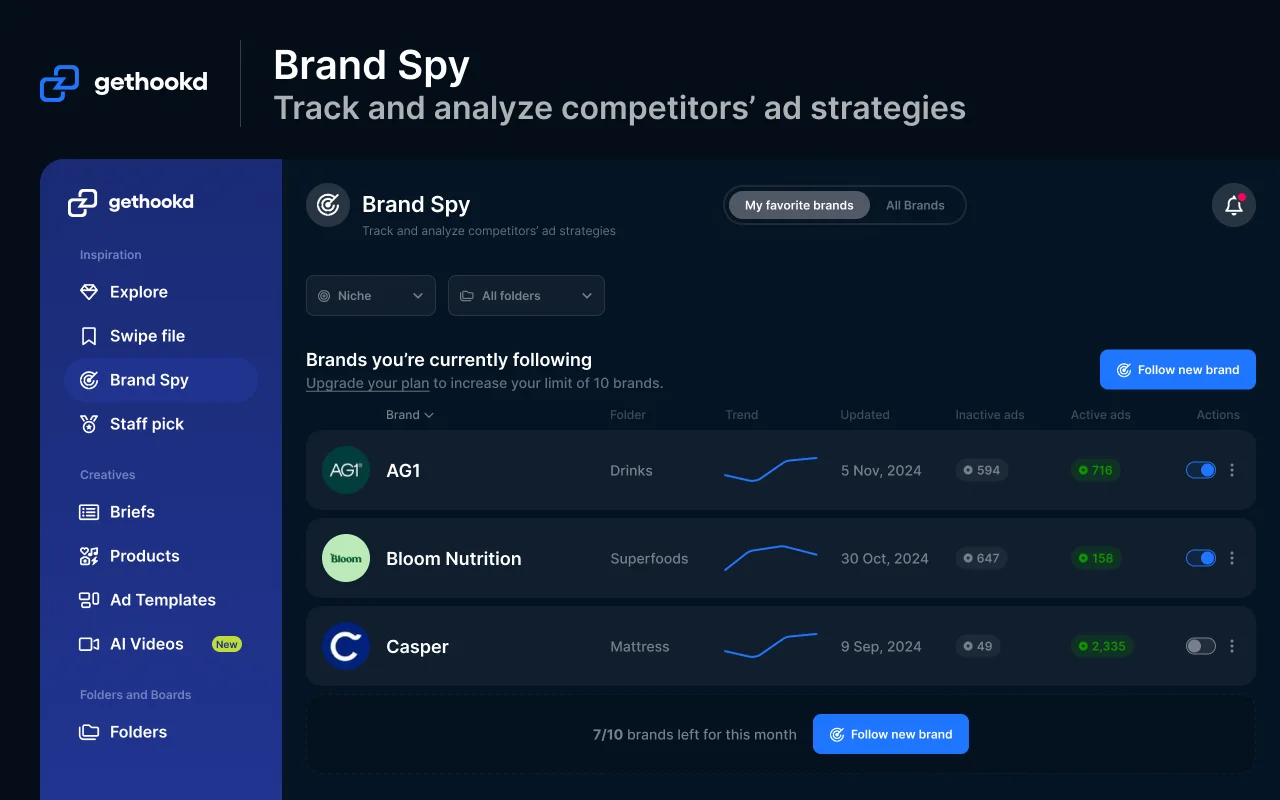
GetHookd reveals which ads your competitors are actively scaling, not just running. Spy on their best-performing creatives, landing pages, and traffic strategies, then turn proven concepts into testable campaigns in seconds with AI-powered script generation and creative cloning.
What You Get:- ✓ Brand Spy to decode competitor ad strategies in real-time
- ✓ AI script generation and ad cloning for instant variations
- ✓ Performance scoring based on actual ad behavior, not vanity metrics
- ✓ Creative Analyzer to identify and scale your top performers
4 Best Catalog Ad Setups Worth Testing
1. Sephora US: Creator Partnership Ads Paired With Catalog Ads
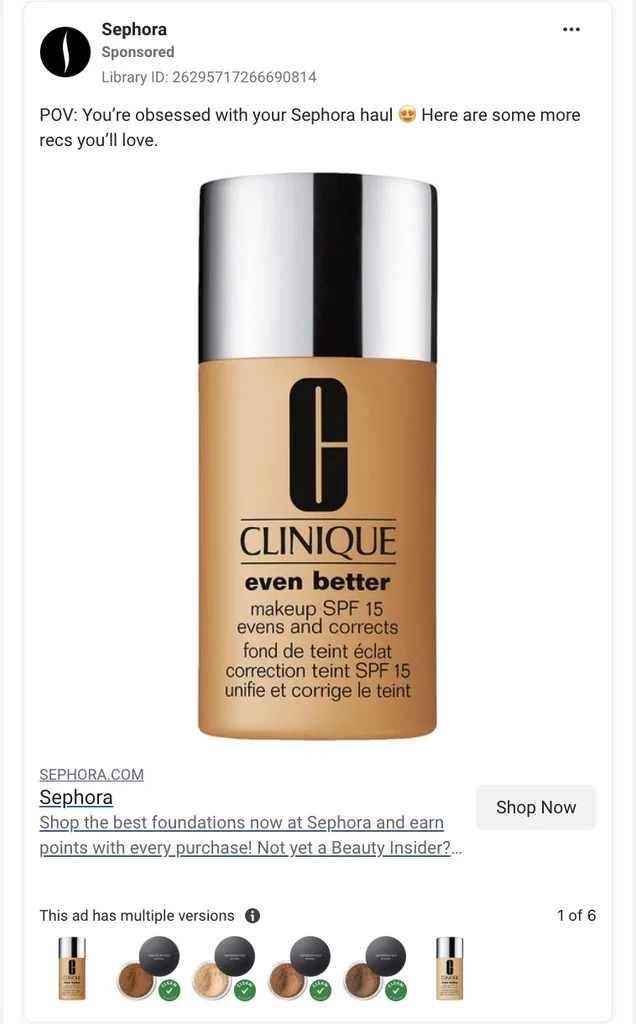
Sephora US ran its usual omnichannel ads alongside a new layer of creator partnership ads, paired with Advantage+ catalog ads.
Product images were pulled dynamically from Sephora’s catalog and set against creator photo and video shot at the brand’s flagship New York location, with the creator content serving as the hero asset in carousel and collection formats. Partnership ads deliver through both the brand’s handles and each creator’s handles, which is how the campaign reached audiences outside Sephora’s existing following.
Meta’s case study reports 1.56x incremental omnichannel return on ad spend, 1.04x return on ad spend for in-store purchases, and 3% higher incremental reach than usual omnichannel ads alone, measured across Instagram Feed, Stories, and Reels between August 19 and September 15, 2025.
Copying this setup means sourcing creators who genuinely shop your category, then letting the catalog choose products instead of scripting every placement by hand.
2. ONE BOY: Catalog Product Video in the Carousel
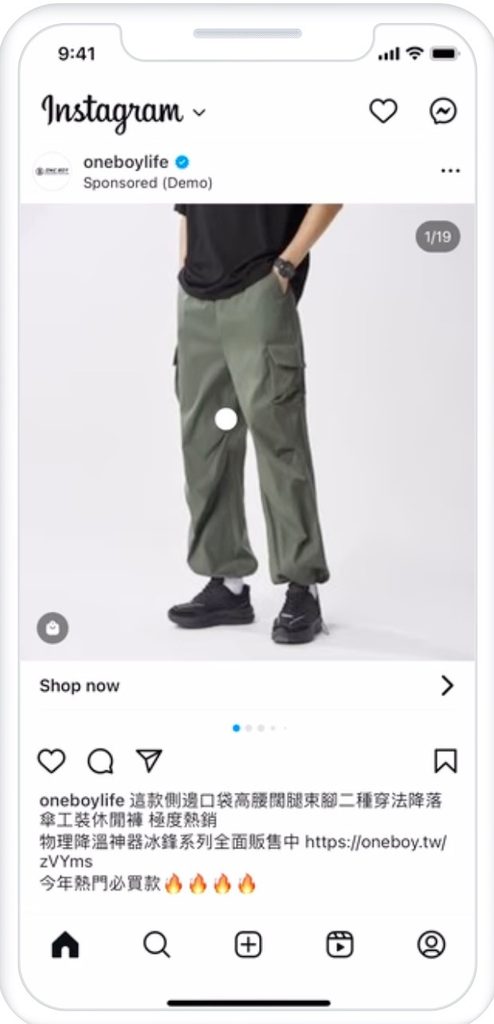
ONE BOY, a Taiwanese fashion retailer, uploaded video assets directly into its product catalog and ran them through an Advantage+ shopping campaign in carousel format. The control cell used the brand’s usual catalog photo carousels, so the single variable under test was what the personalized product slot rendered for each viewer: a still image or a short clip. Delivery ran to a broad Taiwanese audience with Advantage+ placements handling distribution.
The conversion lift study ran from May 20 to June 14, 2024, and reports a 34% increase in purchases, 10% higher return on ad spend, and 11% lower cost per acquisition against the usual catalog ads. Mapping existing footage to the right catalog items is the main setup cost here, which is why this remains the cheapest of the four tests to stand up.
3. Ben & Jerry’s: AI-Generated Backgrounds on Catalog Creative
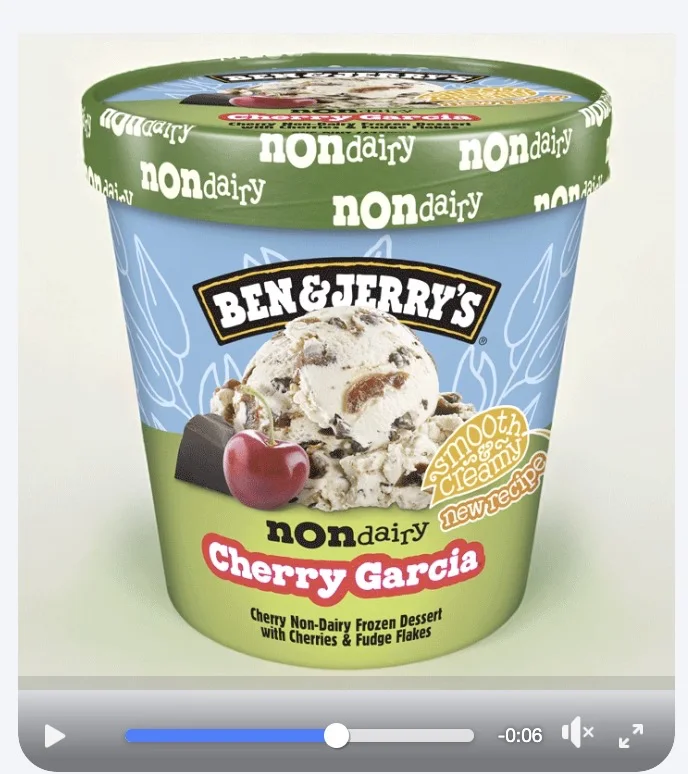
Ben & Jerry’s and its agency WITHIN tested background image generation, a generative AI feature inside Advantage+ creative, on catalog ads promoting the brand’s non-dairy range.
The control cell used manually chosen creative, while the test cell let Meta produce background variations around the same product shots and combine them with Advantage+ creative for catalog. Every ad carried a Learn more button pointing at the non-dairy landing page, where visitors could select instant delivery.
The two-week test, from October 30 to November 13, 2024, returned a 7% increase in link clicks and a 6.5% lower cost per link click. The lift is the smallest of the four and reflects what the feature actually does, since AI backgrounds add creative volume without introducing a new angle, which suits brands whose product photography is already strong but whose asset library runs thin.
4. Boden: A Curated Product Set Plus the Rest of the Catalog
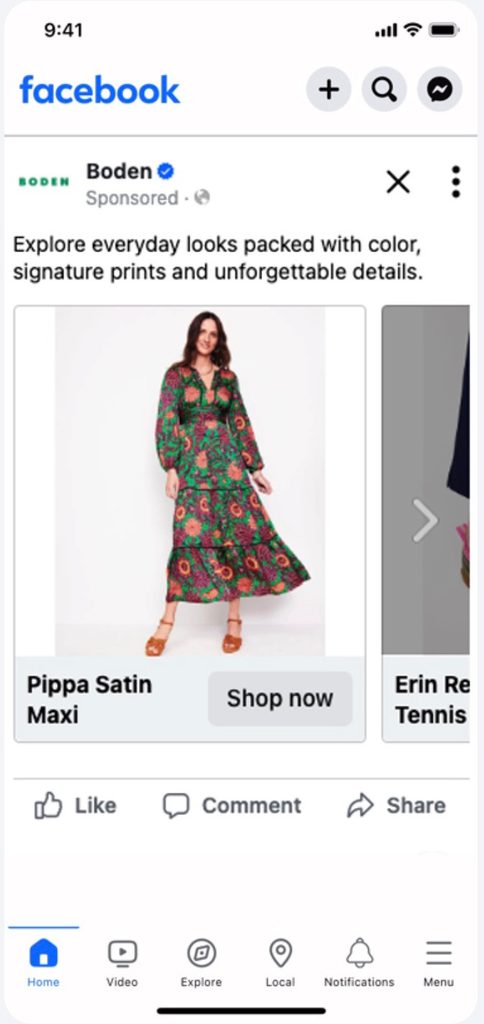
Boden, a UK apparel brand, kept promoting a curated product set but switched on the “Include other products from catalog” setting in Ads Manager, which ranks the chosen set higher while allowing Meta to surface the wider catalog alongside it. The A/B test ran from September 15 to October 15, 2024 against women in the US aged 25 to 55, with Advantage+ placements and Advantage+ campaign budget handling delivery and spend distribution.
Meta reported a 24% lower cost per purchase and a 23% increase in return on ad spend compared with promoting the curated set alone. Three Bird Nest ran the same test over a similar period and reported a 26% lower cost per purchase with 67% more link clicks, and that second result is what makes this the most repeatable of the four.
Facebook Dynamic Product Ad Examples: Comparison Table
| Example | Catalog Ad Setup Tested | Reported Result | Setup Required |
| Sephora US | Creator partnership ads paired with Advantage+ catalog ads | 1.56x incremental omnichannel ROAS, 3% higher incremental reach | Creator contracts, a shoot, offline conversion tracking |
| ONE BOY | Catalog product video in carousel format | 34% more purchases, 10% higher ROAS, 11% lower CPA | Existing video mapped to catalog items |
| Ben & Jerry’s | AI background image generation on catalog creative | 7% more link clicks, 6.5% lower cost per link click | Strong product shots, Advantage+ creative switched on |
| Boden | Curated product set plus other catalog products | 24% lower cost per purchase, 23% higher ROAS | One setting in Ads Manager, no new creative |
Pick a Proven Dynamic Product Ad Test With GetHookd
Each of these four campaigns tested a specific change against a control. Sephora’s creator pairing returned the strongest result, while Boden’s catalog setting and ONE BOY’s product video cost the least to set up. The right first test depends on what your category has already proven.
At GetHookd, we show which catalog ad setups brands in your niche are running now and how long they have kept funding them. That tells you which variable your category has already validated before you commit budget. Check your niche in GetHookd and build your first dynamic product ad test around what is working.
Frequently Asked Questions (FAQs)
Can you run dynamic product ads without a Facebook pixel?
Some form of data source is required, though it does not have to be the pixel. The Meta Conversions API or the Meta app SDK can send the same add-to-cart and purchase signals, and delivery improves when a brand runs more than one, since the Conversions API picks up signals the pixel can miss.
Do you need a large product catalog to run dynamic product ads?
No minimum applies, though the delivery system has more to work with as inventory grows. Meta advises keeping all products in a single catalog, maintaining a high match rate against your website, and keeping pricing and availability consistent, since mismatches between feed and site suppress delivery.
How often should you refresh dynamic product ad creative?
Refresh cadence depends on spend, but catalog ads can fatigue more slowly than manual creative because the product mix rotates automatically. Feed changes are the faster lever, since adding video to catalog items or generating background variations expands the creative pool without commissioning a new shoot for every SKU.
Do you need technical skills to set up a product catalog?
Setting up a catalog in Commerce Manager takes three steps and no code: create the catalog, pick the type, then upload products manually, connect a data feed, or link your ecommerce platform. Pixel or Conversions API setup usually needs developer help if your platform has no native integration.
How often should you check competitor catalog ads in GetHookd?
Monthly suits most categories, since a catalog setup needs several weeks of sustained spend before scaling becomes visible. Move to twice-monthly during a competitor’s seasonal push, when new creative enters and exits quickly. At GetHookd, we track how long each ad stays live, so you can tell a quick test from a setup a brand is scaling.
*Note: Pricing and/or product availability mentioned in this post are subject to change. Please check our website for current pricing and stock information before making a purchase.