How to Make Successful UGC Ads: Strategy, Examples, and AI Tools
Key Takeaways
- UGC ads outperform traditional brand creative because they look like organic content, which lowers audience resistance and holds attention longer on social feeds.
- The strongest UGC ads combine a specific, pain-point-driven hook in the first three seconds with genuine delivery and a clear, conversational CTA at the close.
- AI tools have made UGC production significantly faster; the most effective use is hook testing, where you generate multiple variations cheaply before investing in full creator production.
- Branding in UGC ads works best when it is subtle and placed toward the end, after the creator has already built trust with the viewer.
- GetHookd gives performance marketers the competitive intelligence and AI production tools to build UGC campaigns grounded in real market data rather than guesswork.
How to Make Successful UGC Ads
Successful UGC ads begin with a strong hook in the first few seconds, usually tied to a specific pain point or curiosity trigger. The creator should present the product in a natural, conversational way rather than sounding scripted. This authenticity helps the ad blend into social feeds and prevents the “obvious ad” effect that causes people to scroll past branded content.
Next, structure the ad around a simple narrative: problem, experience, and outcome. Show the product in real use, highlight a clear benefit, and keep branding subtle until trust is established. The final seconds should include a clear and conversational call to action that tells viewers exactly what to do next.
This guide covers what makes UGC ads work, different examples, and the tools that give performance marketers an edge.

GetHookd: Turn Competitor Intelligence Into Your Next Winning Ad
GetHookd reveals which ads your competitors are actively scaling—not just running. Spy on their best-performing creatives, landing pages, and traffic strategies, then turn proven concepts into testable campaigns in seconds with AI-powered script generation and creative cloning.
What You Get:- ✓ Brand Spy to decode competitor ad strategies in real-time
- ✓ AI script generation and ad cloning for instant variations
- ✓ Performance scoring based on actual ad behavior, not vanity metrics
- ✓ Creative Analyzer to identify and scale your top performers
GetHookd: Turn Competitor Intelligence Into Your Next Winning Ad
65M+ Ads Analyzed | 4.8★ G2 Rating | 4.5★ Trustpilot Rating
Stop Guessing. Start Scaling:
GetHookd reveals which ads your competitors are actively scaling—not just running. Spy on their best-performing creatives, landing pages, and traffic strategies, then turn proven concepts into testable campaigns in seconds with AI-powered script generation and creative cloning.
What You Get:
- ✓ Brand Spy to decode competitor ad strategies in real-time
- ✓ AI script generation and ad cloning for instant variations
- ✓ Performance scoring based on actual ad behavior, not vanity metrics
- ✓ Creative Analyzer to identify and scale your top performers
Examples of UGC Ads & When to Use Each
Short-Form Video Ads
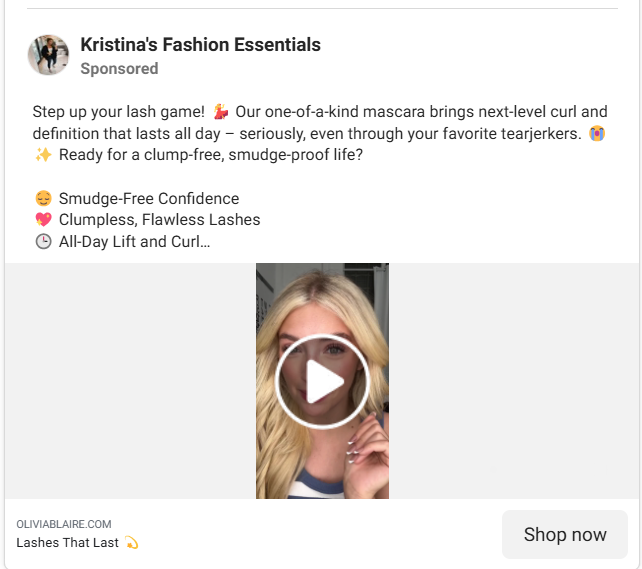
Short-form video is the dominant UGC format right now. A 15 to 60-second video of a real person demonstrating, reviewing, or reacting to a product is the closest thing to a personal recommendation that paid advertising can deliver.
These ads perform best when they look like organic content. Shoot vertically on a smartphone, with natural lighting and genuine energy in the delivery.
Customer Testimonial Ads
Testimonial ads bring the classic customer review to life on video or static creative. They work best at the middle and bottom of the funnel, where a potential buyer knows the product but needs social proof to convert.
The most effective testimonials are specific: a real problem, a real outcome, a real timeframe. That specificity is what builds credibility. Static versions, where a customer quote is paired with a product image, are low-cost to produce and easy to test across audience segments.
Always secure written permission before using a customer’s words or likeness in a paid ad, even if they originally posted it publicly.
Influencer Collaboration Ads
Influencer collaboration ads sit at the intersection of UGC and influencer marketing. A brand works with a creator who posts content to their own channel, then uses that same content as a paid ad.
The result carries both the social proof of a genuine creator endorsement and the scalability of a paid placement.
Social Proof & Review-Based Ads
Review-based ads take your best written or video reviews and turn them directly into ad creative. A five-star review with a specific outcome, pulled from your product page and formatted into a clean ad, can outperform weeks of carefully produced brand content.
These work across every major platform and are especially powerful for eCommerce brands where purchase decisions depend on what other customers experienced.
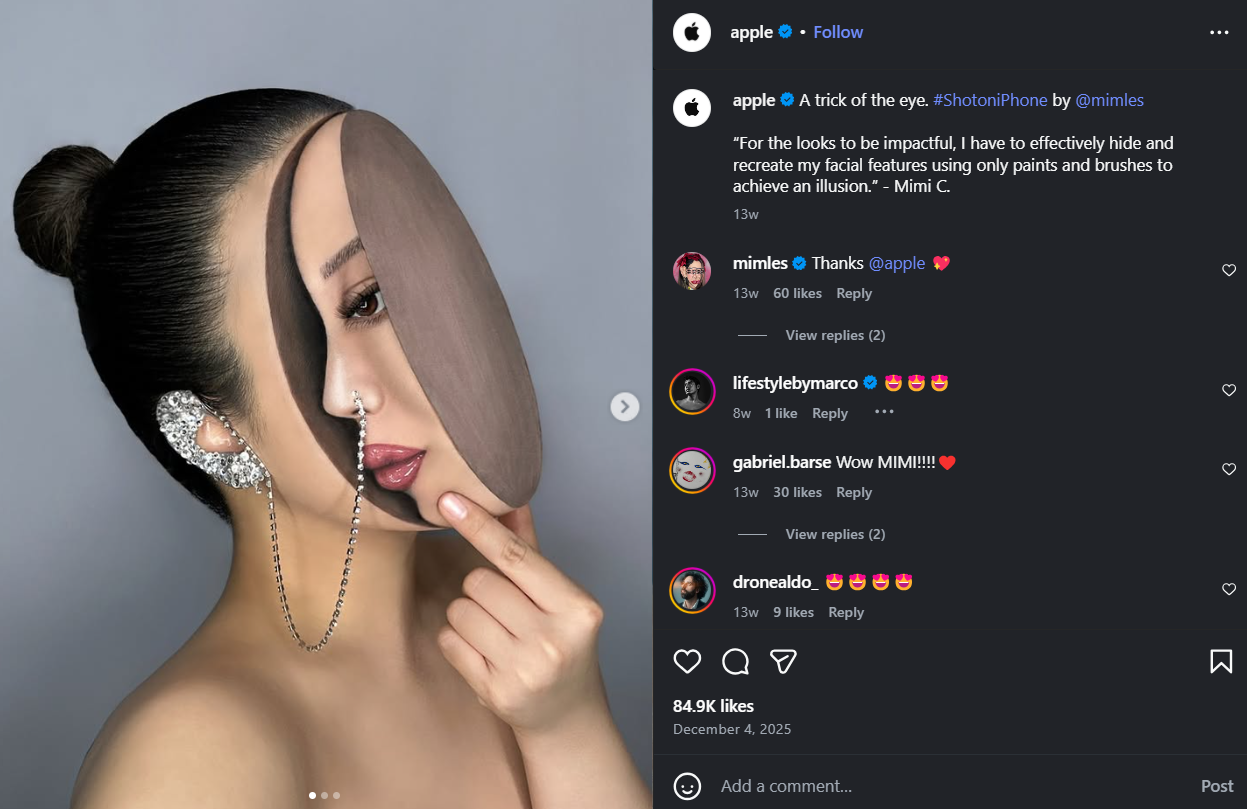
Apple’s Shot on iPhone campaign is one of the clearest examples of this principle at scale. Rather than producing studio content, Apple features photos taken by iPhone users, crediting the actual people behind each shot.
The campaign works because the proof is built in. That is UGC at its most effective: real users and real results.
AI Tools That Make UGC Ad Creation Faster
1. GetHookd
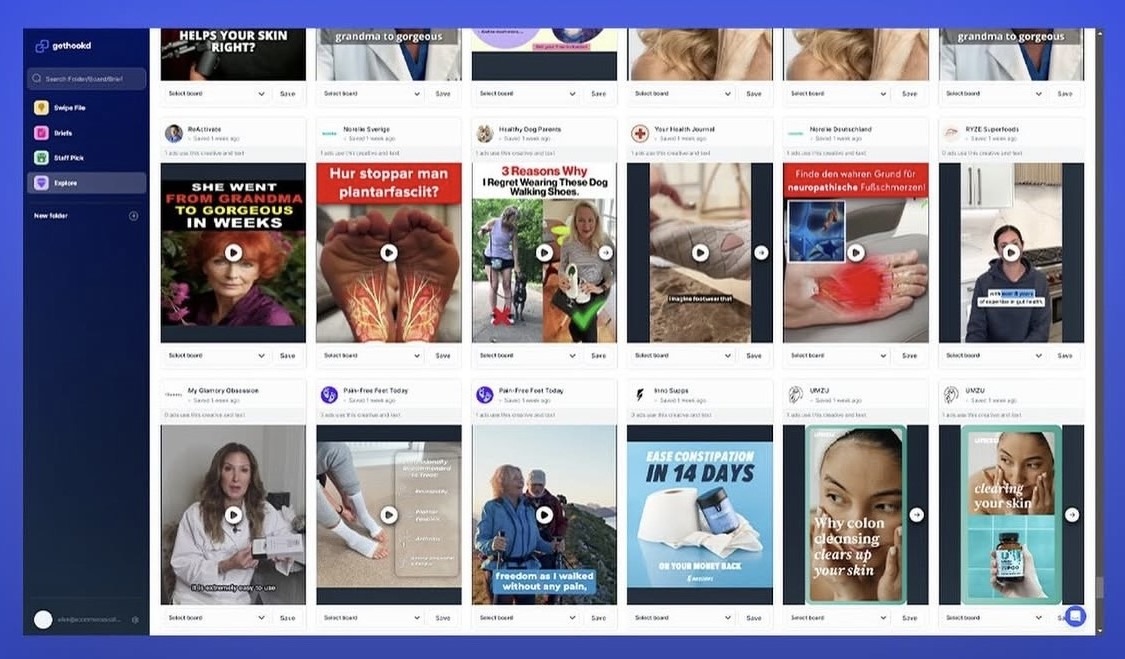
GetHookd is the strongest option for performance marketers who want AI-powered UGC creation built into a competitive research and analytics workflow. Rather than generating content in isolation, our platform connects the entire process, from studying what competitors are actively scaling to generating scripts, hooks, and visual variations from winning ad concepts.
Key features for UGC production include:
- Explore Ads: Browse a library of 65 million-plus Meta ads to find UGC-style creatives that are already performing in your niche.
- Save Ads: Save any UGC ad worth referencing (even after it goes offline) and organize it by niche or format for your next creative brief.
- Video Scripts: Feed in a winning ad, and your product details, and GetHookd’s AI produces ready-to-use hooks, angles, and full scripts tailored to your campaign.
- Ads Transcription: Break down any video ad into its core copy elements: hooks, body, and CTA, so you can adapt what is already converting in your market.
- Clone Ads: Take any high-performing image ad and generate multiple creative variations across different formats, colors, and styles without starting from scratch.
- Image Ad Templates: Access a library of proven static ad templates across niches, each editable directly in Canva.
- Funnel Templates: Pick from high-converting landing page formats and customize for your offer.
- Creative Analyzer: Identify which of your own UGC ads are driving results and understand why, so you can scale what’s working and cut what isn’t.
2. HeyGen
HeyGen focuses on AI-avatar video generation, enabling brands to produce presenter-style video ads without a camera or a creator. It is useful for rapid hook testing at low cost, though the output lacks the raw authenticity that makes the strongest UGC ads convert.
3. Creatify
Creatify generates UGC-style video ads directly from a product URL, making it an option for brands with limited production resources. Like most AI video tools, it works best as a testing instrument rather than a primary creative source.
Strategies for High-Performing UGC Ads
Authentic Visuals That Feel Unscripted
High-performing UGC ads are deliberately imperfect. Natural lighting, real environments, and genuine delivery outperform studio setups because they preserve the sense that a real person is sharing their experience.
Brief your creators on key messages and outcomes, but give them room to express it in their own voice. The moment an ad looks too polished, it stops working like UGC.
Branding That Blends In
Your brand needs to show up in the ad, but it should not dominate it. The most effective approach is subtle: a product label visible in a natural shot, a creator mentioning the brand name in conversation, or a clean end card in the final two seconds.
Front-loading logos and brand colors signal “ad” to an audience that is actively trying to scroll past ads. Test a branded end card against a non-branded version in your ad sets and let the data decide.
A Hook That Stops the Scroll
Your opening line, visual, or on-screen text has to create enough curiosity or relevance to earn the next few seconds. The strongest hooks are specific to a pain point, genuinely surprising, or visually arresting.
Test hook variations systematically by keeping everything else constant and changing only the opening three seconds.
A CTA That Drives Immediate Response
A UGC ad without a clear CTA is content, not a conversion tool. For cold traffic, low-friction CTAs like “see how X works” outperform aggressive purchase prompts because they meet the audience where they are.
For warm retargeting audiences, a direct “shop now” is the nudge they need. Place the CTA verbally in the final seconds and reinforce it with on-screen text. Keep the language conversational and consistent throughout.
Start Running UGC Ads That Convert with GetHookd
Most teams waste budget producing UGC creative that was never going to work because they skipped the research stage. GetHookd removes that problem. We give performance marketers, eCommerce brands, and agencies the intelligence to know what is already converting in their market before going into production.
GetHookd connects research and execution in one place. Our Brand Spy feature surfaces what competitors are actively running on Meta, including the hooks, formats, and landing pages behind their best campaigns. Ads Transcription extracts the exact copy structure and hook angles from any video UGC ad, giving your team proven frameworks to build from rather than starting from scratch each production cycle.
Once you know what to make, our AI tools handle the rest. For teams running Meta campaigns at scale, that kind of visibility at every stage is what turns UGC from a content exercise into a revenue system.
Start your GetHookd free trial today.
Frequently Asked Questions (FAQs)
What makes a good UGC ad?
A good UGC ad looks and feels like organic content. It opens with a hook that speaks directly to a pain point, builds trust through genuine delivery, and closes with a clear and conversational CTA.
Specificity separates high-converting UGC from generic content. Ads that reference real problems and outcomes and maintain a natural voice throughout earn attention.
How do you make a UGC ad?
Start by researching what formats and hooks are already performing in your niche. Brief a creator or create content with Google Veo through invideo to generate UGC-style video variations, then refine the output before launch.
Test multiple hooks against the same audience, identify the top performer, and iterate from there. The process works best when research informs every creative decision upfront.
What is the best AI tool for UGC ads?
GetHookd is the most complete option for performance marketers. It covers the full UGC workflow from competitor research and hook analysis to AI script generation and creative variation, and every production decision is backed by real ad data.
*Note: Pricing and/or product availability mentioned in this post are subject to change. Please check our website for current pricing and stock information before making a purchase.