How to Increase Facebook Ad Reach: Tips & Best Tools
Key Takeaways
- Prioritize shares, saves, and watch time over passive likes; these are the signals Facebook’s algorithm uses to decide how far your ad travels.
- Spend your budget on ads that already show engagement signals; putting paid budget behind cold or unproven content makes underperformance worse, not better.
- Post consistently, but make quality the filter. One strong piece of content will outperform five forgettable ones every time.
- Segment your audience and retarget warm users rather than running broad campaigns; people who have already engaged with your brand cost less to reach and convert at higher rates.
- Use GetHookd to see which ads competitors are actively scaling, so your next campaign starts from proven data rather than guesswork.
Why Your Facebook Ad Reach Is Plateauing (And How to Fix It)
Facebook’s algorithm evaluates every ad based on relevance, engagement signals, and user behavior before deciding how many people to show it to. If your reach has stalled, the algorithm is not seeing enough positive signals to push your content further.
The fix is not simply spending more. Putting your budget behind a poorly optimized ad amplifies the problem rather than solving it. The solution starts with understanding what the algorithm rewards: time spent on a post, meaningful comments and shares, how well your ad matches the audience’s interests, and whether viewers are hiding or reporting it.
Negative feedback actively suppresses reach, and repetition without relevance makes that worse over time.

GetHookd: Turn Competitor Intelligence Into Your Next Winning Ad
GetHookd reveals which ads your competitors are actively scaling—not just running. Spy on their best-performing creatives, landing pages, and traffic strategies, then turn proven concepts into testable campaigns in seconds with AI-powered script generation and creative cloning.
What You Get:- ✓ Brand Spy to decode competitor ad strategies in real-time
- ✓ AI script generation and ad cloning for instant variations
- ✓ Performance scoring based on actual ad behavior, not vanity metrics
- ✓ Creative Analyzer to identify and scale your top performers
GetHookd: Turn Competitor Intelligence Into Your Next Winning Ad
65M+ Ads Analyzed | 4.8★ G2 Rating | 4.5★ Trustpilot Rating
Stop Guessing. Start Scaling:
GetHookd reveals which ads your competitors are actively scaling—not just running. Spy on their best-performing creatives, landing pages, and traffic strategies, then turn proven concepts into testable campaigns in seconds with AI-powered script generation and creative cloning.
What You Get:
- ✓ Brand Spy to decode competitor ad strategies in real-time
- ✓ AI script generation and ad cloning for instant variations
- ✓ Performance scoring based on actual ad behavior, not vanity metrics
- ✓ Creative Analyzer to identify and scale your top performers
How to Increase Facebook Ad Reach: 4 Tips
1. Use Your Facebook Page More Proactively
The brands winning on Facebook treat their pages as active marketing channels. They post regularly, respond to comments, and create content that sparks genuine engagement.
Post Content That Makes People Stop Scrolling
Facebook tracks how long a user spends on any given post. When the algorithm detects that people are pausing, reading, and engaging, it rewards that content with more distribution.
That means every post needs a strong hook in the first line or first frame, something that gives a user a reason not to keep scrolling. Video content, behind-the-scenes posts, and opinion-based questions tend to generate the most dwell time.
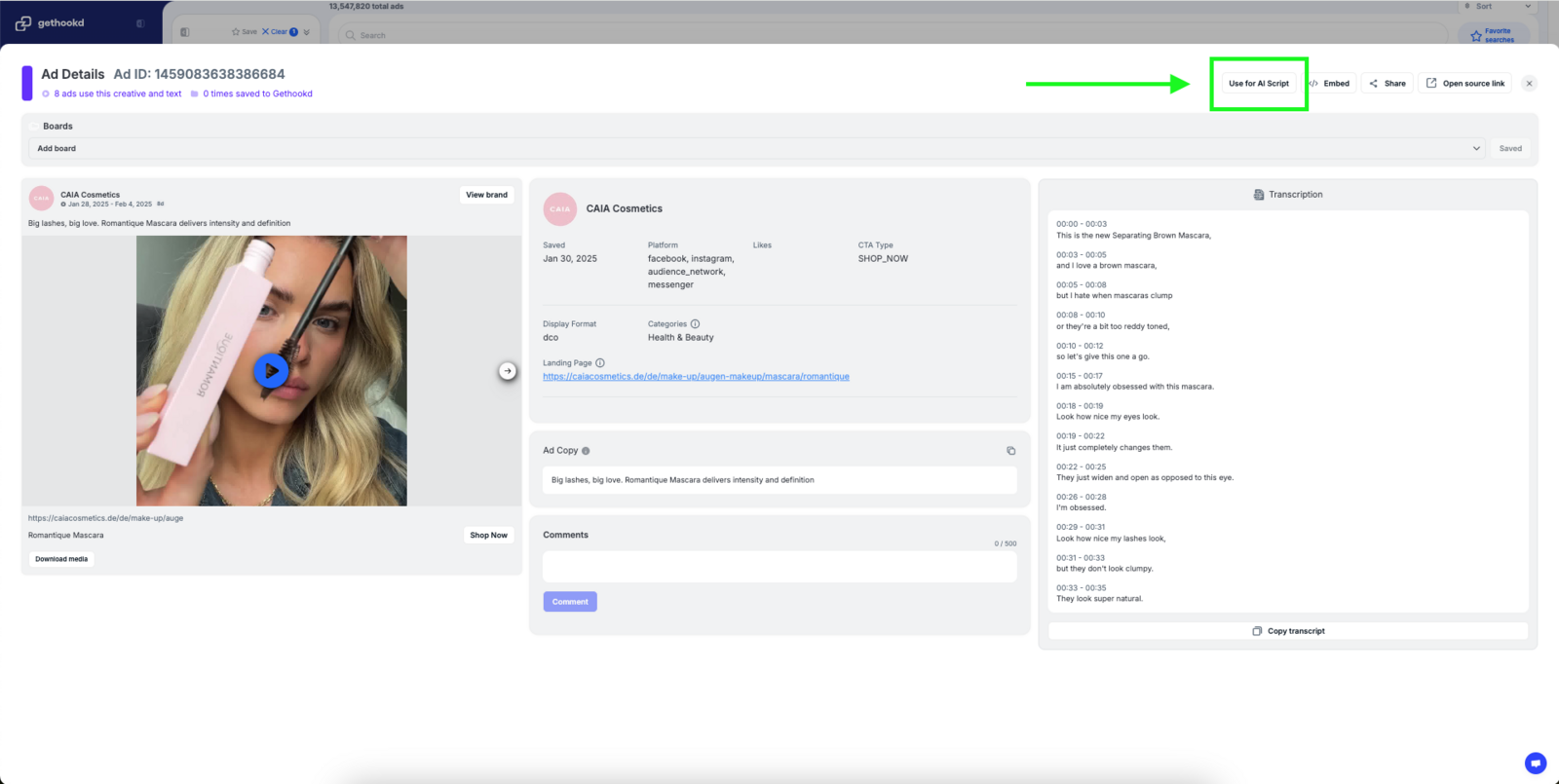
GetHookd’s Ads Transcription lets you extract the exact hook structures from competitor ads already earning that attention in your niche, so you are not guessing at what works.
Consistency & Quality Work Together
Realistic, steady posting keeps your page visible and gives the algorithm enough material to learn what your audience responds to.
But consistency without quality only compounds the problem. Facebook weighs shares and saves far more heavily than passive likes. Genuine comments and meaningful interactions signal more value than a high impression count with no engagement behind it.
For video, watch time and retention are the metrics that trigger wider distribution, not view count alone.
2. Build Engagement Through Facebook Groups
Facebook Groups generate the kind of two-way participation that produces exactly the engagement signals the algorithm rewards. Unlike a business page, a group creates a community where members actively contribute rather than passively scroll.
Focus on content that genuinely serves your members: tutorials, Q&A sessions, industry news, and polls. The goal is a space people return to, not a secondary ad channel.
If joining an existing group makes more sense than creating one, lead with value. Share useful information first and let your credibility build over time. Hard selling gets you removed and damages your reputation with the audience you were trying to reach.
3. Run a Smart Paid Ad Strategy on Facebook
a. Invest in Page Likes First
Advertising for page likes is one of the most cost-effective ways to build compounding reach. When users like your page, your content appears in their feeds organically, giving every post a distribution advantage without additional spend. The larger and more engaged your follower base, the more amplification your paid campaigns receive when you do run them.
b. Audit Your Content to Find What Works
Before increasing ad spend, identify what is already performing. Review your post history and find which formats, topics, and tones generated the highest engagement.
Boosting content that already has proven engagement signals is far more effective than putting paid budget behind cold content.
c. Use Audience Segmentation & Retargeting
Broad targeting wastes budget. Segment your audience based on demographics, interests, behaviors, and purchase intent.
Retargeting is especially efficient. Serving ads to users who have already interacted with your brand drives higher relevance scores, lower costs, and broader algorithmic distribution.
d. A/B Test Your Ads Regularly
Never assume your first ad is your best ad. Test headlines, images, copy, CTAs, and audience segments independently. Let performance data decide the winner, then scale it and cut the loser quickly.
4. Use Audience Insights to Guide Every Decision
Facebook Audience Insights provides a detailed breakdown of who your current and potential audiences are, including age, gender, location, interests, device usage, and purchasing behavior.
Start with the interest overlaps that your competitors have not targeted yet. Check device usage patterns and let them inform how your creative is built.
Look at behavioral signals to identify high-intent users worth targeting with conversion campaigns. Then compare your existing customer base against a broader target audience to find where expansion opportunities sit. Audience behaviors shift over time, so treat this as an ongoing task rather than a one-time setup.
Best Tools to Increase Facebook Ad Reach
1. GetHookd
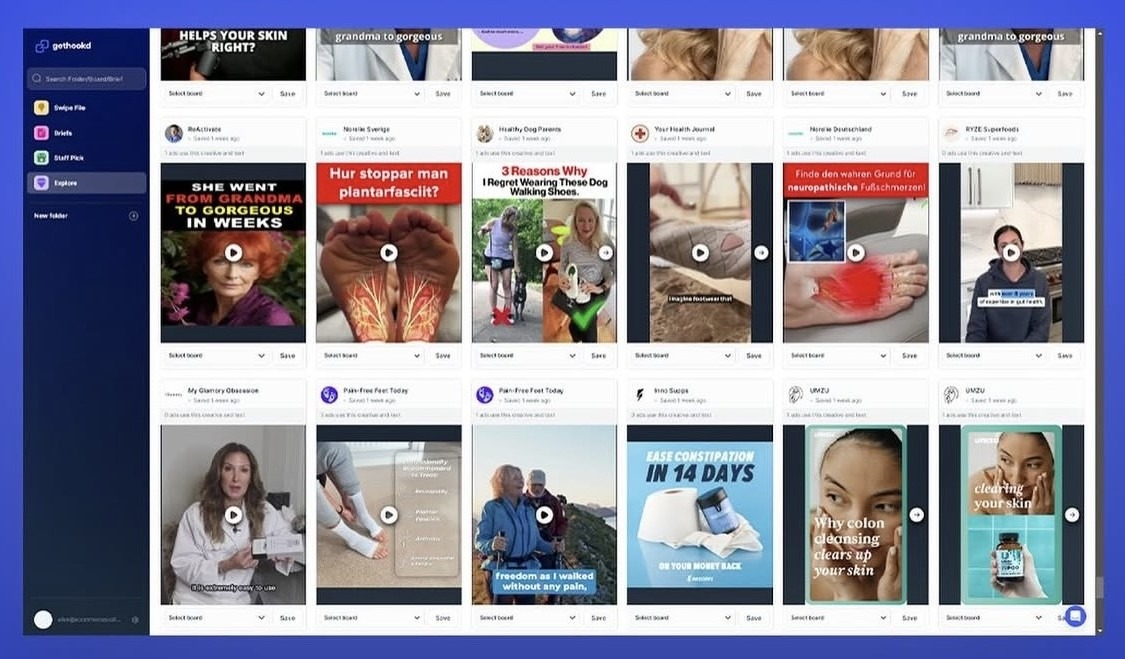
For eCommerce brands, dropshippers, media buyers, and agencies running Meta campaigns, GetHookd brings competitive research, creative production, and performance analysis into one place. Our platform gives you access to 65M+ ads so you can see exactly what is scaling in your niche before spending a dollar on production.
Key features relevant to increasing Facebook ad reach:
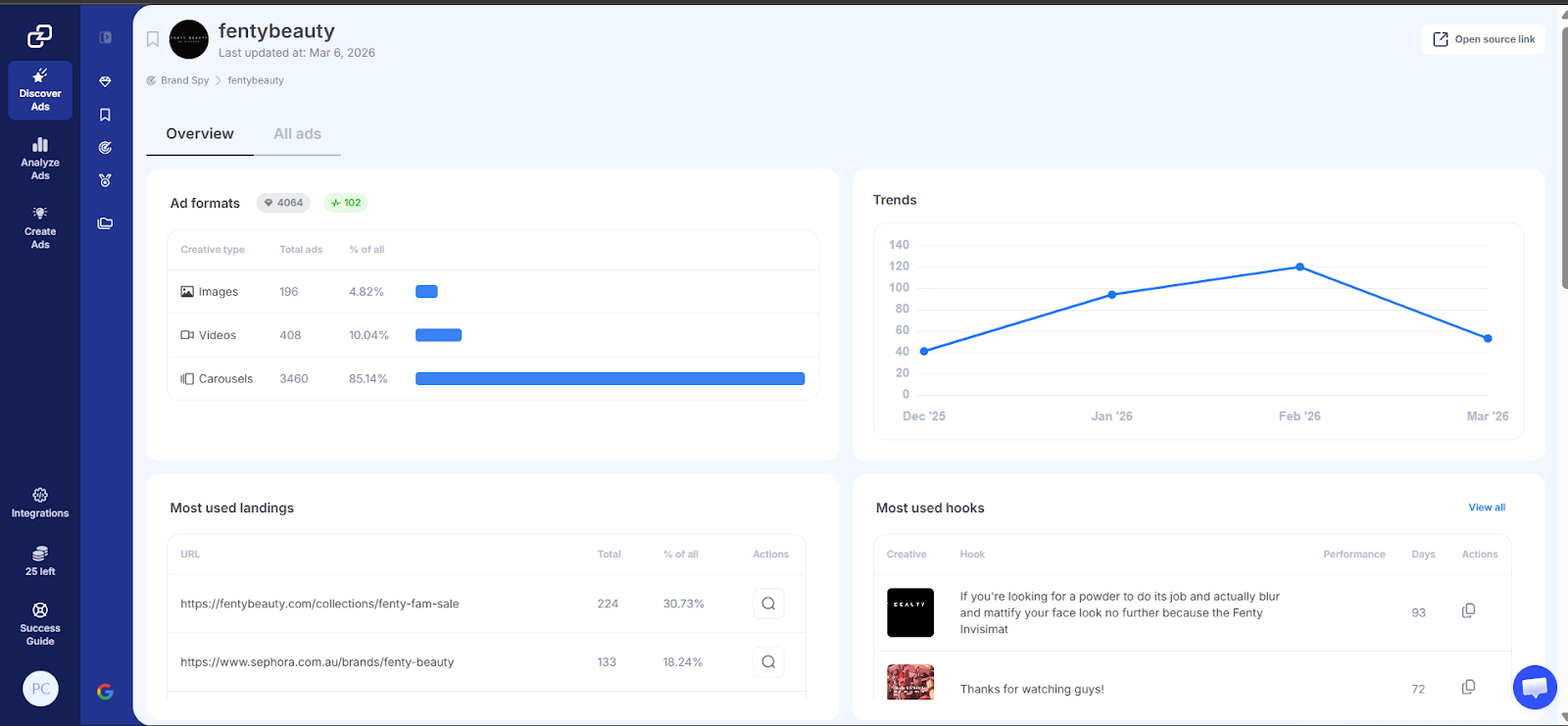
- Brand Spy surfaces the full picture behind any competitor’s ad strategy, from the formats they keep returning to and the hooks driving engagement, to the landing pages behind their top performers.
- Ads Transcription pulls the exact copy structure and hook angles from any video ad.
- Video Scripts generate full ad scripts from your product details in minutes.
- Clone Ads lets you generate dozens of image variations from any top-performing ad (e.g., new colors, avatars, and formats) almost instantly, so you can scale what works without starting from scratch.
- Creative Analyzer pulls performance data directly from your Meta ad account, so you can see which ads are earning their spend and which ones to replace before they drain budget further.
For teams looking to increase Facebook ad reach without the guesswork, GetHookd gives you the intelligence to make every campaign decision count.
2. Facebook Ads Manager
Facebook Ads Manager is the central hub for building and monitoring every paid campaign on the platform. You can define your target audience by age, location, interests, behavior, and connection type, set daily or lifetime budgets, choose your optimization goal, and monitor real-time performance metrics.
That said, it shows you how your own campaigns are performing but gives you no visibility into what competitors are running or which creatives are scaling in your niche.
3. AdEspresso
AdEspresso is a Facebook ad management platform that allows you to test multiple variables simultaneously across headlines, images, copy, and audiences from a single setup. It covers campaign management and basic testing, but its reporting is limited to your own account data.
It offers no visibility into competitor creatives or what’s actively scaling in your niche. For teams that need competitive intelligence alongside creative production, GetHookd fills that gap.
Grow Your Facebook Ad Reach with GetHookd
Every tactic in this article points to the same underlying truth: reach on Facebook is earned, not bought. The brands seeing consistent growth are combining meaningful content, smart audience targeting, and regular testing with tools that make every decision data-driven rather than instinctive.
GetHookd gives you visibility at every stage of that process. You can see what competitors are actively scaling before committing to production, extract the hooks and copy structures behind ads that are already working, and connect your own Meta account to identify exactly where your spend is earning returns and where it is not.
Most teams already have the budget. What they are missing is the intelligence to deploy the right ad. And that is the difference between a reach that plateaus after the first month and one that keeps building as your creative decisions get sharper.
Improve your Facebook ad reach with GetHookd today!
Frequently Asked Questions (FAQs)
How to improve Facebook ad reach?
Start with your creative. Weak creative limits distribution before your budget even gets a chance to work.
Beyond that, maintain a consistent posting cadence, use audience segmentation to avoid wasting impressions on cold audiences, retarget users who have already engaged with your brand, and audit performance regularly.
What is the 20% rule on Facebook ads?
Facebook previously required that text cover no more than 20% of an ad image, and ads exceeding that threshold were penalized with reduced reach or rejected outright. Meta officially retired this rule in 2020, so it no longer applies.
However, ads with heavy text overlays feel promotional rather than native to the feed. Keeping text minimal remains good practice even without the formal restriction.
What type of Facebook content gets the most reach?
Short-form video, particularly Reels, consistently generates the highest reach on Facebook. After video, carousels perform well because multiple frames give the algorithm more chances to match the content to the viewer’s interest. UGC-style content, behind-the-scenes posts, and real customer stories tend to outperform polished brand creative because they feel native to the feed.
Whatever format you choose, relevance to a specific audience will always outperform content built for broad appeal.
How does GetHookd help me identify winning Facebook ad formats?
GetHookd’s Explore Ads gives you access to 65M+ Meta ads filterable by niche, format, and run time. Instead of guessing which content type your audience responds to, you can see exactly which formats competitors are actively putting budget behind, how long those ads have been running, and what hooks they are leading with.
Our Brand Spy feature takes it further by tracking specific competitor accounts over time so you can see how their creative direction shifts and which formats they keep returning to.
Do I need technical skills to use GetHookd?
No. GetHookd is built for media buyers, brand owners, and agencies. not developers. There is no setup, coding, or technical knowledge required.
You can search 65M+ ads, spy on competitor strategies, and generate scripts or creative variations from a straightforward dashboard. If you know how to run a Meta campaign, you already have the skills to get value out of GetHookd immediately.
*Note: Pricing and/or product availability mentioned in this post are subject to change. Please check our website for current pricing and stock information before making a purchase.