7 Best Ways to Improve Facebook Ads Performance in 2026
Key Takeaways
- Feed Meta’s algorithm high-quality creative and accurate campaign objectives; targeting alone no longer drives results.
- Creative is now the primary performance lever on Facebook, and short-form video, UGC-style content, and native-feeling formats consistently outperform polished brand production.
- First-party data and properly configured conversion tracking are no longer optional, as third-party tracking erosion has made them the foundation of reliable campaign optimization.
- A proactive creative refresh schedule with new variations every two to three weeks keeps performance stable before frequency climbs and CTR drops.
- GetHookd gives media buyers, eCommerce brands, and agencies the competitive intelligence and AI creative tools to improve Facebook ad performance faster.
Facebook Ads Performance Has Shifted in 2026
Improving Facebook ad performance in 2026 comes down to working with Meta’s AI rather than against it. That means feeding the algorithm with high-quality creative, clean conversion signals, and accurate campaign objectives, while building the creative systems to stay ahead of a faster-moving auction environment.
Meta’s shift toward AI-driven campaign automation, combined with the erosion of third-party tracking after iOS privacy changes, fundamentally changed how the platform delivers ads. Hyper-segmented audience structures that once gave advertisers an edge now fragment the data the algorithm needs to optimize, and costs reflect that.
While tools like the Facebook Ad Library give advertisers a starting point for competitor research, they surface raw ad data without the performance context needed to make confident creative and scaling decisions.
The seven strategies below cover each lever worth pulling to improve Facebook ad performance right now.

GetHookd: Turn Competitor Intelligence Into Your Next Winning Ad
GetHookd reveals which ads your competitors are actively scaling—not just running. Spy on their best-performing creatives, landing pages, and traffic strategies, then turn proven concepts into testable campaigns in seconds with AI-powered script generation and creative cloning.
What You Get:- ✓ Brand Spy to decode competitor ad strategies in real-time
- ✓ AI script generation and ad cloning for instant variations
- ✓ Performance scoring based on actual ad behavior, not vanity metrics
- ✓ Creative Analyzer to identify and scale your top performers
GetHookd: Turn Competitor Intelligence Into Your Next Winning Ad
65M+ Ads Analyzed | 4.8★ G2 Rating | 4.5★ Trustpilot Rating
Stop Guessing. Start Scaling:
GetHookd reveals which ads your competitors are actively scaling—not just running. Spy on their best-performing creatives, landing pages, and traffic strategies, then turn proven concepts into testable campaigns in seconds with AI-powered script generation and creative cloning.
What You Get:
- ✓ Brand Spy to decode competitor ad strategies in real-time
- ✓ AI script generation and ad cloning for instant variations
- ✓ Performance scoring based on actual ad behavior, not vanity metrics
- ✓ Creative Analyzer to identify and scale your top performers
7 Best Ways to Improve Facebook Ads Performance in 2026
1. Let Meta’s AI Do More of the Heavy Lifting
Meta’s Advantage+ Shopping Campaigns and Advantage+ Audience targeting use machine learning to find the people most likely to convert across a broader audience than most advertisers would manually define.
Run fewer, consolidated campaigns with wider audience settings, multiple creative variations per ad set, and conversion objectives set to the action that actually matters: purchases, leads, or qualified clicks.
The algorithm needs roughly 50 conversion events per ad set per week to optimize properly, but fragmenting the budget across too many narrow ad sets prevents that.
2. Make Creatives Your Biggest Competitive Advantage
If Meta’s AI handles targeting, creative is the last true lever you control, and in 2026, it is the primary determinant of Facebook ad performance.
A mediocre ad shown to a perfect audience still fails. A compelling ad shown to a broad audience performs well because the algorithm learns quickly who responds and scales delivery to similar people.
Short-form video dominates, particularly content that hooks viewers in the first three seconds with a bold visual or a direct pain-point call-out. UGC and creator-style ads consistently outperform heavily produced brand content because they look like organic content rather than advertisements.
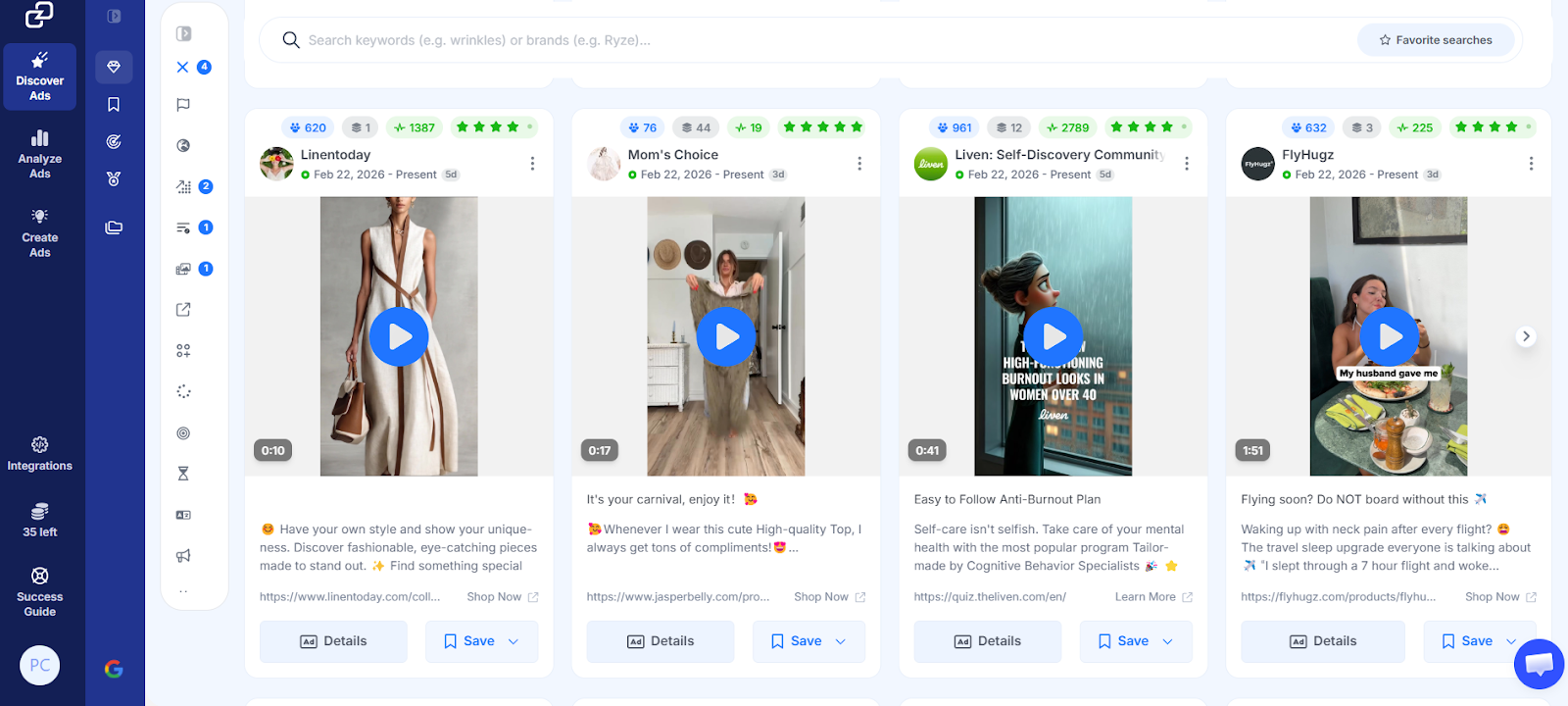
GetHookd’s Explore Ads and Brand Spy let you identify which creative formats and angles competitors are actively scaling across Meta, so your next round of creative is grounded in what is already converting in your niche.
3. Build a First-Party Data Strategy
Third-party tracking has become increasingly unreliable since Apple’s iOS privacy changes, and advertisers who built their targeting strategy on Meta pixel data alone are now operating with significant blind spots.
First-party data, collected directly from your customers through lead forms, loyalty programs, gated content, and post-purchase flows, gives Meta’s algorithm a high-quality signal that does not depend on third-party cookies.
Upload your customer list to Meta regularly to keep Custom Audiences fresh. Stale lists that have not been refreshed can degrade in match rate over time as contact information becomes outdated.
4. Set Up Your Conversion Tracking Correctly
Meta’s AI is only as good as the conversion signals it’s fed. If your tracking is misconfigured or measuring the wrong events, the algorithm optimizes toward the wrong outcomes. Follow these steps to get it right:
- Confirm your Meta Pixel fires correctly on all key pages, with standard events like ViewContent, AddToCart, InitiateCheckout, and Purchase triggering as expected.
- Add Conversions API for server-side tracking to recover the conversion signal lost after iOS privacy changes.
- Enable event deduplication if running both Pixel and Conversions API simultaneously to avoid double-counting.
- Verify your Pixel and Conversions API are correctly configured in Events Manager to maximize signal quality for Meta’s Aggregated Event Measurement system.
5. Optimize for the Full Funnel, Not Just Clicks
Running ads exclusively to cold audiences and expecting immediate conversions is a costly mistake. Most buyers need multiple touchpoints before they trust a brand enough to convert.
A properly structured funnel uses different objectives and creative types at each stage: broad awareness campaigns at the top to build familiarity, benefit-focused retargeting in the middle for people who have already engaged, and conversion-focused offers at the bottom for warm audiences ready to act.
6. Refresh Creatives Before Fatigue Sets In
Creative fatigue is one of the most predictable causes of declining Facebook ad performance. The clearest signal is a rising frequency score paired with a falling CTR.
Rather than waiting for performance to drop, build a proactive refresh schedule into your process. Introduce new creative variations every two to three weeks.
You do not always need to rebuild from scratch. Changing the opening line, swapping the visual, or testing a new copy angle can reset audience response and extend the life of a winning concept.
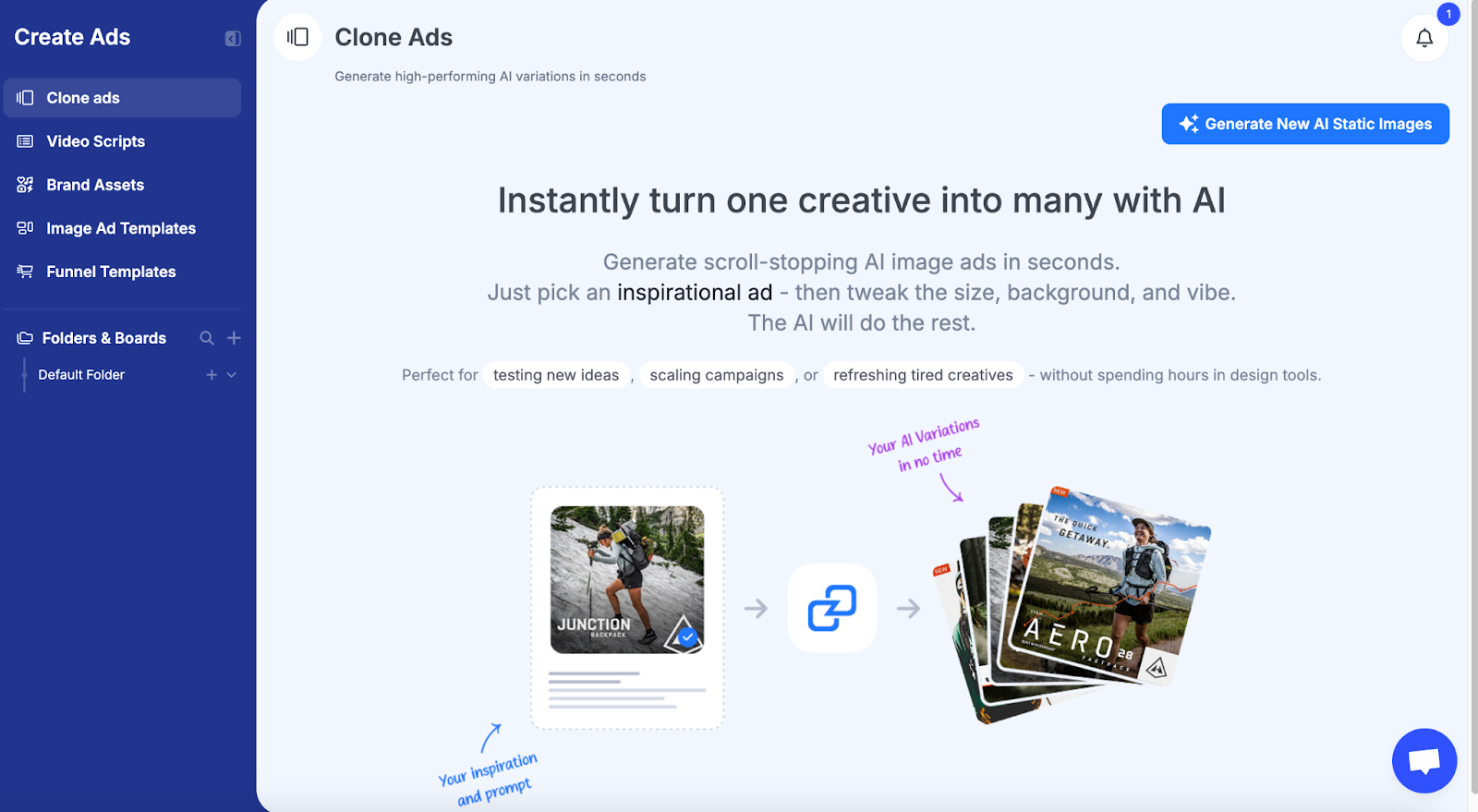
For static ads, GetHookd’s Clone Ads produces fresh visual variations in seconds. For video, Ads Transcription pulls the hooks and copy structure from any winning ad, so you have a proven framework to work from.
7. Track the Metrics That Actually Predict Profitability
Clicks and impressions do not pay invoices. The metrics worth tracking are cost per acquisition, return on ad spend, and contribution margin per conversion, as they directly connect ad spend to business outcomes.
CTR and CPC are useful diagnostic signals that indicate whether your creative and targeting are generating interest. Always cross-reference Meta’s reported conversions against your own analytics platform. Meta’s default 7-day click plus 1-day view attribution credits conversions to ads that were only seen, not clicked, which can inflate reported numbers significantly for campaigns with high frequency.
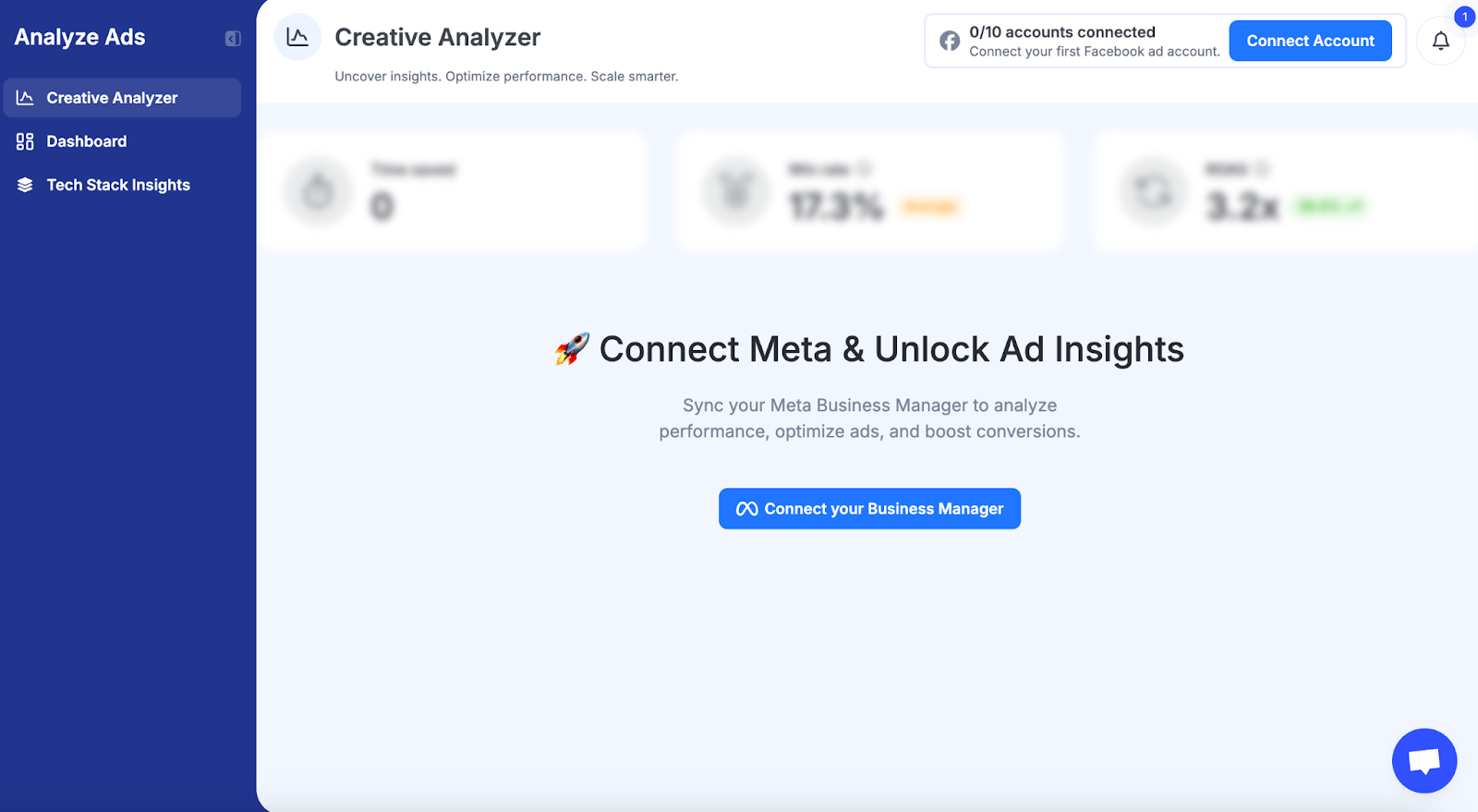
GetHookd’s Creative Analyzer connects directly to your Meta ad account to analyze performance, so every scaling decision is backed by real data rather than inflated reporting.
Build Higher-Performing Facebook Ads with GetHookd
We built GetHookd for the advertisers who cannot afford to spend two weeks testing a creative concept that was never going to work. Media buyers, dropshippers, eCommerce brands, agencies, and scaling teams need decisions backed by real data, and they need them fast. That is the problem GetHookd solves.
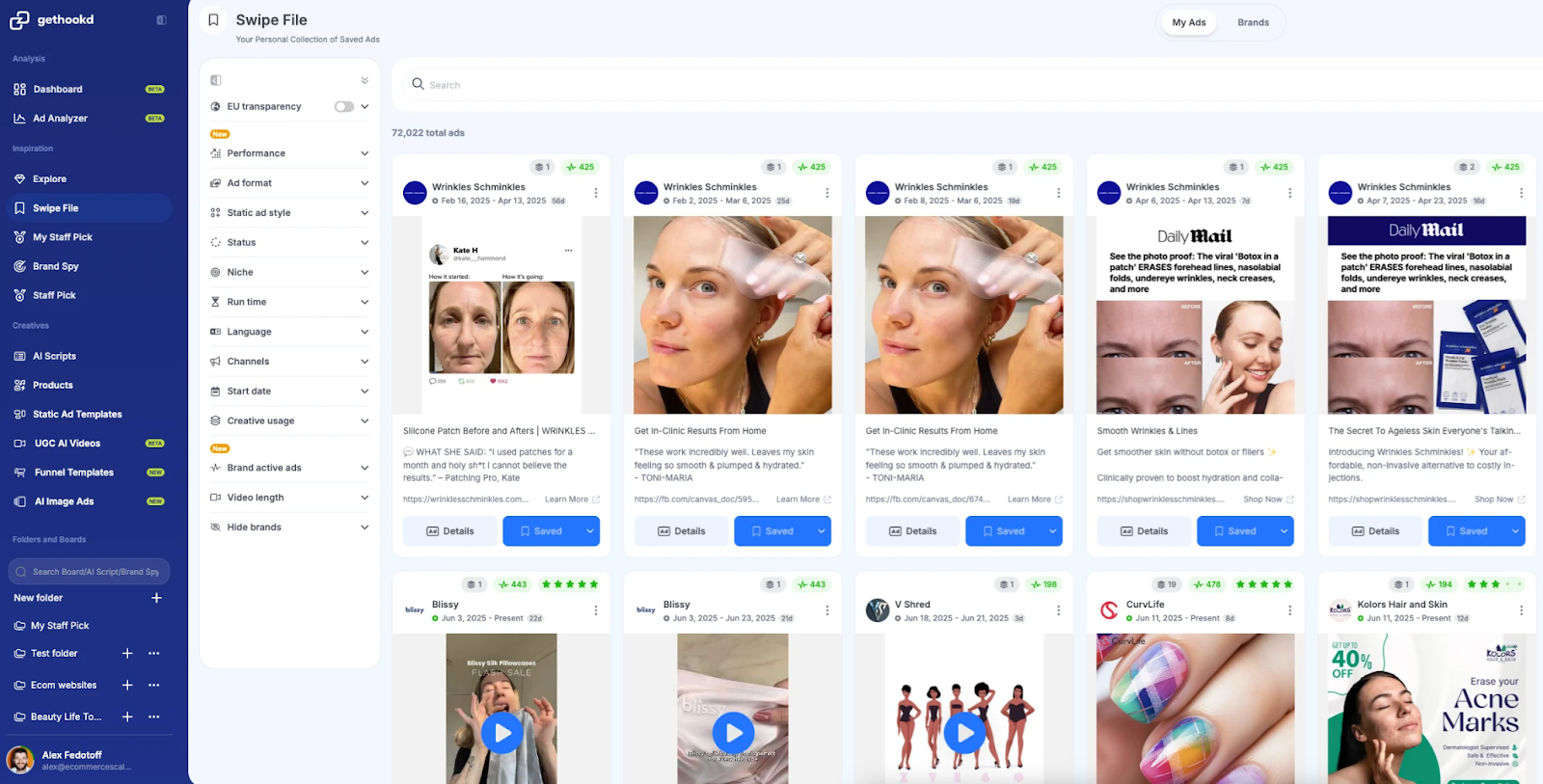
Our 65M+ high-performing Meta ad database gives you a live view of what is converting across every niche, scored on real behavioral signals, so you can distinguish between an ad a brand has tested once and one they are putting budget behind.
Brand Spy shows you exactly which creatives your competitors are actively scaling, the landing pages receiving their traffic, and the hooks they keep returning to. The competitive intelligence that used to take hours of manual research now takes minutes.
When you find a concept worth acting on, our AI creative tools and templates close the gap between research and production. Every feature is built around one principle: the faster you move from insight to live campaign, the less budget you waste on concepts that were never proven in the first place.
Start your GetHookd free trial today!
Frequently Asked Questions (FAQs)
What is the best Facebook ad format in 2026?
Short-form vertical video dominates right now, particularly for top and mid-funnel campaigns, with Reels and Stories driving strong reach when the creative feels native rather than promotional. For bottom-of-funnel retargeting, single-image ads with a strong headline and clear CTA still perform well because they are fast to consume and direct in their message.
How long does it take for Facebook ads to optimize?
Meta’s algorithm typically takes 7 to 14 days and around 50 conversion events per ad set to exit the learning phase and stabilize delivery. Avoid significant changes to budget, targeting, or creative during this period, as each significant edit resets the learning clock entirely.
What is the biggest reason Facebook ads fail?
Weak creative is the biggest reason Meta ads fail. Advertisers spend significant energy on targeting and campaign structure, then launch ads with generic visuals and no compelling hook. GetHookd solves this by giving you access to 65M+ high-performing Meta ads and AI tools to turn proven concepts into your own campaigns, so you never have to guess what will connect with your audience. For teams whose bottleneck is account infrastructure rather than creative, agency ad accounts can provide another route for running and scaling campaigns across major advertising platforms.
How to increase ROI on Facebook ads?
Start by ensuring your ads are grounded in what is already converting in your market. GetHookd’s Brand Spy shows which creatives competitors are actively scaling, so your next campaign is built on proven concepts rather than guesswork. Pair that with a properly structured full-funnel strategy and a proactive creative refresh schedule, and you have the core of a system that compounds ROAS over time.
How does GetHookd’s Brand Spy work?
Brand Spy lets you look up any competitor and see exactly which ads they are actively scaling, the landing pages receiving their traffic, and the hooks and angles they keep returning to. Unlike the Facebook Ad Library, which shows you what is running, Brand Spy shows you what is working, so your creative decisions are grounded in real performance signals rather than guesswork.
*Note: Pricing and/or product availability mentioned in this post are subject to change. Please check our website for current pricing and stock information before making a purchase.