Key Takeaways
- Instagram poll ads are interactive Story, Reel, or Feed creatives that use a two-option sticker to let viewers tap their preferred answer, capturing engagement and first-party data inside a single placement.
- The five effective poll ad examples worth testing in 2026 are product preference polls, lifestyle debate polls, pain point yes-or-no polls, predictive launch polls, and audience segmentation polls.
- These formats work because each tap builds a custom audience that can be retargeted with creative matched to that specific preference, giving advertisers measurable returns well beyond surface engagement.
- To make them work in 2026, brands should surface debates the audience already holds, frame yes-or-no questions around real pain points, and use segmentation polls to route different customer groups to tailored landing pages.
- At GetHookd, we help media buyers and ecommerce teams spot winning poll ad formats faster by analyzing competitor creatives across our database of 65M+ Meta ads.
What Works in Instagram Poll Ads Right Now?
Product preference, lifestyle debate, pain point yes-or-no, predictive launch, and audience segmentation polls are the five Instagram poll ad examples worth running in 2026. Brands using these formats are seeing the lowest cost per engagement on Meta right now because every tap doubles as a first-party signal that can be retargeted with creative built around the answer.
For media buyers and ecommerce teams, picking a format is not the hard part. Knowing which competitor is already scaling one is. GetHookd closes that gap by analyzing 65M+ Meta ads inside one platform, surfacing the poll structures competitors are actively pushing budget behind, so your next test starts from proven ground instead of guesswork.
Below, you’ll find a breakdown of all five formats, brand examples you can model, notes on which use case each one fits, and a summary table for quick reference.

GetHookd: Turn Competitor Intelligence Into Your Next Winning Ad
GetHookd reveals which ads your competitors are actively scaling—not just running. Spy on their best-performing creatives, landing pages, and traffic strategies, then turn proven concepts into testable campaigns in seconds with AI-powered script generation and creative cloning.
What You Get:- ✓ Brand Spy to decode competitor ad strategies in real-time
- ✓ AI script generation and ad cloning for instant variations
- ✓ Performance scoring based on actual ad behavior, not vanity metrics
- ✓ Creative Analyzer to identify and scale your top performers
5 Effective Instagram Poll Ad Examples for 2026
1. The Product Preference Poll (A vs B Flavor or Variant)
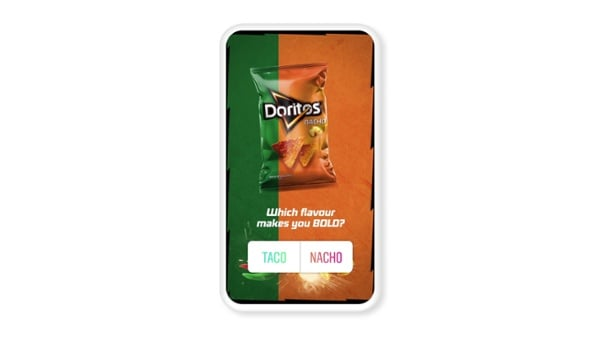
This is the classic two-option ad. You show two product variants side by side and ask viewers to vote for their favorite. Doritos used this format with a Taco vs Nacho flavor poll, splitting the frame down the middle to give each option equal visual weight. The poll sticker is positioned at the bottom, with motion graphics pulling the viewer’s eye toward the tap zone.
The reason this format works for food, beauty, and apparel brands is simple. Buyers already have an opinion about flavor, scent, or color, so the tap requires almost no thought.
Use this format when you have two SKUs to launch, two color variants to test, or a clear “which one should we make next” question. The poll results then feed your next production decision.
2. The Lifestyle Debate Poll (Hot Take or Pain Point)
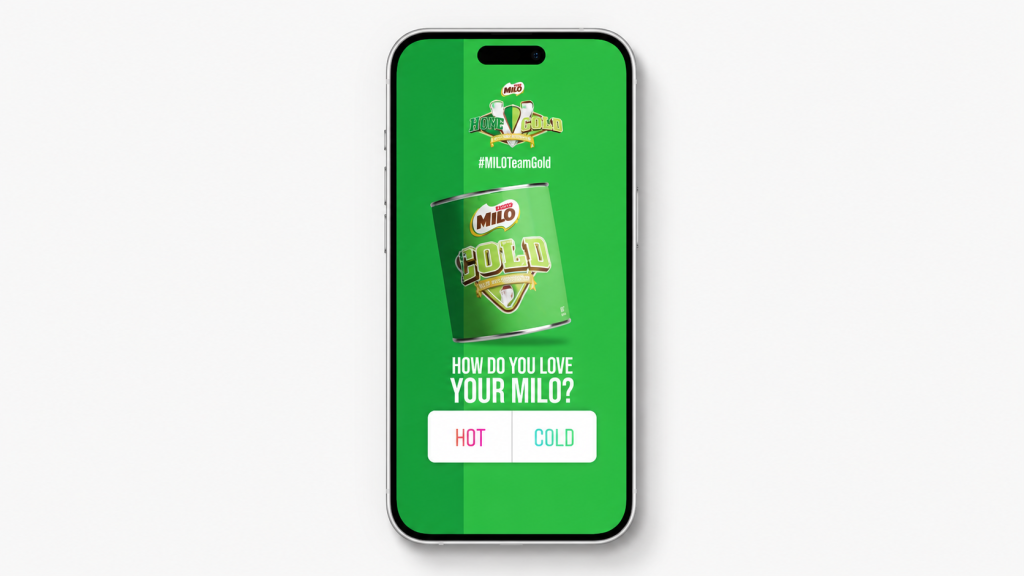
A lifestyle debate poll taps into an existing opinion your audience already holds. Nestlé’s Milo brand ran a poll asking whether Milo tastes better hot or cold, a debate that already exists among loyal customers.
The brand did not invent a question; it amplified one. That is the trick. Look for the running argument inside your category, then put it on screen. Skincare brands can ask “oily skin or dry skin,” coffee brands can ask “espresso or filter,” and apparel brands can ask “minimalist or maximalist.”
The vote itself is secondary. The real benefit is the segmentation. Each tap adds a user to a custom audience you can retarget with a creative built around that preference.
3. The Pain Point Yes or No Poll
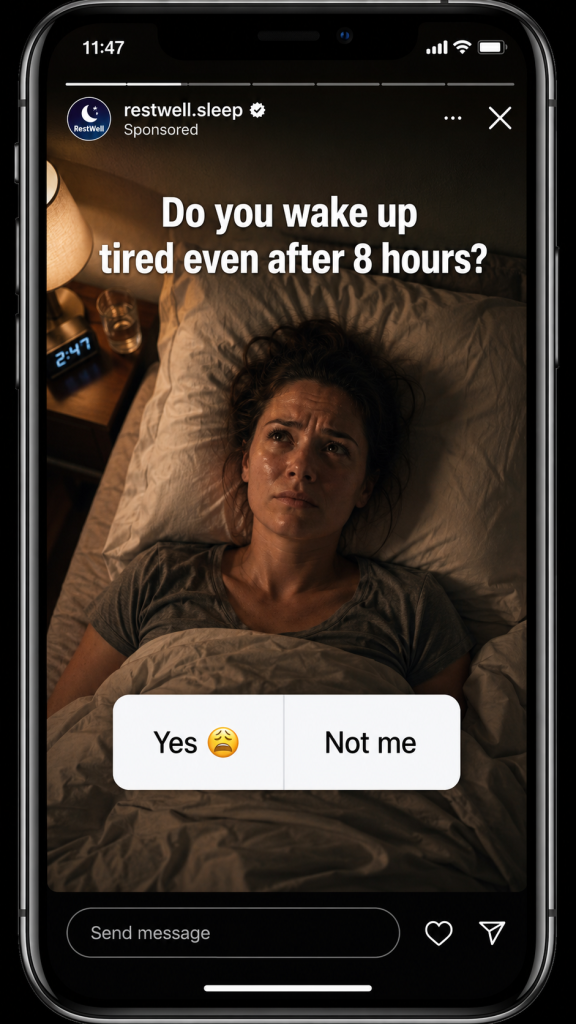
Bedding brand restwell.sleep ran a poll ad that surfaced a customer pain point and asked a straight yes-or-no question. The visual carried the question itself rather than relying on the poll sticker text, while the sticker sat below as the response mechanism.
This format works for any product solving a clear problem. Sleep, skincare, productivity tools, supplements, and B2B software all fit. The structure is straightforward:
- Open with the pain point on-screen in the first 2 seconds.
- Frame the question as a yes-or-no; the viewer can answer instantly.
- Place the poll sticker so it does not block the visual or headline.
- Use the “yes” tap as the trigger for a retargeting audience tied to that pain point.
Honesty matters here. Loaded questions where one answer is obviously correct get filtered out by viewers and earn fewer taps.
4. The Predictive or Launch Teaser Poll
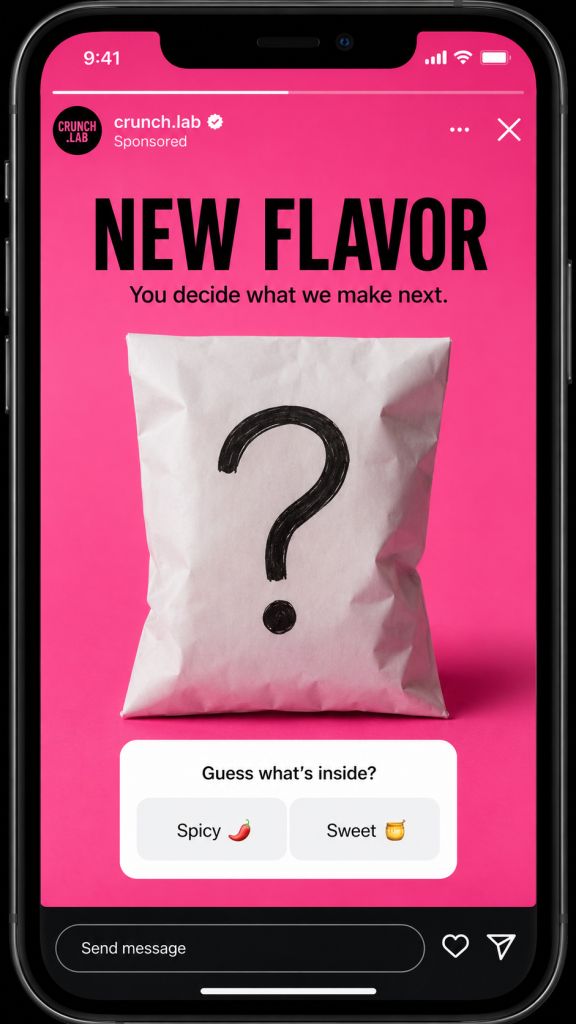
Predictive polls build anticipation before a product drop. A common version asks viewers to guess the price, color, or flavor of an unreleased product. Crunch.lab ran a clean version of this format by hiding the contents of a new chip bag and asking viewers to vote on “Spicy or Sweet,” using poll responses to build a retargeting audience for the official reveal.
This format works because curiosity is a stronger trigger than a sales pitch. The viewer is voting on an outcome they want to know, not buying anything yet. When the launch happens, the same audience sees the reveal ad, and conversion rates lift because the warm-up did the heavy lifting.
For ecommerce teams, the predictive poll is a low-risk way to test demand for a SKU before committing inventory. Heavy interest in one option signals where to focus production spend.
5. The Audience Segmentation Poll
This format treats the poll itself as a routing tool. You ask a question with two genuine paths, then send each answer to a different landing page using Meta’s poll URL feature. Each answer can link to a different destination URL, giving advertisers a lightweight way to collect first-party preference data without a survey form.
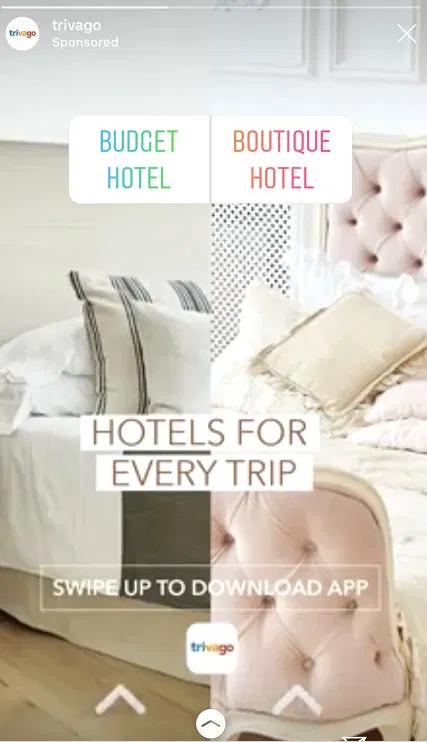
Trivago ran a version of this with a “budget hotels or boutique hotels” poll. Either tap qualified the viewer as a travel intender, and Trivago could direct each segment to a tailored search experience.
Skincare brands can split traffic by skin type. Fitness apps can split traffic by goal. SaaS brands can split traffic by team size. The format is most useful for advertisers with two clear customer segments who would benefit from different messaging on the landing page.
5 Best Instagram Poll Ad Formats: Summary Table
| Poll Format | Best Use Case | Primary Benefit | Example Brand |
| Product Preference | Variant or SKU testing | Direct production input | Doritos |
| Lifestyle Debate | Audience segmentation | Builds custom audiences | Milo (Nestlé) |
| Pain Point Yes or No | Problem-solution offers | Identifies warm leads | restwell.sleep |
| Predictive Launch | Pre-launch warm-up | Builds anticipation | Crunch.lab |
| Audience Segmentation | Multi-segment brands | Routes traffic by intent | Trivago |
How Does GetHookd Help You Spot the Next Winning Poll Ad?
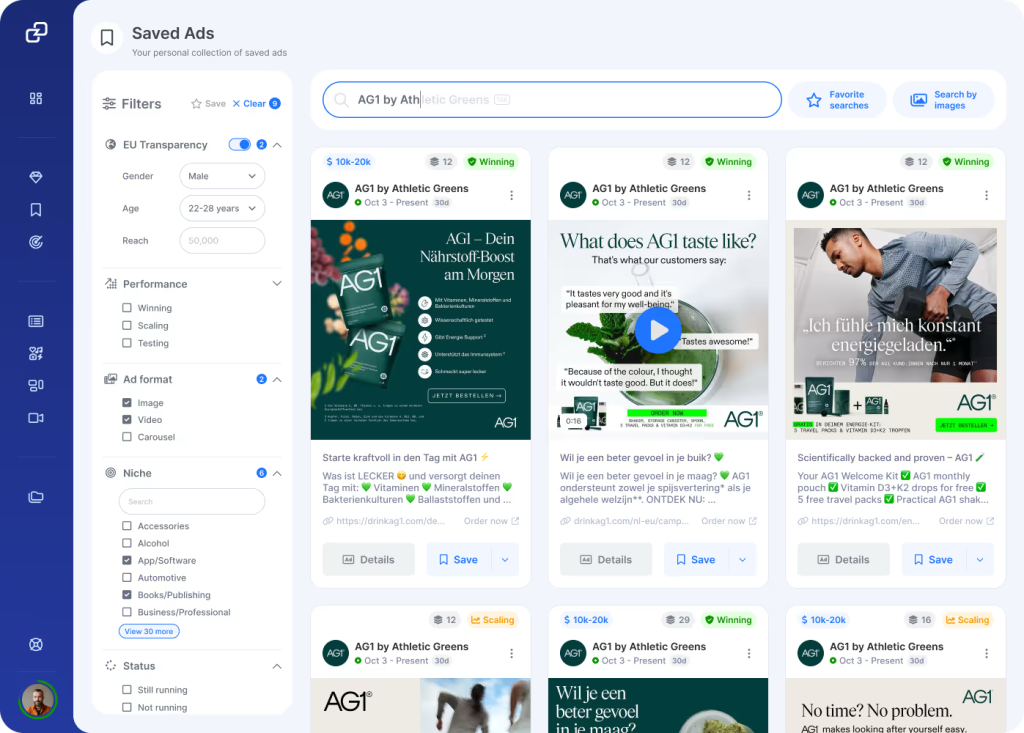
The five poll ad formats above succeed because they pair a real audience opinion with a creative built around the sticker. Brands that test these formats early capture cheap engagement before competitors flood the placement.
At GetHookd, we help media buyers and ecommerce teams find those early signals across the 65M+ Meta ads in our database, with Brand Spy, Creative Analyzer, and Clone Ads working together to turn competitor poll wins into your next testable concept. If you want to spot scaling poll ads before everyone else, start your free GetHookd trial today.
Start your free GetHookd trial today.
Frequently Asked Questions (FAQs)
Are Instagram poll ads still available in 2026?
Yes. Poll ads remain a supported interactive format in Meta Ads Manager for Stories, Reels, and Feed placements. You can add a two-option poll sticker during the ad creation step under the creative section, with each option capped at 24 characters.
Do poll ads hurt the website’s click-through rate?
Poll ads can slightly reduce direct CTR by prompting viewers to tap the poll rather than the headline link. However, CPM often drops as engagement signals rise, and you can link each poll answer to a different URL, helping recover some of the lost click volume.
How often should I scrape competitor ads to spot poll trends?
A weekly cadence works for most ecommerce teams. Poll ads tend to run in 30 to 60-day cycles, so checking weekly catches new formats early without overwhelming your workflow. With GetHookd, you can set up Brand Spy alerts on key competitors so updates surface automatically.
How long should an Instagram poll ad run before judging its performance?
Give a poll ad 7 to 10 days of consistent spend before making a call. Engagement signals stabilize after the first few days as Meta finishes the learning phase, and a longer run gives you enough tap volume to read which option is actually winning rather than which option got an early bump.
What makes GetHookd different from the free Meta Ad Library?
The Meta Ad Library shows every live ad but provides no indication which are scaling. GetHookd analyzes 65M+ Meta ads with performance scoring based on real ad behavior, surfaces top creatives through Brand Spy, and includes AI tools for transcription, cloning, and script generation, replacing several manual workflows in one platform.
*Note: Pricing and/or product availability mentioned in this post are subject to change. Please check our website for current pricing and stock information before making a purchase.