Key Takeaways
- The main difference between carousel and collection ads is the user journey. Carousel ads are swipeable in-feed units with 2 to 10 cards that send users to external pages, while collection ads open into a full-screen Instant Experience storefront inside Facebook or Instagram.
- Carousel ad examples include fashion brands showcasing full seasonal collections, SaaS tools walking users through features card by card, and fitness brands telling a problem-to-solution story across multiple swipes. Collection ad examples include runway-style fashion drops with shoppable product grids, retargeting campaigns showing previously viewed items, and personalized catalog ads built around browsing behavior.
- Use cases for carousel ads center on awareness, education, and consideration, which makes them ideal for product launches, multi-product showcases, and top-of-funnel campaigns. Use cases for collection ads center on direct conversion, which makes them ideal for retargeting, cart abandoners, and high-intent mobile shoppers.
- Carousel ads allow up to 45-character headlines and 125 characters of primary text per card, giving more room for storytelling, while collection ads use shorter 25-character headlines and 90 characters of primary text that force sharper, high-impact copy.
- GetHookd analyzes 65M+ Meta ads so performance marketers and eCommerce teams can see which carousel and collection ads competitors are actively scaling, turning real market signals into faster testing, clearer decisions, and stronger ad performance.
What is the Difference Between Carousel and Collection Ads?
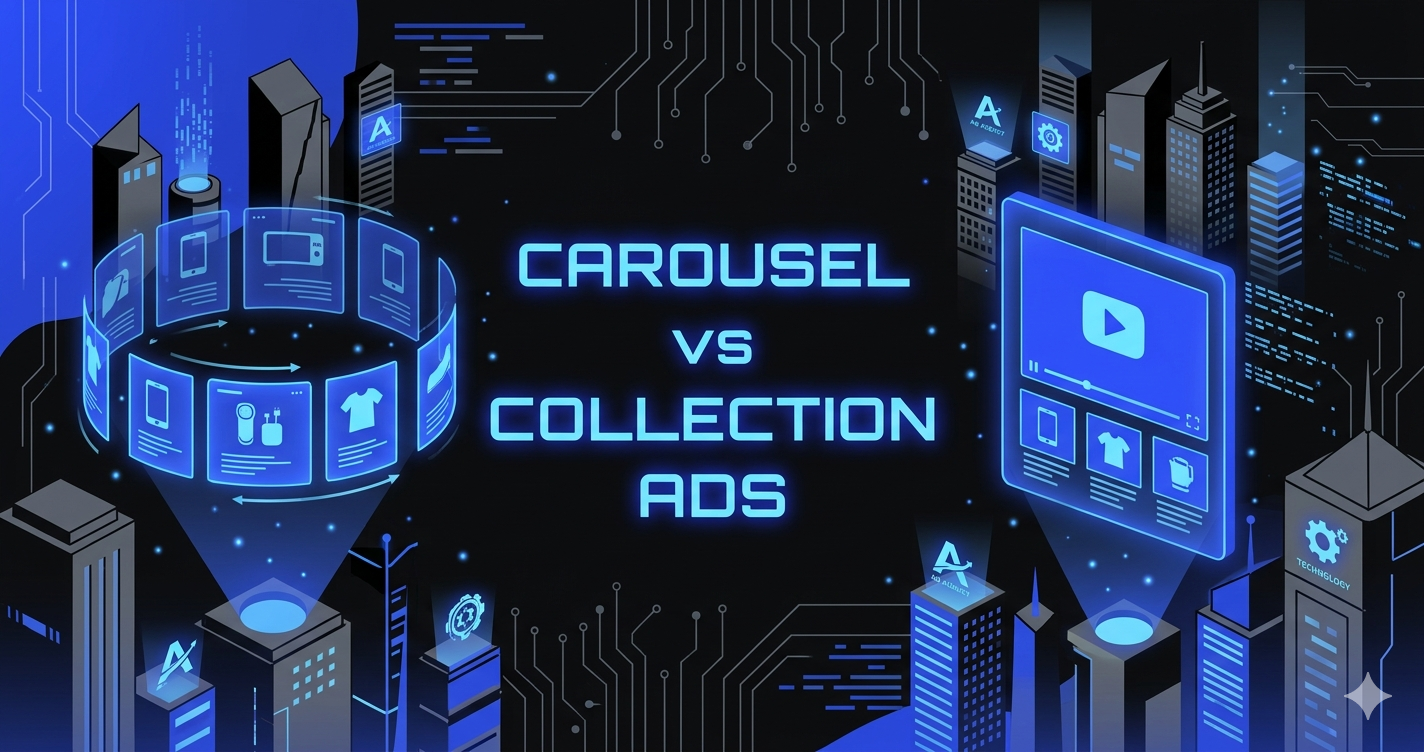
Carousel and collection ads are two Meta formats used for product exploration, but they serve different goals.
Carousel ads are swipeable feed units with 2–10 cards, each with its own creative, headline, CTA, and URL. They work well for eCommerce examples like fashion brands showing full collections or SaaS and fitness brands explaining a product step-by-step, making them ideal for storytelling, education, and engagement across desktop and mobile.
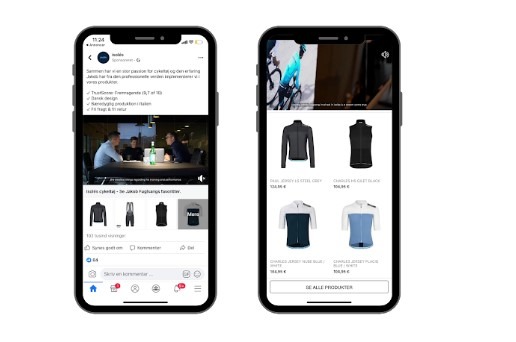
Collection ads are designed for mobile-first, high-intent shopping. A cover image or video is followed by product tiles that open into an Instant Experience, a full-screen storefront where users browse and buy instantly. They work best for retargeting, cart abandoners, and personalized product ads, where reducing friction improves conversions.
GetHookd analyzes 65M+ Meta ads to identify what’s actually being scaled and turn competitor data into faster testing and better ad decisions.

GetHookd: Turn Competitor Intelligence Into Your Next Winning Ad
GetHookd reveals which ads your competitors are actively scaling—not just running. Spy on their best-performing creatives, landing pages, and traffic strategies, then turn proven concepts into testable campaigns in seconds with AI-powered script generation and creative cloning.
What You Get:- ✓ Brand Spy to decode competitor ad strategies in real-time
- ✓ AI script generation and ad cloning for instant variations
- ✓ Performance scoring based on actual ad behavior, not vanity metrics
- ✓ Creative Analyzer to identify and scale your top performers
Carousel vs Collection Ads: Key Differences
Format & Visual Structure
Carousel ads are a swipeable, single-layer experience inside the feed. Users scroll horizontally through cards without leaving the ad unit.
Collection ads are a two-step experience. The feed shows a cover image or video with product tiles, and the full browsing experience happens after tapping inside an Instant Experience. This makes collection ads more structured and more dependent on upfront creative planning.
Character Limits & Copy Differences
Carousel ads allow more messaging flexibility with up to 45-character headlines per card and around 125 characters for primary text. This supports multi-angle storytelling across cards.
Collection ads are tighter: 25-character headlines and about 90 characters of primary text. This forces more direct, high-impact copy that needs to hook users immediately.
Mobile Experience & Shopping Flow
Carousel ads work across both desktop and mobile, giving them broader placement reach. However, collection ads are mobile-first and fully optimized for fast, in-app shopping behavior.
Because mobile users are more likely to abandon slow pages, collection ads reduce friction by keeping the entire experience inside the app. Carousel ads, while familiar and intuitive to swipe, still rely on external pages after a click.
Post-Click Behavior & User Journey
Carousel ads send users to external URLs after each card click, meaning your website performance directly impacts conversions.
Collection ads open Meta’s Instant Experience, keeping users inside Facebook or Instagram with near-instant load times and a seamless browsing flow.
Carousel Ad Examples & Use Cases
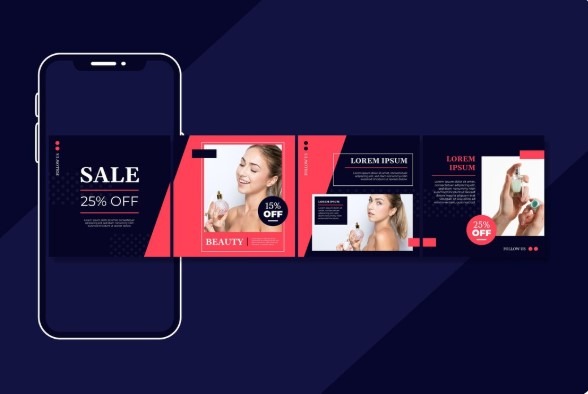
Carousel ads are a flexible paid social format that lets you use up to 10 swipeable cards in a single ad. Each card can include its own creative, copy, CTA, and destination URL, turning one ad into multiple connected touchpoints.
The strength of this format is structure; instead of one message, you can guide users through a sequence of products or ideas that build interest step by step.
E-commerce: Showcasing Multiple Products in One Ad
For eCommerce brands, carousel ads are highly effective for showcasing multiple products in one campaign. A fashion brand, for example, can display an entire collection where each card links to a different product page, allowing users to browse directly from the feed.
They’re also widely used for upsells and bundles. A kitchen brand might feature a hero product first, followed by accessories, add-ons, and a bundle offer, turning a single ad into a complete purchase journey.
Because each card has its own URL, carousel ads are great for precise targeting and attribution, since users can be sent exactly where they show interest.
Storytelling: Walking Users Through a Product’s Features
Carousel ads also work well for educating users before purchase. Each card builds part of a story, making it easier to explain complex products or offers.
For example, a fitness brand might start with the problem, introduce the solution, show key features, add use cases, include customer results, and end with a CTA. Each swipe builds clarity and intent.
This is especially effective for SaaS tools, skincare, and high-consideration products, where context is needed before conversion. The first card matters most; it has to spark enough curiosity to earn the swipe.
When Carousel Ads Win Over Collection Ads
Carousel ads perform best when the goal is awareness, engagement, or consideration rather than immediate purchase. They’re ideal for new product launches, explaining complex offers, or top-of-funnel campaigns.
They also offer broader reach across desktop and mobile, unlike collection ads, which are mobile-only, making them more flexible for mixed-audience campaigns where reach and storytelling matter more than instant checkout.
Collection Ad Examples & Use Cases
Collection ads are built for mobile-first shopping and work best when the goal is direct purchase. They combine a cover image or video with product cards and open into an Instant Experience, a full-screen storefront that lets users browse and buy without leaving Facebook or Instagram.
Fashion & Apparel: Full Catalog Browsing in One Tap
Fashion brands use collection ads heavily because they match how users already shop visually. A single ad can showcase a seasonal drop, with a cover video and product tiles that expand into a full Instant Storefront.
For example, a fashion campaign might use a runway-style cover video, followed by hero products from the collection. Once tapped, users enter a full-screen catalog where they can browse, view pricing, and purchase instantly, all inside Instagram.
This works especially well for impulse-driven fashion purchases, where users don’t want interruptions like page loads or external redirects. The experience feels native and fast, which is key for mobile conversions.
When Collection Ads Drive More Conversions
Collection ads perform best when targeting warm or high-intent audiences, such as retargeting site visitors, cart abandoners, or users who have already engaged with your ads.
For example, showing a user the exact product they viewed before, inside an Instant Experience, removes almost all friction from the purchase path. When paired with personalized product ads, this makes collection ads especially effective for bottom-of-funnel conversion campaigns where speed and simplicity directly impact ROAS.
Carousel vs Collection Ads: Comparison Table
| Feature | Carousel Ads | Collection Ads |
| Format | Swipeable feed ad with 2–10 cards | Mobile-first ad with cover + product grid |
| User Experience | Swipe through cards in-feed | Tap opens full-screen Instant Experience |
| Best Use Case | Storytelling, education, product exploration | Direct purchase, high-intent shopping |
| Copy Flexibility | More space for messaging across cards | Short, direct copy focused on quick impact |
| Traffic Flow | Sends users to external URLs | Keeps users inside Facebook/Instagram |
| Strength | Strong for engagement and awareness | Strong for conversion and frictionless buying |
Using GetHookd to Build Better Carousel and Collection Ad Strategies
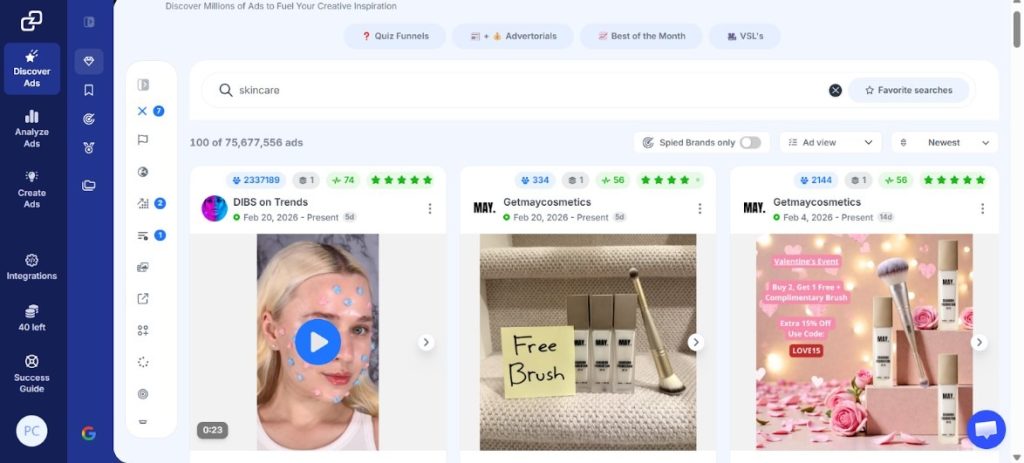
The best way to improve performance with carousel and collection ads is to base every creative decision on real competitor data, what’s already being scaled, which hooks are driving engagement, and how winning brands structure their funnels across Meta placements.
That’s exactly what we do at GetHookd. We help performance marketers and eCommerce teams analyze over 65M Meta ads to understand what’s actually working in the market, from carousel storytelling structures to collection-style product funnels, so you can turn real competitor signals into faster testing, clearer decisions, and more efficient ad spend.
Start your free GetHookd trial today.
Frequently Asked Questions (FAQs)
What is the main difference between carousel and collection ads?
The main difference is the user journey. Carousel ads let users swipe through 2–10 cards in the feed, with each card linking to an external page. Collection ads open a full-screen in-app shopping experience after a tap, keeping users inside Facebook or Instagram without leaving the platform.
Which ad format is better for eCommerce sales, carousel or collection?
Collection ads are generally better for driving direct purchases because they offer a smoother shopping flow, especially on mobile. They work best for users closer to buying. Carousel ads are better for showcasing products, explaining features, and building interest before conversion, making them stronger for product discovery and consideration.
Can you use carousel and collection ads together in one campaign?
Yes, they work well together in a funnel. Carousel ads can introduce products and build engagement, while collection ads retarget those users with a more seamless in-app shopping experience designed for conversion. This combination helps move users from interest to purchase more effectively.
Are collection ads only available on mobile?
Yes, collection ads are mobile-only and designed for in-app browsing inside Facebook and Instagram. This makes them ideal for mobile-first audiences. For desktop traffic, carousel ads are a better option since they work across both desktop and mobile placements.
How can advertisers choose the right creative strategy for carousel and collection ads?
The best approach is to study what’s already working in the market, from carousel storytelling structures to collection ad funnels, and use those patterns to guide creative decisions instead of guessing. That’s exactly what we do at GetHookd, where we analyze Meta ads to help advertisers quickly spot winning strategies across both formats and turn them into faster, more effective campaigns.
*Note: Pricing and/or product availability mentioned in this post are subject to change. Please check our website for current pricing and stock information before making a purchase.