
Key Takeaways
- Effective Facebook ads for Amazon products demonstrate a specific feature, offer a real discount, or dramatize a problem instead of relying on a plain product photo.
- Five ad examples worth studying are: Luminess demos on camera, Pleasantlybuilt styles a room, Lee Anne Benjamin curates by price, Nella pairs a factual comparison with trust badges, and House Becomes Home hooks with a daily frustration.
- The gap between clicks and sales usually traces back to a mismatch between what the ad showed and what the listing delivers.
- Strong ads open with a recognizable problem, stick to one idea, show the product working within three seconds, and link to the exact variant the creative promised.
- GetHookd helps Amazon sellers find Facebook ads that perform in their niche, track competitors with Brand Spy, and adapt proven angles using Clone Ads and Video Scripts.
Why Do Some Amazon Facebook Ads Get Clicks But No Sales?
The ad earned the tap, but the listing lost the sale. That pattern repeats across Amazon Facebook campaigns when the creative promises one thing and the listing shows another: a different color, a higher price, a bundle the shopper did not expect, or a main image that looks nothing like the styled shot in the ad. Every mismatch gives the shopper a reason to bounce, and the click still costs the same whether it converts or not.
The five examples below each solve this differently. Luminess films its product changing color on camera so the listing confirms exactly what the viewer already saw. Nella places credibility badges in the ad that match the trust signals on its Amazon page. House Becomes Home names a specific daily frustration before showing the product, so shoppers arrive on the listing already understanding what the product replaces. Each ad works because the promise and the landing experience say the same thing.
GetHookd’s database of more than 65 million Meta ads lets sellers, dropshippers, and affiliates see which product demos, offers, and hooks other Amazon sellers are scaling, so you can study what converts before building a single asset of your own.

GetHookd: Turn Competitor Intelligence Into Your Next Winning Ad
GetHookd reveals which ads your competitors are actively scaling, not just running. Spy on their best-performing creatives, landing pages, and traffic strategies, then turn proven concepts into testable campaigns in seconds with AI-powered script generation and creative cloning.
What You Get:- ✓ Brand Spy to decode competitor ad strategies in real-time
- ✓ AI script generation and ad cloning for instant variations
- ✓ Performance scoring based on actual ad behavior, not vanity metrics
- ✓ Creative Analyzer to identify and scale your top performers
5 Facebook Ad Examples for Amazon Products
Luminess
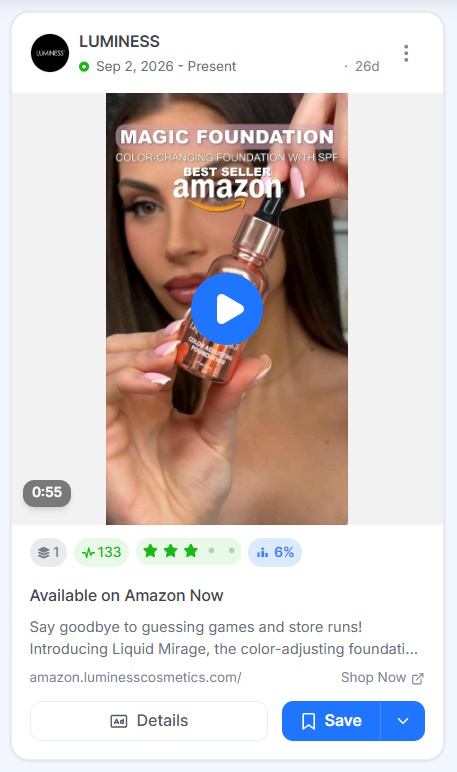
Luminess turns a beauty problem into visual proof, a tactic that shows up across many effective Meta beauty ads. The brand’s video ad shows its Liquid Mirage color-changing foundation adjusting to different skin tones as it’s applied, which removes the guesswork shoppers usually face when picking a foundation shade online.
A “Best Seller Amazon” badge sits in the frame, borrowing social proof from the marketplace itself before the viewer even clicks through. The lesson is straightforward: when a product has a genuinely different mechanism, filming it in action convinces faster than any headline.
Pleasantlybuilt
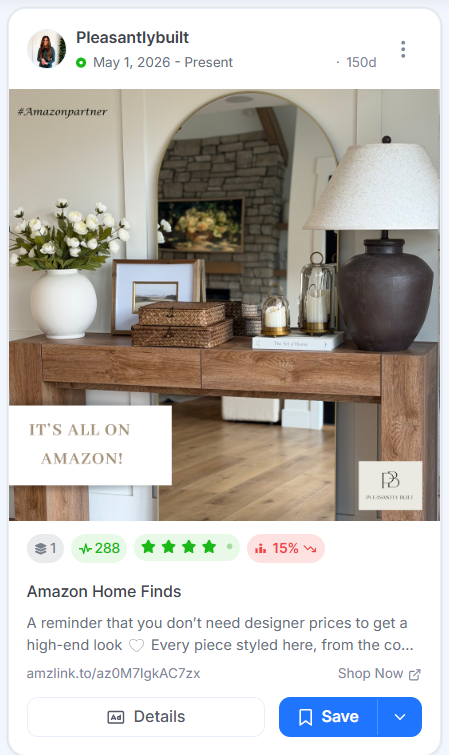
This home decor ad shows a fully styled console table labeled “It’s all on Amazon!” The caption promises a high-end look without designer prices, and the #Amazonpartner tag in the corner discloses the creator’s affiliate relationship upfront.
The ad sells an aspirational look that feels within reach, since viewers see a designer-style room built entirely from Amazon products. That visible disclosure also matters because the FTC requires affiliates to make paid relationships clear, and hidden partnerships can quickly erode trust.
Lee Anne Benjamin
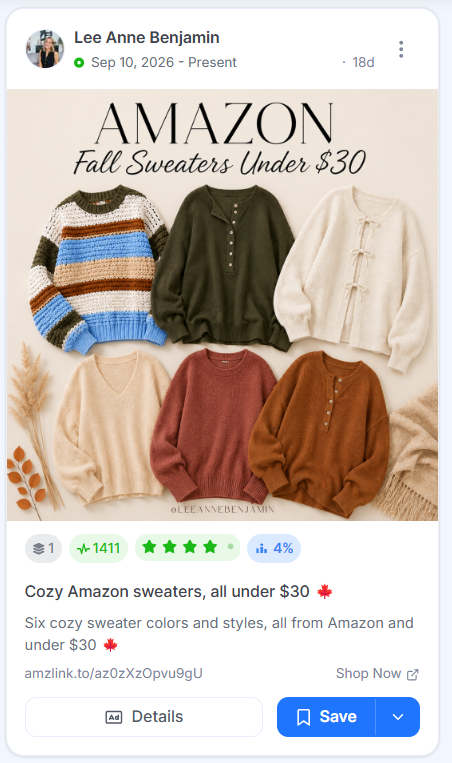
Lee Anne Benjamin’s ad skips the single-product pitch and sells a shopping mission instead. The headline reads “Amazon Fall Sweaters Under $30,” paired with a seasonal collage of sweater options.
Price is the organizing idea for the whole ad, and it works only because every sweater shown falls under that threshold. Curating a themed collection like this suits Amazon sellers with multiple SKUs in a category, since it gives Facebook users several entry points into the same storefront instead of one make-or-break click.
The takeaway extends beyond fashion. Any seller with a handful of related products can borrow this structure by anchoring the collage around a season, price ceiling, or use case, then letting the variety do the selling.
Nella Speculum
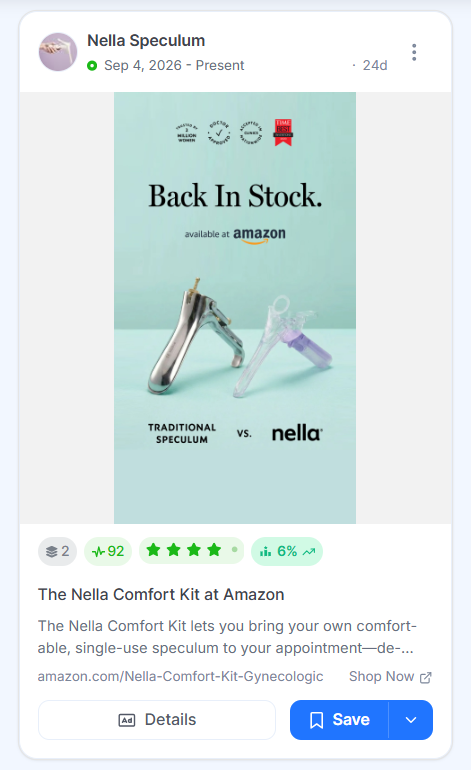
Nella takes a more direct approach by placing its product next to what shoppers expect to see at a medical appointment. The ad’s side-by-side image contrasts a traditional speculum with the Nella Comfort Kit.
The comparison stays factual rather than critical, focusing on what the product is and how it’s meant to be used. That distinction matters for any Amazon seller building a comparison ad: the goal is to show a genuine difference in design or use without calling out a competitor by name or implication.
Nella’s approach also reminds sellers that a stock notification, “Back In Stock,” can double as a low-pressure reason to click through to Amazon.
House Becomes Home
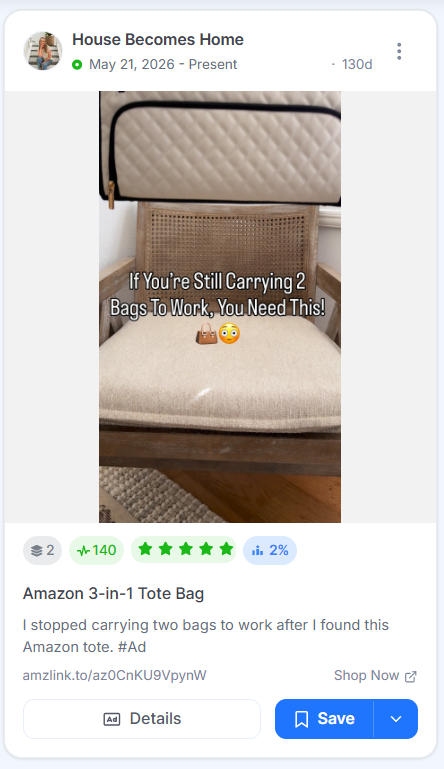
House Becomes Home opens its video with a blunt hook: “If You’re Still Carrying 2 Bags To Work, You Need This!” The ad then shows an Amazon tote in action, with work essentials going into a single bag, making the benefit visible within seconds rather than explained in a caption. A visible “#Ad” tag discloses the paid relationship, keeping the creator-style format transparent.
The structure here works because it names a specific daily inconvenience before introducing the product as the fix. Sellers borrowing this format should resist the urge to open with a product name or feature list; the hook needs to open with a relatable problem first, with the Amazon product arriving as the visual payoff.
How Do You Create Facebook Ads for Amazon Products?
Start With a Customer Problem
House Becomes Home’s tote ad and Luminess’s shade-matching video both open with a problem the viewer already recognizes, whether that’s carrying too many bags or guessing at a foundation shade. Leading with the frustration, rather than a spec sheet, gives the viewer a reason to keep watching before the product is even named.
Keep Every Ad Focused on One Idea
Pleasantlybuilt’s ad centers entirely on getting a designer look for less, and Lee Anne Benjamin’s collage centers entirely on sweaters under $30. Neither tries to also explain shipping, materials, and reviews in the same frame. One clear idea per ad keeps the message simple enough to register during a fast scroll through a Facebook feed.
Show the Product Working Within the First 3 Seconds
Luminess’s color-changing foundation and House Becomes Home’s tote both demonstrate the product doing something, not just sitting still for a photo. That is especially useful for products with a mechanism or transformation that’s hard to describe in words alone.
Turn Features Into Benefits Shoppers Understand
A spec is only useful to a shopper once you translate it into what it means for their day. Amazon listings are full of technical features, but ads work better when you rewrite those features as outcomes. An ad that says “three-in-one tote” is describing the product; an ad that says “one bag for your workday” is describing the shopper’s life after buying it.
Match the Ad Creative to the Amazon Listing
If the ad shows a specific color, size, or bundle, make that exact version easy to find once the shopper lands on Amazon. A mismatch between the ad and the listing is one of the fastest ways to lose a sale that was already won on the click, since the shopper now has to search the listing themselves or simply bounce.
Facebook Ad Examples for Amazon Products: Summary Table
| Brand | Ad example | Why it works |
| Luminess | Demonstrates color-changing foundation in a video and highlights its Amazon best-seller status. | Shows the product’s distinctive feature in action and adds a credibility cue. |
| Pleasantlybuilt | Styles Amazon home finds into a polished room scene. | Helps shoppers picture the finished look, rather than viewing products in isolation. |
| Lee Anne Benjamin | Groups fall sweaters under $30 in a simple collage. | Makes the selection easy to browse with a clear theme and price point. |
| Nella Speculum | Compares a traditional speculum with Nella’s product. | Shows the brand’s difference through a factual comparison, without disparaging the alternative. |
| House Becomes Home | Opens with the problem of carrying two bags, then presents a tote as the solution. | Connects a relatable inconvenience to a visible product benefit. |
Turn Winning Competitor Ads Into Your Next Amazon Campaign With GetHookd
Every example above proves the same point: converting ads are built on a specific problem, a clear offer, or a real product demonstration. To get there without wasting ad spend, start by seeing what’s already working elsewhere in the market before testing a brand-new creative direction from scratch.
We built GetHookd to shortcut that research process for Amazon sellers running Facebook campaigns. Our platform gives access to over 65 million high-performing ads, Brand Spy for competitor tracking, and AI tools like Clone Ads and Video Scripts to turn a winning angle into original creative fast. Use our 7-day free trial to start building your next Amazon campaign from proven angles.
Frequently Asked Questions (FAQs)
Can you run Facebook ads that link directly to an Amazon listing?
Yes, Facebook ads can link directly to an Amazon product listing. Sellers commonly do this to drive traffic and sales without maintaining a separate landing page.
How much does it cost to run Facebook ads for Amazon products?
There’s no fixed cost, since you set your own daily or lifetime budget in Meta Ads Manager. What you pay per click or impression depends on your niche, audience, country, and how competitive the season is.
How do I post my Amazon listing on Facebook?
Posting an Amazon listing on Facebook typically means linking to the product page in an ad or organic post, paired with an image or video that demonstrates the product clearly. A demonstration, offer, comparison, curated collection, or problem-solution hook are all proven creative directions for this kind of post.
What are examples of good Amazon ads?
Strong Facebook ads for Amazon products usually show the product in use, lead with one clear benefit, and include trust signals shoppers recognize, like star ratings, Prime delivery, or an Amazon’s Choice badge. Creator “Amazon finds” roundups also perform well, since they present products as personal recommendations.
Does GetHookd help Amazon sellers find winning Facebook ad ideas?
Yes, GetHookd gives sellers access to a database of high-performing ads, along with Brand Spy for competitor research and AI tools like Clone Ads and Video Scripts for creating ads in minutes. Those tools make it possible to see a competitor’s exact creative approach, then adapt that same proven angle for a different Amazon product.
*Note: Pricing and/or product availability mentioned in this post are subject to change. Please check our website for current pricing and stock information before making a purchase.