Key Takeaways
- Problem-aware hooks, before-and-after comparisons, and UGC videos are the top-of-funnel and mid-funnel formats driving cold traffic conversions for beauty brands on Meta in 2026.
- Founder story ads and social proof stacking build credibility by combining personal narratives with layered trust signals like reviews, ratings, and endorsements.
- Ingredient-story statics and seasonal offer ads convert high-intent and time-sensitive buyers by leading with science or urgency instead of lifestyle promises.
- Minimalist product hero ads and shade range grids close sales at the retargeting stage by giving warm audiences a clean reminder or a moment of shade-level self-identification.
- GetHookd lets beauty marketers search over 65 million Meta ads by niche and format, then produce variations using AI-powered Clone Ads, video scripts, and image ad templates without switching tools.
What Separates a Winning Beauty Ad From a Wasted Budget?
Format choice separates a winning beauty ad from a wasted budget. Nine of them do most of the work: problem-aware hooks, before-and-after comparisons, UGC videos, founder stories, social proof stacking, ingredient-story statics, seasonal offers, minimalist product heroes, and shade range grids. Each format serves a different funnel stage and audience temperature, but they all share one trait: they earn attention before they ask for a sale.
Cold audiences don’t care about your serum’s proprietary peptide complex. They care about whether it will fix their dry patches. The moment your ad leads with a problem your audience already feels, you have earned their attention. Everything else, from the product shot, the ingredient story, and the CTA, comes after that.

GetHookd: Turn Competitor Intelligence Into Your Next Winning Ad
GetHookd reveals which ads your competitors are actively scaling—not just running. Spy on their best-performing creatives, landing pages, and traffic strategies, then turn proven concepts into testable campaigns in seconds with AI-powered script generation and creative cloning.
What You Get:- ✓ Brand Spy to decode competitor ad strategies in real-time
- ✓ AI script generation and ad cloning for instant variations
- ✓ Performance scoring based on actual ad behavior, not vanity metrics
- ✓ Creative Analyzer to identify and scale your top performers
Top 9 Meta Beauty Ads That Convert in 2026
1. The Problem-Aware Hook Ad
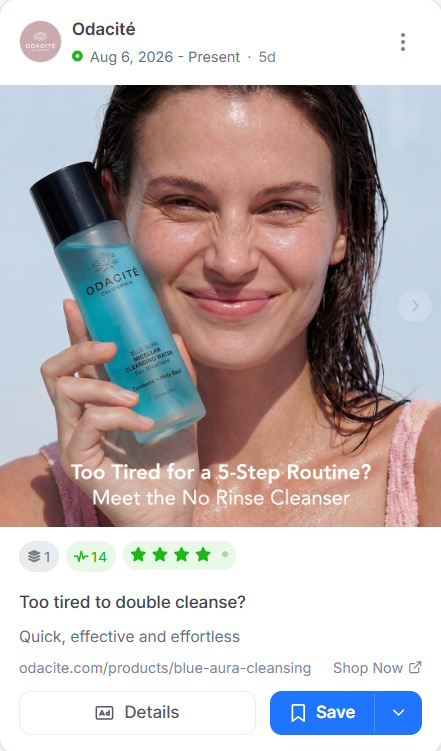
A problem-aware hook is the workhorse format for cold traffic. In the first 1–3 seconds, name a specific, felt problem, like “Why does my foundation always oxidize by noon?” or “I tried everything for hormonal breakouts.”
The product is introduced as the solution only after the audience has nodded along. It works because it triggers pattern recognition: the viewer sees their own problem reflected back at them, which earns attention better than any visual effect ever could.
For beauty brands, the most effective problem statements are hyper-specific rather than broad. “Dry skin” is too vague. “Tight, flaky skin after cleansing” is something a viewer physically recognizes.
2. The Before & After Ad
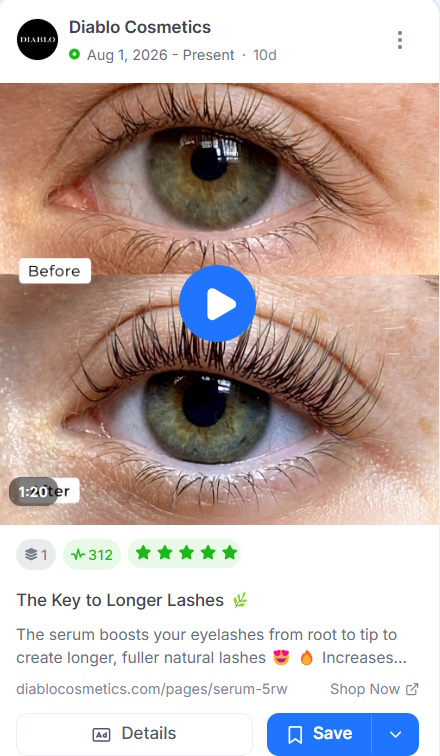
Before/after is one of the oldest formats in beauty advertising, and it still dominates because it answers the only question a buyer actually has: does this work?
The format creates a visual contract. Here’s where you are, here’s where you could be, and beauty is uniquely positioned to deliver on that promise visually.
What separates a high-converting before/after from one that gets flagged or ignored comes down to authenticity. Overly polished, clearly retouched comparisons trigger skepticism.
The best-performing ads use real customer results, slightly imperfect lighting, and genuine skin texture because that reads as credible.
3. The UGC Video Ad
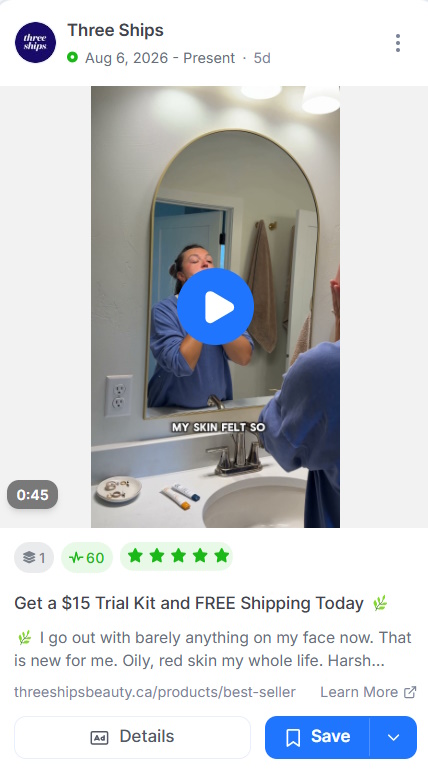
User-generated content combines the emotional pull of a personal story with the credibility of a real person’s face.
A creator (not a model) talks to camera about a skin, hair, or makeup problem they had, walks through their experience with the product, and shows a result. The format feels like a friend’s recommendation.
This format is the go-to for mid-funnel trust building, especially for products with a learning curve or a higher price point where viewers need more convincing before clicking.
4. The Founder Story Ad
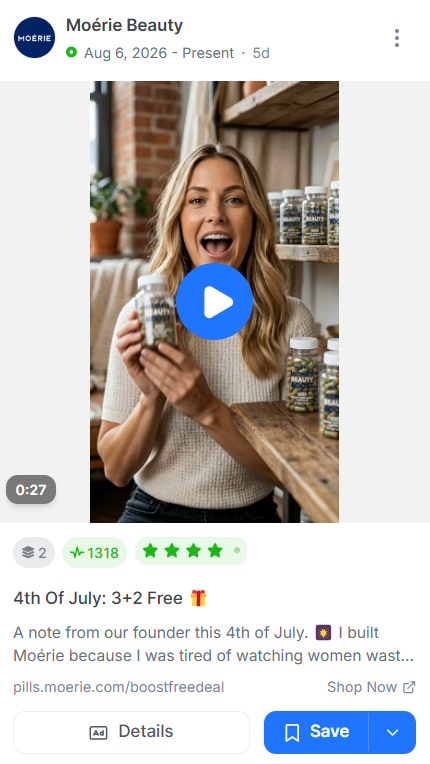
The founder story ad works because people buy from people, not brands. When a founder, or a brand-adjacent figure, speaks directly to camera about why they created the product, it collapses the distance between brand and buyer.
The best versions of this format aren’t polished brand manifestos. Keep it specific, personal, and slightly vulnerable: “I spent three years trying to fix my postpartum hair loss before I finally formulated this.”
These work especially well for indie and DTC beauty brands where the founder’s authenticity is itself a differentiator against mass-market competition.
5. The Social Proof Stacking Ad
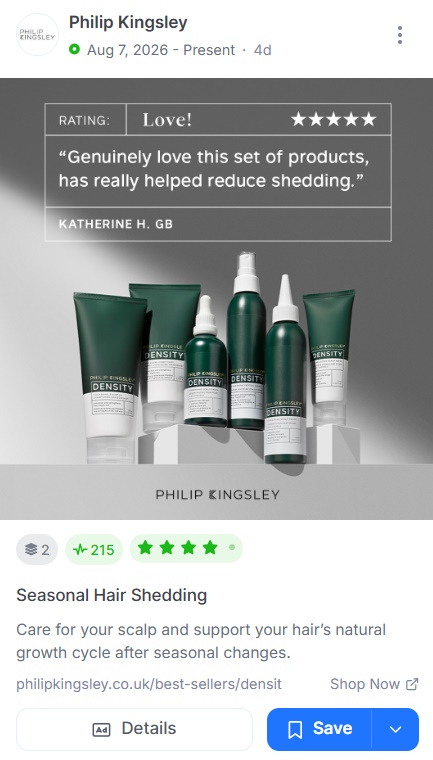
Social proof stacking takes every trust signal a brand has, such as star ratings, review counts, press mentions, dermatologist endorsements, testimonials, and layers them into an ad.
The cumulative effect is overwhelming credibility. By the time a viewer reaches the CTA, they’ve been shown five different reasons to trust the product from five different angles.
This format is exceptionally strong in retargeting, where the viewer already knows the product but hasn’t yet committed. Stacking proof at that moment addresses the last remaining objection: “But does it actually work for people like me?”
6. The Ingredient-Story Static
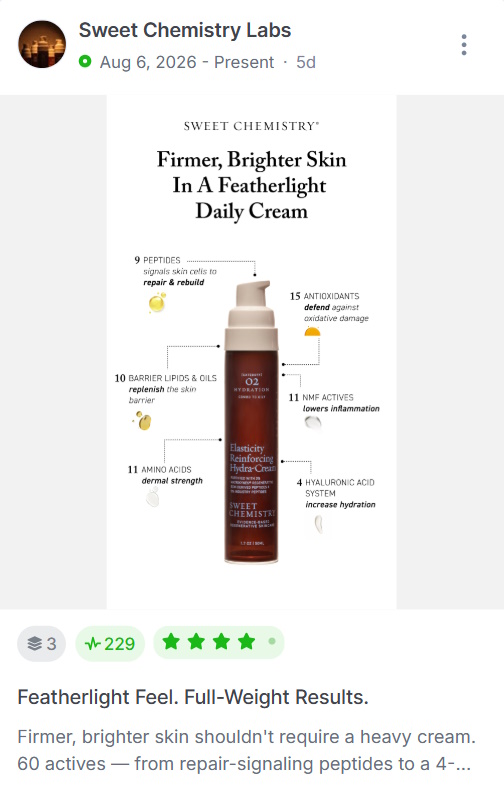
Beauty consumers in 2026 are ingredient-literate. They know what niacinamide does. They’re looking up retinol percentages. The ingredient-story static meets this audience where they are by leading with the science, instead of the lifestyle promise.
A high-converting ingredient static typically features a close-up product shot, a bold ingredient callout (“3% Bakuchiol”), a one-line benefit statement, and a clean CTA.
This format is powerful because it pre-qualifies the audience. Someone who responds to a niacinamide callout already understands what niacinamide does, which means they’re much closer to purchase than a cold audience seeing a generic “glowing skin” promise.
7. The Seasonal Offer Ad
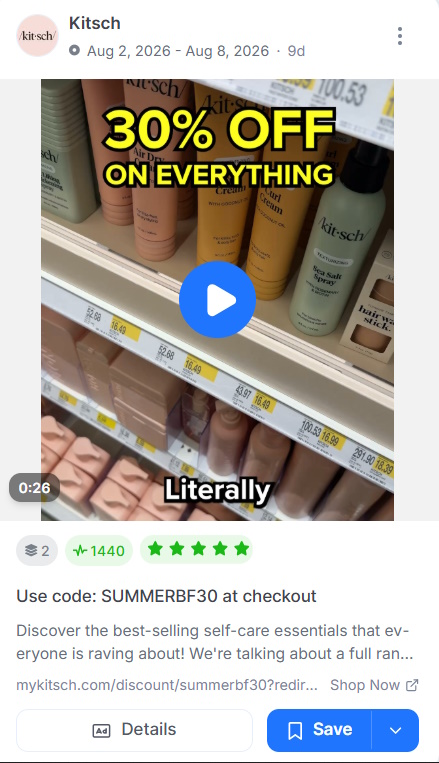
Urgency is one of the oldest conversion levers in advertising, and seasonal offer ads use it with precision. These ads anchor a promotion to a specific moment in time, which creates a natural deadline that pushes fence-sitters to act. The format works because it removes the “I’ll think about it” option.
The most effective seasonal beauty ads don’t just slap a discount banner on an existing creative. Instead, they rebuild the entire narrative around the occasion.
A Valentine’s Day ad for a lip product doesn’t just say “20% off.” It says “The Valentine’s gift she won’t regift.” The product becomes a gift, the buyer becomes a hero, and the discount is the final nudge rather than the entire value proposition.
8. The Minimalist Product Hero Ad
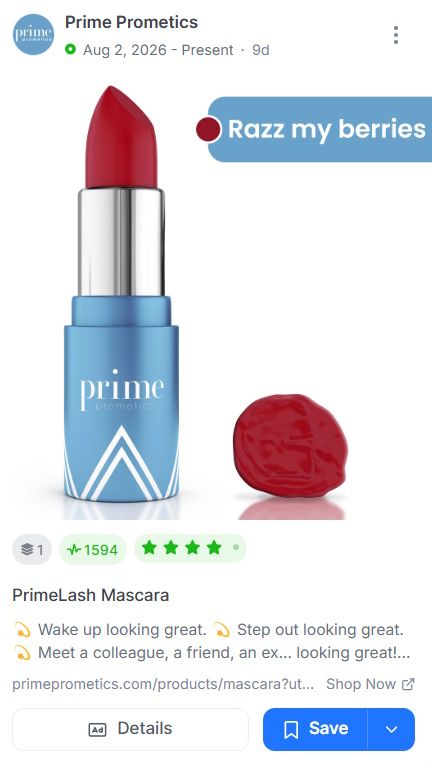
Sometimes the most powerful ad is the simplest one. The minimalist product hero format strips everything away and presents the product against a clean background with a single, sharp headline.
It communicates brand confidence. It says: this product is good enough to sell itself.
This format performs best as a retargeting ad for warm audiences who already know the brand. For someone who visited the product page but didn’t buy, a clean product shot with a benefit reminder and a “Shop Now” button is often all it takes to close the sale.
9. The Shade Range Grid
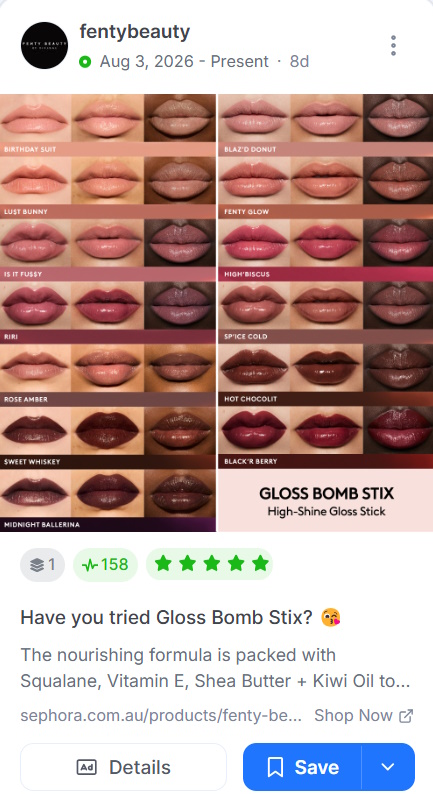
The shade range grid is a format built specifically for makeup brands with inclusive product lines, and it does something no other format can: it shows belonging at a glance.
A grid of foundation shades, lip colors, or eyeshadow palettes laid out in a clean visual arrangement communicates range, inclusivity, and choice without a single word of copy. The viewer sees their shade, and that moment of recognition is the conversion trigger.
This format works at both cold and warm funnel stages. For cold audiences, it builds brand affinity through inclusivity signaling. For warm audiences who already browsed the product, it re-engages them with the specific angle they may have hesitated about: finding the right shade.
Effective Meta Beauty Ads Examples at a Glance
| Ad Format | Best For | Funnel Stage | Key Element |
| Problem-Aware Hook | Cold traffic acquisition | Top | Hyper-specific pain point in the first 1–3 seconds |
| Before & After | Visual proof of results | Top to Mid | Authentic, unretouched comparisons |
| UGC Video | Mid-funnel trust building | Mid | Real creator, real story, real result |
| Founder Story | Indie and DTC brands | Mid | Personal narrative from the person behind the product |
| Social Proof Stacking | Overcoming purchase hesitation | Retargeting | Layered trust signals: reviews, ratings, endorsements |
| Ingredient-Story Static | Ingredient-literate buyers | Mid to Bottom | Bold ingredient callout with a single benefit line |
| Seasonal Offer | Converting fence-sitters | Bottom | Time-bound promotion tied to a specific occasion |
| Minimalist Product Hero | Warm audience conversion | Retargeting | Clean product shot, one headline, one CTA |
| Shade Range Grid | Inclusive makeup lines | Top to Bottom | Full shade display that triggers self-identification |
Find & Create Winning Beauty Ads with GetHookd
Beauty brands scaling on Meta in 2026 aren’t guessing at creative. They study what already converts, adapt proven formats to their products, and test faster than their competitors. Every ad format above exists because it works, and the beauty brands running them have the results to prove it.
GetHookd gives beauty marketers access to over 65 million Meta ads, filterable by niche, format, and run time, so you can see exactly what is converting in your category. Once you find what works, our AI creative tools, including Clone Ads, image ad templates, and video scripts, let you build on those frameworks in minutes. Sign up for a free trial today to start creating high-converting beauty ads on Meta.
Frequently Asked Questions (FAQs)
What ad format works best for beauty brands on Meta in 2026?
It depends on funnel stage. Short-form video with a problem-aware hook tends to perform best for cold traffic, UGC videos build trust at mid-funnel, and minimalist product statics work well for retargeting audiences who already know the brand.
How much should a beauty brand spend to test a Meta ad?
There is no universal number because it depends on product price, audience size, and how many variations you are testing. The key is allocating enough budget per ad to exit Meta’s learning phase and generate meaningful data before making optimization decisions.
How long should you run a beauty ad before judging performance?
Give each ad enough time to clear Meta’s learning phase before making decisions, which typically means avoiding any changes during the first week. After that, evaluate on a rolling window that accounts for your product’s consideration cycle, since higher-priced beauty purchases often take several days to convert.
What is the best image size for a Facebook beauty ad?
For feed placements, use 1080 x 1080px (1:1) or 1080 x 1350px (4:5), with the vertical format taking up more screen space on mobile. For Stories and Reels, use 1080 x 1920px (9:16) and keep all critical text and visuals centered in the frame to avoid cutoff across placements.
How do I test & scale beauty brand Meta ads?
Start by researching what competitors in your category are actively scaling, so you build from proven creative angles instead of guessing. GetHookd surfaces those scaling signals and lets you move straight into production with Clone Ads, video scripts, and image ad templates without switching between tools. Use Brand Spy to track which competitor creatives are gaining traction, then produce and test your own variations from winning concepts.
*Note: Pricing and/or product availability mentioned in this post are subject to change. Please check our website for current pricing and stock information before making a purchase.