8 Best Facebook Ad Hook Examples for 2026
Key Takeaways
- Your Facebook ad hook has less than two seconds to stop the scroll, and every word and visual choice in that window is make or break.
- The most effective hooks in 2026 tap into psychological triggers like curiosity gaps, loss aversion, pattern interrupts, and social proof rather than hype or clickbait.
- Confessional, direct address, and contrast hooks are outperforming traditional bold claim hooks as audiences grow more skeptical of over-produced ads.
- Testing three to five meaningfully different hook variations per ad set is the fastest way to identify what converts for your specific audience without wasting budget on minor copy edits.
- GetHookd gives you access to 65M+ real Meta ads so you can study which hook types competitors are actively scaling in your niche, then use our Ads Transcription and Video Scripts tools to build your own without starting from scratch.
What Makes a Facebook Ad Hook Actually Work
A hook works when it does one of two things in under two seconds: it creates an open loop the brain needs to close, or it triggers an emotional response strong enough to pause the scroll. The best hooks do both.
Underneath every high-performing hook is a psychological mechanism, whether curiosity, fear of loss, identity, social proof, or surprise. Understanding those mechanisms is what separates marketers who guess from those who scale.
There are also practical elements that determine whether a hook lands:
- Specificity: “Most coaches make this pricing mistake” beats “Here’s a business tip” every time.
- Relevance: The hook must signal to the right person that this content is for them, immediately.
- Pattern interruption: Anything that breaks the visual or emotional rhythm of the feed earns an extra half-second of attention.
- Promise of value: The viewer needs to feel that watching more is worth their time before they’ve consciously decided to.
With that framework in place, here are the 8 best Facebook ad hook types working in 2026, with examples you can swipe and adapt today.

GetHookd: Turn Competitor Intelligence Into Your Next Winning Ad
GetHookd reveals which ads your competitors are actively scaling—not just running. Spy on their best-performing creatives, landing pages, and traffic strategies, then turn proven concepts into testable campaigns in seconds with AI-powered script generation and creative cloning.
What You Get:- ✓ Brand Spy to decode competitor ad strategies in real-time
- ✓ AI script generation and ad cloning for instant variations
- ✓ Performance scoring based on actual ad behavior, not vanity metrics
- ✓ Creative Analyzer to identify and scale your top performers
Top 8 Facebook Ad Hook Examples to Try in 2026
1. The Curiosity Gap Hook
The curiosity gap hook works by giving the audience just enough information to make them want the rest. When you open a loop and don’t immediately close it, attention follows almost involuntarily.
The key is that the gap has to be specific. Broad curiosity reads as clickbait, while specific curiosity reads as value.
- Example: “There’s one line of Facebook ad copy that doubled our client’s ROAS, and it’s not what any guru is teaching.”
- Why it works: It’s specific, it implies insider knowledge, and it creates an open loop the viewer has to close.
2. The Loss Aversion Hook
People are more motivated to avoid losing something than to gain something new. Warning-style hooks that frame content around mistakes, missed opportunities, or things to stop doing consistently outperform positive “here’s how to win” framing. This is especially true in saturated niches where audiences have heard every growth promise before.
- Example: “If you’re still running Facebook ads this way, you’re leaving money on the table every single day.”
- Why it works: It activates the fear of loss, implies the viewer may already be making a mistake, and creates urgency without manufactured hype.
3. The Direct Address Hook
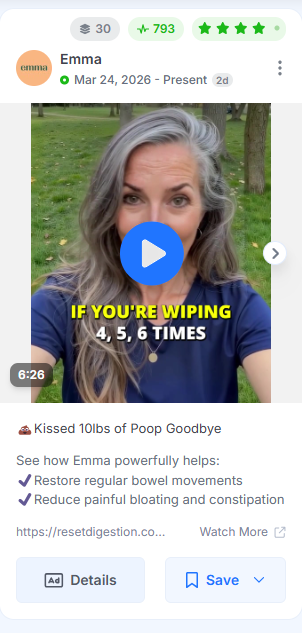
Direct address hooks call out a specific person or group by name, and that specificity is exactly what makes them work. When someone sees themselves described precisely in the first line of an ad, the brain registers it as personally relevant rather than a generic advertisement. This improves retention among the right viewers while naturally filtering out those who aren’t a fit.
- Example: “If you manage Facebook ads for multiple clients and you’re still doing this manually, this will save you hours every week.”
- Why it works: Establishes instant relevance, qualifies the lead immediately, and improves watch time among the target audience.
4. The Confessional Hook
Confessional hooks lead with vulnerability rather than authority. It could be a mistake made, a lesson learned the hard way, or something the speaker wishes they had known sooner. Audiences that have grown skeptical of polished brand messaging respond to this format because it feels genuinely human.
- Example: “I wasted $40,000 on Facebook ads before I figured out what I’m about to show you.”
- Why it works: The specific dollar figure adds credibility, the confession creates empathy, and the implied payoff keeps viewers watching.
5. The Bold Claim Hook
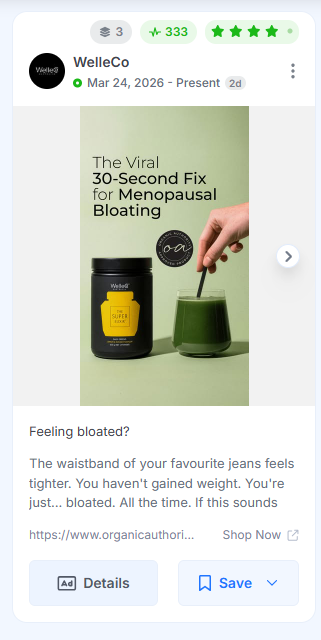
A bold claim hook makes a statement that is confident and specific enough to be believable, prompting the viewer to stop and evaluate it.
Vague superlatives like “the best strategy ever” are invisible now. A precise, verifiable-sounding claim with an implied mechanism creates enough cognitive friction to stop the scroll.
- Example: “This single creative change increased our client’s click-through rate by 74% in 11 days.”
- Why it works: The specific numbers signal authenticity, the bold result triggers curiosity, and the word “single” implies the solution is accessible.
6. The Social Proof Hook
Social proof hooks borrow credibility from results, numbers, or behavior your audience already recognizes. In a time where skepticism toward advertising is high, leading with evidence rather than claims is one of the most disarming things a Facebook ad can do.
The strongest social proof hooks combine a specific number with a specific behavioral outcome. “Used by thousands” is weak. “Helped 3,200 ecommerce brands reduce their cost per purchase by 30%” is a hook with real stopping power. The more granular the proof, the more the hook reads as a fact rather than a pitch.
- Example: “Over 8,000 media buyers switched to this reporting method in the last six months, and they’re not going back.”
- Why it works: The volume signals widespread validation, the time frame adds recency, and the “not going back” framing creates an open loop.
7. The Contrast Hook
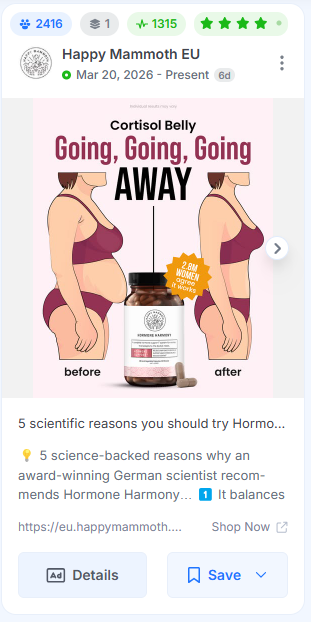
Contrast hooks place two opposing realities side by side: what most people do versus what actually works, or where someone was before versus where they are now.
The gap between the two states creates immediate tension that demands resolution, and the mechanism behind the shift is withheld until the viewer keeps watching.
| Hook Type | Example | Core Tension |
| Before vs. After | “Six months ago I had a 1.2x ROAS. Last month it hit 6.8x. One thing changed.” | Dramatic result with withheld explanation |
| Majority vs. Minority | “90% of Facebook advertisers do this wrong. The other 10% are quietly scaling.” | Fear of being in the wrong group |
| Common Belief vs. Reality | “Everyone told me to increase my ad budget. Cutting it in half was what actually worked.” | Counterintuitive result that challenges the assumption |
| Effort vs. Output | “I used to spend 12 hours a week on ad creative. Now it takes 45 minutes.” | Time savings tied to a specific, relatable task |
The most effective contrast hooks resist the urge to explain themselves. If the hook answers its own question, you’ve already lost the viewer’s reason to keep watching.
8. The Pattern Interrupt Hook
The pattern interrupt operates at the creative level, which makes it the most distinct tool available to a media buyer. It uses something unexpected in the ad itself to break the viewer out of autopilot scrolling, whether that’s an unusual visual, dead silence where music is expected, or an opening statement so counterintuitive the brain pauses to process it.
- Example: “Wait — before you skip this.”
- Why it works: What makes this hook type powerful is that it doesn’t rely on a single psychological trigger. The brain is wired to pay attention to anything that breaks its expectations. Layer a pattern interrupt hook on top of any of the other seven hook types on this list, and you amplify their stopping power immediately.
Other effective variations include opening a video ad with zero music, zero text, and two full seconds of direct eye contact before speaking, a single bold word filling the screen before the ad begins, filming from an environment that sharply contrasts with what the brand category typically looks like, or a counterintuitive opening statement.
Best Facebook Ad Hook Examples for 2026: Summary Table
| Hook Type | Core Mechanism | Best For |
| Curiosity Gap | Opens an information loop the brain needs to close | Niches where insider knowledge or contrarian angles have strong perceived value |
| Loss Aversion | Activates fear of missing out or making a costly mistake | Saturated niches where audiences have heard every growth promise before |
| Direct Address | Calls out a specific person or situation to create instant relevance | Lead generation and high-ticket offers where qualifying the viewer early matters |
| Confessional | Leads with vulnerability to disarm skepticism and build trust | Personal brand ads, coaching, and any category where polish has eroded audience trust |
| Bold Claim | Makes a specific, verifiable-sounding statement that demands evaluation | eCommerce and DTC brands with strong proof points or measurable results |
| Social Proof | Borrows credibility from numbers, results, or widespread behavior | New or unknown brands building trust with cold audiences |
| Contrast | Places two opposing realities side by side to create tension | Transformation-driven products and before-and-after categories |
| Pattern Interrupt | Breaks the viewer’s visual or cognitive autopilot at the creative level | Any campaign where standard ad formats have worn out their stopping power |
Write Better Facebook Ad Hooks With GetHookd
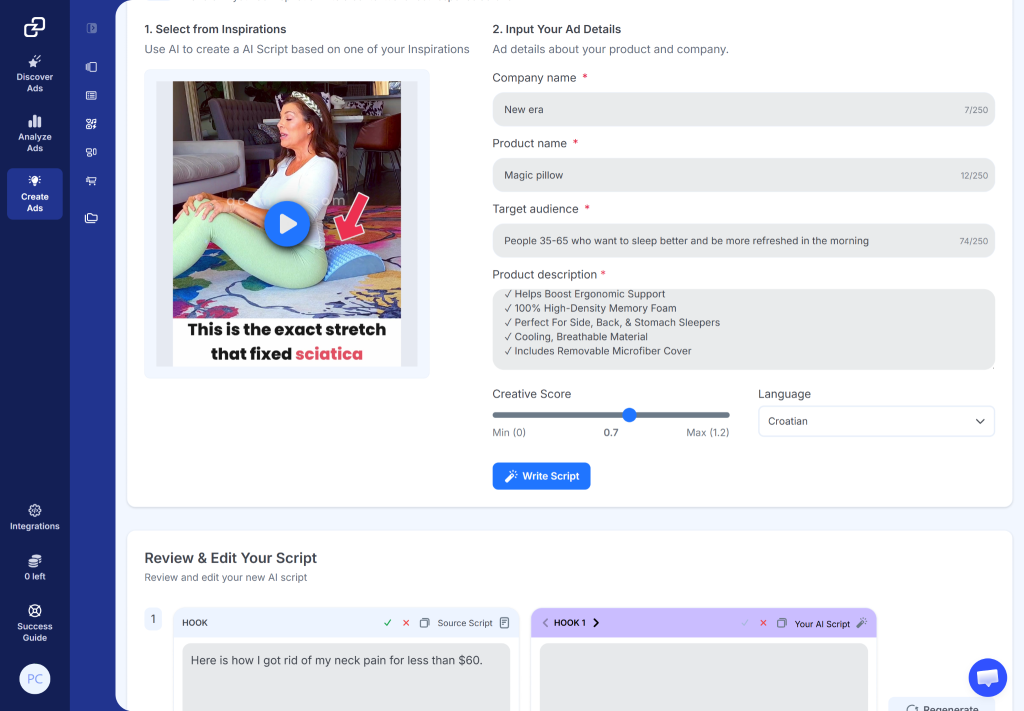
With access to 65M+ real Meta ads filtered by niche, format, and performance signals, GetHookd lets you see exactly which hook types competitors are leading with and which ones are getting scaled. Use our Brand Spy feature to go deeper on any brand in your market, study their top-performing creatives, and identify the hooks driving their results before testing your own.
Once you know what’s working, our Video Scripts and Ads Transcription tools let you move from research to production without switching platforms. Extract hooks from winning competitor ads, feed your product details into the AI script generator, and launch a creative that’s grounded in real market intelligence.
Start your GetHookd free trial today!
Frequently Asked Questions (FAQs)
How long should a Facebook ad hook be in 2026?
A Facebook ad hook should land its impact within two seconds for video and within the first visible line of text for static ads. For video, your opening spoken line or on-screen text should be no longer than 12 words. For static ads, the headline carries the hook and should communicate the core tension before the viewer decides whether to read further.
Do Facebook ad hooks work the same for video and static ads?
The psychological mechanisms are identical, but the delivery changes. In video ads, your hook lives in the first spoken line, on-screen text, or visual, with motion and sound available to amplify the emotional trigger. In static ads, the hook lives in the headline or opening line of primary text, which means it needs to be sharper and more specific because there is no movement working in its favor.
How does GetHookd help you find winning Facebook ad hooks?
GetHookd gives you direct access to 65M+ real Meta ads searchable by niche, format, and performance signals, so you can study which hook types are actively getting scaled in your market. From there, our Ads Transcription and Video Scripts tools let you extract proven hook frameworks and generate your own variations without having to start from scratch.
Can I use GetHookd to find real examples of these hook types?
Yes. GetHookd’s Brand Spy feature lets you filter 65M+ real Meta ads by niche and format, so you can see which specific hook types competitors are actively scaling rather than guessing what works. No technical skills required; it’s built for media buyers who need answers fast.
*Note: Pricing and/or product availability mentioned in this post are subject to change. Please check our website for current pricing and stock information before making a purchase.