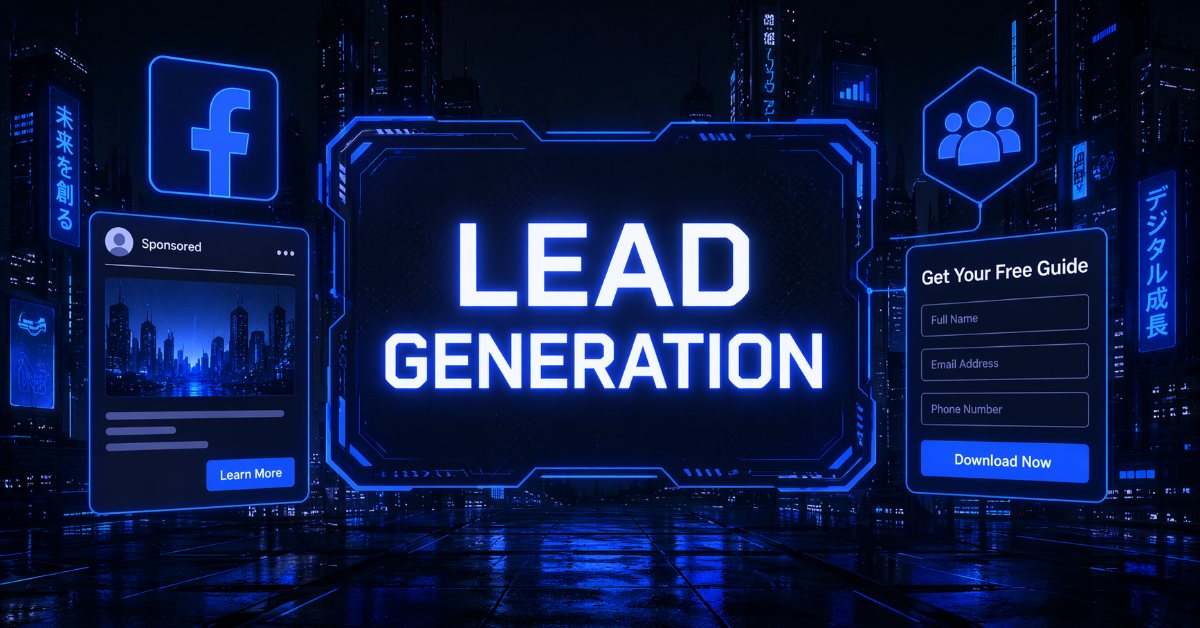
5 Best Lead Generation Facebook Ad Examples to Try in 2026
Key Takeaways
- The five lead generation Facebook ad formats producing the most consistent results in 2026 are lead magnet ads, webinar registration ads, quiz funnels, free trial or consultation ads, and giveaway ads.
- Lead generation performance on Facebook in 2026 hinges on offer specificity. Narrow, outcome-focused offers like “the email sequence that made us $180K in Q3” consistently outperform broad ones, regardless of which of the five formats a brand chooses.
- Across formats, quiz funnels deliver the lowest cost per lead in most DTC verticals, webinar ads produce the highest-intent signups for high-ticket offers, and giveaway ads grow email lists fastest while generating the lowest-intent leads.
- The biggest mistakes brands make when trying these formats are running quizzes longer than eight questions, treating giveaway leads like buyers without a 24-hour follow-up sequence, and using polished brand video when founder-style UGC consistently wins.
- At GetHookd, we help media buyers find winning lead-gen ads across 65M+ analyzed Meta ads and turn them into testable creatives quickly.
What Are the Best Lead Generation Facebook Ad Examples in 2026?
Lead magnet ads, webinar registrations, quiz funnels, free trial offers, and giveaways top the list of Facebook ad formats worth testing for lead generation in 2026. These five approaches share a common pattern: a specific offer paired with a creative that previews the value before the click, plus a landing page that matches what the ad promised.
Below, we walk through each format with live examples from the Meta Ad Library, the verticals where they perform best, and the execution details separating winning lead gen ads from the ones quietly burning budget.
We also show how our team at GetHookd helps performance marketers cut research time by pulling scaled lead gen creatives from a 65M+ Meta ad index and turning them into testable campaigns in the same workflow.

GetHookd: Turn Competitor Intelligence Into Your Next Winning Ad
GetHookd reveals which ads your competitors are actively scaling—not just running. Spy on their best-performing creatives, landing pages, and traffic strategies, then turn proven concepts into testable campaigns in seconds with AI-powered script generation and creative cloning.
What You Get:- ✓ Brand Spy to decode competitor ad strategies in real-time
- ✓ AI script generation and ad cloning for instant variations
- ✓ Performance scoring based on actual ad behavior, not vanity metrics
- ✓ Creative Analyzer to identify and scale your top performers
Top 5 Lead Generation Facebook Ad Examples in 2026
Here are the five ad formats our team sees scaling most consistently inside the Meta Ad Library right now. Each one fits a different stage of a funnel, but all five share the same core mechanics: a sharp hook, a valuable offer, and a clean path to sign up.
1. Lead Magnet Ads (Guides, Checklists, and Templates)
Lead magnet ads trade a free resource for an email address. The strongest versions in 2026 are short, specific, and solve one narrow problem rather than covering an entire topic broadly.
What works right now is the specificity of the asset’s title. Swap “Complete Marketing Guide” for “The exact email sequence that made us $180K in Q3” and watch signup rates climb. Founder-led video creative, flat-lay mockups of the asset, and short screen recordings flipping through the pages all tend to beat stock imagery in cold feeds.
The creative should show the asset itself, not just talk about it. A three-second clip panning across the pages of a PDF gives users a reason to believe the resource is real and valuable. Adding a single-sentence description of what the reader will know after consuming the asset also lifts conversion rates on the landing page.
This format fits SaaS, B2B services, coaching, and agencies. It also works well for e-commerce brands offering product-specific buying guides, like a wine subscription sharing a pairing cheat sheet, or a skincare brand giving away a routine builder.
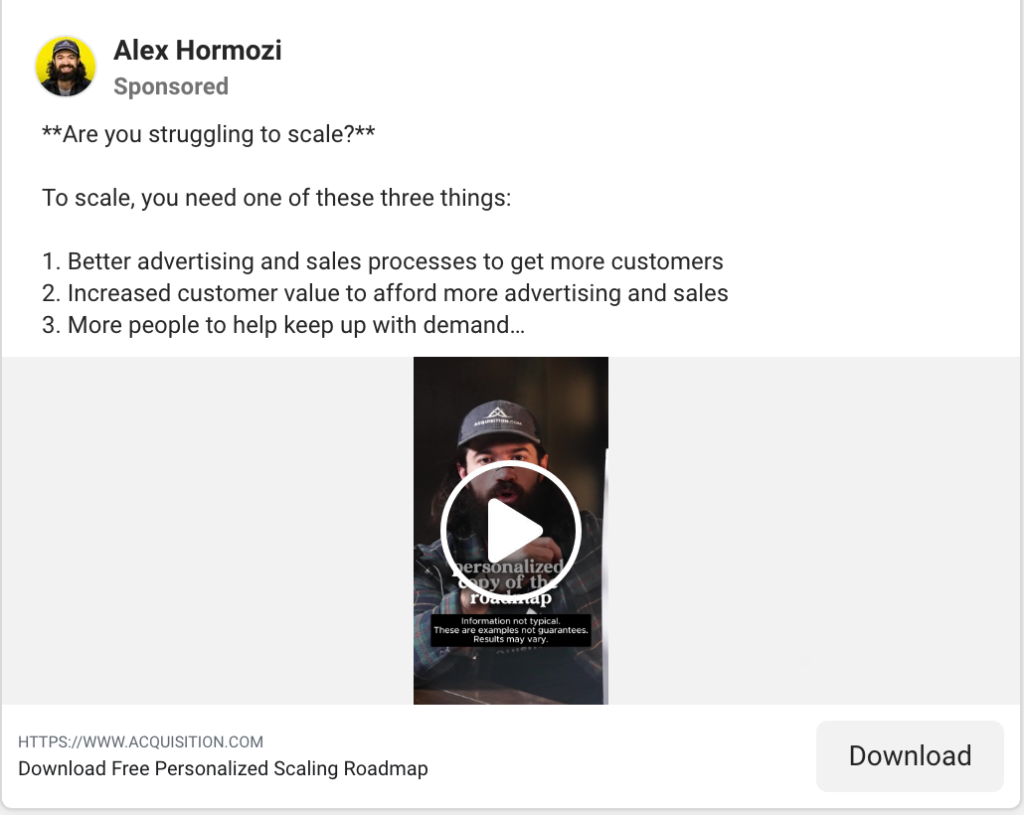
2. Webinar & Live Training Registration Ads
Webinar ads offer a live or on-demand training in exchange for registration. The format works because perceived value is higher than a PDF, which filters out low-intent leads and improves backend conversion rates.
The best webinar ads in 2026 lead with the outcome, not the topic. A hook like “How we cut CAC in half in 90 days using three ad formats” pulls more signups than “Join our free marketing webinar on cost efficiency.” Countdown timers in the creative and a visible host in the first second also push urgency in a cold feed.
Many advertisers still waste budget on polished brand videos for this format. A short clip of the actual host speaking directly to the camera about the one thing attendees will walk away with almost always beats a produced promo. Keep the video under 30 seconds and put the date and time directly on the thumbnail.
This format fits course creators, B2B SaaS, financial services, and high-ticket coaching. E-commerce brands running masterclasses around skincare routines, fitness programs, or parenting topics also see strong results when the host has authority in the niche.
3. Quiz & Assessment Ads
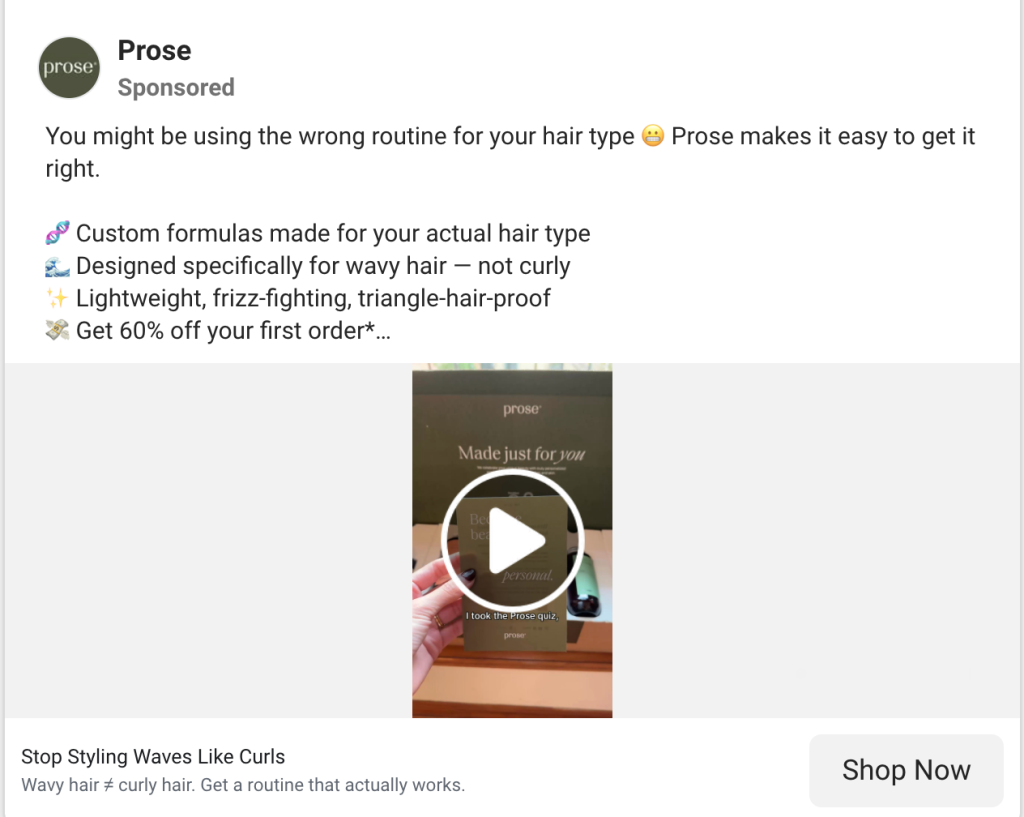
Quiz ads send traffic to a short interactive quiz that recommends a product, plan, or content track based on the user’s answers. The format captures both an email and valuable first-party data that the brand can use for segmentation, email sequences, and retargeting later.
Quiz funnels tend to produce a lower cost per lead than static image ads in most DTC verticals, because users are entertained while being qualified. The creative should preview the quiz itself, either as a short screen recording or a carousel walking through sample questions. Users want to know what they are signing up for before they click.
Good quiz ads also promise a specific, personal result. “Find your skin type in 60 seconds” outperforms a generic “Take our skincare quiz.” Keep the quiz under eight questions, because completion rate drops sharply past that point and drags cost per lead up with it.
This format fits DTC brands in beauty, supplements, pet, and apparel. It also suits financial advisors, fitness coaches, and any business where recommendations depend heavily on the user’s personal situation.
4. Free Trial, Demo, or Consultation Ads
These ads pitch a direct, low-friction first step with the product or service. Depending on the business, that first step might be a free SaaS trial, a booked discovery call for an agency, or a free DTC sample.
Social proof matters more here than in any other format. Founder-style UGC, short customer testimonials, and concrete outcomes beat polished brand videos by a wide margin. The creative should answer one question clearly: what changes for the user inside the first 7 to 14 days of signing up?
Strong versions of this ad type also reduce perceived risk in the copy. Lines like “No credit card required” or “Free until you see results in your first report” pull signups from users who would otherwise scroll past. Stacking a time-limited bonus on top of the free offer almost always lifts conversion further.
This format fits SaaS, agencies, B2B services, subscription boxes, and DTC brands with sampling programs. Higher-ticket services usually prefer booked calls over forms, since the sales team can qualify the lead before quoting a price.
Companies that don’t want to build the entire process in-house can also work with B2B lead generation companies to handle targeting, qualification, and meeting booking.
5. Contest & Giveaway Ads
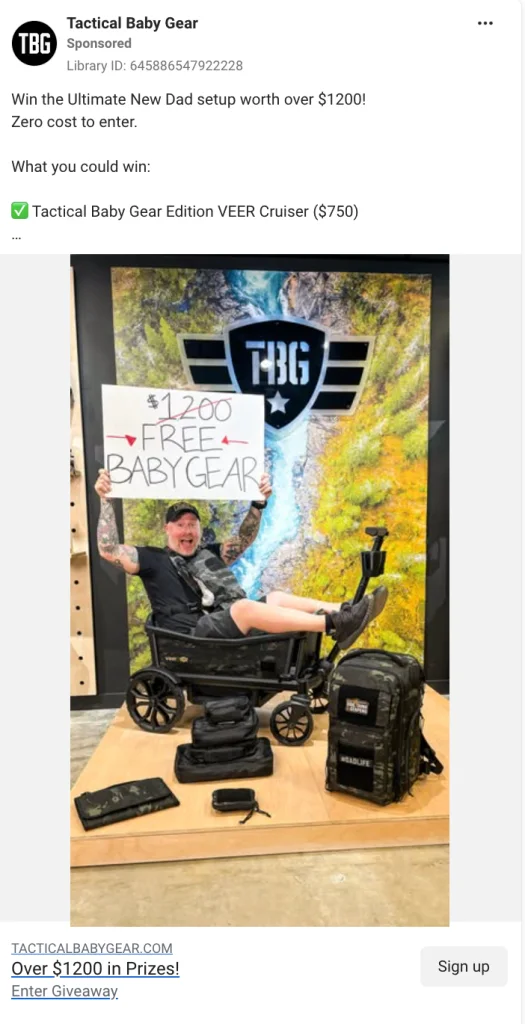
Giveaway ads offer a prize in exchange for an email and sometimes a follow or share. They are the fastest way to grow an email list, though the leads tend to be lower intent than the other four formats, which makes post-signup sequences critical.
The creative should show the prize clearly and stack the perceived value. Bundles usually beat single items because the total stated value looks bigger, and keeping the entry mechanic to two steps or fewer protects completion rate and cost per lead.
Giveaway ads also benefit from a clear, tight deadline. A seven-to-ten-day window pushes users to enter in the moment rather than forgetting and scrolling past. Follow up within 24 hours of signup with a welcome email sequence that introduces the brand, because giveaway leads cool fast.
This format fits e-commerce brands building launch lists, brick-and-mortar stores growing local audiences, and creators preparing product drops. Brands with a strong post-signup email flow capture the most value from this format.
Top 5 Lead Generation Facebook Ad Examples: Summary Table
| Approach | Best For | Typical Offer | Lead Quality |
| Lead magnet ads | SaaS, agencies, coaching, B2B | Guide, checklist, template | Medium to high |
| Webinar registration ads | Courses, high-ticket services | Live or recorded training | High |
| Quiz and assessment ads | DTC beauty, supplements, fitness | Personalized recommendation | High |
| Free trial / demo / call ads | SaaS, agencies, subscriptions | Trial, booked call, sample | High |
| Contest and giveaway ads | E-commerce launches, local stores | Prize bundle | Low to medium |
Why We Built GetHookd for Lead Gen Advertisers
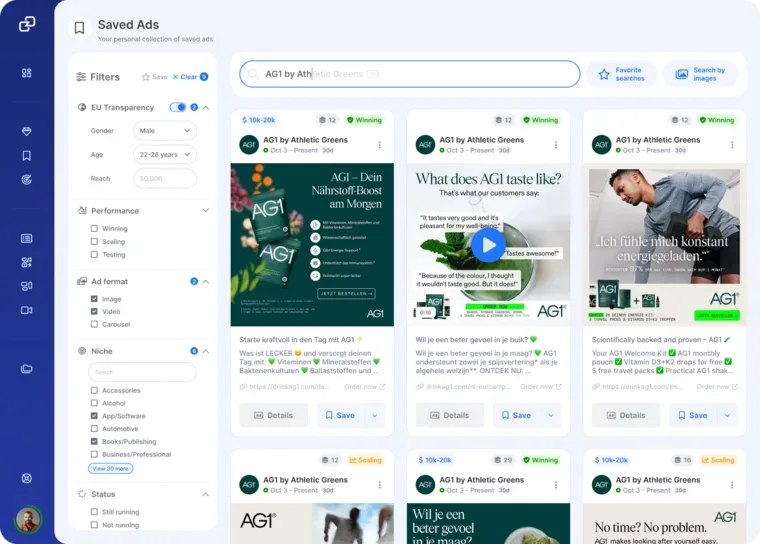
Winning lead generation on Facebook in 2026 comes down to format-offer fit. Lead magnets, webinars, quizzes, free trials, and giveaways each pull qualified signups when the creative matches the funnel stage and the offer is specific enough to filter intent. At GetHookd, we shorten the gap between spotting a scaling lead gen ad and shipping a tested variation. If you want to find the lead gen creatives competitors are actively pouring budget into, our 65M+ Meta ad index and AI tools get you there in one session.
See GetHookd’s full feature set here.
Frequently Asked Questions (FAQs)
What is a good cost per lead on Facebook ads in 2026?
Cost per lead varies widely by industry, audience, and the strength of the offer. Most B2C verticals still see leads priced between $2 and $10, while higher-ticket B2B offers often range from $15 to over $100 per lead. Creative quality and offer clarity now matter far more than bid strategy.
How often should I refresh my lead generation ad creatives?
Most media buyers running lead-gen campaigns refresh creatives every 2 to 3 weeks to combat ad fatigue. Brands with larger budgets usually test new hooks every single week. The signals to refresh are rising cost per lead, falling click-through rate, and frequency exceeding 2 in the same audience.
What makes GetHookd different from free tools like the Meta Ad Library?
The Meta Ad Library shows every ad currently running, with no signal on which ones are actually performing. GetHookd indexes over 65 million Meta ads and layers in scaling indicators, landing page data, and performance scoring so our users can focus on ads competitors are genuinely pouring budget into, not ads sitting dormant in an account.
Can I use GetHookd to see which lead generation ads my competitors are scaling?
Yes. Our Brand Spy feature surfaces the specific ads competitors are putting budget behind, how long each ad has been active, and which landing pages the traffic is hitting. For lead generation campaigns, this lets you reverse-engineer scaled funnels rather than guessing at which offer or creative to test next.
Do I need technical skills to use GetHookd?
No. We built GetHookd for marketers, not engineers. Our platform requires no scraping setup, no API work, and no code. Users search our Meta ad index, save what they want, and use our AI tools to generate variations. Most of our customers run their first real test inside the first session.
*Note: Pricing and/or product availability mentioned in this post are subject to change. Please check our website for current pricing and stock information before making a purchase.