5 Effective Facebook Slideshow Ads Examples & Tips for 2026
Key Takeaways
- The five Facebook slideshow ad formats performing consistently in 2026 are the product showcase, before-and-after transformation, tutorial, social proof stack, and promotional countdown. Each turns still images into lightweight video-style creatives that load fast and cost less to produce than full video.
- Runtime, text, and branding discipline drive results. Keep slideshows under 15 seconds, limit on-image text to seven words per slide, and lock branding across every frame.
- Each format fits a specific funnel stage. Tutorial and social proof slideshows work best mid-funnel for warm audiences, while product showcases and countdown ads drive cold traffic and seasonal sales windows.
- Slideshow ads fatigue at the same rate as static images. Refreshing creative every 10 to 14 days on scaling campaigns keeps CPMs stable and prevents performance drops from ad exhaustion.
- At GetHookd, we help media buyers and agencies spot winning slideshow ads across 65M+ analyzed ads on Meta, then turn those angles into testable campaigns in seconds.
What Are Facebook Slideshow Ads That Actually Move the Needle in 2026?
Five Facebook slideshow ad formats continue to perform well in 2026: the product showcase, before-and-after transformation, tutorial or how-to, social proof stack, and promotional countdown.
Each pair of still images or short clips is turned into a lightweight video-style creative that loads fast on mobile, costs less to produce than a full video, and gives advertisers full watch-time data for retargeting.
The tips that separate winners from wasted spend are equally clear: keep runtime under 15 seconds, lock branding across every frame, limit on-image text to seven words per slide, and refresh creative every 10 to 14 days on scaling campaigns.
GetHookd helps by surfacing slideshow ads competitors are actively scaling across Meta, then turning those proven hooks and structures into fresh variations with AI-powered scripting and creative tools.
The rest of this guide breaks down each example and the execution choices that drive their conversions.

GetHookd: Turn Competitor Intelligence Into Your Next Winning Ad
GetHookd reveals which ads your competitors are actively scaling—not just running. Spy on their best-performing creatives, landing pages, and traffic strategies, then turn proven concepts into testable campaigns in seconds with AI-powered script generation and creative cloning.
What You Get:- ✓ Brand Spy to decode competitor ad strategies in real-time
- ✓ AI script generation and ad cloning for instant variations
- ✓ Performance scoring based on actual ad behavior, not vanity metrics
- ✓ Creative Analyzer to identify and scale your top performers
5 Effective Facebook Slideshow Ads Examples for 2026
1. The Product Showcase Slideshow
The product showcase slideshow cycles through a handful of clean product shots, each paired with a single benefit callout, and closes on a bundle offer or Shop Now CTA. Slides are typically shot against the same neutral background, so transitions feel seamless, and the eye stays trained on the benefit text rather than the visual scenery.
Skincare and supplement brands lean on this format the hardest: Ursa Major, Kosas, and Ritual all run variations of it, and the same structure shows up across coffee subscriptions, pet food, and household goods, anywhere a brand needs to walk shoppers through a small catalog of visually similar SKUs. It is also the fastest slideshow format to produce, which makes it the default starting point for teams testing creative velocity at the top of the funnel.

2. The Before-and-After Transformation
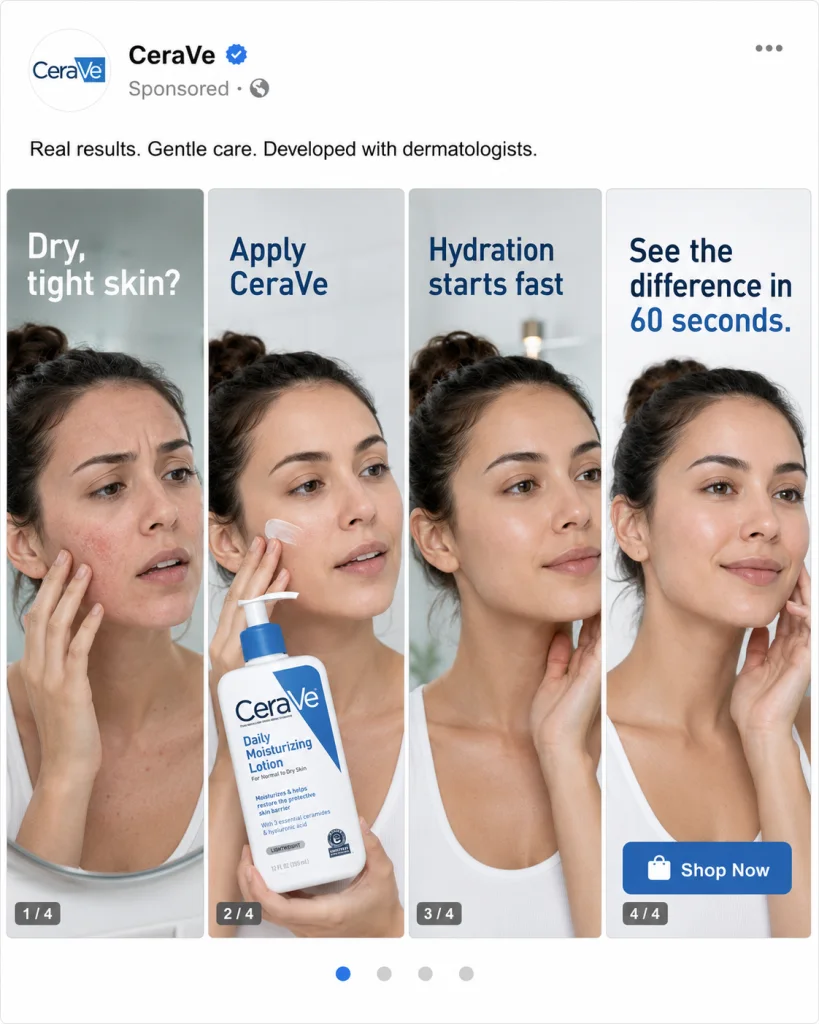
The before-and-after transformation slideshow opens on a problem state, fades into the product being applied, then closes with the resolved result. Three to four slides total, no voiceover required, with a bold text overlay on the final frame anchoring the payoff in copy like “See the difference in 60 seconds.”
The format originated in cleaning and skincare: The Pink Stuff and CeraVe are the obvious reference points, but fitness coaches, home renovation brands, and DIY tool companies have all borrowed the same arc to sell their own version of “messy now, fixed later.”
The contrast between the opening and closing slides does most of the persuasion work, which is why the structure travels so well across categories. Curiosity pulls the viewer through the middle slides, and the resolved final frame gives them somewhere to land.
3. The Tutorial or How-To Slideshow
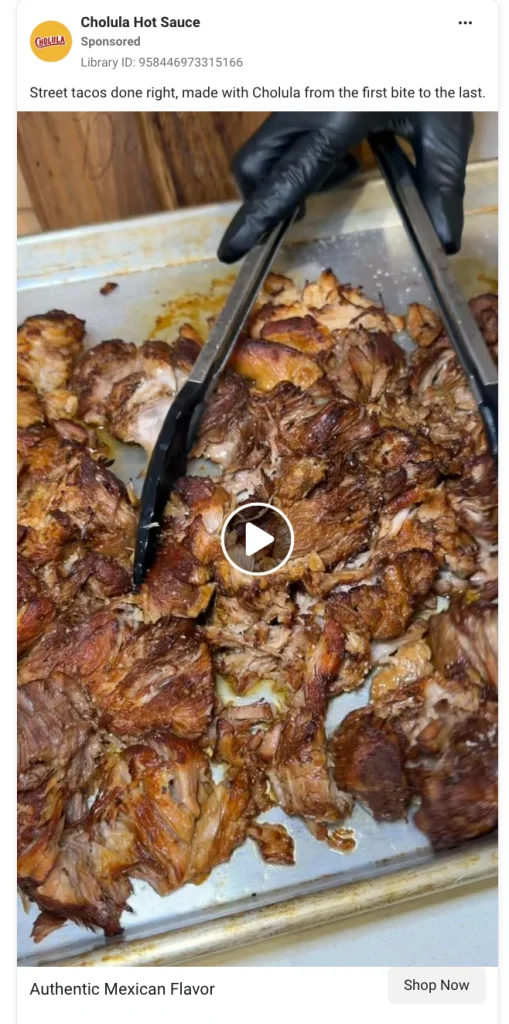
The tutorial slideshow walks viewers through a process in three to four steps, each slide showing one stage with minimal text and the product clearly in use. The final slide drops a soft CTA like “Get yours today” alongside a Shop Now button.
Recipe brands set the standard here. Cholula and HelloFresh have run dozens of variations, but the same step-by-step structure powers tutorials for power tools, skincare routines, hair styling products, and even SaaS onboarding ads.
How-to slideshows convert because they deliver value before asking for the sale; viewers who watch the full sequence self-qualify as interested buyers, which makes the downstream retargeting audience unusually efficient.
4. The Social Proof Stack
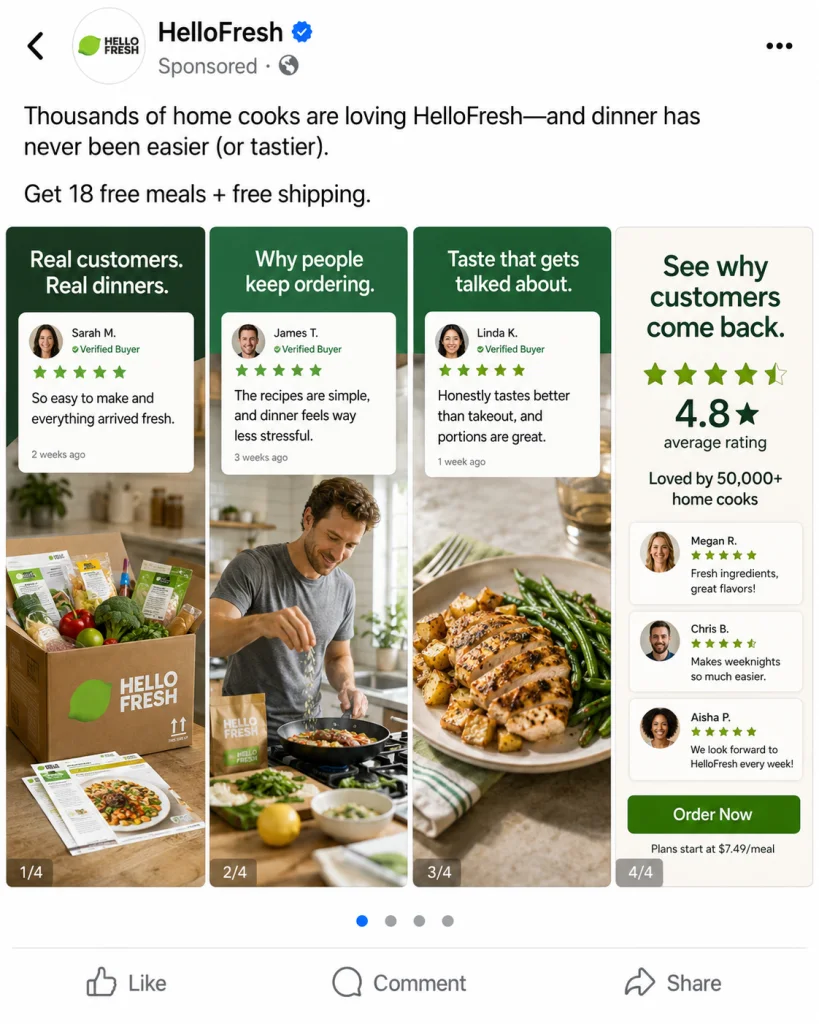
The social proof stack turns customer reviews into the entire creative. Four slides pair review screenshots with unboxing or product-in-use photos, no voiceover, no music required. The final slide aggregates the star rating and points, then directs users to checkout.
You’ll see this format running constantly from subscription-led DTC names: AG1, Magic Spoon, HelloFresh, and it shows up just as often in apparel, beauty, and home goods, anywhere buyers stall on questions of quality, fit, or taste.
The reason it works mid-funnel is mechanical: site visitors who didn’t convert the first time were usually held back by hesitation, and stacked reviews answer that hesitation in the exact moment the retargeting impression hits.
5. The Promotional Offer Countdown
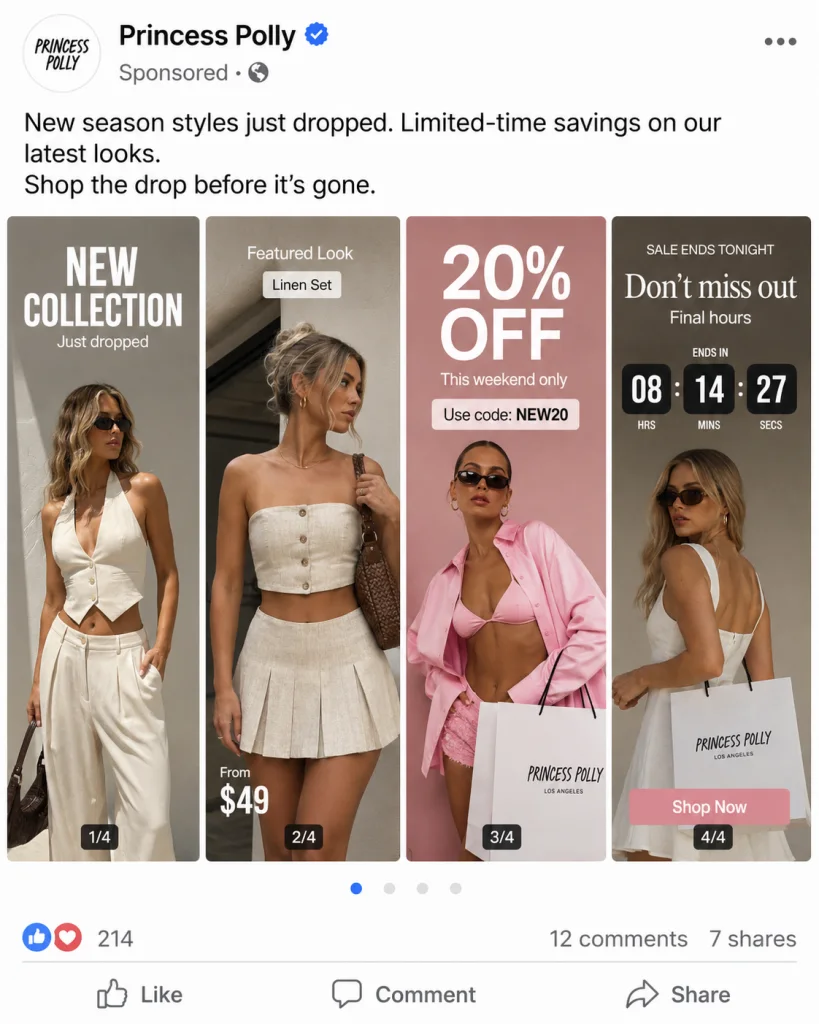
The promotional countdown stacks urgency across four slides: a new collection teaser, a featured product, the discount reveal, and an urgency timer graphic on the closing frame. The sequence runs during seasonal sales windows and gets refreshed weekly to keep the offer feeling current.
Fast fashion has owned this playbook for years: SHEIN, Princess Polly, and ASOS run countdown variations almost continuously through every seasonal window, but the same four-slide skeleton is what beauty launches, supplement restocks, and electronics drops reach for whenever a deadline is part of the offer.
When paired with limited-time offers, the urgency slide is what gives cold traffic a concrete reason to act now rather than scroll past.
Tips to Make Your Slideshow Ads Convert Better
Small execution choices separate average slideshow ads from the ones that scale. The following tips come up repeatedly in top-performing campaigns across verticals.
- Keep on-image text to fewer than 7 words per slide so mobile users can read without pausing.
- Design the first frame as a standalone thumbnail, because many users will see it before any motion begins.
- Match the aspect ratio to placement: 1:1 for feed, 9:16 for Stories and Reels.
- Use royalty-free music or silence; avoid licensed tracks that may trigger takedowns mid-campaign.
- Test at least three hook variations per concept before scaling the budget on the winner.
Refresh creative every 10-14 days for high-spend campaigns. Slideshow ads fatigue on the same cadence as static imagery, and running a fresh angle against the same offer keeps CPMs stable.
Facebook Slideshow Ads: Quick-Reference Summary Table
| Slideshow Format | Best Use Case | Ideal Runtime | Typical Funnel Stage |
| Product Showcase | Catalog-style DTC brands | 8 to 12 seconds | Cold traffic |
| Before-and-After | Beauty, cleaning, fitness | 6 to 10 seconds | Cold to warm |
| Tutorial / How-To | Kitchenware, tools, beauty | 10 to 15 seconds | Warm traffic |
| Social Proof Stack | Subscription, apparel, DTC | 8 to 12 seconds | Retargeting |
| Promotional Countdown | Seasonal sales, launches | 8 to 10 seconds | Warm to retargeting |
Why GetHookd Is the Smartest Way to Build Winning Slideshow Ads
The five formats above: product showcase, before-and-after, tutorial, social proof stack, and promotional countdown, give you a working framework, but the real edge in 2026 comes from knowing which specific slideshow ads are actually scaling in your niche, not just which formats exist. The brands winning on Meta right now are the ones moving fastest through the testing cycle: spotting a competitor’s breakout creative, decoding what makes it work, and shipping their own variation while the angle is still fresh. Speed and signal beat guesswork every time.
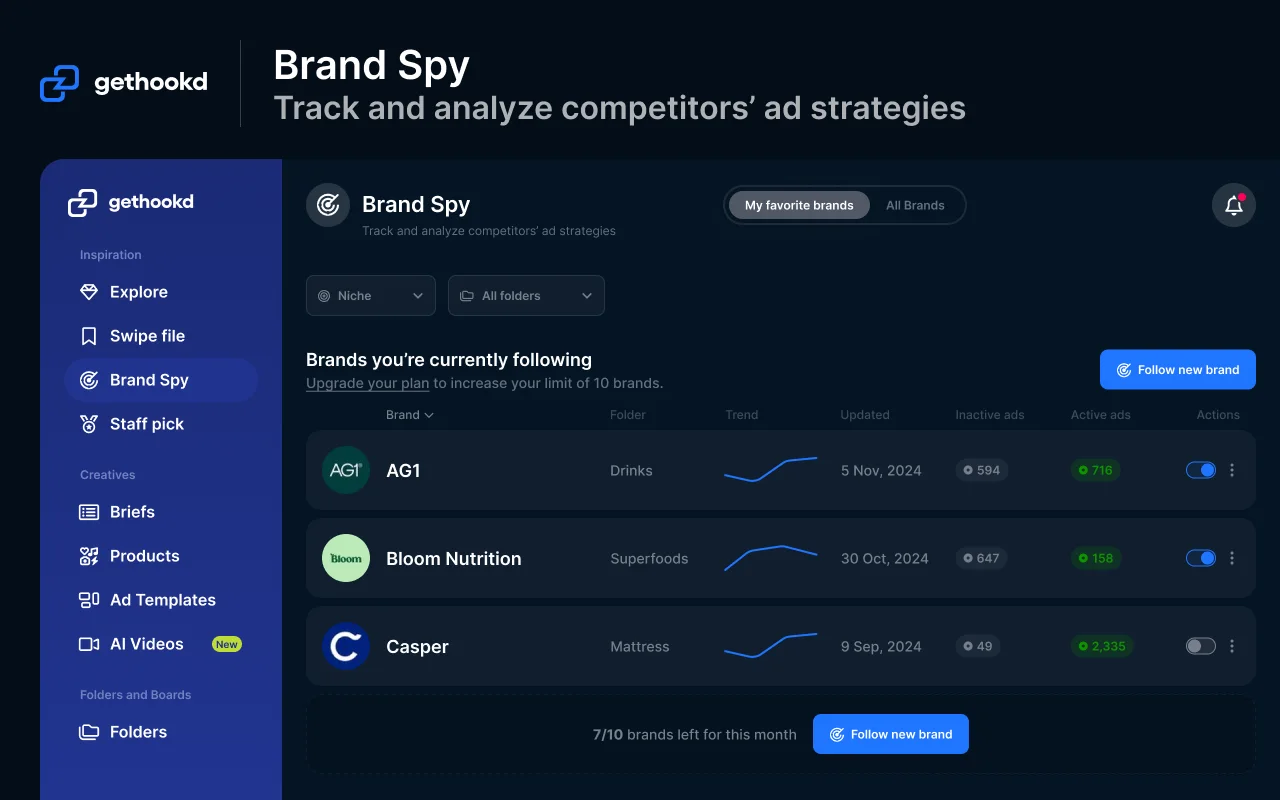
That’s the problem GetHookd was built to solve. Our database covers 65M+ ads analyzed across Facebook and the Meta Ad Library, with Brand Spy showing you which slideshow formats, hooks, and landing pages are driving competitor growth in real time, and our Ads Transcription and Video Scripts tools turning proven concepts into fresh testable variations in seconds. If you want to reduce wasted ad spend and accelerate creative testing, start here.
See GetHookd’s full feature set here!
Frequently Asked Questions (FAQs)
How many slides should a Facebook slideshow ad have?
Three to five slides is the sweet spot for most campaigns in 2026. Fewer than three feels incomplete, and more than six often pushes the runtime past the point where feed users drop off. Test different counts against your specific audience to find the mix that holds attention longest.
Are slideshow ads cheaper than video ads on Facebook?
Yes, slideshow ads typically cost less to produce because they use still images rather than shot footage. Media costs on delivery are similar to standard video ads, but the production savings let brands test more creative variations on the same budget, which usually improves overall campaign efficiency.
How often should I refresh my Facebook slideshow ad creative?
For high-spend campaigns, refresh slideshow creative every 10 to 14 days to prevent audience fatigue. Lower-spend campaigns can run the same creative for three to four weeks. Watch for rising CPMs and falling CTR as signals that it is time to rotate in fresh angles.
What audio works best for Facebook slideshow ads?
Most users scroll the feed with sound off, so slideshow ads need to communicate without audio first. Add royalty-free background music or light sound effects for the minority who watch with sound on, but avoid licensed tracks that risk takedowns and never rely on voiceover to carry your core message.
Can I use GetHookd to find winning slideshow ads in my niche?
Yes. At GetHookd, we give you Brand Spy access to see which slideshow ads your competitors are scaling right now, with performance scoring based on real ad behavior rather than vanity metrics. You can filter by niche, format, and angle, then use our AI tools to turn those concepts into your own tested variations fast.
*Note: Pricing and/or product availability mentioned in this post are subject to change. Please check our website for current pricing and stock information before making a purchase.