Key Takeaways
- The five Instagram Instant Experience ad examples worth testing in 2026 are Instant Storefront, Instant Lookbook, Instant Customer Acquisition, Instant Storytelling, and Instant Form. Each opens as a full-screen mobile page, keeping buyers in the app.
- Each format covers a different funnel stage. Storefront and Lookbook drive product browsing and catalog sales; Customer Acquisition drives signups and installs; Storytelling builds brand depth; and Instant Form captures leads without an external landing page.
- Format choice should match the offer. Catalogs suit Storefront; lifestyle brands suit Lookbook; subscription and DTC brands suit Customer Acquisition; and service businesses and B2B offers suit Instant Form.
- Short copy, a single primary CTA, and three or fewer form fields are the execution rules that separate high-performing Instant Experiences from forgettable ones across every format.
- At GetHookd, we help media buyers reverse-engineer top Instant Experience ads using Brand Spy, AI-generated scripts, and a 65M+ ad library to launch winning variations faster.
Why Instant Experience Still Matters for Meta Advertisers
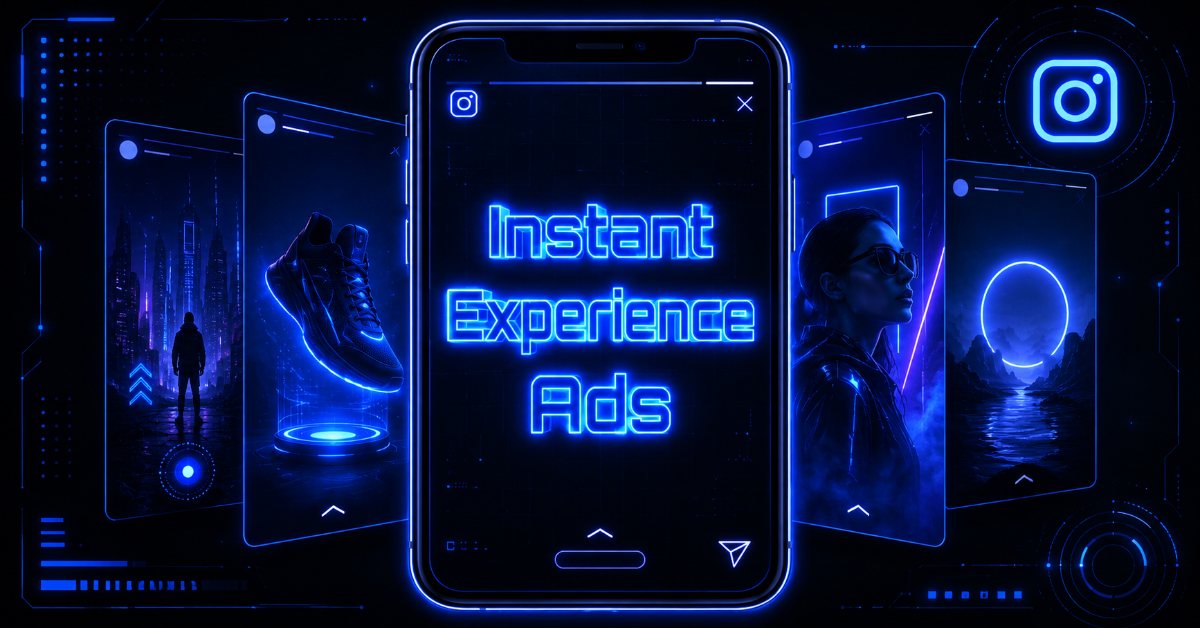
Instant Experience is Meta’s full-screen, in-app destination format that opens after a user taps a feed, Stories, or Explore ad, and it still matters in 2026 because it removes the single biggest cause of mobile drop-off: the jump from ad to external landing page. Pages that load inside Instagram convert faster than external sites because there’s no load delay, no browser handoff, and no tracking break.
The deeper advantage most advertisers miss is data. Because the user never leaves the app, Meta captures every tap, scroll, video view, and form submission as a native signal, which improves audience optimization in a way no off-platform landing page can match. That signal density is what makes Instant Experience worth re-testing now that iOS tracking restrictions have weakened traditional pixel data.
Below, we break down the five Instant Experience templates worth testing this year, the offers each one fits, and how GetHookd helps you see which lead-in ads competitors are actually scaling before you commit budget.

GetHookd: Turn Competitor Intelligence Into Your Next Winning Ad
GetHookd reveals which ads your competitors are actively scaling—not just running. Spy on their best-performing creatives, landing pages, and traffic strategies, then turn proven concepts into testable campaigns in seconds with AI-powered script generation and creative cloning.
What You Get:- ✓ Brand Spy to decode competitor ad strategies in real-time
- ✓ AI script generation and ad cloning for instant variations
- ✓ Performance scoring based on actual ad behavior, not vanity metrics
- ✓ Creative Analyzer to identify and scale your top performers
Top 5 Instagram Instant Experience Ad Examples for 2026
1. Instant Storefront Ads
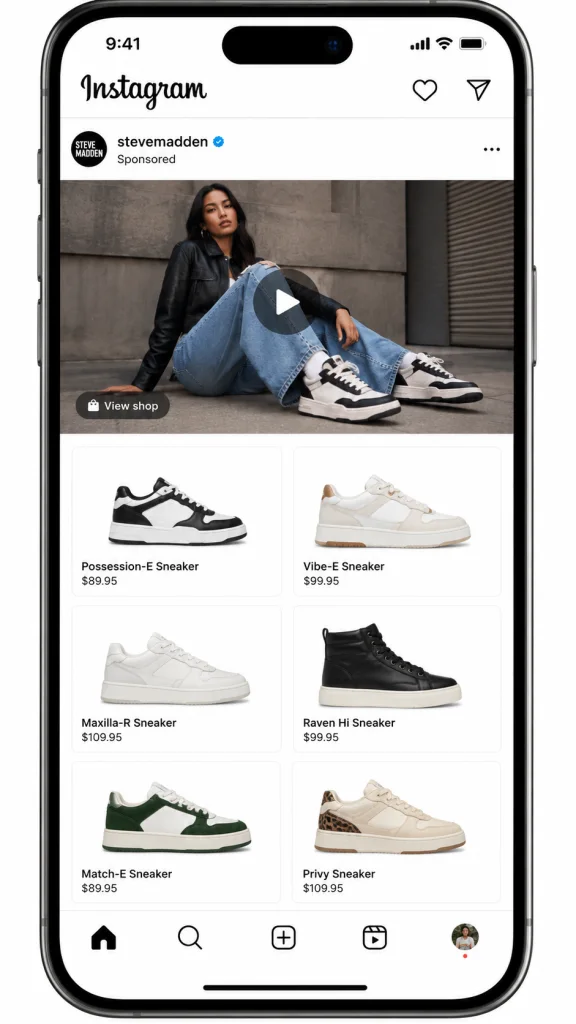
Instant Storefront is the grid-style template tied to a Meta product catalog. The lead-in ad is a collection ad featuring a hero image or video, with a row of products below. Tap the ad, and the full-screen page opens to a scrollable grid of items, each linking to a product page or an in-app checkout.
Storefront ads work best for ecommerce brands with deep catalogs, like fashion retailers, beauty stores, and home goods sellers. The grid layout lets shoppers scan multiple items at once rather than swipe through carousel cards one by one. You can order products manually or let Meta auto-sort them based on purchase likelihood.
A good test in 2026 is to pair a short hero video showing the collection in use with a grid of your top six sellers. Filter the catalog by theme, such as “New Arrivals” or “Best Sellers,” to give the ad a magazine feel.
2. Instant Lookbook Ads
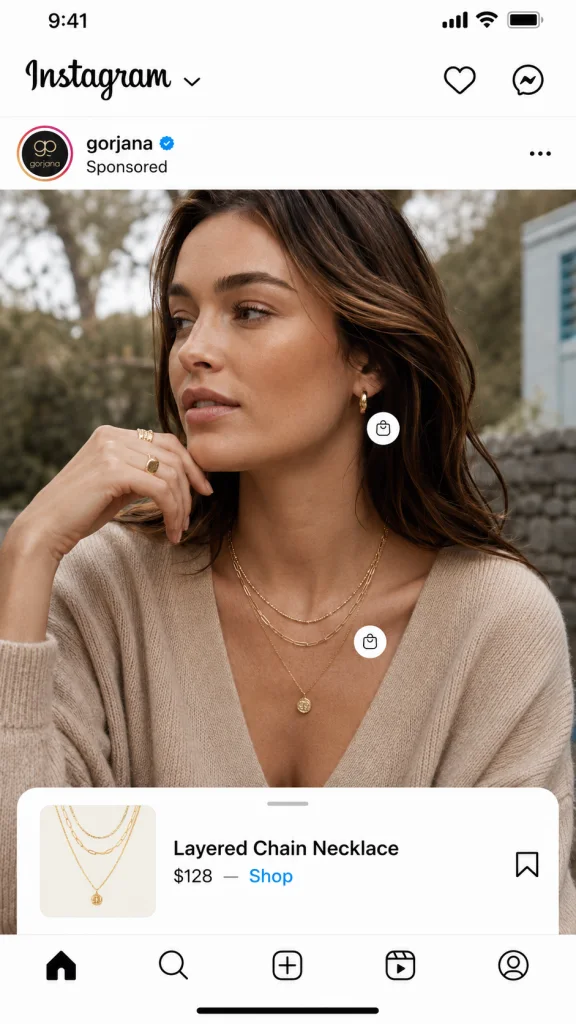
Instant Lookbook is the lifestyle-focused cousin of Storefront. Instead of a product grid, users scroll through full-screen lifestyle images. Each image can be tagged with the products shown, so tapping a tagged item pulls up its details and a buy link.
Lookbook fits apparel, beauty, jewelry, and home decor brands that sell on aspiration. Showing a sweater on a model in a styled outdoor setting tends to convert better than a flat product shot, because the buyer can picture the item in their own life. Missoma, the jewelry brand, has used Lookbook-style Instant Experiences to drive engagement around new collections.
For 2026, treat the Lookbook like a mini editorial. Use three to five lifestyle shots, tag two to three products per image, and write short captions that anchor each scene. Vertical 1080 x 1920 images perform best.
3. Instant Customer Acquisition Ads
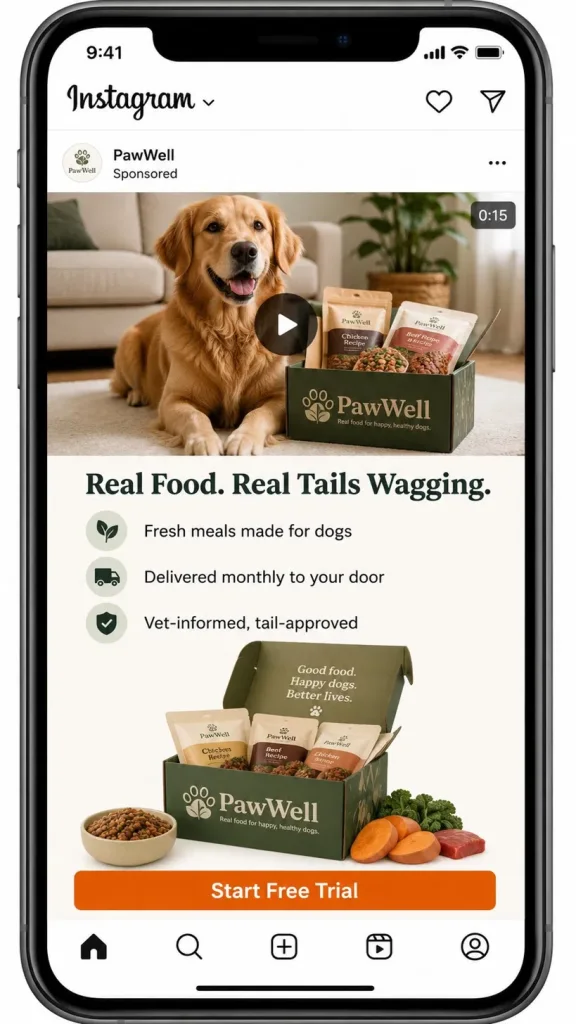
The Customer Acquisition template functions like a mobile landing page inside Instagram. It combines a hero image or video, a few text blocks, supporting visuals, and a strong CTA button that drives a specific action: a free trial, a subscription, or a store visit.
This template is the right pick when you do not need a full catalog but still want more space than a single-feed ad provides. Subscription-box brands and DTC startups have used it heavily. BarkBox ran Instant Experience ads to grow subscriber signups, and Wearsafe used the same format to push back-to-school awareness for its safety device.
The key with Customer Acquisition ads is keeping copy tight. Use one clear headline, two or three short benefit blocks, supporting product imagery, and a single primary CTA. Adding a second CTA at the bottom of the page often lifts conversions for users who scroll all the way down.
4. Instant Storytelling Ads
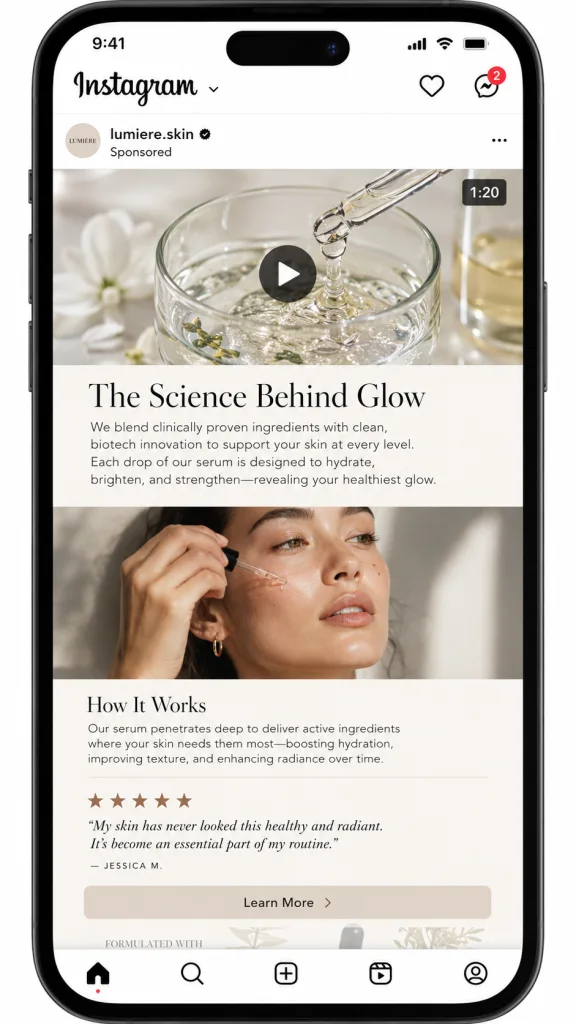
Instant Storytelling leans on video and longer-form content. The template combines videos, photos, and text blocks to walk users through a brand narrative or product story. The total video runtime can reach 2 minutes, with up to 500 words per text block.
This format suits higher-consideration purchases where buyers need context: skincare with active ingredients, fitness equipment, software trials, or niche supplements. The Brazilian arm of Spotify used a Storytelling-style Instant Experience to promote the album launch of the band Tribalistas, combining video clips, photos, and copy into a single immersive page.
For a 2026 test, structure your Storytelling ad like a mini article: a hook video at the top, a problem block, a solution block with product visuals, social proof, and a final CTA. Keep each text block under 50 words so users keep scrolling.
5. Instant Form Ads
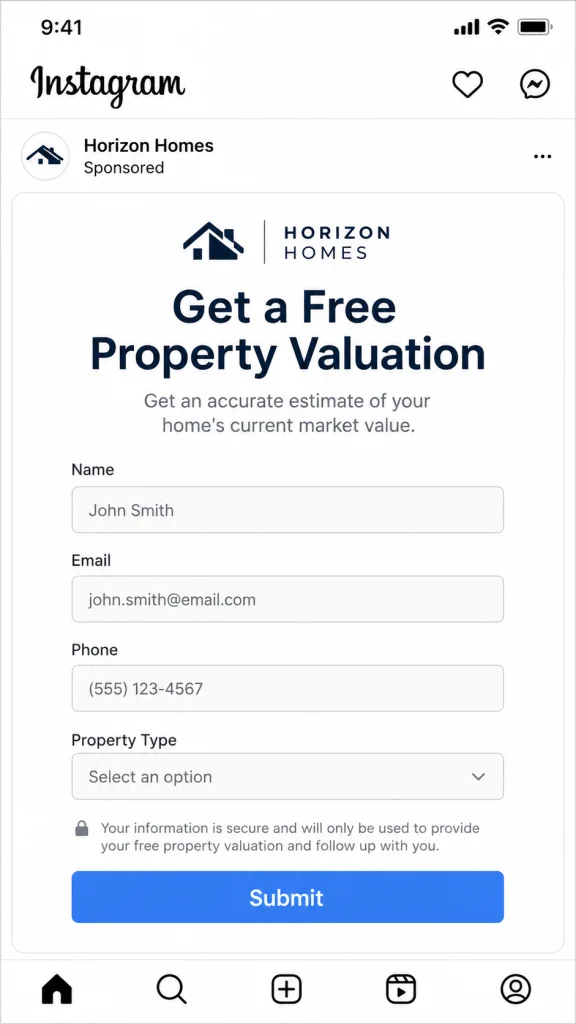
Instant Form is built for lead generation. After tapping the lead-in ad, users land on a full-screen form that auto-fills their Instagram contact details, reducing friction to a couple of taps. The form sits inside the app, so users never bounce out to a third-party landing page.
This template is the go-to for service businesses, real estate, finance, education, and B2B offers. It pairs well with the Customer Acquisition template if you want to warm users up with a short pitch before asking for their details.
To get the most out of Instant Form ads in 2026, ask for three fields or fewer. Add one qualifying question if you need to filter leads, and follow up within 24 hours, since lead quality drops sharply after that window. Use a clear privacy line under the form to keep cost per lead manageable.
Instagram Instant Experience Ad Formats at a Glance
| Ad Format | Best For | Primary Objective | Recommended Asset |
| Storefront | Ecommerce catalogs | Catalog sales, traffic | Grid of 4 to 20 product images |
| Lookbook | Fashion, beauty, decor | Consideration, sales | 3 to 5 tagged lifestyle images |
| Customer Acquisition | DTC, subscriptions, apps | Conversions, installs | Hero video plus 2 to 3 benefit blocks |
| Storytelling | High-consideration brands | Awareness, consideration | Video plus mixed media blocks |
| Instant Form | Lead gen, services, B2B | Leads | Short form with 3 fields or fewer |
How GetHookd Helps You Find Winning Instant Experience Ads Faster
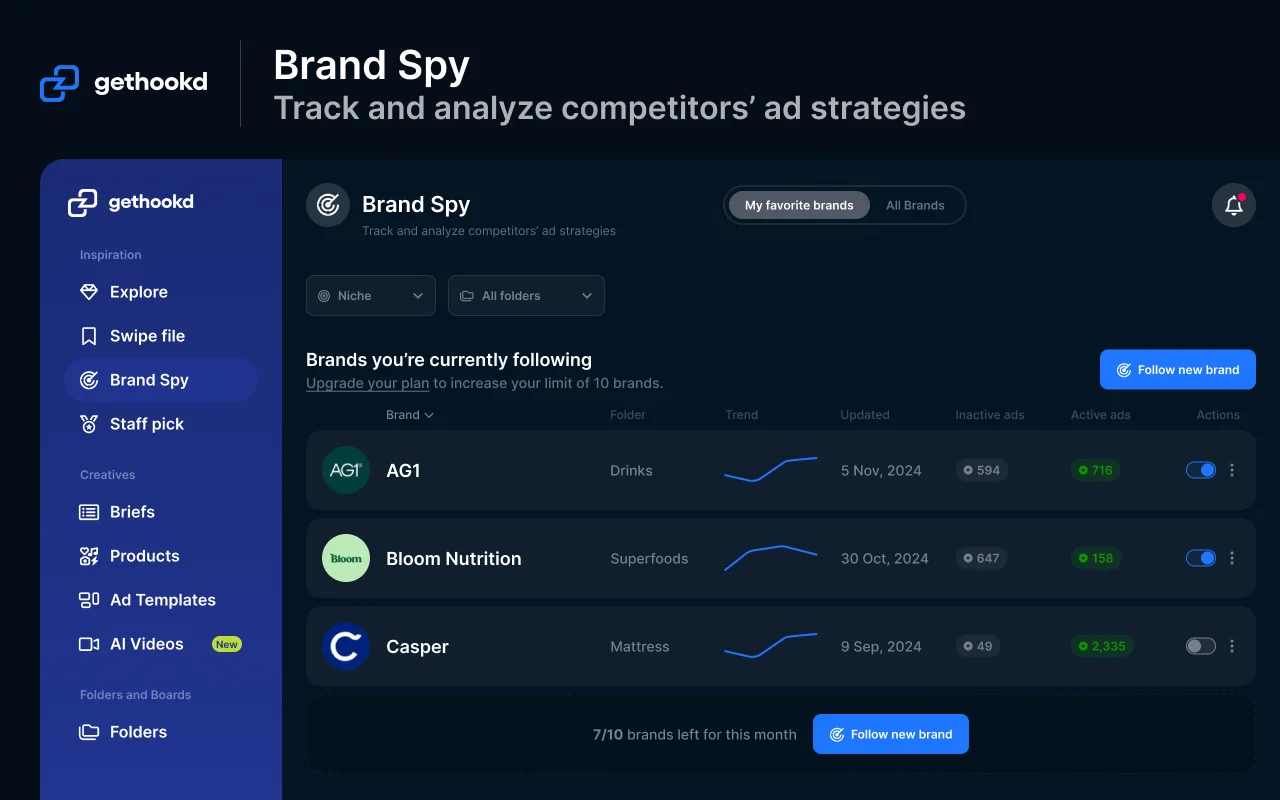
Picking the right Instant Experience template is half the battle. The other half is knowing which lead-in creative, hook, and landing page combination is actually scaling in your niche before you spend on a test. Running any of the five formats above without that signal turns the campaign into a guess.
That is the gap we close at GetHookd. Our Brand Spy feature shows which Instant Experience lead-in ads competitors are actively scaling across Meta, not the ones sitting idle, and our Landing Page Insights reveal where traffic is sent after a tap. With over 65 million ads analyzed and built-in AI tools for transcribing videos, generating scripts, and cloning winning visuals, our platform helps dropshippers, ecommerce brands, agencies, and performance marketers move from research to launch in one session.
Sign up and start finding winning ads today.
Frequently Asked Questions (FAQs)
Do I need a Meta product catalog to run Instant Experience ads?
Only the Storefront and Lookbook templates require a connected Meta Commerce catalog, since both pull product details directly from it. Customer Acquisition, Storytelling, and Instant Form templates do not require a catalog, making them easier to launch for service businesses, app installs, or single-offer campaigns.
How often should I refresh my Instant Experience creative?
Most performance marketers refresh hero creative every two to three weeks to fight ad fatigue and rotate body content monthly. If your CTR or ROAS starts sliding within the same audience, it is usually a creative problem before it is a targeting problem. Tracking competitor refresh cycles helps benchmark the right pace.
Can I run the same Instant Experience on Facebook and Instagram?
Yes. Meta built Instant Experience to work across Facebook and Instagram with the same specs, so one build covers Feed, Stories, Explore, and Marketplace placements. You only need to confirm that your lead-in format, such as carousel or collection, is supported on the placement you want, since a few combinations are platform-specific.
Do I need technical skills to build an Instant Experience ad?
No. Instant Experience ads are built inside Meta Ads Manager using a drag-and-drop interface with prebuilt templates. You add images, videos, text blocks, and CTA buttons without touching code. Basic design knowledge helps with hero assets, but tools like Canva or our AI image cloning at GetHookd handle the heavy lifting if you do not have a designer.
How does GetHookd help me beat the Meta Ad Library on Instant Experience research?
The Meta Ad Library shows you which ads are live. It does not show you which ones are winning. At GetHookd, our Brand Spy surfaces which Instant Experience lead-in ads competitors are actively scaling, our Creative Analyzer flags the hooks driving performance, and our AI tools turn those insights into fresh scripts and cloned visuals. You move from research to launch within a single workflow.
*Note: Pricing and/or product availability mentioned in this post are subject to change. Please check our website for current pricing and stock information before making a purchase.