
Key Takeaways
- The five most effective Facebook ad examples for baby products are product-in-use videos, feature-focused carousels, nursery or lifestyle collection ads, customer demonstration or review ads, and comparison or product-range carousels.
- Product-in-use videos show how a product handles in daily use, and feature-focused carousels give parents one clear detail per card.
- Nursery or lifestyle collection ads show coordinated items together in a real room, and customer demonstration or review ads build trust through a parent’s own footage.
- Comparison or product-range carousels place similar variants side by side, helping parents tell near-identical options apart by size, color, or spec.
- At GetHookd, our tool analyzes 65M+ Meta ads, and its Brand Spy shows which baby product ads competitors are scaling, so you can model proven formats.
What Makes a Baby Product Ad Actually Convert on Facebook?
A baby product ad converts when it shows the item solving a real, everyday task. Parents browsing strollers, carriers, or feeding gear are cautious shoppers who have seen enough recalls and exaggerated marketing claims to distrust feature lists and bold promises.
What most brands miss is that the format carries as much weight as the message itself. A static product photo can list every spec correctly and still get scrolled past, while a short video of a parent folding a stroller one-handed answers the exact question a shopper was about to search for.

GetHookd: Turn Competitor Intelligence Into Your Next Winning Ad
GetHookd reveals which ads your competitors are actively scaling, not just running. Spy on their best-performing creatives, landing pages, and traffic strategies, then turn proven concepts into testable campaigns in seconds with AI-powered script generation and creative cloning.
What You Get:- ✓ Brand Spy to decode competitor ad strategies in real-time
- ✓ AI script generation and ad cloning for instant variations
- ✓ Performance scoring based on actual ad behavior, not vanity metrics
- ✓ Creative Analyzer to identify and scale your top performers
What Are the Best Baby Product Facebook Ad Examples?
1. Product-in-Use Video

This format features a parent or caregiver using the product inside an ordinary routine: bathing the baby, folding a stroller at the curb, adjusting a carrier before a walk, packing a diaper bag, or setting up a high chair before dinner.
Why It Works
Video demonstrates how a product works instead of relying on a feature list, which matters because size, handling, and ease of use are hard to judge from a photo alone. Watching someone else fold, snap, or adjust the item gives a shopper a mental script for their own first use, and it turns the ad into a small, relatable story rather than a sales pitch.
2. Feature-Focused Carousel
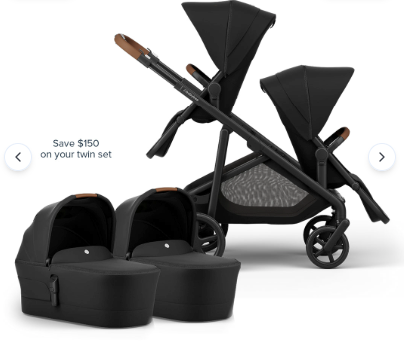
A feature-focused carousel presents a single product across several cards, with each card dedicated to one detail. The copy on each static card stays brief and practical, either explaining that one feature or linking out to more detail.
Why It Works
Breaking a detailed purchase decision into small, swipeable pieces keeps a shopper engaged longer than a single image trying to cram in every selling point at once. Each carousel card gets a clear job, the shopper can move through the information at their own pace, and the ad never asks them to absorb more than one fact before deciding whether to keep swiping.
3. Nursery or Lifestyle Collection Ad
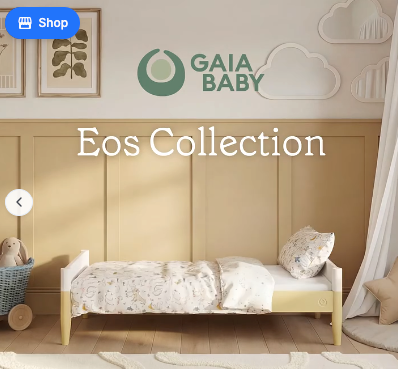
A nursery or lifestyle collection ad shows several coordinated baby products in one setting, such as bedding, storage bins, a changing mat, and a lamp arranged together in a decorated nursery. The ad copy usually introduces a collection or design style and invites shoppers to browse, rather than pushing a single item.
Why It Works
Seeing related items together shows how a room could come together as a whole instead of one item at a time, which helps shoppers discover products they weren’t already searching for. It also lets a brand show off its design aesthetic while still linking through to individual product pages for anyone who wants just one piece.
4. Customer Demonstration or Review
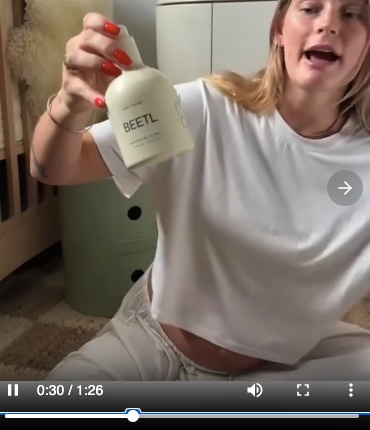
A customer demonstration or review ad is UGC-style content that features a parent or caregiver giving a short, honest demonstration or describing their experience with a product, often showing setup, packing, washing, or daily use at home. Strong copy for this format identifies who is speaking and the specific feature they’re addressing, and avoids framing one parent’s experience as a guaranteed result for every family.
Why It Works
A real person’s perspective adds credibility a product shot alone can’t, and seeing the item in a familiar home setting answers practical questions that studio photography leaves out.
5. Comparison or Product-Range Carousel
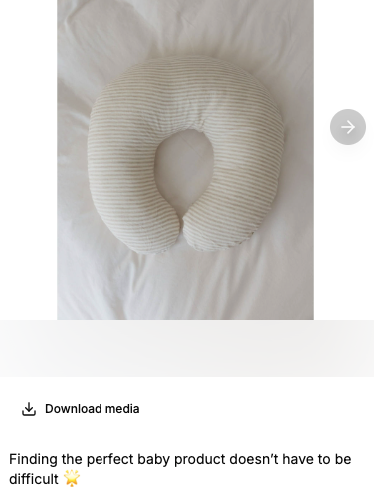
A comparison or product-range carousel puts several options from the same line side by side. Instead of picking a favorite, the copy focuses on factual differences and lets the shopper match the details to their needs.
Copy that sticks to specifications rather than opinions keeps the ad compliant and useful, since shoppers can easily verify factual claims about materials or included items against the actual product listing.
Why It Works
This format helps shoppers tell similar products apart, which matters most when a catalog has several variations of the same core item. It also encourages browsing across the full range instead of funneling everyone toward a single bestseller, without ever claiming one option is superior to another.
Top 5 Baby Product Facebook Ad Examples: Summary Table
| Ad Format | What It Shows | Best Use Case |
| Product-in-use video | A caregiver using the product during a normal routine, such as bathing, folding, or packing | Demonstrating handling and size when a photo leaves questions open |
| Feature-focused carousel | One detail per card, with brief practical copy on each | Explaining a product with several features worth understanding separately |
| Nursery or lifestyle collection ad | Coordinated products arranged together in a real room setting | Cross-selling across a range and showing design aesthetic |
| Customer demonstration or review | A parent showing setup, washing, or daily use in their own home | Building credibility with shoppers who distrust polished advertising |
| Comparison or product-range carousel | Several variants of the same core item side by side | Helping shoppers tell near-identical options apart by size, color or spec |
Tips for Creating Top-Performing Baby Product Ads
- Lead With the Child, Not the Product: The opening frame of a video should show a real child’s face or reaction before it shows packaging, features, or a product shot on white. Meta and Nielsen research found that up to 47% of a video campaign’s value is delivered in the first three seconds.
- Put Your Offer in the First Frame: When the hook is a discount or a free trial, that offer needs to be visible immediately, not buried in the caption or revealed halfway through a video.
- Answer Objections Inside the Creative Itself: Rather than waiting for objections to surface in the comments, the strongest ads answer them directly, for example with a short video that replies to a common customer question. This preempts hesitation around fit, safety, or effectiveness before it ever becomes a reason not to click.
- Choose Real Kids Over Polished Studio Shots: A real child’s unscripted reaction reads as more trustworthy than a polished studio shoot, no matter how well-lit. Production value still matters, so center the product in a soft, lived-in setting rather than on an isolated white background.
See Which Baby Product Ads Are Scaling With GetHookd’s Brand Spy
Knowing the best examples and formats gets you to a brief. However, it does not tell you which one suits your product, what a parent needs to see in the first three seconds, or which hook is currently working in your part of the category. Those answers usually arrive after the budget has already gone.
Instead of scrolling the Facebook Ad Library one ad at a time, use our Brand Spy to see which baby product ads competitors are actively scaling, so your team can model proven formats instead of guessing. The AI script tool then turns a winning ad into a ready-to-shoot hook for your own product in minutes. Clone Ads generates new variations of top-performing static ads, and Creative Analyzer shows which of your own creatives to scale. Start exploring GetHookd to see which creative angles are already working in your category.
Frequently Asked Questions (FAQs)
What are some popular ads for baby products?
Popular baby product ads include product-in-use videos, feature-focused carousels, nursery or lifestyle collection ads, customer demonstration or review ads, and comparison or product-range carousels. Ads that show a child’s genuine reaction to a product are also popular.
How do I promote baby products?
Promote baby products on Facebook by opening on a real child using the product, placing any discount or free trial offer in the first frame, and using real, lived-in footage rather than polished studio photography.
What is the best way to advertise to children?
The best way to advertise baby and kids products is to target the parent who makes the purchase, since the adult decides and pays. Show the product in a real family moment, such as bath time or a first walk, rather than listing specs or features.
How often should I check competitor baby product ads?
Check competitor ads whenever you plan a new creative test, and more often around seasonal peaks or new product launches, when baby brands tend to refresh their creative. Ads you save in GetHookd stay in your account even after they go offline, so you can track how a competitor’s angles change over time.
How does GetHookd help me create better baby product ads?
At GetHookd, our platform analyzes a database of 65 million ads to show which competitor creatives are being scaled, transcribes winning videos into ready-made ad copy, and uses AI to generate new hooks, scripts, and image variations from a single top-performing ad, without any design experience required.
*Note: Pricing and/or product availability mentioned in this post are subject to change. Please check our website for current pricing and stock information before making a purchase.