Key Takeaways
- LAIFE, Teknasyon, hipto, and Kalshi produced the four most copyable AI UGC ads of 2026, each with published performance figures.
- LAIFE batches avatar and hook combinations to produce 50 AI UGC videos a week, reaching a $3.89 cost per order and a tenfold jump in testing volume.
- Teknasyon rebuilds one winning ad structure across new AI actors, cutting cost per purchase by 76% and lifting return on ad spend (ROAS) by 40%.
- hipto’s demographic-matched AI actors grew qualified leads by 49% and cut cost per lead by 14%, while Kalshi built its AI spot for about $2,000 in two days.
- GetHookd’s Brand Spy shows which AI UGC ads competitors are actively scaling, and its AI Ad Generator turns those winning formats into new scripts and variations in minutes.
What is the Production Problem Each AI UGC Ad Solved?
AI UGC ads perform best when they solve one specific production problem instead of following a single template. LAIFE, Teknasyon, hipto, and Kalshi each built a different format to fix a different constraint, ranging from testing volume to casting accuracy to raw attention. Most brands copy an ad’s visual style without checking which constraint it was built to solve.
Copying the wrong format wastes budget rather than saving it. A high-volume batching method suits a brand that needs constant testing, but it fails a brand that only needs one polished hero ad. A demographic-specific cast that works for one buyer group can just as easily flop with another, so the method has to match the bottleneck, not just the platform or budget size.
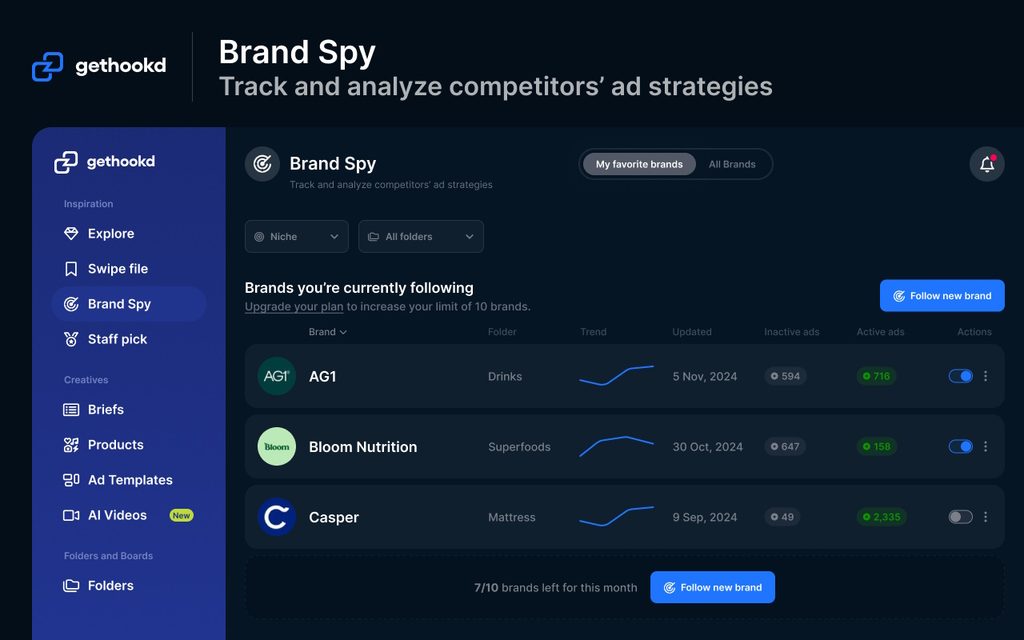
GetHookd narrows that choice from both ends. Brand Spy shows which competitor formats are still receiving ad spend, and Clone Ads and Video Scripts let you turn that format into a fresh script or creative variation in minutes, so you can test it without a shoot.

GetHookd: Turn Competitor Intelligence Into Your Next Winning Ad
GetHookd reveals which ads your competitors are actively scaling, not just running. Spy on their best-performing creatives, landing pages, and traffic strategies, then turn proven concepts into testable campaigns in seconds with AI-powered script generation and creative cloning.
What You Get:- ✓ Brand Spy to decode competitor ad strategies in real-time
- ✓ AI script generation and ad cloning for instant variations
- ✓ Performance scoring based on actual ad behavior, not vanity metrics
- ✓ Creative Analyzer to identify and scale your top performers
4 AI UGC Ad Examples to Copy
1. LAIFE: High-Volume AI UGC Testing at 50 Videos a Week
LAIFE is a Boston longevity brand selling supplements, founded by Harvard genetics professor George Church and Dr. Gavin Zhou. Its audience is health-conscious buyers aged 35 to 65, a group the team describes as educated and quick to spot fake content.
That skepticism shaped the creative. Earlier attempts with other AI tools produced characters with mismatched lip sync, and the uncanny valley effect made the videos unusable for a brand selling science-backed products. Credibility was the constraint, not cost.
The current workflow starts with positioning research to decide which benefit to lead on, then avatar selection matched to the target demographic, then script variations testing science-backed claims, founder credibility, and customer results as separate hooks. Roughly 50 videos go out weekly across products, hooks, and styles.
The published creatives also carry an “AI-generated” label in the corner and a standing disclaimer across the base of the frame noting that visuals may include AI-generated content and do not depict real cases. For a brand making health claims through a synthetic presenter, that overlay is part of the creative rather than an afterthought.
Cost per order reached $3.89, and creative testing volume increased tenfold against the same timeline. The team reports that almost every video on its brand account is AI-generated, and organic product cards began producing consistent orders alongside paid placement.
Copy this by treating hook, avatar, and product benefit as three independent variables and generating combinations rather than one-off concepts. Volume only pays off if each variant differs in a way you can attribute later.

2. Teknasyon: One AI UGC Format Rebuilt Across Many Actors
Teknasyon builds consumer apps and B2B services, and its constraint was creative volume rather than credibility. The team was already producing good videos, but the production process could not keep pace with how quickly it wanted to test new story angles and audience motivations.
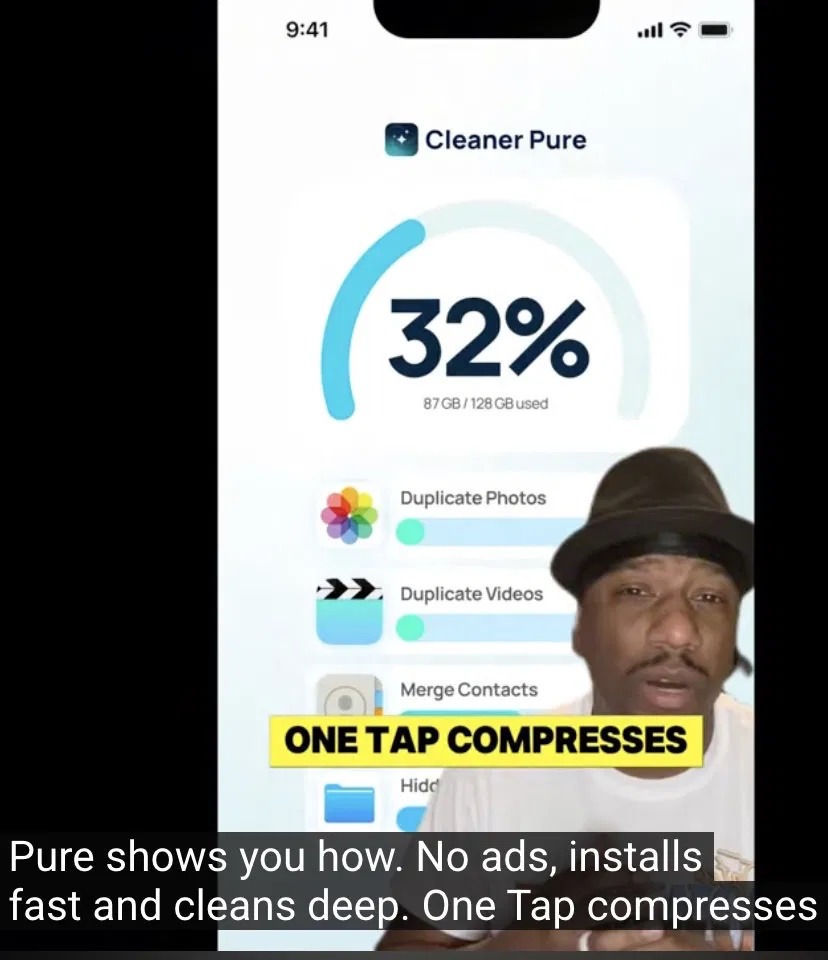
The method runs in two stages. Ad variations go out first to identify the winning type, then that same structure is rebuilt with different AI actors and scripts. Hook, pacing, and CTA stay fixed while the face and phrasing rotate.
In the Cleaner Pure creatives, the fixed layer is visible on screen. App footage fills the frame showing a storage scan and a feature list; the presenter sits inset in the lower corner, and the hook text runs as a highlighted bar across the middle. Only the person changes across variants.
Holding the structure constant is what keeps the second stage readable. When only the messenger changes, a performance difference points at casting rather than at some combination of edits nobody can untangle later.
One app in the portfolio recorded a 76% drop in cost per purchase and a 40% ROAS uplift under this approach, published in the Teknasyon case study. The team also uses the speed to react to short-lived trends, producing UGC-style creatives within a day rather than waiting on a shoot.
Copy this by resisting the urge to generate fifty unrelated videos on day one. Find the winner, then vary one element at a time.
3. hipto: AI Actors Cast for One Demographic
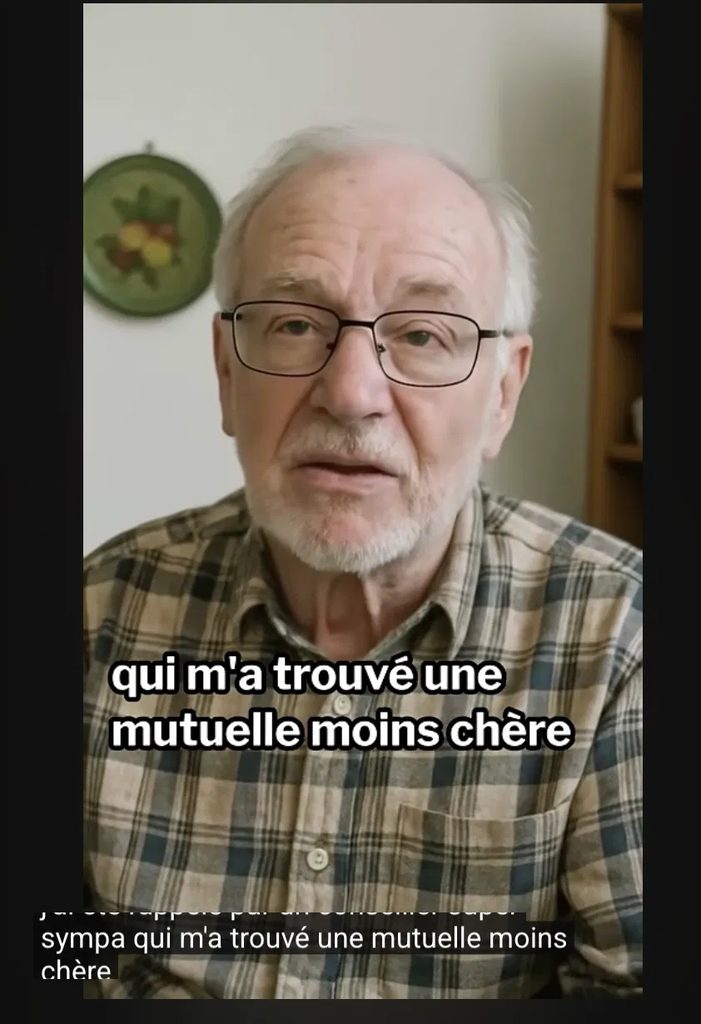
hipto is a French lead generation agency running paid campaigns across Meta and several other channels, focused on qualified, GDPR-compliant leads rather than raw volume. Its AI UGC campaign targeted seniors comparing complementary health cover, known in France as a mutuelle.
The script follows a first-person story: filling in an online form, receiving a call back from an adviser, and finding cheaper cover. Personalized plans and accessible service carry the message, two things that matter disproportionately to an older buyer weighing a decision they expect to have questions about.
Casting carries the rest. The AI actor’s age, glasses, plaid shirt, and modest domestic setting were selected to match that buyer rather than defaulting to a generic presenter. Language and market are part of the same match, since a French senior audience will not respond to a US-styled spokesperson reading translated copy.
This is the hardest element to arrange at short notice through human creator marketplaces, where the available roster rarely matches a narrow demographic brief and turnaround runs to days.
Over a one-month run, hipto recorded a 49% increase in qualified leads and a 14% lower cost per lead.
Copy this by generating the same script with three different ages or accents before touching the copy. Casting is usually the cheapest variable to test, and the one most teams leave on its default setting.
4. Kalshi: Fast-Cut AI Characters Talking to Camera
Kalshi’s spot, tagged “The World’s Gone Mad. Trade It.”, ran during Game 3 of the 2025 NBA Finals on the YouTube TV broadcast. Filmmaker PJ Accetturo produced it with Google’s Veo 3 in roughly two days for about $2,000, generating 300 to 400 clips and cutting down to around 15, as reported by Ad Age.
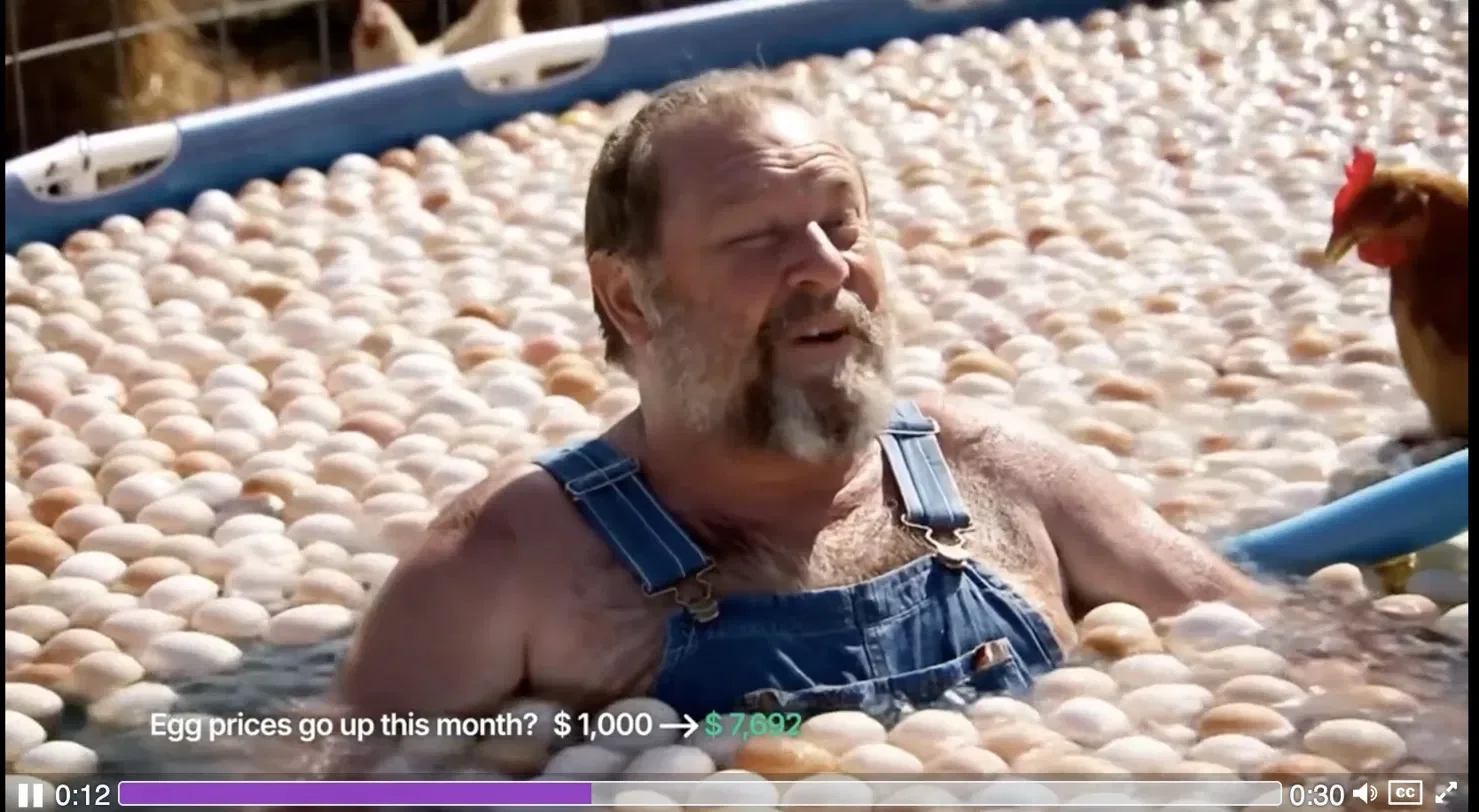
The structure is vox-pop. A presenter opens by explaining that the crew is in Florida, asking people what they are putting their money on; then the ad cuts through a run of characters who each shout one line at the camera. A man floats in a paddling pool of eggs, an older man in a cowboy hat carries a chihuahua, an alien drinks beer.
Underneath each character sits the product demonstration: the market being traded, a $1,000 stake, and the specific return. Egg prices returning $7,692, an Indiana championship returning $3,523. The chaos holds attention while the overlay does the selling.
The visual codes match social video rather than produced commercial work, which is what earns it a place on this list. Kalshi’s CEO framed the exercise around speed and cost, noting the team went from idea to finished ad in under 48 hours, and the company said it planned to do more with AI.
Copy this by writing one character, one market, and one number per cut. The format carries elevated risk in trust-heavy categories, where visible AI production has drawn audience pushback, and it suits brands whose voice already runs loud.
AI UGC Ads Examples: Summary Table
| Ad Example | Format | Channel | Documented Result | Best Suited To |
| LAIFE | Avatar matched to demographic, hooks tested in batches | TikTok Shop paid and organic | $3.89 cost per order, 10x testing volume | Supplements, wellness, high-volume DTC |
| Teknasyon | One winning structure rebuilt across many AI actors | Paid social | 76% lower cost per purchase, 40% ROAS uplift | Apps and rapid creative testing |
| hipto | AI actor cast for a single demographic | Meta and other paid channels | 49% more qualified leads, 14% lower CPL | Insurance, finance, senior audiences |
| Kalshi | Fast-cut AI characters, one market per cut | Broadcast and social | Produced for roughly $2,000 in two days | Bold consumer brands |
Find Your Next AI UGC Ad to Copy with GetHookd
Format decides whether an AI UGC ad is worth copying, not budget or platform. LAIFE, Teknasyon, hipto, and Kalshi each proved a different method, and the results held because each team changed one variable at a time. Copying the surface style without matching the underlying constraint rarely produces the same numbers.
At GetHookd, our Brand Spy shows which AI UGC ads competitors are actively scaling, and our Video Scripts and Clone Ads tools turn any proven format into new scripts and creative variations in minutes. Pick a format with real spend behind it, then build and test your own version without a shoot. Start your 7-day free trial today.
Frequently Asked Questions (FAQs)
What is an AI UGC ad?
An AI UGC ad is a creator-style video where the on-camera person, voice, or entire scene is generated by AI instead of filmed by a hired creator. It keeps the handheld, conversational look of user-generated content while removing the casting, shipping, and revision cycle.
Are AI UGC ads allowed on Facebook and Instagram?
Yes. Meta applies its standard advertising policies to an ad’s claims, regardless of how the creative was produced. The risk sits in the script rather than the render, since an AI actor implying personal use of a product they never touched can cross into deceptive testimonial territory.
Do AI UGC ads work outside ecommerce?
Yes. Lead generation, mobile apps, insurance, and supplements all appear among the documented results, because the format depends on matching a face to a buyer rather than on showing a physical product. Categories that require a product shown in hand are a harder fit.
Do I need editing skills to run AI UGC ads?
No. Current AI UGC tools handle script, avatar, voice, captions, and platform sizing in a single pass, with finished assets rendering in minutes. The skill that still matters is judgment about which format to copy and which variable to isolate in the next test.
How does GetHookd help me find AI UGC ads worth copying?
GetHookd indexes 65M+ ads across Meta and TikTok, and Brand Spy shows which creatives, landing pages, and traffic sources a competitor is actively scaling. That distinction separates copying a format with spend behind it from copying one that was quietly switched off.
*Note: Pricing and/or product availability mentioned in this post are subject to change. Please check our website for current pricing and stock information before making a purchase.