5 Effective B2B Facebook Ads Examples & Tips for 2026
Key Takeaways
- B2B Facebook ads fail most often not because of weak creative, but because the ad format is mismatched to the funnel stage. A sales-heavy ad hitting a cold audience wastes spend before trust is built.
- Most B2B teams either run the same ad format across all funnel stages or rely on the Facebook Ad Library to gauge what competitors are running, without any signal on which ads are actually being scaled.
- GetHookd, alongside a structured funnel using lead magnets, problem-first videos, social proof ads, sequential retargeting, and competitor comparison ads, gives B2B marketers both a clear format framework and the competitive intelligence to execute it.
- B2B buyers spend 74% more time on Facebook than the average user, and the platform reaches over 200 million active businesses. The audience is there, but only stage-matched campaigns convert it.
- GetHookd’s Brand Spy shows which B2B ad formats competitors are actively scaling on Meta, so every campaign starts from real market data rather than guesswork.
What B2B Advertisers Get Wrong About Facebook
GetHookd gives B2B marketers the competitive intelligence to know which ad formats are actually scaling on Meta before they build a single campaign, and five formats consistently produce results when matched to the right funnel stage. B2B buyers spend 74% more time on Facebook than the average user, and the platform reaches over 200 million active businesses.
The sections below break down how each format works, where it fits in the funnel, and what separates the versions that generate qualified leads from the ones that burn budget.

GetHookd: Turn Competitor Intelligence Into Your Next Winning Ad
GetHookd reveals which ads your competitors are actively scaling—not just running. Spy on their best-performing creatives, landing pages, and traffic strategies, then turn proven concepts into testable campaigns in seconds with AI-powered script generation and creative cloning.
What You Get:- ✓ Brand Spy to decode competitor ad strategies in real-time
- ✓ AI script generation and ad cloning for instant variations
- ✓ Performance scoring based on actual ad behavior, not vanity metrics
- ✓ Creative Analyzer to identify and scale your top performers
5 Effective B2B Facebook Ad Examples for 2026
1. Lead Magnet Ads with Specific, Actionable Resources
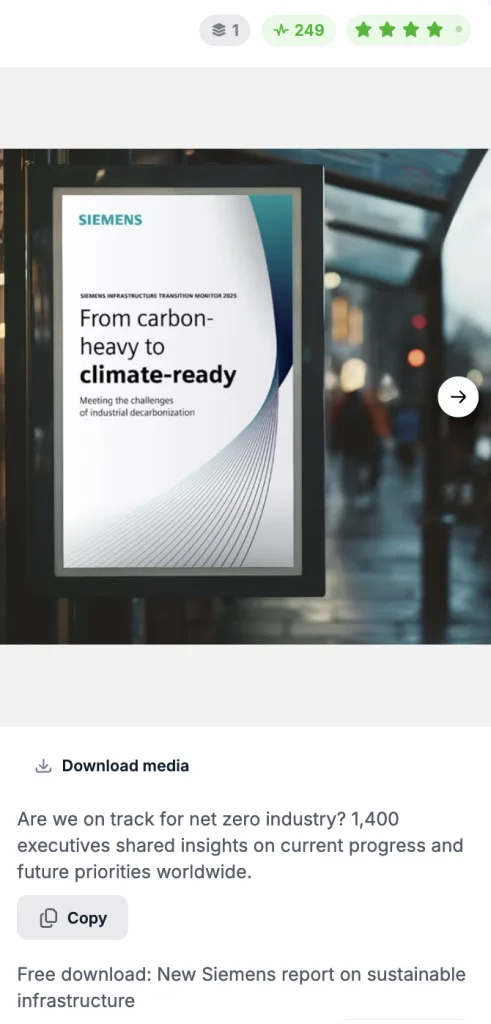
Lead magnet ads work because they trade value for attention. A decision-maker scrolling through their feed will stop for something that solves a problem they have right now. They will not stop for a vague PDF they will never open.
The format performs best when the deliverable is narrow and immediately useful. A “2026 Paid Social Budget Planner for SaaS Teams” is a real offer. “Download our latest marketing guide” is not. Specificity does two things: it attracts the right audience and filters out the wrong ones, improving lead quality downstream. For the creative itself, a single static image with a clean mockup of the resource works well. A carousel format, where each slide highlights a single key takeaway from the resource, is worth testing against the single-image format. Facebook Instant Forms reduce drop-off significantly for mobile users by keeping the sign-up flow inside the platform.
Tips to run this ad type effectively:
- State the exact deliverable in the headline, not the category (“Get the 2026 Paid Social Benchmark Report,” not “Download our research”).
- Keep the Instant Form to two or three fields at the top of the funnel. Qualify the lead further in follow-up.
- Test carousel against single image to identify which layout drives lower cost per lead in your specific niche.
- Follow up immediately. An automated email sequence that delivers the resource within minutes and continues to nurture the lead over the following days substantially increases conversion rates.
2. Problem-First Video Ads
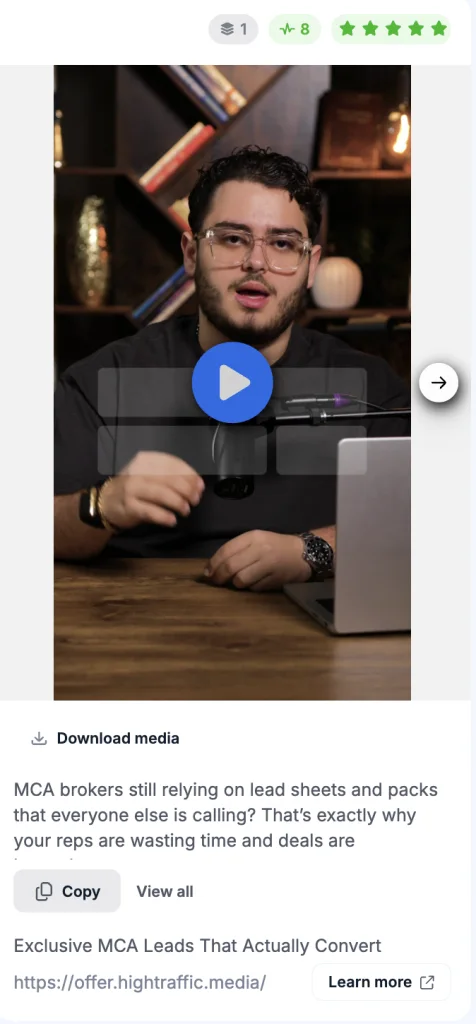
A video ad that opens with a logo or brand name loses most B2B viewers before the message lands. Problem-first video ads flip the structure. They open with a specific, recognizable frustration in the first two to three seconds, before any branding appears.
This is the most effective top-of-funnel (TOFU) format for B2B campaigns because it earns attention by reflecting the viewer’s reality rather than interrupting it. A project management software company showing five browser tabs open, a missed deadline notification, and a frantic Slack channel resonates with an operations director in a way that a product feature walkthrough never will. The problem-first hook creates a pattern interrupt. The rest of the video connects that frustration to the solution. Beyond driving immediate engagement, TOFU video campaigns serve a secondary purpose. People who watch at least 50% of your video form a warmer, more qualified retargeting audience than any interest-based segment you can build through manual targeting. Every completed video view is a signal to use at the next funnel stage.
Tips to run this ad type effectively:
- Put the pain point before the product in the first three seconds, without exception.
- Keep TOFU videos between 30 and 60 seconds for feed placements. Shorter works. Longer tends to drop off.
- Add captions. Most B2B buyers watch video without sound during the workday.
- Create a custom audience from people who watched 50% or more of the video and use it as the seed audience for your MOFU retargeting campaign.
3. Social Proof and Case Study Ads
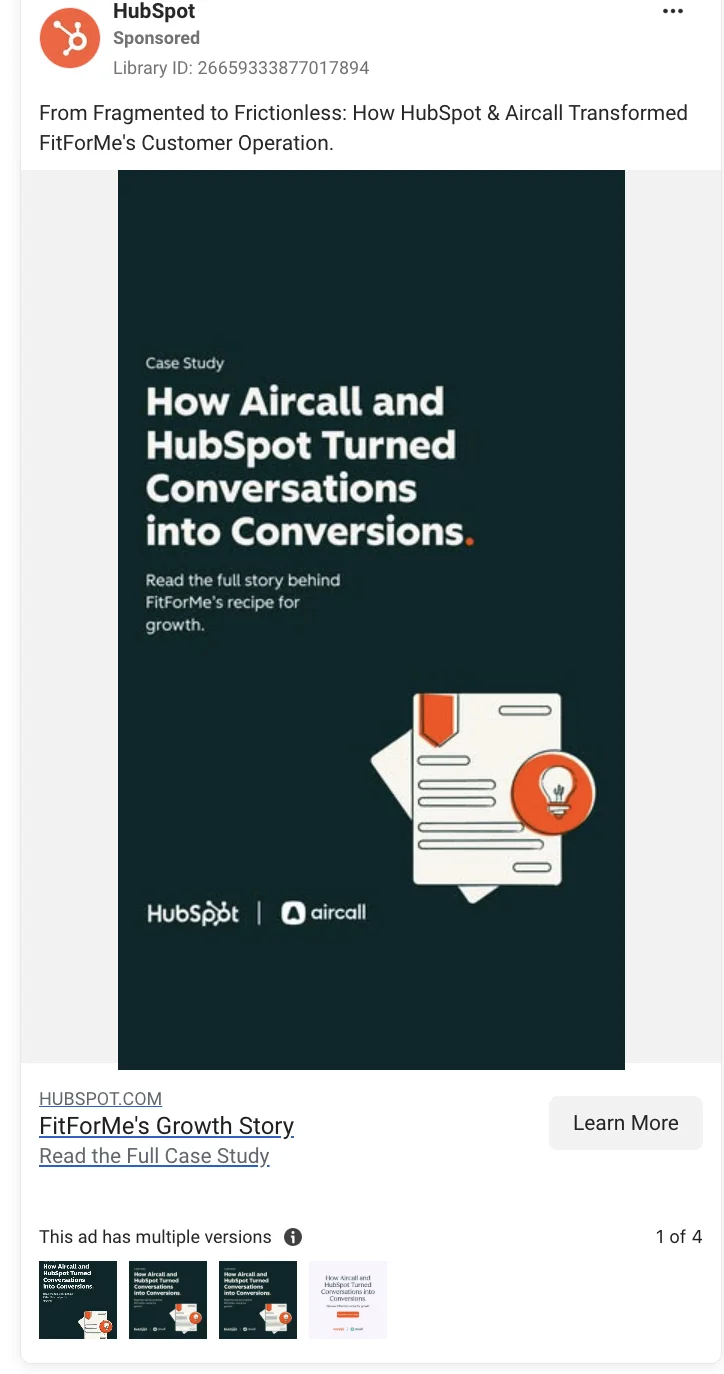
B2B decisions involve scrutiny. Multiple stakeholders, budget sign-off, and extended evaluation periods mean trust-building matters more than any feature comparison. Social proof ads earn that trust at the middle-of-funnel (MOFU) stage, after a prospect has already been exposed to your brand at least once.
The most effective version of this ad is specific to a result. A claim like “cut monthly reporting from eight hours to 45 minutes” gives a decision-maker something concrete to bring into an internal conversation. Vague testimonials do not move B2B buyers. Numbers, job titles, and company types do. Short talking-head videos from real customers (30 to 45 seconds) tend to outperform polished quote cards in the feed because they feel less produced and therefore more credible in a social context. Both formats are worth testing, and running them against each other on the same warm audience gives you a clear answer for your specific market. Target this ad exclusively at people who have already watched your TOFU video or visited your website.
Tips to run this ad type effectively:
- Lead with the result in the first line of the caption or headline, not the customer’s name.
- Include the customer’s job title and company type to maximize relevance for similar prospects reviewing the ad.
- Layer this ad only on top of warm audiences: video viewers, website visitors, or lead form openers.
- Test a talking-head testimonial video against a clean static quote card to identify which format your audience responds to.
4. Sequential Retargeting Campaigns
Most B2B conversions do not happen from a single ad exposure. They happen after multiple touchpoints across days or weeks. Sequential retargeting delivers different ads in a planned order to the same audience, matching the message to where the prospect currently sits in the buying journey.
A three-stage sequence looks like this in practice: a TOFU video introduces the problem and builds the audience, a MOFU social proof ad reinforces credibility for people who engaged with that video, and a BOFU ad delivers a specific and time-bound offer (a demo, a free trial, or a strategy session) to prospects who have visited the pricing page. Facebook’s custom audience and exclusion tools make this practical even with a limited budget. Small B2B teams can run effective sequential campaigns using first-party data, website visitor audiences, and video view segments. The structure is what drives results, not the spend level.
Tips to run this ad type effectively:
- Map each ad in the sequence to a single funnel stage (TOFU, MOFU, BOFU) before building the campaign.
- Exclude audiences from prior funnel stages once they advance to the next to avoid budget waste and repetition.
- Set frequency caps to reduce ad fatigue, particularly for B2B buyers in longer six-to-twelve-month sales cycles.
- Use a single, clear CTA in the BOFU ad. Presenting multiple options reduces conversion rates at the decision stage.
5. Competitor Comparison Ads
At the bottom of the funnel, your prospect is already evaluating options. They are not browsing. They are deciding. Competitor comparison ads meet them at that stage with exactly the information they are looking for.
These ads work best as simple, factual comparisons. A clean side-by-side table, a short video walkthrough of key differences, or a direct-response headline such as “Switching from [Competitor]? Here is what changes” positions your product within a decision the prospect is already making. The goal is clarity, not aggression. Specific numbers outperform vague claims in this format every time. “We index 65M+ ads versus their 8M” is more persuasive than “we have more data.” This format performs best against warm audiences: people who have visited your pricing page, opened a lead form, or interacted with your MOFU ads. Running it against cold audiences wastes spend. The targeting should focus exclusively on prospects who are close to making a decision.
Tips to run this ad type effectively:
- Keep comparisons factual, specific, and easy to scan. Numbers and concrete differentiators outperform generic superiority claims.
- Target this ad only to warm audiences such as pricing page visitors or MOFU ad engagers. Cold targeting does not suit this format.
- Use a direct, single CTA: a demo booking link, a free trial sign-up, or a contact form.
- Update this ad whenever product features, key capabilities, or market positioning changes.
Know What Your Competitors Are Scaling Before You Spend a Dollar
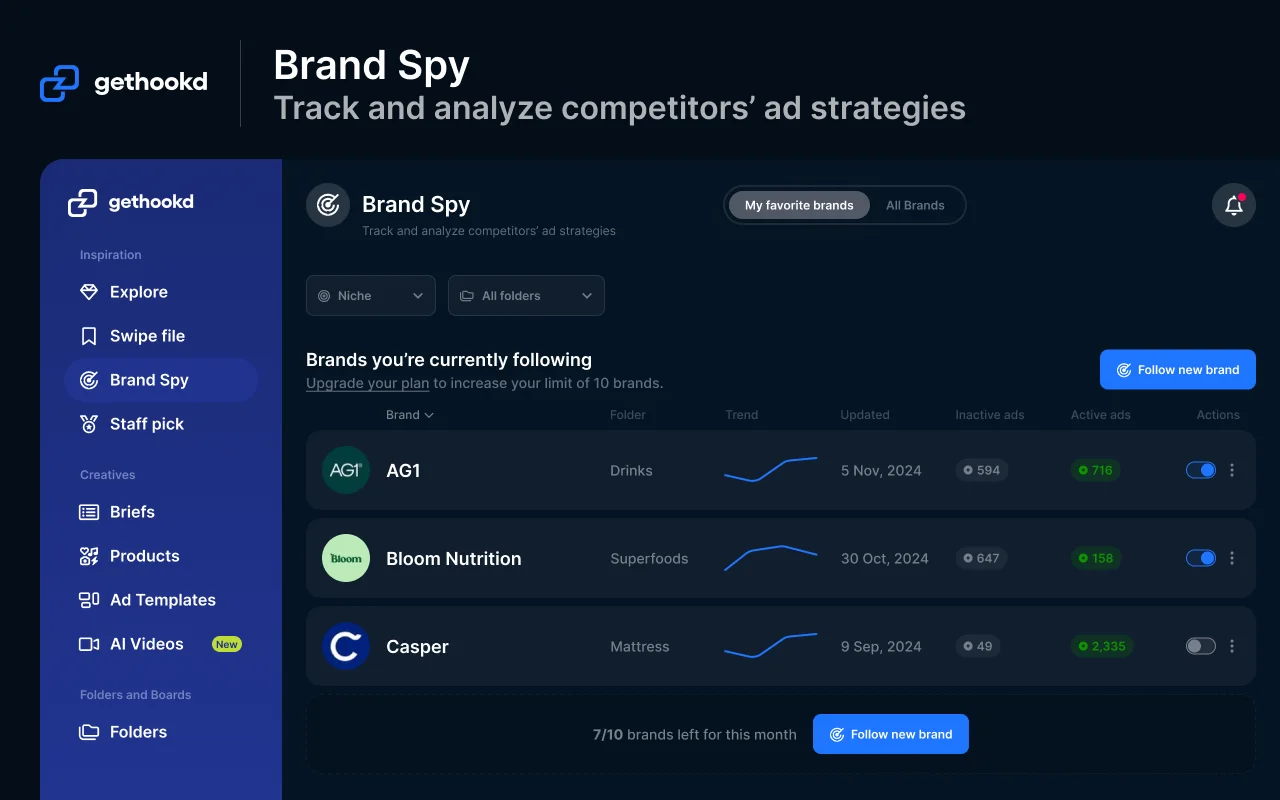
Knowing which ad formats work is one part of the equation. Knowing which specific creatives your competitors are actively scaling on Meta is what turns a good B2B campaign into a great one. At GetHookd, we give performance marketers and media buyers access to over 65 million analyzed ads across Meta, so every creative decision starts from real market data rather than assumptions. Our Brand Spy feature surfaces the ads competitors are scaling, including the landing pages driving their traffic, giving you signals the Facebook Ad Library cannot provide.
GetHookd’s Brand Spy shows which of these formats your competitors are actively scaling on Meta, including the landing pages driving their traffic. From there, the Video Scripts tool generates full ad scripts from a single creative, Clone Ads produces static variations in seconds, and the Creative Analyzer scores your live ads against real performance signals so you know what to scale and what to cut before spending more budget.
Start your GetHookd free trial today
Frequently Asked Questions (FAQs)
Is Facebook a viable platform for B2B lead generation in 2026?
Yes. Facebook’s B2B targeting capabilities have expanded substantially, and its average cost-per-click for B2B ads makes it significantly more budget-efficient than most alternatives. Decision-makers are active on the platform across the workday, and a properly structured funnel moving from awareness through retargeting to conversion consistently produces qualified leads at a lower cost per acquisition.
How often should B2B Facebook ad creatives be refreshed?
Refreshing creatives every two to four weeks is a reasonable baseline for B2B campaigns. B2B buyers evaluate purchases more slowly than B2C audiences, which means ad fatigue builds over multiple exposures rather than days. Tracking frequency alongside click-through rate gives the clearest early signal for when a refresh is due.
Can the Facebook Ad Library tell me which competitor ads are actually performing?
The Facebook Ad Library (Meta Ad Library) shows which ads are currently active for any advertiser, but it does not show performance data or reveal which campaigns are being actively scaled versus passively tested. For that level of competitive intelligence, a dedicated research platform gives you far more actionable signals than the native library.
How does GetHookd support B2B Facebook ad research and creative production?
At GetHookd, we combine a searchable library of 65M+ analyzed Meta ads with AI-powered creative tools so teams can move from research to production inside a single workspace. Our Brand Spy feature shows which ads competitors are actively scaling, including their landing pages and traffic sources. From there, you can generate full scripts with our Video Scripts tool, clone top-performing creatives, and connect your Meta account to the Creative Analyzer to score live ads against real performance signals.