
5 Best Facebook Dynamic Ads Examples in 2026
Key Takeaways
- The five best Facebook Dynamic Ad formats in 2026 are the abandoned cart carousel, cross-sell dynamic ad, bestseller prospecting ad, seasonal refresh ad, and dynamic creative ad. Each uses your product catalog and Pixel signals to automatically serve the right product, without manual creative work per SKU.
- Dynamic Ads have moved well beyond retargeting. Brands running Advantage+ Catalog campaigns against broad cold audiences are winning prospecting auctions by pairing clean product feeds with Conversions API data alongside the Pixel.
- Operational discipline matters as much as the ads. Seasonal inventory rotations, purchaser exclusions, and custom product set labels within existing campaigns prevent learning-phase resets and preserve the algorithm’s performance history.
- The abandoned cart carousel remains the highest-performing format, but it only works when retargeting fires within one to three days, and purchase suppressions are active. Without those two conditions, the budget leaks to audiences that have already converted.
- At GetHookd, we help media buyers and e-commerce teams spot which Dynamic Ads competitors are scaling by analyzing a database of over 65M ads across Meta, so you can build testable concepts faster.
What Dynamic Ad Patterns Are Driving Ecommerce Growth Right Now?
The five best Facebook Dynamic Ads examples in 2026 are the abandoned cart carousel, the cross-sell dynamic ad, the bestseller prospecting ad, the seasonal refresh ad, and the dynamic creative ad. Each one uses your product catalog plus Pixel signals to serve the right product to the right shopper without manual creative work per SKU.
GetHookd helps you spot which Dynamic Ad formats competitors are actively scaling, then uses AI tools to turn those winning structures, hooks, and angles into new testable variations for your own campaigns.
Below, we break down how top e-commerce brands, dropshippers, and agencies run each format, what makes them convert, and how to replicate the setup in your own account.

GetHookd: Turn Competitor Intelligence Into Your Next Winning Ad
GetHookd reveals which ads your competitors are actively scaling—not just running. Spy on their best-performing creatives, landing pages, and traffic strategies, then turn proven concepts into testable campaigns in seconds with AI-powered script generation and creative cloning.
What You Get:- ✓ Brand Spy to decode competitor ad strategies in real-time
- ✓ AI script generation and ad cloning for instant variations
- ✓ Performance scoring based on actual ad behavior, not vanity metrics
- ✓ Creative Analyzer to identify and scale your top performers
5 Best Facebook Dynamic Ads Examples in 2026
1. Abandoned Cart Carousel by a Fashion E-Commerce Brand
The highest-performing Dynamic Ad pattern in 2026 is the abandoned cart carousel, widely used by mid-sized fashion retailers. A shopper adds a dress to their cart, leaves the site, and later sees a carousel featuring the exact dress, two color variants, and a matching accessory. No manual work goes into building it. The catalog and Pixel handle the entire match.
What makes this example work is the recency logic. The best brands retarget within a one to three-day window and suppress the creative once a purchase fires. Pricing and availability stay up to date because the feed updates in near real time. If a shopper returns and the size is gone, a different product appears instead.
Copy this by segmenting your product set into cart abandoners only, setting a three-day exclusion on purchasers, and layering a small overlay badge like “Still Available” directly in the image template.
2. Cross-Sell Dynamic Ad by a Beauty Retailer
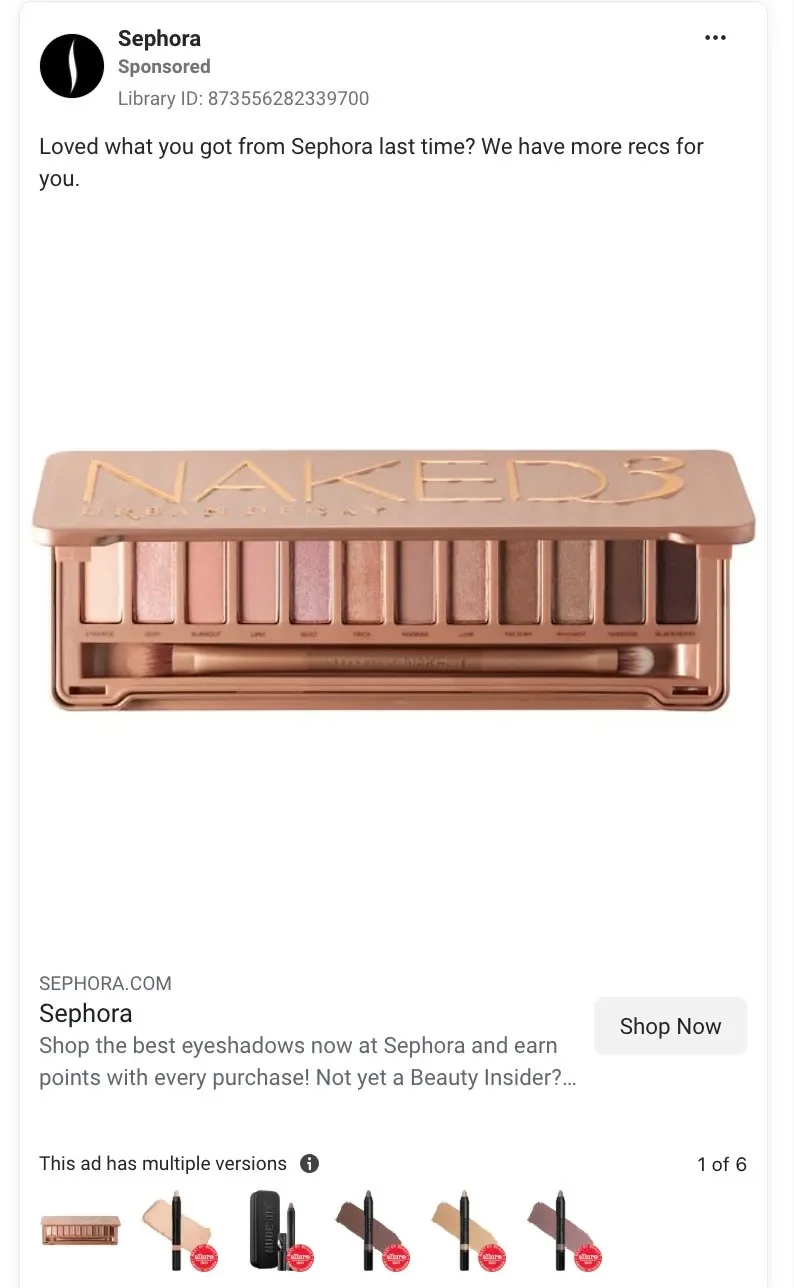
Beauty retailers have turned cross-sell Dynamic Ads into a post-purchase workhorse. After a customer buys an eyeshadow palette, Facebook serves a follow-up ad featuring the next logical purchase, such as a complementary eyeliner, a matching brush set, or a bestseller in the same category. The product image rotates for each shopper based on what they already own, while the headline and copy remain consistent across the audience.
This format works because it respects purchase context. You are not pitching the same palette to someone who just bought it. You are pitching the next item that pairs with it. The dynamic feed automatically handles product matching, so the shopper sees something genuinely relevant instead of a generic bestseller.
To run this, use custom labels in your feed to group items by category, then build product sets that exclude any items the shopper has purchased in the last 30 days.
3. Bestseller Prospecting Ad by a Home Goods Brand
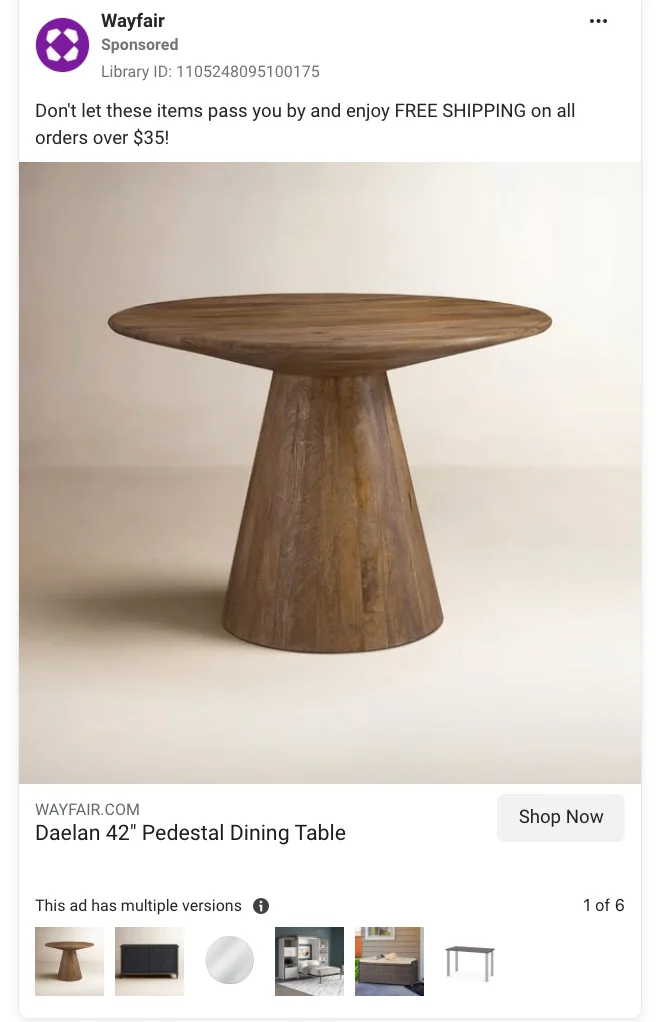
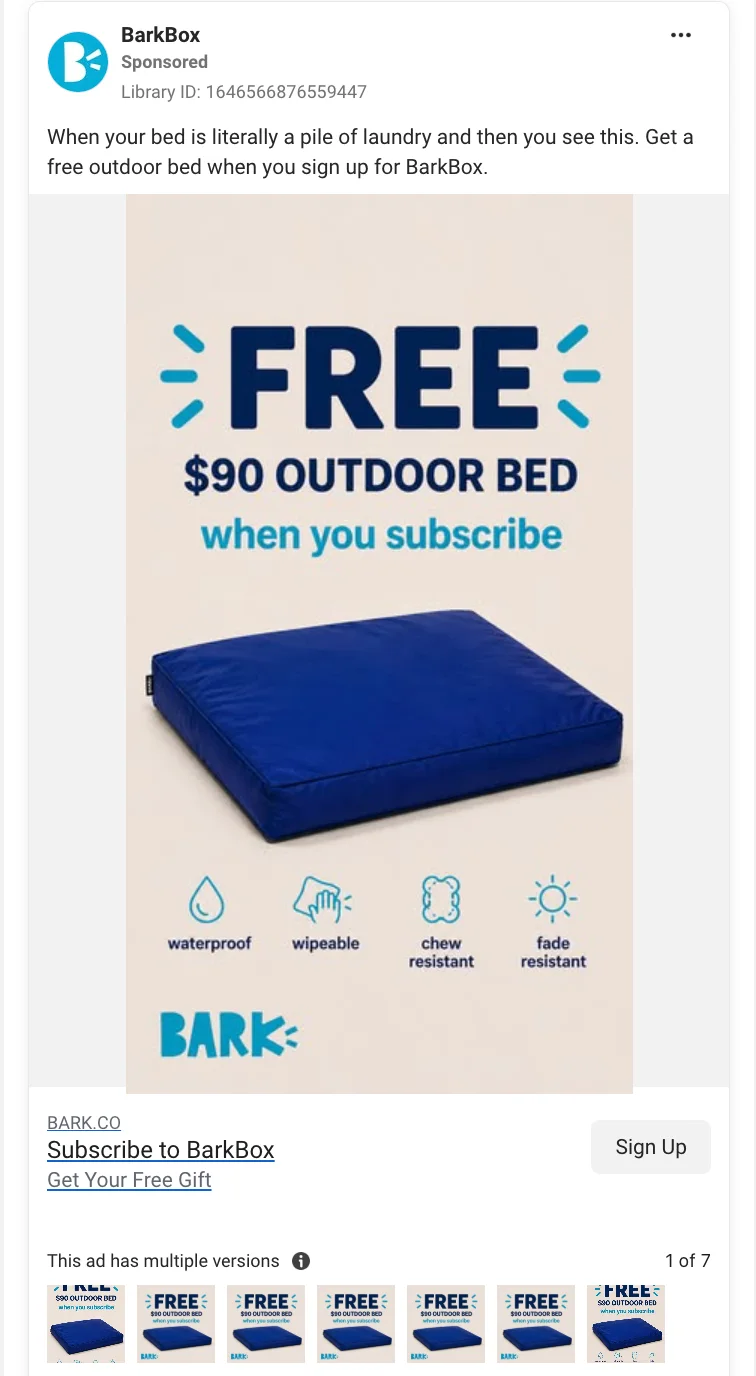
Home goods brands are running Dynamic Ads against broad prospecting audiences, not just remarketing. The setup uses Advantage+ Catalog Ads with broad targeting and lets Meta’s machine learning pick which products from the catalog to serve to cold audiences. The creative layer stays lightweight, often a single product image with a short benefit line.
This example shows why Dynamic Ads have expanded well beyond retargeting. Brands with cleaner product feeds, stronger Pixel signals, and Conversions API running in parallel consistently win prospecting auctions. Meta rewards data quality more than clever targeting in 2026.
Apply this by enabling Advantage+ Catalog campaigns, connecting Conversions API alongside your Pixel, and feeding Meta custom labels for margin tiers so it scales profitable items, not just popular ones.
4. Seasonal Refresh Ad by an Apparel Retailer
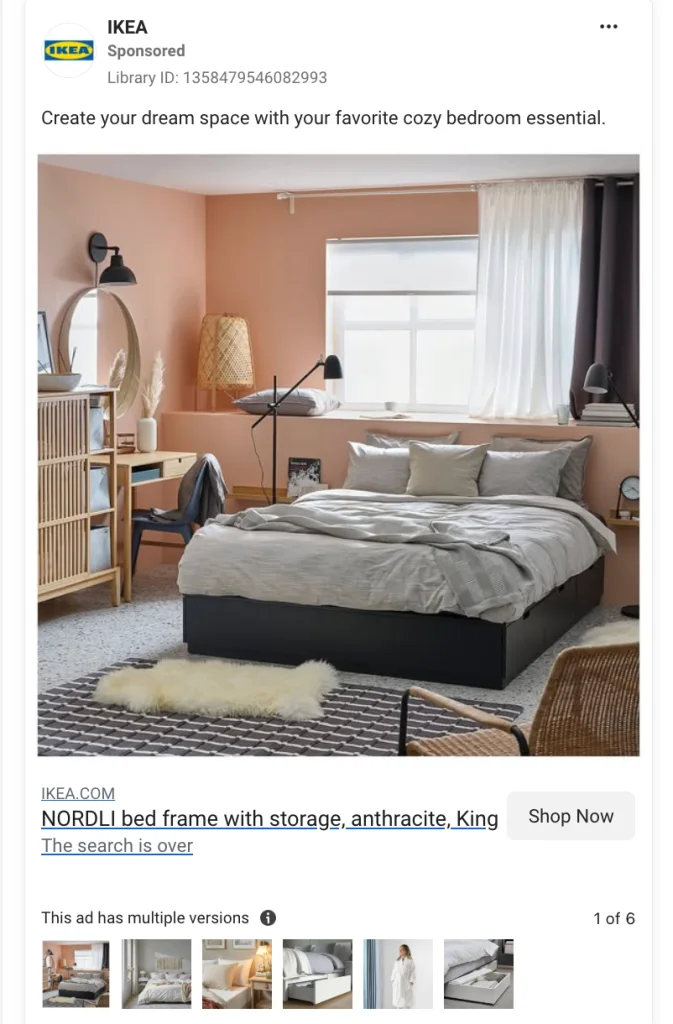
Apparel retailers use Dynamic Ads to push seasonal collections without rebuilding campaigns. When fall arrives, they update product set filters to show jackets and boots while hiding swimwear. The same ad structure, budget, and audience stay in place. Only the feed logic changes.
What this example teaches is operational discipline. Instead of launching a new “Fall Collection” campaign, the retailer swaps the product set inside an existing ad set. Learning-phase resets are minimized, and the algorithm maintains its performance history.
Set this up by building product sets around a seasonal tag in your feed, then scheduling the tag changes ahead of the calendar shift. Your ads rotate inventory automatically without manual campaign launches.
5. Dynamic Creative Ad by a Subscription Box Brand
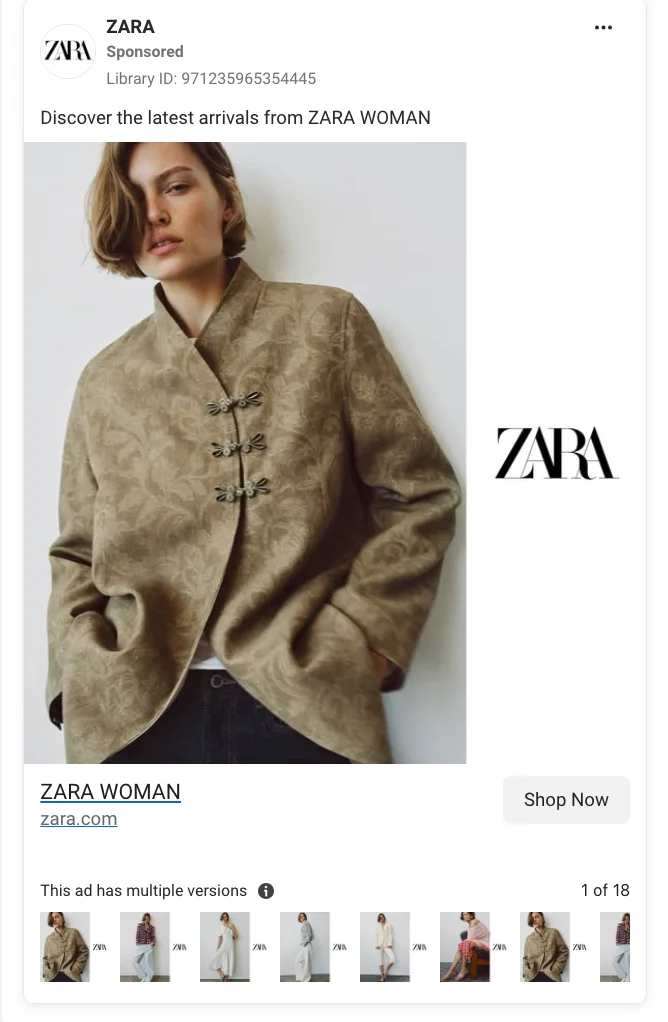
Subscription box brands pair Dynamic Creative Optimization with one percent lookalike audiences built from their highest-value subscribers. The setup pairs a single offer asset, such as a free toy or a discounted first box, with a rotating set of caption variants that test which hook lands for each segment of the lookalike.
The smart move here is to layer creative variation on top of a strong offer. The brand keeps the visual and the deal consistent, then lets Meta rotate captions, headlines, and angles to find the version that converts best for each audience segment. The offer is fixed. The surrounding creative is the testing ground.
Run this by building a lookalike of subscribers with 3 or more renewals, then enabling Dynamic Creative in the ad set so Meta can automatically mix caption and headline variants against the catalog or offer creative.
5 Best Facebook Dynamic Ads Examples: Summary Table
| Example | Best Use Case | Ad Format | Key Benefit |
| Abandoned Cart Carousel | Cart recovery | Carousel | Recovers high-intent shoppers quickly |
| Cross-Sell Dynamic Ad | Post-purchase upsell | Single image | Grows average order value |
| Bestseller Prospecting | Cold audience acquisition | Single image | Expands reach with low CAC |
| Seasonal Refresh | Inventory rotation | Carousel | Keeps ad sets in learning memory |
| Dynamic Creative Ad | High-value audience scaling | Dynamic creative | Finds new shoppers like your best |
Why We Built GetHookd for Dynamic Ad Research
The five Dynamic Ad patterns above all share the same underlying truth: the ads that win in 2026 are built on clean product feeds, strong Pixel and Conversions API signals, and disciplined audience structure. Creative still matters, but it sits on top of infrastructure now, not in place of it. The brands pulling ahead treat their catalog as a creative asset, not just a backend file.
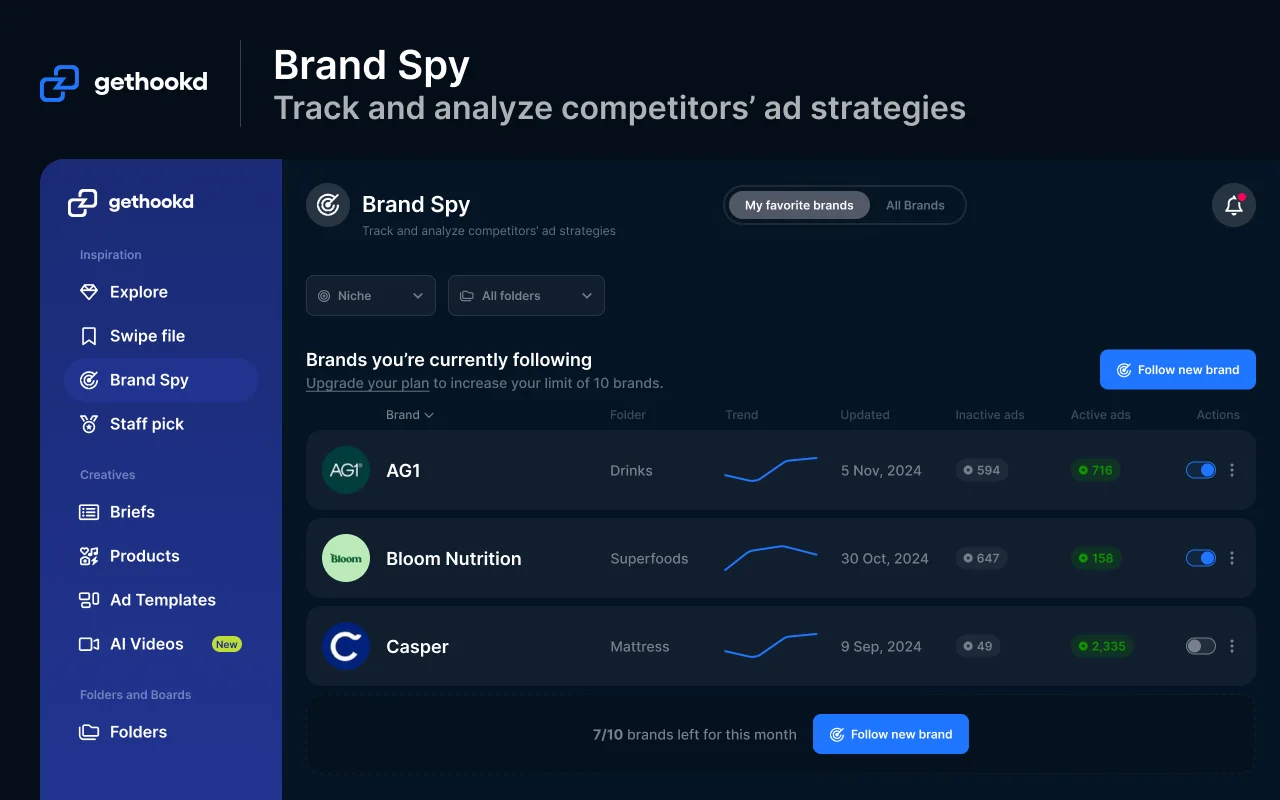
This is where GetHookd earns its place in the workflow. Our platform analyzes over 65M ads across Meta and Facebook Ad Library, so you see which Dynamic Ads competitors are actively scaling, not just the ones they happen to be running. Brand Spy surfaces top performers and traffic strategies in real time, AI Creative Analyzer breaks down why an ad works, and Clone Ads helps you generate testable variations in seconds. If you want to build winning Facebook Dynamic Ads, start here.
Start running better Facebook Dynamic Ads with GetHookd.
Frequently Asked Questions (FAQs)
What is the difference between Facebook Dynamic Ads and regular Facebook Ads?
Regular Facebook Ads use fixed creatives and copy that you build manually for each campaign. Dynamic Ads pull from your product catalog automatically and personalize the product shown to each user based on behavior signals like page views, adds to cart, or past purchases.
How often should I refresh my Facebook Dynamic Ads creative?
Most e-commerce teams refresh Facebook Dynamic Ads creative frames every two to three weeks to fight ad fatigue. The underlying product feed updates in near real time, but the visual template, overlay badges, and copy variants benefit from a regular rotation to keep click-through rates healthy.
Do Facebook Dynamic Ads work for prospecting or only retargeting?
Facebook Dynamic Ads work for both. Advantage+ Catalog Ads use machine learning to serve products to cold audiences that have never visited your site. Clean Pixel and Conversions API signals plus well-structured product sets are the biggest drivers of prospecting success.
How often should I scrape or research competitor Facebook Dynamic Ads?
Weekly research is a strong baseline for most media buyers and agencies. Competitor creative rotates fast, and catching a new Facebook Dynamic Ad pattern early lets you test before the angle saturates. Tools that monitor the Meta Ad Library continuously save hours of manual checking.
Do I need technical skills to use GetHookd for Facebook Dynamic Ads research?
No technical skills are needed. At GetHookd, we built the platform for media buyers, dropshippers, and agency teams who want fast answers, not engineering workflows. Our AI ad discovery, Brand Spy, and Creative Analyzer run inside a simple dashboard.
*Note: Pricing and/or product availability mentioned in this post are subject to change. Please check our website for current pricing and stock information before making a purchase.