Key Takeaways
- The best 2026 Facebook travel ads pair a fast visual hook with one clear promise, then make the booking step simple.
- Southwest and Hopper show that blunt price and low-fare hooks still work to reach deal-driven travelers on Facebook.
- Booking.com leans on real creators and everyday moments, while Vrbo uses catalog-style property ads with visible social proof.
- Every featured ad is free to view in the Meta Ad Library, but it won’t show you which ones competitors are actually scaling or spending on.
- GetHookd surfaces the travel ads with real budget behind them across 65 million analyzed Meta ads, so you can rebuild proven formats instead of guessing which ones work.
The Facebook Travel Ads Getting Results in 2026
Facebook remains a primary paid channel for travel brands in 2026, and several large advertisers are currently running ads that reflect what performs well. Four are worth studying: Southwest Airlines with low-fare urgency, Booking.com with a creator partnership video, Vrbo with catalog-style property listings, and Hopper with a direct price claim.
The four differ in format, budget, and target audience, yet each does the same core job: turning attention into a booking. Because the angles are not tied to one kind of travel business, they apply to airlines, rental platforms, tour operators, and booking apps alike. Their value sits in the reusable approach behind each ad, which any travel advertiser can rebuild for a different offer, destination, or season without a large production budget.

GetHookd: Turn Competitor Intelligence Into Your Next Winning Ad
GetHookd reveals which ads your competitors are actively scaling—not just running. Spy on their best-performing creatives, landing pages, and traffic strategies, then turn proven concepts into testable campaigns in seconds with AI-powered script generation and creative cloning.
What You Get:- ✓ Brand Spy to decode competitor ad strategies in real-time
- ✓ AI script generation and ad cloning for instant variations
- ✓ Performance scoring based on actual ad behavior, not vanity metrics
- ✓ Creative Analyzer to identify and scale your top performers
4 Facebook Travel Ad Examples Worth Copying in 2026
1. Southwest Airlines: Low-Fare Urgency
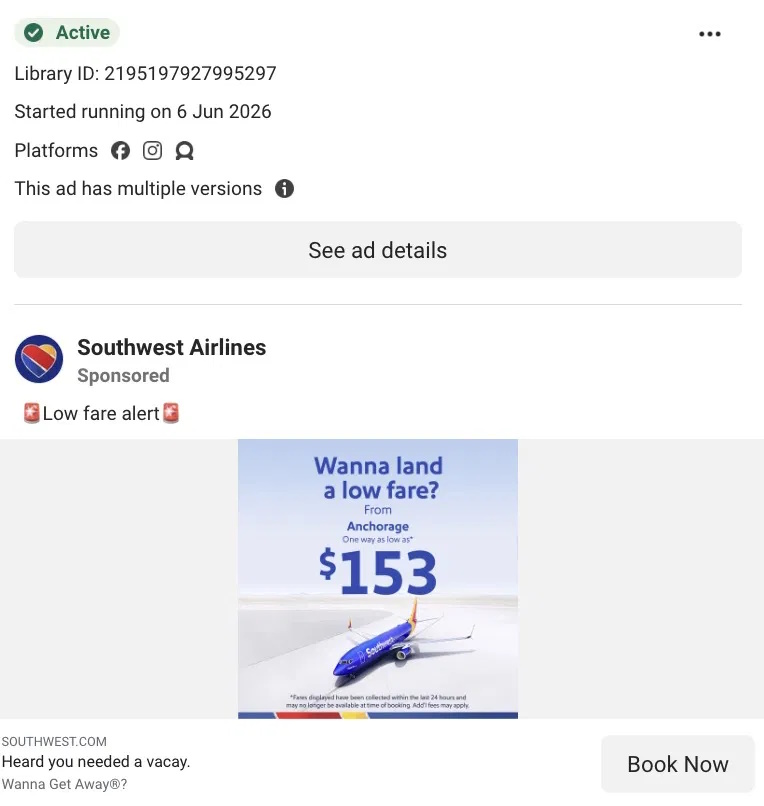
Southwest Airlines runs a single-image ad that opens with a low-fare alert and its established “Wanna Get Away?” line. The copy is short, the image is clean, and the call to action links directly to the airline’s booking page. It runs as a standard feed placement built for direct response, aimed at travelers ready to book a cheap fare.
The ad targets price-sensitive travelers who react to deals. The alert framing signals urgency without a countdown; the short copy is quick to read in a feed, and the long-running tagline supports recognition for anyone who has seen a Southwest promotion before. Minimal creative also loads fast and stays legible at small sizes, which matters on mobile.
To adapt this, attach a specific fare or discount to your own brand voice instead of a generic sale message. Keep the image uncluttered so the price stays readable on a phone, and send traffic to a fares or booking page rather than a homepage. A single verifiable price point usually outperforms a vague sale message, and because urgency-led ads fatigue quickly, track click-through rate and cost per booking and refresh the offer often.
2. Booking.com: Creator Partnership Video
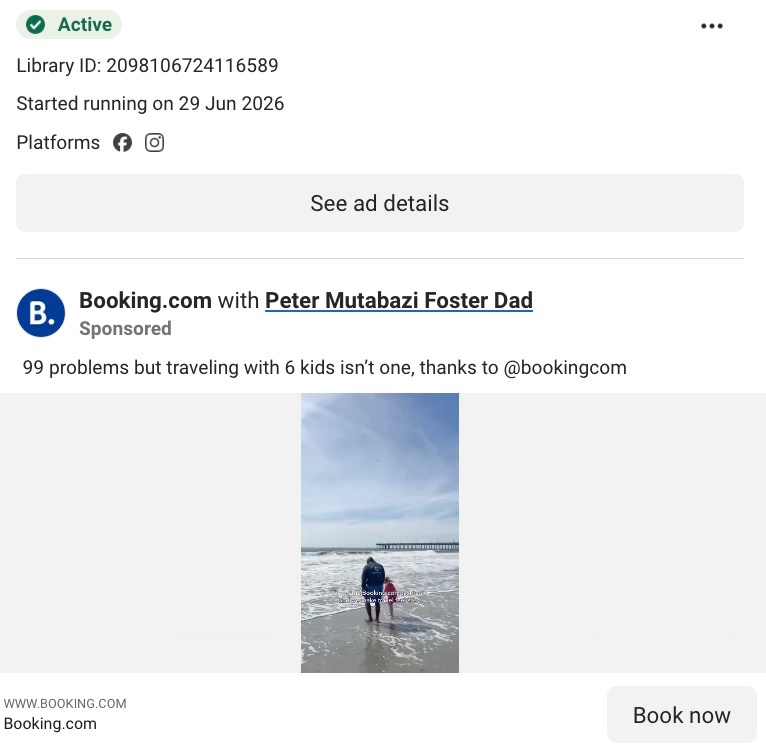
Booking.com runs a video ad produced with creator Peter Mutabazi, a foster dad, built around the idea that traveling with six children is manageable when the logistics are handled. The video resembles native creator content rather than a produced commercial. It links to the Booking.com site and is designed to sit naturally in the feed.
The format relies on a real person and a specific situation, which tends to raise trust more than brand-led messaging. Family travel is a common source of stress, so an everyday scenario shown going smoothly matches the concerns of parents planning a trip. The partnership also gives the ad access to the creator’s existing audience and credibility.
To apply this, work with a creator whose followers match the travelers you want to reach, then let them describe a genuine use of your product in their own words. Keep the tone unscripted and avoid heavy brand overlays that break the native feel. Creator video often earns cheaper engagement than studio creative, but you can test the two against the same audience before deciding where to spend.
3. Vrbo: Catalog-Style Property Ads
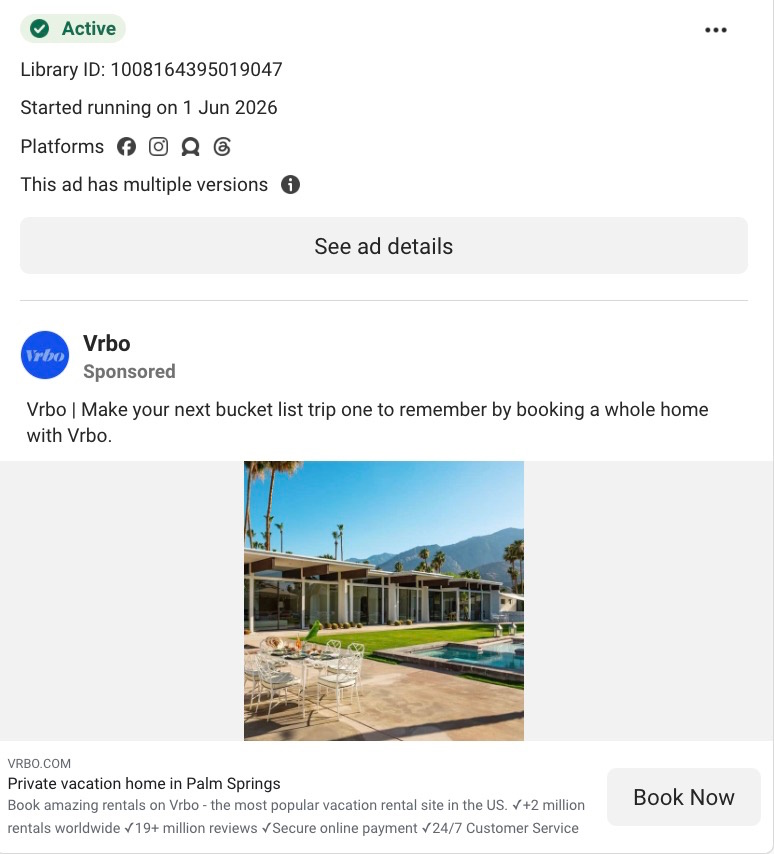
Vrbo runs catalog-style listing ads that display a specific rental, such as a private home in Palm Springs, with copy about booking a whole home for a trip. Each listing carries reassurance points, including a large rental inventory, a high review count, secure payment, and 24/7 customer service. The format pulls live listings automatically rather than using a fixed image.
The ad shows real inventory instead of a generic stock photo, and it answers common hesitation on the spot with social proof and safety signals. A viewer sees an actual property they could book, along with immediate reasons to trust the platform, which reduces hesitation before the click.
To adapt it, connect your property or product catalog to Meta so ads surface live listings, then place short proof points near the offer. Match listings to search intent where possible, so viewers see a property type they are likely to want. This format works best for advertisers with a large, changing inventory, since the ads update as availability and pricing shift.
4. Hopper: A Direct Price Claim
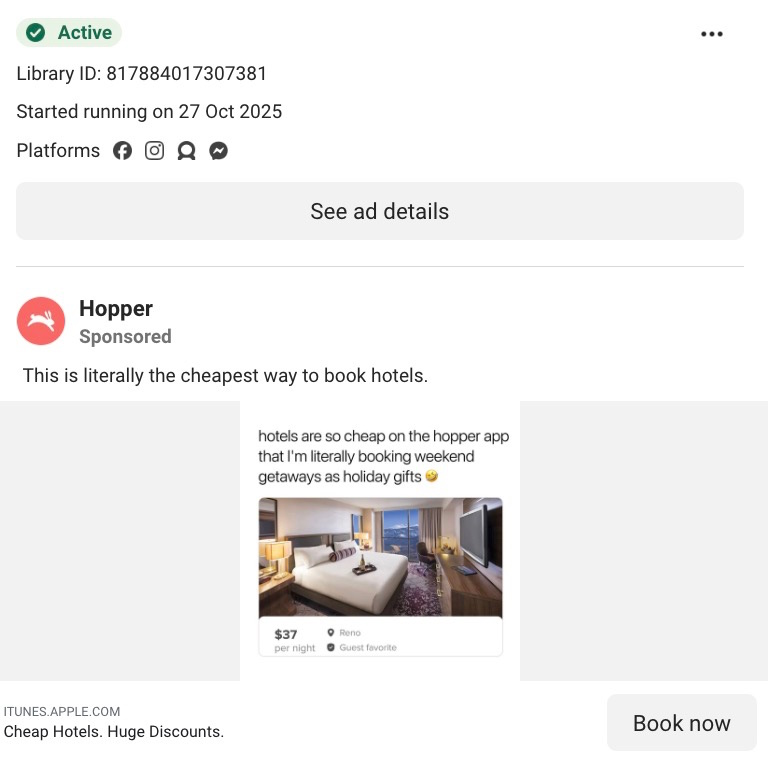
Hopper runs a single-image app-install ad with a direct claim that it is the cheapest way to book hotels, supported by a headline about cheap hotels and large discounts. The call to action sends users to the app store. The objective is app installs, and the creative is built to earn a tap quickly.
The ad rests on one promise and one action. It targets price-driven travelers, states its value plainly, and asks for a low-effort step. No extended explanation or feature list keeps the message simple in a busy feed.
To test this approach, lead with your single strongest promise instead of listing multiple benefits, and keep the requested action small. A direct price claim only works if the landing experience or app supports it, so the offer behind the hook has to hold up under scrutiny. This angle suits apps and booking platforms with a genuine price advantage, and it pairs well with a clear next step such as an install or a search.
How to Adapt These Travel Ads for Your Own Campaigns
Studying strong ads only helps if you turn them into tests. These steps move an angle from reference to a live campaign:
- Choose one angle from the examples above that fits your offer, such as urgency, creator content, catalog listings, or a price claim.
- Use GetHookd’s Explore Ads to search across 65 million analyzed Meta ads for more ads using that angle in your niche, so you can confirm a pattern backed by real performance signals rather than copying one ad at random.
- Run the top results through GetHookd’s Brand Spy to see which competitors are actively scaling those formats and where their traffic lands, giving you proof before you commit budget.
- Write your own hook for the first line, keeping to one clear promise per ad, or use GetHookd’s AI Video Scripts to generate multiple hook and angle variations from a single winning reference.
- Match the format to the goal, using static images for fast promotions, video for storytelling, and catalog ads for live inventory.
- Launch two or three variations, keep the strongest, and rework the rest into new tests using GetHookd’s Clone Ads to quickly produce fresh creative from your top performer.
Facebook Travel Ads at a Glance
| Brand | Ad format | Main hook | Best for |
| Southwest Airlines | Single image | Low-fare alert with a familiar brand line | Price-led promos and flash deals |
| Booking.com | Creator video | Relatable family story with a real creator | Trust and everyday relatability |
| Vrbo | Catalog listing | Real property plus social proof | Showing live inventory and reassurance |
| Hopper | Single image, app install | Direct cheapest-price claim | Deal seekers and app downloads |
Scaling Proven Travel Ad Angles With GetHookd
The most effective Facebook travel ads in 2026 are built on angles that have already worked with real audiences. A single hook, one clear offer, and a short path to booking consistently beat crowded creative, no matter the production budget. The harder part is knowing which of those angles are actually pulling their weight before you spend on them.
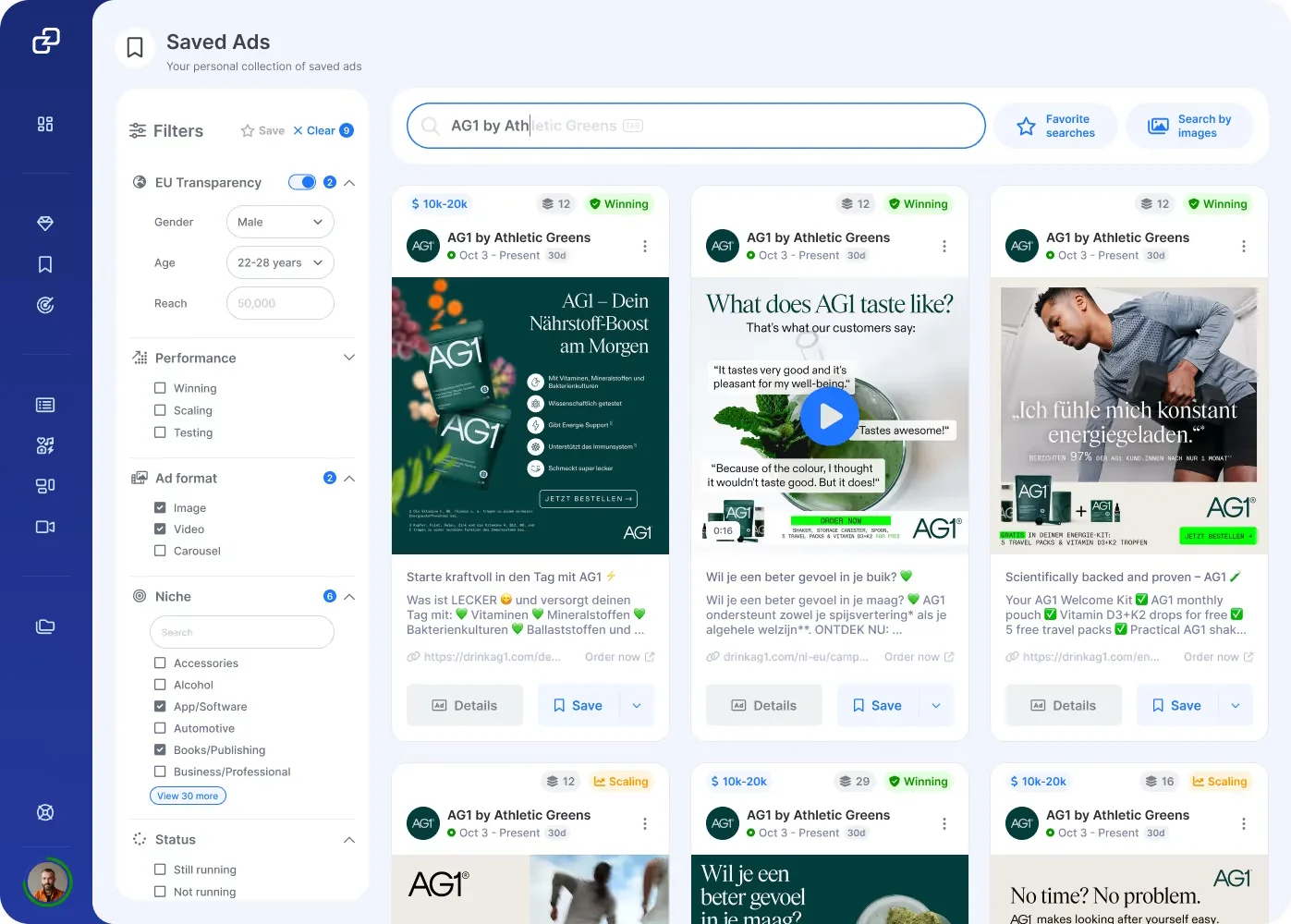
That is the research step we handle. At GetHookd, we show you which competitor ads carry real performance signals across 65 million analyzed Meta ads, then help you clone and rescript the winners into testable creative in minutes. Start a free trial and build your next travel campaign on proven angles instead of guesses.
Frequently Asked Questions (FAQs)
How much budget do I need to start testing Facebook travel ads?
You can begin with a modest daily budget, often around 20 to 50 dollars per ad set, which gives Meta enough data to start optimizing. Early on, the goal is learning which hooks and audiences respond rather than immediate profit. Increase spend only after a creative shows steady, repeatable results.
How far in advance do travelers book after seeing an ad?
Booking windows vary widely by trip type. Flights and package holidays are often booked weeks or months ahead, while last-minute hotel and app deals convert within days. Because of this range, many travel advertisers run separate campaigns for early planners and near-term bookers rather than one message for both.
Do I need design or technical skills to run travel ads?
No. Meta’s tools handle most of the setup, and many effective travel ads use simple images or short creator-style videos. Clear copy and a strong offer matter more than polish. Consistent testing habits will take you further than advanced design or editing skills.
Are video ads better than image ads for travel?
Neither wins by default. Video suits storytelling, destinations, and creator content, while single images work well for fast promotions and clear price offers. The better choice depends on your goal and budget, so testing both formats against the same audience is the reliable way to decide.
How does GetHookd help travel brands find winning Facebook ads?
At GetHookd, we give you a searchable library of analyzed Meta ads, so you can find travel angles that already work. Once you find one, our Video Scripts and Clone Ads tools help you quickly turn that proven ad into your own copy and creative variations, with less guesswork.
*Note: Pricing and/or product availability mentioned in this post are subject to change. Please check our website for current pricing and stock information before making a purchase.