4 Best Facebook Instant Experience Ads Examples & Tips for 2026
Key Takeaways
- The four Facebook Instant Experience formats are Instant Storefront, Instant Lookbook, Instant Customer Acquisition, and Instant Storytelling. Each is built for a different campaign goal, and using the wrong template is one of the fastest ways to waste ad spend.
- Real-world examples show that high-performing Instant Experience ads always lead with the strongest visual first, because users decide within three seconds whether to keep engaging or swipe away.
- The most effective Instant Experience ads are designed for sound-off viewing, use short, punchy copy, and are A/B tested against standard mobile link ads to confirm the format is driving real performance gains.
- In 2026, Instant Experience ads load 15 times faster than standard mobile web pages, making them one of the most competitive formats available as mobile attention windows continue to shrink.
- GetHookd gives media buyers and eCommerce brands access to 65M+ ads across Meta to find which Instant Experience creatives are already converting before they spend a dollar building their own.
Why Facebook Instant Experience Ads Deserve Your Attention in 2026
The four best Facebook Instant Experience ad formats are Instant Storefront, Instant Lookbook, Instant Customer Acquisition, and Instant Storytelling. Each is built for a different goal, and choosing the right one is what separates a high-converting mobile experience from a wasted ad budget.
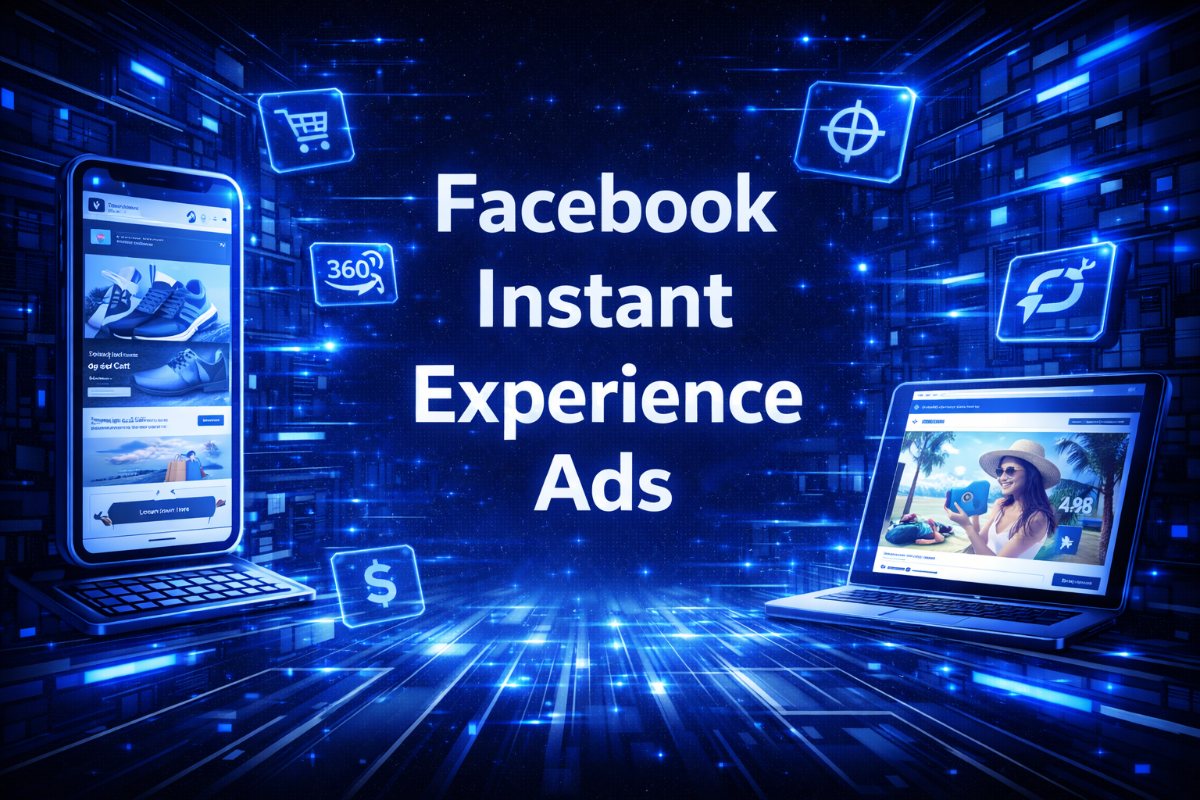
Facebook Instant Experience ads (formerly Canvas Ads) are full-screen, mobile-only ad experiences that open directly within the Facebook app when a user taps your ad. Instead of redirecting someone to an external website, the entire brand experience lives natively inside Facebook.
Mobile advertising is more competitive than ever, and attention spans are not getting longer. Instant Experience ads solve this by keeping users inside the Facebook platform and delivering a full-screen interactive experience that loads in a fraction of the time.
The numbers are hard to ignore. Facebook confirmed that Instant Experiences load 15 times faster than standard mobile web pages, and more than half of users who tap into one stay engaged long enough to view at least half the content.

GetHookd: Turn Competitor Intelligence Into Your Next Winning Ad
GetHookd reveals which ads your competitors are actively scaling—not just running. Spy on their best-performing creatives, landing pages, and traffic strategies, then turn proven concepts into testable campaigns in seconds with AI-powered script generation and creative cloning.
What You Get:- ✓ Brand Spy to decode competitor ad strategies in real-time
- ✓ AI script generation and ad cloning for instant variations
- ✓ Performance scoring based on actual ad behavior, not vanity metrics
- ✓ Creative Analyzer to identify and scale your top performers
4 Facebook Instant Experience Ad Formats & When to Use Each
Facebook gives you two paths when building an Instant Experience: choose from pre-built templates or build something entirely from scratch. The templates are designed to match specific campaign goals, so picking the right one before you start building will save you time and improve your results.
1. Instant Storefront: Best for Ecommerce & Retail
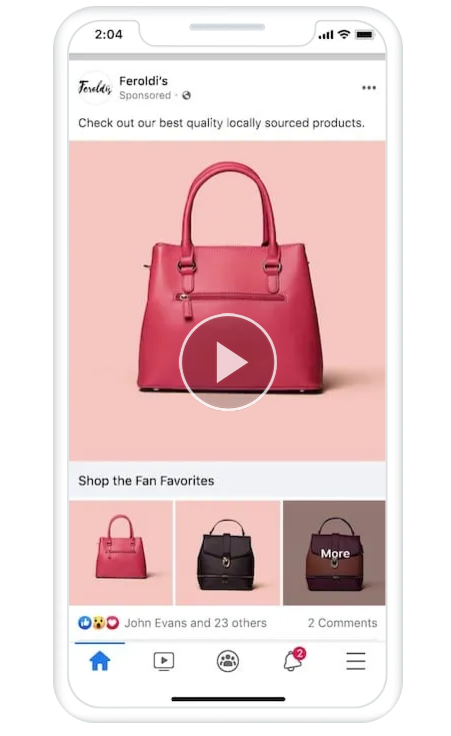
Instant Storefront is built around a product grid that functions like a mini digital catalog inside Facebook. You can pull products directly from your catalog, let users browse multiple items, and send them straight to product pages with a single tap.
For eCommerce brands running catalog sales campaigns, this template removes the friction between discovery and purchase intent.
Where a standard link ad gives you one product and one shot at a click, Instant Storefront gives your audience an entire browsable selection without leaving the Facebook platform.
For dropshippers and retail brands running multiple SKUs, lead with a strong hero image or short video before the product grid loads. That opening creative pulls users deeper into the experience, where the catalog takes over.
2. Instant Lookbook: Best for Fashion & Lifestyle Brands
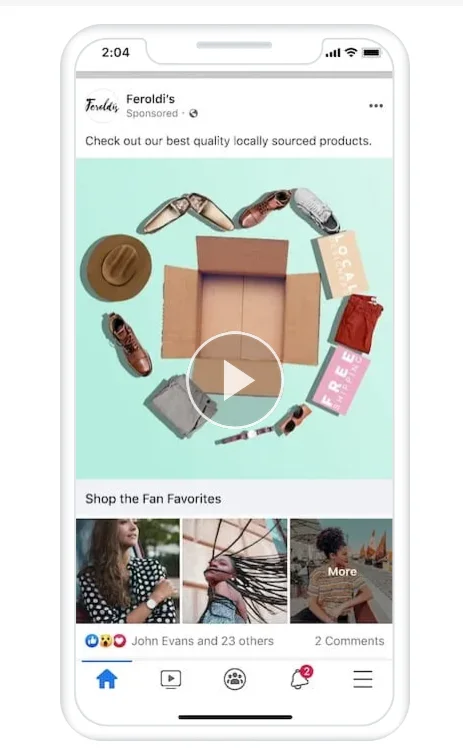
The Instant Lookbook template is designed for brands where the visual experience is part of the sell.
It pairs high-quality lifestyle imagery with tagged, shoppable products, so a user can see a product in context and tap through to buy specific pieces immediately. It works especially well when your product needs real-world context to convert.
The format supports full-bleed lifestyle photography with products tagged directly within each image, and a swipeable layout that encourages exploration rather than a single click decision.
For fashion and lifestyle brands running seasonal campaigns, this is one of the strongest templates available because the creative and the commerce live in the same experience.
3. Instant Customer Acquisition: Best for Lead Generation
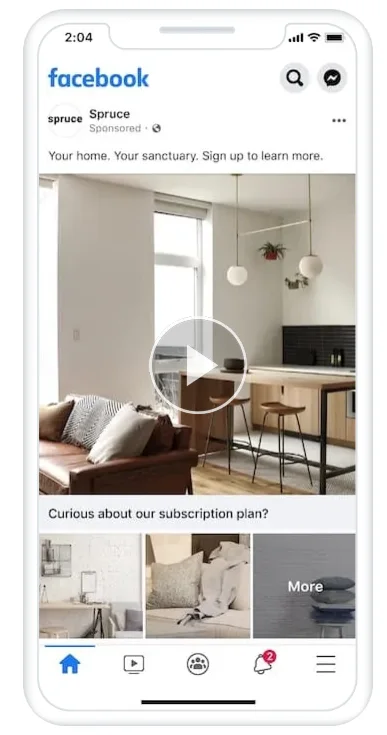
Unlike Storefront and Lookbook, Instant Customer Acquisition is built around a single conversion goal. The “Curious about our subscription plan?” prompt in the image above shows how the template drives users toward one action rather than a browsable product experience.
This ad format prioritizes a clear value proposition and a single strong CTA, whether that is a form fill, a sign-up, or a click to a landing page. If your goal is generating leads rather than building brand awareness, this is your template.
Unlike Storefront or Lookbook, there is minimal browsing involved. The experience is built to move users from interest to action in as few steps as possible, which makes it the strongest option for service businesses and any advertiser running a direct response campaign on mobile.
4. Instant Storytelling: Best for Brand Awareness Campaigns
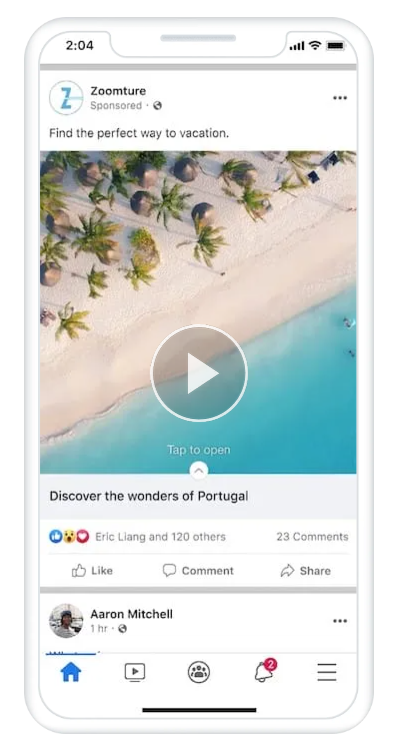
Instant Storytelling is the most narrative-driven of the four templates. It is built to lead with video and guide users through a brand story in a structured, scroll-driven format. The emphasis is on emotional connection, making someone feel something about your brand before pushing a transaction.
This makes it a strong choice for product launches, brand repositioning, or any campaign where the audience needs context before they are ready to convert. A single compelling video in the feed may be all it takes to pull users in, and the full experience unfolds once they tap through.
Build Your Own: When Custom Beats Template
When none of the four templates fit your campaign, the Build Your Own option gives you complete control over every content block. Video, images, text, buttons, carousels, and product sets can all be arranged in any order you choose. This is the right path for experienced advertisers running campaigns where a templated structure would limit creative effectiveness.
The tradeoff is that it requires more time, stronger creative direction, and a clear sense of what the experience should feel like before you start building. For brands that have already tested the standard templates and know what their audience responds to, custom is where Instant Experience ads can become a genuine competitive advantage.
Top 4 Facebook Instant Experience Ads Formats: Summary Table
| Ad Format | Best For | Key Features |
| Instant Storefront | Ecommerce & Retail | Product grid, catalog integration, tap-to-purchase links |
| Instant Lookbook | Fashion & Lifestyle | Full-bleed lifestyle imagery, tagged shoppable products, swipeable layout |
| Instant Customer Acquisition | Lead Generation & Direct Response | Single conversion goal, clear value proposition, strong CTA |
| Instant Storytelling | Brand Awareness | Video-led, scroll-driven narrative, emotional brand storytelling |
Top Tips to Build High-Performing Facebook Instant Experience Ads in 2026
1. Lead With Your Strongest Visual in the First Three Seconds
The opening frame of your Instant Experience is the most important creative decision you will make. Users decide within the first two to three seconds whether to keep engaging or swipe away.
Open with your most compelling image or the strongest moment of your video, then build from there. If a user cannot tell what your brand is about within three seconds, the rest of your creative work does not matter.
2. Use the Instant Experience Pixel to Retarget Engaged Viewers
Facebook lets you build custom audiences of users who opened your Instant Experience, as well as those who viewed a specific percentage of it.
This means you can serve a more conversion-focused ad to users who have already spent time inside your experience, a signal of genuine interest that is far more valuable than a standard feed impression.
3. Match Your Template to Your Campaign Goal
Each template is designed to drive a specific outcome, and using the wrong one creates friction in the user journey.
Before choosing your template, ask one question: what is the single action I want a user to take after this experience? The answer should point directly to your template choice.
4. Keep Copy Short
Instant Experience ads are a visual medium first. Keep headlines under ten words, body copy under three lines per section, and let every block of text serve a single purpose: reinforcing what the visual shows or directing the user toward the next action.
5. A/B Test Instant Experience Ads Against Standard Mobile Ads
Run a direct split test against your current best-performing mobile link ad. Use the same audience, budget, and campaign objective, with the format as the only variable.
After seven to fourteen days, compare click-through rate, cost per click, and conversion data. The results will tell you exactly how much the format itself is contributing to your performance.
6. Design for Sound-Off Viewing
There are Facebook users who scroll with audio muted, which means any video inside your Instant Experience should be able to communicate through visuals and captions alone.
Add text overlays to key video moments and make sure your brand story makes complete sense in complete silence.
Build High-Converting Instant Experience Ads with GetHookd
The difference between an Instant Experience ad that converts and one that gets swiped past almost always comes down to the creative decisions made before the build starts. Knowing which hooks, angles, and formats are already working in your niche is what removes the guesswork from that process.
At GetHookd, our platform lets you search 65M+ ads across Meta to find exactly that. Use Brand Spy to see what competitors are actively scaling. When you find a winning creative for your niche, our AI-powered tools, including Video Scripts generator, Clone Ads, and Image Ad Templates, help turn what you find into ready-to-test creatives. If you want to find your next winning ad before your competitors do, start your free trial today.
Start your GetHookd free trial today!
Frequently Asked Questions (FAQs)
What is the difference between Facebook Canvas Ads and Instant Experience Ads?
They are the same product. Facebook rebranded Canvas Ads to Instant Experiences in 2018, but the core functionality remains identical. Both are full-screen, mobile-only ad experiences that load natively inside the Facebook app. Any Canvas Ad campaigns built before the rebrand are now referred to as Instant Experiences inside Meta Ads Manager.
Are Facebook Instant Experience Ads only available on mobile?
Yes. Instant Experience ads are exclusively served to users on iOS and Android devices inside the Facebook app. Desktop users who encounter an Instant Experience ad will typically be directed to a standard landing page instead.
How long can a Facebook Instant Experience Ad be?
There is no strict time limit, but best practice favors concise experiences. Most high-performing Instant Experiences are designed to be consumed in under 60 seconds, with individual video segments performing best between 15 and 30 seconds. Every section should earn its place, so length should be driven by your story, not the format’s limits.
Can I use Facebook Instant Experience Ads for ecommerce?
Ecommerce is one of the strongest use cases for the format. The Instant Storefront and Instant Lookbook templates are built specifically for product-driven campaigns, connecting your catalog directly to the experience so users can browse and tap through to purchase pages. GetHookd gives eCommerce brands and media buyers access to 65M+ ads across Meta to find which Instant Experience creatives are already converting in their niche before they spend a dollar building their own.
How can GetHookd help me find winning Instant Experience ad creatives?
GetHookd lets you search across 65M+ ads on Meta to see which Instant Experience creatives competitors are actively scaling. Use Brand Spy to analyze competitor ad strategies, then use AI-powered tools like Video Scripts and Clone Ads to turn proven concepts into ready-to-test creatives without starting from scratch.
*Note: Pricing and/or product availability mentioned in this post are subject to change. Please check our website for current pricing and stock information before making a purchase.