

Facebook does not allow CBD brands to make direct health claims, reference medical conditions, or use before-and-after framing in ad copy. That policy friction eliminates most conventional direct-response approaches and forces advertisers to rethink how they communicate value at the ad level.
The brands navigating this successfully follow a consistent pattern: they avoid prohibited language, lead with lifestyle and wellness angles, and rely on advertorial landing pages to handle education, objections, and conversion. The ad's job is to earn the click - nothing more.
The five formats that perform best across Meta include lifestyle hook ads, educational video ads, social proof carousels, UGC-style ads, and limited-time offer ads. Each is built around staying compliant at the ad level while maximizing purchase intent by the time a viewer reaches the landing page.
65M+ Ads Analyzed | 4.8★ G2 Rating | 4.5★ Trustpilot Rating
GetHookd reveals which ads your competitors are actively scaling—not just running. Spy on their best-performing creatives, landing pages, and traffic strategies, then turn proven concepts into testable campaigns in seconds with AI-powered script generation and creative cloning.
What You Get:One of the most effective CBD ad formats on Facebook avoids mentioning CBD at all in the first three seconds. Instead, it opens with a relatable pain point: poor sleep, daily stress, or post-workout soreness. The product enters the frame naturally as part of a routine.
This approach works because it sidesteps policy friction while still addressing the buyer's problem directly. The copy typically reads something like "I started adding this to my morning routine," followed by a soft CTA like "See what others are saying." The lifestyle framing keeps the ad in review-safe territory while building curiosity.
Brands running this format consistently see strong click-through rates with warm audiences and lower CPMs than with overtly product-focused creatives.
Short educational videos in the 30-60 second range perform well for CBD brands because they build trust before asking for a sale. A typical structure: open with a question the audience is already asking ("Why do so many people add CBD to their nighttime routine?"), walk through a plain-language explanation, then close with the product.
The key is keeping the language general enough to pass review while still being informative. Phrases like "people report" or "many users find" replace direct claims. This format works especially well for cold audiences who need context before converting.
Video content also gets more organic reach in feeds, which means even paid placements can pick up additional free impressions. For CBD brands working with conservative ad budgets, that compound effect matters.
Carousel ads built around customer testimonials are a strong performer for CBD brands, particularly in retargeting campaigns. Each card in the carousel features a short user quote, a product image, and a single benefit callout. The final card drives to a landing page or product page.
Facebook's policy restricts fabricated health claims, but real user sentiment framed as personal experience tends to pass review. The carousel format also lets brands surface multiple angles in a single ad unit, which is useful for a product category where different buyers care about different benefits.
Brands that structure their carousels around a story arc (problem, product, outcome, action) typically see higher swipe-through and click rates than those that use the format as a static image dump.
User-generated content (UGC) ads styled to look like organic posts consistently outperform polished brand creative for CBD. The format mimics how a real person would share a product recommendation, which reduces the visual cues that signal "this is an ad."
High-performing versions usually start with an attention-holding first line, cut to the product being used in a real-life setting, and end with a conversational CTA. The lack of heavy production value is intentional. These ads feel native to the feed, which keeps scroll-stopping rates high.
For CBD specifically, the authenticity angle also helps with trust. Buyers in this category are often skeptical of brand claims, so a recommendation framed as peer advice carries more weight than a polished spokesperson.
Urgency-based ads work for CBD, but the execution has to be tight. The best examples pair a clean product image with a short copy block that leads with the offer, not the product. "Free shipping ends tonight" or "Starter kits are back in stock" pull attention without making any claim that could trigger a policy flag.
This format tends to perform best in retargeting, where the audience already has brand familiarity. Cold traffic rarely converts on urgency alone, but a warm audience that has already visited the product page can be pushed over the line with a well-timed offer ad.
Countdown timers in the ad creative, combined with landing pages that reflect the same offer, help maintain conversion continuity from click to checkout.
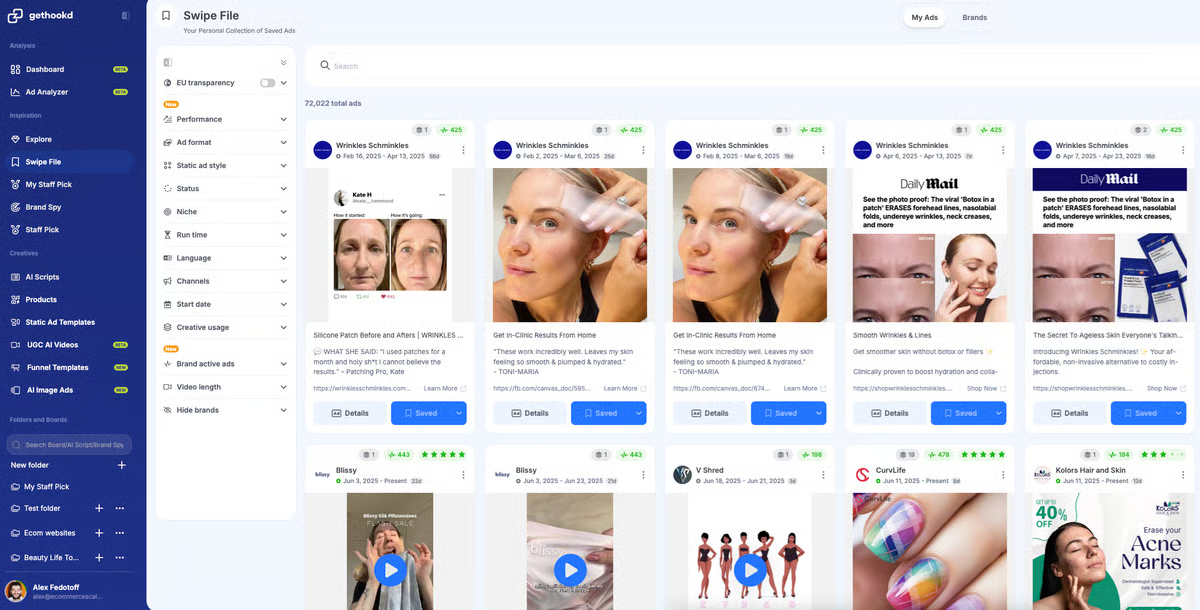
Figuring out what works in CBD advertising on your own often means wasting budget on tests that compliant brands have already run. GetHookd gives media buyers and ecommerce brands a faster way to see what is actually scaling. With Brand Spy, you can track which ads competitors are actively running on Meta, not just view static archives. Backed by 65 million plus ads, it highlights the creatives, angles, and landing pages driving real results, helping reduce policy risk before you spend.
From there, AI-powered Video Scripts and Clone Ads turn those insights into execution. Once you identify a winning format, the system generates hooks, angles, and full scripts based on proven patterns, so you can move from research to testable creative much faster.
Start your GetHookd free trial today!
Yes, with restrictions. Facebook allows CBD ads in certain regions under specific conditions, but direct health claims and medical language are prohibited. Approved ads typically focus on lifestyle framing, personal experience language, and general wellness angles. Ad account eligibility depends on the advertiser's category approval status with Meta.
Lifestyle and routine-based angles consistently perform well because they stay compliant while addressing real buyer motivations. Pain point framing ("trouble sleeping?", "recovery days hitting harder?") combined with soft social proof tends to outperform direct product-feature copy, especially on cold audiences.
Creative fatigue typically sets in after two to four weeks for active campaigns. CBD brands running aggressive paid social budgets often rotate new creative every two weeks. Monitoring frequency scores and CTR decline in Ads Manager helps identify when a refresh is needed before performance drops significantly.
Short-form video (15-60 seconds) and carousel formats consistently outperform single static images for CBD brands. UGC-style videos tend to see the strongest feed engagement because they look organic. Carousel works well for retargeting, where multiple product angles or testimonials can be shown in sequence.
At GetHookd, our platform lets you search and filter across 65M+ analyzed Meta ads to find top-performing CBD creatives in seconds. Our Brand Spy feature shows which competitor ads are actively scaling, and our Video Scripts tool breaks down hooks, formats, and angles so you can build stronger briefs and launch better tests faster.
*Note: Pricing and/or product availability mentioned in this post are subject to change. Please check our website for current pricing and stock information before making a purchase.


