Problem-Solution Ads: Format, Examples & Tips
Key Takeaways
- A problem-solution ad works by meeting the audience where they already are, leading with the pain, making it uncomfortable to stay there, and only introducing the product as the way out.
- Effective problem-solution ads follow four phases: hook, agitation, solution, and proof. Each phase has one job, and skipping any one of them weakens the entire ad.
- Specificity is what separates ads that convert from those that get scrolled past, from the problem you name to the numbers you cite to the outcomes in your testimonials.
- Replace vague proof with real numbers: “4.8 stars across 12,000 reviews” is more persuasive than “thousands of happy customers” because precision signals honesty.
- GetHookd gives you access to 65M+ real Meta ads to study which problem angles are converting in your niche, plus Video Scripts, Image Ad Templates, and Clone Ads tools to build and test problem-solution creatives faster.
Problem-Solution Ads: The Most Persuasive Ad Format in DTC Advertising
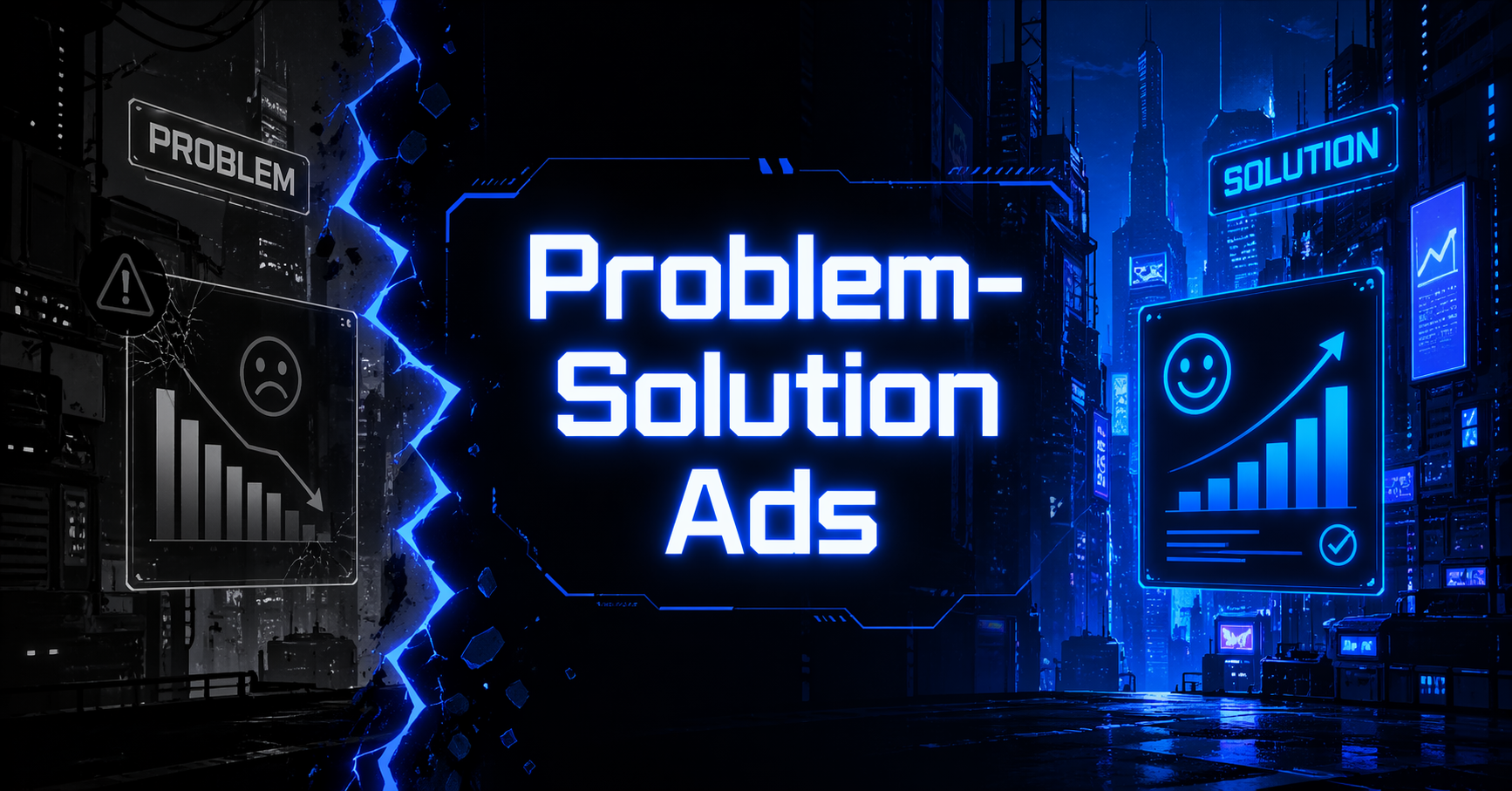
A problem-solution ad opens by identifying a pain point your audience already feels. It makes that pain urgent and real, then positions your product as the clear, logical answer.
The format follows four phases: hook, agitation, solution, and proof. Real examples from Mama Bear Oasis, More Hair Naturally, and Jana Kramer for Froya Organics show how each phase works in practice, from calling out a specific condition by name to letting a visual transformation do the heavy lifting before the copy begins.
Common mistakes, tips on using specificity to build credibility, and a full breakdown of the four-part structure are all covered in detail below.

GetHookd: Turn Competitor Intelligence Into Your Next Winning Ad
GetHookd reveals which ads your competitors are actively scaling—not just running. Spy on their best-performing creatives, landing pages, and traffic strategies, then turn proven concepts into testable campaigns in seconds with AI-powered script generation and creative cloning.
What You Get:- ✓ Brand Spy to decode competitor ad strategies in real-time
- ✓ AI script generation and ad cloning for instant variations
- ✓ Performance scoring based on actual ad behavior, not vanity metrics
- ✓ Creative Analyzer to identify and scale your top performers
The Four-Part Problem-Solution Ad Structure
Every effective problem-solution ad follows the same structural blueprint regardless of product, platform, or budget.
For video ads, the timestamps below are based on a 60-second format but apply equally to longer versions. For static ads, the same four phases map to the headline, body copy, product visual, and CTA in sequence.
What matters across both formats is not the exact timing or placement but that each phase gets enough room to do its job before the next one begins.
1. The Problem Hook (0–5 Seconds): Stop the Scroll
The hook must make the right person think “that’s me.”
Whether it is a first-person confession, a visual demonstration of the problem, or a bold question directed at a specific audience, it only works if it is specific.
“Struggling with your finances?” targets no one. “Tired of being charged hidden fees every time you transfer money abroad?” targets exactly the person most likely to buy.
2. Agitation (5–20 Seconds): Make the Problem Feel Real
This phase is not about repeating the problem. Instead, it’s when you expand it.
Show the consequences, the frustration, and the failed attempts at other solutions. The goal is to make the viewer feel the weight of staying stuck.
A first-person pain hook works well here: “I tried everything, and nothing worked until I found this.”
That framing validates the audience’s own failed attempts before the product is ever mentioned.
3. Solution Introduction (20–40 Seconds): Enter the Product
Let the problem breathe before your product appears. When it does, introduce it as the specific answer to the specific problem you just agitated. Lead with what it fixes, not what it is.
“This is [Product]” is weak.
“This is what finally stopped the 3 am wake-ups” lands with emotional context already built in.
Keep the transition clean and immediately connect the product back to the pain.
4. Proof & CTA (40–60 Seconds): Close With Confidence
Proof must be specific. “Thousands of happy customers” is forgettable. “4.8 stars across 12,000 reviews” is credible.
Your CTA should be singular and action-oriented. Give your audience one thing to do, the reason to do it now, with no competing instructions pulling attention in different directions.
Real Problem-Solution Ad Examples That Work
1. Mama Bear Oasis: Calling Out the Problem by Name
Caption: Mama Bear Oasis names the problem in the headline and pairs the product reveal with social proof to reduce skepticism before the click. (Image source: GetHookd)
Alt text: Mama Bear Oasis Facebook static ad with a bold problem-focused headline alongside a product image and five-star rating.
The hook “Still Blaming Neuropathy?” does two things: it identifies the exact condition the audience is dealing with and implies they have been tolerating it without a real solution.
The copy amplifies the pain by naming the underlying causes and conditions, validating that the problem is not the viewer’s fault, before introducing the product.
The solution enters naturally along with some social proof. “Trusted by 200,000+ workers on their feet all day” shifts the ad from a product claim to a credibility signal. It reduces skepticism just as the viewer is deciding whether to keep reading.
2. More Hair Naturally: Letting the Visual Do the Heavy Lifting
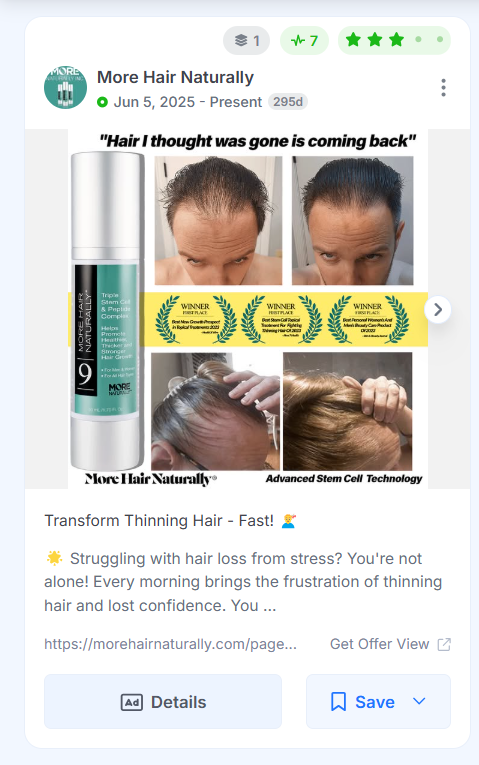
More Hair Naturally leads with a before-and-after image that communicates the problem and the solution simultaneously. The transformation is visible, specific, and credible enough to earn attention before the copy even begins.
The customer quote “Hair I thought was gone is coming back” functions as both the solution reveal and the social proof, framing the result through a real person’s experience.
The copy then names the specific trigger (stress-related hair loss) and immediately validates the emotional consequence: lost confidence and daily frustration. By the time the solution appears, the viewer already believes the result is possible.
3. Jana Kramer for Froya Organics: The Confessional Problem Hook
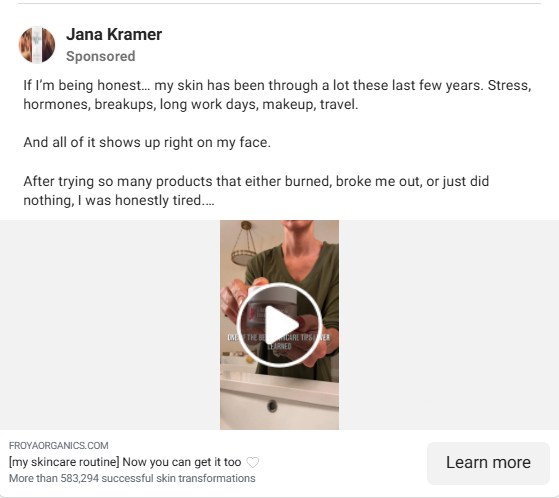
Jana Kramer opens with a list of life stressors, hormones, breakups, long work days, travel, and then delivers the agitation in one line: “And all of it shows up right on my face.” That compression is what makes it effective. The problem is not just named; it is made personal and visible.
The copy then validates failed attempts with “so many products that either burned, broke me out, or just did nothing,” which addresses the skepticism of anyone who has already tried and been disappointed. That earned trust is what makes the solution land when it finally arrives.
Tips on How to Use Specificity In Your Results Claims
Generic proof kills conversions. The moment your ad says “amazing results” or “life-changing product,” you lose the credibility you worked to build in the first 40 seconds.
Instead of “users love it,” say “4.9 stars from over 8,400 verified buyers.”
Instead of “customers see results fast,” say “most customers report a noticeable difference within 14 days.”
Precision signals honesty, and honesty is the foundation of purchase confidence.
The same principle applies to testimonials. “This changed my life” adds almost no conversion value. “I went from waking up three times a night to sleeping straight through in about a week” is specific, visual, and believable.
Where possible, coach testimonial contributors on how to anchor their experience in measurable outcomes.
The Biggest Problem-Solution Ad Mistakes to Avoid
Introducing the Product Before the Problem Is Felt
The most common mistake is leading with the product before the audience has any emotional reason to care. Hold the reveal until the viewer is actively looking for an answer.
A useful test: cover your product and ask whether the first 15 seconds stand alone as a compelling portrait of a real problem. If they do, your structure is sound. If not, you have front-loaded the solution and undermined the tension the format depends on.
Overpromising What the Product Delivers
The problem-solution format creates an implicit contract with the viewer: you have identified their pain, and you are promising a fix.
Overclaiming breaks that contract the moment real-world experience does not match the ad. Frame your solution honestly. “This reduced my back pain from a daily 7 to a manageable 3 within two weeks” is more persuasive than “say goodbye to back pain forever” because it is believable. Credible claims convert better than sweeping ones.
Running One Ad When Your Product Solves Five Problems
If your product has five benefits, you have five ads, not one. Cramming multiple pain points into a single ad dilutes both the agitation and the solution.
Create separate ads for each problem, each targeted at the customer segment most motivated by that specific pain point, then let performance data tell you which combination drives your most profitable acquisition.
Create Winning Problem-Solution Ads With GetHookd
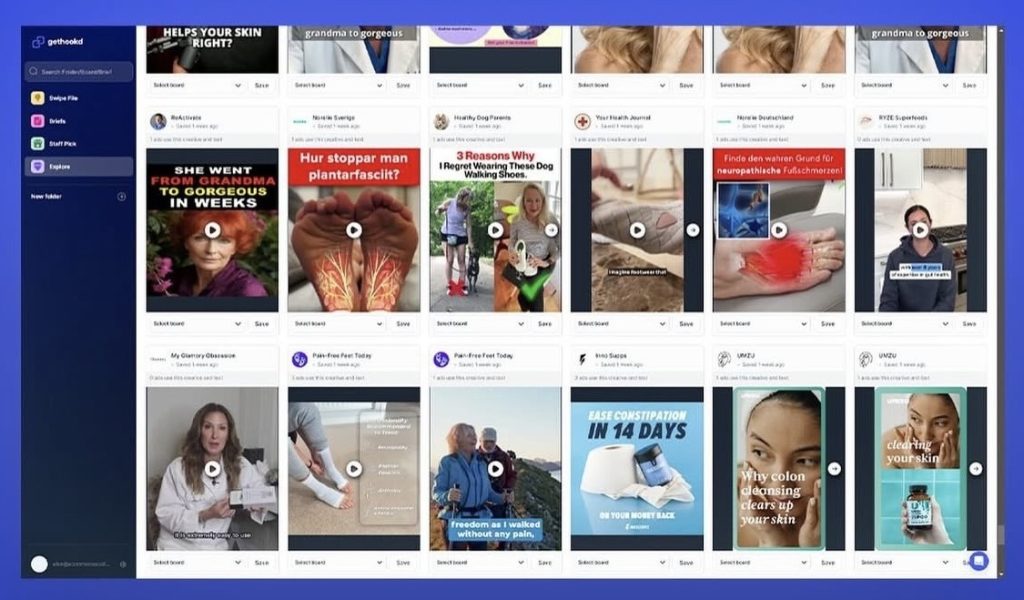
The problem-solution format lives or dies on one thing: how well you understand the pain your audience is already feeling. GetHookd’s Explore Ads feature gives you access to 65M+ real Meta ads so you can see exactly how brands in your niche are framing problems, which agitation angles are resonating, and which solution reveals are driving action right now.
When you are ready to build, our Video Scripts tool generates full ad scripts structured around proven direct-response frameworks for video, while our Image Ad Templates and Clone Ads tools let you produce and iterate on problem-solution creatives without slowing down your testing pipeline.
Start your GetHookd free trial today!
Frequently Asked Questions (FAQs)
What is a problem-solution ad?
A problem-solution ad is a creative format that opens by identifying a pain point the target audience already feels, agitates that pain to make it feel urgent and real, then positions the product as the specific answer. The format works because it meets the viewer where they already are emotionally, building tension around a familiar frustration before offering the resolution, which makes the product feel like a logical conclusion rather than a sales pitch.
How long should a problem-solution video ad be?
The 60-second format is the most versatile, long enough to build tension and deliver proof, short enough to hold attention on social platforms. The format scales in both directions.
A six-second bumper can execute a compressed version with one visual of the problem, one of the solution, and one CTA. A two-minute format works well for warm audiences who already know the category. Match your length to the platform’s natural viewing behavior.
Can the same product use multiple problem-solution angles?
Yes, and it should. Different customers buy the same product for different reasons. Each distinct pain point is a separate ad with its own hook, agitation, and solution introduction. Testing multiple problem angles is one of the most effective ways to scale ad performance without changing the product or the offer.
Does the problem-solution format work on all ad platforms?
The psychological sequence works wherever attention can be captured and held. What changes across platforms are pacing, visual language, and length.
Facebook and Instagram reward strong three-second hooks. YouTube allows the most room for a full four-part structure. The smartest approach is to develop your core script first, then adapt the timing and length for each platform without changing the underlying narrative logic.
How does GetHookd help you build better problem-solution ads?
GetHookd gives you access to 65M+ real Meta ads so you can study which problem angles and agitation hooks are converting in your niche. Our Ads Transcription tool extracts copy frameworks from any video ad directly, and our Video Scripts, Image Ad Templates, and Clone Ads tools help you build and iterate on both video and static problem-solution creatives without starting from scratch.
*Note: Pricing and/or product availability mentioned in this post are subject to change. Please check our website for current pricing and stock information before making a purchase.