Key Takeaways
- Untested ads waste spend before Meta’s algorithm ever gathers enough data to optimise, so testing protects your budget as much as it improves results.
- Five testing layers cover the full account: A/B, creative, campaign, ad set, and ad level.
- Four tools handle Facebook ad testing well: GetHookd, Madgicx, AdEspresso, and Adzooma.
- GetHookd works one step earlier than the rest by showing which competitor ads are already scaling, while Madgicx, AdEspresso, and Adzooma manage and automate ads you have already built.
- GetHookd gives you a searchable ad library, Brand Spy, AI performance scoring, and ad cloning so every test starts from a proven concept.
How Facebook Ad Testing Works
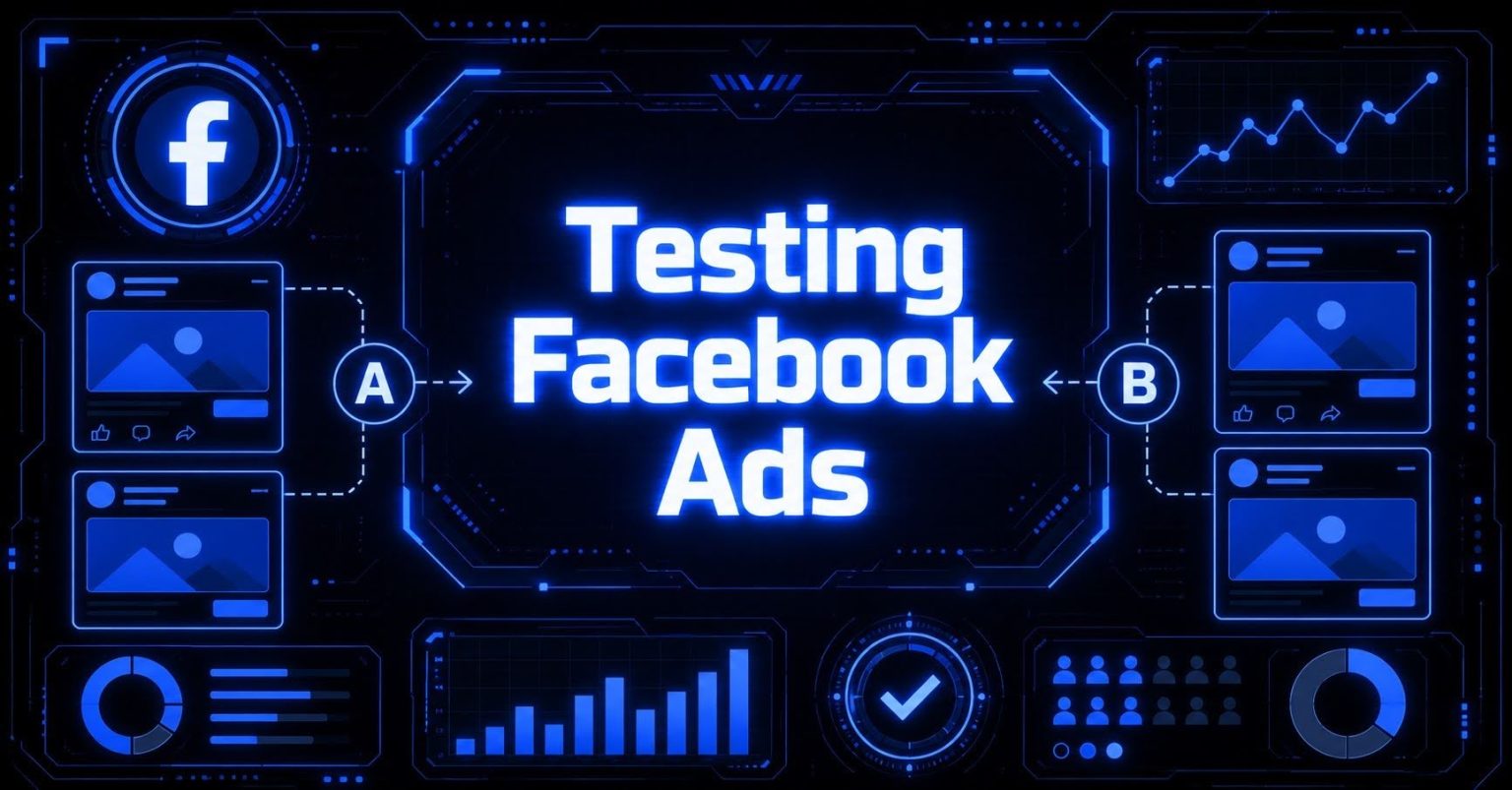
Testing Facebook ads means running controlled comparisons until the data tells you what works. A/B testing isolates one variable at a time. Creative testing digs into formats, hooks, and visuals. Campaign, ad set, and ad level testing each answer different questions about structure, audience, and copy.
Testing matters because guessing is expensive. Meta’s algorithm needs roughly 50 optimization events per ad set per week before results stabilize, so untested creatives burn budget while you wait. Structured testing lowers your cost per result, sharpens targeting, and turns every campaign into usable knowledge for the next one.
The fastest way to test smarter is to start from concepts already proven in market. GetHookd shows which competitor ads are actively scaling, then turns those insights into testable variations. It is the strongest starting point for any Facebook ad testing plan.

GetHookd: Turn Competitor Intelligence Into Your Next Winning Ad
GetHookd reveals which ads your competitors are actively scaling—not just running. Spy on their best-performing creatives, landing pages, and traffic strategies, then turn proven concepts into testable campaigns in seconds with AI-powered script generation and creative cloning.
What You Get:- ✓ Brand Spy to decode competitor ad strategies in real-time
- ✓ AI script generation and ad cloning for instant variations
- ✓ Performance scoring based on actual ad behavior, not vanity metrics
- ✓ Creative Analyzer to identify and scale your top performers
Strategies for Facebook Ad Testing
1. A/B Testing
A/B testing (also called split testing) is the foundation of all Facebook ad testing. You run two versions of an ad that are identical except for one variable and see which performs better. Facebook’s native split testing tool divides your audience automatically, so each variant gets a fair sample.
The critical rule: test one variable at a time. Change the headline and the image together and you won’t know which one moved the numbers. Common variables to test include:
- Ad headlines and primary text copy
- Hero images versus video creatives
- Call-to-action button text (“Shop Now” vs. “Learn More”)
- Landing page destinations
- Audience segments and demographic targeting
- Ad placements (Feed vs. Stories vs. Reels)
2. Creative Testing
Creative testing goes deeper than basic A/B testing by systematically exploring every element of your ad’s visual and copy components. The creative is consistently the single biggest performance lever in Facebook advertising, outweighing audience targeting and bidding strategy in most campaigns.
Effective creative testing follows a structured hierarchy. Start by testing your creative format first: static image, carousel, video, or collection. Once you identify the top-performing format, move down to testing specific creative elements within that format: hook (first 3 seconds of video or opening headline), visual style, color schemes, and social proof elements like testimonials or review callouts.
3. Campaign Level Testing
Campaign-level testing focuses on the highest level of your Facebook ads structure: your campaign objective, budget type, and bidding strategy. This is where you determine whether Advantage+ campaigns outperform manual campaigns for your specific offer, or whether a Cost Cap bid strategy delivers better results than Highest Volume (formerly Lowest Cost) for your target CPA.
Keep campaign-level tests isolated from creative and audience changes. When you’re testing campaign structure, everything below it should remain constant.
4. Ad Set Level Testing
Ad set testing is where you experiment with audience targeting, scheduling, placements, and budget allocation. This is the level where you answer questions like:
- Does a broad audience outperform a detailed interest-based audience?
- Does running ads 24/7 beat a dayparting schedule?
- Does Meta’s Advantage+ Placements outperform manual placement selection?
One effective approach here is the “1-Campaign, Multiple Ad Sets” structure. Run one campaign with 3–4 ad sets targeting different segments, using identical creatives in each. Any performance gap comes purely from audience variables, giving you clean data on who responds best.
5. Ad Level Testing
Ad-level testing is the most granular layer of the testing framework. At this level, you’re testing specific copy variations, individual creative assets, and combinations of both within a fixed audience and campaign structure.
Facebook’s Dynamic Creative feature automates much of this process by allowing you to upload multiple headlines, descriptions, images, and CTAs simultaneously. Meta’s algorithm then mixes and matches these elements to find the highest-performing combinations. This is particularly useful for early-stage testing when you have limited data but want to identify winning creative directions quickly.
Tools That Make Facebook Ads Testing Faster and Smarter
1. GetHookd
GetHookd is an ad intelligence platform that indexes over 23 million high-performing ads across Facebook, TikTok, and Google.You can filter by niche, format, and style, then save any ad permanently to a swipe file that stays accessible after the campaign ends.
For testing, Brand Spy shows what rival brands are running, including top creatives, landing pages, and traffic sources. AI performance scoring surfaces ads that are actually scaling, and AI script generation plus ad cloning turn proven concepts into testable variations fast.
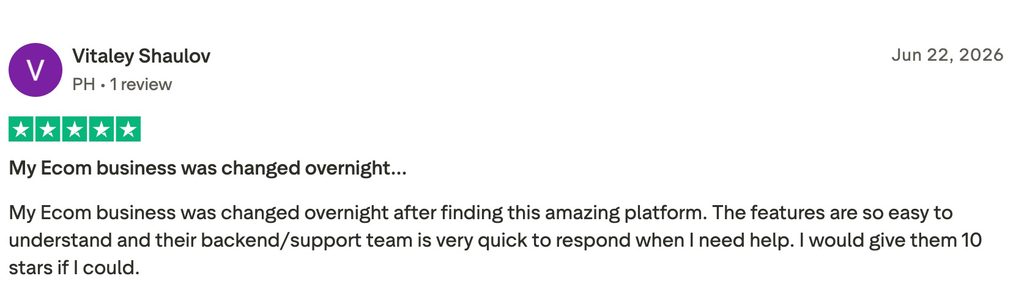
Reviewers describe using it as a faster replacement for scrolling the native Meta Ad Library, especially when hunting for strong performers in a specific region or niche. Several say the value is cumulative, since they learn ad patterns just from studying the library. Support responsiveness and ease of use comes up often as a positive.
2. Madgicx
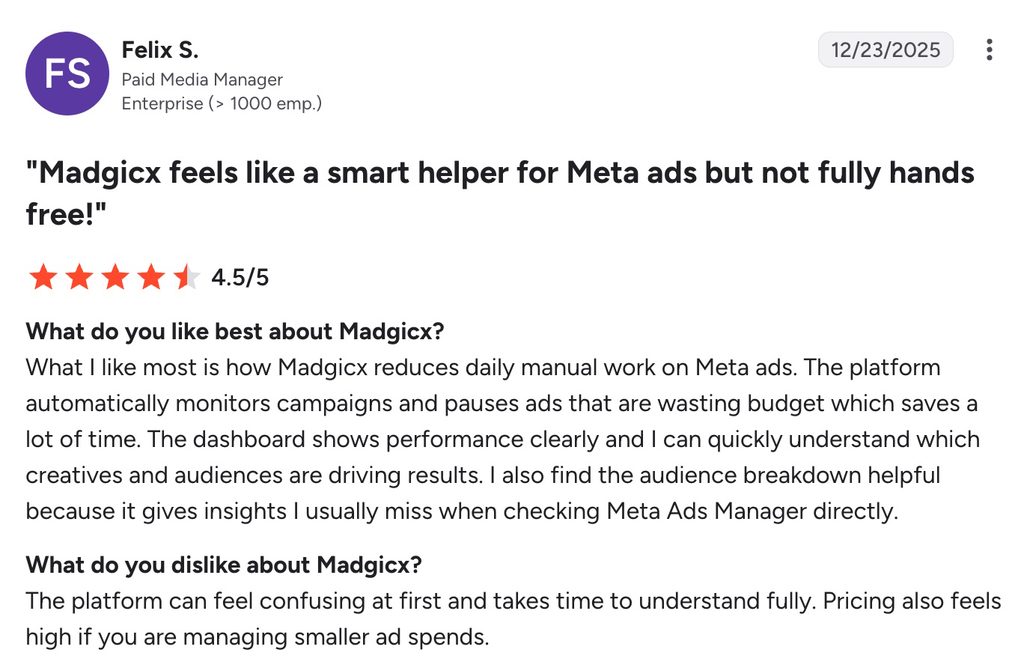
Madgicx is a Meta ads management platform that layers automation and AI analysis on top of Ads Manager. It connects to your ad accounts and audits them, then flags which campaigns, audiences, and creatives to scale, pause, or test next.
For testing, its creative intelligence tools score ads and surface patterns across images, video, headlines, and copy length. Automation rules adjust budgets and bids on set triggers, so weak variants can be paused without daily manual checks.
Madgicx holds a 4.6 rating on G2. Reviewers commonly cite ease of use, time savings, and automation. The most frequent complaints are a steep learning curve, an overwhelming setup, cost for small businesses, and inconsistent support.
3. AdEspresso
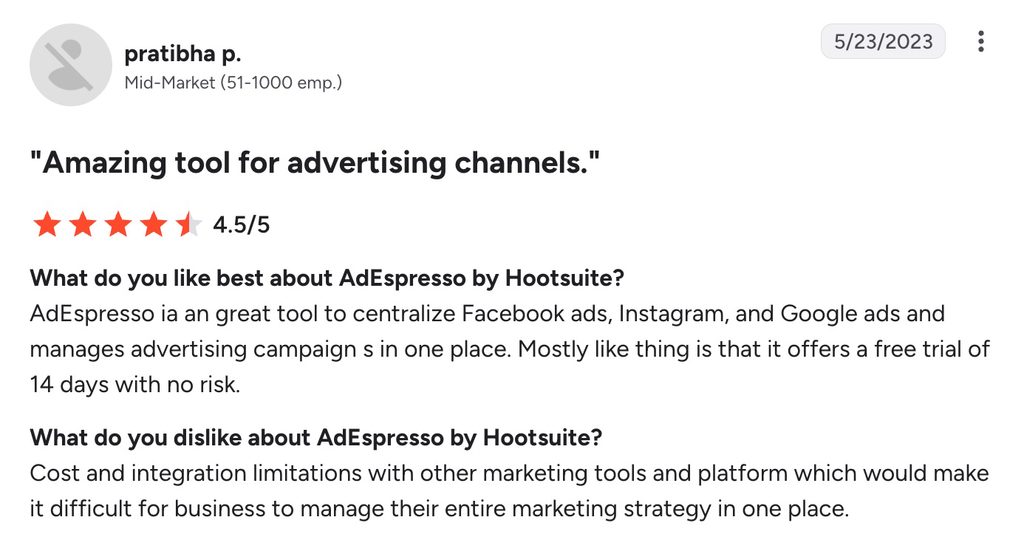
AdEspresso is a Hootsuite-owned platform built around split testing Facebook and Instagram campaigns. You enter multiple headlines, images, text variations, and calls to action, and it generates every combination as separate ads automatically.
That matrix approach is its main testing draw, since building the same variation set manually in Ads Manager takes far longer. Once data comes in, the dashboard shows which variants are working and prompts you to pause the ones that aren’t. Reporting exports to web, PDF, email, and Excel.
AdEspresso holds a 3.6 G2 rating. Positive reviews cite ease of use and fast ad creation. Negative reviews focus heavily on slow or unresponsive customer support, billing and refund disputes, and pricing.
4. Adzooma
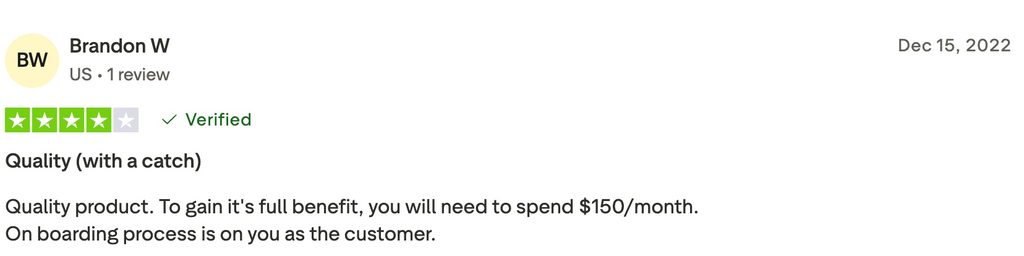
Adzooma is a PPC management platform covering Google, Microsoft, and Facebook ads from one dashboard. It audits connected accounts, then flags wasted spend, disapprovals, broken tracking, and targeting gaps as prioritised fixes you can apply in a couple of clicks.
For Meta testing, it focuses on cleanup and scaling rather than creating ad variations. You get budget pacing across platforms, 30+ pre-built performance alerts for changes in CPA, CPC, and spend, plus audience and delivery recommendations. There is a free forever plan.
Adzooma holds a 3.1 Trustpilot rating. Reviewers commonly cite ease of setup and clear reporting. Critical reviews mention paid tiers feeling expensive, refund disputes, and recommendations that duplicate what native ad managers already surface.
Facebook Ad Testing Tools: Summary
| Tool | Best For | Testing Strengths |
| GetHookd | Competitor research before you spend | Brand Spy, AI performance scoring, script generation, ad cloning, permanent swipe file |
| Madgicx | Automating account management | Creative scoring, pattern analysis, budget and bid rules |
| AdEspresso | Bulk split testing | Auto-generates every headline, image, and CTA combination |
| Adzooma | Cross-platform cleanup | Account audits, wasted spend alerts, budget pacing |
Why Choose GetHookd for Your Next Facebook Ad Campaign
Testing wins Facebook campaigns, but every test costs money and time. Change one variable, wait for real data, then decide. The advertisers who scale fastest are the ones who start from proven concepts instead of blank guesses. The question is where those concepts come from.
We give you that starting point. Our library shows which competitor ads are actively scaling right now, with the creatives, landing pages, and traffic sources behind them. Save what works, then generate your own variations with AI scripting and cloning. Sign up for GetHookd and build your first test today.
Frequently Asked Questions (FAQs)
Is A/B testing worth it on Facebook?
Yes, A/B testing on Facebook is absolutely worth it. Every test that identifies a winning creative or audience directly reduces your cost per result and improves your return on ad spend over time. Done right, consistent A/B testing compounds into a significant competitive advantage over advertisers who rely on intuition.
How many ad variations should I test at once?
For most advertisers, testing 3 to 5 creative variations simultaneously is the sweet spot. Too few variations and you’re not generating enough learning. Too many variations and your budget gets spread too thin for any single variant to accumulate enough data to be statistically meaningful.
What are common FB ads mistakes to avoid?
The biggest mistake is ending tests too early. Campaigns need roughly 50 optimization events per ad set per week to exit the learning phase, so early data misleads. Other common errors: changing several variables at once, targeting audiences too narrow for useful data, and never recording your results.
What metrics should I measure in Facebook ad testing?
The metrics that matter most depend on your testing stage, but some of the core performance metrics you should monitor include Cost Per Result (CPR), Click-Through Rate (CTR), Cost Per Click (CPC), Return on Ad Spend (ROAS), Frequency, Hook Rate, and Landing Page View Rate.
How can GetHookd help Facebook ad campaigns?
GetHookd lets you search over 23 million high-performing ads by niche, format, and style, so you see what already works before spending. Brand Spy reveals competitor creatives, landing pages, and traffic sources. Save the best to a swipe file, then clone them into your own variations.
*Note: Pricing and/or product availability mentioned in this post are subject to change. Please check our website for current pricing and stock information before making a purchase.