5 Effective Facebook Ads Headline Examples for 2026
Key Takeaways
- The five Facebook ad headline formats driving the highest click-through rates in 2026 are benefit-driven, question, social proof, urgency, and how-to. Each fits inside Meta’s 40-character limit and pairs a single trigger word with a concrete outcome the viewer can picture before clicking.
- Each format serves a different funnel stage. Question headlines qualify cold traffic, how-to headlines work best for top-of-funnel education, urgency headlines drive flash sales, and social proof headlines convert warm audiences already familiar with the brand.
- Specificity outperforms vague claims across every format. A precise discount, an exact follower count, or a hard deadline consistently outperforms round numbers, generic promises, and evergreen urgency language.
- False scarcity and overstated claims carry real costs. Fake deadlines raise cost per acquisition account-wide, and unsupported percentage claims risk ad rejection under Meta’s misleading claims policy.
- At GetHookd, we help media buyers spot proven headline patterns from 65M+ analyzed Meta ads, so teams can stop guessing and start testing variations of headlines that are already scaling in their niche.
The Headline Formulas Winning Meta Feeds Right Now
The Facebook ad headlines that get the most clicks share three traits: they fit within Meta’s 40-character recommendation, they pair one trigger word with one concrete outcome, and they match the viewer’s funnel stage rather than trying to do everything at once. Get those three right, and the Click-Through Rate (CTR) follows.
Five headline examples are scaling right now, and each one earns clicks differently. A benefit-driven example like “Save 30% on Your First Order” removes ambiguity by leading with the reward, while a question like “Tired of Low Converting Ads?” pulls in cold traffic by getting viewers to self-identify with a problem. Social proof examples such as “Join 50,000+ Marketers Growing Faster” borrow credibility from numbers viewers can verify, urgency lines like “Last Day: Free Shipping Ends Tonight” lean on loss aversion, and how-to examples like “How to Cut Ad Spend by Half” promise an educational payoff that fits top-of-funnel research traffic.
In this article, we’ll break down each of the five examples, explain the psychology behind why they convert, and identify the campaign types they fit best.

GetHookd: Turn Competitor Intelligence Into Your Next Winning Ad
GetHookd reveals which ads your competitors are actively scaling—not just running. Spy on their best-performing creatives, landing pages, and traffic strategies, then turn proven concepts into testable campaigns in seconds with AI-powered script generation and creative cloning.
What You Get:- ✓ Brand Spy to decode competitor ad strategies in real-time
- ✓ AI script generation and ad cloning for instant variations
- ✓ Performance scoring based on actual ad behavior, not vanity metrics
- ✓ Creative Analyzer to identify and scale your top performers
5 Facebook Ad Headline Examples That Drive Clicks in 2026
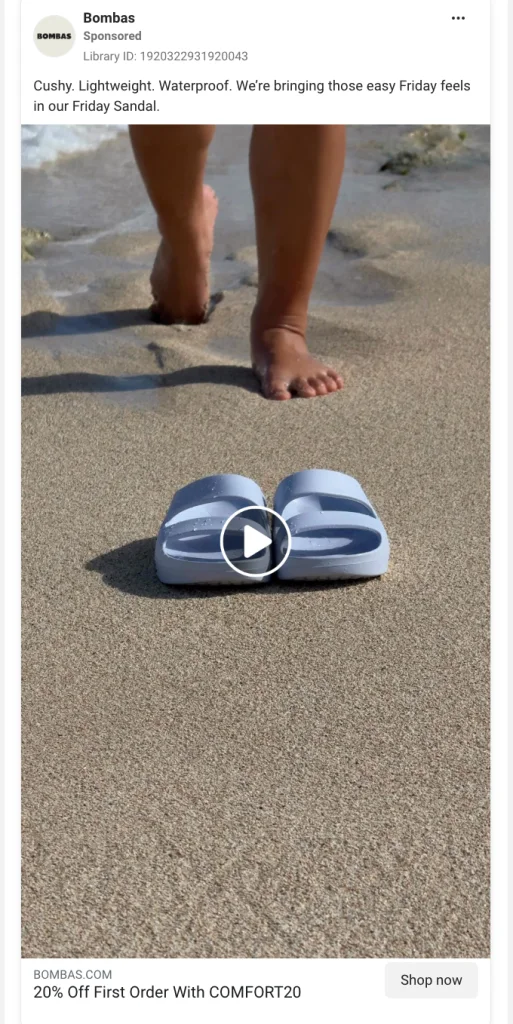
1. Benefit-Driven Headline: “Save 30% on Your First Order”
Benefit-first headlines tell the viewer exactly what they get the moment they click. This structure works because it removes ambiguity and puts the reward front and center.
The example above uses a specific discount, a possessive pronoun (“your”), and an implied urgency tied to first-time buyers. It sits comfortably around 27 characters, so it displays fully on Feed placements without being cut off.
Use this format for eCommerce launches, limited promotions, or subscription offers. Swap the number for a dollar amount, a free shipping offer, or a bonus gift to match your margin structure. Avoid stacking more than one benefit, since a second hook tends to dilute the first.
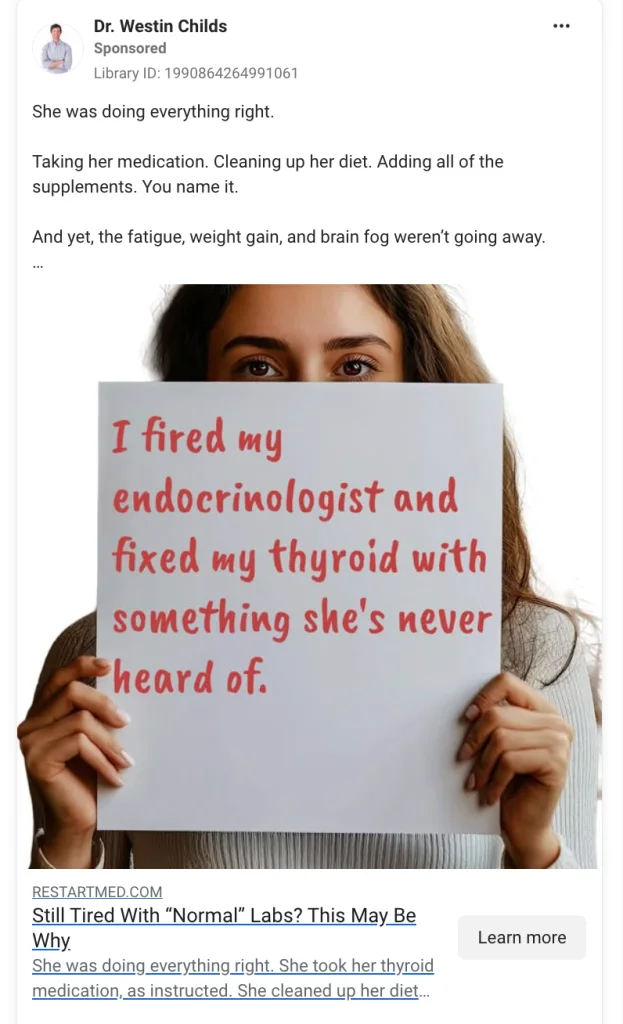
2. Question Headline: “Tired of Low Converting Ads?”
Question headlines work because they force the viewer to pause and self-identify with the problem. When a scroller mentally answers “yes,” they become qualified traffic before they even click.
The strongest question headlines target a pain point your ideal customer has already named. They should never feel like a trick or a sales setup. Keep the question specific enough that the wrong audience scrolls past and the right audience leans in.
This format performs especially well for service-based offers, SaaS tools, and info products. Media buyers running cold-traffic campaigns often use question headlines as the first creative in a sequence, then follow up with benefit-driven variations for retargeting.
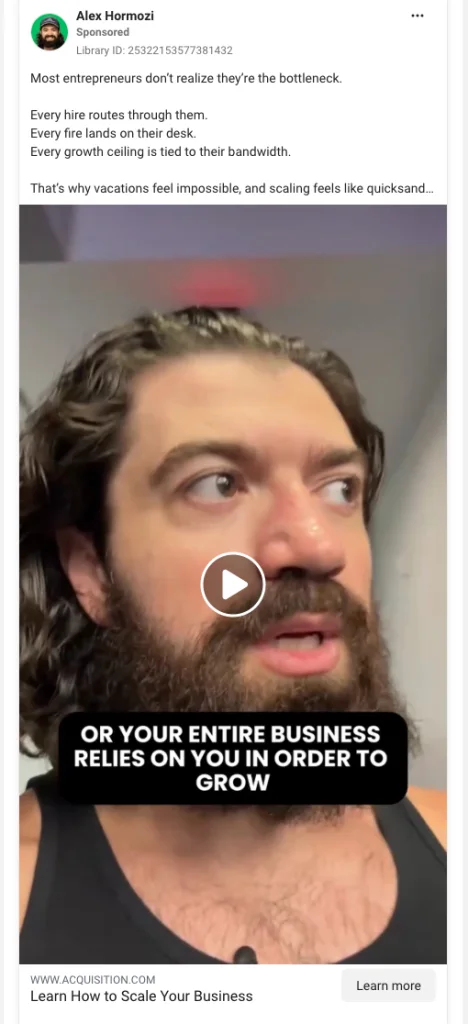
3. Social Proof Headline: “Join 50,000+ Marketers Growing Faster”
Social proof headlines borrow credibility from the size of your existing customer base. Numbers signal that other people have already validated the offer, which lowers the perceived risk of clicking.
The formula follows a simple pattern: an action verb, a concrete number, and a target identity. “Join 50,000+ Marketers” does more work than “Trusted by Thousands” because the specific figure feels verifiable. Round numbers tend to feel softer, while odd or precise figures feel researched.
Use social proof headlines once your brand has the numbers to back them up. Overstating your user base is a short path to ad policy review, and Meta’s trust signals penalize ads that contradict the landing page. Match the claim on your headline to a visible proof point on the destination page.
4. Urgency Headline: “Last Day: Free Shipping Ends Tonight”
Urgency headlines create a time-boxed reason to act now. They work because loss aversion is a stronger motivator than gain across most buying decisions, and a real deadline collapses the viewer’s window for hesitation.
The example above uses a hard deadline (“Last Day”), a concrete benefit (“Free Shipping”), and a closing time (“Tonight”). Each element reinforces the others. Without the deadline, the offer feels evergreen. Without the benefit, the deadline feels empty.
Only use urgency language when the deadline is real. False scarcity damages retention and raises your cost per acquisition across the account, because Meta’s system learns to under-deliver ads that users report or hide. Rotate urgency creatives in and out of active campaigns to keep the message fresh.
5. How-To Headline: “How to Cut Ad Spend by Half”
How-to headlines promise a concrete outcome and imply an educational payoff. They work best for top-of-funnel traffic where the viewer is still researching rather than ready to buy.
Notice the structure: “How to” + desired outcome + measurable result. This format pairs well with video ads, lead magnets, and long-form landing pages where the promised method unfolds in detail. The headline sets expectations, and the landing page delivers on them.
How-to headlines also tend to pass Meta’s ad review cleanly because they focus on education rather than unsupported claims. Keep the promised result grounded in what your product or content actually delivers. Overpromising a specific percentage or dollar figure without support can trigger ad rejection under Meta’s misleading claims policy.
Facebook Ad Headline Examples: At-a-Glance Comparison
| Headline Type | Example | Best For | Character Count |
| Benefit-Driven | Save 30% on Your First Order | eCommerce promos, first-order discounts | 28 |
| Question | Tired of Low Converting Ads? | SaaS, services, cold traffic | 28 |
| Social Proof | Join 50,000+ Marketers Growing Faster | Established brands, community offers | 37 |
| Urgency | Last Day: Free Shipping Ends Tonight | Flash sales, seasonal campaigns | 36 |
| How-To | How to Cut Ad Spend by Half | Lead magnets, educational funnels | 27 |
Why We Built GetHookd for Headline Research
The five formats above give you a proven starting point, but the real lift comes from knowing which angles are actively scaling in your specific niche right now, and that’s exactly the gap we built GetHookd to close. Our Brand Spy feature surfaces which headlines, hooks, and creative formats competitors are scaling across 65M+ analyzed Meta and Facebook Ad Library ads, so you can model what is already converting instead of guessing from a blank page.
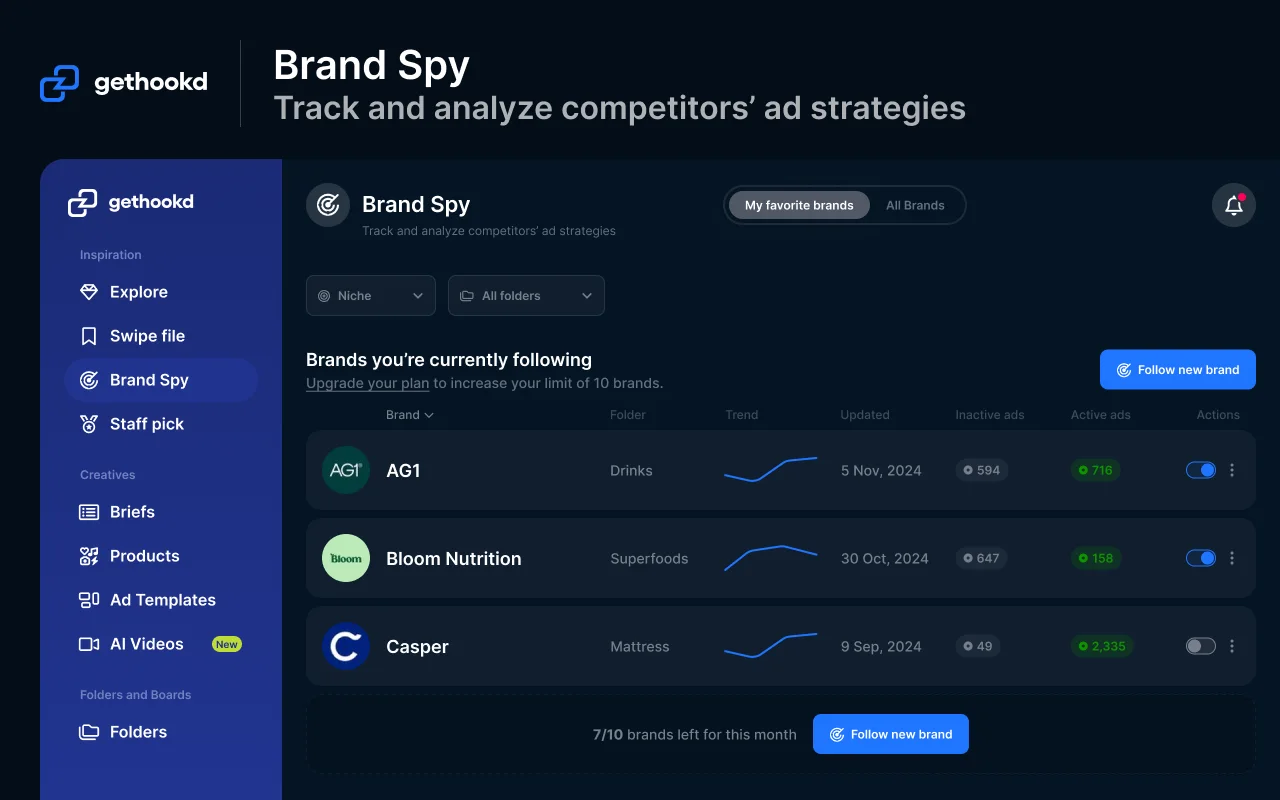
Unlike passive ad libraries that flood you with every ad ever run, we score ads based on real-world performance signals and surface only the ones worth your attention. From there, our AI script generation and ad cloning tools turn those proven concepts into testable variations in seconds, closing the gap between research and production so you can move from spotting a winning competitor angle to launching your own version in the same session.
Start your GetHookd free trial today.
Frequently Asked Questions (FAQs)
How long should a Facebook ad headline be in 2026?
Meta recommends 40 characters for most placements and 27 characters for Facebook Feed specifically. Reels Overlay drops to 10 characters. Headlines longer than the recommended limit get truncated on mobile, where most of your impressions come from, so shorter is almost always safer.
Can I use emojis in Facebook ad headlines?
Yes, emojis are allowed and can boost CTR when used sparingly. Limit yourself to one emoji per headline, place it near the benefit, and avoid stacking multiple symbols. Meta occasionally flags emoji-heavy ads for policy review, especially in regulated verticals like finance and health.
Should my Facebook ad headline match my primary text exactly?
No, they should complement each other rather than repeat. The primary text sets up context or emotion, and the headline delivers the concrete hook or offer. Repeating the same message in both fields wastes the character budget and reduces the reasons a viewer has to click.
How often should I refresh my Facebook ad headlines?
Refresh headlines every two to four weeks for active campaigns, or sooner if CTR drops by more than a quarter from peak. Ad fatigue hits headlines faster than creatives because the text stays static while feeds scroll past. Running three to five headline variations per ad set slows the decline.
How does GetHookd help me write better Facebook ad headlines?
We analyze 65M+ ads running across Meta to show you which headlines, hooks, and angles competitors are actively scaling. Our Brand Spy and Creative Analyzer tools surface the patterns behind winning ads, and our AI script generator turns those patterns into fresh variations you can test immediately.
*Note: Pricing and/or product availability mentioned in this post are subject to change. Please check our website for current pricing and stock information before making a purchase