Key Takeaways
- The four best competitor ad analysis tools in 2026 are GetHookd, the Meta Ad Library, AdSpy, and BigSpy.
- The Meta Ad Library is the free official Facebook and Instagram record of live ads, but stops short of engagement metrics, saved history, or any way to track creatives over time.
- AdSpy earns its slot through the scale of its 200 million-plus Meta ad archive and the precision of its filters, comment search, and cloak bypass.
- BigSpy is the widest-net option, covering Facebook, Instagram, TikTok, YouTube, Twitter, and Pinterest under one search bar.
- GetHookd leads the four as the only tool that closes the loop between research and production, pairing a 65 million Meta ad database with Brand Spy, AI script generation, and Clone Ads in one dashboard.
What Competitor Ad Analysis Tools Actually Do
Competitor ad analysis tools let you see the ads your rivals run, spot the creatives they are spending money on, and copy the patterns that work into your own campaigns. Every tool here (GetHookd, Meta Ad Library, AdSpy, and BigSpy) reads public ad data, so the real difference is what each one lets you do with it.
Some tools stop at showing you what a competitor is running today. Others let you save ads, track them over time, and study the hooks and landing pages behind them, which is what turns a quick look into real research.
The biggest difference, though, is what happens after you find a winning ad. Most tools leave you to build your own version from scratch, while GetHookd takes you from a rival’s creative straight into writing and cloning your own, which is why it leads this list.

GetHookd: Turn Competitor Intelligence Into Your Next Winning Ad
GetHookd reveals which ads your competitors are actively scaling—not just running. Spy on their best-performing creatives, landing pages, and traffic strategies, then turn proven concepts into testable campaigns in seconds with AI-powered script generation and creative cloning.
What You Get:- ✓ Brand Spy to decode competitor ad strategies in real-time
- ✓ AI script generation and ad cloning for instant variations
- ✓ Performance scoring based on actual ad behavior, not vanity metrics
- ✓ Creative Analyzer to identify and scale your top performers
The 4 Best Competitor Ad Analysis Tools
1. GetHookd
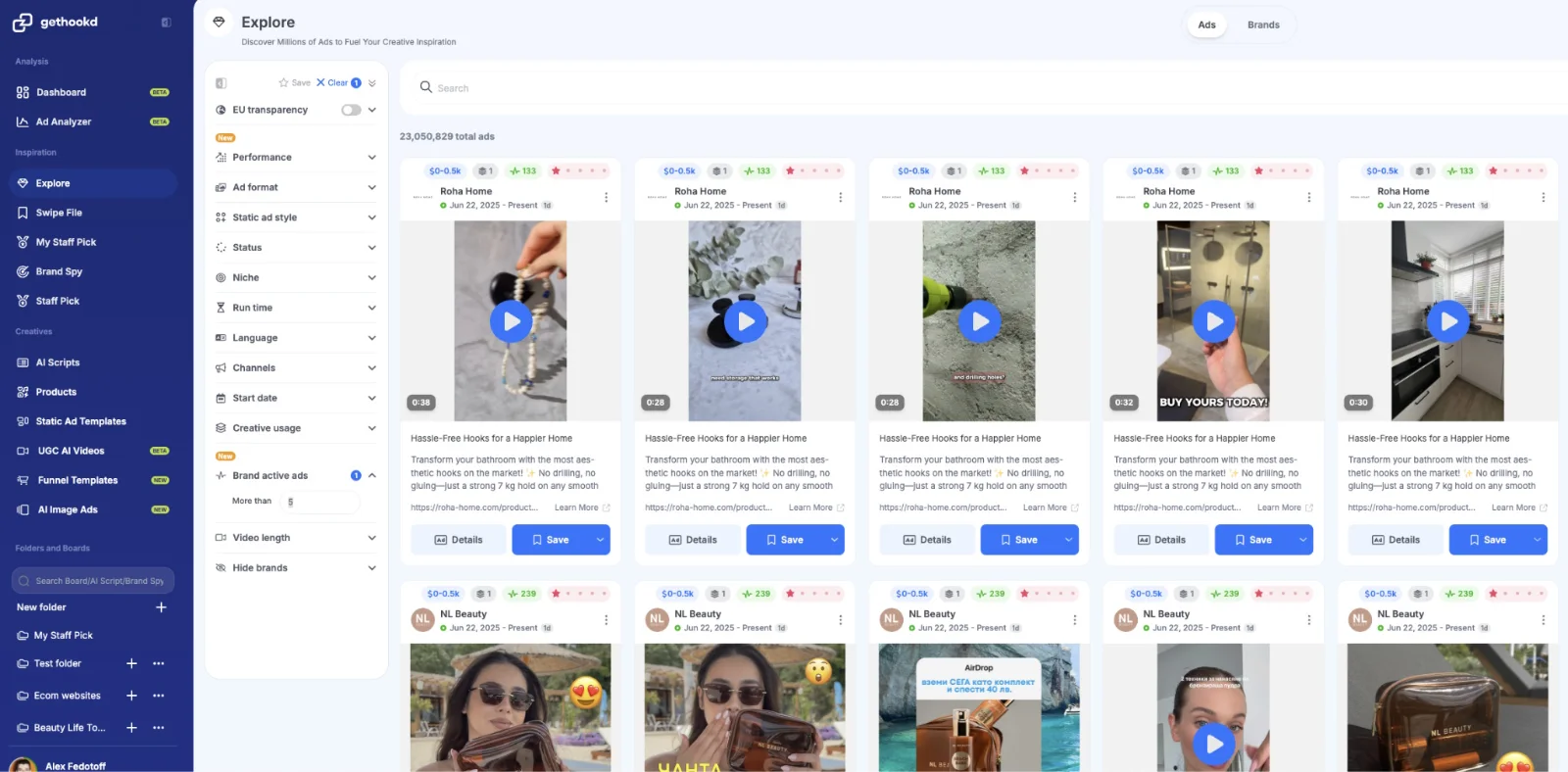
GetHookd is a competitive ad research and creative intelligence platform built for media buyers, agencies, dropshippers, and e-commerce teams running Meta ads. It’s a decision-support tool for people actively testing ads, not a passive swipe file. We index over 65 million high-performing ads across Meta, and you can filter by niche, industry, format, country, and performance status, so you spend your time on real winners rather than dead campaigns.
GetHookd Features
- Brand Spy: Tracks any brand you pick and surfaces the creatives they’re actively funding, based on engagement and activity signals rather than vanity metrics.
- Swipe File: Saves any ad worth keeping in a permanent library, organized by brand, niche, or client, so a good idea doesn’t vanish when the original campaign ends.
- AI Script & Hook Generation: Transcribes video ads and writes fresh hooks and scripts using proven direct-response frameworks.
- Clone Ads: Turns winning creatives into new testable variations in seconds, so research feeds production directly.
- Creative Analyzer: Connects your own Meta account and shows which of your ads deserve more budget and which to cut.
- Landing Page Insights: Reveals the full funnel a competitor sends traffic to, not only the ad itself.
Customer Reviews
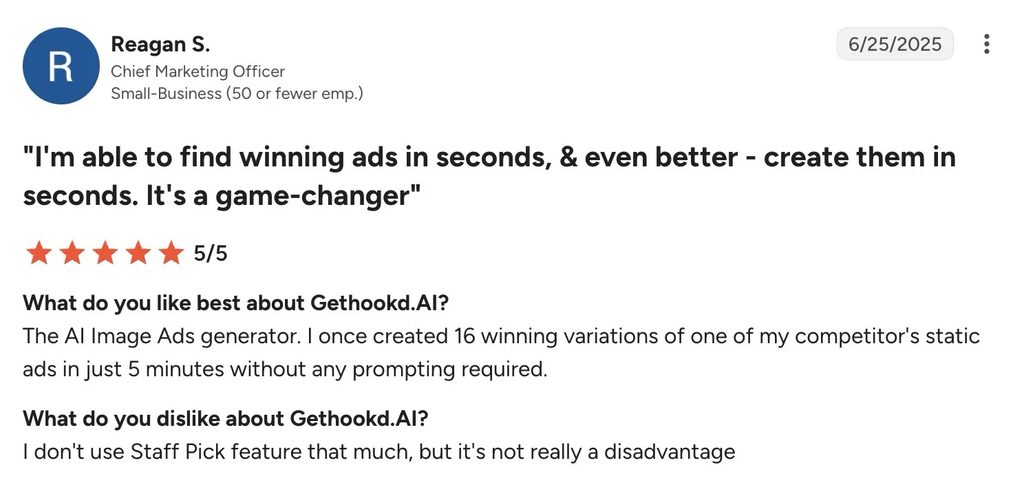
GetHookd holds a 4.8 out of 5 rating on G2, and speed is the theme reviewers keep returning to across the feedback. Some describe generating 16 winning variations of a competitor’s static ad in around five minutes using the AI Image Ads generator without any prompting, and media buyers echo the same point on the Meta side, describing how the platform helps them turn around ROAS after finding and duplicating high-performing creatives.
Beyond the AI tools, users highlight the depth of the swipe library, the ability to limit the number of ads shown per brand so the feed stays clean instead of stacking the same advertiser repeatedly, and how quickly the platform loads compared to other spy tools they have tested. Creative teams also point to Brand Spy and Swipe File as the reasons GetHookd replaces the other research tools in their daily workflow.
2. Meta Ad Library
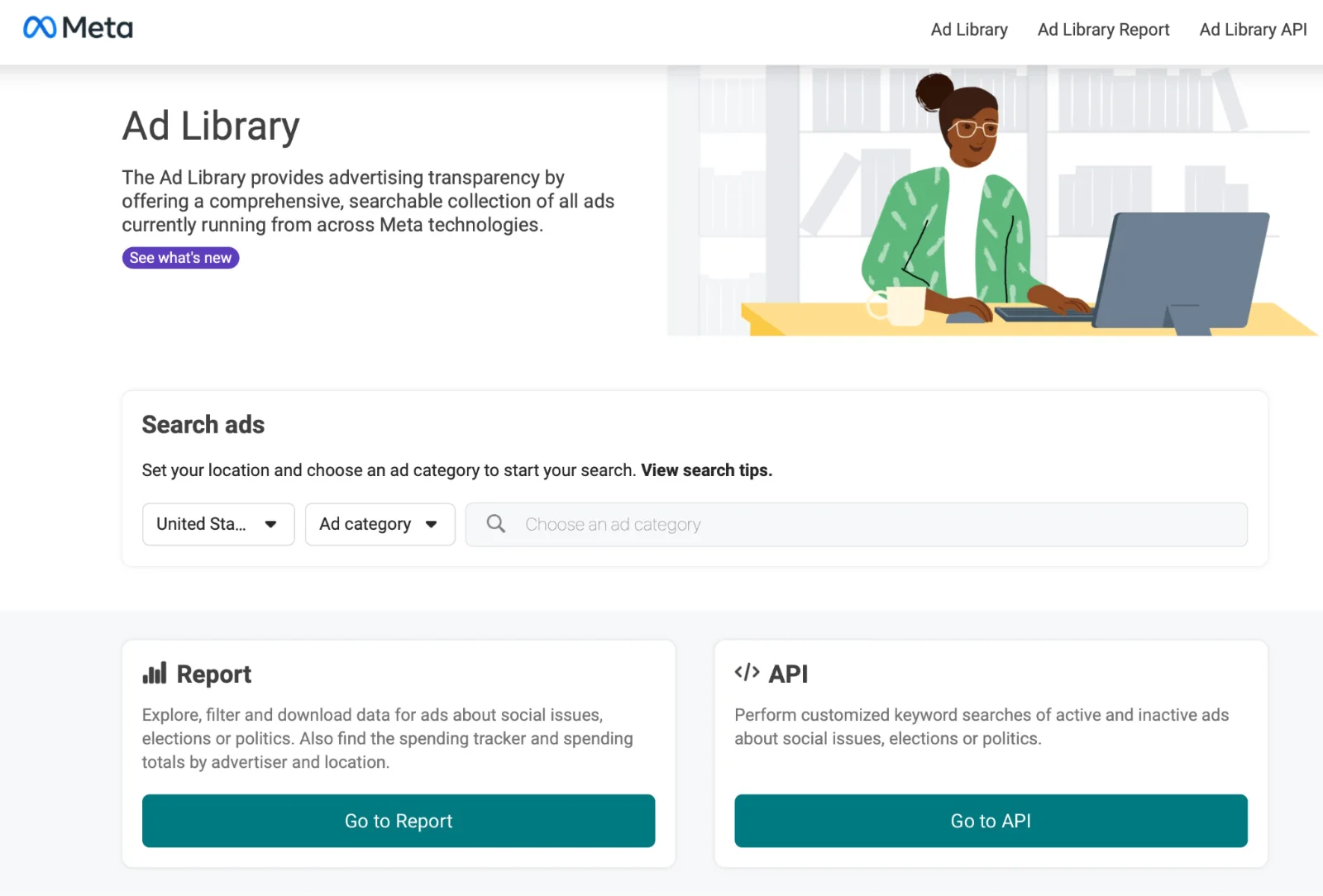
The Meta Ad Library, also known as the Facebook Ad Library, is the free, official database of ads running across Facebook and Instagram. It covers every advertiser in every region with no paywall, and you can search by brand name or keyword to see every ad a page is currently running. Filters for country, platform, and ad category are built in, and for political or issue-based ads you also get spend ranges and impression data.
As a first-pass research step, it’s hard to beat. It’s the official record of what a brand is live with today, and almost every paid tool on the market pulls from this same public data. For a quick audit before a pitch, or a fast look at whether a competitor is testing several variants at once, the Ad Library answers the question at no cost.
Meta Ad Library Features
- Full Advertiser Coverage: Every active advertiser on Facebook and Instagram, in every region, with no gated results.
- Keyword & Brand Search: Search by page name or keyword to pull up every live creative from a competitor.
- Built-in Filters: Filter by country, platform (Facebook, Instagram, Messenger, Audience Network), and ad category.
- Political & Issue Ad Data: Spend ranges, impression buckets, and demographic reach for political and social-issue ads.
- Free Access: No account tier or paywall — anyone can search the library.
Customer Reviews
Because Meta Ad Library is Meta’s own free tool rather than a paid SaaS product, it doesn’t carry a G2, Trustpilot, or Capterra profile. Sentiment across marketing forums and industry blogs is consistent, though: marketers praise it as the free, authoritative, most current source for live Meta ads, and note that almost every paid ad-spy tool builds on this same public data.
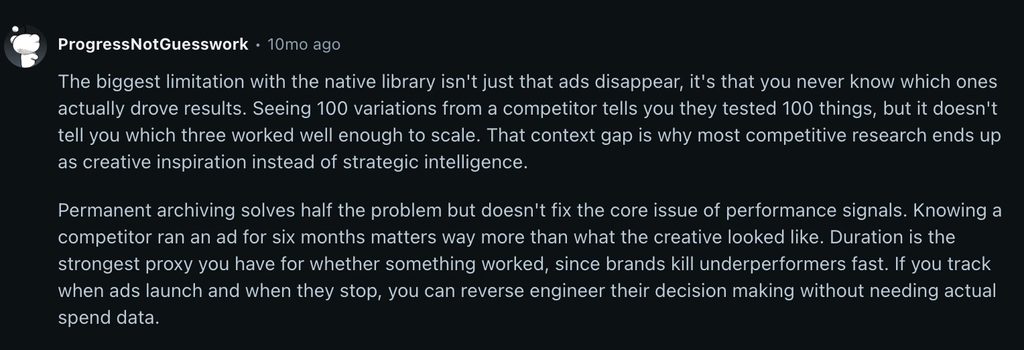
The consistent complaint is what’s missing. There are no engagement metrics, no spend estimates for standard ads, no saved history for paused ads outside political categories, and no way to tag, save, or compare creatives over time. That missing organization layer is the single biggest reason teams doing ongoing competitor tracking end up paying for a second tool on top of it.
3. AdSpy
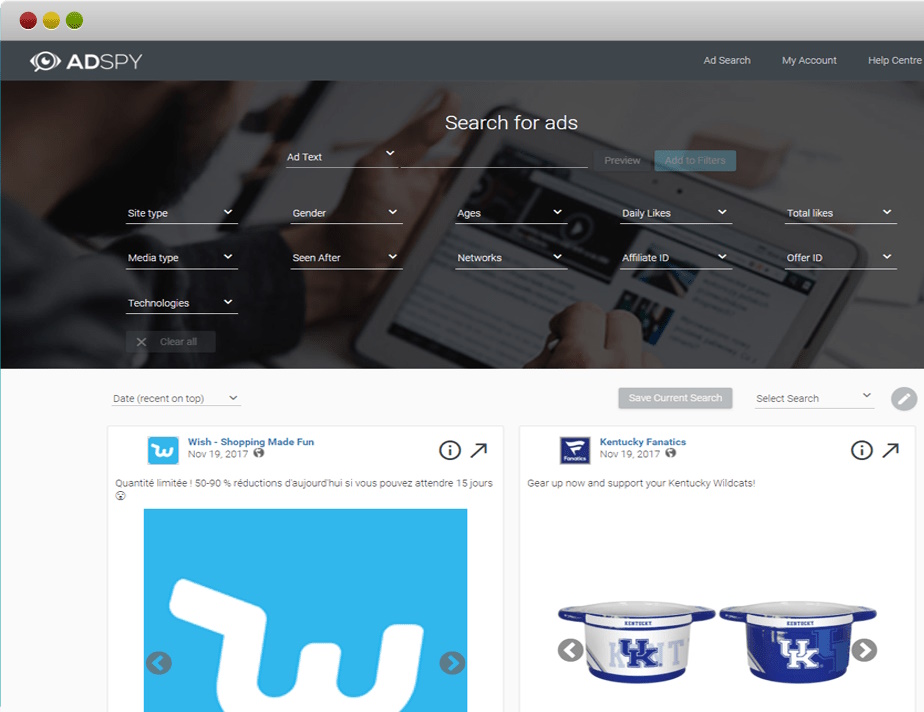
AdSpy is a paid ad intelligence tool focused on Facebook and Instagram, and it runs one of the largest Meta ad archives on the market. Its database includes over 200 million ads across many countries and languages, and you can search through a web dashboard or a Chrome extension using a competitor URL, advertiser name, keyword, or demographic target.
AdSpy Features
- 200M+ Ad Database: One of the deepest historical archives of Facebook and Instagram ads on the market.
- Advanced Filtering: Search by ad text, advertiser, affiliate network, offer ID, media type, and ad duration.
- Comment Search: Search the comments on ads themselves; an uncommon feature useful for social proof research and audience sentiment.
- Long-Runner Sorting: Sort by longest-running ads to spot creatives that have paid off over months or years.
- Cloak Bypass: See the real landing page behind an ad, not the decoy page shown to Meta’s reviewers.
- Demographic Targeting Search: Filter by age, gender, and country to see ads served to a specific audience profile.
Customer Reviews
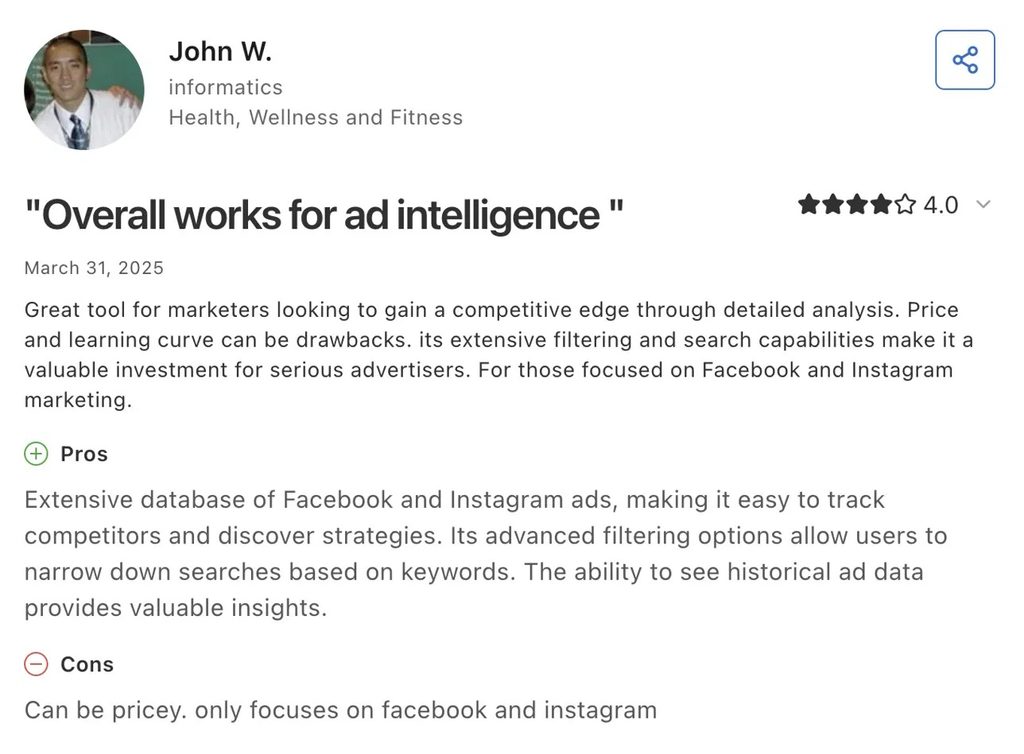
AdSpy holds a 4.3 out of 5 rating on Capterra and a 2.4 out of 5 rating on Trustpilot. Capterra reviewers describe it as a strong tool for marketers looking to gain a competitive edge through detailed analysis, highlighting the extensive Facebook and Instagram database, advanced keyword filtering, and the value of pulling historical ad data when researching competitor strategies.
Recurring drawbacks on the same platform include pricing and the learning curve, along with limited coverage to Facebook and Instagram, which pushes users on other channels toward additional tools. Trustpilot reviewers, meanwhile, focus their complaints on billing after cancellation and slow support responses, which drive most of the low ratings on that platform.
4. BigSpy
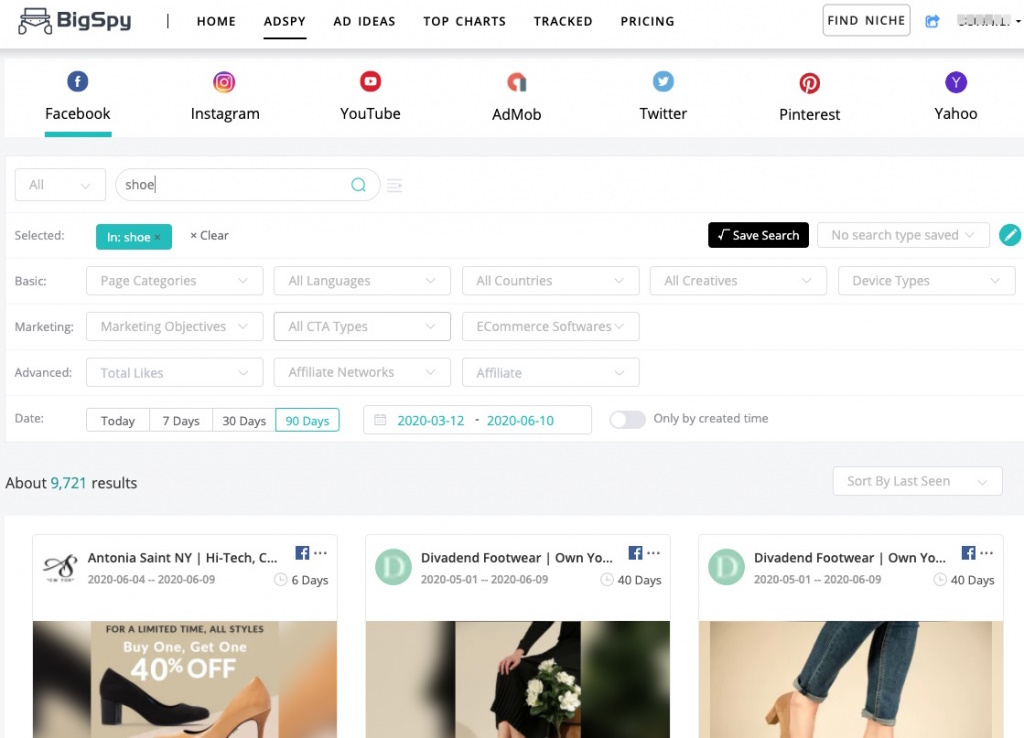
BigSpy is a multi-platform ad intelligence tool that covers Facebook, Instagram, TikTok, YouTube, Twitter, and Pinterest in one dashboard. Its database holds over 1 billion ads across more than 70 countries, and its pricing, starting from around $9 a month on a Basic plan, makes it one of the most accessible paid options for marketers who don’t want to be locked into a single platform.
BigSpy Features
- Multi-Platform Coverage: Facebook, Instagram, TikTok, YouTube, Twitter, and Pinterest ads under one search bar.
- 1B+ Ad Database: Broad reach across 70+ countries, useful for global campaigns and cross-market research.
- Trend & Top Charts: Ranked lists of trending ads by platform, industry, and country to surface what’s currently gaining traction.
- Ad Tracking & Alerts: Track specific advertisers or keywords and get notified when new creatives go live.
- Ad Analysis Reports: Basic performance scoring using likes, shares, comments, and duration to gauge which ads have staying power.
- Affordable Entry Tier: Basic plans start around $9/month, well below AdSpy’s $149 floor, though feature-rich Pro and VIP tiers cost more.
Customer Reviews
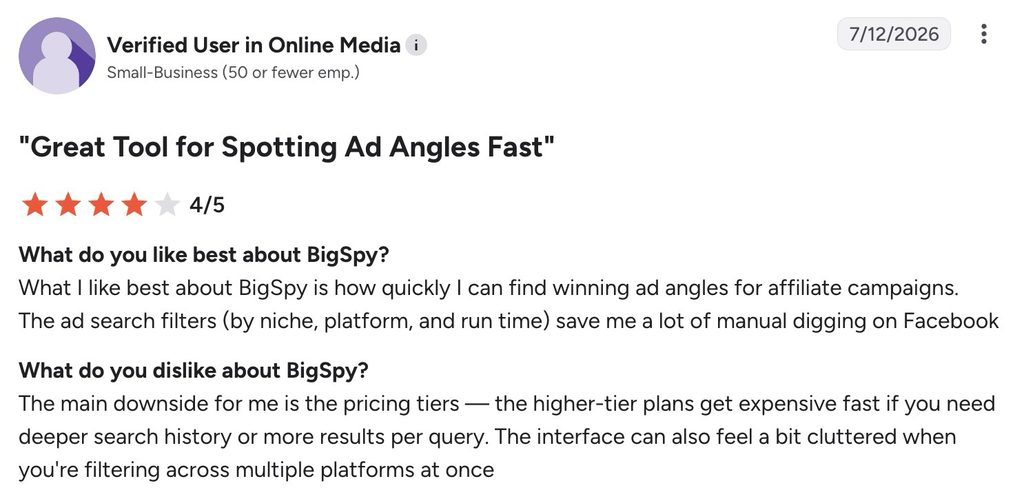
BigSpy holds a 4.6 out of 5 rating on G2 and a 2.1 out of 5 rating on Trustpilot. Reviewers highlight how quickly the platform surfaces winning ad angles for affiliate and e-commerce campaigns, with search filters by niche, platform, country, and run time that cut out a lot of the manual digging otherwise done inside Facebook. Reviewers also value the multi-channel coverage that pulls Facebook, Instagram, TikTok, YouTube, and Pinterest ads into one search, along with the size of the ad database for trend research.
The most common drawbacks are that higher-tier plans get expensive quickly if you need deeper search history or more results per query, and that the interface can feel cluttered when filtering across several platforms at once.
Competitor Ad Analysis Tools Compared
| Tool | Best for | Platform focus | AI creative tools |
| GetHookd | Marketers who want research plus creation in one place | Meta (Facebook & Instagram) | Yes (AI scripts, Clone Ads, Creative Analyzer) |
| Meta Ad Library | Free, quick competitor lookups | Meta (Facebook & Instagram) | No |
| AdSpy | Advanced historical Meta research | Meta (Facebook & Instagram) | No |
| BigSpy | Multi-platform ad research on a budget | Facebook, Instagram, TikTok, YouTube, Twitter, Pinterest | No |
Where GetHookd Fits in Your Competitor Ad Analysis
All four tools read public ad data, so the real difference is what each one lets you do with it. The Meta Ad Library is the free baseline for quick checks, AdSpy suits marketers who work inside deep historical archives on Meta, and BigSpy widens the lens to TikTok, YouTube, and beyond. All three stop at research, which is fine if research is all you need.
GetHookd is the better fit when the goal is to act on what you find. For teams running daily tests on Meta, spotting a competitor’s scaling ad only pays off if you can build your own version before that window closes, and that is the step we handle with Brand Spy, AI scripts, and Clone Ads in one place. If that sounds like your workflow, start with GetHookd.
Frequently Asked Questions (FAQs)
What is competitor ad analysis?
Competitor ad analysis is the process of tracking and decoding the ads your rivals run, then using those patterns to sharpen your own campaigns. It covers which creatives they are scaling, the hooks and formats they repeat, and the landing pages they send traffic to. When done well, it reduces wasted spend and speeds up creative testing.
What is brand spying, and is it legal?
Brand spying means monitoring a specific competitor’s ads over time rather than manually checking their page. It relies only on public ad data, the same information visible in the Meta Ad Library, so using a reputable tool for this is standard marketing practice. It does not touch private accounts, budgets, or targeting settings.
How often should I refresh competitor ads?
For active Meta campaigns, a weekly refresh keeps you current without drowning in data, though fast-moving niches reward a quicker cadence. Treat competitor research as an ongoing habit rather than a one-off check. Automated tracking removes the manual effort, so you never miss a rival’s new launch.
Do I need technical skills to use an ad analysis tool?
No. Modern ad analysis tools are built for marketers, not developers, so you search, filter, and save ads through a simple dashboard with no code or setup required. Most skip API work entirely. If a tool feels like it needs a developer, it is aimed at data teams rather than everyday media buyers.
Can GetHookd help me create ads, not only find them?
Yes. GetHookd is built to close the gap between research and production. Alongside Brand Spy and a 65 million ad database, our AI tools transcribe winning videos, write fresh hooks and scripts, and clone strong creatives into testable variations, while Creative Analyzer shows which of your own ads to scale. You research and create in one place.
*Note: Pricing and/or product availability mentioned in this post are subject to change. Please check our website for current pricing and stock information before making a purchase.