UGC Automation: Tips, Best Practices & Tools
Key Takeaways
- UGC automation significantly reduces per-unit production costs, allowing teams to test more creative variations without expanding budgets or headcount.
- AI tools compress the traditional UGC pipeline from weeks to minutes, but volume without direction produces content that does not convert.
- Strong brand guidelines are the foundation of effective UGC automation; vague inputs produce generic outputs, and generic content does not perform in a competitive feed.
- GetHookd gives performance marketers a single platform to go from competitor research to publish-ready creatives.
What UGC Automation Actually Is
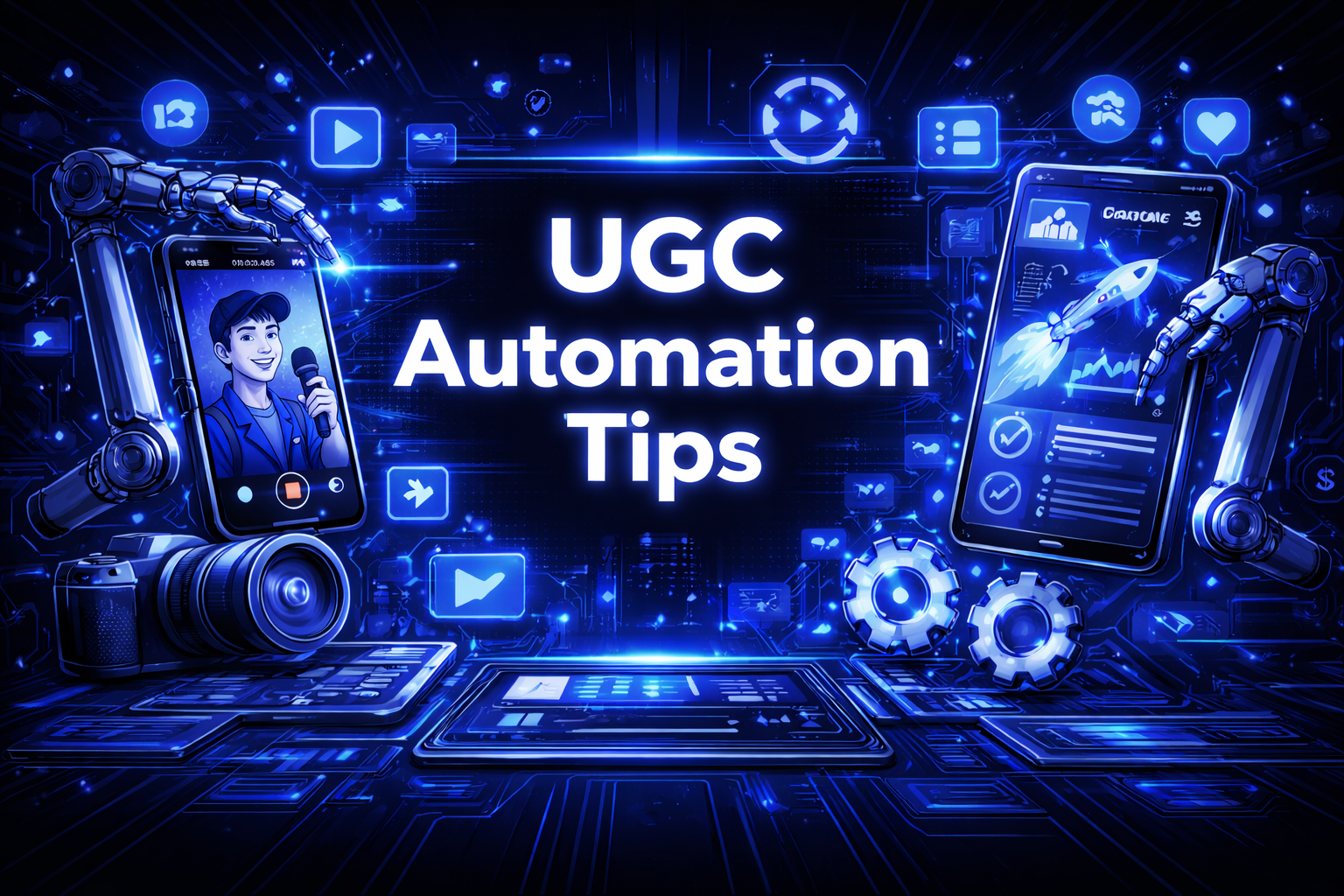
UGC automation is the use of AI and software to create, collect, organize, and publish user-generated content at scale, without manually coordinating every piece from scratch.
The goal is to remove the production bottlenecks that slow down and make UGC ads expensive to maintain.
The old workflow required finding creators, negotiating briefs, waiting on deliverables, and managing revisions. AI UGC automation compresses that entire process into minutes.
You define your tone and product details, and the platform generates video or written content that mirrors the authentic, conversational style audiences respond to.

GetHookd: Turn Competitor Intelligence Into Your Next Winning Ad
GetHookd reveals which ads your competitors are actively scaling—not just running. Spy on their best-performing creatives, landing pages, and traffic strategies, then turn proven concepts into testable campaigns in seconds with AI-powered script generation and creative cloning.
What You Get:- ✓ Brand Spy to decode competitor ad strategies in real-time
- ✓ AI script generation and ad cloning for instant variations
- ✓ Performance scoring based on actual ad behavior, not vanity metrics
- ✓ Creative Analyzer to identify and scale your top performers
GetHookd: Turn Competitor Intelligence Into Your Next Winning Ad
65M+ Ads Analyzed | 4.8★ G2 Rating | 4.5★ Trustpilot Rating
Stop Guessing. Start Scaling:
GetHookd reveals which ads your competitors are actively scaling—not just running. Spy on their best-performing creatives, landing pages, and traffic strategies, then turn proven concepts into testable campaigns in seconds with AI-powered script generation and creative cloning.
What You Get:
- ✓ Brand Spy to decode competitor ad strategies in real-time
- ✓ AI script generation and ad cloning for instant variations
- ✓ Performance scoring based on actual ad behavior, not vanity metrics
- ✓ Creative Analyzer to identify and scale your top performers
The Real Benefits of Automating UGC
Production Costs Come Down Significantly
Hiring UGC creators through platforms or agencies carries real costs. Factor in creator fees, revision rounds, usage rights, and production time, and a single piece of quality UGC content can run into hundreds of dollars.
AI UGC tools reduce that per-unit cost substantially, allowing teams to generate dozens of creative variations at a fraction of the price. Your testing budget stretches further, and winning ads get found faster.
Speed: From Weeks to Minutes
The traditional UGC pipeline, from outreach and briefing through filming, editing, and delivery, easily runs two to four weeks per batch. AI UGC tools compress that cycle entirely. You can go from a product brief to a publish-ready video ad in under an hour, which matters when you are responding to a trend or replacing a fatigued creative before it affects your ROAS.
Speed also changes how you test. Rather than committing to three or four creatives per month, you can run 20 or 30 variations across different hooks, angles, and CTAs and let performance data decide what converts.
Scaling Output Without Scaling Headcount
One of the most practical advantages of UGC automation is that creative output can grow without adding team members. A two-person marketing team can operate with the output of a full creative studio, producing and distributing content across multiple campaigns simultaneously.
For lean eCommerce brands and agencies managing multiple clients, that kind of advantage changes what is achievable with a given budget.
Top UGC Automation Tools by Use Case
Content Discovery & AI Video Generation
For brands focused on generating UGC-style video ads at scale, the tools in this category handle everything from script generation to publish-ready creative output.
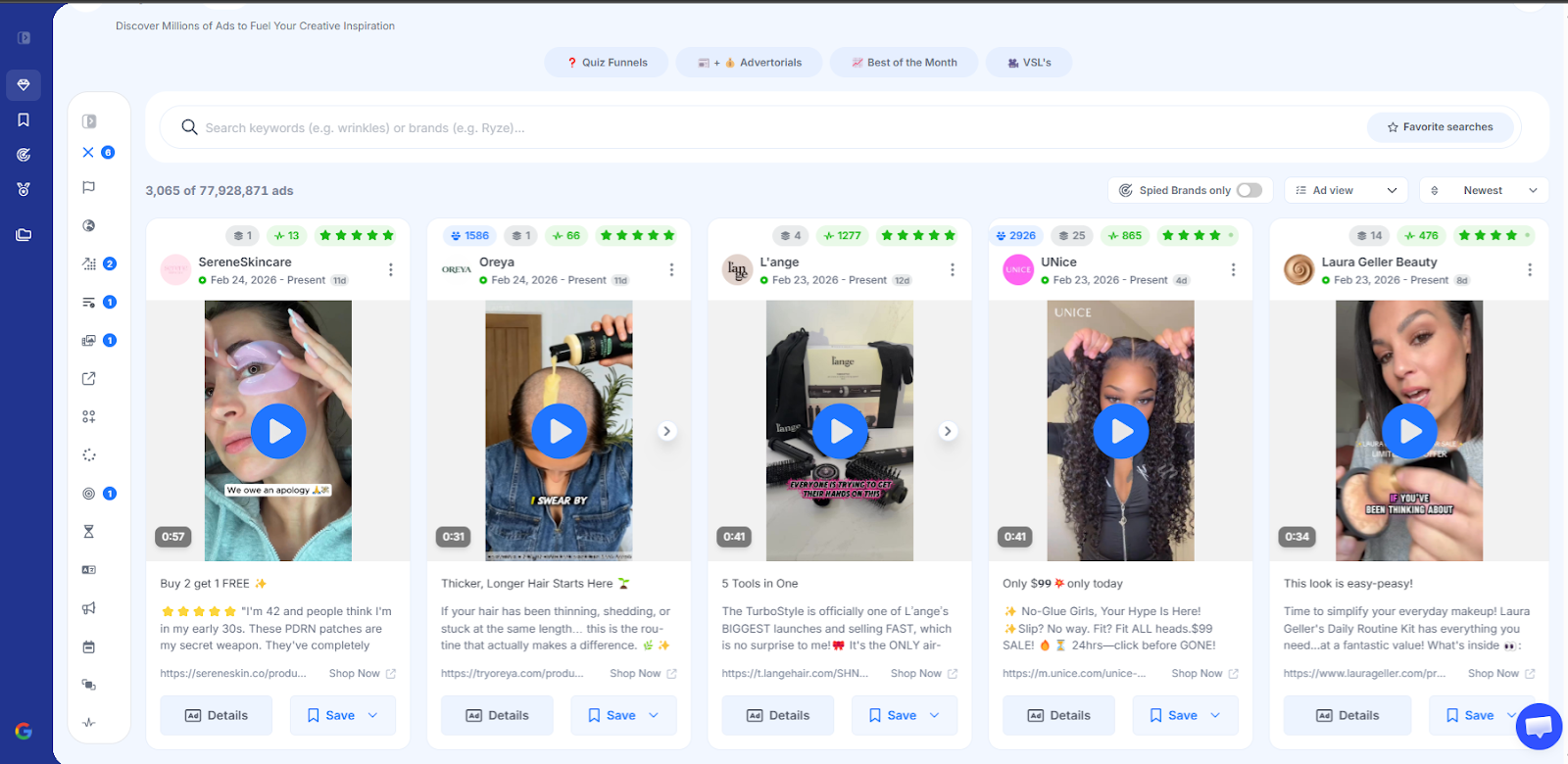
GetHookd is built specifically for performance marketers running ads on Meta. With 65M+ ads analyzed, our platform connects competitive research directly to creative production, so every piece of content is informed by what is already working in your market rather than a blank brief.
Key features relevant to UGC automation include:
- AI Video Scripts: Input your product details, and GetHookd’s AI generates hooks, angles, and full scripts modeled after top-performing ad formats, ready to hand to a creator or record directly.
- Ads Transcription: Upload any competitor UGC video ad and extract the exact hook structure, copy flow, and CTA so you can adapt proven formats for your own product without starting from scratch.
- Clone Ads: Take a winning static creative and generate multiple visual variations in seconds, new colors, formats, and styles.
- Static Ad & Funnel Templates: Access hundreds of proven templates covering ad creatives and full landing page flows, so your UGC sits within a tested end-to-end campaign structure rather than driving traffic to an unproven page.
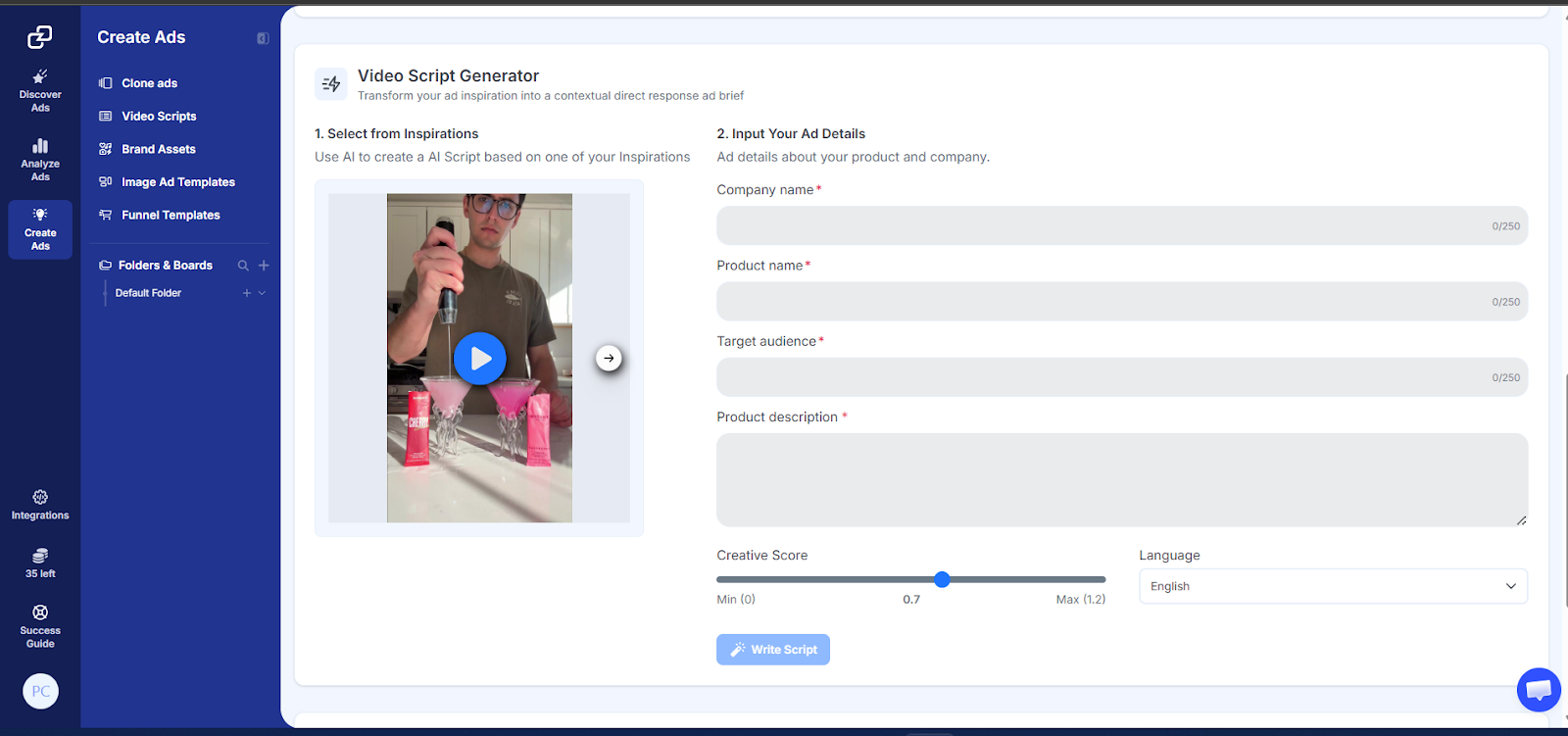
Other tools in this category, including MagicUGC, Creatify, and Arcads, focus primarily on AI video generation from a product brief. They cover the production side of the workflow but do not connect to competitive research or performance analysis.
Creator & Campaign Management
Once you are producing UGC at scale, keeping track of every asset, brief, and approval becomes its own challenge. GetHookd’s Save Ads feature gives you a built-in creative library. Save your favourite ads permanently, even after they go offline, and organize them by niche, format, or performance so your team always has a clear reference point when briefing new content.
For broader workflow management, tools like ClickUp and Airtable can handle the operational side: assigning tasks, managing review stages, and moving content through approval pipelines. They are not built specifically for UGC, but work well as a backbone for teams coordinating across multiple campaigns or clients.
Performance Tracking & Analytics
Knowing which UGC creatives are driving results is what closes the loop on the entire automation workflow. Tools like Triple Whale give you attribution data at the creative level. They track metrics like hook rate, hold rate, and cost per acquisition per individual asset across campaigns.
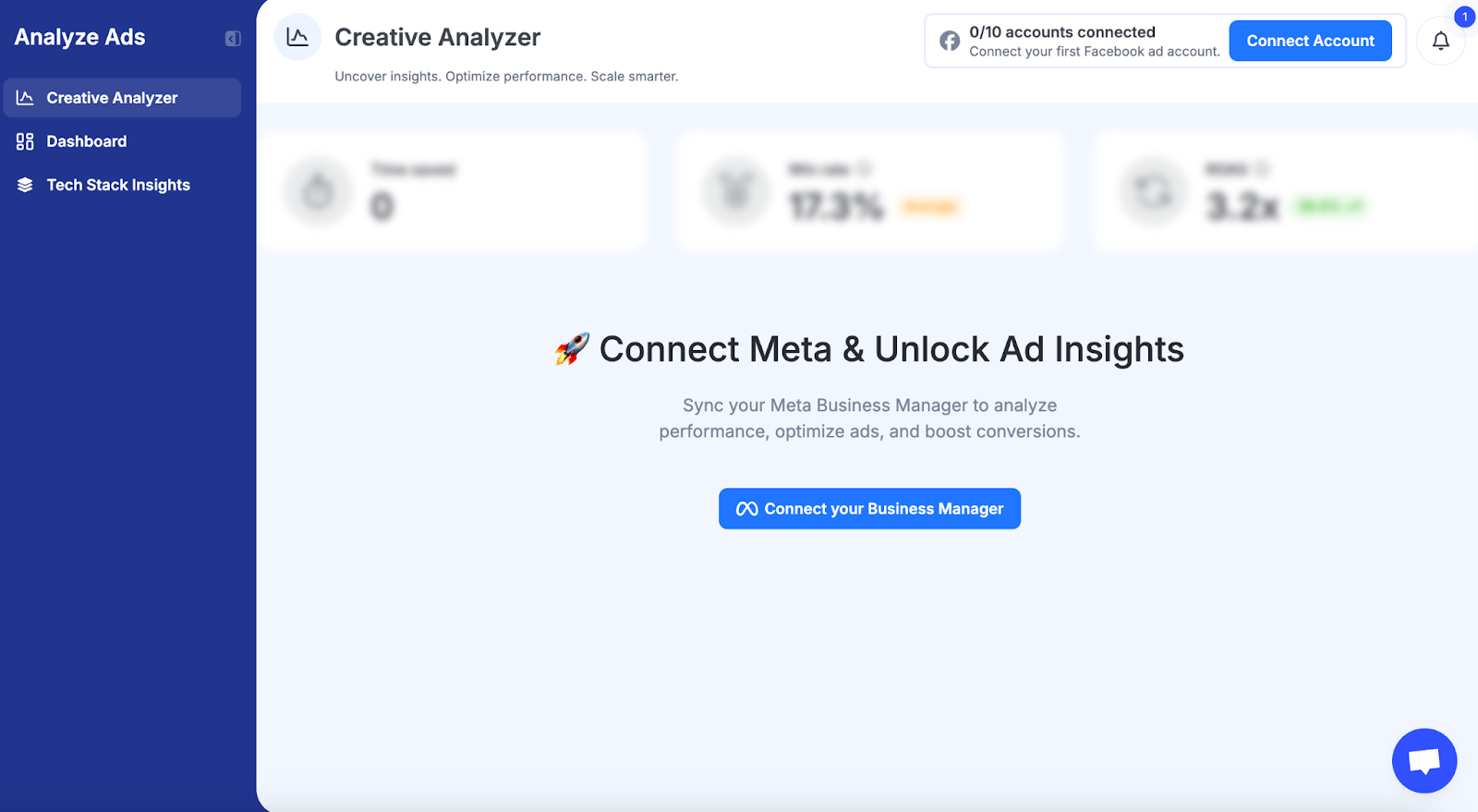
For teams running Meta campaigns, GetHookd’s Creative Analyzer connects to your Meta ad account and gives you a clear read on creative performance across your campaigns, so you know exactly where to double down and where to pull spend.
Best Practices for Managing Automated UGC
A few clear practices applied consistently will keep your automated UGC performing well and protect your brand from the most common pitfalls.
Set Clear Brand Guidelines Before You Automate Anything
Before generating any AI UGC, document your tone of voice, visual style, messaging priorities, prohibited language, and platform-specific requirements. The more specific your inputs, the more on-brand your outputs. Vague guidelines produce generic content, and generic content does not convert.
Specific, well-documented guidelines also reduce moderation time significantly. When your team has a clear reference point, content either meets the standard or it does not. Approval becomes faster because the criteria are objective rather than subjective.
Keep a Human in the Loop
AI tools are good at producing volume and maintaining structural consistency, but they miss cultural nuances, emerging sensitivities, and subtle tone issues that a person catches immediately.
Build a final human review step into your workflow before any automated UGC goes live. That one checkpoint prevents the kind of brand missteps that take far longer to recover from than the time saved by skipping it.
Audit Content Regularly for Accuracy & Tone
Product details change, pricing shifts, and cultural context evolve. Without routine checks, you risk running ads with outdated claims or content that no longer accurately reflects your brand.
A simple audit cadence keeps things clean:
| Audit Area | What to Check | Frequency |
|---|---|---|
| Tone & Voice | Does content match brand personality? | Every batch |
| Factual Accuracy | Are product claims and pricing current? | Weekly |
| Compliance | Is AI usage disclosed where required? | Every publish cycle |
| Performance Relevance | Is underperforming content being retired? | Bi-weekly |
| Cultural Sensitivity | Does the content conflict with current events? | Ongoing |
Set a recurring reminder to review active content at least bi-weekly, retire pieces that are underperforming, and flag anything that needs updating. Think of it as content maintenance rather than quality control.
The Biggest UGC Automation Mistakes to Avoid
The most damaging mistake is treating automation like a vending machine. A weak creative brief produces weak content at scale. The quality of your inputs determines the quality of your outputs every single time.
A second common mistake is ignoring AI disclosure requirements. As AI-generated content becomes more prevalent, platforms and regulators increasingly require transparency about when content is AI-produced. Non-compliance is a compliance risk that can get ads pulled or accounts flagged. Build disclosure into your standard publishing checklist so it never gets missed.
The last trap worth calling out is treating automation as a passive process once it is running. AI tools do not get better on their own.
Without regular creative direction, automated content drifts toward the generic, and generic content does not perform in a crowded feed. The brands producing results with UGC automation are actively steering the system, not merely watching it run.
GetHookd: Where UGC Automation Meets Creative Intelligence
Automating UGC production solves a volume problem. But volume without direction produces a lot of content that does not convert. GetHookd connects both sides of that equation. Our Brand Spy feature surfaces what competitors are actively running on Meta, including the hooks, formats, and landing pages behind their campaigns, so your creative briefs are informed by real market data rather than assumptions.
Ads Transcription extracts the exact copy structure and hook angles from any video UGC ad, giving your team proven frameworks to build from rather than starting from scratch every production cycle. Once you know what to produce, our AI tools handle the execution. Video Scripts generate hooks, angles, and full ad scripts from your product details in minutes. Clone Ads turns a single winning creative into multiple ready-to-test variations without a design tool.
For eCommerce brands, media buyers, and agencies running Meta campaigns, that kind of visibility at every stage is what makes UGC automation a genuine growth system rather than a content treadmill.
Start your GetHookd free trial today!
Frequently Asked Questions (FAQs)
What is UGC automation, and how does it work?
UGC automation uses AI tools and software to create, manage, and distribute user-generated style content at scale without manually producing every piece from scratch. You feed the platform your brand inputs, including product details, tone guidelines, and campaign goals, and it generates video or written content that mirrors the conversational style audiences trust. The output is designed to feel authentic while being produced at a fraction of the time and cost of traditional UGC workflows.
How to create UGC using AI?
Start with a clear product brief including your tone, hook angle, and target audience. Feed those inputs into an AI UGC tool and generate multiple video or static ad variations from a single prompt. From there, run a human review pass, publish your strongest variations, and use performance data to inform the next production cycle.
What is the best AI tool for UGC?
The right tool depends on what stage of the workflow you need help with. For teams running Meta campaigns who want competitive research, AI script generation, and creative production in one place, GetHookd covers the full cycle from understanding what is working in your market to producing and testing content without switching platforms.
Do I need technical skills to use GetHookd?
No. GetHookd is built for marketers, not designers or developers. Our platform guides you from competitive research through to creative production without requiring any design software, coding knowledge, or technical setup. If you can fill in a product brief, you can produce publish-ready ad creatives.
*Note: Pricing and/or product availability mentioned in this post are subject to change. Please check our website for current pricing and stock information before making a purchase.