Key Takeaways
- GetHookd, Meta Ad Library, Foreplay, and AdSpy cover the ad research space in 2026, ranging from free one-off checks to paid tools built for deep competitor tracking and creative production.
- GetHookd analyzes 65M+ Meta ads and uses Brand Spy plus a performance score to show which competitor creatives are actually scaling, not just running.
- Meta Ad Library is free and shows every advertiser’s active ads with start dates, but it lacks spend data, engagement metrics, and side-by-side comparison across competitors.
- Foreplay starts at $59/month and suits agencies that need shared boards, tags, and briefs, while AdSpy’s $149/month plan opens 200M+ ads with comment search no rival offers.
- GetHookd turns competitor research into testable ads with AI scripts and Clone Ads, letting a winning concept become a new ad the same day, starting at $29/month with a 7-day free trial.
How Ad Research Tools Differ from Ad Libraries
Ad research splits into two jobs: seeing what a competitor is running, and knowing which of those ads are actually working. A free ad library only does the first job, so marketers end up guessing at winners from raw ad counts alone. Paid tools add the missing layer, with performance signals, saved history, and filters that turn a pile of ads into a shortlist worth studying.
A long-running ad is a strong clue that a creative is working, but a clue is not proof. Without spend or engagement data, it’s easy to mistake a low-budget test for a scaled winner, and copying the wrong ad wastes a production cycle. That risk is why the stronger tools separate ads that are merely live from ads a competitor is actively pushing budget behind.
GetHookd was built around that distinction. It scores competitor creatives on real ad behavior rather than run time alone, then hands the winning concept straight to AI scripts and Clone Ads so a team can test a variation the same day.

GetHookd: Turn Competitor Intelligence Into Your Next Winning Ad
GetHookd reveals which ads your competitors are actively scaling, not just running. Spy on their best-performing creatives, landing pages, and traffic strategies, then turn proven concepts into testable campaigns in seconds with AI-powered script generation and creative cloning.
What You Get:- ✓ Brand Spy to decode competitor ad strategies in real-time
- ✓ AI script generation and ad cloning for instant variations
- ✓ Performance scoring based on actual ad behavior, not vanity metrics
- ✓ Creative Analyzer to identify and scale your top performers
The 4 Best Ad Research Tools in 2026
1. GetHookd — Best for Turning Competitor Research Into Testable Ads
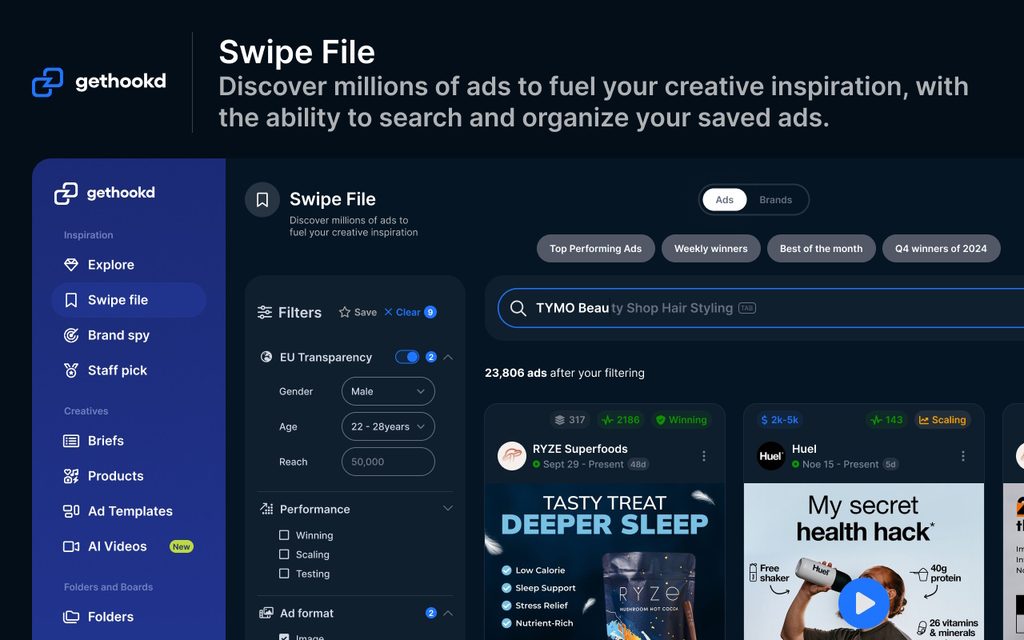
GetHookd is an ad research and creative platform for media buyers, agencies, e-commerce brands, and dropshippers running ads on Meta. It analyzes more than 65 million ads, then shows which ones competitors are actively scaling.
Brand Spy is the feature that makes it work as a research tool. It surfaces a competitor’s top ads, landing pages, and traffic sources in one view and tracks active ads over time, so a growing ad set points to a creative that is scaling rather than one that is merely live. Paired with the ad performance score, which rates creatives on real ad behavior instead of vanity metrics, users can filter straight to the highest-rated ads rather than reading every result.
The platform also provides other tools to handle production:
- Ads Transcription pulls hooks and copy from winning videos.
- Video Scripts writes new angles with AI.
- Clone Ads turns a strong image into fresh variations in minutes.
- Creative Analyzer applies the same scoring to a user’s own creatives.
Saved ads sit in an organized swipe file, so an idea stays reachable after the original ad goes offline. Plans start at $29/month (monthly plan), and a 7-day free trial gives access to the plan you select, including Brand Spy. An annual plan gives a 35% discount across all tiers.
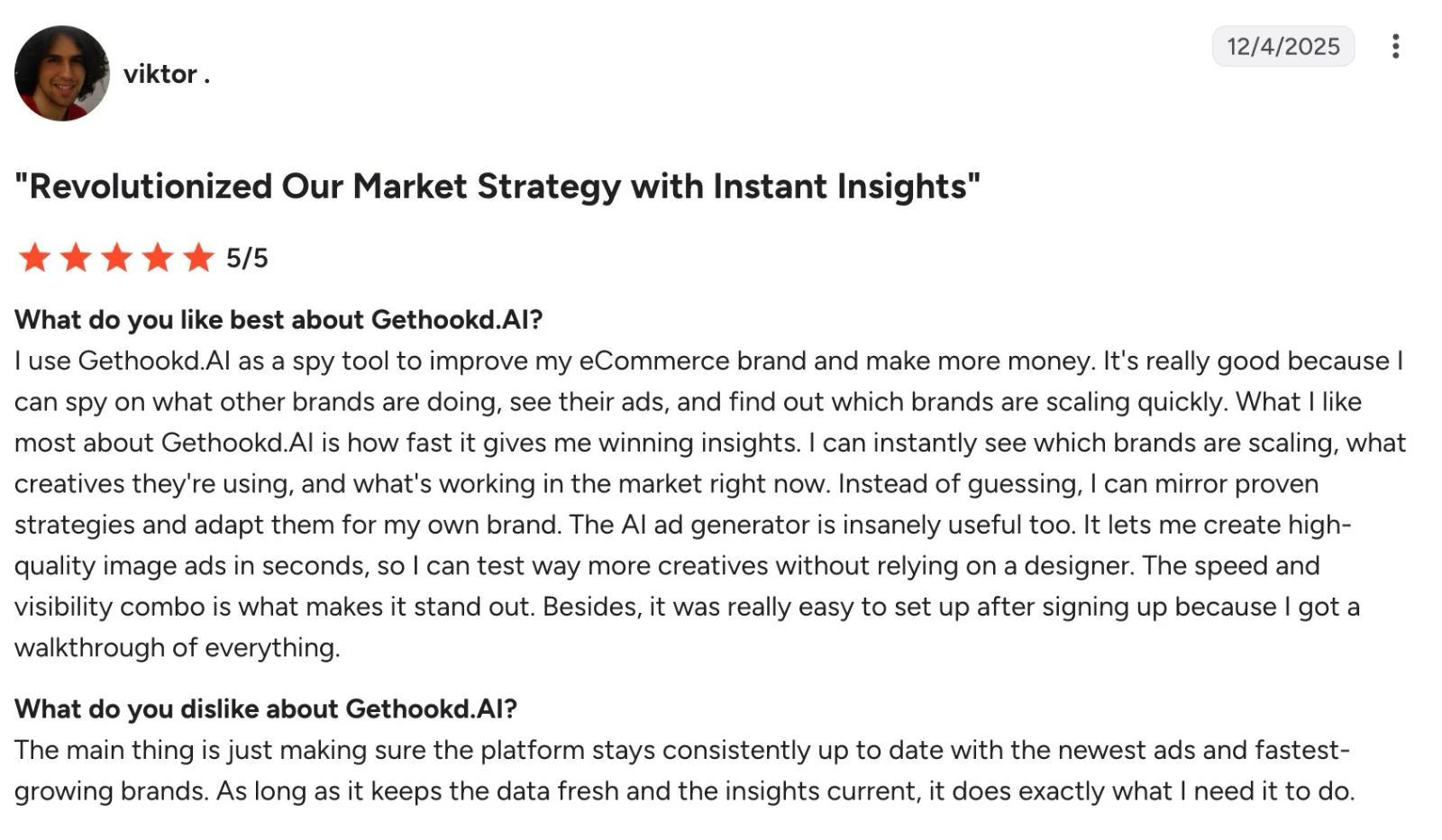
GetHookd holds a 4.8-star rating on G2 and 3.2 stars on Trustpilot. Reviewers on both sites praise the same things: how quickly they can see which brands are scaling and what creatives those brands are running, and how much time the AI script and cloning tools save on production. The negative Trustpilot reviews mostly cluster around trial and subscription billing rather than the product, and the company replies to them publicly.
2. Meta Ad Library — Best Free Tool for Quick Competitor Checks
Meta Ad Library is Meta’s own free tool for viewing active and past ads. It lets users search ads running across Meta’s platforms, including Facebook and Instagram.
Anyone can search a brand or page and see the ads it currently runs, which makes it the most reliable free option for a quick competitor check. Meta built the library for ad transparency, so it lists every advertiser’s active ads worldwide, with no login required for a basic search.
As a free first-party tool, the Ad Library carries no G2 or Trustpilot listing, so the fair read is practitioner consensus rather than a star rating. On that, many marketers treat it as a starting point for competitor research, and the detail they rate highest is the ad start date on every card. A long run time is the strongest free signal the Ad Library offers, since advertisers rarely keep spending on creatives that aren’t performing.
The trade-off is depth. For ordinary commercial ads outside the EU, it does not show engagement signals, spend, or performance data, and its filters stay basic. It cannot compare several competitors side by side or rank ads by traction, so patterns across a niche are hard to spot. The complaint marketers raise most often is the manual load that follows: a five-competitor review turns into a browser-tab exercise, repeated every week.
3. Foreplay — Best for Agency Teams Building Shared Swipe Files
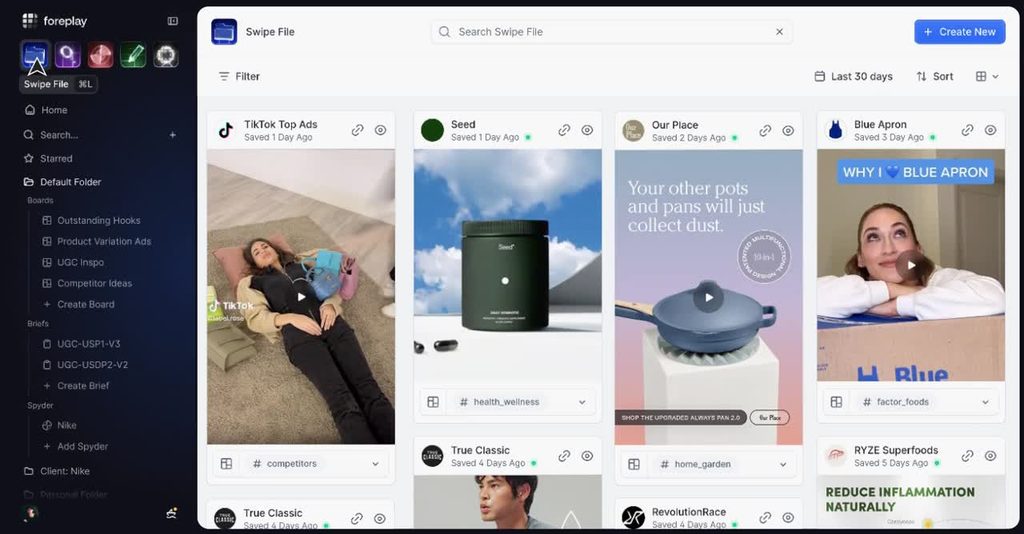
Foreplay is a creative research and workflow tool for performance marketers and agencies. It works as a swipe file: users save ads with a Chrome extension, organize them into boards, and build creative briefs a team can share. It saves ads from the Facebook Ad Library and other public ad sources.
Boards and tags are what make Foreplay work as research infrastructure at team scale. They keep a swipe file searchable as a collection grows past a few hundred ads, so a reference saved in March is still findable in September. The Spyder feature tracks competitors, and Lens adds creative analytics.
Pricing starts at $59/month for the Basic plan, with Spyder and Lens reserved for the Workflow plan at $175/month and the Agency plan at $459/month.
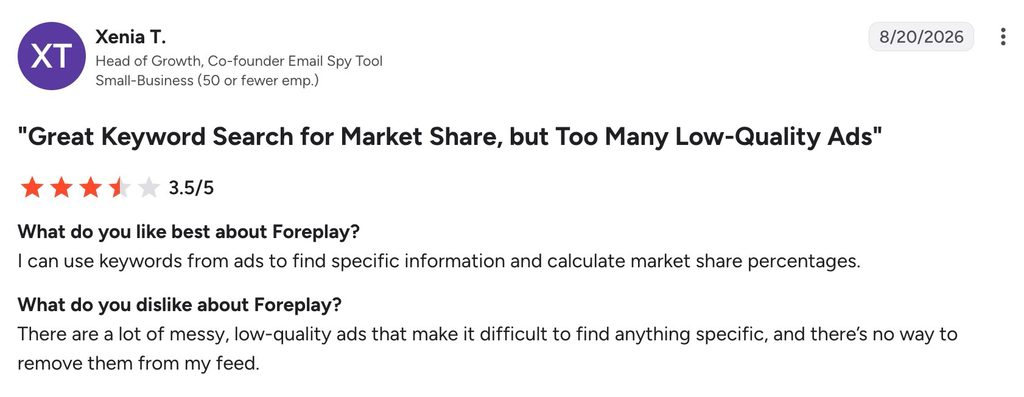
Foreplay holds a 4.8-star rating on G2 from roughly 127 reviews, and its Chrome extension has a 4.9-star rating from more than 230 ratings. Reviewers consistently credit the clean interface and the speed of saving and filtering ads, and agency users describe it as the tool that keeps a whole team working from one creative library. Cost is a recurring complaint on G2, and some reviewers note that the platform is built for social ads, so it does less for teams running Google Search campaigns.
4. AdSpy — Best for Affiliates Who Need Deep Meta Ad History
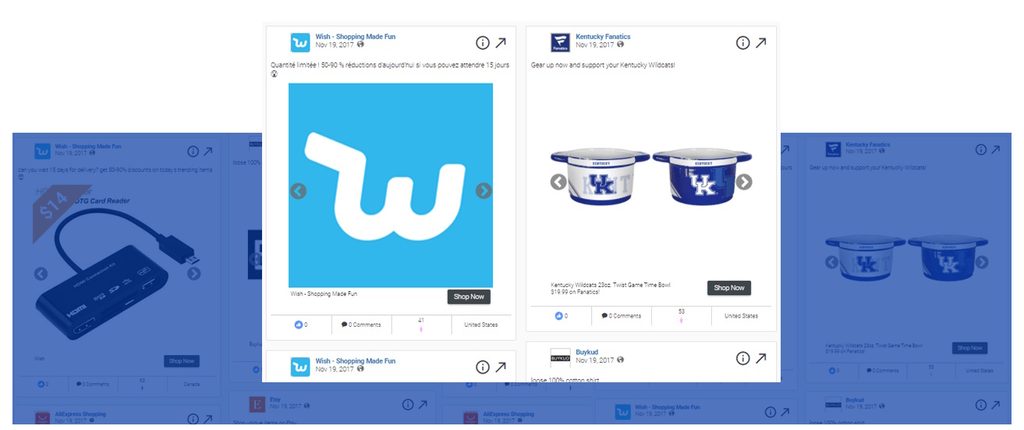
AdSpy holds a large searchable database of Facebook and Instagram ads, built for affiliates and media buyers who want depth on Meta. The database holds well over 200 million ads, with historical creatives going back years. Users can filter by page, text, CTA, gender, age, and technology, and search inside ad comments to read audience reactions.
Affiliate network and ad longevity filters help users find offers that have run for months, a signal that an angle is working, and comment search is the feature reviewers single out most, since it lets users read real audience reactions under a competitor’s ad.
AdSpy runs a single flat plan at $149/month with no standard free trial, and it shows which ads exist rather than which ones are scaling or how much is being spent.
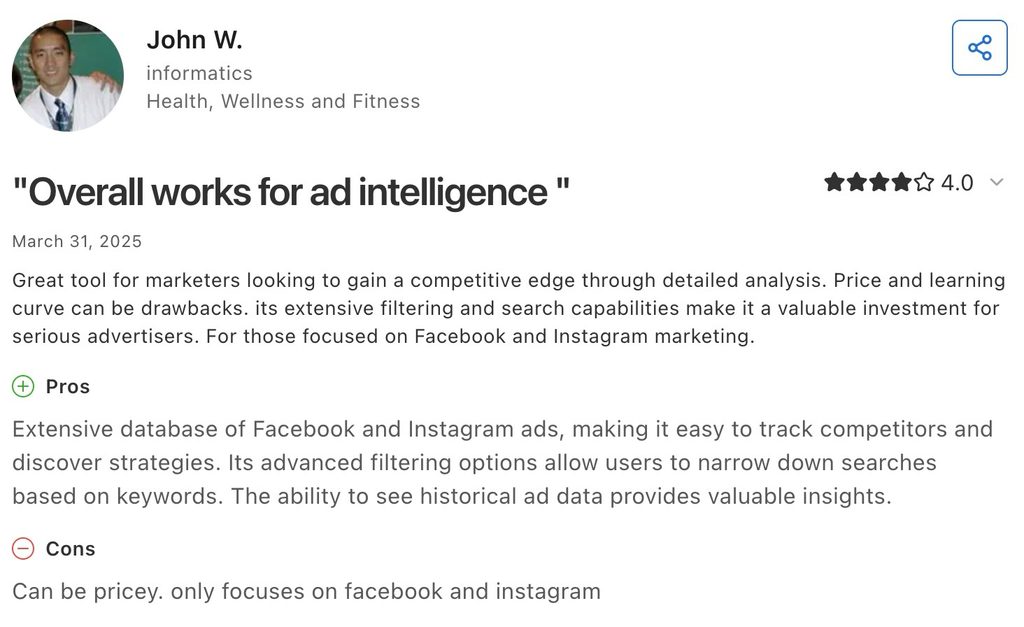
Its review scores differ sharply by platform. AdSpy rates 4.3 out of 5 on Capterra, where a small pool of verified reviewers scores the database and filters highly. On Trustpilot, it rates 2.4 out of 5, with almost every review citing billing issues, including charges continuing after cancellation and slow or absent support replies.
The database depth is not in dispute. The risk sits in the subscription experience, and at $149/month with no trial, that is worth weighing before committing.
Top 4 Ad Research Tools in 2026: Summary Table
| Tool | Best For | Platform Focus | Starting Price | G2 Rating |
| GetHookd | Meta advertisers who want research and AI creative in one place | Meta, TikTok | $29/mo for monthly plan (7-day free trial) | 4.8/5 |
| Meta Ad Library | Quick, free competitor checks | Meta | Free | No Public Rating |
| Foreplay | Creative teams and agencies building swipe files | Meta and other social media channels | $59/mo for monthly plan | 4.8/5 |
| AdSpy | Affiliates needing deep Meta ad history | Facebook, Instagram | $149/mo for monthly plan | 4.3 on Capterra (G2 rating unavailable) |
For Meta Advertisers, GetHookd Closes the Gap Between Research & Creative
Choosing an ad research tool comes down to how much depth you need and how fast you want to act on it. A free library works fine for occasional checks, but any team running ads at scale needs to know which competitor creatives are actually gaining traction, not just which ones exist.
For advertisers who want research and creative production in the same account, GetHookd brings competitor ad intelligence, performance signals, and AI-powered creative tools into one workflow. Instead of switching between separate tools, you can identify ads worth studying, extract winning angles, and turn proven concepts into testable creatives faster. Try GetHookd free and see how it can streamline your next campaign.
Frequently Asked Questions (FAQs)
What is an ad research tool?
An ad research tool is software that collects the ads your competitors are running on a platform and makes them searchable in one place. Along with the creative and copy, most tools show the landing page behind the ad, the format, and how long the ad has been live. Paid tools layer filters, competitor tracking, saved boards, and performance analysis on top of that raw data.
What is the difference between an ad library and an ad research tool?
An ad library, such as Meta’s, lists the ads a page is running. An ad research tool adds filters, competitor tracking, saved boards, and analysis on top of that raw data. The result is that you can sort by traction and spot patterns instead of scrolling one page at a time.
Are ad research and ad spy tools legal?
Yes. The official ad libraries exist because of platform transparency rules, and paid tools index ads that are already public. What you do with the research matters. Studying hooks, formats, and offers to inform your own creative is standard practice across the industry, while copying a competitor’s ad outright can run into copyright and trademark problems.
Can ad research tools help in a small or niche market?
Yes, though you will see fewer examples than in a broad market. Widen the search with related keywords and adjacent brands that target the same buyers. Since most niches still advertise on Meta, a Facebook Ad Library-based tool usually surfaces enough active ads to spot a pattern worth testing.
What makes GetHookd different from other ad research tools?
GetHookd is built for Meta advertisers and joins research to creative in one account. It shows which Meta ads competitors are scaling, then turns those concepts into testable ads with AI scripts and cloning. That removes the switch between a research tool and a separate design workflow.
*Note: Pricing and/or product availability mentioned in this post are subject to change. Please check our website for current pricing and stock information before making a purchase.