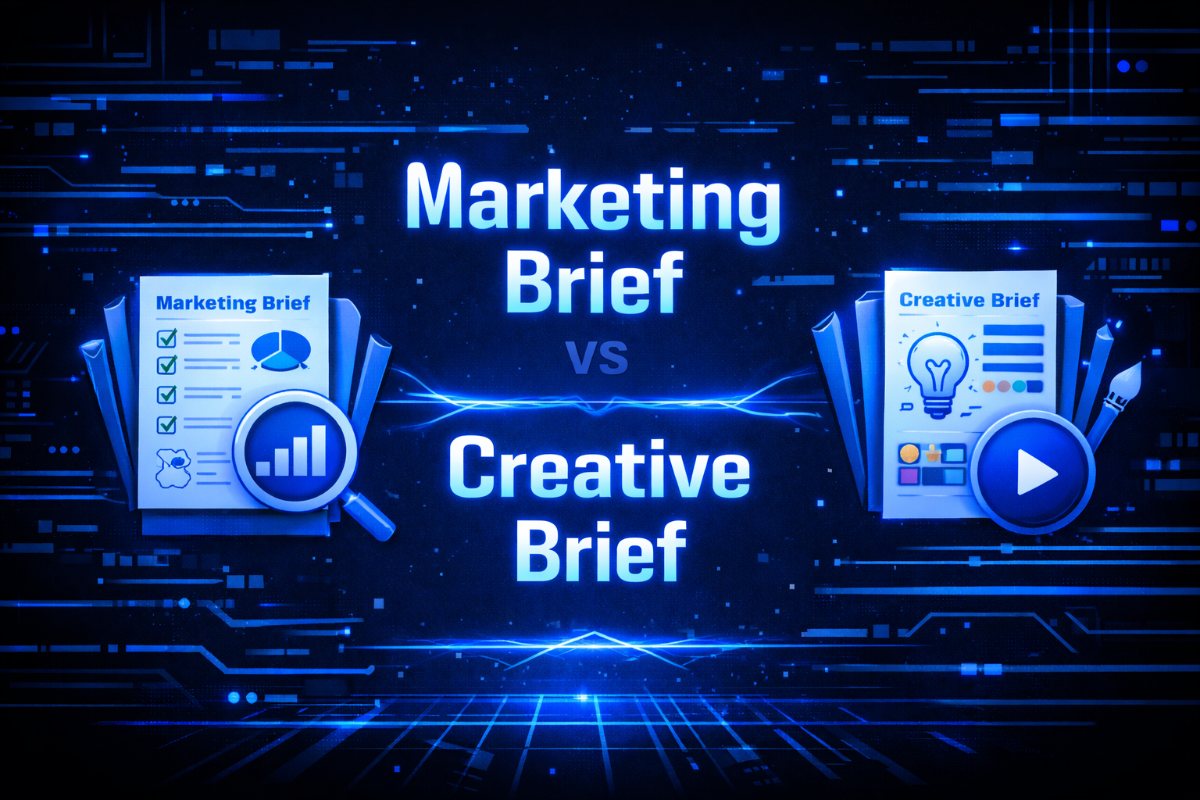
Marketing Brief vs Creative Brief: Differences, Examples & Templates
Key Takeaways
- Marketing briefs provide strategic direction for campaigns, focusing on business objectives, target audience, and competitive landscape, while creative briefs translate that strategy into specific creative elements.
- Marketing briefs typically come first in the project workflow and are created by marketing managers, while creative briefs follow and are developed by creative directors or account managers.
- A well-structured marketing brief includes business context and campaign goals, whereas a creative brief includes specific tone, message, and design guidelines.
- Using both briefs in tandem aligns strategic objectives with creative execution, leading to more successful marketing campaigns.
- GetHookd helps you build stronger creative briefs by showing competitors’ top ads, extracting useful hooks and CTAs from winning creatives, and generating scripts using a database of more than 65 million Meta ads.
Marketing Brief vs Creative Brief Explained
A marketing brief outlines the strategic foundation of a campaign by defining its goals, target audience, competitive context, KPIs, budget, and timelines. It explains why the campaign exists and what the business needs it to achieve, giving all stakeholders a shared understanding before any creative work begins.
A creative brief builds on the marketing brief by turning that strategy into an executional direction. It focuses on how the campaign will come to life, detailing the messaging, tone, visual approach, deliverables, and any constraints the creative team must follow. This ensures the final assets align with the strategy.
In simple terms, the marketing brief sets the objectives and guardrails, while the creative brief translates those objectives into actionable guidance for designers, writers, and producers. Both documents work together to keep strategy and creative output aligned throughout the campaign.
GetHookd: Turn Competitor Intelligence Into Your Next Winning Ad
65M+ Ads Analyzed | 4.8★ G2 Rating | 4.4★ Trustpilot Rating

Stop Guessing. Start Scaling:
GetHookd reveals which ads your competitors are actively scaling—not just running. Spy on their best-performing creatives, landing pages, and traffic strategies, then turn proven concepts into testable campaigns in seconds with AI-powered script generation and creative cloning.
What You Get:
- ✓ Brand Spy to decode competitor ad strategies in real-time
- ✓ AI script generation and ad cloning for instant variations
- ✓ Performance scoring based on actual ad behavior, not vanity metrics
- ✓ Creative Analyzer to identify and scale your top performers
Differences Between Marketing & Creative Briefs

Purpose: Strategic Planning vs. Creative Direction
Marketing briefs establish the strategic framework by defining business objectives, market positioning, and insights into the target audience. They answer why a campaign exists and what it needs to accomplish from a business perspective.
Creative briefs provide specific guidance for creative execution. They translate business objectives into direction for tone, messaging, and visual elements. Marketing briefs focus on outcomes; creative briefs focus on outputs or the tangible assets that will be created.
Timing: When Each Brief Enters the Process
The marketing brief initiates the campaign planning process, appearing during the strategy development phase before any creative ideation begins. The creative brief is developed after strategic approval and before production begins.
This sequence matters. Creative work without strategic direction risks becoming visually appealing but ineffective. Strategic plans without creative interpretation may never connect with the target audience.
Audience: Who Needs to See & Approve Each Brief
Marketing briefs circulate broadly, reaching C-suite executives, marketing directors, and stakeholders who approve strategic direction. They align different departments around common business objectives.
Creative briefs target the creative team: designers, copywriters, art directors, and production specialists. Marketing briefs require approval from business leaders; creative briefs need sign-off from both marketing leaders and creative directors to ensure alignment between strategy and execution.
Detail Level: High-Level Goals vs. Specific Guidelines
Marketing briefs provide high-level strategic guidance, focusing on business objectives and market positioning. They establish the “what” and “why” without prescribing the “how.”
Creative briefs dive into specifics: color palettes, typography, photography style, messaging tone, and other execution details. Marketing briefs create the strategic boundaries; creative briefs define how to work within them.
Content Focus: What Each Brief Prioritizes
Marketing briefs prioritize business metrics, competitive analysis, and audience insights. They focus on market positioning, value proposition, and strategic approach.
Creative briefs emphasize concept development, messaging frameworks, visual direction, and brand voice. Where marketing briefs describe the target audience in demographic and psychographic terms, creative briefs translate those insights into practical guidance for reaching that audience through specific creative approaches.

How Marketing & Creative Briefs Work Together
The marketing brief should inform every aspect of the creative brief. If the marketing brief identifies sustainability as a key differentiator, the creative brief should establish visual and messaging guidelines that emphasize that attribute. This alignment ensures creative work advances business goals.
The workflow typically follows a linear progression: strategic planning leads to the marketing brief, which informs the creative brief, and both guide production. But the process often includes feedback loops where creative insights refine strategic thinking.
Effective collaboration between marketing strategists and creative teams, through brief translation meetings or regular check-ins, helps identify disconnects before they impact production. Using an AI note taker during these sessions ensures every decision, revision, and agreed direction is automatically captured, so both teams have a shared record to reference throughout the campaign.
Marketing Brief Template & Example
The following template covers the essential elements of a marketing brief. Keep it concise. Two to three pages are typically enough to communicate strategic direction without overwhelming readers.
- Project Overview: Brief description of the campaign or initiative
- Business Context: Market conditions, competitive landscape, business challenges
- Campaign Objectives: Specific, measurable goals for the campaign
- Target Audience: Detailed profile including demographics, psychographics, and behaviors
- Value Proposition: Why the audience should choose your product/service
- Key Messages: Primary points the campaign should communicate
- Budget: Available resources for campaign development and execution
- Timeline: Key milestones and deadlines
- Success Metrics: How campaign effectiveness will be measured
- Approval Process: Who needs to review and approve campaign elements
Example of a Marketing Brief
Here’s what a marketing brief looks like in practice:
Marketing Brief: Q3 Electric Spin Scrubber Launch
- Project Overview: A paid social campaign on Meta to drive sales of a cordless electric spin scrubber targeting homeowners and renters who hate manual scrubbing. The campaign will rely on short-form video creatives optimized for impulse purchases.
- Business Context: Electric spin scrubbers are trending across TikTok and Meta, with dozens of dropshippers running similar offers. Several competitors are scaling aggressively with UGC-style before-and-after demos. Winning will come down to stronger hooks, better creative angles, and a landing page that converts above the category average; the product itself is widely available.
- Campaign Objectives: Hit a 3x minimum ROAS within the first 14 days of testing, generate at least 500 purchases in the first month, and identify two to three scalable ad creatives worth pushing to $500+ per day in spend.
- Target Audience: Women aged 25–45, homeowners or renters, interested in cleaning hacks, home organization, and time-saving household products. They follow pages like CleanTok, watch “satisfying cleaning” content, and are motivated by visual transformations, social proof, and limited-time deals.
- Value Proposition: A cordless, rechargeable scrubber with interchangeable heads that does the hard scrubbing for you in bathrooms, kitchens, tile, and grout, in half the time and with zero effort.
- Key Messages: Stop scrubbing on your hands and knees. This tool does the work for you in minutes. Over 10,000 five-star reviews. Order now before the summer restock sells out.
- Budget: $10,000 for the initial testing phase, scaling to $30,000 per month if ROAS targets are met.
- Timeline: Creative production from July 1–10, ad testing begins July 12, scaling decisions made by July 25.
- Success Metrics: ROAS, cost per purchase, click-through rate, landing page conversion rate, and hook rate on video ads.
- Approval Process: Store owner reviews and approves all creatives and landing page copy before launch.
Creative Brief Template & Example
The creative brief builds on the marketing brief, translating strategy into specific creative guidance. It should inspire creativity while establishing clear parameters. Aim for 1–2 pages, approved by both marketing and creative leaders before production begins.
- Project Background: Summary of relevant information from the marketing brief
- Creative Objective: What the creative assets need to accomplish
- Target Audience Insights: Deeper understanding of audience motivations and behaviors
- Single-Minded Proposition: The one thing the audience should take away
- Tone and Voice: How the brand should sound and feel in this campaign
- Visual Direction: Style, imagery, color considerations
- Mandatories: Required elements (logos, disclaimers, calls to action)
- Deliverables: Specific assets needed with formats and specifications
- Timeline: Due dates for concepts, revisions, and final deliverables
- Reference Materials: Examples, inspiration, previous campaigns
Example of a Creative Brief
Here’s what a creative brief looks like in practice:
Creative Brief: Q3 Electric Spin Scrubber Meta Ad Creatives
- Project Background: The marketing brief calls for a Meta-focused campaign selling a cordless electric spin scrubber to women aged 25–45 who are tired of manual cleaning. The market is saturated with similar offers, so creative differentiation is the primary lever. The goal is to find scalable creatives that hit a 3x ROAS within two weeks.
- Creative Objective: Produce thumb-stopping video ads that showcase the scrubber’s cleaning power within the first three seconds, build trust through visible results and social proof, and drive clicks to the product landing page.
- Target Audience Insights: These buyers are drawn to satisfying cleaning transformations. They trust UGC and real-home footage over polished brand content. They’re skeptical of “too good to be true” products, so showing the scrubber working on genuinely dirty surfaces (grout, soap scum, stovetops) is more persuasive than a staged demo. Urgency and peer validation (“I bought this because of TikTok and it actually works”) drive conversions.
- Single-Minded Proposition: This scrubber does the hard part for you; sparkling clean surfaces with zero elbow grease.
- Tone and Voice: Casual, relatable, slightly amazed. Think someone is filming a product that actually exceeded their expectations. The copy should feel like a genuine review, not a sales pitch. Example: “Okay, I was skeptical, but LOOK at this grout.”
- Visual Direction: UGC-style footage shot on a phone in real bathrooms and kitchens. Prioritize dramatic before-and-after reveals, close-up scrubbing shots, and split-screen transformations. Text overlays should be bold, high-contrast, and readable on mobile without sound. Natural lighting preferred.
- Mandatories: Product link in CTA, “satisfaction guarantee” mention, star rating or review count shown on at least one visual, subtitles on all video content, and a clear shot of the interchangeable brush heads.
- Deliverables: Three UGC-style video ads (15–30 seconds each, one focused on bathroom, one on kitchen, one on “five ways to use it”), two static image ads with before-and-after splits and testimonial overlays, and one landing page hero image. All assets optimized for Meta placements, including Feed, Stories, and Reels.
- Timeline: Scripts and storyboards due July 3, first cuts by July 7, final assets delivered by July 10.
- Reference Materials: Top-performing competitor spin scrubber ads identified through GetHookd Brand Spy, hooks and CTAs extracted via Ads Transcription from the highest-scaling competitor creatives, supplier product photos and demo clips, and approved customer testimonials.
Marketing Brief vs Creative Brief: Comparison Table
Here’s a side-by-side summary of the key differences:
| Feature | Marketing Brief | Creative Brief |
|---|---|---|
| Primary Purpose | Define strategic objectives and business goals | Provide creative direction and execution guidelines |
| Created By | Marketing managers or directors | Creative directors or account managers |
| Primary Audience | Executives, stakeholders, marketing team | Designers, copywriters, production team |
| Timing in Process | Beginning of campaign planning | After strategy approval, before production |
| Content Focus | Market analysis, business objectives, KPIs | Tone, messaging, visual direction, deliverables |
| Level of Detail | High-level strategic guidance | Specific creative guidelines |
Build Stronger Creative Briefs with GetHookd
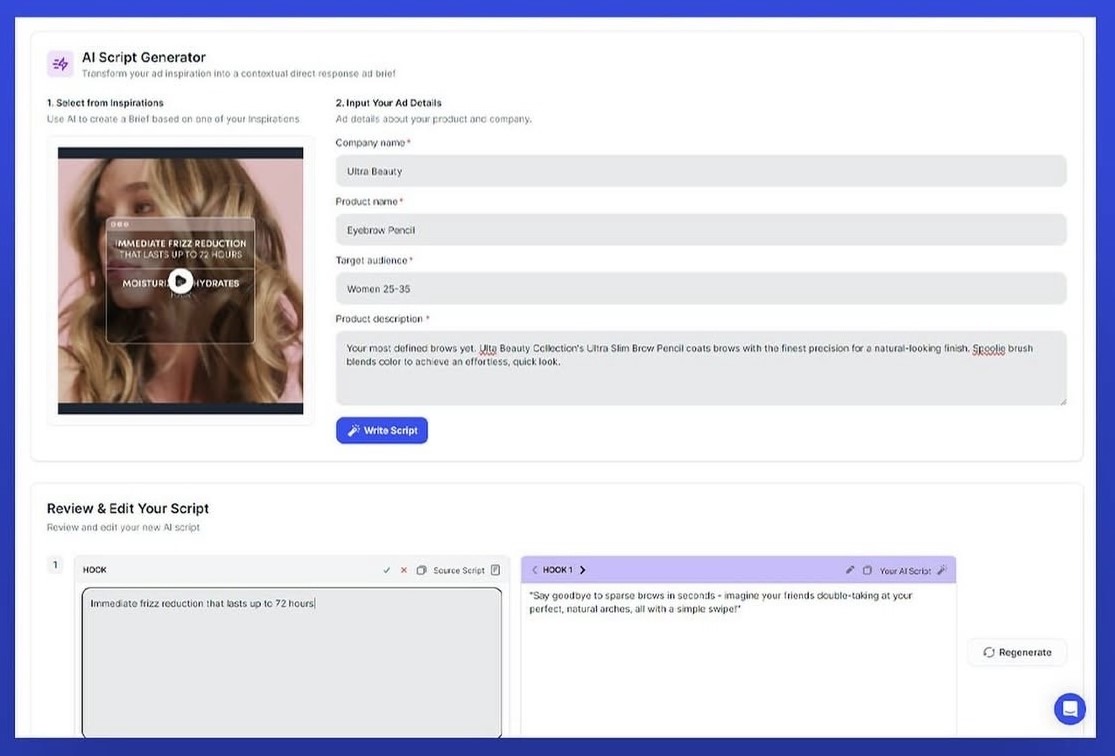
A creative brief is only as good as the references and direction it provides. Telling your team to “make it punchy” doesn’t give them much to work with. Concrete examples, including actual creatives working in your niche, make briefs clearer and execution faster.
At GetHookd, we give you access to over 65 million winning ads across Meta. Use our Explore Ads feature to filter by niche, format, and performance signals to surface creatives worth studying. With Brand Spy, you can track competitors and see which content they’re actively scaling, not just running.
Once you find creatives worth referencing, save them to your Swipe File so they’re organized and accessible when you’re building briefs. If you find a winning video ad, our AI-powered Ads Transcription pulls the hooks, CTAs, and copy structure so you can include specific messaging examples in your brief. If your brief calls for a video script, our Video Scripts feature generates hooks, angles, and full scripts based on your product information and proven ad concepts.
Instead of handing your creative team vague direction, give them real examples and frameworks they can act on.
Frequently Asked Questions (FAQs)
What is the difference between a marketing brief and a creative brief?
A marketing brief outlines the strategic foundation of a campaign, focusing on business objectives, target audience, and market positioning. It establishes the “why” behind marketing initiatives and typically comes first in the project workflow.
A creative brief provides specific direction for creative execution, including tone, messaging guidelines, and visual elements. It translates strategic objectives into creative guidance and is used primarily by the production team to develop campaign assets.
What is included in a marketing brief?
A marketing brief typically includes business context, campaign objectives, target audience information, competitive analysis, budget constraints, timeline, and success metrics.
It focuses on strategic elements rather than creative execution.
What is a creative brief?
A creative brief is a document that translates marketing strategy into specific creative direction. It includes project background, creative concept, tone and voice guidelines, visual direction, messaging framework, deliverable specifications, and production timelines.
It builds on the marketing brief, providing specific guidance to the creative team while maintaining alignment with strategic objectives.
How can I find references and examples for my creative brief?
With GetHookd, you can explore over 65 million ads across Meta, filter by niche and format, and see which ads competitors are actively scaling.
Use Ads Transcription to pull hooks and CTAs from winning video ads, or Video Scripts to generate script frameworks based on proven concepts. Save everything to your Swipe File so real examples, not guesswork, back your briefs.
*Note: Pricing and/or product availability mentioned in this post are subject to change. Please check our website for current pricing and stock information before making a purchase.