Key Takeaways
- UGC ads use authentic content from real customers or creators rather than polished brand production, which builds the trust and credibility SaaS buyers need.
- The most effective SaaS ad formats include community-driven tutorials, workplace story testimonials, user walkthrough videos, and customer success stories.
- To create natural but effective ads, give creative prompts instead of scripts, repurpose long-form content into short clips, and refresh creative every 4 to 6 weeks.
- The best UGC strategies start from what’s already proven. GetHookd lets SaaS marketers study the exact ads competitors are scaling, so creative decisions are grounded in real performance rather than guesswork.
Why Are UGC Ads Important for SaaS Companies?
UGC ads (user-generated content) are advertisements built from authentic, real-person footage rather than polished studio production. For SaaS companies, these are among the most effective ways to overcome the central barrier to sign-up: trust.
UGC only converts when it’s done deliberately. The highest-performing SaaS UGC ads match the content to the buyer’s funnel stage, use the unpolished language real customers reach for, lead with a strong hook, and keep branding light enough to preserve authenticity.

GetHookd: Turn Competitor Intelligence Into Your Next Winning Ad
GetHookd reveals which ads your competitors are actively scaling—not just running. Spy on their best-performing creatives, landing pages, and traffic strategies, then turn proven concepts into testable campaigns in seconds with AI-powered script generation and creative cloning.
What You Get:- ✓ Brand Spy to decode competitor ad strategies in real-time
- ✓ AI script generation and ad cloning for instant variations
- ✓ Performance scoring based on actual ad behavior, not vanity metrics
- ✓ Creative Analyzer to identify and scale your top performers
UGC Ads Examples for SaaS Companies
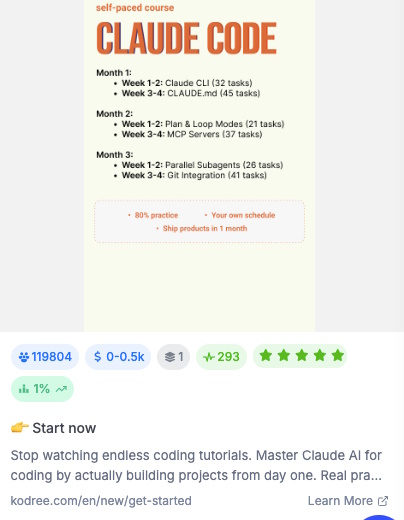
Community-Driven Tutorials
This format features real users teaching other users how to get value from your product, walking through a specific workflow, sharing a clever use case, or solving a common problem on camera. Instead of your marketing team explaining a feature, an actual customer shows it in action.
Why It Works
SaaS buyers are wary of polished feature demos because they know the brand is incentivized to make everything look easy. A peer teaching a peer carries credibility a brand video can’t, and it doubles as proof that real people use the product successfully.
Example
A project-management tool sharing a freelancer’s “how I run my entire week in this app” walkthrough; a video-editing SaaS reposting a creator’s tutorial on a specific transition; an analytics platform featuring a user explaining how they built a custom dashboard.
Workplace Story Testimonials
Here, a customer tells the story of a real problem their team faced and how your product changed the way they work. The focus is on the before-and-after of their workflow, not a list of features, delivered in their own words from their actual workspace.
Why It Works
B2B purchases are emotional and risk-driven, since the buyer is staking their credibility on the decision. A relatable story from someone in a similar role lets the viewer picture their own team in the same situation, which lowers perceived risk far more effectively than a stats sheet.
Example
An operations manager describing how a tool cut their reporting time from a full day to an hour; a small-agency owner explaining how a CRM ended their “everything in spreadsheets” chaos; a support lead sharing how a helpdesk tool cleared their ticket backlog.
User Walkthrough Videos
These are screen-recorded product walkthroughs filmed by real users (or creators acting as users), showing the actual interface as they narrate what they’re doing and why. Run as paid social ads, they give cold audiences a genuine look inside the product before they ever sign up.
Why It Works
For SaaS, the biggest pre-trial objection is “I don’t know what it actually looks like or whether I’ll understand it.” A real screen walkthrough answers that instantly, filtering for genuinely interested prospects and reducing the friction between ad and sign-up.
Example
A 30-second screen recording of someone setting up their first automation; a creator narrating “here’s how I’d use this in the first five minutes”; a side-by-side of the old manual process versus the same task inside the product.
Customer Success Stories
This takes your existing case studies and long-form testimonials and cuts them into short, native-feeling social clips: a punchy result, a single quote, or one key moment from a longer customer interview, reformatted for the feed.
Why It Works
Case studies hold powerful proof, but their PDF or webpage format never reaches a scrolling audience. Repurposing them into UGC-style clips puts hard results (time saved, revenue gained, growth hit) in front of people where they actually spend time, with the credibility of a named real customer attached.
Example
A 15-second clip pulling the strongest stat from a written case study; a vertical cut of a customer interview answering one question; a carousel turning a success story’s key milestones into swipeable social proof.
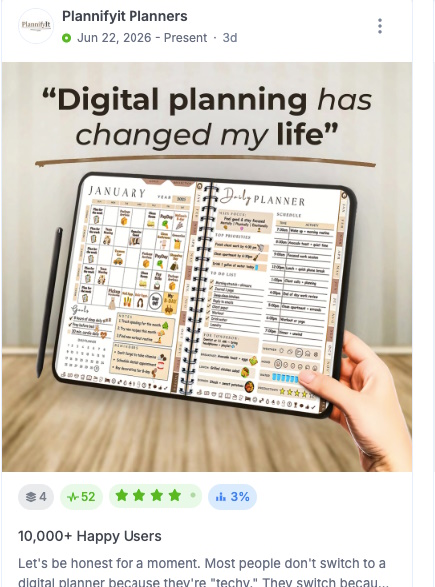
Best Practices for SaaS UGC Ads?
Target the Right Stage of the Funnel
A first-time prospect who has never heard of your product needs a completely different message than someone who visited your pricing page three times last week.
At the top of the funnel, lead with relatable problem stories. Mid-funnel, shift to specific feature demonstrations and outcome-driven testimonials. The bottom of the funnel is where ROI-focused case study clips and “I almost didn’t switch but here’s why I did” narratives perform best.
Use Real Customer Language
One of the fastest ways to kill the authenticity of a UGC ad is to over-script it. The most converting SaaS UGC ads are built around the exact phrases real customers use when they recommend your tool to a colleague over coffee.
Mine your support tickets, G2 reviews, Trustpilot feedback, and onboarding call recordings for the raw, unpolished language your customers naturally reach for.
Using language such as “I stopped dreading Monday reporting,” “our team finally stopped using three different tools,” and “it just works the way my brain works” is your creative gold. It often performs better than overly polished headlines.
Keep Branding Subtle
UGC ads live and die by perceived authenticity. The moment content looks too produced or too branded, the trust signal evaporates. The goal is to let the customer’s voice lead while your brand plays a supporting role.
A subtle logo watermark, a consistent color in the caption overlay, or a branded end card is all you need. Heavy-handed branding transforms genuine customer content into something that feels like a scripted commercial, which defeats the entire purpose.
Tips for Creating Winning SaaS UGC Ads
- Start with your power users: Identify your most engaged customers and reach out directly. They’re your most credible voices and often the most willing to participate.
- Give creative prompts, not scripts: Ask customers to answer specific questions (“Show us your morning workflow using our tool”) rather than recite talking points. Prompted but unscripted content sounds more authentic.
- Repurpose long-form into short-form: A 10-minute customer interview contains at least three 30-second ad clips. Build a systematic process to extract, edit, and tag content by funnel stage and persona. For teams conducting customer or candidate interviews, an AI interviewer can help structure conversations, practise questions, and make the interview process more efficient.
- Always secure usage rights upfront: A simple licensing agreement before publishing protects your company and sets clear expectations with the creator.
- Test hooks relentlessly: The first three seconds determine whether someone stops scrolling. Test multiple opening hooks from the same UGC clip to find what drives the highest watch-through and CTR for each audience segment.
- Rotate creative frequently: Even the best UGC ad fatigues eventually. Build a content calendar that refreshes UGC creative at least every four to six weeks per audience segment to maintain performance.
Why Do Smart Marketers Choose GetHookd for Ad Intelligence?
UGC is one of the most effective acquisition channels available to SaaS companies, but its success rests almost entirely on the creative decisions made before a single frame is shot: which format, which problem to lead with, which hook will actually stop the scroll. The formats, best practices, and execution tips above give you the framework to make those calls well and to build a UGC library that supports buyers at every stage of the funnel.
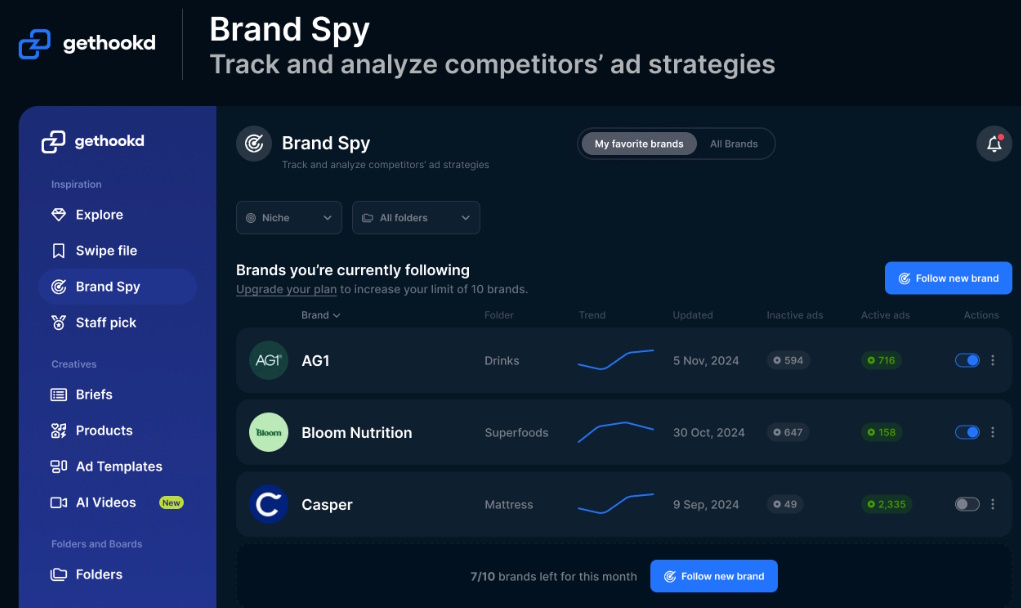
Building a winning UGC ad strategy from scratch is significantly easier when you can see what’s already working across your competitors, and that’s what GetHookd offers. It is an ad intelligence and creation platform built to help SaaS marketers and growth teams analyze competitor ads and identify high-performing creative patterns with features like Brand Spy, then create higher-converting ads using AI-powered tools like Video Scripts and Clone Ads. Start a free GetHookd trial to find your next winning UGC SaaS ad.
Frequently Asked Questions (FAQs)
What is a UGC ad in the context of SaaS?
A UGC ad in SaaS is a paid advertisement that features authentic content created by real customers or creators rather than the brand itself. In the SaaS context specifically, this typically means screen-recorded workflow walkthroughs, talking-head testimonials where customers describe a specific outcome they achieved, or day-in-the-life videos showing your software integrated into a real work routine.
How is UGC different from influencer marketing for SaaS companies?
Influencer marketing involves paying someone with an established audience to promote your product. The value is in their reach and authority with that audience. UGC, by contrast, is about the authenticity of the content itself, not the distribution channel of its creator.
Can early-stage SaaS startups use UGC ads without a large customer base?
Yes. Early customers are frequently the most passionate, most articulate advocates a SaaS company will ever have. They chose your product when it was unproven, often because it solved a pain so acute they were willing to take a risk on a new tool. That emotional investment translates into compelling UGC when you simply ask them to share their experience on camera or in writing.
How do you measure the success of a UGC ad campaign for SaaS?
Measuring UGC ad performance in SaaS requires tracking metrics at two levels simultaneously: the creative performance level and the business outcome level. At the creative level, the metrics that matter most are hook rate (the percentage of viewers who watch past the first three seconds), video completion rate, click-through rate, and cost per click. These tell you whether your UGC content is capturing attention and driving platform engagement.
How does GetHookd work?
GetHookd is an ad intelligence platform that lets SaaS marketing teams search, filter, and analyze competitor ads across major paid social platforms. Drawing on a library of 65M+ high-performing ads across Meta and TikTok, it shows you which creative competitors are actively scaling, how long each ad has been running, and the landing pages and traffic sources behind them. It then uses this intelligence to produce ready-to-use creatives, so you can create ads based on what’s already working in your market rather than committing budget to untested ideas.
*Note: Pricing and/or product availability mentioned in this post are subject to change. Please check our website for current pricing and stock information before making a purchase.