Key Takeaways
- Facebook ads for movers work best for local lead generation, using Meta’s Leads objective with instant forms for fast local quotes and website forms for long-distance jobs, instead of building broad awareness.
- Some ready-to-use ad examples include local moving quote ads, apartment moves, packing, reviews, and long-distance relocation.
- Build every campaign around one conversion action and one offer, with creative showing your actual trucks and crews instead of stock imagery.
- Target a defined service area rather than broad interests, since moving intent is short-lived and geography filters for it more reliably.
- At GetHookd, we show which moving company ads competitors are actively scaling, along with the landing pages behind them, so campaigns start from proven creative rather than assumption.
Which Moving Company Ads Actually Work?
Effective moving company ads share a fairly narrow set of traits. They name a specific city or service area, promote one service rather than a full menu, and ask for a single action that matches the headline’s promise. They use genuine geographic relevance rather than broad interest stacking, because moving intent is short-lived and doesn’t map cleanly to long-term interest categories the way other purchases do.
Facebook ads for moving companies work best when they pair hyper-local targeting with a single, specific offer and creative built from real trucks, crews, and packing jobs rather than stock photography.
Before building a single ad, it helps to see what other moving companies in the market are already doing. At GetHookd, we pull from a database of 65M+ high-performing Meta ads, so you can see the exact creative, offers, and landing pages competing movers are scaling right now, instead of starting from scratch.

GetHookd: Turn Competitor Intelligence Into Your Next Winning Ad
GetHookd reveals which ads your competitors are actively scaling, not just running. Spy on their best-performing creatives, landing pages, and traffic strategies, then turn proven concepts into testable campaigns in seconds with AI-powered script generation and creative cloning.
What You Get:- ✓ Brand Spy to decode competitor ad strategies in real-time
- ✓ AI script generation and ad cloning for instant variations
- ✓ Performance scoring based on actual ad behavior, not vanity metrics
- ✓ Creative Analyzer to identify and scale your top performers
5 Facebook Moving Company Ad Examples Worth Testing
1. Local Moving Quote Ad
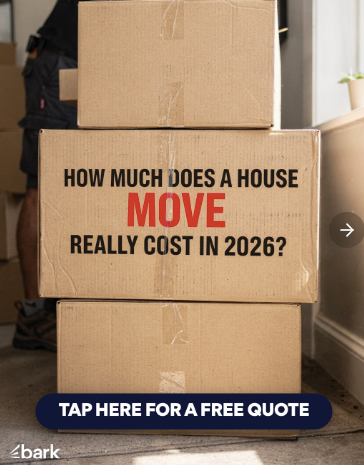
A local moving quote ad performs best when paired with an instant form that asks only what the sales team needs to respond intelligently, such as move date, home size, and origin and destination neighborhoods. Adding extra fields beyond that tends to lower completion rates without improving lead quality.
Why It Works
It names the exact city, which filters in people actually located in the service area. It also uses a single CTA button (“Get Quote”) that matches the offer in the headline, and it keeps the description short so the ad reads clearly in both feed and Stories placements.
2. Apartment & Condo Moving Ad
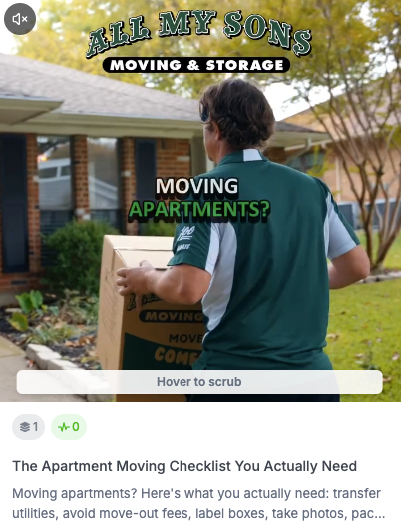
Apartment and condo moves involve different logistics than single-family home moves, including elevator access, stairwells, and building move-in windows, so separating this into its own campaign keeps the creative and copy relevant to that audience.
Why It Works
Renters searching for movers respond to creative that reflects their actual living situation, so footage of a crew navigating a narrow hallway or loading a freight elevator tends to outperform generic house-moving visuals. The narrower service description also sets accurate expectations before the prospect ever reaches the lead form.
3. Packing Service Carousel

A carousel format suits this offer well, since packing breaks down into visual steps: wrapping fragile items, boxing a kitchen, labeling for the truck, and loading. Each card can show one part of that process rather than cramming it all into a single image.
Why It Works
Carousel ads let prospects scroll through the packing process at their own pace, building more confidence than a single static image claiming “professional packing.” Showing the actual steps also answers a question many people have before they even ask: What exactly is included in a packing service?
4. Trust & Review Ad
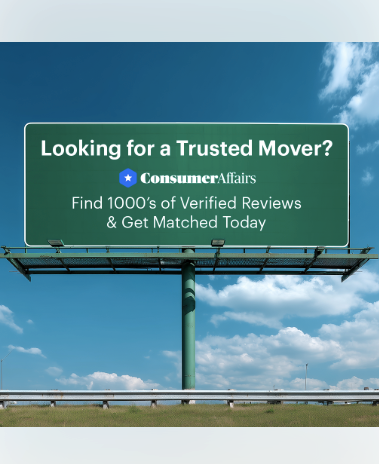
This ad type leans on social proof rather than a specific service angle, making it useful as a secondary ad alongside a service-specific campaign rather than a standalone offer.
Why It Works
Trust ads work best as a retargeting layer for people who already saw a service ad but didn’t convert. Pairing a customer testimonial video or a review screenshot with the same “Get Quote” CTA keeps the funnel consistent, rather than introducing a new action later.
5. Long-Distance Moving Ad
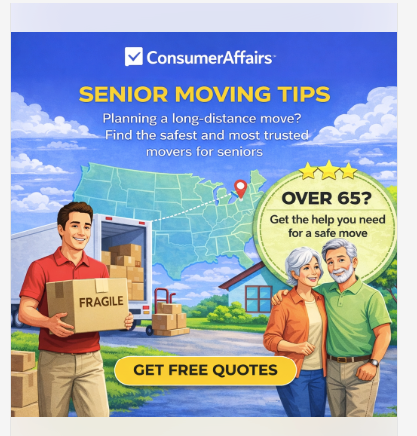
Long-distance and interstate moves require more upfront information than a local move, including inventory size, distance, and any specialty items, so this ad type typically directs users to a website form rather than a short instant form.
Why It Works
Sending long-distance leads to a website form instead of a quick instant form matches the service’s complexity. A prospect planning a cross-country move expects to answer more detailed questions, and a form that reflects that complexity tends to produce better-qualified leads than forcing the request into a short instant form.
How to Create Facebook Ads for Moving Companies
- Choose the Leads objective and a conversion action: In Ads Manager, select the Leads objective, then decide whether the campaign should generate quote requests, phone calls, message conversations, estimate appointments, or booked moves. Most local movers should start with quote-request leads, while companies handling complex or long-distance moves should optimize for booked estimates or high-intent website leads once they have enough conversion data.
- Target your actual service area: Set location targeting to the cities, zip codes, or radius your crews serve, rather than stacking broad interests. Moving intent is short-lived, so geography is a more reliable filter than interest categories.
- Match the form to the move: Use a short instant form (move date, home size, origin, and destination) for local quotes, and send long-distance or complex jobs to a website form that collects inventory size and specialty items.
- Write a clear, service-specific message: The ad should answer four things: what service is offered, what location is served, what the prospect should do next, and what happens after they submit their information. A simple formula works well here: “[Service] in [Location] plus [practical benefit] plus one CTA.” For example, “Local moving support in Calgary. Request a quote and our team will contact you to discuss your move date and service needs.”
- Build creative from real business operations: Branded trucks, an actual crew, packing in progress, and safe loading footage outperform stock imagery because they show prospects exactly who will handle their belongings.
- Retarget people who didn’t finish: Show trust and review ads to people who viewed a quote page or opened a form without submitting, and keep the same “Get Quote” CTA so the funnel stays consistent.
See What Moving Ads Are Actually Scaling With GetHookd
Moving is seasonal and has a short decision window, leaving little room for campaigns that take months to find their footing. The formats above give you a starting point, though the version that works in your market may look different from the version working three cities over. Finding that out by testing your own budget is slow and expensive.
Meta’s Ad Library shows which moving ads are running, but not which ones are working. GetHookd adds performance signals on top of Facebook Ad Library data, so you can see which competitor ads are actually being scaled. From there, AI creative analysis breaks down the hooks, formats, and angles behind those ads, and you can transcribe their scripts and generate new variations built from what’s proven to work. Try GetHookd to build your next moving company campaign on real performance data.
Frequently Asked Questions (FAQs)
How can I advertise for a moving company?
Advertise a moving company on Facebook by choosing the Leads objective, targeting a genuine service area, and promoting one specific offer per campaign, such as a free quote or packing estimate. Pair this with real photos or videos of trucks and crews, and route leads to an instant form or a website form, depending on move complexity.
How can I get leads for a moving company?
Get leads for a moving company by running location-specific ads with a single, clear CTA, such as “Get Quote,” and keeping the instant form short so it asks only for necessary details. Retargeting people who visited a quote page or started a form but didn’t finish it also recovers additional leads from the same ad spend.
How can I attract customers easily?
Attract moving customers with authentic creative: real trucks, crews, and packing footage instead of stock imagery, since prospects are trusting a company with their belongings. Clear, specific offers such as a packing estimate or move-date availability check also convert better than generic “contact us” messaging.
Do I need technical skills to use GetHookd?
No. GetHookd is built for marketers, not developers. You can browse ads by niche, save the ones worth keeping, and use Brand Spy to see a competitor’s top ads and landing pages without any setup or code. AI features like Video Scripts work by uploading a winning ad and adding your product details.
How can GetHookd help me create more targeted Facebook ads for my moving company?
At GetHookd, our platform gives moving companies access to a database of 65 million+ high-performing Meta ads, so you can see exactly what competitors are running with the Brand Spy feature. The Ads Transcription and Video Scripts features turn winning ads into new copy and scripts, while Clone Ads generates fresh creative variations from proven formats instead of starting from scratch.
*Note: Pricing and/or product availability mentioned in this post are subject to change. Please check our website for current pricing and stock information before making a purchase.