Key Takeaways
- The strongest Instagram feed ads in 2026 win attention by leading with usefulness, while still delivering a clear value proposition in the first two seconds.
- The seven feed ad formats worth testing are problem-solution creative, lifestyle integration, UGC-style video, customer testimonials, luxury editorial, before-and-after visuals, and founder-led storytelling.
- Format choice should follow brand voice and audience temperature: UGC and problem-solution creative work for cold traffic, while luxury editorial and founder-led ads suit warm audiences with stronger brand affinity.
- For problem-solution feed ads to cold audiences, lead with the pain point itself rather than a product shot. Save discounts and promotions for retargeting audiences who’ve already engaged with your brand.
- GetHookd helps advertisers research, build, and scale Instagram feed ads in one place, with a library of 65M+ Meta ads for inspiration and AI tools like Ads Transcription, Video Scripts, and Clone Ads to speed up production.
What Makes a Great Instagram Feed Ad in 2026
Great Instagram feed ads earn attention through respect for the viewer. They lead with something genuinely useful (a relatable pain point, a real result, an aspirational moment) rather than chasing the hard sell. The best ones blend in with the surrounding feed enough to bypass the scroll reflex, while still communicating a clear value proposition within the first two seconds.
The seven feed ad formats consistently winning in 2026 include problem-solution creative, lifestyle integration, UGC-style video, customer testimonials, luxury editorial, before-and-after visuals, and founder-led storytelling. Each one fits a different category, audience temperature, and brand voice.
We break down each format, outlining the creative principles you can apply to your next campaign.

GetHookd: Turn Competitor Intelligence Into Your Next Winning Ad
GetHookd reveals which ads your competitors are actively scaling—not just running. Spy on their best-performing creatives, landing pages, and traffic strategies, then turn proven concepts into testable campaigns in seconds with AI-powered script generation and creative cloning.
What You Get:- ✓ Brand Spy to decode competitor ad strategies in real-time
- ✓ AI script generation and ad cloning for instant variations
- ✓ Performance scoring based on actual ad behavior, not vanity metrics
- ✓ Creative Analyzer to identify and scale your top performers
7 Proven Instagram Feed Ad Formats for 2026
1. Problem-Solution Feed Ad
This is one of the most reliable structures in performance marketing, and it translates well to Instagram’s feed. What makes it work on Instagram is the visual hook. The “problem” frame needs to be relatable enough that users pause mid-scroll and think, “Wait, that’s me.”
Strong problem-solution ads open on the pain point itself, not a glamour shot of the product. A skincare ad might open with a close-up of a skin concern. A productivity tool might open on a cluttered inbox.
The copy structure mirrors this: short headline naming the problem, one-line solution statement, and a softer CTA like “See How It Works” rather than a hard “Buy Now.”
Pro Tip: When running problem-solution ads to cold traffic, avoid leading with price or promotions. Save the discount offer for retargeting audiences who’ve already visited your site or engaged with previous ads.
GetHookd: Turn Competitor Intelligence Into Your Next Winning Ad
GetHookd reveals which ads your competitors are actively scaling—not just running. Spy on their best-performing creatives, landing pages, and traffic strategies, then turn proven concepts into testable campaigns in seconds with AI-powered script generation and creative cloning.
What You Get:- ✓ Brand Spy to decode competitor ad strategies in real-time
- ✓ AI script generation and ad cloning for instant variations
- ✓ Performance scoring based on actual ad behavior, not vanity metrics
- ✓ Creative Analyzer to identify and scale your top performers
2. Lifestyle Integration Feed Ad

Lifestyle ads sell the life the product fits into. This format works especially well for apparel, fitness, food and beverage, and home goods brands because purchase decisions are often emotional rather than rational. The goal is to create aspiration without alienating the viewer.
The high-performing lifestyle ads anchor the scene in a specific moment: morning coffee on a balcony, a post-workout stretch in a well-lit apartment, friends at a particular venue. That specificity signals to the algorithm exactly who this product is for, making it easier for the viewer to recognize themselves in it.
3. UGC-Style Feed Ad
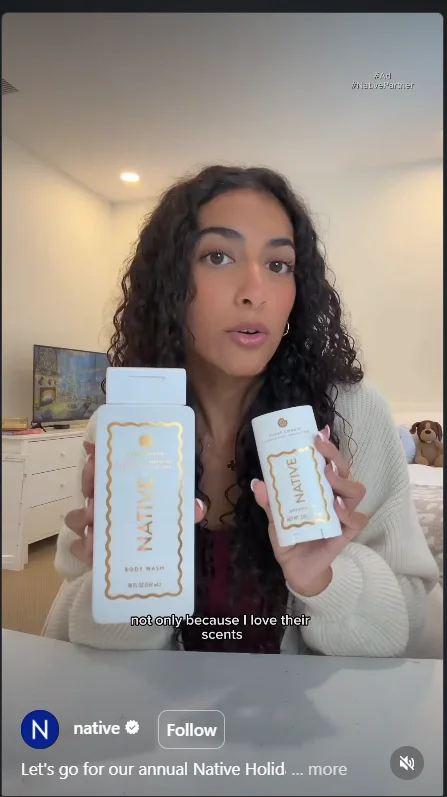
User-generated content style ads are arguably the biggest creative shift in Instagram advertising over the last few years. These are ads deliberately produced to look like they were filmed by a real customer on their phone. The reason they work is psychological: the brain processes them as peer recommendations rather than advertisements.
The format typically opens with a creator holding the product in a real-world setting, speaking directly to the camera in the first person. The key is authenticity. Over-scripted UGC reads as fake immediately, and savvy Instagram users will disengage just as fast as they would with a traditional ad.
4. Testimonial Feed Ad
The testimonial feed ad puts social proof at the center of the entire creative concept. Instead of the brand making claims about its product, a real customer does. That shift in voice changes how the ad is received.
The most effective testimonial feed ads in 2026 are structured narratives that guide viewers through a customer’s experience.
The testimonial leads with a precise result (“I lost 14 lbs in 6 weeks”), provides brief context (“I’d tried everything else”), and ends with an implicit endorsement of the product.
5. Luxury Editorial Feed Ad
For premium and luxury brands, the rules flip. Where most Instagram feed ads chase nativeness and relatability, luxury editorial ads lean into aspiration, distance, and visual perfection. The goal is to make the viewer want the product, not to make it feel within easy reach.
The visual language of luxury feed ads is distinct: lots of negative space, muted or highly controlled color palettes, minimal copy, and product photography that treats the item as an art object rather than a commodity.
The CTA, if there is one, is understated (“Discover” or “Explore the Collection” rather than “Shop Now”). This restraint is a feature that signals exclusivity and reinforces brand positioning at every touchpoint.
6. Before-and-After Creative
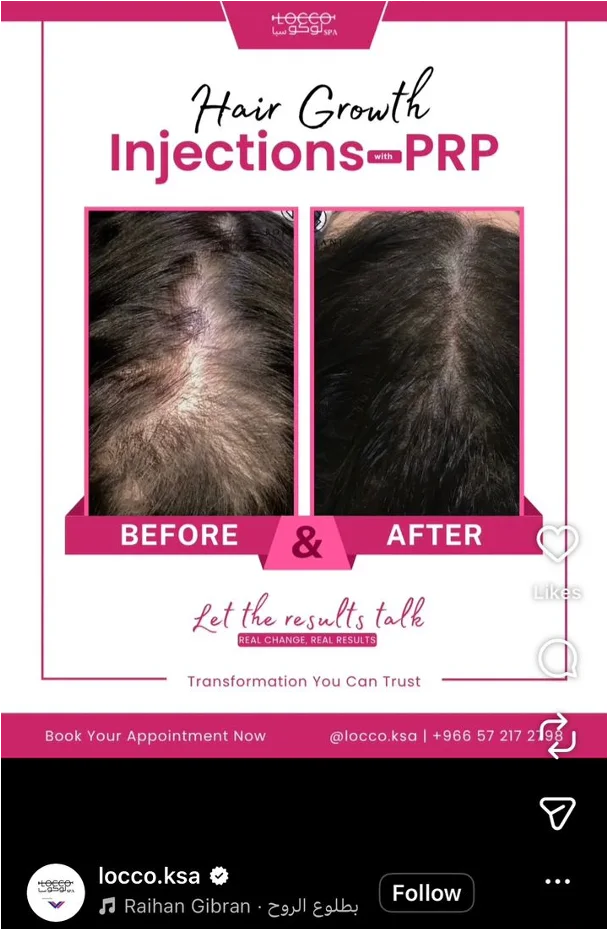
Few ad formats communicate product value as effectively as the before-and-after format. It’s a visual proof mechanism: the viewer doesn’t have to imagine the result because the ad shows it directly. This format dominates in categories where transformation is the core value proposition, including skincare, fitness, home renovation, hair care, and weight management.
The mechanics are straightforward, but execution details separate winners from underperformers. The “before” image needs to be honest and relatable, not so extreme that it feels unbelievable, but real enough to trigger recognition.
The “after” needs to be genuinely impressive without veering into territory that could be flagged by Meta’s advertising policies, which restrict certain “ideal body” imagery. Focus the transformation on the specific treatment area rather than full-body comparisons to keep results credible.
7. Founder-Led Feed Ad
The founder-led ad is having a major moment in 2026. When a real founder speaks directly to the camera about why they built their product, it carries weight that polished brand creative can’t replicate.
It’s a strong trust signal: someone who put their name, reputation, and resources behind an idea, talking to the viewer about the problem they set out to solve.
This format works especially well for eCommerce brands in crowded categories where differentiation is hard to communicate through product shots alone. The structure that performs best is simple: open with a personal story about the problem, explain the gap in the market, and show the product as the solution the founder built for themselves first.
Best Instagram Feed Ad Examples: Summary Table
| Ad Format | Best For | Key Creative Element |
| Problem-Solution Feed Ad | DTC eCommerce, skincare, productivity tools, services | Pain point as the visual hook before the product reveal |
| Lifestyle Integration Feed Ad | Apparel, fitness, food and beverage, home goods | A specific real-life moment that signals the product’s audience |
| UGC-Style Feed Ad | DTC brands across most categories | Creator filming on phone in a real-world setting |
| Testimonial Feed Ad | Supplements, software, financial products, beauty | Customer story leading with a specific result |
| Luxury Editorial Feed Ad | Premium and luxury brands | Negative space, muted palette, product as art object |
| Before-and-After Creative | Skincare, fitness, home renovation, hair care | Visual proof showing the result directly |
| Founder-Led Feed Ad | DTC brands in crowded categories | A Founder speaking to the camera about the problem they solved |
Research, Build, & Scale Instagram Feed Ads With GetHookd
The best Instagram feed ad examples of 2026 all share one underlying truth: they respect the viewer’s intelligence and attention. From a raw UGC clip to a polished luxury editorial, the ads that convert lead with genuine value: a relatable problem, a real result, or an aspirational world the viewer actually wants to inhabit.
GetHookd is built for media buyers, performance marketers, and agencies running campaigns at every level. We provide a library of 65M+ Meta ads for users to find the hooks, formats, and angles already converting in their niche, and use Ads Transcription to break down the exact phrasing top brands use to stop the scroll. When it’s time to build, AI Video Scripts, Clone Ads, and Image Ad Templates take care of the production side, giving you fresh variations to test before fatigue sets in.
Start your free GetHookd trial today →
Frequently Asked Questions (FAQs)
What size should an Instagram feed ad be in 2026?
The recommended aspect ratio for Instagram feed ads is 4:5 (vertical) at 1080 x 1350 pixels, since this format takes up the most screen space on mobile without being cropped. Square (1:1) at 1080 x 1080 pixels also performs well and works across both feed and other placements. Both are widely supported by Meta Ads Manager.
How long should an Instagram feed video ad be?
For feed video ads, the sweet spot is 15 to 30 seconds. Shorter videos work well for retargeting audiences who already know your brand, while longer formats up to 60 seconds can work for cold audiences when the hook is strong and the storytelling is tight.
What is the best type of Instagram feed ad for ecommerce?
Carousel ads and UGC-style video ads consistently perform well for ecommerce on Instagram. Carousels let you showcase multiple products or walk through a product story frame by frame, while UGC-style videos build trust with cold audiences. For retargeting, single-image ads with a strong offer and clear CTA tend to drive solid return on ad spend.
How often should you refresh your Instagram feed ad creative?
Most performance marketers recommend refreshing creative every 2 to 4 weeks, depending on budget and audience size. Smaller audiences experience ad fatigue faster because the same users see your ad repeatedly. Monitor your frequency score in Meta Ads Manager, and rotate in a new creative once the same users start seeing the ad too often.
How do I write a strong hook for my Instagram feed ad?
Strong feed ad hooks lead with a problem, a curiosity gap, or a bold statement that pauses the scroll within two seconds. GetHookd offers two tools that help here: Ads Transcription, which turns any video ad on the platform into a searchable transcript so you can study the exact phrasing top brands use. There’s also the AI Video Scripts, which generate ready-to-test scripts based on your brand and product details, with the option to add a reference ad for extra context.
*Note: Pricing and/or product availability mentioned in this post are subject to change. Please check our website for current pricing and stock information before making a purchase.