Key Takeaways
- The five top discount ad formats on Meta are percentage-off, BOGO, free shipping threshold, flash sale, and bundle ads, each converting differently based on product category, audience temperature, and campaign goal.
- Format choice should match the business objective. Percentage-off suits storewide promos, BOGO lifts average order value, free shipping grows cart size, flash sales drive urgency pushes, and bundles work best for consumable and repeat-purchase categories.
- One clear offer per creative consistently outperforms stacked incentives. Combining multiple discounts splits attention and reduces memorability, making single-offer testing the stronger starting point.
- Real urgency outperforms fake countdowns. Shoppers recognize inflated scarcity, which damages brand trust. Tying deadlines to a credible reason gives the urgency a logical anchor that buyers accept.
- At GetHookd, we help marketers find winning discount ads across 65M+ Meta creatives using Brand Spy for real-time competitor tracking, AI tools for testable creative variations, and performance scoring based on real ad behavior.
The Discount Ad Formats Marketers Run Most
The five discount ad formats marketers run most often on Meta are percentage-off, BOGO (buy one, get one), free shipping threshold, flash sale, and bundle ads. What separates the ones that convert from the ones that get scrolled past comes down to three build choices: one clear offer per creative, sharp visual contrast around the savings number, and a landing page that mirrors the ad promise.
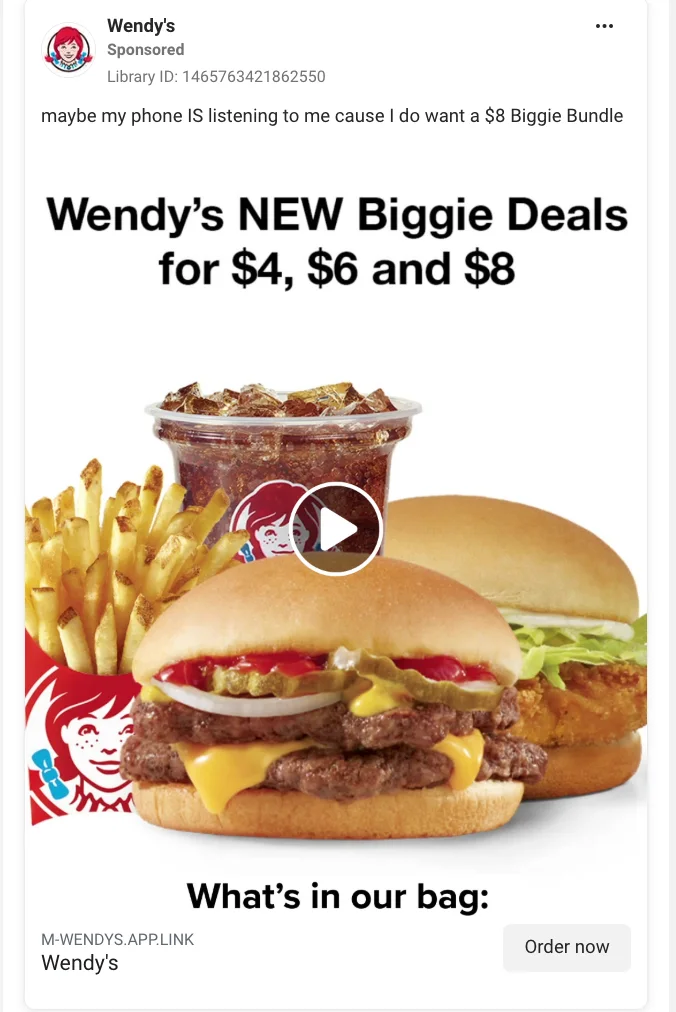
In this guide, we’ll break down each format using real ads examples from Brooklinen, Domino’s Pizza India, Commense, Goli, and Wendy’s, showing the visual patterns, headline structures, and urgency cues each brand uses to drive conversions. You’ll also see a step-by-step process for creating test-ready discount ads.
The full breakdowns sit below. With GetHookd, you can also see exactly which of these discount formats your competitors are actively scaling across Meta, with 65 million+ ads analyzed inside the platform, so your test budget starts from proven angles instead of cold guesses.

GetHookd: Turn Competitor Intelligence Into Your Next Winning Ad
GetHookd reveals which ads your competitors are actively scaling—not just running. Spy on their best-performing creatives, landing pages, and traffic strategies, then turn proven concepts into testable campaigns in seconds with AI-powered script generation and creative cloning.
What You Get:- ✓ Brand Spy to decode competitor ad strategies in real-time
- ✓ AI script generation and ad cloning for instant variations
- ✓ Performance scoring based on actual ad behavior, not vanity metrics
- ✓ Creative Analyzer to identify and scale your top performers
5 Top Discount Ad Examples
1. Percentage-Off Discount Ads
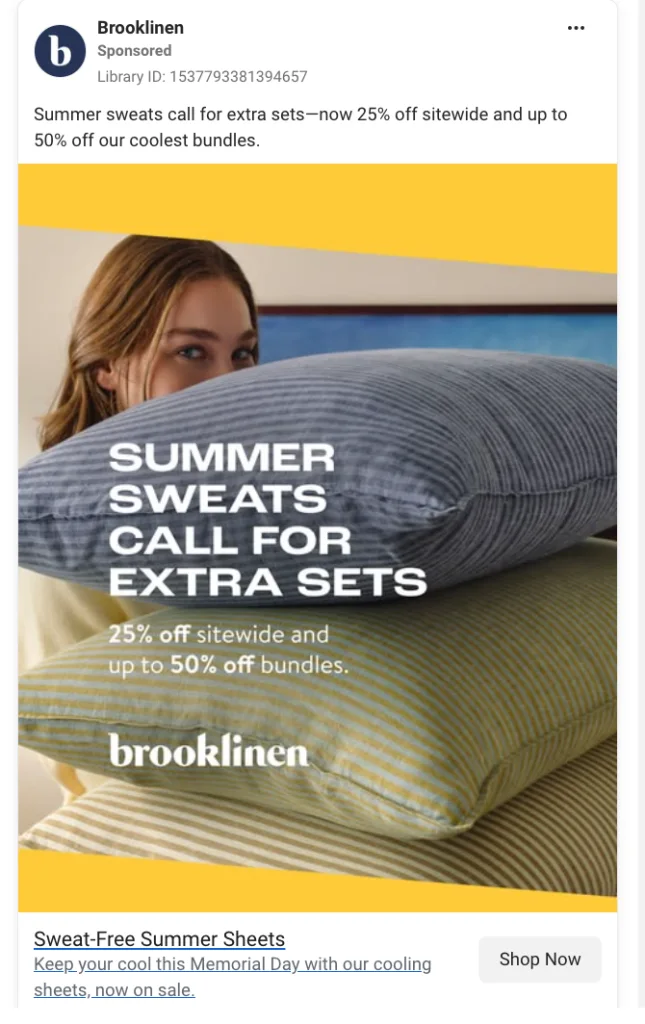
Percentage-off ads stay the workhorse format of e-commerce paid social. Headlines like “20% OFF SITEWIDE,” “Save 40% Today,” or “Up to 50% Off” carry the entire visual weight of the creative. Brands like Brooklinen consistently run percentage-off ads because the savings register in under a second.
The biggest visual hook is large, bold typography displaying the percentage, paired with a product hero shot and a short line of urgency, such as “Today Only” or “Ends Sunday.” Shoppers do not have to do math; the discount is the headline.
This format suits storewide promotions, holiday weekends, and clearance pushes. It also performs well as a retargeting creative because returning visitors often need a final price nudge to convert. Many e-commerce brands find that larger discount tiers outperform smaller cuts because they cross a clearer psychological savings threshold for shoppers.
2. BOGO (Buy One, Get One) Discount Ads
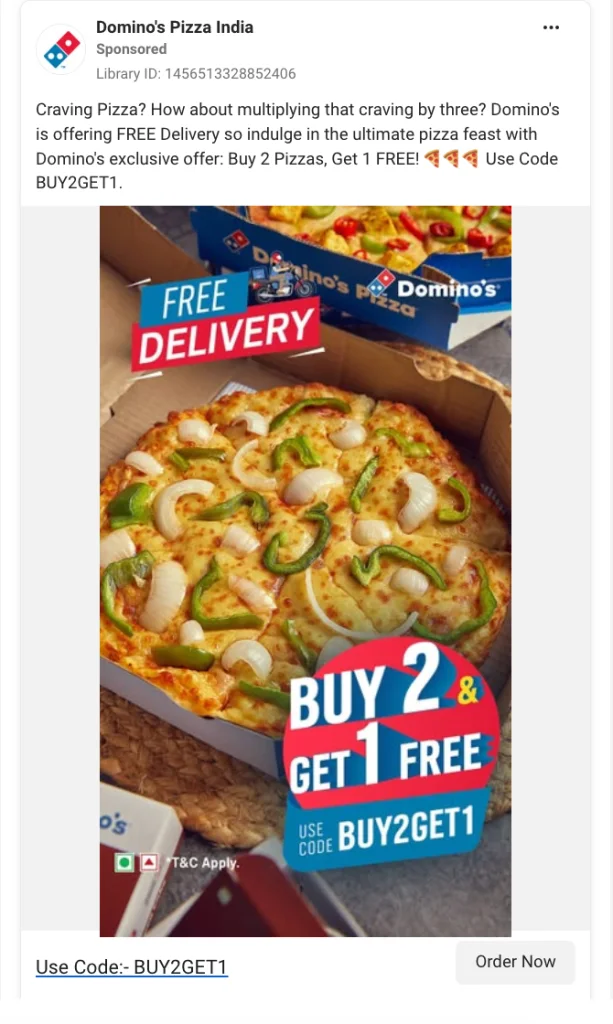
BOGO creatives stack perceived value without lowering the unit price. “Buy 1, Get 1 Free,” “Buy 2, Get 1 50% Off,” or “BOGO on All Hoodies” are the standard headline structures. Apparel, beauty brands, and fast-food restaurants use BOGO consistently to increase average order value and move inventory faster.
The visual typically shows two product units side by side with a bold “FREE” or “HALF OFF” stamp on the second item. The format works best for repeat-purchase categories where customers can realistically use multiple units, such as socks, basics, lipsticks, or skincare staples.
BOGO ads also pair well with email and SMS retargeting because shoppers who hesitate at full price often convert once the second-unit incentive is in the mix.
3. Free Shipping Threshold Discount Ads
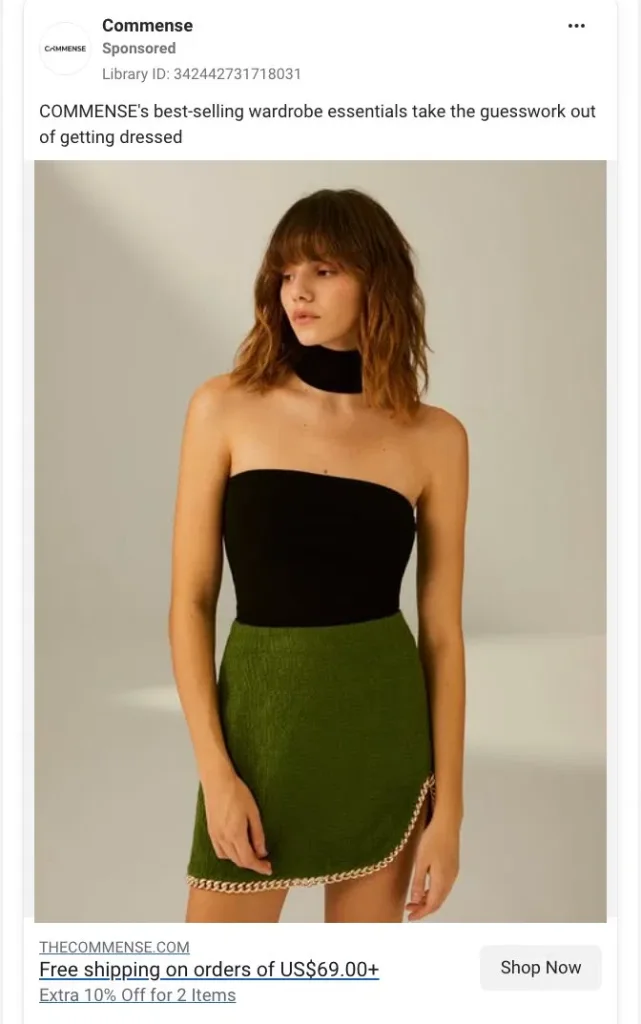
“Free Shipping on Orders Over $50” sits between an incentive and a soft discount. Brands like Commense run threshold ads featuring a hero product carousel that shows upsell items needed to reach the cart total.
This format pushes basket size, so it suits brands with lower average order values that need to lift cart totals to protect margin. The creative usually displays a set of bestseller items alongside the threshold figure, giving shoppers a clear path to qualify for the offer.
Free shipping creatives perform well as cold acquisition ads because the offer feels low-risk and removes a common cart-abandonment trigger without cutting product margins in the same way a percentage discount would. The format also pairs naturally with new customer audiences who hesitate at first-purchase shipping fees.
4. Flash Sale & Limited Time Discount Ads
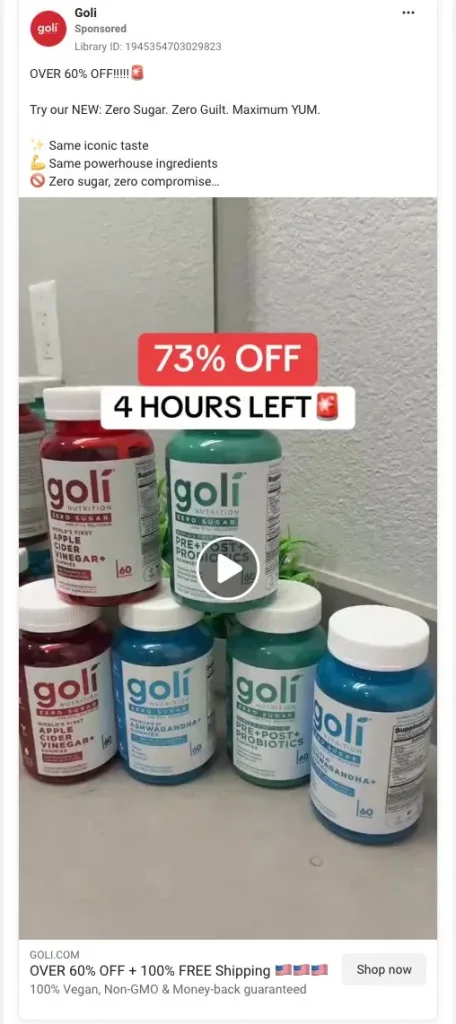
Flash sale creatives lean on urgency. Countdown timers, “24 Hours Only,” and “Ends at Midnight” copy do most of the heavy lifting. Drop-style brands and DTC retailers run flash sale ads during launches and inventory pushes.
Common visual treatments include a black or red banner, a digital countdown graphic, and a hard cutoff time. The scarcity tightens buyers’ decisions and tends to drive higher click-through than static evergreen offers.
Real-time-bound offers outperform fake countdowns because returning customers quickly spot inflated urgency, which erodes brand trust across multiple campaigns. The best flash sale ads tie the urgency to a credible reason, such as a holiday, a product anniversary, or limited stock, giving the deadline a logical anchor that shoppers accept.
5. Bundle & Volume Discount Ads
Bundle ads show three to five products grouped at a single discounted price. “Build Your Own Bundle, Save 30%” or “3-Pack for $45, Save $20” are the standard formats. Beauty brands use bundle creatives that frame savings relative to the per-unit total. This format suits consumable products, replenishment categories, and gift sets.
The visual stacks the items neatly with the bundle price stamped on top, making the value comparison instant for the viewer.
Bundle ads also reduce return rates because shoppers commit to a multi-product set at a single price, which reduces the friction of regretting individual SKU choices. Strong bundle creatives include the dollar savings figure above the percentage to make the value concrete.
How to Create High-Converting Discount Ads
The strongest discount ads share a few build steps. Use the following process to create test-ready creatives that match proven patterns in your niche.
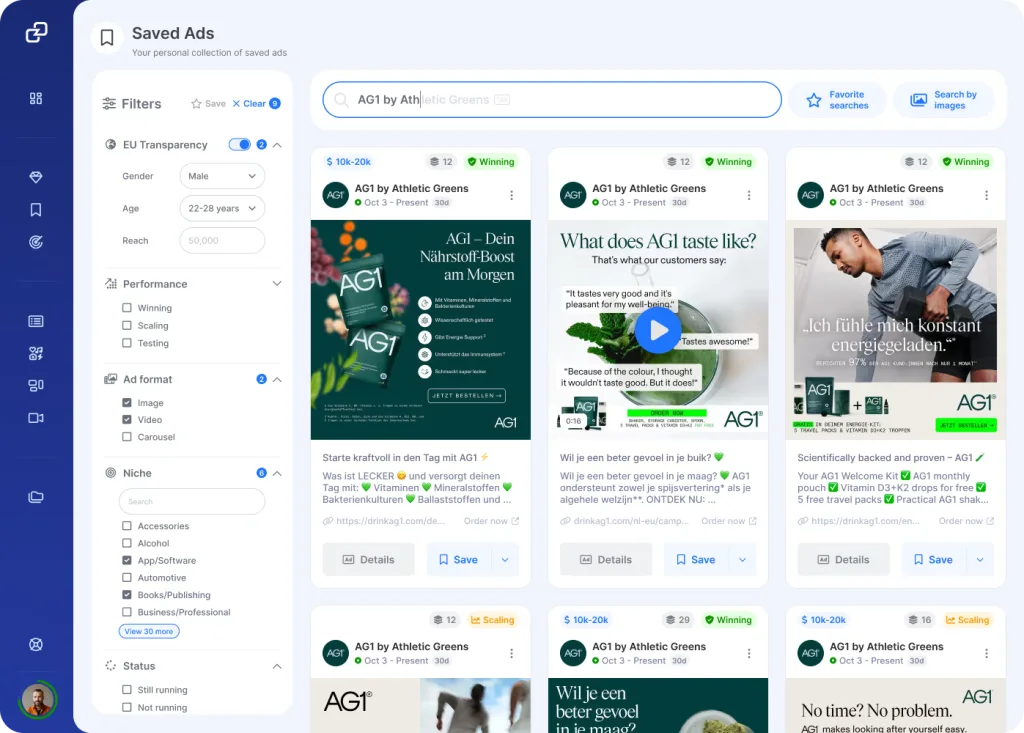
- Research discount ad scaling in your niche. Before designing a single creative, look at which discount formats competitors actively scale. The Meta Ad Library shows what is currently running, but it cannot tell you which ads have been live for weeks versus those that have been live for only three hours. GetHookd surfaces ads with longer run times and stronger performance signals, so you start from proven angles instead of cold testing.
- Pick one offer and make it the headline. Strong discount ads have one clear offer. “20% OFF + Free Shipping + Free Gift” splits attention across three incentives, and shoppers tend to remember none of them well. Test single offers separately, then layer them only if data supports stacking.
- Match the discount format to your campaign goal. Use percentage-off for storewide pushes, BOGO for AOV lift, free shipping for cart-size growth, flash sales for urgency drops, and bundles for repeat-purchase categories. The format should map to your business objective for that ad set.
- Add urgency or scarcity copy. Lines like “Today Only,” “While Supplies Last,” or “Ends Sunday at Midnight” tighten the decision window. Use real cutoffs, never fake countdowns that reset for every visitor.
- Build multiple creative variants quickly. Hooks, headlines, colors, and product framings all affect performance. AI tools that clone winning ads into format variants speed up creative testing without manual design cycles, so you can ship 10 to 20 ad versions in the time a designer might build two.
- Track post-click behavior. A great discount ad sends warm traffic. The landing page must reinforce the offer above the fold. Mismatched landing pages kill conversion rates even when the ad performs well in the feed, and shoppers bounce within seconds if the promised deal does not appear instantly.
Discount Ad Examples Summary Table
| Discount Ad Type | Best Use Case | Brand Examples | Primary Conversion Driver |
| Percentage-Off | Storewide and holiday promos | Brooklinen | Clear instant savings |
| BOGO | AOV lift on repeat purchases | Domino’s Pizza India | Stacked perceived value |
| Free Shipping Threshold | Lower-AOV brands | Commense | Bigger basket sizes |
| Flash Sale / Limited Time | Inventory pushes, launches | Goli | Urgency and scarcity |
| Bundle / Volume Discount | Consumables and gift sets | Wendy | Multi-unit value framing |
Finding Discount Ads That Convert With GetHookd
Strong discount ads share a clear pattern: one offer, sharp visual contrast around the savings number, real urgency, and a landing page that matches the creative promise. Choosing the right format for your product category and funnel stage matters more than chasing the biggest discount. The five formats above (percentage-off, BOGO, free shipping, flash sale, and bundles) cover most scaling promo creatives on Meta, so they give you proven starting points rather than expensive cold tests in your ad account.
At GetHookd, we help media buyers, dropshippers, and agencies find the discount ads competitors actually scale across 65M+ Meta creatives, then clone the winners into testable variants with our AI tools.
Frequently Asked Questions (FAQs)
What makes a discount ad convert better on Meta?
A converting discount ad uses one clear offer, strong visual contrast, urgency copy, and a landing page that matches the creative promise. Single offers outperform stacked promotions, and real scarcity beats fake countdown timers in keeping customer trust over multiple campaign cycles.
How often should I refresh my discount ad creatives?
Most performance marketers refresh discount creatives on a rolling weekly to biweekly cadence for active scaling accounts. Creative fatigue hits promotional ads faster because audiences quickly recognize recurring formats. Track frequency, CTR drops, and CPM rises to time refreshes before performance falls below profitable thresholds for the account.
Can I copy a competitor’s discount ad directly?
Copying creatives directly is risky and rarely works well because you do not see the data behind the ad. Model the structure, hook, and offer angle instead. Build variants that fit your brand voice, product range, and audience to achieve stronger long-term performance across campaigns.
Do I need design skills to create discount ads?
You can produce strong discount ads without design experience by using ad cloning tools that generate variants from a single winning creative. Modern AI creative tools handle layout, color swaps, and copy iterations, so non-designers can ship test-ready ads quickly without hiring outside agencies.
How does GetHookd help me find the best discount ads to model?
At GetHookd, we surface scaling discount ads across 65M+ Meta creatives, showing which competitors run sustained campaigns versus short tests. Our Brand Spy tracks competitor landing pages and offer cycles, while Creative Analyzer identifies the hooks driving the strongest performance signals across niches.
*Note: Pricing and/or product availability mentioned in this post are subject to change. Please check our website for current pricing and stock information before making a purchase.