Key Takeaways
- Nulo’s Olympic athlete ad works because the “Dog Parents” label turns famous endorsers into relatable peers facing the same feeding decisions as the viewer.
- EltaMD’s makeup artist explains how she uses the product on clients, which answers common doubts more convincingly than a quick compliment.
- Form Footwear pairs an orthopedic specialist’s quote with a visual pressure map, so the claimed benefit is shown rather than just stated.
- By Rosie Jane shows Allure’s description of the scent next to the award so shoppers can tell whether the winning fragrance suits their taste, while DRMTLGY pairs “developed for doctors” positioning with Ulta Beauty availability to build credibility without claiming a doctor’s endorsement.
- GetHookd lets you study the expert endorsements, awards, and retail credibility your competitors run on Meta, then turn a winning ad into your own variations with Clone Ads or Video Scripts.
Why Do Some Authority Claims Convert While Others Fail?
Authority only persuades when it’s relevant to the exact decision a buyer is stuck on. A celebrity’s fame alone rarely closes a sale, but a celebrity who uses the product in their actual job, or an expert whose title matches the problem being solved, gives the shopper a reason that lines up with their own hesitation.
Specificity is what makes an authority claim convincing. An endorsement that names a clear outcome, like fewer pressure points or a more even skin tone, carries more weight than general praise for the brand.
GetHookd lets you see how brands in your niche phrase their expert claims across live Meta ads, so you can spot fresh angles before committing your ad spend.
GetHookd: Give Your AI
22 Million Live Meta Ads

Your AI cannot see Meta's ad library. Now it can. Connect GetHookd to Claude, ChatGPT, Gemini, Cursor or Perplexity in about 30 seconds, no code needed. Ask in plain English what your market is running and get back the live Facebook and Instagram ads. Every answer comes back with the source ad attached, so you can check it yourself.
What You Get:- Brand Spy: Get told every time a competitor launches, with the launch date and how many ads they have live
- Shops: Open any Shopify store to see its monthly visitors, best sellers, and every Meta ad it runs
- Clone Ads: Turn any winning ad into new statics built off a creative already running in your market
Prefer clicking? Search and filter the library yourself in the app, on any plan.
Start a 7-Day Trial for $05 Successful Appeal to Authority Ad Examples
1. Nulo Uses Olympic Athletes to Sell Dog Food
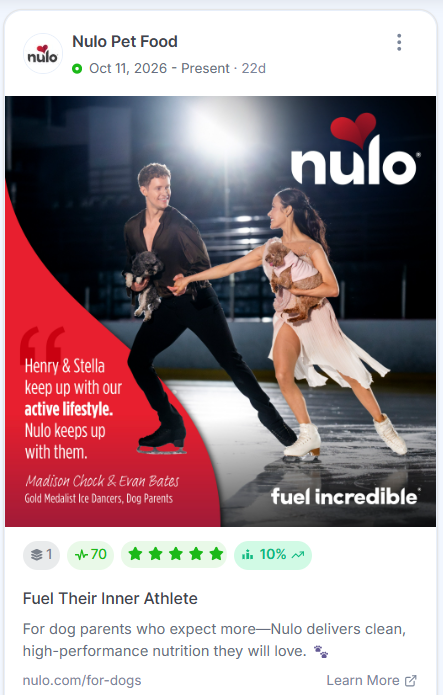
Nulo’s ad features Madison Chock and Evan Bates, labeled “Gold Medal Ice Dancers, Dog Parents,” with the headline “Fuel Their Inner Athlete” promising “clean, high-performance nutrition.”
The testimonial reads, “Henry & Stella keep up with our active lifestyle. Nulo keeps up with them.” That second identifier, “Dog Parents,” does the heavy lifting here, because it turns two Olympic medalists into regular pet owners facing the same feeding decisions as the person scrolling past the ad.
The narrative is simple on purpose: the dogs keep up with their owners, and the food keeps up with the dogs. That structure sidesteps a common trap in athlete endorsements, where the fame feels disconnected from the product.
Here, the athletic achievement sets the bar for an active lifestyle, and the “dog parent” label makes the recommendation feel like a peer’s rather than a paid spokesperson’s line.
2. EltaMD Uses a Celebrity Makeup Artist to Handle Objections
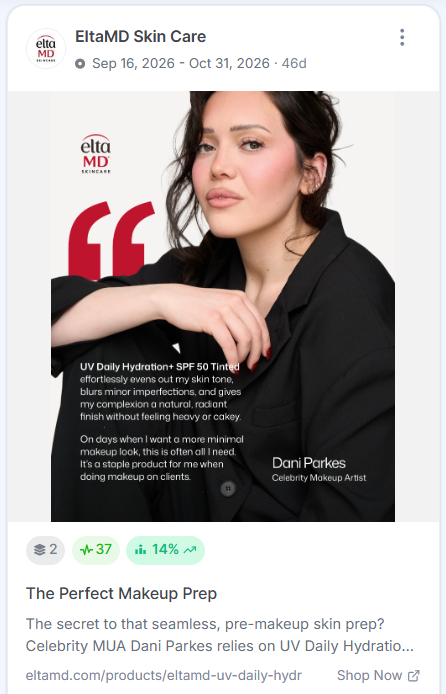
EltaMD’s ad for UV Daily Hydration+ SPF 50 Tinted features Dani Parkes, credited as “Celebrity Makeup Artist,” under the headline “The Perfect Makeup Prep.” Her beauty ad testimonial goes beyond a one-line compliment, describing how the product evens out skin tone, blurs minor imperfections, and leaves a natural radiant finish “without feeling heavy or cakey.” She adds that it can stand in for makeup on minimal-routine days and is a staple she reaches for when working on clients.
That level of detail matters because it answers four objections a shopper might have at once: will this look unnatural, will it feel heavy, does it fit a low-maintenance routine, and does it still work when makeup goes on top. Referencing her actual client work also reframes the product as a professional tool in active use, not something she tried once for a sponsored post.
3. Form Footwear Uses an Orthopedic Surgeon’s Endorsement
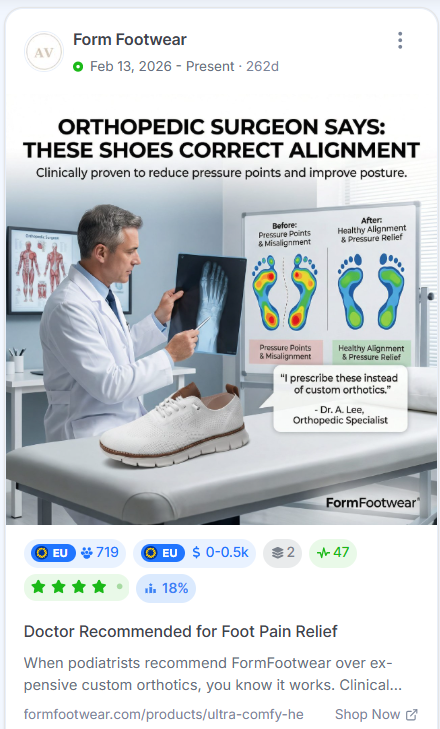
Form Footwear opens its ad with “Orthopedic surgeon says: These shoes correct alignment,” followed by the claim “Clinically proven to reduce pressure points and improve posture.” The quoted line, “I prescribe these instead of custom orthotics,” is attributed to “Dr. A. Lee, Orthopedic Specialist,” and the headline reads “Doctor Recommended for Foot Pain Relief.”
Every piece of this ad targets a distinct concern: alignment, pressure, posture, and pain. The comparison to custom orthotics is the ad’s sharpest line, since it speaks directly to anyone already weighing that more expensive option.
Medical language like “clinically proven” and “correct alignment” raises the bar for substantiation too, since FTC guidance says an expert’s comparison claim should be backed by that expert’s own evaluation, not only a quoted preference.
The endorser details are thin, though. The ad calls the doctor an orthopedic surgeon in its opening line and an orthopedic specialist in the attribution, and gives only an initial for a first name. Shoppers who look closely will notice, so a full name and one consistent title would make the endorsement easier to trust.
4. By Rosie Jane Uses an Allure Beauty Award
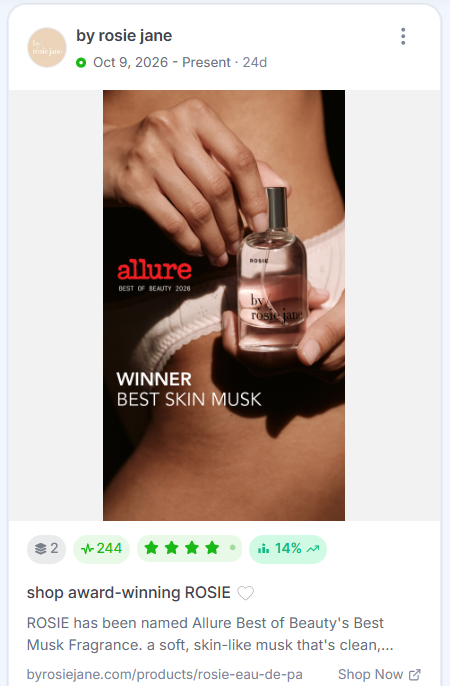
By Rosie Jane’s fragrance ROSIE carries the line “Winner Best Skin Musk” on the ad image, referring to its Allure Best of Beauty 2026 win in the Best Musk Fragrance category. The headline reads “shop award-winning ROSIE,” and Allure’s own description, “a delicate skin scent combining white musks and rose,” sits alongside the award in the ad.
That supporting line does more work than the award badge alone would. Instead of leaving shoppers to guess what “best” means, it tells them what kind of scent won: soft and close to the skin, not bold or overpowering.
The headline packs the product name, the reason to trust it, and the next step into one short sentence, which keeps the ad moving instead of stalling on the credential.
5. DRMTLGY Pairs Doctor Development With Ulta Availability
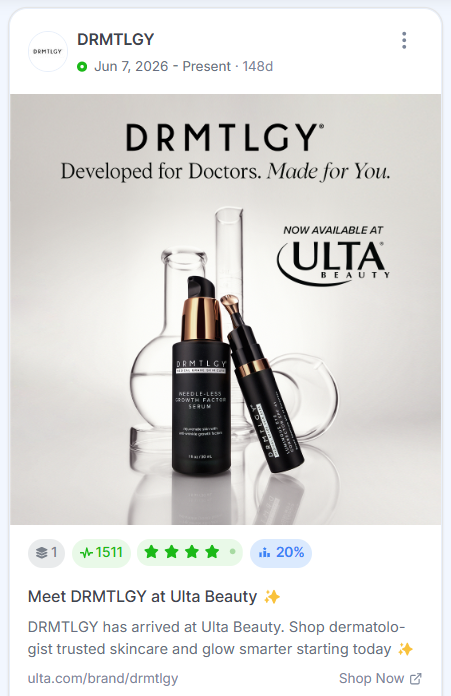
DRMTLGY’s ad opens with “Developed for Doctors. Made for You.” and pairs it with “Now Available at Ulta Beauty,” under the headline “Meet DRMTLGY at Ulta Beauty.” Unlike the Form Footwear or EltaMD examples, there’s no named doctor or direct testimonial here.
The authority signal is indirect, built from professional positioning and a retail relationship rather than a specific expert’s recommendation. That distinction is worth noticing: being available at a trusted retailer is not the same as that retailer endorsing the product’s claims, and “developed for doctors” is a narrower statement than “recommended by doctors.”
The ad stays within that narrower claim, which keeps it on safer ground while still drawing trust from both the medical framing and the retail name.
Top 5 Appeal to Authority Ads: Summary Table
| Brand | Authority Appeal | Replicable Takeaway |
| Nulo | Olympic gold medalist ice dancers speak as dog parents, connecting performance positioning to their pets’ active lives | Choose endorsers whose relevant customer experience makes the partnership meaningful |
| EltaMD | A celebrity makeup artist explains specific benefits and professional uses | Use expert testimonials to answer buying objections, not simply praise products |
| Form Footwear | An orthopedic specialist supports alignment and pain-relief claims | Connect expertise to customer problems; substantiate medical and comparative claims |
| By Rosie Jane | Allure recognition provides external validation for ROSIE fragrance | Name the award and category, then connect recognition to product appeal |
| DRMTLGY | Professional positioning combines with Ulta Beauty availability | Pair credibility with accessibility, without implying retail availability proves efficacy |
Create Credible, Expert-Backed Ads Faster With GetHookd
Authority works when the expert fits the product, and the claim stays within what that expert can back up. Every example above draws on someone shoppers already trust. The strongest ones also make it clear why that person’s opinion counts.
We built GetHookd so you can find ads like these in minutes. Search 22M+ live Meta ads, updated daily, to see how competitors use experts and endorsements. Then use Clone Ads to turn a winning authority static into new variations, or Video Scripts to draft your own expert testimonial script, with your product and claims at the center. Try GetHookd free for 7 days and give your next ad the credibility it needs.
Frequently Asked Questions (FAQs)
What is an appeal to authority in advertising?
An appeal-to-authority ad draws credibility from a qualified professional, a well-known public figure, an editorial award, or an established retailer to support a product claim. The goal is to give shoppers a trusted reason to believe the product beyond the brand’s own promises.
Is appeal to authority a logical fallacy in marketing?
It can be. The fallacy applies when the authority has no real connection to the claim, like a celebrity vouching for a medical benefit. A surgeon talking about foot alignment or an editor judging fragrances brings relevant expertise; a celebrity is better framed as a genuine customer than as an expert. Either way, the claim itself still needs support.
Can businesses use appeal-to-authority ads without celebrities?
Yes, many authority ads use professionals, credentials, or awards instead of famous faces. A doctor, nutritionist, or trainer can lend credibility within their field, and so can certifications, clinical testing, or recognition from a respected publication.
What happens if an authority claim in an ad isn’t substantiated?
Advertisers need a reasonable basis for both express claims and the implications their ad creates. FTC guidance requires expert endorsements to reflect actual exercise of relevant expertise, and any comparison implied by an endorsement must be supported by that expert’s own evaluation rather than a quoted opinion.
Can GetHookd show me what ads my competitors are running?
Yes, GetHookd’s Brand Spy lets you follow any competitor and see the Meta ads they’re running, including when each one launched and how many they have live. You can turn on alerts to find out when they launch something new. Any ad worth keeping can go on a board your whole team can see, and it stays there even after the competitor takes it down.
*Note: Pricing and/or product availability mentioned in this post are subject to change. Please check our website for current pricing and stock information before making a purchase.