Key Takeaways
- UGC ads are cheaper and faster to produce, often ready within days at a fraction of traditional production costs, making high-volume creative testing far more practical.
- Trust is UGC’s biggest structural edge: feed-native, creator-style content lowers viewer skepticism and carries social proof that polished brand ads can’t replicate.
- Traditional ads trade authenticity for control, giving brands complete command over visuals, tone, and consistency, which matters for brand-building and premium positioning.
- Each format has clear use cases: UGC wins for top-of-funnel social, retargeting, and younger audiences, while traditional ads win for brand launches, luxury categories, and TV, OOH, and display.
- Whichever format you choose, performance starts with the creative concept. GetHookd shows which ads competitors are actively scaling, so your campaigns launch from proven ideas rather than guesswork.
UGC vs Traditional Ads: An Overview
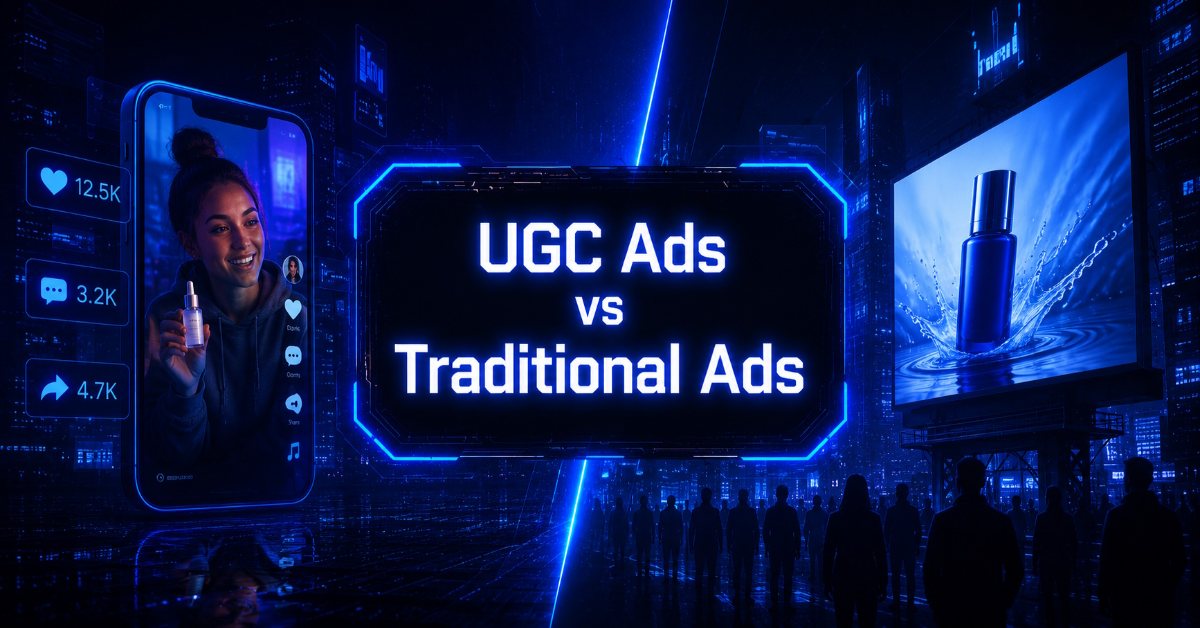
UGC ads (user-generated content ads) are creator-style videos and images designed to look and feel like organic social content. The goal is for someone scrolling through a feed not to immediately recognize it as an advertisement. On the other hand, traditional ads are brand-produced creative. They dominated television, print, display networks, and out-of-home placements for decades.
One of the most important structural differences between these two formats is how they’re received in a social feed. UGC blends in. Traditional ads stand out, but on platforms where users are trained to skip anything that looks like an ad, that very standout-ness can be a liability.
Knowing which to use and when is what separates efficient ad spend from wasted budget. And whichever direction you lean, the strongest campaigns start from creative that’s already proven to work. GetHookd helps marketers find those winning ads before they spend a dollar on testing.

GetHookd: Turn Competitor Intelligence Into Your Next Winning Ad
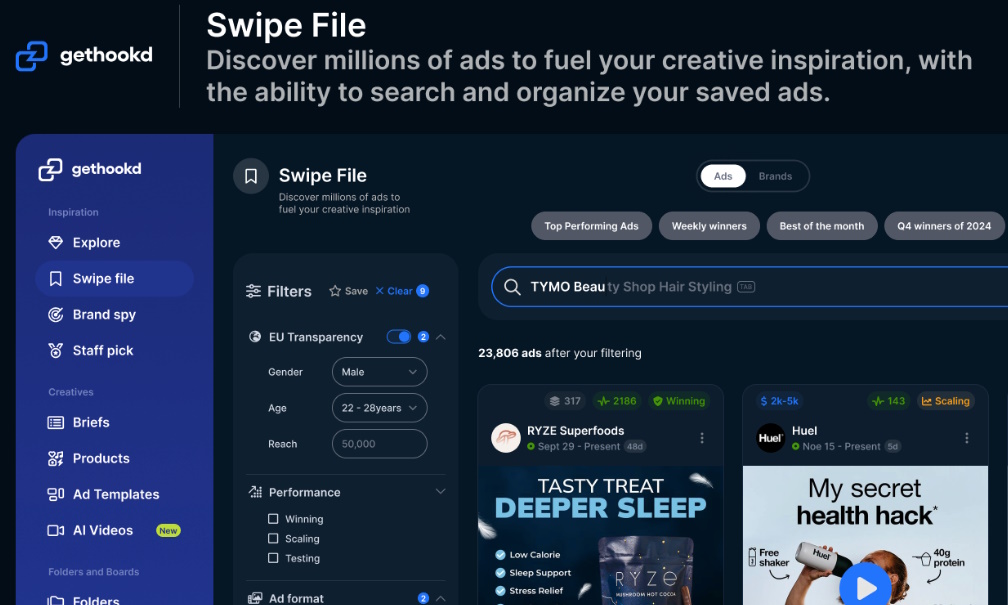
GetHookd reveals which ads your competitors are actively scaling—not just running. Spy on their best-performing creatives, landing pages, and traffic strategies, then turn proven concepts into testable campaigns in seconds with AI-powered script generation and creative cloning.
What You Get:- ✓ Brand Spy to decode competitor ad strategies in real-time
- ✓ AI script generation and ad cloning for instant variations
- ✓ Performance scoring based on actual ad behavior, not vanity metrics
- ✓ Creative Analyzer to identify and scale your top performers
UGC vs Traditional Ads: Key Differences
Cost & Production Speed
UGC ads can be sourced from creators or customers at a fraction of that cost, often within days. That speed advantage means you can test more creative variations, kill losing ads faster, and scale winners before the audience fatigues.
On the other hand, traditional ad production can run anywhere from several thousand to hundreds of thousands of dollars, depending on the scope. Studio time, directors, talent, post-production, and licensing all stack up fast.
Trust & Authenticity in the Feed
Customer trust is where UGC creates its biggest structural edge. When someone sees a polished brand video on TikTok or Meta, their guard goes up. It registers as an ad, which triggers skepticism before the message even lands. A creator-style video from someone who looks like a real customer doesn’t trigger that same response.
There’s also a second layer to the trust dynamic: social proof. A UGC ad that shows a real person talking about a real result implicitly signals that others have already bought the product and found it worthwhile. Traditional ads can’t replicate that signal. They can make a product look premium, but they can’t make it feel proven.

Brand Control & Visual Consistency
UGC trades control for authenticity. You can brief a creator extensively, but the final output will always reflect their voice, environment, and style. For most ecommerce performance campaigns, that’s a good feature. But for brands where visual consistency is load-bearing, ceding that control carries real risk.
Traditional ads, by contrast, give brands complete control over every visual element, including color grading, talent presentation, logo placement, tone of voice, and overall aesthetic. That consistency matters when you’re building or protecting a brand identity.
Polished brand creative signals investment, intention, and professionalism in a way that UGC simply isn’t designed to do.
Creative Flexibility & Testing Speed
UGC wins decisively here. A single creator brief can produce five to ten distinct variations in a week. You can test different hooks, angles, product claims, and calls to action without rebuilding an entire production.
Traditional creative is structurally harder to iterate on. For example, reshooting a studio ad to test a new opening line isn’t practical. That inflexibility creates a real bottleneck for brands running continuous paid social campaigns, where creative fatigue sets in fast and fresh variations are essential to maintaining performance.
UGC Ads: Use Cases
Top-of-Funnel Awareness
On TikTok, Instagram Reels, and Facebook, content that looks native to the feed outperforms anything that looks like a traditional ad. UGC blends in, earning the first three seconds of attention that determine whether a cold audience keeps watching or scrolls past.
Retargeting & Objection-Handling
Testimonials and before-and-after clips work especially well on warm audiences, closing the gap between interest and purchase by addressing the specific doubts that stopped someone from buying the first time.
High-Volume Creative Testing
Because UGC is faster and cheaper to produce than studio campaigns, it’s ideal for quickly testing many hooks, angles, and formats, then scaling the winners. This is where most performance marketers get their best return.
Younger, Mobile-First Audiences
Gen Z and younger Millennials are highly attuned to what feels authentic versus advertised, and they reward content that respects that instinct, making UGC the stronger choice for brands targeting these demographics.
Traditional Ads: Use Cases
Brand Launches & Perception Resets
When a brand enters a market for the first time, it needs to establish what it stands for before it can ask for a purchase. UGC is powerful at converting people who already know a brand exists, but it’s less effective at defining what a brand is and why it should be taken seriously from a standing start.
Perception resets work similarly. If a brand is trying to move upmarket, recover from a reputational issue, or reposition in a crowded category, a polished brand campaign signals that something has fundamentally changed.
Premium & Luxury Product Categories
Premium and luxury brands live and die by the perception of exclusivity and craftsmanship. A raw, phone-shot UGC clip can actively damage that perception. Traditional production methods, with carefully controlled lighting, high-end talent, and cinematic post-production, reinforce the premium signal that justifies a high price point.
Brands in luxury watches, designer fashion, fine fragrance, or premium spirits need every creative touchpoint to reflect the same level of craft as their products.
Broad Awareness Across TV, OOH, & Display
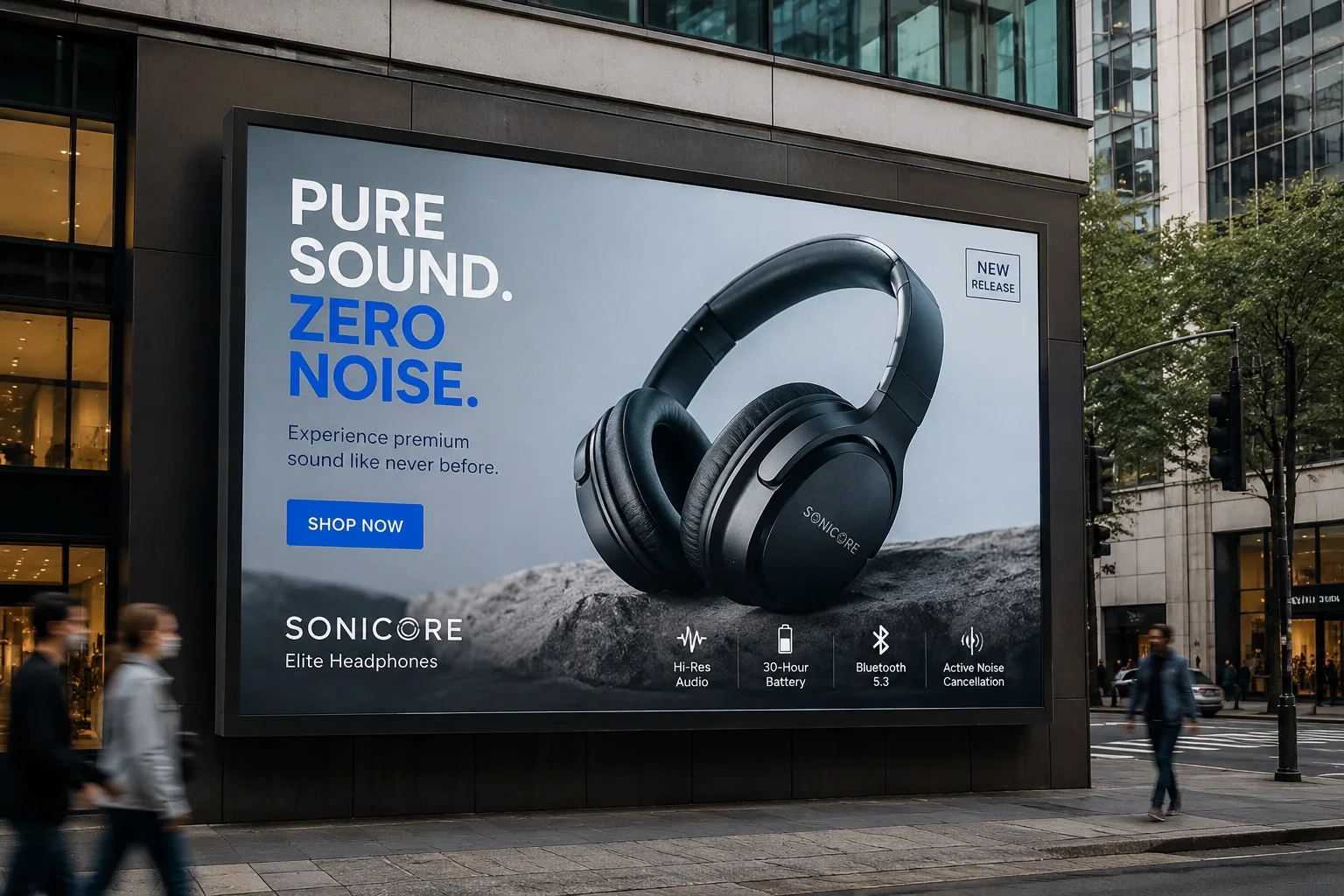
Outside of social feeds, traditional ads simply fit better. A billboard doesn’t have an algorithm rewarding engagement rates. A television placement doesn’t care whether your ad looks native to the surrounding content. In those environments, production quality and visual impact are what drive recall, and traditional creative is purpose-built for exactly that job.
Brands allocating budget to linear TV, connected TV, digital out-of-home (OOH), or programmatic display should lean heavily on polished brand creative rather than adapting UGC formats designed for those placements.
UGC vs Traditional Ads: Performance Comparison
On raw performance, the two formats win in different arenas, and the gap usually comes down to where the ad runs and what it’s trying to achieve.
In paid social environments (TikTok, Instagram Reels, Facebook), UGC consistently outperforms traditional creative on the metrics that matter most: hook rate, watch-through, click-through, and cost-per-result. Its feed-native look earns attention in the critical first three seconds and lowers the skepticism that polished ads trigger, which translates directly into cheaper clicks and more efficient testing.
Traditional ads, by contrast, perform best where production quality drives recall rather than engagement. On TV, connected TV, digital out-of-home, and programmatic display, there’s no algorithm rewarding native-looking content. Therefore, the polish and visual impact of traditional ads become an advantage.
UGC vs Traditional Ads: Comparison Table
| Factor | UGC Ads | Traditional Ads |
| Production Cost | Low; a fraction of studio costs | High; thousands to hundreds of thousands |
| Production Speed | Fast, often within days | Slow; involves studio, talent, and post-production |
| Trust & Authenticity | High; feels like a real recommendation | Lower; registers as an ad, triggers skepticism |
| Social Proof | Strong; implies real people use the product | Weak; can look premium but not “proven” |
| Brand Control | Limited; carries the creator’s voice and style | Complete control over every visual element |
| Visual Consistency | Variable by creator | High and fully consistent |
| Best Channels | TikTok, Instagram Reels, Facebook feeds | TV, connected TV, OOH, display |
| Best Funnel Stage | Top-of-funnel awareness and retargeting | Brand-building and broad awareness |
| Best For | Ecommerce, demonstration products, younger audiences | Brand launches, luxury, premium positioning |
Get Expert Ad Intelligence Using GetHookd
UGC and traditional ads aren’t really competitors. Rather, they’re tools for different jobs. UGC delivers cheaper, faster, more believable creative for social feeds and direct-response campaigns, while traditional ads build brand perception and carry premium positioning in channels where polish drives recall.
The brands that are winning on paid social aren’t choosing between UGC and traditional ads. They’re using both strategically, testing continuously, and building from data rather than gut feel, which is where GetHookd comes in. If you want to build smarter ads and stop wasting budget on creatives that don’t convert, GetHookd gives you the creative intelligence to make better decisions across every format and every campaign. Start a free GetHookd trial to find your next winning ad.
Frequently Asked Questions (FAQs)
How is UGC different from traditional marketing?
UGC relies on authentic, creator-style content that looks and feels like a real person’s recommendation, while traditional marketing uses polished, brand-controlled production designed for visual impact. The core difference is trust versus control: UGC lowers viewer skepticism by blending into the feed, while traditional ads command every visual element to build a consistent brand image. UGC is also far cheaper and faster to produce, making it better suited to rapid creative testing.
What is UGC performance?
UGC performance refers to how user-generated content ads perform across key metrics such as hook rate, watch-through rate, click-through rate, and cost-per-result. UGC tends to outperform traditional creative in paid social because its native look earns attention quickly and reduces the skepticism that polished ads trigger. It also sustains performance longer, since fresh variations can be produced cheaply to combat creative fatigue.
Are influencers replacing traditional advertising?
Not quite. Instead, it is reshaping it, rather than replacing it. Influencer and UGC-style content have taken a significant share of the budget in social-first, direct-response advertising, where authenticity converts better than polish. However, traditional advertising still dominates brand-building, premium categories, and non-social channels like TV and out-of-home, so the two increasingly work together rather than one fully replacing the other.
Is UGC always better than traditional ads for ecommerce?
Not always, but it wins more often in paid social environments. The feed-native format reduces skepticism and builds trust faster, which matters at the point of purchase. That said, traditional ads still outperform UGC for brand-building objectives, premium product categories, and channels outside of social.
How does GetHookd help me create higher-converting ads?
GetHookd removes the guesswork from creative strategy by giving marketers direct access to intelligence from the best-performing ads currently running across Meta and TikTok. Instead of building campaigns based on assumptions about what might work, you can see exactly which hooks, formats, structures, and creative angles are already driving results in your category and use that intelligence to build smarter briefs for both UGC and traditional ads.
*Note: Pricing and/or product availability mentioned in this post are subject to change. Please check our website for current pricing and stock information before making a purchase.