Key Takeaways
- Five Instagram ad examples consistently drive results for nonprofits: fundraising appeals, single-image emotional ads, awareness campaigns, event promotions, and before-and-after impact ads, each suited to a different stage of the donor journey.
- The highest-converting nonprofit ads lead with a real person or moment of impact, then introduce a specific, concrete ask (e.g., “$35 provides a week of meals”) rather than a generic donation link.
- Carousels and video ads outperform other formats for fundraising because they allow a problem-solution-impact-ask story arc, while single-image ads remain powerful when the visual alone carries the emotional weight.
- Pair every ad with one clear CTA, add captions for silent viewing, use low-friction CTAs like “Learn More” for cold audiences, and test 2–3 creative variations with at least 500 impressions each before scaling the winner.
- GetHookd gives you access to 65M+ analyzed ads, plus AI tools to clone top-performing creatives and generate scripts, so you can replicate what’s already working for other nonprofits instead of guessing.
What Makes Instagram Ads Effective for Nonprofits?
Instagram ads convert for nonprofits when they pair a real story with one specific ask, delivered in a format built for silent, fast scrolling. The platform’s visual-first design rewards emotional authenticity over polished production, which is why a field photo of a beneficiary often outperforms a high-budget studio shoot.
What separates an ad that funds a mission from one that drains a budget usually comes down to structure: problem first, intervention second, impact third, ask last. Most nonprofits invert this order and lose the donor before the CTA ever appears on screen.
The examples below: fundraising appeals, single-image emotional ads, awareness campaigns, event promotions, and before-and-after impact ads, break down a proven approach used by real nonprofits, the structural pattern behind each one, and how to adapt it to your own campaign.
With GetHookd, you can go a step further and study 65M+ analyzed ads to see exactly which nonprofit campaigns are scaling right now, then clone what’s working with AI-powered tools and templates.

GetHookd: Turn Competitor Intelligence Into Your Next Winning Ad
GetHookd reveals which ads your competitors are actively scaling—not just running. Spy on their best-performing creatives, landing pages, and traffic strategies, then turn proven concepts into testable campaigns in seconds with AI-powered script generation and creative cloning.
What You Get:- ✓ Brand Spy to decode competitor ad strategies in real-time
- ✓ AI script generation and ad cloning for instant variations
- ✓ Performance scoring based on actual ad behavior, not vanity metrics
- ✓ Creative Analyzer to identify and scale your top performers
Real Nonprofit Instagram Ad Examples That Work
Fundraising Appeal Ads That Drive Donations
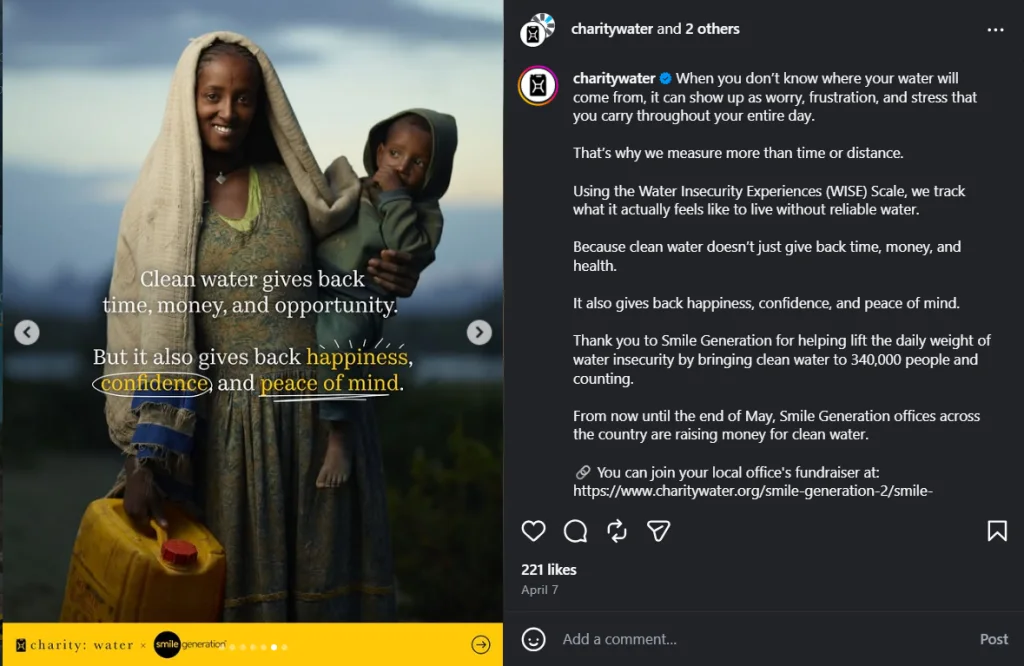
The most effective fundraising ads lead with a person, instead of a donation link. A single mother who got back on her feet. A child who now has access to clean water.
When the viewer connects with a real story first, the donation ask feels natural rather than transactional. Pair that story with a specific, concrete ask such as “$35 provides a week of meals,” and you’ve given donors a clear reason to act.
Carousel and video formats are best for fundraising appeals because they give you space to build context before making the ask. Structure your fundraising ad like a story arc.
Introduce the problem, show your organization’s solution, demonstrate real impact, then make the ask. One pattern that performs well across nonprofits is the matched-gift fundraising ad.
These ads layer urgency onto the story by communicating that every dollar donated during a specific window will be doubled or tripled by a sponsor. Donors feel their contribution carries more weight, and the time-bound nature of the offer pushes them to act now rather than later.
Emotional Storytelling Through Single Image Ads
Single-image ads are often dismissed as too simple to compete with video and carousel formats, but for nonprofits, they remain one of the highest-performing formats when executed well. The reason is simple: a single, powerful image can communicate an entire story in less than a second, and Instagram is a platform built for visual impact.
The strongest single-image ads for nonprofits share three traits.
- The image features a real person or moment, not stock photography.
- The composition draws the eye to a single focal point such as a face, a gesture, or a meaningful object.
- The caption complements the image rather than competing with it, opening with a hook that makes the viewer stop scrolling and ending with one clear call to action.
Many nonprofits have built entire campaigns around this principle, using portrait-style photography of beneficiaries paired with short, direct captions. The image carries the emotional weight, and the copy delivers the context and the ask.
For nonprofits without large creative budgets, this format is also the most accessible. A high-quality field photograph, paired with thoughtful copy, can outperform polished video productions when the story is genuine.
Awareness Ads That Grow Your Audience
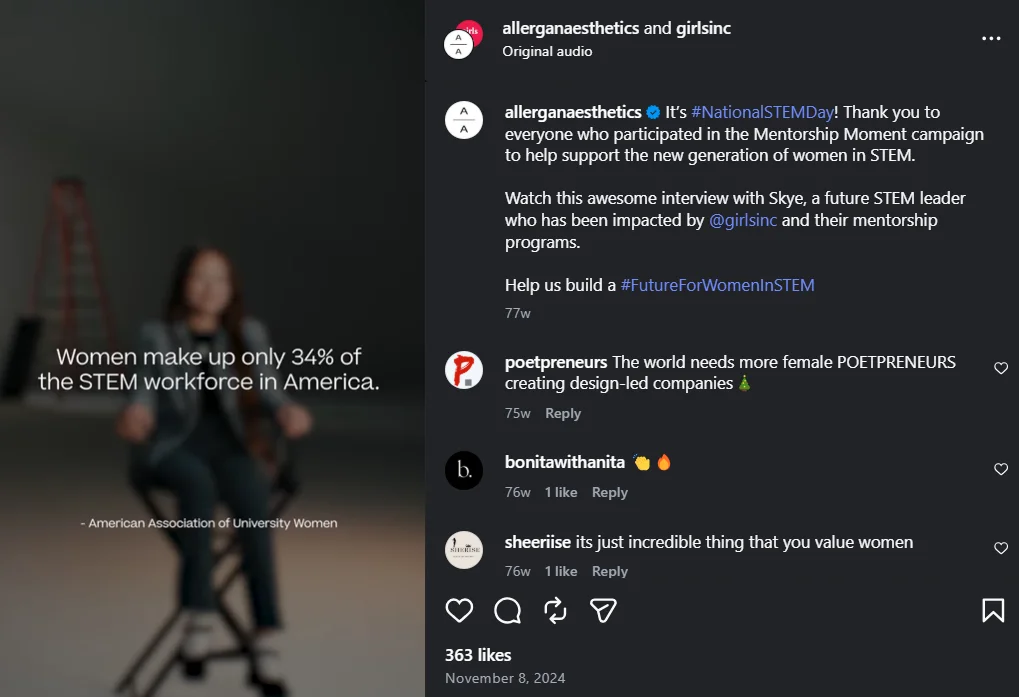
Awareness ads aren’t about immediate donations. Instead, they get the right people into your orbit so you can cultivate them over time.
These ads work best when they highlight something surprising, urgent, or emotionally resonant about your cause. A striking statistic, an unexpected before-and-after, or a short documentary-style video clip can stop a cold audience mid-scroll and make them want to learn more.
The mistake most nonprofits make with awareness ads is trying to convert too early. Someone who has just discovered your cause is not ready to give.
Build your awareness campaigns around content that delivers value upfront, whether that’s an educational video, a powerful behind-the-scenes look at your work, or a short story about the people you serve. The donation ask comes later, through retargeting campaigns aimed at users who have already engaged with your content.
Event Promotion Ads That Fill Seats
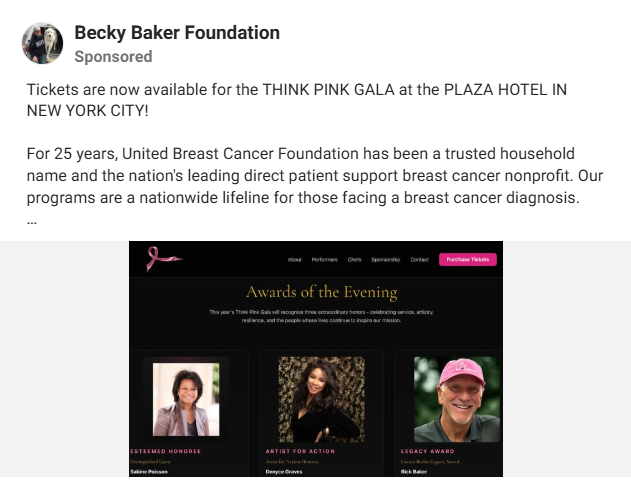
Event promotion ads need to answer three questions instantly: What is it? Why should I care? How do I sign up? Use a bold visual that reflects the event’s energy, keep your copy tight, and make sure the registration link is front and center.
Countdown timers in Stories ads create urgency that works particularly well for events with limited capacity or early-bird pricing. Start running event ads at least three weeks out and increase frequency in the final 72 hours before registration closes.
Retargeting is where most nonprofits leave registrations on the table. Anyone who clicked your ad, visited your event page, or started a registration but didn’t complete it should see a follow-up ad within 48 hours. A simple “Don’t miss out” reminder paired with the registration link can recover a meaningful percentage of drop-offs.
Before-and-After Ads That Prove Your Impact
Before-and-after ads are the strongest approach for nonprofits that need to show transformation. The structure gives viewers a clear sense of impact, which is the single most important factor in driving nonprofit donations. Donors want to see that their money creates change, and a well-built before-and-after ad shows that change in a way no other approach can match.
The format flexes across ad types. Carousels work when you want viewers to swipe through at their own pace. Video and Reels are stronger when the transformation benefits from motion or a tighter narrative. Even sequenced single-image ads can deliver the same effect.
Structure it in three parts. Open by establishing the problem, move to your organization’s intervention, and close with the after and a clear call to action. The format earns the ask by showing exactly what a contribution will achieve, which makes it one of the highest-converting approaches on Instagram for nonprofits.
Best Practices for Nonprofit Instagram Ads That Actually Convert
1. Lead With Emotion, Not Information
The instinct for many nonprofits is to open an ad with facts: statistics about the problem, program descriptions, organizational credentials. Instagram users scroll fast, and information doesn’t stop them. A strong emotion does.
Open every ad with a visual or text that makes your viewer feel something in the first two seconds. The information can come after you’ve earned their attention.
2. Use a Single, Clear Call to Action
Every ad should have exactly one job. Asking someone to donate, follow your account, share your post, and sign up for your newsletter in the same ad guarantees they won’t do any of those things. Pick the one action that matters most for that specific campaign goal and build everything (the visual, copy, button) around that single ask.
3. Design for Silent Viewing With Captions & Text Overlays
A significant portion of Instagram users watch video content with the sound off, especially in public spaces or when their phone is on silent. If your ad relies entirely on voiceover or audio to deliver its message, you’re losing a large chunk of your potential audience before they even hear a word. Add captions to every video ad and use on-screen text overlays to visually reinforce your key message.
4. Test Multiple Ad Versions Before Scaling Your Budget
Never allocate your entire budget to a single ad creative without testing first. Run two to three variations of your ad simultaneously. Change one variable at a time, whether that’s the opening image, the headline, the call-to-action button, or the audience targeting.
Give each version enough budget to gather meaningful data (typically at least 500 impressions), then cut the underperformers and scale what’s working. This process of testing and iterating improves your advertising ROI over time.
Build Instagram Ads That Drive Real Donations With GetHookd
Instagram ads work for nonprofits when they lead with story, respect the viewer’s intelligence, and pair emotional weight with one clear ask. The examples and best practices in this article all point to the same principle: the strongest nonprofit ads are built on what’s already proven to convert, not guesswork. Find the right approach, test it against your audience, and scale what drives results.
That’s where GetHookd comes in. We give you access to 65M+ ads across the Meta and Facebook Ad Library, plus AI tools to transcribe winning videos, generate fresh scripts, clone top-performing creatives, and launch campaigns from ready-to-use templates. Skip the guesswork and build Instagram ads your donors actually respond to.
Start your free GetHookd trial today →
Frequently Asked Questions (FAQs)
How often should a nonprofit post on Instagram?
Most nonprofits see the strongest results with 3 to 5 organic posts per week, paired with a consistent Stories presence. Quality matters far more than frequency. One emotionally resonant post per week will outperform five rushed updates.
Which social media platform is best for nonprofits?
Instagram remains the top platform for nonprofits because of its visual storytelling format, strong engagement rates, and powerful Meta Ads targeting capabilities. Facebook is a close second and works best when run alongside Instagram through Meta Ads Manager. The right mix depends on where your donors and supporters already spend their time.
What is the best type of Instagram ad for nonprofit fundraising?
Carousels and video ads consistently perform strongest for fundraising because both give you space to tell a story before making the ask. Stories ads also work well, especially for retargeting warm audiences with a direct link sticker to your donation page. Test multiple formats, then scale whichever drives the lowest cost per donation for your campaign.
How do I measure the success of my nonprofit’s Instagram ads?
Track metrics that match your campaign goal: Reach and CPM for awareness, CTR and CPC for traffic, Conversions and ROAS for fundraising, and Engagement Rate for community-building campaigns. Review performance every 3 to 5 days and pause ads where CTR drops below 1% or cost per result climbs above your benchmark. Over time, the most valuable metric is the cost to acquire a new donor and the lifetime value of that relationship.
How can I find Instagram ads that other nonprofits are running?
You can use the Meta Ad Library to browse active ads, but the search and filtering options are limited. With GetHookd, we give you access to 65M+ ads across the Meta and Facebook Ad Library, with filters for niche, format, and performance, so you can quickly find which nonprofit ads are scaling and study what’s working.
*Note: Pricing and/or product availability mentioned in this post are subject to change. Please check our website for current pricing and stock information before making a purchase.