Key Takeaways
- The Instagram Search Ads that work in 2026 mirror real search queries with their hooks, look organic enough to bypass ad-skipping behavior, and lead with proof or value before the pitch.
- The strongest formats include keyword-triggered Reels, proof-first creative, before-and-after frames, creator-led recommendations, comparison ads, shoppable formats, location-based discovery, and tutorial-led ads.
- Instagram doesn’t use exact keyword bidding like Google. Meta surfaces your ad based on interest targeting, audience behaviors, and the relevance signals in your creative, so your hook and copy have to carry the keyword weight.
- Match each ad format to a specific search intent: “how to fix” queries reward before-and-afters, “best X for Y” queries reward comparison ads, and “near me” queries reward location-based creative built around a real place.
- With GetHookd, you can study 65M+ Meta ads to find the keyword-aligned hooks already winning in your sector, then use our AI creative tools to launch search-ready campaigns in minutes.
What Every Winning Instagram Search Ad Has in Common
The Instagram Search Ads that perform in 2026 share three traits: they mirror real search queries with their hooks, they look organic enough to bypass ad-skipping behavior, and they lead with proof or value before the pitch. Unlike Feed placements, Instagram ads compete in a discovery context closer to Google Search, where the first 1.5 seconds of your hook decide whether the user reads further or scrolls past.
This guide breaks down eight ad examples that consistently win this attention battle in 2026: keyword-triggered Reels, proof-first creative, before-and-after frames, creator-led recommendations, comparison ads, shoppable formats, location-based discovery, and tutorial-led ads. Each one maps to a distinct search intent, from “how to fix” queries to “best X for Y” evaluations to local “near me” searches.
We pair every example with the search intent it serves, and the creative structure that drives conversions, so you can match the right ad to the right query without guessing. And when it’s time to research which hooks are already winning in your sector, GetHookd gives you a head start, letting you study 65M+ Meta ads to see what competitors are actively scaling before you build your own.

GetHookd: Turn Competitor Intelligence Into Your Next Winning Ad
GetHookd reveals which ads your competitors are actively scaling—not just running. Spy on their best-performing creatives, landing pages, and traffic strategies, then turn proven concepts into testable campaigns in seconds with AI-powered script generation and creative cloning.
What You Get:- ✓ Brand Spy to decode competitor ad strategies in real-time
- ✓ AI script generation and ad cloning for instant variations
- ✓ Performance scoring based on actual ad behavior, not vanity metrics
- ✓ Creative Analyzer to identify and scale your top performers
8 Instagram Search Ads Examples That Work
1. Keyword-Triggered Reels That Feel Organic
The single most effective format for Instagram Search placements in 2026 is the short-form vertical video that opens with a keyword-mirroring hook. This means the first line of dialogue or on-screen text directly echoes the search term a user just typed.
If someone searches “best protein powder for women,” the ad opens with exactly that phrase, spoken or displayed, before anything else happens.
This approach works because it creates immediate pattern recognition. The user’s brain registers the match between their query and the content, which reduces the impulse to scroll past.
2. Proof-First Creative
Proof-first creative flips the traditional ad structure by leading with the result before the product. This format typically opens with a screenshot of a review, a data point, or a user testimonial in the first frame.
The brand reveal comes second. It’s counterintuitive for marketers trained in traditional brand advertising, but for performance-driven search placements, it’s consistently one of the highest-converting structures available.
The reason this structure performs so well in search is that it aligns with the user’s mindset. They’re looking for answers. Starting with proof signals immediately that your content has the answer they’re searching for, which earns the next few seconds of attention needed to deliver your actual pitch.
3. Before/After Proof in a Single Frame
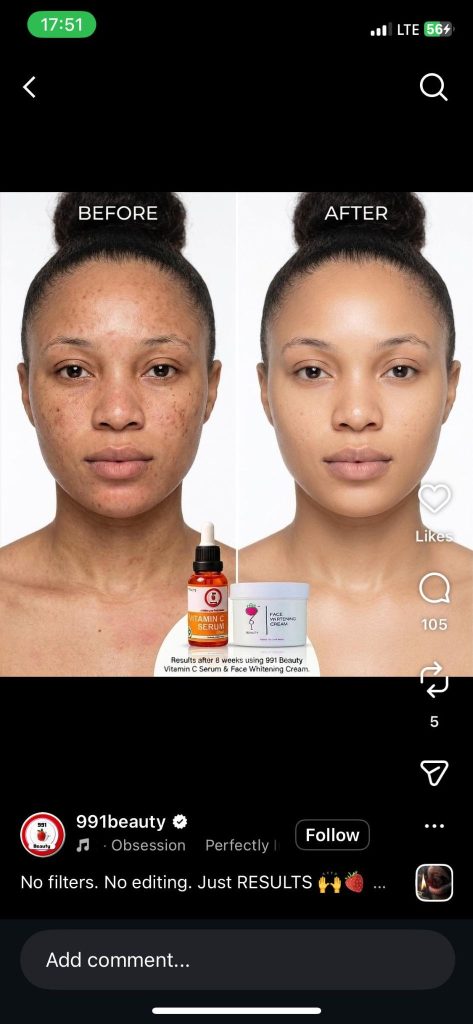
The before/after format has existed in advertising for decades, but Instagram Search Ads take it to a new level thanks to the discovery context. When someone searches “how to fix dark spots” or “best home gym setup,” a split-frame visual that shows a clear transformation answers their question before they’ve even read a word.
The key to making this work in a search placement is compression. You have one frame and sometimes less than a second of attention to communicate the entire value proposition.
The most effective versions use a clean vertical split, high contrast between the two states, and a short text overlay that names the outcome rather than the product. The product or brand comes in the caption, the CTA, or the second scene of a video version.
4. Creator-Led Recommendation Ads
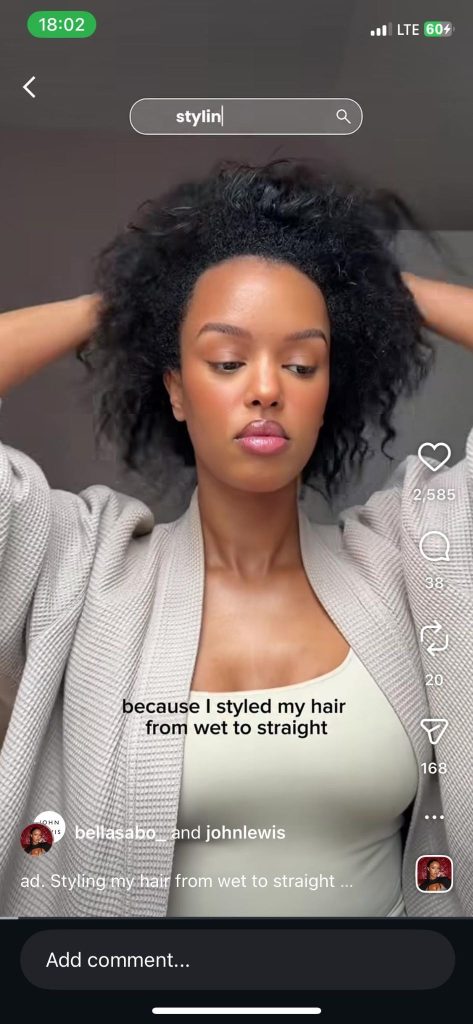
Creator-led ads have dominated Instagram feeds for years, but in search results, they play a different role. Rather than entertainment-first content, the creator becomes a trusted peer recommendation. This format performs exceptionally well for product categories where trust and expertise matter: skincare, supplements, tech tools, and financial services.
The best structure is straightforward. A creator opens with a direct statement that aligns with the search intent, delivers a short personal story or a specific use case, and closes with a clear recommendation and CTA. The whole thing runs between 15 and 30 seconds for video, or a single strong quote with a face-forward image for static.
5. Comparison-Style Search Ads
Comparison ads are built for high-intent searchers who are already deep in the consideration phase. When someone searches “best CRM for small business” or “HIIT vs strength training for fat loss,” they’re not at the top of the funnel.
These people are already evaluating options. A comparison-style search ad meets them exactly there, positioning your product or service as the obvious conclusion to a decision they’re already trying to make.
The most effective version of this format doesn’t trash competitors. You’re not saying “we’re better than X.” Instead, you’re saying, “Here’s the criteria that actually matter for your situation, and here’s how to think about it.” That positions your brand as the authoritative guide rather than just another option.
6. Shoppable Formats Tied to High-Intent Keywords
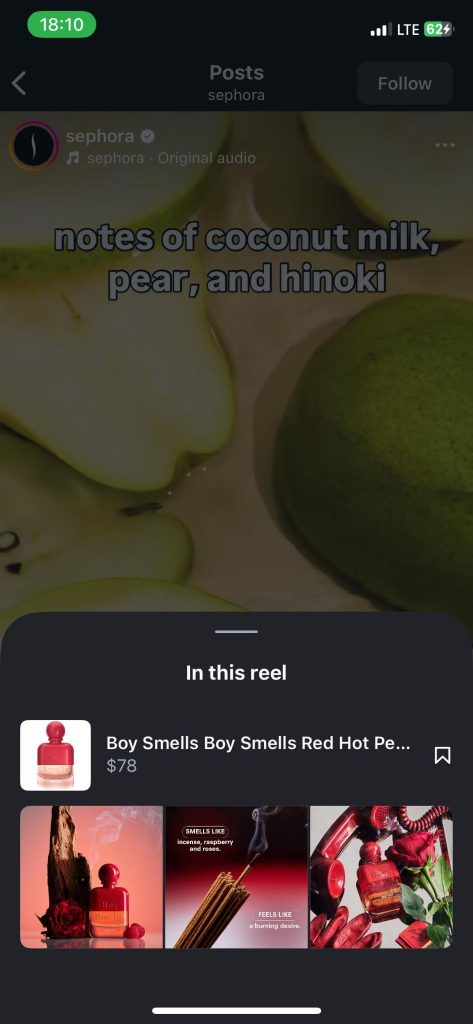
Instagram’s shoppable ad formats, particularly Collection Ads and product-tagged image ads, become significantly more powerful when combined with search placement targeting.
The reason is simple: a user searching “linen pants for summer” or “under desk treadmill” is demonstrating purchase intent. Dropping a shoppable format directly into that search result collapses the funnel from discovery to transaction in a single interaction.
7. Location-Based Discovery Ads
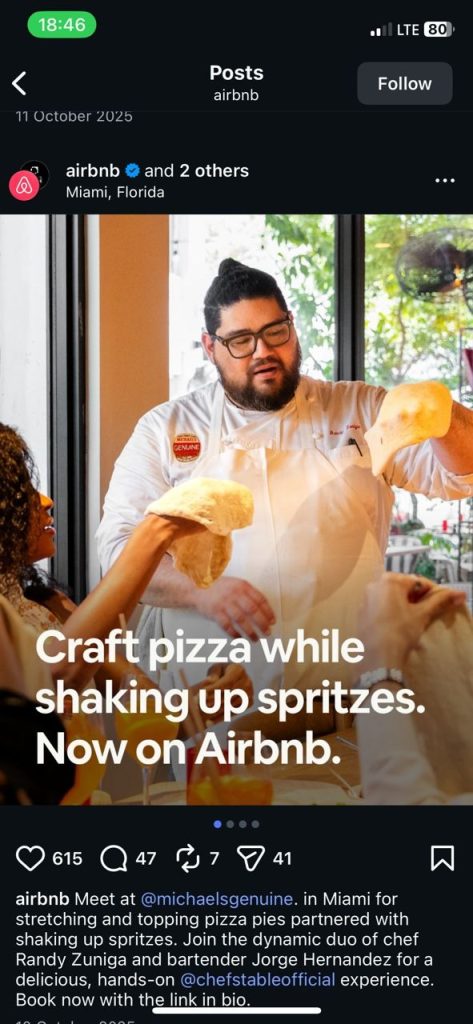
For local businesses, service providers, and regionally specific brands, location-based Instagram Search Ads are one of the highest-ROI placements available. When a user searches “best coffee shop near me” or “personal trainer in Austin,” a location-targeted search ad puts your business directly in that moment of local intent.
The creative approach for location-based search ads should lean heavily into place-specific visual identity. Show your actual space, your real team, your neighborhood context.
Generic stock imagery performs poorly here because it fails the authenticity test for a user who is specifically looking for something local and real.
8. Tutorial-Led Search Ads
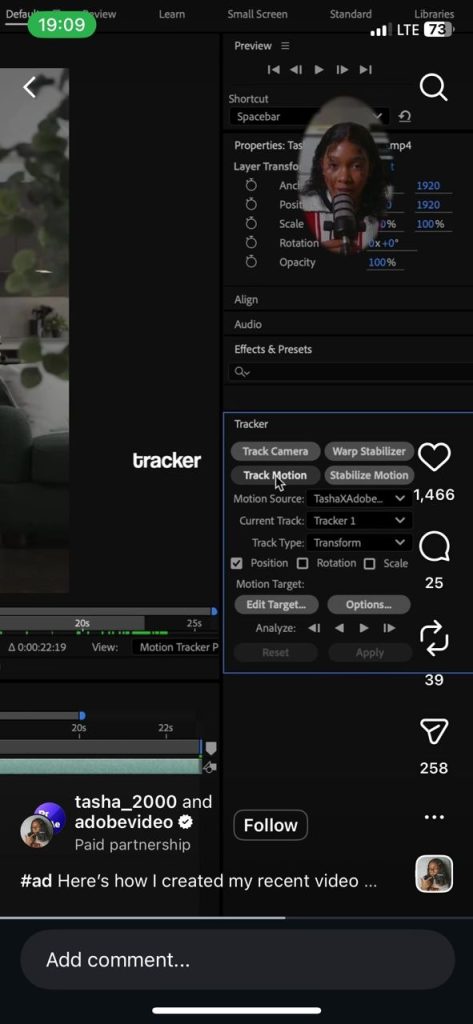
Tutorial content is naturally aligned with search intent because it answers a question while demonstrating a product in action.
When someone searches for “how to layer skincare” or “how to set up a home office,” a short tutorial ad delivers value in the first few seconds, earning attention before any commercial message is introduced. This format works exceptionally well for products where the use case isn’t immediately obvious, or where showing the process is more persuasive than showing the result alone.
Length is a critical variable here. For complex tutorials, 30–45 seconds is acceptable if every second delivers new information. For simpler demonstrations, 15–20 seconds is the performance sweet spot.
Best Instagram Search Ads Examples at a Glance
| Ad Format | Best For | Ideal Search Intent |
| Keyword-Triggered Reels | DTC brands, content creators, SaaS | Informational and product discovery searches |
| Proof-First Creative | Apps, tools, supplements | Comparison and evaluation searches |
| Before/After Single Frame | Skincare, fitness, home improvement, and transformation products | Solution-seeking searches (“how to fix…”) |
| Creator-Led Recommendation | Skincare, supplements, tech, and financial services | Trust-driven product searches |
| Comparison-Style | B2B SaaS, services, and considered purchases | High-intent “best X for Y” searches |
| Shoppable Formats | eCommerce, fashion, home goods | Purchase-intent product searches |
| Location-Based Discovery | Local businesses, service providers, regional brands | “Near me” and city-specific searches |
| Tutorial-Led | Products with non-obvious use cases | “How to” and instructional searches |
GetHookd: Research & Launch Search-Ready Instagram Ads in Minutes
The eight formats above all share one underlying principle: the ad earns attention by matching what the user already wants, rather than fighting for it. That shift in mindset, from broadcasting to answering, is what separates the brands seeing strong returns from those burning budget on impressions that never convert.
GetHookd shortens the gap between research and launch. Use Brand Spy to uncover the keyword-aligned hooks and creatives your competitors are scaling, then turn those insights into search-ready creatives with our AI Video Scripts, Clone Ads, Image Ad Templates, and Ads Transcription tool. What used to take a week of competitor research and creative production now takes minutes.
Start your free GetHookd trial today →
Frequently Asked Questions (FAQs)
What are Instagram Search Ads?
Instagram Search Ads are paid placements that appear within Instagram’s search results when a user types a query into the search bar. They surface alongside organic content in the search results feed. The placement is activated through Meta Ads Manager by selecting the Instagram Search Results option within your ad set.
How can I target specific keywords with Instagram Search Ads?
Instagram Search Ads do not use exact keyword bidding the way Google Search does. Meta combines your interest targeting, audience behaviors, and the relevance signals within your creative (the spoken words, on-screen text, caption, and landing page) to determine when your ad appears. Writing your hook to mirror likely search queries is the most effective way to surface in front of matching intent.
What is the best ad format for Instagram Search placements in 2026?
Short-form vertical video in a 9:16 aspect ratio is the top-performing format for Instagram Search placements. Image ads also work for eCommerce products with strong visual differentiation or for before/after proofs that fit in a single frame.
What’s the difference between Instagram Search Ads and Google Search Ads?
Both ads target users in active discovery mode, but the matching mechanisms differ. Google Search Ads use exact and phrase-match keyword bidding, while Instagram Search Ads rely on interest targeting and creative relevance signals to surface ads tied to user queries. Instagram also leans heavily on visual creativity, so the hook and on-screen text carry the weight that text headlines do on Google.
How do I know which hooks actually work in Instagram Search Ads?
The hooks that win in search placements are the ones that mirror real user queries. With GetHookd, we let you study 65M+ high-performing Meta ads to see which keyword-aligned hooks are scaling in your sector, then use our AI Video Scripts, Clone Ads, and templates to build your own variations in minutes.
*Note: Pricing and/or product availability mentioned in this post are subject to change. Please check our website for current pricing and stock information before making a purchase.