10 Facebook Brand Awareness Ads Examples for Your 2026 Campaigns
Key Takeaways
- Ten formats are driving the strongest brand awareness results in 2026: scroll-stopping videos, relatable lifestyle ads, bold visual branding, humor, social proof, educational micro-content, collection ads, curiosity hooks, UGC-style ads, and founder or human story ads.
- The top awareness videos are designed for silent viewing, open with movement or visual tension in the first frame, and stay between 6 and 15 seconds to hold attention without triggering fatigue.
- The best lifestyle, UGC, and humor ads work by embedding the brand in everyday moments or shared experiences rather than making the product the subject, which builds the feeling that the brand “gets” the viewer.
- For social proof and founder story ads, lead with specific, verifiable numbers or a real human face, since vague claims register as noise while specificity and human presence register as proof and trigger empathy.
- GetHookd gives marketers 65M+ Meta ads filterable by industry, angle, and format, plus AI tools to generate image variations, write video scripts, and analyze their awareness ads in one place.
Facebook Brand Awareness Ads That Work in 2026
The Facebook brand awareness ads working in 2026 are the ones designed to make a viewer feel something rather than click something. That single shift, from chasing immediate action to engineering recall, is what separates an awareness ad from a direct response ad and what determines whether your brand is the first one a buyer thinks of when they’re finally ready to spend.
Ten formats are doing that job especially well right now. Scroll-stopping videos earn the first second of attention, relatable lifestyle and UGC-style ads embed the brand into everyday moments, and humor and curiosity hooks turn passive viewers into active ones. Bold visual branding trains thumbnail recognition, social proof, and educational micro-content to build trust before the pitch, collection ads create immersive brand worlds, and founder or human story ads anchor the brand to a real face viewers can remember.
In this article, we’ll break down each format, who it works best for, and what makes it stick.

GetHookd: Turn Competitor Intelligence Into Your Next Winning Ad
GetHookd reveals which ads your competitors are actively scaling—not just running. Spy on their best-performing creatives, landing pages, and traffic strategies, then turn proven concepts into testable campaigns in seconds with AI-powered script generation and creative cloning.
What You Get:- ✓ Brand Spy to decode competitor ad strategies in real-time
- ✓ AI script generation and ad cloning for instant variations
- ✓ Performance scoring based on actual ad behavior, not vanity metrics
- ✓ Creative Analyzer to identify and scale your top performers
1. The Scroll-Stopping Video Ad
Video is the dominant format for brand awareness on Facebook because it does something static images can’t: it creates a moment.
The key to a scroll-stopping video ad is the first frame. If your opening shot doesn’t create immediate tension, curiosity, or visual interest, people scroll past before your brand even registers.
For your scroll-stopping video ads, start with movement or an unexpected visual in frame one. Keep the total runtime between 6 and 15 seconds for awareness campaigns, and always design for silent viewing with captions or on-screen text carrying the message.
2. The Relatable Lifestyle Ad
The relatable lifestyle ad works by showing your target audience a version of themselves, such as their daily life, struggles, or aspirations, with your brand naturally embedded in that scene. It doesn’t shout “buy this.” Instead of pushing the sale, it builds the feeling that the brand gets you, which is a far more powerful awareness trigger.
This format performs especially well for consumer brands in food, fitness, parenting, home, and fashion. The creative formula is simple: your product or brand appears as a natural part of the scene rather than as its subject.
3. The Bold Visual Branding Ad
The bold visual branding ad uses striking design, high-contrast color, and confident typography to make an aesthetic impression. Think of how brands like Apple or Glossier have trained their audiences to recognize them from a thumbnail.
On Facebook, this format works best when your brand has a defined visual language: a signature color palette, a recurring design motif, or a typographic style that’s distinctly yours.
For newer brands, this approach requires a strong design foundation before it pays off, but for established brands, it reinforces recall every time it appears in the feed.
4. Humor as Brand Awareness
Humor is one of the most underused tools in brand awareness advertising, and also one of the most effective. A genuinely funny ad creates a shared experience between the brand and the viewer, and shared experiences are memorable.
When someone laughs at your ad, they’re also, whether they realize it or not, deciding that your brand has good taste and gets them.
The brands doing this best on Facebook are using dry humor, absurdist scenarios, and relatable micro-frustrations to create ads that feel more like content than advertising.
5. Social Proof for Cold Audiences
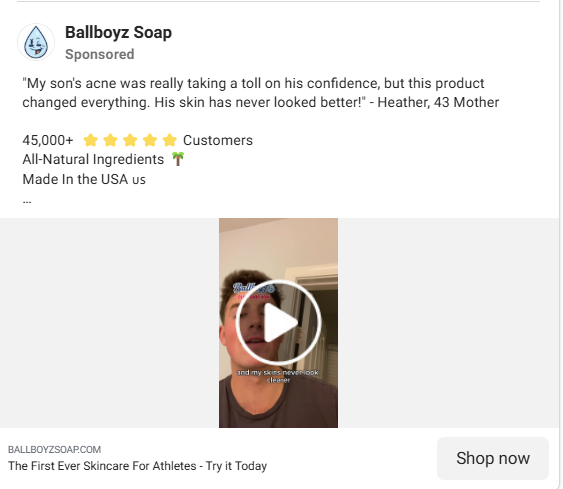
Social proof in a brand awareness context builds credibility before someone even considers buying. When a cold audience sees that thousands of people already trust your brand, the mental barrier to remembering and eventually choosing you drops significantly.
This format bridges the gap between pure awareness and consideration, making it especially valuable for brands in competitive or skeptical markets like finance, health, and SaaS.
The key distinction with this format is specificity. Vague claims like “loved by customers everywhere” register as noise. Specific, verifiable numbers and real customer voices register as proof.
6. The Educational Micro-Content Ad
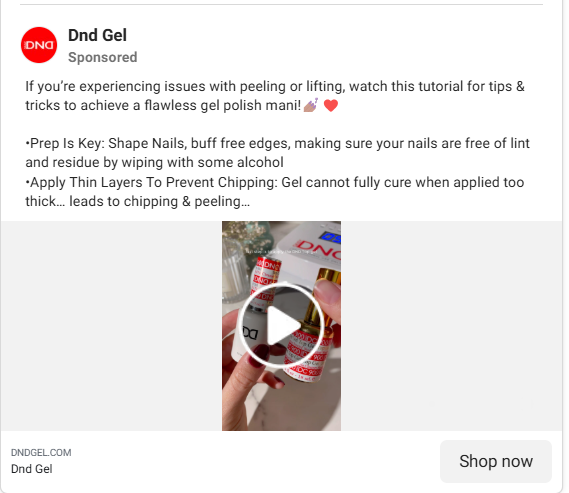
Educational micro-content ads position your brand as the authority in your space. You don’t do this by telling people you’re an expert, but by being one in 15 seconds or less.
The format delivers a useful insight that your target audience cares about, with your brand naturally framed as the source. It’s one of the highest-trust brand awareness formats available on Facebook because it creates a value exchange: the viewer gets something useful, and your brand gets the association with that value.
7. Collection Ads as a Brand Experience Tool
Collection ads are typically associated with e-commerce conversions, but they’re an underrated brand awareness format when used at the top of the funnel.
The immersive, full-screen Instant Experience that opens when someone taps a Collection ad creates a mini brand world. Think of collection ads as a curated, mobile-native environment where your visual identity, product range, and brand story all come together in one place.
For fashion, home goods, and lifestyle brands especially, this format delivers a brand experience rather than just an impression.
8. The Curiosity Hook Ad
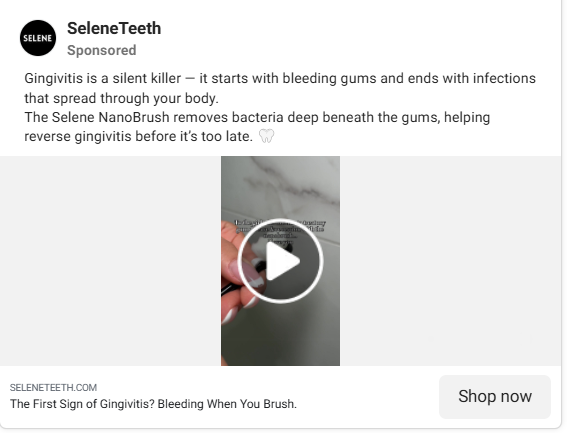
The curiosity hook ad is built around a single, irresistible open loop. That could be a question, statement, or visual that the viewer’s brain needs to resolve.
The hook doesn’t have to be complicated. “We almost didn’t launch this product.” “The thing nobody tells you about [industry problem].” “This is what happens when you stop doing [common habit].”
Each of these creates an information gap that makes stopping feel necessary. The brand is remembered for the feeling of intrigue, a powerful brand association to own.
9. UGC-Style Ad
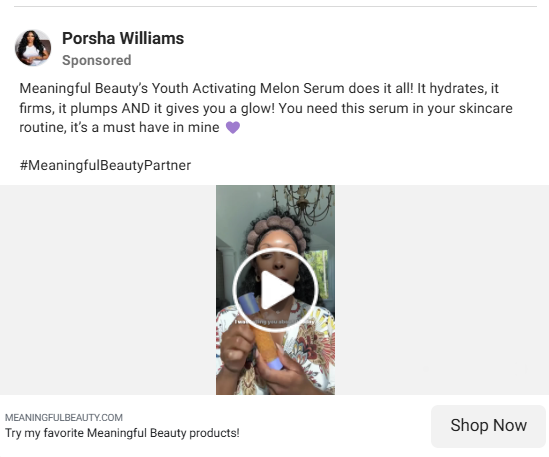
UGC-style ads are consistently outperforming polished, produced creative for brand awareness. When an ad looks like something a genuine customer filmed on their phone while talking about a product they love, it bypasses the audience’s built-in ad skepticism.
The format works even when viewers know it’s an ad, because the presentation’s authenticity signals that real people are behind the brand. Casual language, natural lighting, and first-person narrative are all features of this format.
10. The Founder or Human Story Ad
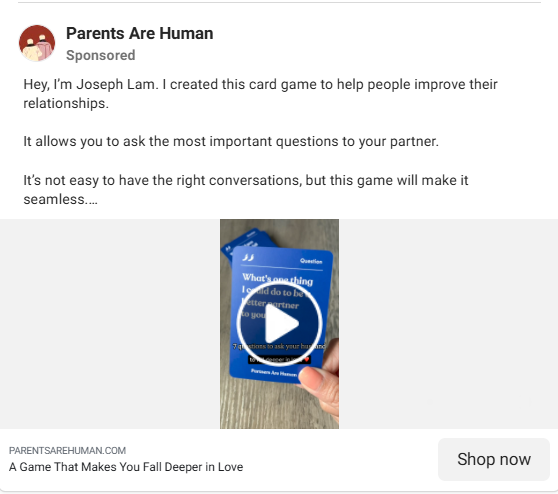
The human story or founder ad adds a real face and voice at the center of your brand awareness creative, creating an emotional connection that no product shot or tagline can replicate.
It doesn’t have to be the founder specifically. Your ad can feature a longtime employee, a customer whose life changed, or anyone whose story authentically represents the brand’s values.
The format works because human faces automatically trigger empathy, and a compelling personal story creates a narrative anchor that sticks in memory far longer than any feature list.
10 Best Facebook Brand Awareness Ad Formats: Summary Table
| Format | Best For | Key Strength |
| Scroll-Stopping Video | Brands with strong visual storytelling | Creates a moment that static formats cannot, optimized for silent viewing |
| Relatable Lifestyle | Consumer brands in food, fitness, parenting, home, and fashion | Shows the audience a version of themselves with the brand naturally embedded |
| Bold Visual Branding | Established brands with a defined design language | Trains audiences to recognize the brand from a thumbnail alone |
| Humor and Relatability | Brands willing to commit to a distinct voice | Turns shared laughter into brand affinity and memorable recall |
| Social Proof | Competitive or skeptical markets like finance and health | Builds credibility with specific, verifiable numbers |
| Educational Micro-Content | Brands positioning themselves as category authorities | Earns trust through value |
| Collection Ads | Lifestyle brands with strong visual identity | Creates an immersive, full-screen brand world through Instant Experience |
| Curiosity Hook | Brands with a distinct story or counterintuitive point of view | Opens an information gap strong enough to override the scroll reflex |
| UGC-Style | DTC categories | Bypasses ad resistance through casual, first-person authenticity |
| Founder/Human Story | Brands with a compelling origin story or real people at the center | Builds emotional connection |
GetHookd: Your Best Ally for Engaging Brand Awareness Ads
Running Facebook brand awareness ads that actually move the needle means combining the right format, creative strategy, and a clear understanding of how Meta’s algorithm rewards engagement. We built GetHookd to bring all three together for brands ready to own their space in 2026. Our database of 65 million Meta ads lets you search by industry, angle, and format, so you can spot the awareness concepts earning real attention in your category.
From there, our AI creative tools close the gap between spotting a winning idea and shipping your own version. You can generate image ad variations, write video scripts, analyze competitor copy line by line, or track how your own ad account is performing. That keeps the entire workflow in one place, so your team spends more time on the creative decisions that move awareness campaigns forward.
Start your GetHookd free trial today
Frequently Asked Questions (FAQs)
What is the difference between a Facebook brand awareness ad and a reach ad?
A Facebook brand awareness ad optimizes for estimated ad recall lift, meaning Meta shows your ad to people most likely to remember seeing it. A reach ad simply optimizes for showing your ad to the maximum number of unique people within your budget, regardless of whether they will remember it.
How long should a Facebook brand awareness campaign run?
Run awareness campaigns for 4 to 6 weeks before drawing any meaningful conclusions, since repeated exposure across multiple touchpoints is how memory is built. A good rule of thumb is to monitor frequency closely. Too few impressions and you are not building enough repetition for memory to form, too many and you risk ad fatigue where the audience starts tuning out your creative.
What metrics should I track for Facebook brand awareness ads?
The right metrics to track for Facebook brand awareness ads are estimated ad recall lift, reach, frequency, and video completion rate. Secondary signals worth monitoring include social engagement, direct website traffic, and email open rates, all of which compound over time. Avoid judging awareness campaigns by conversion metrics like cost-per-click or ROAS, since awareness ads are not built to convert cold audiences directly.
How does GetHookd help with brand awareness ads?
GetHookd gives you access to 65 million Meta ads filterable by industry, angle, and format, so you can study the brand awareness creative that is actually earning attention in your category. From there, our AI tools help you generate image ad variations, write video scripts, and analyze competitor copy, so you can move from research to launch without switching platforms.
*Note: Pricing and/or product availability mentioned in this post are subject to change. Please check our website for current pricing and stock information before making a purchase.