

8 Effective Instagram Carousel Ad Examples & Tips for 2026
Key Takeaways
- Tutorials, before-and-after transformations, product breakdowns, social proof stacks, problem-solution flows, UGC, comparison cards, and FAQ carousels are Instagram carousel formats driving results in 2026.
- High-performing carousel ads are built around sequence logic: every card has a job, from the card-one hook through the proof cards to the closing CTA.
- Design every carousel at 1080 x 1350px (4:5) for mobile-first placements and limit on-card copy to 8 to 10 words of headline text per card.
- For product feature breakdowns, list features in the order your customer cares about most. Lead with the benefit that solves their biggest pain point rather than the spec you are proudest of.
- GetHookd gives performance marketers access to 65M+ Meta ads filterable by niche, format, and performance signals, alongside AI creative tools that turn competitor intelligence into tested carousel variations in minutes.
What Separates High-Performing Carousel Ads From Generic Ones
The Instagram carousel ads that actually convert in 2026 are the ones built as journeys rather than galleries. Most fail because brands treat the format like a photo album, dropping five product shots into Ads Manager and hoping engagement follows. The ones that win give every card a job, so each swipe becomes a small commitment that pulls the viewer toward the CTA instead of a passive scroll that ends in silence.
Eight examples are doing this well right now, each suited to a different campaign goal. Tutorials and before-and-after transformations earn trust through visible value, product feature breakdowns and FAQ carousels handle considered purchases by surfacing benefits and objections one card at a time, problem-solution and comparison carousels frame the buying decision, and social proof and UGC carousels borrow credibility from real customers.
In this article, we’ll break down each example, the specs every card needs to hit, and the mistakes that quietly kill carousel performance.

GetHookd: Turn Competitor Intelligence Into Your Next Winning Ad
GetHookd reveals which ads your competitors are actively scaling—not just running. Spy on their best-performing creatives, landing pages, and traffic strategies, then turn proven concepts into testable campaigns in seconds with AI-powered script generation and creative cloning.
What You Get:- ✓ Brand Spy to decode competitor ad strategies in real-time
- ✓ AI script generation and ad cloning for instant variations
- ✓ Performance scoring based on actual ad behavior, not vanity metrics
- ✓ Creative Analyzer to identify and scale your top performers
8 Effective Instagram Carousel Ad Examples
1. The Step-by-Step Tutorial Carousel
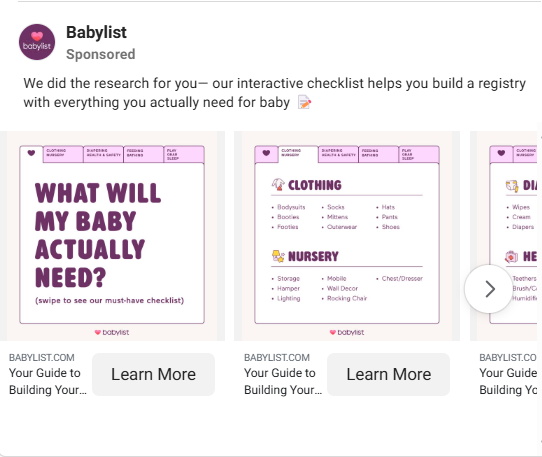
Tutorial carousels deliver real, immediate value before asking for anything in return. The structure works by turning a process into a numbered sequence. Each card = one step.
The viewer learns something useful with every swipe, which builds trust fast. By the time they reach the CTA card, they’ve already experienced your expertise firsthand.
To create the best Instagram carousel ad, pick one problem your audience faces and solve it in 5–8 steps. Keep each card to a single action or insight.
A fitness brand might run “How to do a perfect deadlift in 6 steps.” A SaaS company might use “Set up your first automation in 7 minutes.” The format works for almost any niche.
2. The Before-and-After Transformation Carousel

Transformation is one of the most primal hooks in advertising. Showing where someone started and where they ended up creates an immediate emotional response, and carousels are the perfect format to stretch that story across multiple cards.
Unlike a single split-image before-and-after, a carousel lets you show the journey rather than just the result. That middle part, the process, is where trust is built, and skepticism is reduced.
A skincare brand could use this format to show a customer’s 30-day skin journey with a product. A home renovation account could walk through a room transformation, card by card.
3. The Product Feature Breakdown Carousel
When a product has multiple features worth highlighting, cramming them all into one image is a losing strategy. The feature breakdown carousel solves this by giving each key feature its own dedicated card.
Don’t list features in order of what you’re most proud of. Instead, list them in order of what your customer cares about most.
The critical distinction to keep in mind here is benefits over features. “12-hour battery life” is a feature. “Get through your entire workday without hunting for an outlet” is a benefit. Frame every card through the lens of what the customer gains, not what the product does.
4. The Social Proof Carousel
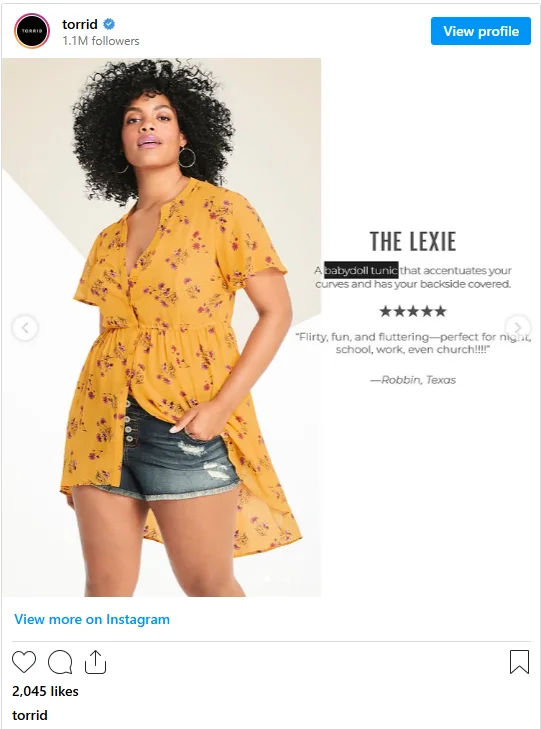
Trust is the real currency of digital advertising, and nothing builds it faster than other people’s words. The social proof carousel aggregates testimonials, reviews, case study results, or user wins into a single compelling ad unit. The format works because it shifts the voice. Instead of the brand making claims, it’s the customers.
For maximum impact, don’t just screenshot generic five-star reviews. Curate testimonials that speak to specific objections.
If price is a common hesitation, find a review that addresses value. If people doubt results, lead with a testimonial that includes specific, measurable outcomes.
5. The Problem-Solution Carousel
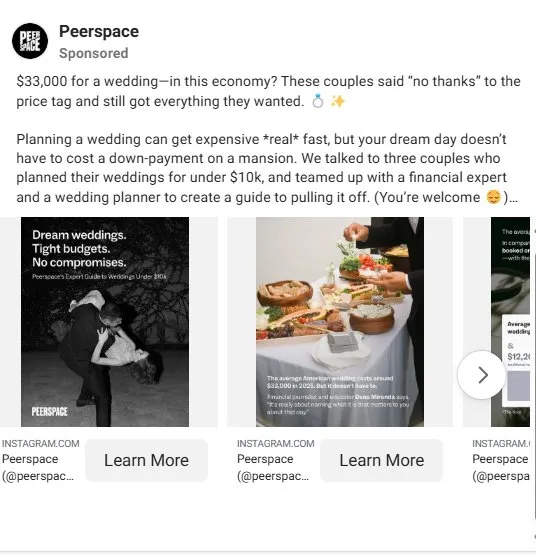
This is the format closest to a classic direct-response ad, and it converts well because it mirrors exactly how buyers think.
Card 1 names the problem in the language your audience uses themselves. Card 2 agitates it by adding stakes or showing the cost of inaction. The remaining cards introduce and demonstrate the solution, while the final card serves as the CTA.
The problem-solution structure works because it creates emotional resonance before making any ask. By the time your product appears, the viewer already feels understood, which is the fastest path to trust.
6. The Comparison Carousel
Comparison carousels work by making decisions for the buyer. Instead of making them research alternatives, you lay out the options clearly and position your offer as the obvious winner.
This doesn’t require tearing down competitors. The most effective comparison carousels use “old way vs. new way” framing, or “DIY vs. done-for-you,” or “generic solution vs. specialized solution.” The contrast makes your value proposition feel obvious, with little need for an explicit product pitch.
7. The FAQ Carousel
Every product or service has a list of questions that prospects ask before buying. The FAQ carousel turns those objections into a structured, swipeable sales conversation.
The genius of this format is that it mirrors the internal dialogue of a buyer who’s almost convinced but not quite there. By surfacing and answering the most common hesitations in sequence, you remove friction at scale.
8. The User-Generated Content (UGC) Carousel
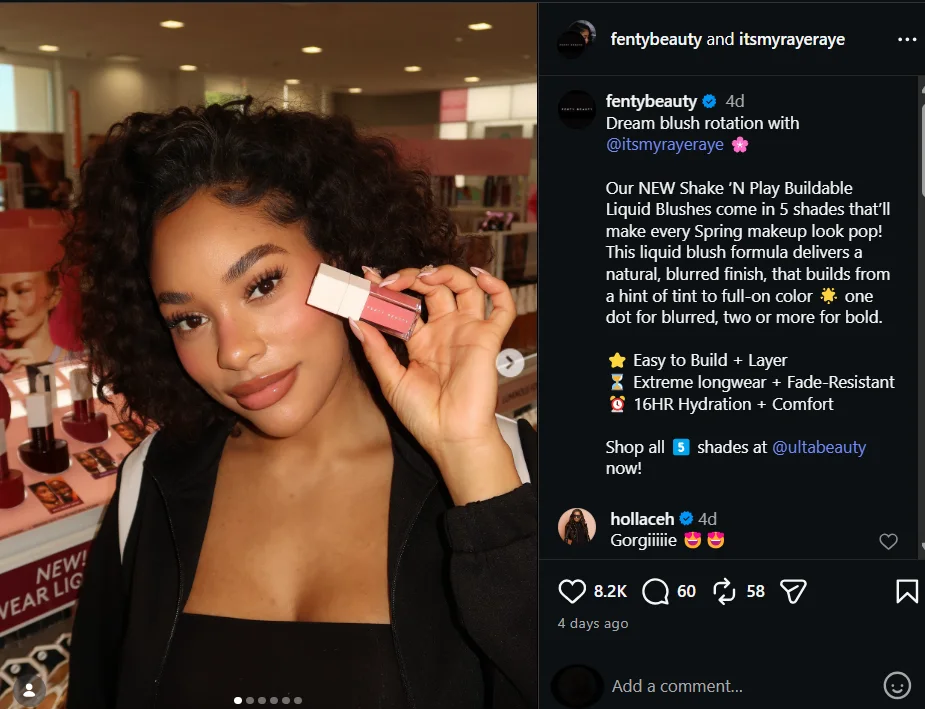
UGC carousels borrow credibility from real customers by featuring their content in a paid ad format. The lo-fi aesthetic is intentional. It signals authenticity in a feed full of polished brand content, and that contrast stops the scroll.
Curate UGC that shows diverse use cases or different customer types to broaden appeal across your audience segments. Always secure usage rights before running any customer content as a paid ad.
Instagram Carousel Ad Specs You Need to Get Right
The recommended aspect ratios for Instagram carousel ads are 1:1 (1080 x 1080px) for the universal square format, and 4:5 (1080 x 1350px) for the mobile-first vertical format, which takes up more screen real estate in the feed.
All cards in a single carousel must use the same aspect ratio. Mixing ratios within a single ad are not supported. Meta’s system will default to the first card’s ratio and crop the rest or reject the upload entirely.
For video cards, the maximum file size is 4 GB, with MP4 and MOV as the recommended formats. Instagram allows video cards up to 60 seconds each, though clips under 15 seconds are generally recommended.
Slide Count, File Size, & Caption Limits
Instagram carousel ads support a minimum of 2 cards and a maximum of 10 cards. For most conversion-focused campaigns, 5 to 7 cards hit the sweet spot, enough to build a case without losing viewers to drop-off fatigue.
Primary text (the caption above the carousel) allows up to 2,200 characters, but only the first 125 characters show before the “more” truncation in most placements. Treat 125 as the practical limit and front-load your key message.
Common Carousel Ad Mistakes to Avoid
- Overloading Slides With Text: Each card in your carousel should communicate one idea, not five. Keep card copy to a maximum of 8 to 10 words of headline text, supported by a clean visual. If you have more to say, that is what the next card is for.
- Using Weak or Generic First Slides: The first slide needs to create an immediate open loop: a bold claim, a provocative question, a surprising number, or a visual so striking it breaks the scroll pattern.
- Ignoring Mobile Viewing Behavior: What looks balanced on a 27-inch screen can render as cluttered, cropped, or unreadable on a 6-inch phone display. Always design with mobile in mind and keep critical text and visual elements within the central frame.
Best Instagram Carousel Ad Formats: Summary Table
| Format | Best For | Key Strength |
| Step-by-Step Tutorial | Educational content | Delivers real value on every swipe, building trust before the CTA |
| Before-and-After Transformation | Categories with a visible or measurable change | Shows the journey across cards and reduces skepticism |
| Product Feature Breakdown | Products with multiple features | Dedicates one card per benefit, framed around the customer’s priorities |
| Social Proof | Brands with customer reviews, testimonials, or case study wins | Replaces brand claims with customer voices, curated to target specific objections |
| Problem-Solution | Direct-response campaigns | Mirrors buyer psychology, naming the problem before introducing the product |
| Comparison | Brands competing in crowded categories | Frames the decision for the buyer using “old way vs new way” contrasts |
| FAQ | Considered purchases where prospects have specific pre-buy objections | Surfaces and answers hesitations in sequence |
| UGC | Brands with real customer content and usage rights secured | Borrows credibility from customers |
Turn Carousel Ads Into a Performance Channel with GetHookd
Scaling carousel ads from occasional tests into a consistent growth channel comes down to knowing which sequences, hooks, and card structures are moving the needle for brands in your industry. We built GetHookd to deliver that intelligence and more. Our database of 65M+ Meta ads lets you filter by format (including carousels) and performance signals, so you can see what competitors are scaling.
With our AI tool, you can easily move from research to production without switching platforms. We provide features like Clone Ads, which takes a winning ad and generates dozens of fresh variations. Our Video Scripts generator writes ready-to-use scripts in minutes, while our library of image ad templates gives you a structured starting point whenever you need to ship new creative quickly.
Start your GetHookd free trial today
Frequently Asked Questions (FAQs)
How many slides should an Instagram carousel ad have?
For most carousel ads, 5 to 7 cards give you enough depth to build a hook-to-CTA sequence without hitting swipe fatigue. Tutorial and educational formats can stretch to 8 to 10 cards when each card earns the next swipe. Instagram supports a minimum of 2 and a maximum of 10 cards per carousel ad.
What is the best size for Instagram carousel ad images in 2026?
The best size for Instagram carousel ad images in 2026 is 1080 x 1350px (4:5 ratio) for mobile-first placements, since the vertical format takes up more screen real estate than square (1:1). All cards within a single carousel must share the same aspect ratio, so use one ratio and build every card to match. Consistency here is non-negotiable for both technical compliance and visual cohesion.
Can you mix images and videos in the same carousel ad?
Yes, Meta’s Ads Manager supports mixed-media carousels where some cards are static images, and others are short video clips. Used intentionally, a video card early in the sequence captures attention through motion, while static cards that follow deliver clearer, readable information.
Are Instagram carousel ads worth it for small budgets?
Carousel ads are a strong fit for smaller advertisers because the format creates more interaction opportunities per impression, including swipes, card views, and link clicks. GetHookd’s ad database and Brand Spy feature help you track how brands at different growth stages are structuring their carousel ads. With our creative tools and templates, you can turn that insight into your own variations without relying on guesswork or wasting ad spend.
*Note: Pricing and/or product availability mentioned in this post are subject to change. Please check our website for current pricing and stock information before making a purchase.