How to Target Competitors’ Audience on Facebook: Tips & Tools
Key Takeaways
- To target competitor audiences on Facebook, build interest-based audiences in Meta Ads Manager that mirror your competitors’ followers, then layer in lookalike audiences pulled from your existing customer data so you reach buyers who already engage with similar brands.
- Facebook is the right platform because it targets people by who they are and what they engage with (not by search intent like Google), which lets you skip cold awareness and enter the conversation at the consideration stage where buying decisions happen.
- Define your ideal customer profile before researching competitors, run two to three ad variations against the audience at the same time, and give each ad set a full seven days plus a meaningful budget before deciding which creative wins.
- The free Meta Ad Library shows what competitors are running, while competitive intelligence platforms like GetHookd reveal which of those ads are actually scaling, along with the landing pages and hooks behind them.
- GetHookd gives you a searchable database of more than 65 million Meta ads and a Brand Spy feature that breaks down any competitor’s top-performing campaigns, landing pages, and hooks in one place.
Why Facebook Is the Best Place to Reach Competitor Audiences
To target a competitor’s audience on Facebook, you build interest-based audiences inside Meta Ads Manager around competitor pages and adjacent brands, then layer lookalike audiences from your existing customer data on top.
Facebook makes this realistic because it targets people by who they are and what they engage with, letting you skip cold awareness and enter the conversation at the consideration stage where buying decisions actually happen.
The harder part is knowing which competitor ads are worth modeling, because the free Meta Ad Library only shows what is running, not what is converting. That gap is where competitive intelligence platforms come in.
GetHookd maintains a searchable database of more than 65 million Meta ads with scaling signals on individual creatives, and its Brand Spy view breaks down each competitor’s top-performing landing pages and hooks in one place, so you can target their audience with a creative that is already proven to convert.

GetHookd: Turn Competitor Intelligence Into Your Next Winning Ad
GetHookd reveals which ads your competitors are actively scaling—not just running. Spy on their best-performing creatives, landing pages, and traffic strategies, then turn proven concepts into testable campaigns in seconds with AI-powered script generation and creative cloning.
What You Get:- ✓ Brand Spy to decode competitor ad strategies in real-time
- ✓ AI script generation and ad cloning for instant variations
- ✓ Performance scoring based on actual ad behavior, not vanity metrics
- ✓ Creative Analyzer to identify and scale your top performers
How to Target a Competitor’s Audience on Facebook
1. Define Your Ideal Audience
Before you look at a competitor, get crystal clear on who you’re trying to reach. Build out a detailed customer profile that includes:
- Age range and gender
- Location (city, region, or country, depending on your business)
- Key interests and hobbies that relate to your product or service
- Buying behaviors (are they frequent online shoppers, small business owners, or parents?)
- Pain points your offer directly solves
This step matters because your competitor research needs a filter. Not every competitor’s audience will perfectly overlap with your ideal customer. Knowing your customer profile first keeps your targeting tight and your ad spend efficient.
2. Identify & Analyze Competitors
Search Facebook using the same keywords your target audience would use to find businesses like yours.
Once you’ve built your shortlist, dig into each competitor’s page. Check their Related Pages section to see which other pages their audience likes. Visit the Meta Ad Library and search their page name to see every ad they’re currently running. Note the creative style, copy angle, offer type, and the length of time the ads have been running.
Meta Business Suite Insights gives you aggregated demographic and engagement data on audiences that interact with pages in your niche, which you can cross-reference with competitor research to map out who your competitors are actually reaching.
3. Build Competitor-Based Audiences in Ads Manager
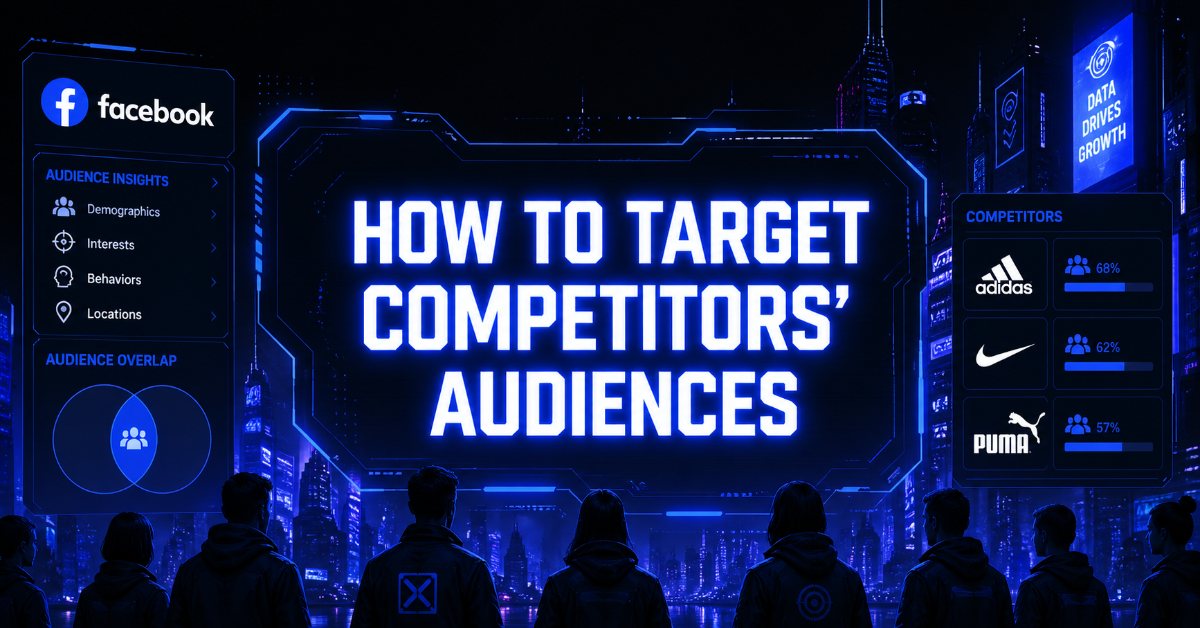
You cannot type a competitor’s name and target their followers directly. Facebook doesn’t allow that level of direct access. What you can do is build interest-based audiences that closely mirror those followers using the aggregated data Facebook makes available.
In Ads Manager, open the Detailed Targeting section and search for your competitor’s Facebook Page by name. Meta has steadily reduced the brand and page interests it makes available since 2022, so most competitor pages will not appear directly. When that happens, target adjacent brands, category interests, and behavioral signals that profile the same buyer.
For broader reach, layer this with Advantage+ Audiences, which Meta now recommends as the default targeting approach. Treat your competitor-based interests as suggestions to the algorithm rather than rigid filters, and let Meta’s delivery system find lookalike behavior at scale.
4. Create Ads That Convert Competitor Traffic
Targeting the right audience means nothing if your ad doesn’t give them a reason to switch.
People already following your competitor have a baseline loyalty, so your ad needs to interrupt that pattern with something compelling. Lead with your strongest differentiator, whether that’s price, quality, speed, or a feature your competitor simply doesn’t offer.
Your ad creative should speak directly to the pain points that drive someone to follow a brand in your niche in the first place. Use social proof aggressively here. Testimonials, case study results, and specific numbers outperform generic claims every time.
5. Test, Optimize, & Scale
Run at least two to three ad variations against your competitor-based audience simultaneously. Test different hooks, creative formats, and calls to action.
Give each ad set at least seven days and a statistically meaningful budget before drawing conclusions. Facebook’s algorithm needs time and data to optimize delivery, and pulling the plug too early is one of the most common and costly mistakes advertisers make.
Once you identify a winning combination, scale it gradually. As you scale, layer in Lookalike Audiences built from your existing customers or website visitors. These audiences share behavioral and demographic traits with your best buyers, and when combined with competitor interest targeting, they create an incredibly efficient ad machine.
Tools That Help You Find & Target Competitor Audiences
GetHookd
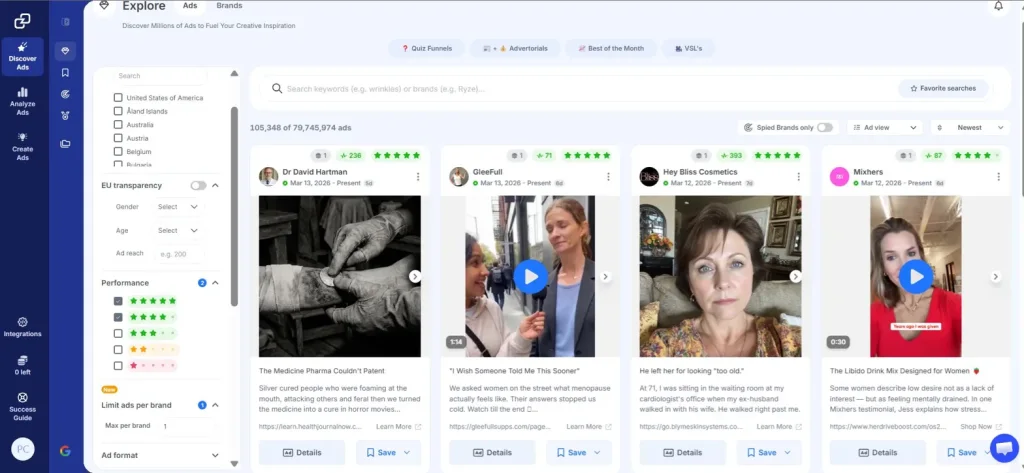
GetHookd helps marketers conduct the deepest competitor research to surface what’s working in their industry instantly. The real advantage our users get comes from understanding what the best-performing ads do, then building their own version that connects with the same audience.
Our database of over 65 million Meta ads lets you search by niche and performance, track the exact campaigns your competitors are scaling, and break down the hooks and copy structures that earn engagement.
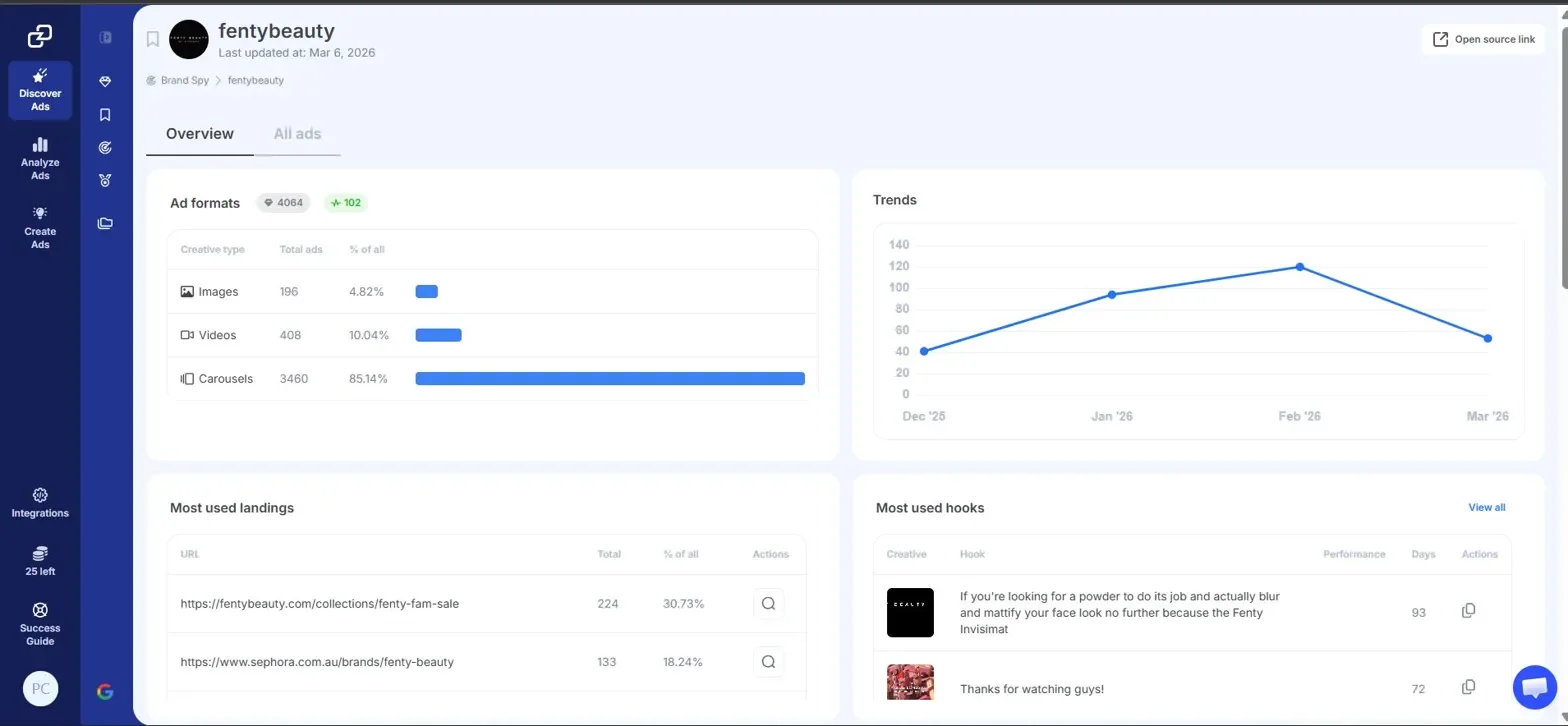
Our dedicated competitor research tool, Brand Spy, lets you monitor specific brands across their full advertising footprint, including the landing pages and traffic sources behind their top-performing ads.
From there, you can use our AI features to generate image variations and ready-to-film video scripts based on what is already working, which closes the gap between research and launch.
Meta Ad Library
The Meta Ad Library is a free, publicly accessible database of every active ad running across Facebook, Instagram, Messenger, and the Audience Network. Search any competitor’s page name to see every ad they are currently running and which platforms each ad appears on.
That said, the Meta Ad Library has real limits worth knowing before you rely on it as your only research tool. The platform shows you what competitors are running, but it does not show how those ads are performing. There are no performance signals, so you mostly judge ads by how long they’ve been live.
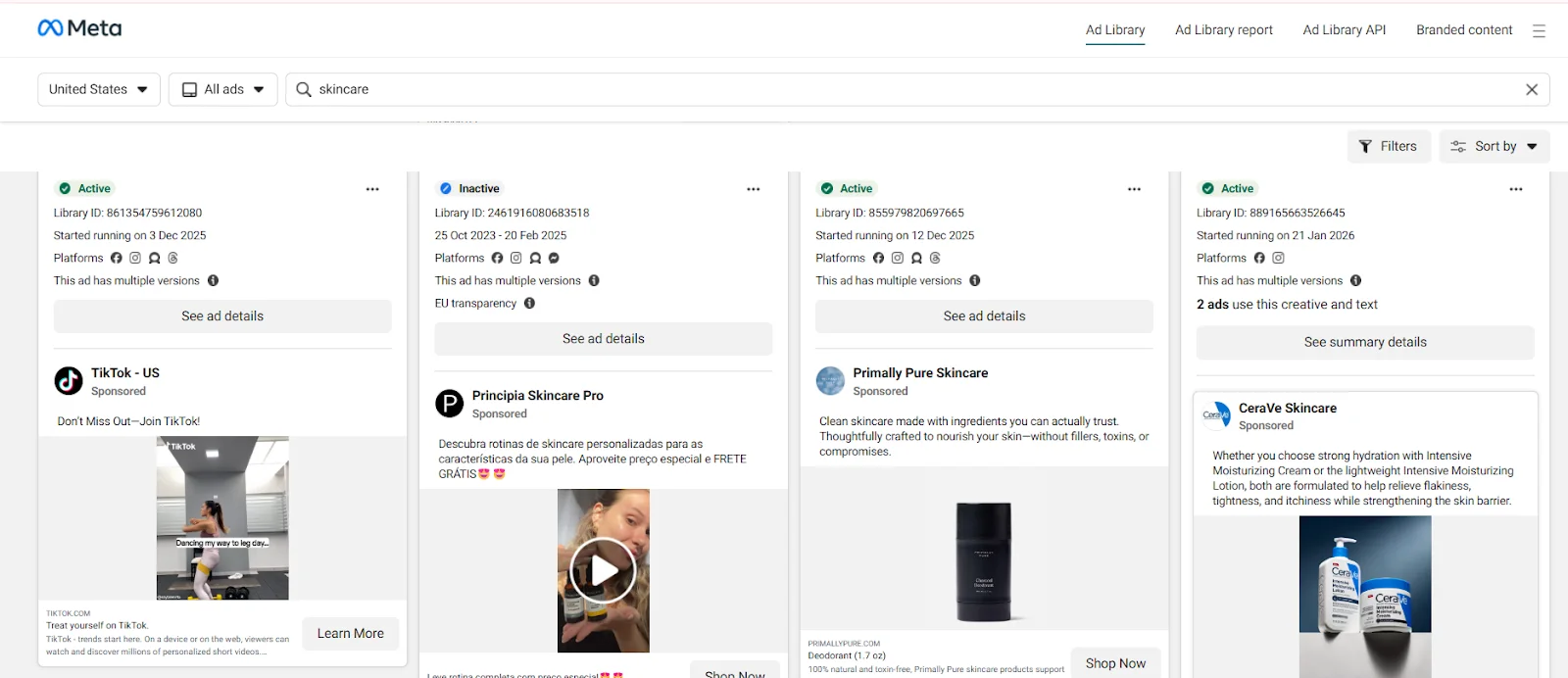
Filters are also basic, limited mostly to country, language, platform, media type, and active status. So there is no way to narrow your research by industry, niche, or ad format combinations.
Turn Competitor Insights Into Winning Ads with GetHookd
Targeting a competitor’s audience on Facebook only pays off when research turns into ads that convert. The marketers who win are the ones who identify scaling competitor creatives, decode the hooks behind them, and launch tested variations before the opportunity cools.
At GetHookd, we built our platform around that handoff. Our database, Brand Spy, and AI scripting tools live in one workflow, so you spend less time assembling intelligence and more time acting on it. If you want to turn competitor research into winning ads, start your free trial today.
Start your GetHookd free trial today!
Frequently Asked Questions (FAQs)
Can you target a competitor’s Facebook followers directly?
No, Meta does not let you upload a competitor’s follower list or directly select their followers as a targeting segment. You can use interest-based targeting in Ads Manager to reach audiences who follow competitor pages that Meta has categorized as interests.
Combined with demographic filters and behavioral data, this approach gets you remarkably close to that audience without crossing platform boundaries.
Is it legal to target a competitor’s audience on Facebook?
Yes, it is legal. Targeting audiences based on shared interests, behaviors, and demographics is standard digital advertising practice and fully permitted within Meta’s advertising policies.
The only boundaries to respect are Meta’s ad policies around misleading claims and prohibited content, which apply to every campaign regardless of how you build your audience.
How long does it take to see results from competitor audience targeting?
Most campaigns targeting competitor audiences start generating meaningful data within the first seven to fourteen days, which is largely a learning phase as Meta figures out which people in your audience are most likely to convert.
Conversion results become more consistent between weeks two and four once your campaign reaches the 50 optimization events per ad set threshold required to exit learning.
What is the best tool for researching competitors on Facebook?
GetHookd is the best tool for researching competitors on Facebook. Our platform gives you a searchable database of more than 65 million Meta ads, filterable by performance rating, audience targeting, ad reach, and demographics, so you can move past surface-level browsing and find the campaigns competitors are scaling.
The Brand Spy tool goes a layer deeper for any specific competitor, breaking down their full creative mix across formats, the landing pages driving the most traffic, and the exact hooks earning the strongest engagement on their top ads.
*Note: Pricing and/or product availability mentioned in this post are subject to change. Please check our website for current pricing and stock information before making a purchase.