
Key Takeaways
- Three Instagram UGC ad examples show real paid results: Meller with customer-photo Stories, Parachute with tagged-photo retargeting, and Timberland with anniversary UGC on Meta.
- Meller’s Instagram Stories test showed customer content beat brand images, cutting cost per click while the ad spend stayed the same.
- Parachute reused #MyParachuteHome posts as retargeting ads, lifting click-through rates and lowering cost per click against editorial content.
- Timberland’s 50th anniversary creative proved UGC still scales for large brands, raising return on ad spend on Meta placements.
- GetHookd scans over 65 million Meta ads, letting media buyers find winning UGC creatives, spy on competitors, and clone proven formats fast.
What Counts as a UGC Ad (Not Organic UGC)
Organic UGC is a customer posting about you for free. A UGC ad is that same style of content placed behind ad spend and pointed at buyers, so you control the targeting, the budget, and the message. For dropshippers, ecommerce brands, agencies, media buyers, and scaling teams, the paid version is the money-maker, because a free post reaches whoever the algorithm decides, while an ad reaches the audience you choose.
Meller, Parachute, and Timberland each ran UGC against their own studio creative and won on CPC or ROAS. Their campaigns show how the pattern plays out across a small accessories label, a home goods retailer, and a global footwear brand,
However, every UGC creative has a shelf life, because once an audience has seen it enough times, performance drops and costs climb back up. Staying ahead means constantly finding fresh angles to test.
GetHookd helps media buyers solve that refresh problem by showing which UGC ads competitors are actively scaling, so each new test starts from proven creative instead of a blank page.

GetHookd: Turn Competitor Intelligence Into Your Next Winning Ad
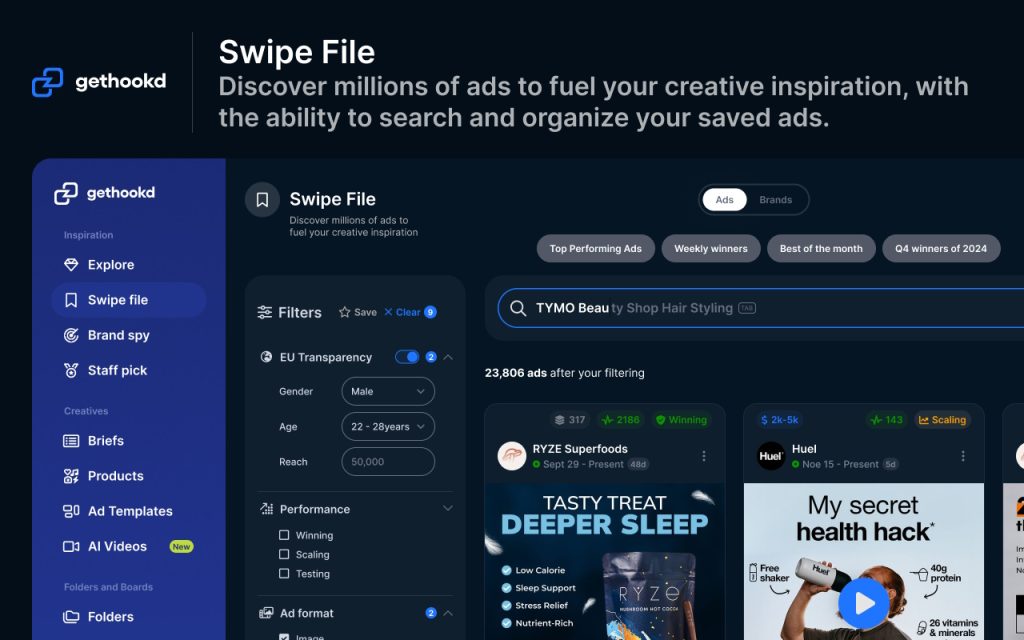
GetHookd reveals which ads your competitors are actively scaling—not just running. Spy on their best-performing creatives, landing pages, and traffic strategies, then turn proven concepts into testable campaigns in seconds with AI-powered script generation and creative cloning.
What You Get:- ✓ Brand Spy to decode competitor ad strategies in real-time
- ✓ AI script generation and ad cloning for instant variations
- ✓ Performance scoring based on actual ad behavior, not vanity metrics
- ✓ Creative Analyzer to identify and scale your top performers
3 Instagram UGC Ad Examples That Work
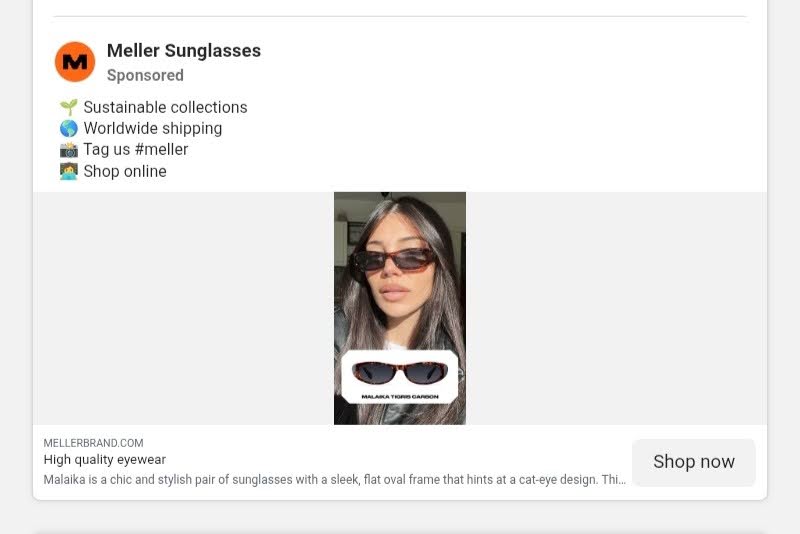
1. Meller: Instagram Stories Ads Built From Customer Photos
Meller is a watch and sunglasses brand that runs most of its customer acquisition through social ads, so small changes in cost per click add up fast. The team set up a clean A/B test on Instagram Stories: one set of ads used the brand’s own studio images, the other used photos created by real customers. Everything else, including targeting, product, and placement, stayed the same.
The customer-content ads won in every market they tested. Those ads produced a cost per click that came in close to 14% lower than the brand-image versions. Meller also found that a steady flow of customer posts let it rotate ads more often, which slows the creative fatigue that pushes costs back up. The practical lesson: before you shoot another studio set, test the photos your customers already gave you.
2. Parachute: #MyParachuteHome Turned Into Retargeting Ads
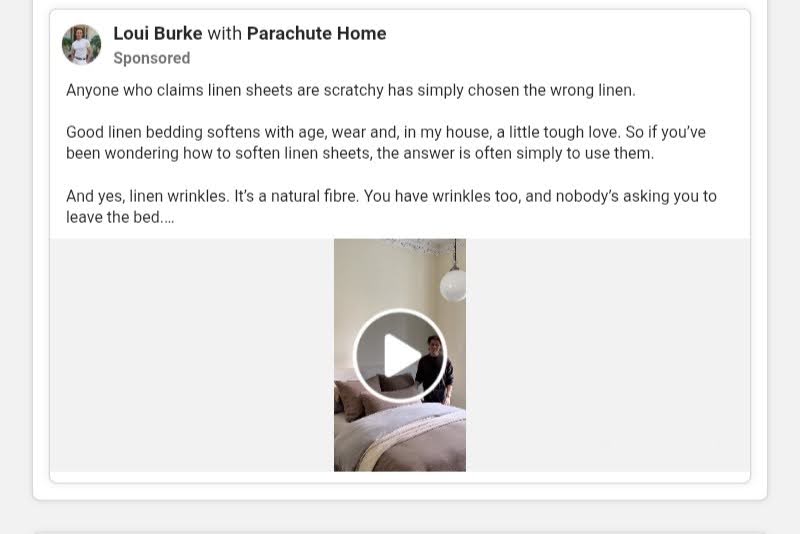
Parachute sells premium bedding and bath products and has spent years asking customers to tag their rooms with #MyParachuteHome. That gave the brand a large library of real bedrooms and bathrooms styled with its products. Instead of letting those posts sit in the feed, Parachute pushed them into paid retargeting ads and tested them against its own editorial content.
The real-room ads clearly outperformed the studio creative. The user-generated versions earned a 35% higher click-through rate and a cost per click roughly 60% lower than the polished content. Parachute’s CMO noted that customers engage more with rich UGC imagery than with traditional product-centric imagery. For any ecommerce team, the takeaway is that your best-performing ad creative may already exist inside your tagged photos.
3. Timberland: UGC Creative for a 50th Anniversary Push
UGC ads are not a small-brand tactic. For Timberland’s 50th anniversary, the brand worked with agency brkfst.io to build user-style creative and run it as paid ads across Meta placements, including Instagram. The point was to reach a younger audience with content that felt native to the feed rather than like a heritage-brand campaign.
The real-looking creative beat the brand’s standard ads on the metric that pays the bills. The UGC ads returned roughly 53% higher return on ad spend on Meta compared with Timberland’s usual business-as-usual creative. At a budget that size, a lift like that moves meaningful revenue. The lesson: even with decades of polished studio assets, raw customer-style content can still win the auction and the click.

What These UGC Ads Have in Common
Three different brands, three different budgets, and one shared result: creative that looked made by a person beat creative that looked made by a studio. In each case, the win landed on the numbers media buyers actually track: cost per click and return on ad spend, not on likes or comments. That is the line between a UGC ad that works and a post that just looks nice.
Why does this keep happening? Real-looking content blends into the feed, so people stop and watch before they realize it is an ad. It also carries built-in social proof, since a product in a real hand or a real room is more believable than a lit studio shot. On top of that, UGC is cheaper and faster to produce, which lets teams test more angles for the same money.
The catch is supply. Every one of these brands needed a steady stream of fresh customer content, because even a winning creative burns out once an audience has seen it too often. Copying the idea is easy; sourcing and refreshing winners at scale is the real job, and it is where most teams stall.
Instagram UGC Ad Examples: Quick Comparison
| Brand | Category | Ad format & placement | Reported result |
| Meller | Watches & sunglasses | Instagram Stories ads | Lower cost per click vs brand images |
| Parachute | Bedding & home | Retargeting ads (Instagram / Facebook) | Higher click-through rate, lower cost per click vs editorial content |
| Timberland | Footwear & apparel | Meta paid ads (anniversary push) | Higher return on ad spend vs usual creative |
Turn Winning UGC Ads Into Your Next Test With GetHookd
The three ads above share one lesson: creative that looks real beats creative that looks staged, as long as you keep it fresh. The block most teams hit is not the idea but the supply: finding proven creative and producing enough variations to keep a winner running.
We built GetHookd for this reason, to give media buyers a fast way to see what is already working and turn it into their next test. If you want to spot winning UGC ads and start testing your own this week, you can get started with GetHookd.
Frequently Asked Questions (FAQs)
What is a UGC ad on Instagram?
A UGC ad is a paid Instagram ad built from user-generated content, such as a customer photo, a review video, or a casual clip, either made by a real user or styled to look that way. Brands promote it as a feed post, Reel, or Stories ad because it reads as social proof and tends to hold attention longer than studio creative.
How often should I check for new competitor ads?
For active campaigns, a weekly check is a sensible baseline, with a deeper look whenever performance dips or a competitor launches something new. Ad creative fatigues quickly, so regular research keeps your tests ahead of the feed. A tool that scrapes the Meta and Facebook Ad Library saves you from manual scrolling and helps you catch new angles early.
Do I need technical skills to research competitor UGC ads?
No. Reading an ad library and spotting patterns in hooks and formats needs marketing judgment, not code. Modern research tools handle the data collection for you, so you filter, sort, and save ads through a simple interface. The skill that matters is knowing which creative signals are worth testing, and that comes with practice, not programming.
Can AI help me create UGC-style ads?
Yes. AI can transcribe a winning video, draft new hooks and scripts, and generate creative variations from an existing ad, which shortens the gap between finding an idea and testing it. It works best as a starting point that a person edits, so the final ad still sounds like a real human rather than a template.
How does GetHookd help me spy on competitor UGC ads?
Our Brand Spy feature shows which ads a competitor is actively scaling with their landing pages and traffic sources. With over 65 million ads pulled from the Meta and Facebook Ad Library, you can find winning UGC creatives fast, then use Clone Ads and Video Scripts to build your own tested variations without a shoot. You can see more common questions on the GetHookd FAQ page.
*Note: Pricing and/or product availability mentioned in this post are subject to change. Please check our website for current pricing and stock information before making a purchase.