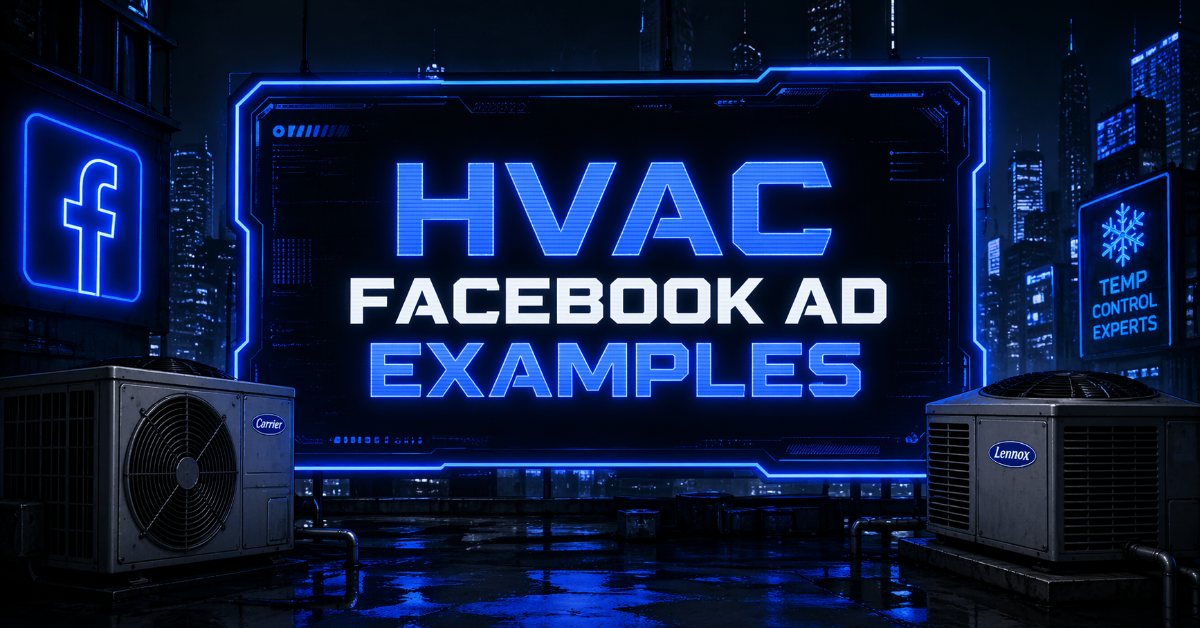
9 Best HVAC Facebook Ad Examples to Try in 2026
Key Takeaways
- The best HVAC Facebook ad matches the format to the intent; emergency click-to-call, seasonal lead forms, and retargeting ads each serve a different stage of the decision.
- Your hook determines everything: a specific problem statement in the first three seconds will outperform a logo or service list every time.
- Financing ads convert because leading with a monthly payment removes the price objection before it is ever raised.
- Retargeting is the most underused format in HVAC advertising, and a well-timed ad with fresh social proof is often what turns a fence-sitter into a booked appointment.
- Use GetHookd’s Explore Ads and Brand Spy to see what is already working in your HVAC market, then use our AI creative tools to produce and launch it fast.
HVAC Facebook Ads That Generate Calls in 2026
HVAC is one of the most urgent home service categories on Facebook, and for agencies and media buyers managing HVAC client accounts, that urgency translates directly into performance pressure.
A broken AC in July or a furnace failure in January does not give homeowners time to comparison shop, which means the contractor whose ad appears first in their feed wins the call. Getting that creative right, faster than a competitor does, is exactly where ad intelligence becomes an advantage.
Facebook’s targeting tools let you reach homeowners before they even start searching, keeping your brand visible during the consideration window and re-engaging people who visited your site but never converted.
The 9 ad formats below cover the full range of HVAC campaign scenarios, from emergency response to seasonal promotions to retargeting.

GetHookd: Turn Competitor Intelligence Into Your Next Winning Ad
GetHookd reveals which ads your competitors are actively scaling—not just running. Spy on their best-performing creatives, landing pages, and traffic strategies, then turn proven concepts into testable campaigns in seconds with AI-powered script generation and creative cloning.
What You Get:- ✓ Brand Spy to decode competitor ad strategies in real-time
- ✓ AI script generation and ad cloning for instant variations
- ✓ Performance scoring based on actual ad behavior, not vanity metrics
- ✓ Creative Analyzer to identify and scale your top performers
9 Best HVAC Facebook Ad Examples to Try in 2026
1. Emergency AC Repair — Click-to-Call Ad
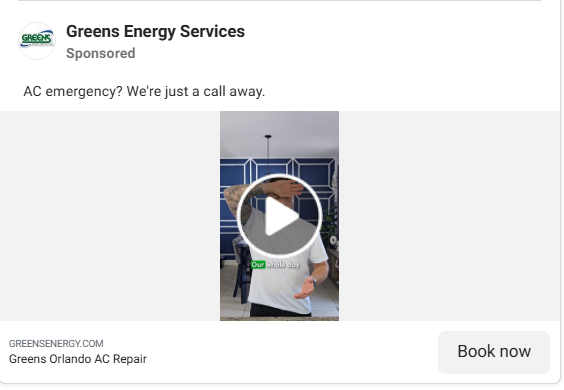
When someone’s AC goes out in July, they are not browsing. Instead, they are looking for the first contractor they can call right now.
A click-to-call ad removes every step between the problem and your phone ringing, making it one of the highest-converting formats for HVAC companies. Lead with the problem in your headline, include local trust signals like your city name or years in business, and make sure your creative is vertical or square and readable without sound.
2. Before & After Video Ad
A before-and-after video ad takes a viewer from skepticism to confidence in under 30 seconds. That makes it one of the strongest formats for system replacements, duct cleanings, and whole-home installs where the transformation is visible.
Lead with the old, rusted, or inefficient unit in the first three seconds, transition quickly to the clean new installation, and add a text overlay with the customer’s city and a specific result, such as “New system installed in Clearwater, homeowner saved $180 on first energy bill.”
End with a single clear CTA, and always add captions since most Facebook users scroll with sound off.
3. Seasonal Tune-Up Promotion Ad
Seasonal maintenance ads reach homeowners before the breakdown, which means lower competition and lower cost per lead than emergency campaigns.
The offer needs to be specific and time-limited. “$79 Spring AC Tune-Up, Book Before May 31st” will outperform vague seasonal messaging because specificity builds trust, and a deadline creates action.
Pair it with a lead form so homeowners can book without leaving Facebook. This format also builds your pipeline for upsells. A homeowner who books a tune-up and gets told their capacitor is failing is far more likely to approve the repair from the technician standing in front of them than from a cold ad.
4. Financing Offer Ad for System Replacements
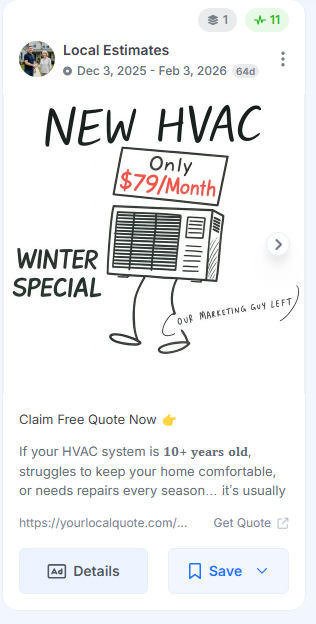
A full HVAC system replacement can cost anywhere from $5,000 to $15,000+, and that price stops many homeowners from acting even when their unit desperately needs replacing. A financing offer ad removes that objection before it is ever raised by leading with the monthly payment rather than the total cost.
Always pair a financing ad with a fast follow-up system. A homeowner who submits a lead form for financing is in a decision-making mindset. If your team does not call quickly, that lead is likely going to a competitor who responded faster.
5. Local Social Proof Ad
A local social proof ad takes your best reviews and turns them into a paid ad that reaches homeowners who have never heard of you and immediately makes them feel like everyone in their neighborhood already has.
Pull a specific, detailed review that mentions the technician by name, the problem solved, and the outcome rather than a generic five-star comment. Design matters here.
A clean screenshot of the actual Google review overlaid on a photo of your branded truck performs better than a heavily designed graphic because it looks organic.
6. Free Estimate Lead Generation Ad
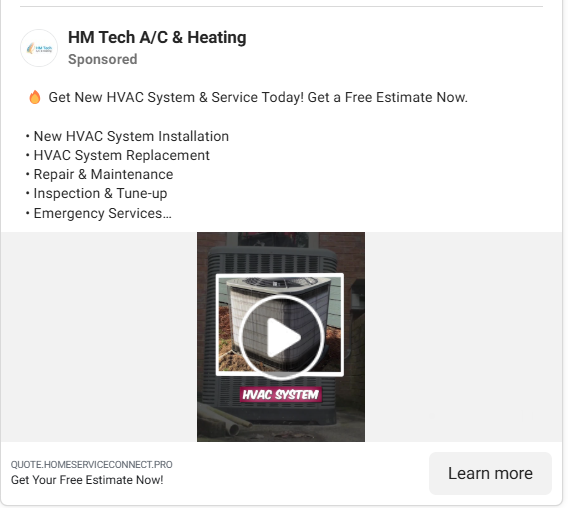
A free estimate ad targets homeowners who are already thinking about a system upgrade but have not committed yet. Being specific about what the estimate covers is what separates a high-converting version from a generic one.
“Free Estimate on a New Energy-Efficient System, We’ll Show You Exactly What You’ll Save Each Month” sets expectations, addresses the homeowner’s real concern, and positions your technician’s visit as valuable rather than just a sales call.
Keep the lead form short: name, phone number, address, and one qualifying question like “How old is your current system?” is enough. Every additional field drops your conversion rate.
7. Retargeting Ad for Website Visitors
Most homeowners who land on your HVAC website check you out, compare a couple of competitors, and move on without calling. A retargeting ad brings them back by serving ads specifically to people who visited your site but did not convert.
Do not repeat the same generic ad that they may have already seen. A retargeting ad should give them a new reason to act, either a time-sensitive offer like “Still thinking about that AC tune-up? Book this week and save $30,” or a social proof ad leading with a strong review from a customer in their same city.
The combination of familiarity and fresh proof consistently converts fence-sitters into booked appointments.
8. Short-Form Reel Ad With a Strong Hook
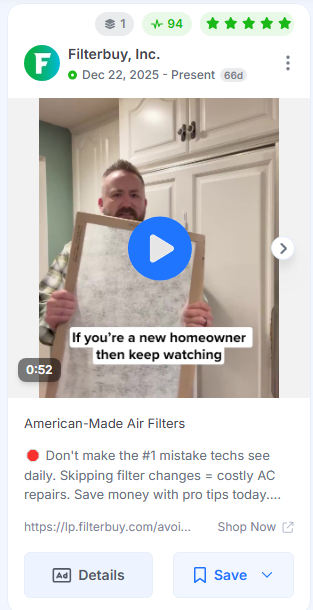
Caption: A conversational hook targeting a specific audience segment stops the scroll and earns the watch before the offer is ever made. (Source: GetHookd)
Alt text: Screenshot of a Filterbuy video ad showing a man holding a dirty air filter.
Reels are the fastest-growing ad placement on Meta, and for HVAC companies, they offer the ability to stop a scrolling homeowner in the first few seconds. The hook determines everything.
A technician pointing directly at the camera and saying, “Your AC is going to fail this summer, here’s how to know before it does,” will stop the scroll where a logo or service statement will not.
Reel ads perform best when they feel native to the platform, shot vertically on a phone, slightly raw, and conversational.
9. Educational Tips Ad
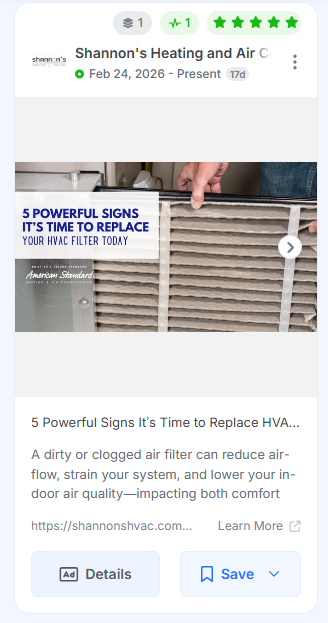
Educational ads build the trust that makes homeowners think of your company first when a breakdown happens. An ad leading with “3 Signs Your AC Is About to Fail This Summer” delivers genuine value without a hard sell, which lowers ad resistance and increases engagement.
Run these as always-on campaigns at a low daily budget alongside your direct response formats. A homeowner who engages with your tips content on Monday is meaningfully warmer when they see your free estimate ad later in the week.
Top 9 HVAC Facebook Ad Formats at a Glance
| Ad Type | Best For | Key Element |
| Emergency Click-to-Call | AC/heat failures | Problem-first headline, call CTA |
| Before & After Video | System replacements | Visible transformation, specific result |
| Seasonal Tune-Up | Pre-season maintenance | Specific offer with a deadline |
| Financing Offer | System replacements | Monthly payment lead, not total cost |
| Local Social Proof | Brand awareness | Detailed review, branded truck photo |
| Free Estimate Lead Form | Upgrade consideration | Short form, one qualifying question |
| Retargeting | Unconverted site visitors | Fresh offer or social proof |
| Short-Form Reel | Cold audience reach | Strong hook in the first three seconds |
| Educational Tips | Long-term trust building | Genuine value, soft CTA |
Turn HVAC Facebook Ads Into Consistent Leads with GetHookd
The examples and strategies in this article only work if you know what your market is responding to before you spend a dollar on testing. Our Explore Ads and Brand Spy tools and features let you see exactly what HVAC companies in your area are running on Facebook right now, which formats are getting traction, and how long specific ads have been running. That intelligence takes the guesswork out of creative decisions and lets you build ads around what is already proven to work in your market.
Once you know what to run, our AI-powered creative tools help you produce it fast. Generate video scripts built around your offer, clone high-performing ad structures, and use the Creative Analyzer to identify which of your ads are ready to scale, all without a production team or a large creative budget.Less wasted spend on ads that do not resonate means more of your budget goes toward calls and booked jobs.
Start your free trial and run smarter HVAC ads today.
Frequently Asked Questions (FAQs)
How fast can HVAC Facebook ads start generating calls?
Click-to-call and lead form ads typically start generating inquiries within 48 to 72 hours, assuming the targeting and creative are solid. The first two weeks are a learning period where Meta refines delivery based on who engages and who converts. Most campaigns see cost per lead drop noticeably between weeks two and four as the algorithm optimizes.
Are video ads necessary for HVAC Facebook advertising?
Video ads are not required, but Reel placements currently offer the highest reach on Meta. If your team is not ready for video, start with static ads to generate immediate leads and introduce short-form video once you know what messaging resonates.
What is a good cost per lead for HVAC Facebook ads?
A healthy CPL varies by market size, season, and ad format, so chasing a single benchmark number is less useful than tracking trends in your own account over time. If CPL is climbing steadily, it usually signals creative fatigue or targeting that has become too broad. The more meaningful metric is cost per booked job, since a higher CPL that converts into system replacements will always outperform a cheap lead that never picks up the phone.
Can small HVAC companies compete with larger contractors on Facebook?
Yes, and smaller companies often have a structural advantage since Facebook rewards relevance over budget. A local ad featuring a real technician, a neighborhood reference, and genuine reviews will regularly outperform a polished corporate ad in the same zip code. Use GetHookd’s Explore Ads and Brand Spy to study what competing local HVAC companies are running so you can find the gaps and position your ads more effectively.
*Note: Pricing and/or product availability mentioned in this post are subject to change. Please check our website for current pricing and stock information before making a purchase.