

The three best restaurant Facebook ad examples worth studying right now come from Applebee's, Burger King (via Redberry Restaurants), and Deraliye, a Michelin-recognized restaurant in Istanbul. Each uses a different strategy: cultural identity, a clear price-deadline offer, and prestige-driven urgency. Each works for a specific reason.
Facebook lets restaurant owners put a targeted offer directly in front of someone who lives five minutes away and hasn't decided where to eat tonight. The problem is that most owners run ads without a clear strategy. Budget is rarely the issue. Strategy almost always is.
Below, we pull apart each ad and show exactly what made it work, so you can apply the same thinking to your own campaigns.
65M+ Ads Analyzed | 4.8★ G2 Rating | 4.5★ Trustpilot Rating
GetHookd reveals which ads your competitors are actively scaling—not just running. Spy on their best-performing creatives, landing pages, and traffic strategies, then turn proven concepts into testable campaigns in seconds with AI-powered script generation and creative cloning.
What You Get: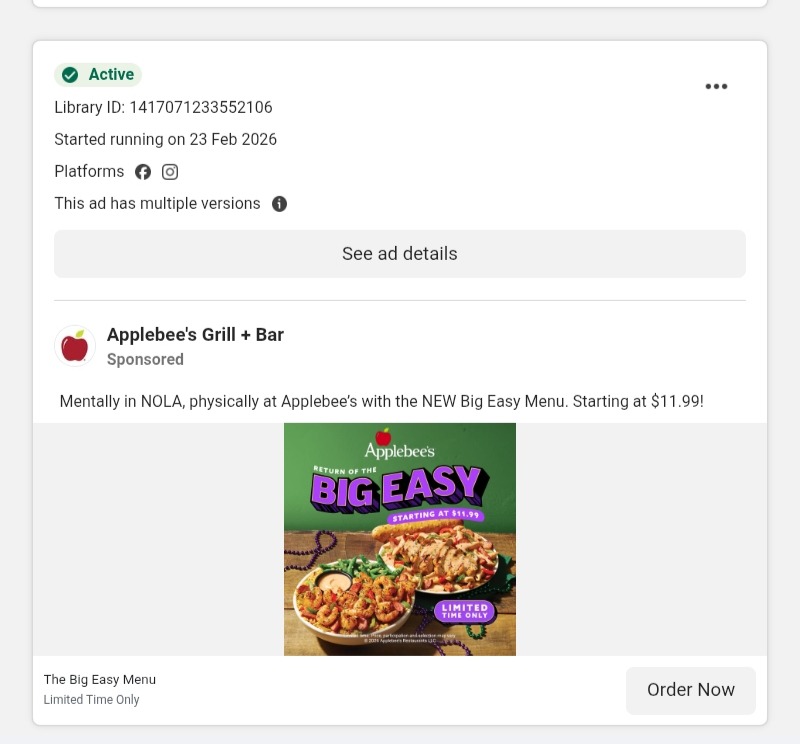
The ad copy, "Mentally in NOLA, physically at Applebee's", is doing clever positioning work. It sells a mini escape, borrowing the excitement of a beloved food city and making it accessible at a neighborhood price.
Food tied to a specific place or culture carries built-in emotional weight. New Orleans cuisine evokes indulgence, bold flavors, and celebration, associations that transfer directly to the menu being promoted. Applebee's doesn't need to describe every dish because "Big Easy" does the storytelling for them. The cultural shorthand communicates flavor, atmosphere, and experience in two words.
The $11.99 starting price removes the other major barrier. Pairing an aspirational food experience with an accessible price point is a sharp move; you get the feeling of something special without the special-occasion price tag. "Limited Time Only" adds urgency without feeling aggressive.
If your restaurant draws inspiration from a specific cuisine or region, anchoring your ad to that cultural identity gives your food a story that a plain menu photo never can.
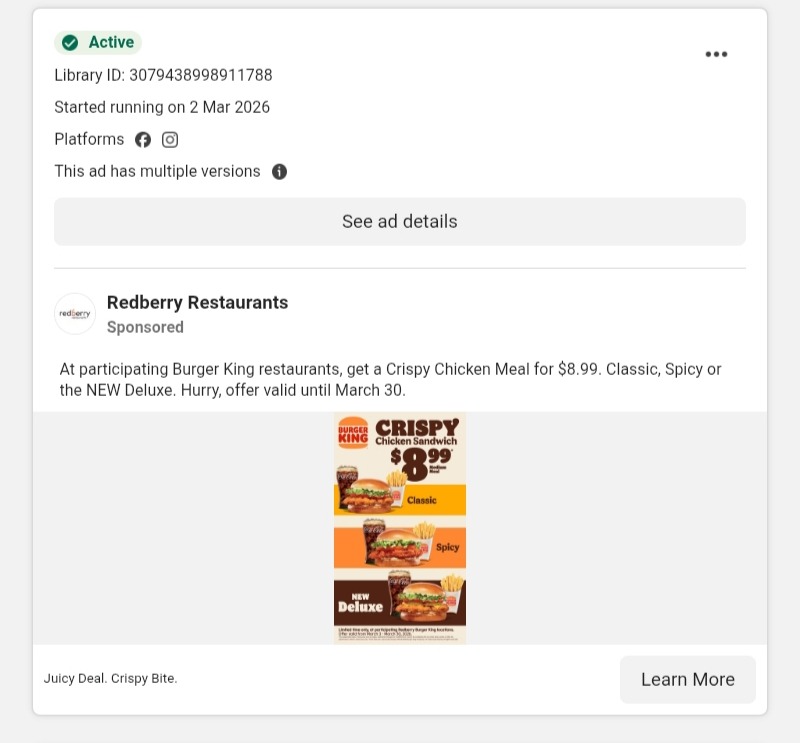
Redberry Restaurants ran a Burger King Facebook ad promoting a Crispy Chicken Meal for $8.99 with three options: Classic, Spicy, or the new Deluxe, and a hard deadline. There's no storytelling, no emotional hook, no mystery. Just a clear product, a clear price, and a clear deadline. Sometimes that directness is exactly what converts.
Not every restaurant ad needs to be clever. For fast-casual and QSR brands, the audience already knows who you are and what you serve. The decision isn't "should I try this restaurant." It's "is there a reason to go today?" A specific deadline answers that question instantly.
The three-option structure is also strategically effective. Giving buyers a choice between Classic, Spicy, or Deluxe creates a sense of personalization within a standardized offer. The customer isn't just accepting a deal; they're choosing their version of it, which increases psychological ownership before they've even placed an order.
The hard deadline adds real urgency without manufactured scarcity. If your restaurant operates in the fast-casual space, test a simple product-price-deadline ad against more elaborate creative, you may find the straightforward version outperforms.
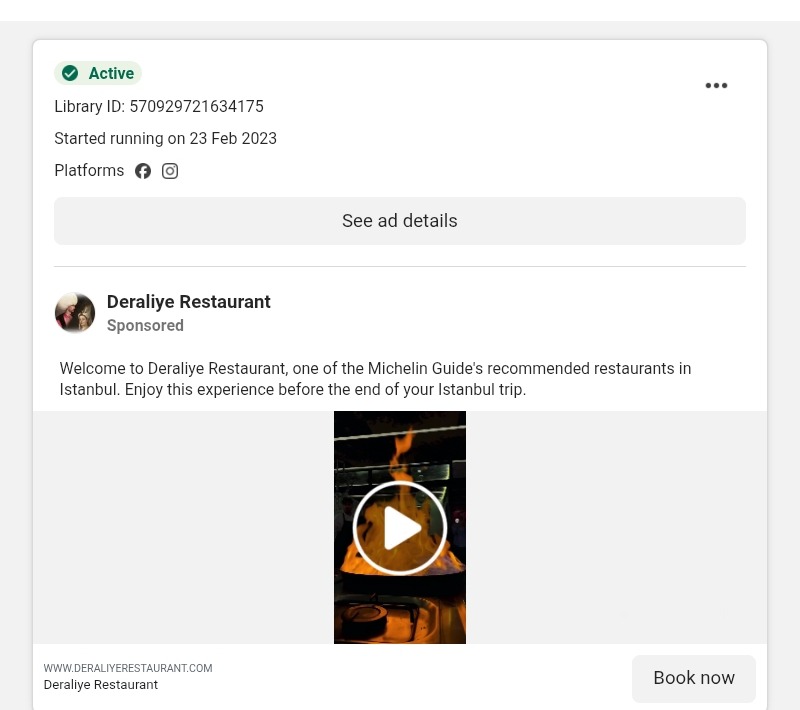
Deraliye Restaurant ad doesn't mention a price, a discount, or even a specific dish. Instead, it sells status and urgency; this is a Michelin-recognized experience, and your trip is ending soon. That combination of prestige and a ticking clock works particularly well for high-value dining.
Fine dining operates on entirely different purchase psychology than casual restaurants. Diners aren't looking for the best deal; they're looking for the best experience. A Michelin Guide mention does more to persuade than any discount could, because it transfers third-party credibility directly to the restaurant.
The diner doesn't have to take the restaurant's word for it; an independent authority has already validated the experience. The travel-specific urgency, "before the end of your Istanbul trip", is equally powerful.
Unlike manufactured countdown timers, this deadline is real and personal. The tourist knows their window is closing, which shifts the decision from "maybe someday" to "now or never." Video format reinforces the strategy by showing the atmosphere, plating, and service in motion, details that static images can't fully convey.
If your restaurant has any third-party recognition, lead with that credential in your ads to attract higher-spending guests who value quality over price.
Start by deciding what you actually want the ad to achieve before you touch a single creative element. Are you trying to fill seats on a slow night? Drive reservations for a special occasion? Promote a new menu item? Each goal calls for a different format, targeting strategy, and call to action.
Here's a quick reference to match your goal to the right format:
Your visual is the first thing someone sees, and in a crowded Facebook feed, you have roughly a second to stop the scroll. Don't lead with your logo, a generic stock photo, or a cluttered image of your full dining room.
Lead with your absolute best-looking dish, your most dramatic kitchen moment, or your most atmospheric table setting. If you don't have professional photos yet, a smartphone shot in good natural light with a clean background will outperform a cluttered studio photo every single time.
Vague ads get ignored. "Come visit us for a great meal!" tells nobody anything useful. Every ad you run should have either a specific offer (free item, discount, limited-time deal) or a specific hook (a curiosity question, a bold claim, an emotional promise).
Look back at every example in this article; not one of them ran a generic "we're open, come eat" ad. Specificity is what makes people act.
The restaurants filling seats consistently aren't the ones with the biggest ad budgets; they're the ones who know exactly what creative, offer, and audience combination works before they spend a dollar testing it. That's the intelligence GetHookd gives you.
Search 65M+ real ads across Facebook and Meta. See what competing restaurants are running right now, which offers they're leading with, what visuals are stopping the scroll, and which hooks are driving reservations in your market. Use Brand Spy to go deeper on any competitor, then generate scripts and clone top-performing creatives directly inside the platform.
When you're actively running ads and testing offers, guessing is expensive. GetHookd is the decision-support tool that replaces guesswork with real data, so every campaign you launch is built on a foundation of what's already proven to convert.
Start your GetHookd free trial today!
Single-image ads with strong offers drive immediate clicks and reservations. Short video ads showcasing food preparation outperform static for brand awareness. Retargeting ads deliver the lowest cost-per-conversion and remain the most underused strategy in local restaurant advertising.
Both, but strategically. High-quality photos work best for quick-action offers. Short videos of food being cooked or plated work best for awareness campaigns. If the budget allows only one format, invest in three to five exceptional dish photos first, then reinvest in video once those campaigns generate revenue.
Set location targeting to a 5–15 mile radius around your restaurant. Layer on demographics and dining-out behaviors matching your typical customer. For sharper results, upload your customer email list as a Custom Audience, then build a Lookalike Audience to find similar local users.
GetHookd provides access to 65M+ real ads across Facebook, TikTok, and Google, searchable by niche, format, and performance signals. Brand Spy shows which offers and visuals competing restaurants are running right now, and you can generate scripts and clone winning creatives directly inside the platform.
*Note: Pricing and/or product availability mentioned in this post are subject to change. Please check our website for current pricing and stock information before making a purchase.


