
Key Takeaways
- AI engines cite brands that appear consistently across multiple authoritative sources, which is why building cross-platform visibility matters more than ranking on a single site.
- AmpiFire’s AmpCast AI turns one piece of content into multiple formats and publishes them across hundreds of trusted news sites, podcast platforms, video channels, and social networks to expand brand reach.
- Writesonic combines content generation with visibility tracking, helping marketing teams refine AI-cited content and close gaps where competitors gain exposure.
- OtterlyAI monitors AI engines and audits pages for crawlability and citation potential, providing actionable insights to optimize brand discoverability.
- For businesses aiming for broad AI visibility, AmpiFire offers a complete system for content creation, distribution, and cross-platform authority, making it the most effective choice among the three tools.
How AI Engines Cite Brands & Tools That Help
AI engines do not cite brands the same way traditional search engines rank pages. They look for information that is relevant, trustworthy, and easy to retrieve from credible sources across the web. Brands with consistent messaging, useful content, and visibility across authoritative channels are better positioned to appear in AI recommendations.
Tools like AmpiFire, Writesonic, and OtterlyAI support different parts of that process. AmpiFire helps brands create and distribute content across hundreds of authoritative sites to build a cross-platform presence that AI engines reward.
Writesonic combines AI content creation with visibility tracking, so teams can identify where they show up in AI search and refine their content accordingly. OtterlyAI monitors brand mentions across major AI engines and provides on-page recommendations to improve how content gets cited.

GetHookd: Turn Competitor Intelligence Into Your Next Winning Ad
GetHookd reveals which ads your competitors are actively scaling—not just running. Spy on their best-performing creatives, landing pages, and traffic strategies, then turn proven concepts into testable campaigns in seconds with AI-powered script generation and creative cloning.
What You Get:- ✓ Brand Spy to decode competitor ad strategies in real-time
- ✓ AI script generation and ad cloning for instant variations
- ✓ Performance scoring based on actual ad behavior, not vanity metrics
- ✓ Creative Analyzer to identify and scale your top performers
1. AmpiFire
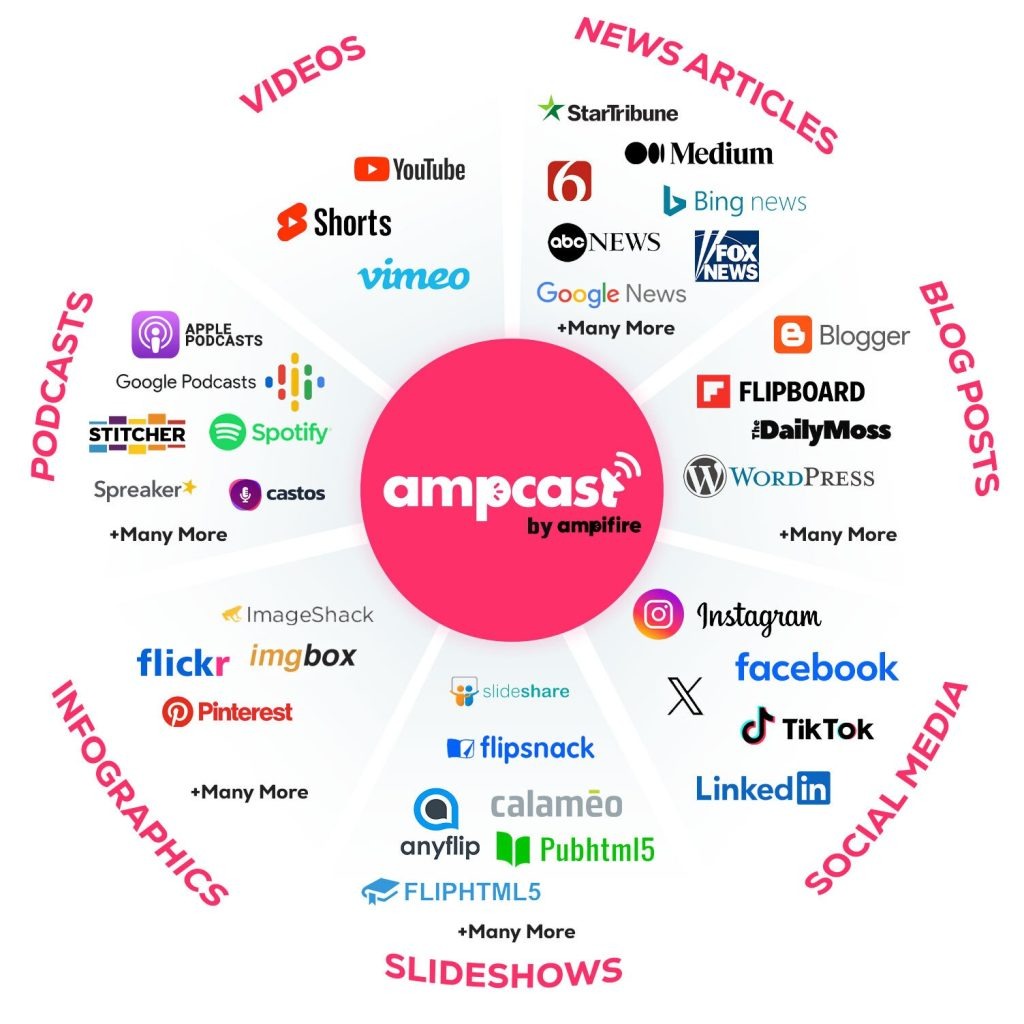
AmpiFire is a content amplification platform built for brands that want to increase their visibility across search engines, AI search tools, news sites, video platforms, podcasts, and social channels.
Tools like ChatGPT, Google AI Overviews, and Gemini are more likely to surface brands when there is clear, consistent, and credible information about them across the web. AmpiFire helps create a wider footprint by turning a single core message into multiple content formats and distributing it across hundreds of high-traffic platforms.
AmpiFire is not a shortcut for AI recommendations. Instead, it improves the conditions that make your brand easier to discover and reference when AI tools answer buyer questions.
How AmpiFire Helps You Get Recommended by AI
Buyer-Intent Topic Research
The AmpiFire process starts with in-depth research to identify the questions your target buyers already ask across search, AI tools, YouTube, and other discovery channels. This focuses your content on high-intent search moments instead of broad keywords that drive low-quality traffic.
Multi-Format Content Creation
AmpiFire’s AmpCast AI turns one topic or source asset into eight content formats, including blog posts, news articles, slideshows, videos, podcasts, infographics, flipbooks, and social posts. Each format is optimized for the platform it appears on, so the output reads as professional, which matters because AI engines filter out low-quality, formulaic content.
Multi-Channel Distribution
AmpiFire’s AmpCast AI distributes content across 300+ high-authority sites and platforms, including, Google News, YouTube, Spotify, Apple Podcasts, and major news affiliates. This gives your brand more external references beyond your own website, which can support discoverability and brand recall.
Social Media Amplification
AmpiFire also helps distribute content across connected social channels, including Facebook, Instagram, LinkedIn, TikTok, YouTube, and Pinterest. This reduces manual reformatting and posting while giving each campaign more opportunities to reach buyers beyond traditional search.
Best For
AmpiFire is best for businesses that want a managed AI visibility and content distribution system instead of another standalone writing tool. It is especially useful for brands that already have a clear offer but need presence across multiple authoritative sites and consistent visibility across the platforms AI-assisted search engines reference.
2. Writesonic
Writesonic launched as an AI writing tool and has since pivoted into a Generative Engine Optimization (GEO) platform. The current product combines AI content generation, AI visibility tracking, and brand monitoring across ChatGPT, Claude, and other major AI platforms. You can generate optimized content, track how your brand is being cited, and then use those insights to refine your next piece.
How Writesonic Helps You Get Recommended by AI
Writesonic’s AI Visibility Suite tracks how often your brand appears in AI-generated answers, your share of voice against competitors, and the sentiment of those mentions. The platform also identifies which prompts trigger competitor citations, then provides an action plan to address the gap.
Also, their AI Traffic Analytics adds a separate layer that monitors which AI crawlers visit your site and which pages receive the most attention. Once a gap is identified, Writesonic’s content creation tools produce or refresh the underlying content directly inside the platform. The AI article writer uses real-time web research, automated competitor analysis, and citation-grade formatting (FAQ blocks and comparison tables) that AI engines are more likely to cite.
Best For
Writesonic is best suited for brands and marketing teams that regularly produce content and want to add AI visibility tracking to their existing workflow.
3. OtterlyAI
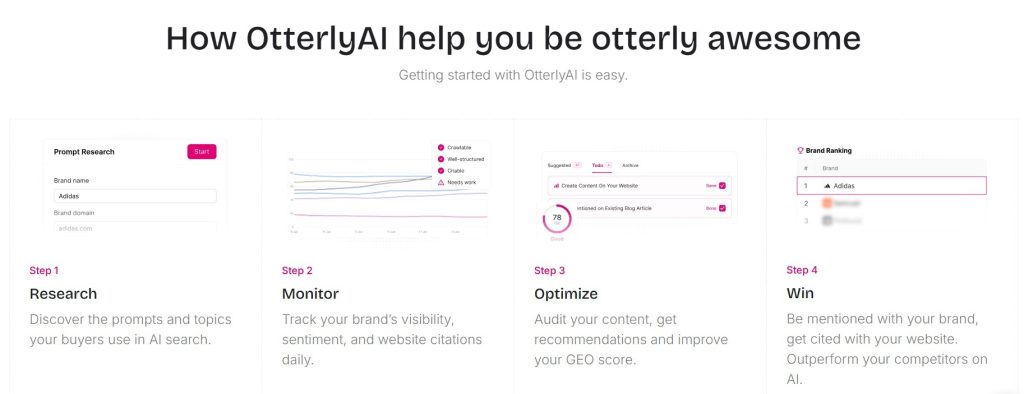
OtterlyAI is an AI search monitoring and optimization platform built to help brands understand and improve how they appear across ChatGPT, Perplexity, Gemini, Google AI Overviews, AI Mode, Copilot, and Claude. The platform combines prompt-level tracking with content optimization recommendations, so teams can see where they are being cited or skipped.
How OtterlyAI Helps You Get Recommended by AI
The platform runs your defined prompts across major AI search engines daily and reports which brands are cited, how often, in what context, and against which competitors. This surfaces your share of AI voice, the queries you are winning, and the queries where competitors get mentioned instead.
OtterlyAI also audits individual pages for crawlability, AI-readiness, and citation potential. It then provides specific on-page recommendations to improve how AI engines read and classify the content.
Best For
OtterlyAI is best suited for marketing teams and agencies that want visibility tracking and actionable optimization recommendations on a single platform. It works for brands that already produce content and need to understand why AI engines skip it, then act on that insight without switching tools.
Top AI Tools to Get Recommended by AI: Comparison Table
| Feature | AmpiFire | Writesonic | OtterlyAI |
| Core Focus | Content creation, distribution, and amplification across high-authority sites and platforms | AI visibility tracking paired with content creation in one workspace | AI search monitoring and on-page optimization recommendations |
| How AI Visibility Works | Builds cross-platform brand presence by publishing across hundreds of trusted sites, which feeds the signals AI engines use to cite brands | Tracks brand mentions across AI engines, then generates content to address visibility gaps | Audits pages for crawlability and citation potential, then provides optimization recommendations |
| Best For | Brands that want to create, distribute, and amplify content for AI search visibility, with self-serve and done-for-you options | Marketing teams that already produce content regularly and want to add visibility tracking | Marketing teams that need visibility tracking with on-page optimization recommendations |
Which AI Visibility Tool Is Right for You?
Writesonic works for teams that want AI content creation with visibility insights, while OtterlyAI is better for monitoring prompts, competitors, and citation gaps. AmpiFire is the stronger choice if you want a broader visibility system that helps your brand show up in more buyer discovery moments.
AmpiFire gives businesses a practical way to build authority without relying only on traditional SEO or one-off content tools. Its content distribution model supports brands that want a clearer path to being found by both buyers and AI-assisted search tools. To improve your brand’s chances of being discovered and referenced by AI, start with AmpiFire.
Frequently Asked Questions (FAQs)
What is the difference between AEO and GEO?
Answer Engine Optimization (AEO) focuses on optimizing content to appear as direct answers in search engine results and AI-powered assistants. Generative Engine Optimization (GEO) is a broader strategy aimed at increasing a brand’s visibility and citations within AI-generated responses from tools like ChatGPT, Gemini, and Claude. While both aim to improve discoverability, GEO places greater emphasis on building authority and mentions across the wider web.
What types of content are most likely to be cited by AI?
AI models are most likely to cite content that is informative, authoritative, and backed by credible sources. Listicles, how-to guides, definition-based content, and well-structured FAQs tend to perform well. Coverage on high-authority sites and industry publications carries more weight than self-published content alone.
How do AI models decide which brands to recommend?
AI models recommend brands based on factors such as relevance, authority, and trustworthiness. They evaluate information from sources such as company websites, reviews, media coverage, expert mentions, and other reputable third-party content available across the web. Brands with a strong online presence and consistent positive signals are more likely to appear in AI-generated recommendations.
How long does it take to see results from AEO optimization?
Results depend on your starting point and the tools you use, but brands that invest in earning third-party coverage and optimizing content structure typically see measurable visibility improvements within a few months. Tracking tools with weekly reports make it easier to spot early momentum and adjust your strategy as the data comes in.
How can I improve my AI Search Visibility?
The most effective approach is to build a consistent, multi-platform brand presence across the authoritative sites that AI search engines already trust. AmpiFire’s AmpCast AI helps brands do this by publishing content across high-traffic news, video, podcast, and content sites. The more consistently your brand appears across these sources, the more often AI search engines reference you in their responses.
*Note: Pricing and/or product availability mentioned in this post are subject to change. Please check our website for current pricing and stock information before making a purchase.