AI Creative Analytics: How It Works and Best Tools
Key Takeaways
- AI creative analytics tools analyze visuals, copy, pacing, and audience signals to tell you exactly why an ad wins or loses.
- Hook rate, hold rate, and creative fatigue score are the metrics that matter most when evaluating creative performance across formats.
- Reviewing creative analytics data at least once a week prevents wasted budget on creatives that have already started to underperform.
- Pre-spend research through tools like GetHookd’s Explore Ads and Brand Spy gives you a competitive edge before a single dollar is committed to production.
- GetHookd connects competitive research, real-time creative analytics, and AI-powered ad production in one platform so you can move from insight to live creative without switching tools.
What Is Creative Analytics?
AI creative analytics tools work by scanning your ad’s visuals, copy, pacing, and structure against real performance data to tell you exactly why an ad wins or loses — and the best platforms combine that analysis with competitor research and AI-powered production so you can act on what you find.
Creative used to be the one part of advertising that lived outside the data conversation. You’d run an ad, check CTR and ROAS after a few weeks, and make a gut call on what to do next.
The problem was that those numbers never told you why something worked. Nothing in the dashboard pointed to the hook, the CTA timing, or the pacing.
Creative analytics answers that question. When AI is layered on top, individual creative signals get cross-referenced against performance data across thousands of ads, surfacing patterns no human analyst could find manually at scale. Brands that win are the ones using that intelligence to make creative decisions before the budget gets spent.

GetHookd: Turn Competitor Intelligence Into Your Next Winning Ad
GetHookd reveals which ads your competitors are actively scaling—not just running. Spy on their best-performing creatives, landing pages, and traffic strategies, then turn proven concepts into testable campaigns in seconds with AI-powered script generation and creative cloning.
What You Get:- ✓ Brand Spy to decode competitor ad strategies in real-time
- ✓ AI script generation and ad cloning for instant variations
- ✓ Performance scoring based on actual ad behavior, not vanity metrics
- ✓ Creative Analyzer to identify and scale your top performers
GetHookd: Turn Competitor Intelligence Into Your Next Winning Ad
65M+ Ads Analyzed | 4.8★ G2 Rating | 4.5★ Trustpilot Rating
Stop Guessing. Start Scaling:
GetHookd reveals which ads your competitors are actively scaling—not just running. Spy on their best-performing creatives, landing pages, and traffic strategies, then turn proven concepts into testable campaigns in seconds with AI-powered script generation and creative cloning.What You Get:
- ✓ Brand Spy to decode competitor ad strategies in real-time
- ✓ AI script generation and ad cloning for instant variations
- ✓ Performance scoring based on actual ad behavior, not vanity metrics
- ✓ Creative Analyzer to identify and scale your top performers
Replace guesswork with intelligence. Build profitable ads that actually convert.
How Does AI Creative Analysis Actually Work?
AI creative analysis combines computer vision, natural language processing, and machine learning to evaluate ad creatives at scale. The process works in three stages: ingestion, analysis, and insight delivery.
- Ingestion: You upload an image, video, or ad set. The tool pulls in the raw creative file and, in most cases, pulls associated performance data from connected ad platforms like Meta.
- Analysis: The AI scans the creative across multiple dimensions, including visual composition, motion pacing, copy strength, CTA placement, emotional signals, and audience alignment.
- Insight Delivery: The platform returns a scored breakdown with specific, actionable feedback. Rather than flagging that an ad underperformed, it tells you your CTA appeared at the 12-second mark in a 15-second video, which is too late for your target audience on that placement.
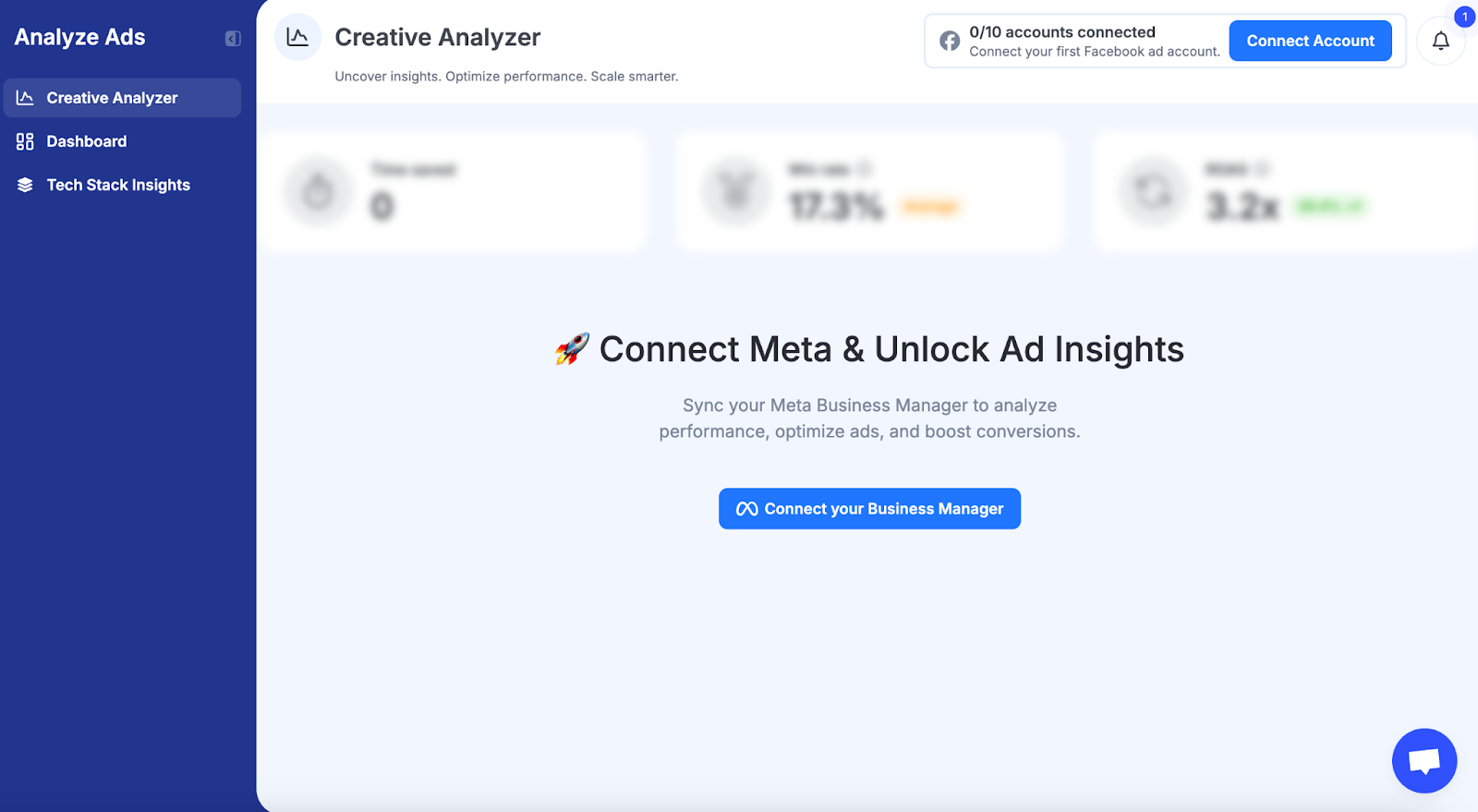
GetHookd’s Creative Analyzer works this way, connecting directly to your Meta ad account to surface which creatives are driving results and which need attention.
The value compounds when pattern recognition runs across your entire creative library and against industry benchmarks, showing you what separates your top performers from the rest.
Computer Vision & Frame-by-Frame Video Analysis
Computer vision is the engine behind video creative analysis. It processes video ads frame by frame, flagging the exact moments where viewer attention is likely to drop.
For a 15-second ad, the AI might identify that scene cuts are too slow between seconds four and seven, or that a product reveal is buried too far into the timeline to register before most viewers scroll past. These conclusions are derived from models trained on real ad performance outcomes matched to creative structure.
Pattern Recognition Across Winning & Losing Ads
Beyond individual ad analysis, AI tools build performance models by identifying what winning creatives have in common. The system looks at structural signals, such as whether the ad opens with a human face, whether the primary message is delivered in the first three seconds, and whether there is movement in the first frame, and cross-references those elements with actual click, conversion, and retention data.
A pattern that works for a DTC skincare brand may not apply to a B2B SaaS product. The best AI creative analytics platforms account for this by segmenting performance data by vertical, audience demographic, and ad placement.
Real-Time Feedback vs. Post-Campaign Reporting
Traditional analytics tools deliver results after the campaign ends, which is useful for planning the next one, but too slow to impact a campaign that is actively spending budget.
Real-time AI analysis flags underperforming creative elements while the campaign is still live, giving media buyers the signal they need to pause, swap, or adjust before the loss compounds.
The 3 Best AI Creative Analytics Tools
1. GetHookd
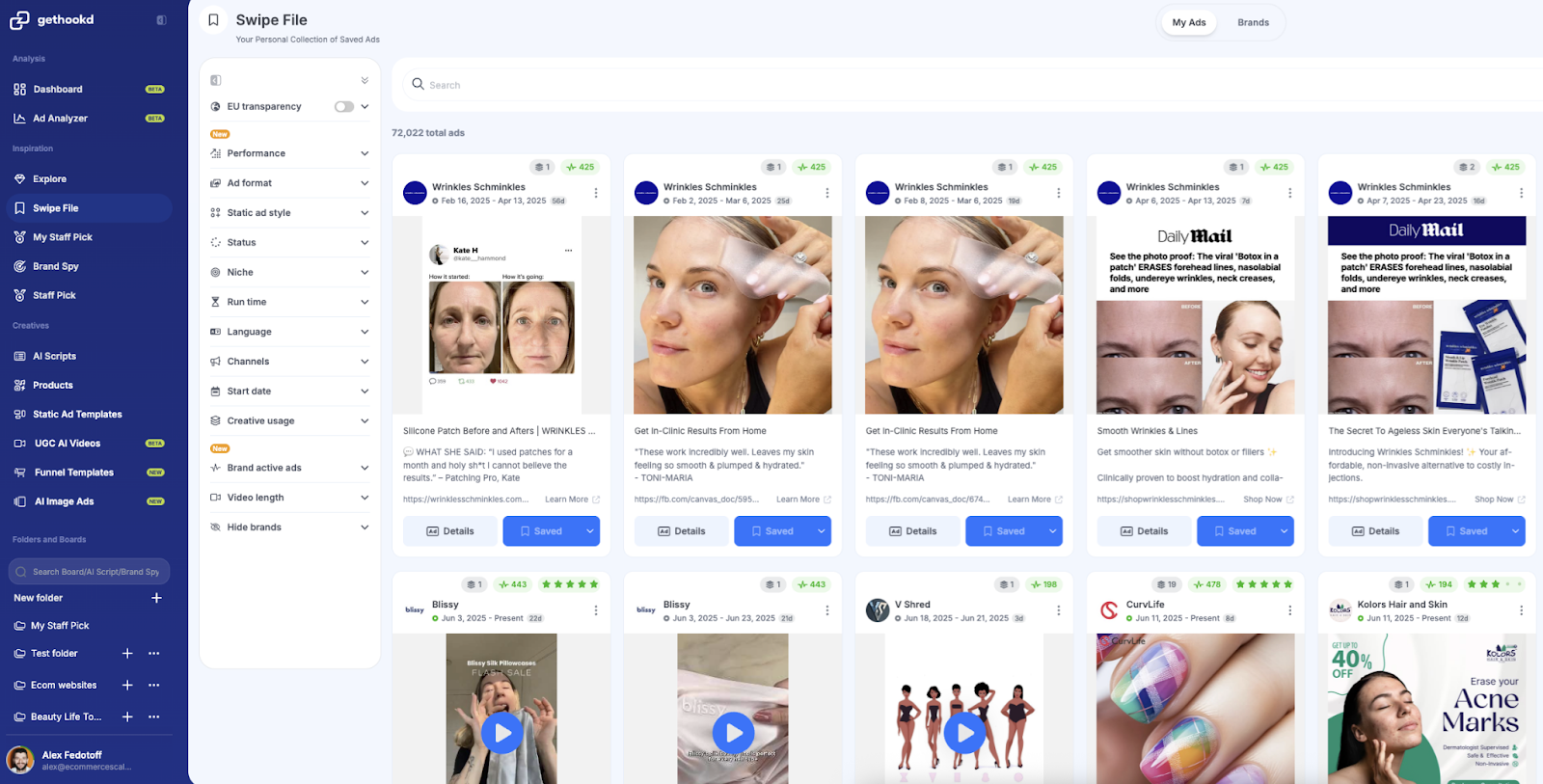
GetHookd is an AI creative platform built for media buyers, performance marketers, agencies, and eCommerce operators who need to know why their ads work.
It connects directly to your Meta ad account and analyzes creative performance at the element level, surfacing patterns across your winning and losing ads to guide smarter creative briefs and faster iteration cycles.
GetHookd’s focus is on the creative itself, not the campaign wrapper. Key features that make that possible:
- Explore Ads: Search across 65M+ Meta ads filtered by niche, format, and performance signals to see what is converting in your market before you spend on production.
- Creative Analyzer: Connects to your Meta Business Manager to analyze ad performance at the creative level, showing you which ads to scale, which to cut, and what to improve.
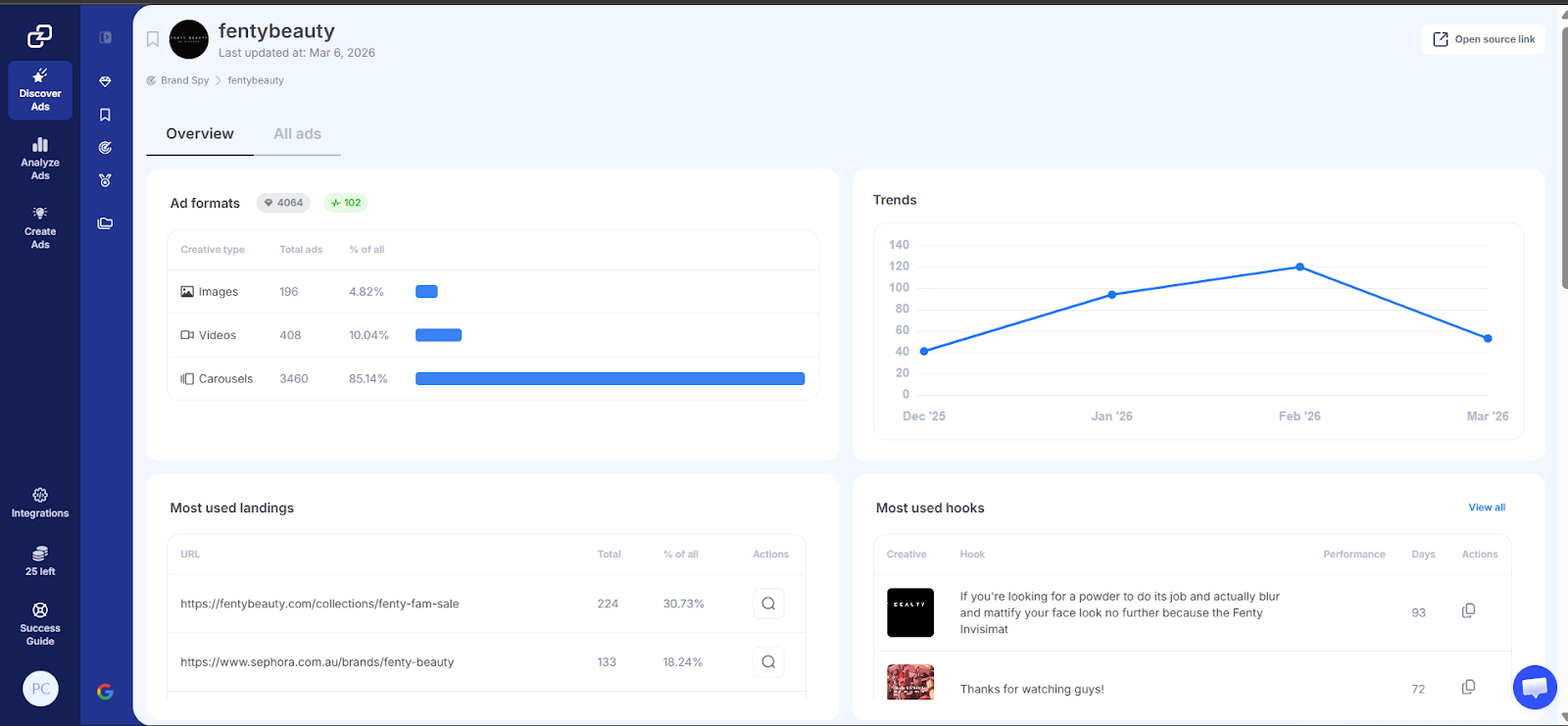
- Brand Spy: Reveals which creatives your competitors are actively scaling on Meta, including their landing pages and traffic sources, so your strategy is built on real market intelligence.
- Ads Transcription: Automatically transcribes video ads to extract hooks, CTAs, and copy frameworks you can adapt immediately.
- Video Scripts: Generates hooks, angles, and full ad scripts from your product details, built on direct response frameworks from 8-figure marketers.
- Clone Ads: Produces multiple visual variations of any static creative instantly, so you can keep fresh ads in rotation without slowing down your testing pipeline.
2. Bestever
Bestever is a creative analytics platform that scores ad creatives across dimensions such as visual appeal, CTA strength, information density, and audience alignment.
Upload an image or video to the Ad Analysis Dashboard, and the platform returns a scored breakdown of each element, using computer vision combined with historical performance data to identify what is contributing to performance and what is working against it.
The focus is on the creative itself rather than campaign-level data, which makes it more relevant for teams that need feedback on individual assets before committing ad spend. Where Bestever stops at analysis, GetHookd connects that intelligence to execution by giving you AI production tools to act on what you find without switching platforms.
3. Motion
Motion sits at the intersection of creative analytics and reporting. It pulls data from platforms like Meta and YouTube and organizes it by creative concept, format, and hook type, so instead of looking at performance by ad set, you see it by creative pattern. This gives teams a clearer picture of which content types are trending up or down across an account and where creative resources should be reallocated.
Motion is built around post-launch reporting, which means it works best once campaigns are already running and data is available to analyze. Conversely, tools like GetHookd surface what is already converting in your niche and what competitors are actively scaling, so your creative decisions are informed before you spend anything.
Best AI Creative Analytics Tools Compared
| Feature | GetHookd | Bestever | Motion |
|---|---|---|---|
| Best For | Media buyers, eCommerce brands, and agencies that need research, analytics, and ad production in one platform | Creative teams that need scored feedback on individual ad assets | Media buying teams that need post-launch creative reporting across campaigns |
| Creative Analytics | Creative Analyzer connects to Meta Business Manager to surface which creatives to scale, cut, or iterate on | Ad Analysis Dashboard scores creatives across visual appeal, CTA strength, information density, and audience alignment | Organizes campaign data by creative concept, format, and hook type to surface performance patterns |
| Pre-Spend Competitive Intelligence | Explore Ads and Brand Spy show what is converting in your niche and what competitors are actively scaling | Not available | Not available |
| AI Creative Production | Video Scripts, Clone Ads, and Ads Transcription | Ad generation available | Not available |
| Ad & Funnel Templates | Image Ad Templates editable in Canva, plus plug-and-play Funnel Templates modeled on high-converting landing pages | Not available | Not available |
| Ad Database | 65M+ Meta ads | Meta Ads Library access | No proprietary database |
| Starting Price | $19/month | $99/month | $79/month |
The GetHookd Advantage for Creative Analytics
Most creative analytics tools are built around a single stage of the advertising process. They either analyze what you have already launched or help you research what to build next. GetHookd is built around the full creative cycle.
Before you spend, Explore Ads and Brand Spy show you what is already converting in your niche and what your competitors are committing budget to. Once your campaigns are live, Creative Analyzer connects directly to your Meta Business Manager to show you which creatives are driving results and which need attention. When it is time to act on those findings, our AI creative tools ensure you are never starting from scratch.
Start your GetHookd free trial and put your creative decisions on solid ground.
Frequently Asked Questions (FAQs)
What is the difference between creative analytics and A/B testing?
A/B testing tells you which version of an ad performed better. Creative analytics tells you why by breaking down the specific elements inside each ad and connecting them to performance signals.
Can small brands benefit from AI creative analytics tools?
Yes, and in some ways, small brands benefit more. AI creative analytics tools help smaller teams make smarter decisions faster without needing a large in-house data team, so even brands producing a handful of ads per month can extract meaningful performance patterns.
What types of creatives can AI analytics tools analyze?
Most tools handle static image ads, short-form video, and carousel ads. Video gets the most granular treatment, covering pacing, hook retention, and frame-level breakdown. Static images are evaluated on visual hierarchy, text density, CTA placement, and audience alignment.
Which metrics matter most in creative analytics?
Hook rate, hold rate, CTA click-through rate, and creative fatigue score are the signals that consistently separate strong performers from weak ones across formats and verticals. Hook rate measures how many viewers watch past the first three seconds, hold rate reveals where attention drops in a video, and creative fatigue score tracks when a specific asset needs to be rotated before performance declines.
How often should you review creative analytics data?
For active campaigns, creative analytics data should be reviewed at a minimum once per week, and every two to three days if daily spend is significant. Waiting until a campaign ends to evaluate creative performance is one of the most common and costly mistakes in paid media. GetHookd’s Creative Analyzer keeps that data connected to your Meta account in real time, so you always know which creatives to push, pause, or replace before budget is wasted.
*Note: Pricing and/or product availability mentioned in this post are subject to change. Please check our website for current pricing and stock information before making a purchase.