AI Automated Advertising: Benefits, Examples & Tools
Key Takeaways
- AI automated advertising uses machine learning and real-time data to handle targeting, bidding, and creative decisions automatically, reducing manual workload while improving performance.
- When budgets shift dynamically, and creatives are continuously tested, stronger ROAS follows as a natural outcome rather than a lucky result.
- AI can generate, test, and iterate on ad creatives faster than any human team, making personalization at scale achievable for brands of all sizes.
- Platform-native tools like Google Performance Max and Meta Advantage+ are powerful within their own ecosystems but offer no visibility into competitor strategy outside of them.
- GetHookd combines competitive intelligence with AI creative production in one platform, giving marketing teams everything they need to research, produce, and scale winning ads on Meta.
AI Automated Advertising: Definition & Core Concept
AI automated advertising is the use of artificial intelligence to plan, execute, optimize, and scale ad campaigns with minimal human intervention. It learns from performance data in real time, adjusting targeting, creative, and spend without waiting for a human to catch up.
The brands consistently hitting their ROAS targets are not necessarily spending more. They are making faster, smarter decisions powered by AI, and doing it at a scale that manual workflows cannot match.
This article breaks down the tangible benefits AI delivers, real-world examples across different use cases, and the tools worth using in 2026.

GetHookd: Turn Competitor Intelligence Into Your Next Winning Ad
GetHookd reveals which ads your competitors are actively scaling—not just running. Spy on their best-performing creatives, landing pages, and traffic strategies, then turn proven concepts into testable campaigns in seconds with AI-powered script generation and creative cloning.
What You Get:- ✓ Brand Spy to decode competitor ad strategies in real-time
- ✓ AI script generation and ad cloning for instant variations
- ✓ Performance scoring based on actual ad behavior, not vanity metrics
- ✓ Creative Analyzer to identify and scale your top performers
GetHookd: Turn Competitor Intelligence Into Your Next Winning Ad
65M+ Ads Analyzed | 4.8★ G2 Rating | 4.5★ Trustpilot Rating
Stop Guessing. Start Scaling:
GetHookd reveals which ads your competitors are actively scaling—not just running. Spy on their best-performing creatives, landing pages, and traffic strategies, then turn proven concepts into testable campaigns in seconds with AI-powered script generation and creative cloning.
What You Get:
- ✓ Brand Spy to decode competitor ad strategies in real-time
- ✓ AI script generation and ad cloning for instant variations
- ✓ Performance scoring based on actual ad behavior, not vanity metrics
- ✓ Creative Analyzer to identify and scale your top performers
What Are the Benefits of AI Automated Advertising?
The shift to AI-driven advertising changes what’s achievable with a given budget and team size. Below are the most impactful benefits that marketing teams are seeing right now.

Smarter, Data-Driven Decisions
Human marketers can only analyze a limited amount of data before making campaign decisions. AI has no such ceiling.
Modern ad platforms process millions of signals simultaneously, including search intent, device type, time of day, and purchase history, to determine the optimal bid and ad format for every auction. Decisions are no longer based on weekly reporting cycles but on what is happening at that exact moment.
Real-Time Budget Optimization
AI continuously monitors performance and moves budget toward what is working, rather than waiting for a human to catch up. Spend shifts between audience segments and placements in real time, optimizing toward your target cost per result without requiring constant manual input.
Faster Creative Production With Less Manual Work
AI reduces the time required to develop, test, and iterate on ad creatives significantly. Multiple variations optimized for different audiences, placements, and funnel stages can be produced in a fraction of the time traditional workflows allow.
The same intelligence that generates creatives can also analyze which visual and copy elements are driving performance, feeding those insights directly back into the next production cycle.
Higher ROI Through Systematic Efficiency
When targeting is sharper, and creatives are continuously tested and refined, stronger return on ad spend follows naturally.
AI removes the inefficiencies built into manual campaign management: the lag between identifying an underperforming ad and acting on it, budget absorbed by broad audiences before optimization kicks in, and creative fatigue that goes unnoticed for weeks.
Each of those inefficiencies carries a real cost, and AI addresses them systematically rather than reactively.
6 Examples of AI Automated Advertising
AI-Powered Ad Creative & Personalization
AI has changed how ad creatives are built from the ground up. Rather than a designer producing a handful of variations manually, AI tools now generate multiple creative combinations for a specific audience segment, placement, or funnel stage in a fraction of the time.
What used to take days now takes minutes, and the output improves continuously as performance data feeds back into each new round of production.
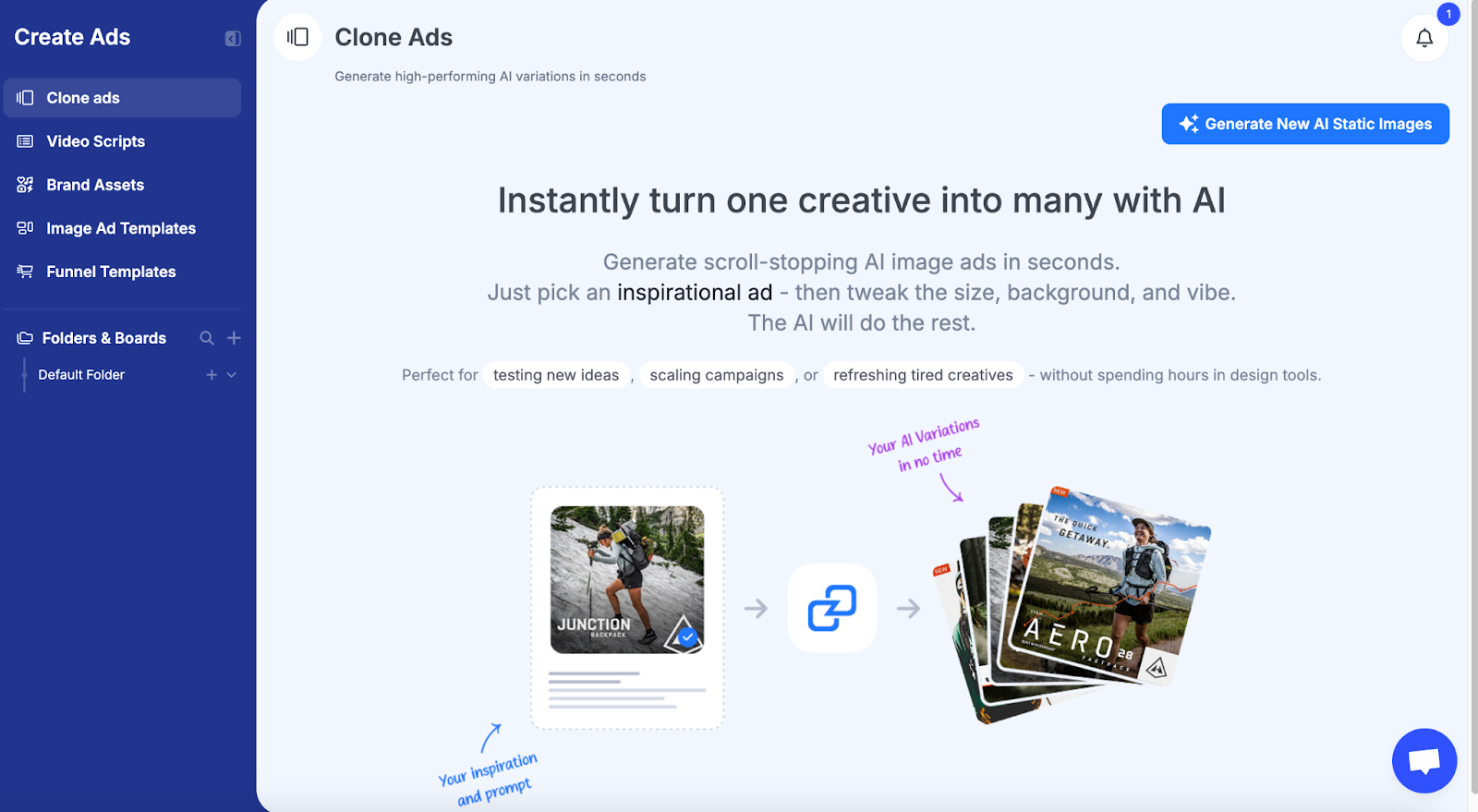
GetHookd’s tools, such as the Clone Ads feature, put this into practice directly. Users can turn a single winning image ad into dozens of ready-to-test variations with new colors, formats, and styles generated in seconds.
Campaign Management & Optimization
Managing campaigns across multiple channels manually means working with data that is already hours old by the time you act on it. AI campaign management eliminates that lag by continuously monitoring performance across channels, shifting budget toward what is converting, and pausing what is not.
AI-Powered Competitor Research
AI has made competitor research faster and more actionable than manual ad library browsing ever allowed.
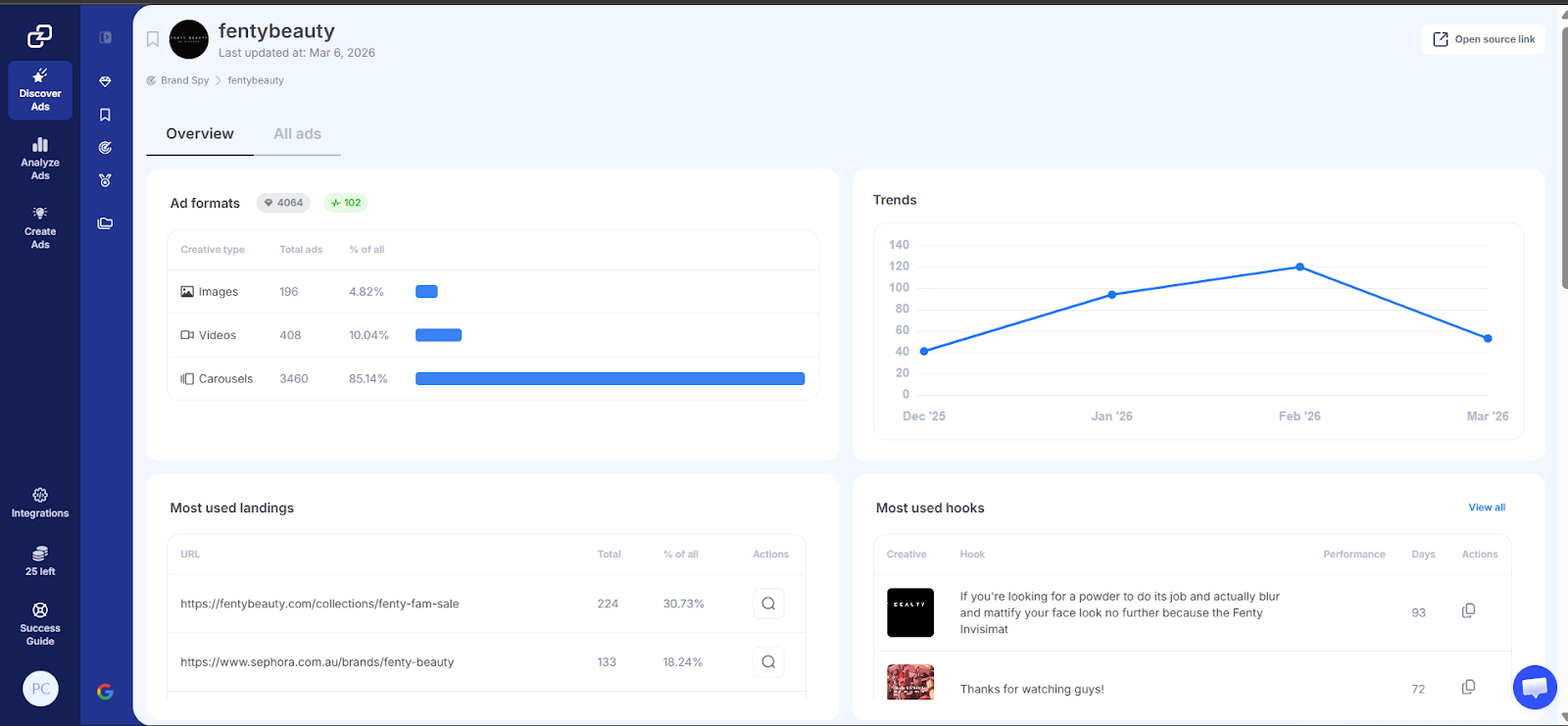
For instance, GetHookd’s Brand Spy feature surfaces which competitor ads are actively scaling on Meta. It also reveals the landing pages behind those campaigns and identifies the hooks and creative formats driving engagement.
Rather than observing what competitors are running, you get enough context to understand why it is working and apply those patterns to your own campaigns.
AI Creative Analysis & Iteration
Running creative tests manually is slow. AI compresses that cycle by analyzing performance across multiple creative variables simultaneously, including hook strength, visual composition, CTA placement, and emotional tone, identifying winning patterns faster than traditional split testing allows.
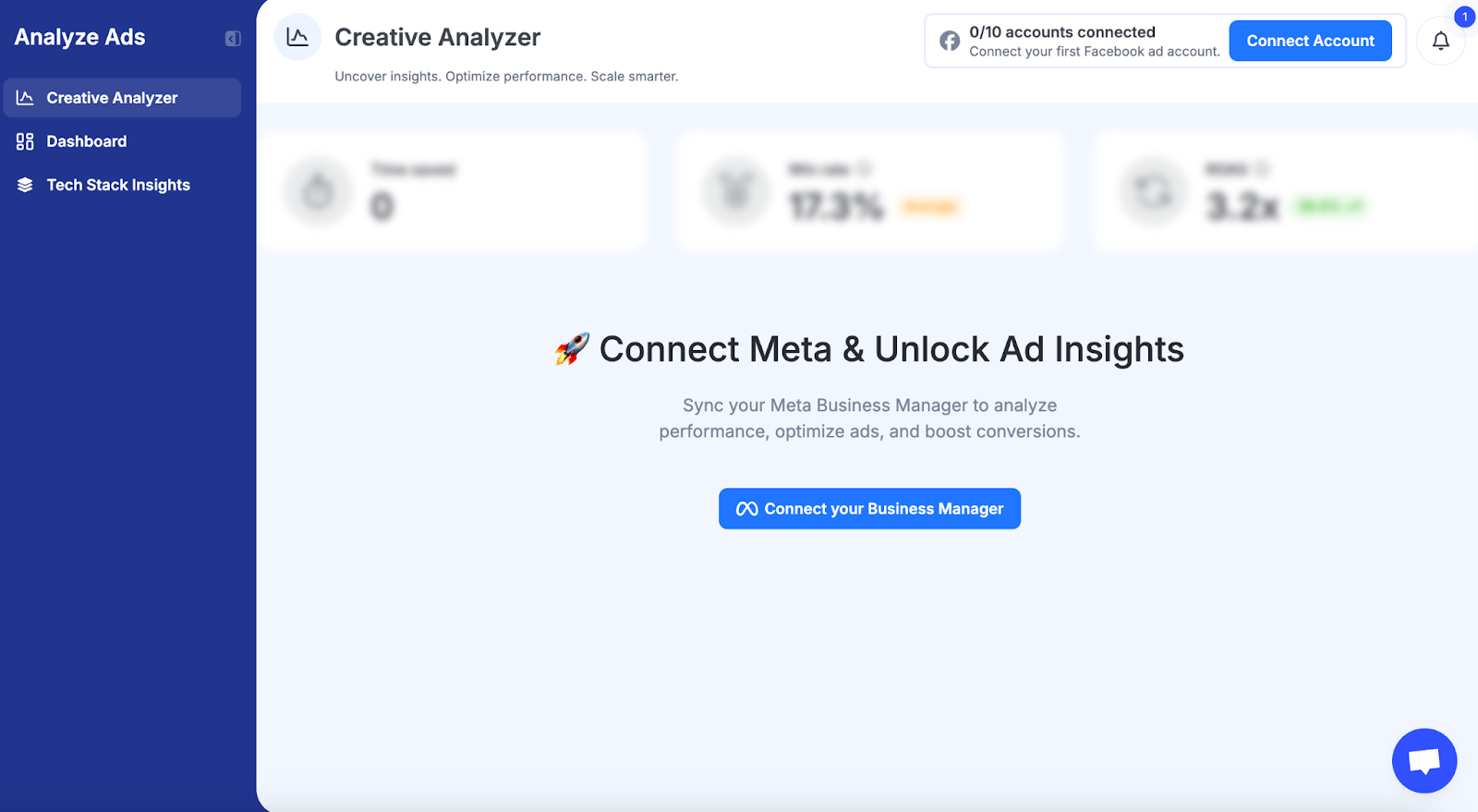
GetHookd’s Creative Analyzer takes this further by giving you a clear read on which of your own creatives are worth scaling and which ones to cut, before wasted spend becomes a bigger problem.
Personalized Ads at Scale
AI-driven audience segmentation allows even mid-sized advertisers to serve relevant, individualized ad experiences across thousands of audience micro-segments simultaneously, without building out separate campaigns for each one.
Machine learning continuously refines targeting based on real conversion signals, finding high-value customers beyond the segments you manually defined at setup.
Media Buying & Advertising
AI evaluates every available impression, weighing audience match, contextual relevance, and conversion probability before placing a bid. Device behavior patterns, live event signals, and cross-channel frequency all factor in automatically, making ad spend consistently more efficient.
Top AI Advertising Tools to Use in 2026
AI advertising tools broadly fall into two categories: platform-native tools that automate delivery within their own ecosystems, and independent platforms that give you intelligence and creative capabilities across the full workflow.
1. GetHookd
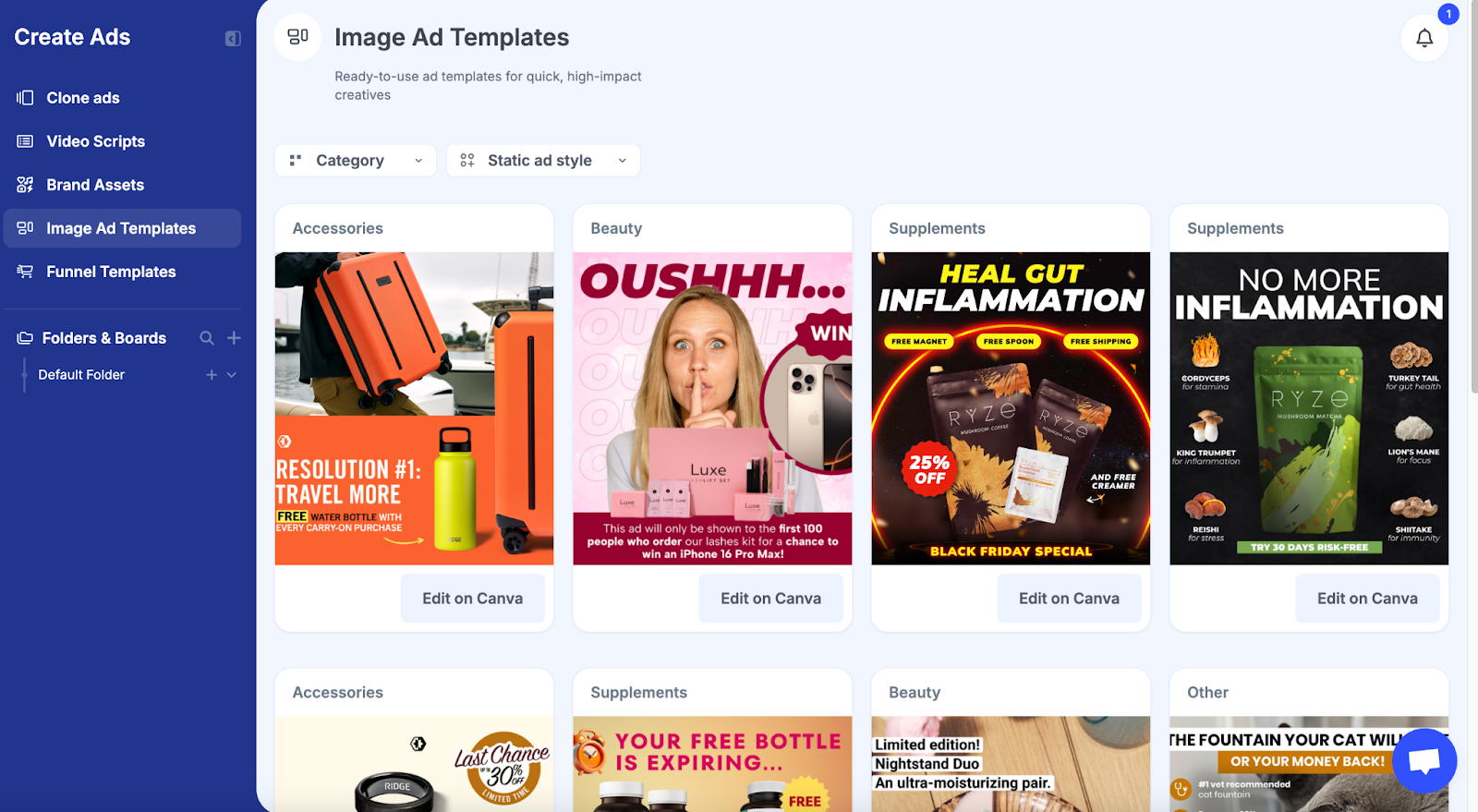
GetHookd is the most complete AI advertising platform for eCommerce brands, dropshippers, media buyers, and agencies running Meta campaigns. With access to 65 million+ ads and a suite of AI creative tools, it covers the entire workflow from competitive research to production and analysis.
- Brand Spy surfaces which competitor ads are actively scaling on Meta and reveals the landing pages behind their campaigns.
- Ads Transcription automatically extracts hooks, copy structure, and CTAs from any video ad, eliminating the need to rewatch and take notes.
- AI Video Scripts, Clone Ads, and an extensive library of static ad and funnel templates mean you can move from a competitor insight to a testable creative without opening a second tool.
- Creative Analyzer identifies which of your own ads are worth scaling and which ones to cut, so every production cycle is informed by real performance data rather than intuition.
For teams that need to move fast, test smart, and keep creative output high without expanding headcount, GetHookd removes the bottlenecks that slow most ad operations down.
2. AdCreative.ai
AdCreative.ai is an AI creative generation platform that produces static ad visuals and copy variations at scale. You provide your brand assets and campaign goal, and the platform outputs creative variations with predictive performance scores attached.
It covers the production side of the workflow. However, unlike GetHookd, it has no competitive intelligence or way to understand what is working in your market before you start generating.
3. Google Performance Max
Performance Max is Google’s AI-driven campaign type that runs across Search, Display, YouTube, Gmail, and Maps from a single setup. You provide creative assets, audience signals, and conversion goals, and Google’s AI determines the best channel, audience, and bid combination in real time.
It suits advertisers running Google-heavy budgets, though it operates entirely within Google’s walled ecosystem, with no visibility into competitor strategy or creative intelligence outside of it.
4. Meta Advantage+ Campaigns
Meta’s Advantage+ suite automates audience targeting, creative delivery, placements, and budget allocation across Facebook and Instagram. Meta’s AI identifies high-value customers across your full addressable audience without manually defined segments.
Like Performance Max, it automates delivery within Meta’s own ecosystem, but that intelligence stops at the platform boundary. There’s no visibility into competitor strategy or creative performance outside of it.
GetHookd: Built for Every Stage of the AI Advertising Workflow
Most AI advertising tools solve one part of the problem. They generate creatives, or they automate delivery, or they track competitors. Rarely do they connect those stages into a single workflow.
For eCommerce brands and media buyers running Meta campaigns, that fragmentation has a real cost. GetHookd removes it by bringing competitive research, creative production, and performance analysis into one place, so the cycle from insight to testable ad runs faster, and every decision is grounded in real data rather than gut feel.
That consistency, maintained at speed and at scale, is what separates profitable growth from expensive guesswork.
Start your free 7-day trial today!
Frequently Asked Questions (FAQs)
How is AI used in advertising?
AI is used across the full advertising workflow, from identifying winning creative patterns and automating bid decisions to generating ad copy, personalizing delivery for individual users, and analyzing performance data in real time.
The result is faster execution, smarter spend allocation, and creative output that improves continuously rather than resetting with every new campaign.
Which AI tool is best for advertising?
The right tool depends on where your biggest bottleneck is. If your focus is Meta campaigns and you need competitive intelligence, creative production, and performance analysis in one place, GetHookd covers the full workflow from research to ready-to-launch creative.
Platform-native AI tools like Google Performance Max are strong for automating delivery within their own ecosystems, but offer no visibility into competitor strategy or creative intelligence outside of them.
How to use AI for marketing automation?
Start by identifying which parts of your workflow consume the most time with the least return. Competitive research, creative production, bid management, and performance reporting are the areas where AI delivers the most immediate impact.
Use AI-powered tools to automate repetitive decisions like budget reallocation and targeting, while AI creative tools handle generating and testing ad variations at a volume that manual workflows cannot sustain. For teams focused on Meta, GetHookd covers the research and creative production stages in one place, removing the need to stitch multiple tools together.
Does GetHookd work for high-volume creative testing?
Yes. GetHookd is built specifically for teams that need to produce and test creatives at scale without expanding headcount.
Our AI creative tools and library of ad and funnel templates make it straightforward to maintain a consistent output of fresh creatives, so testing cycles stay fast and budget goes toward ads with real evidence behind them.
How does GetHookd’s Brand Spy work?
Brand Spy lets you see exactly which ads your competitors are actively scaling on Meta, not just running. It surfaces the landing pages behind those campaigns, the hooks driving engagement, and the creative formats getting the most traction, giving you enough context to understand why something is working and apply those patterns to your own campaigns.
*Note: Pricing and/or product availability mentioned in this post are subject to change. Please check our website for current pricing and stock information before making a purchase.