Key Takeaways
- Kalshi produced a nationally broadcast TV commercial for $2,000 in 48 hours using AI, proving that creative quality and timing now matter more than production budget.
- FULLBEAUTY Brands saw a 45% ROAS lift on Meta simply by replacing static white backgrounds with AI-generated variations, giving the algorithm more creative combinations to optimize.
- H&M used AI digital twins to compress campaign visual production from weeks to hours, allowing the brand to keep pace with fast-moving platform trend cycles at scale.
- Cadbury used AI to generate thousands of personalized ads featuring Shah Rukh Khan, delivering 35% sales growth by giving small businesses celebrity-level advertising exposure for free.
- GetHookd gives performance marketers a single platform to research what is already converting, produce AI-powered ads, and scale campaigns without patching together multiple tools.
AI Ads Case Studies: What These Examples Have In Common
The strongest AI ad results tend to share a consistent pattern. AI addresses a production bottleneck that previously limited what teams could execute, whether it was cost, speed, or creative volume.
Human judgment remains in the loop throughout, directing the strategy and determining what is worth producing in the first place.
The second pattern is that results improve when AI has more creative signals to work with. The competitive edge in these campaigns lies in the quality of the brief and the research behind it.

GetHookd: Turn Competitor Intelligence Into Your Next Winning Ad
GetHookd reveals which ads your competitors are actively scaling—not just running. Spy on their best-performing creatives, landing pages, and traffic strategies, then turn proven concepts into testable campaigns in seconds with AI-powered script generation and creative cloning.
What You Get:- ✓ Brand Spy to decode competitor ad strategies in real-time
- ✓ AI script generation and ad cloning for instant variations
- ✓ Performance scoring based on actual ad behavior, not vanity metrics
- ✓ Creative Analyzer to identify and scale your top performers
GetHookd: Turn Competitor Intelligence Into Your Next Winning Ad
65M+ Ads Analyzed | 4.8★ G2 Rating | 4.5★ Trustpilot Rating
Stop Guessing. Start Scaling:
GetHookd reveals which ads your competitors are actively scaling—not just running. Spy on their best-performing creatives, landing pages, and traffic strategies, then turn proven concepts into testable campaigns in seconds with AI-powered script generation and creative cloning.
What You Get:
- ✓ Brand Spy to decode competitor ad strategies in real-time
- ✓ AI script generation and ad cloning for instant variations
- ✓ Performance scoring based on actual ad behavior, not vanity metrics
- ✓ Creative Analyzer to identify and scale your top performers
AI Ads Case Study 1: Kalshi
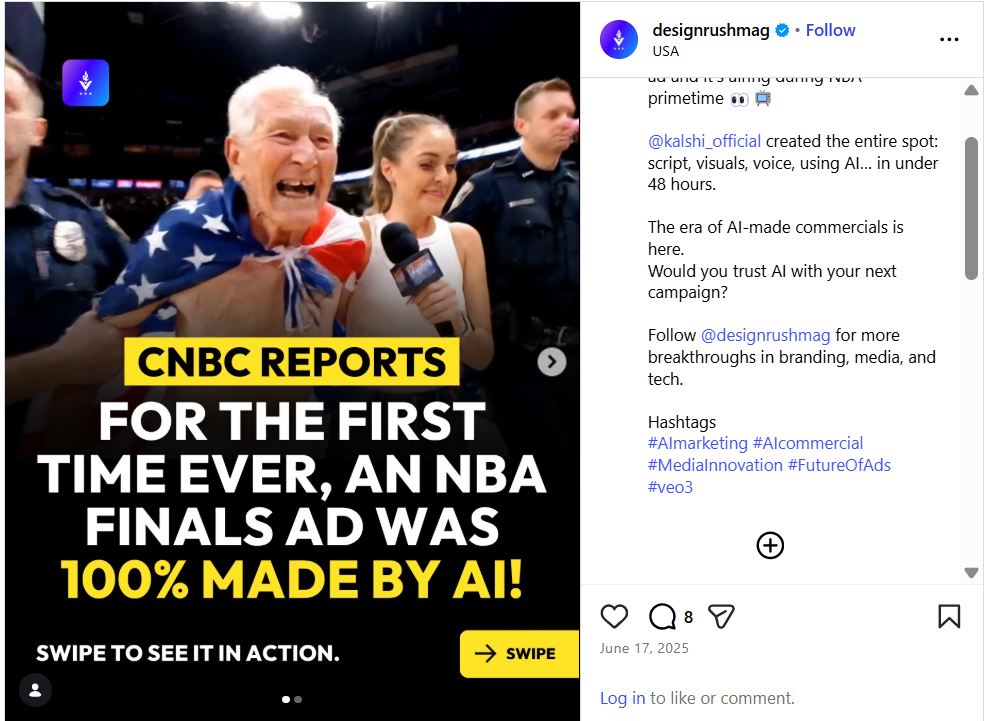
Kalshi, a US-based prediction market platform, wanted to run a commercial during Game 3 of the 2025 NBA Finals. The brand hired filmmaker PJ Accetturo to create the spot exclusively using AI tools. He produced between 300 and 400 clips before narrowing them down to the 15 that made the final cut.
The ad cost $2,000 and took two days to produce. It generated over 3 million views on X alone and became a viral case study in the future of marketing production. The process reportedly cut production costs by 95% compared to traditional ad shoots.
What It Demonstrates
The Kalshi case is a story about what becomes possible when production costs collapse. After receiving traditional production quotes running into seven figures, Kalshi chose AI instead and placed a creative in one of the most competitive advertising slots of the year, generating more buzz than many of the million-dollar spots that surrounded it.
The creative direction, brand alignment, and storytelling came from a human. AI handled the execution.
AI Ads Case Study 2: FULLBEAUTY Brands

FULLBEAUTY Brands, a US-based plus-size fashion and lifestyle retailer, was running catalog ads on Meta with plain white product backgrounds. The creative was functional but offered Meta’s algorithm very little variation to work with.
FULLBEAUTY Brands swapped their plain white catalog backgrounds for AI-generated variations, giving Meta’s system far more creative levers to test. The change was relatively contained: the same product shots, new AI-generated backgrounds that gave the algorithm more creative combinations to optimize across.
That single change produced a noticeable lift: 45% higher ROAS, 22% higher conversion rate, and 36% higher CTR compared to their standard setup.
What It Demonstrates
The improvement did not come from a new campaign structure. Instead, it came from giving the algorithm more creatives to work with. For eCommerce brands running catalog-style ads, this is one of the most accessible applications of AI in paid media.
AI Ads Case Study 3: H&M
H&M operates over 4,200 stores with approximately 3 billion digital visitors annually. Keeping campaign visuals updated across markets at the speed modern platforms demand was not practical with traditional photography alone.
In a spring 2025 campaign, H&M photographed 30 models and used AI to create photo-realistic digital twins of each one. The twins were used in marketing campaigns and social media content, with some ads pairing the human and AI versions side by side. Models retained image rights and were compensated for each use.
Campaign visuals that previously required weeks of production could be generated in hours, allowing H&M to respond to trend cycles that traditional shoot schedules could not accommodate.
What It Demonstrates
The production speed advantage is the headline result here. AI compressed the timeline between concept and published asset, which at H&M’s scale translates directly into competitive agility.
AI Ads Case Study 4: Cadbury
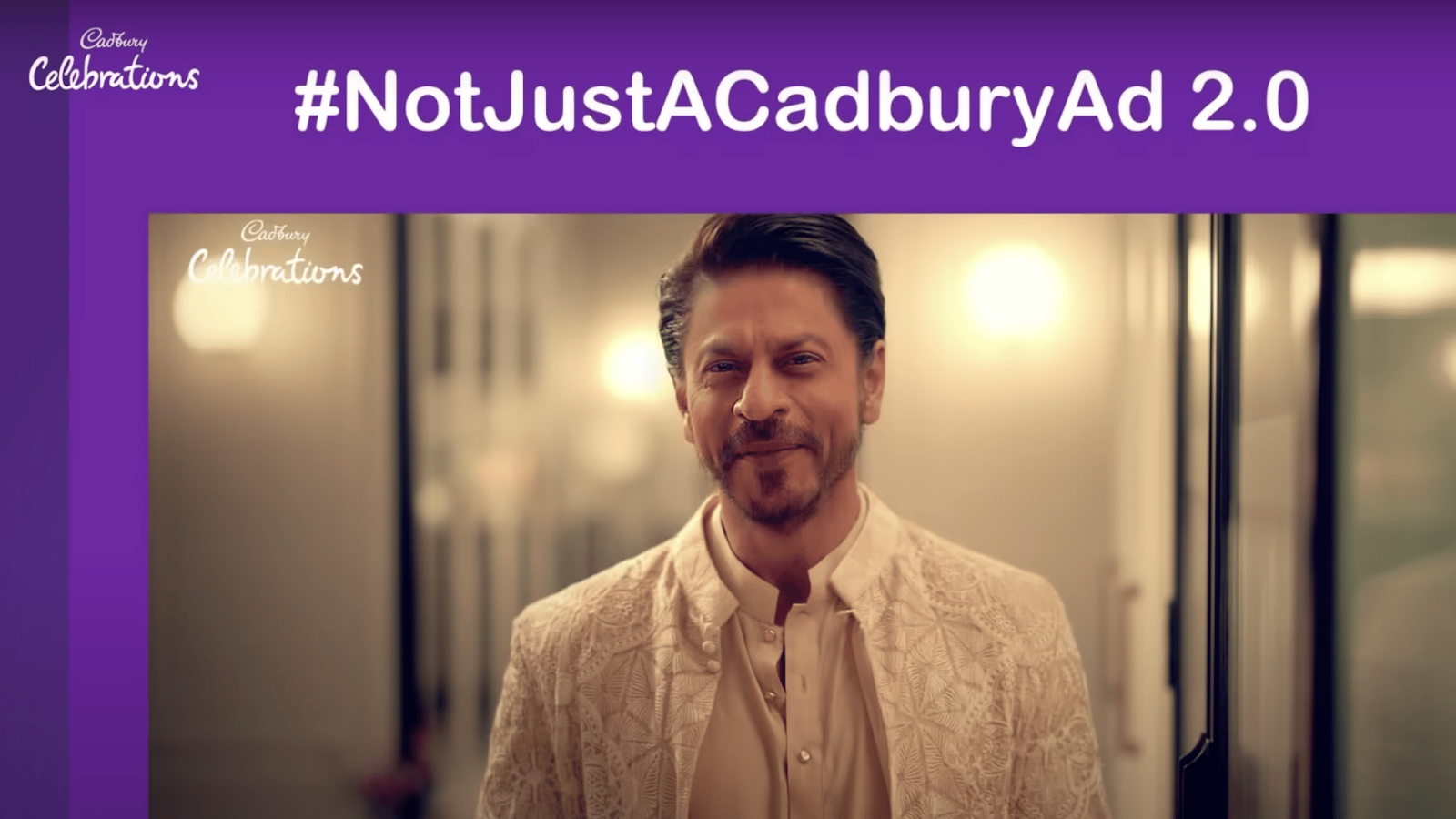
During Diwali 2021, Cadbury Celebrations faced a dual problem. India’s small local retailers, who accounted for over 80% of Cadbury Celebrations sales, were struggling to compete with large eCommerce platforms offering aggressive festive deals. Cadbury needed to drive traffic to local stores while also cutting through a crowded festive advertising season.
Using AI, Cadbury recreated Bollywood superstar Shah Rukh Khan’s face and voice to feature local store names in personalized video ads, localized across 500+ pin codes for over 2,500 small businesses. Every time the ad was served, viewers saw Khan directing them to a specific nearby store by name.
The campaign unlocked an unprecedented 35% business growth for Cadbury Celebrations. It won the Gold at the Clio Awards 2022 and was later named the world’s most effective advertising campaign in the WARC Effective 100 rankings.
What It Demonstrates
Cadbury’s case shows what AI personalization at scale looks like. The campaign did not use AI to reduce costs in isolation. It used AI to give thousands of small businesses access to celebrity-level advertising exposure they could never have afforded individually.
Research, Create, & Scale Winning AI Ads with GetHookd
Every case study in this article points to the same underlying advantage: knowing what works before you spend on production. GetHookd is built around that principle. Our Explore Ads database gives you access to 65M+ high-performing Meta ads filtered by niche, format, and performance signals, so every brief your team writes starts from real market data rather than instinct.
Brand Spy reveals which creatives your competitors are actively scaling, the landing pages behind their top performers, and the hooks they consistently use. When research identifies a concept worth building, our ad production tools take over.
- Ads Transcription extracts the exact hook, copy structure, and CTA from any high-performing video ad so your team can adapt proven frameworks rather than start from scratch.
- Video Scripts generates complete, structured ad scripts from your product details, built on an 8-figure direct-response copywriting framework.
- Clone Ads produces multiple static creative variations in minutes without a designer.
- Image Ad Templates give you ready-to-use static ad designs across multiple niches, editable directly in Canva.
Most teams patch together four or five tools to do what GetHookd does in one place. Our platform removes that overhead entirely, so your budget goes toward scaling what works rather than managing the workflow around it.
Start your GetHookd free trial today!
Frequently Asked Questions (FAQs)
Which industries are seeing the best results from AI ads?
eCommerce and DTC brands are consistently seeing the strongest results, particularly on Meta, where creative diversification directly feeds the platform’s optimization system. Fashion, beauty, supplements, and consumer goods categories have the highest concentration of documented AI ad success stories. The common factor is high creative volume requirements, which is exactly where AI delivers the most operational advantage.
Do AI ads actually perform better than human-created ads?
The evidence shows that AI-generated ads perform well when built on a strong research foundation and guided by human creative direction. For instance, the FULLBEAUTY Brands case study is one of the clearest documented examples: a single AI-driven change to creatives improved ROAS by 45% on Meta.
Can GetHookd help me produce high-performing AI ads?
Yes. GetHookd gives you the research layer, production tools, and performance analysis to run informed, data-backed creative strategies. Explore Ads and Brand Spy features surface what is already converting in your market. Video Scripts, Clone Ads, and templates handle AI-powered production. And once campaigns are live, our Creative Analyzer shows which creatives are driving results and which to cut.
*Note: Pricing and/or product availability mentioned in this post are subject to change. Please check our website for current pricing and stock information before making a purchase.