

AI-generated content has become a core part of how performance marketers and creative teams produce ads, scripts, and campaign copy at scale. With that volume comes a predictable set of problems, most of which go unnoticed until they start affecting results.
The underlying cause is almost always the same. Weak prompts going in and no human review coming out. Tighten those two things, and AI becomes a reliable production tool rather than a source of errors you have to clean up after every batch.
Below are the six most common AI content problems and the exact fix for each.
65M+ Ads Analyzed | 4.8★ G2 Rating | 4.5★ Trustpilot Rating
GetHookd reveals which ads your competitors are actively scaling—not just running. Spy on their best-performing creatives, landing pages, and traffic strategies, then turn proven concepts into testable campaigns in seconds with AI-powered script generation and creative cloning.
What You Get:AI writing tools are trained to optimize. Feed them a target keyword, and they will work it into every other sentence without any sense of how that reads to a human.
The result is content that technically checks SEO boxes but feels mechanical, with phrases repeated unnaturally and headings that exist solely as keyword containers.
Rather than instructing the AI to write about a keyword, give it context about who the reader is, what problem they are trying to solve, and what tone to use. This shifts the output from keyword-focused to reader-focused.
After generation, do a manual read specifically looking for unnatural repetition and replace those instances with synonyms, related phrases, or restructured sentences.
AI gravitates toward informational content. Ask it to write a blog post, and it will produce something educational and useful for awareness-stage readers, but it will not move anyone closer to a purchase.
Conversion-focused content requires understanding buyer psychology and the specific friction points that stop someone from taking action. These are context-specific judgments that do not emerge from a standard AI prompt.
Map your content against the three stages of the buyer journey and identify where the gaps are. If your AI output is heavily weighted toward awareness-stage content, that is a strategy issue, not a tool problem.
Deliberately prompt AI to create consideration and decision-stage content, such as comparison articles, objection-handling FAQs, and benefit-driven landing page copy.
Give the AI the context it needs to write persuasively by including your unique value proposition, the top objections your audience raises, and the primary action you want the reader to take.
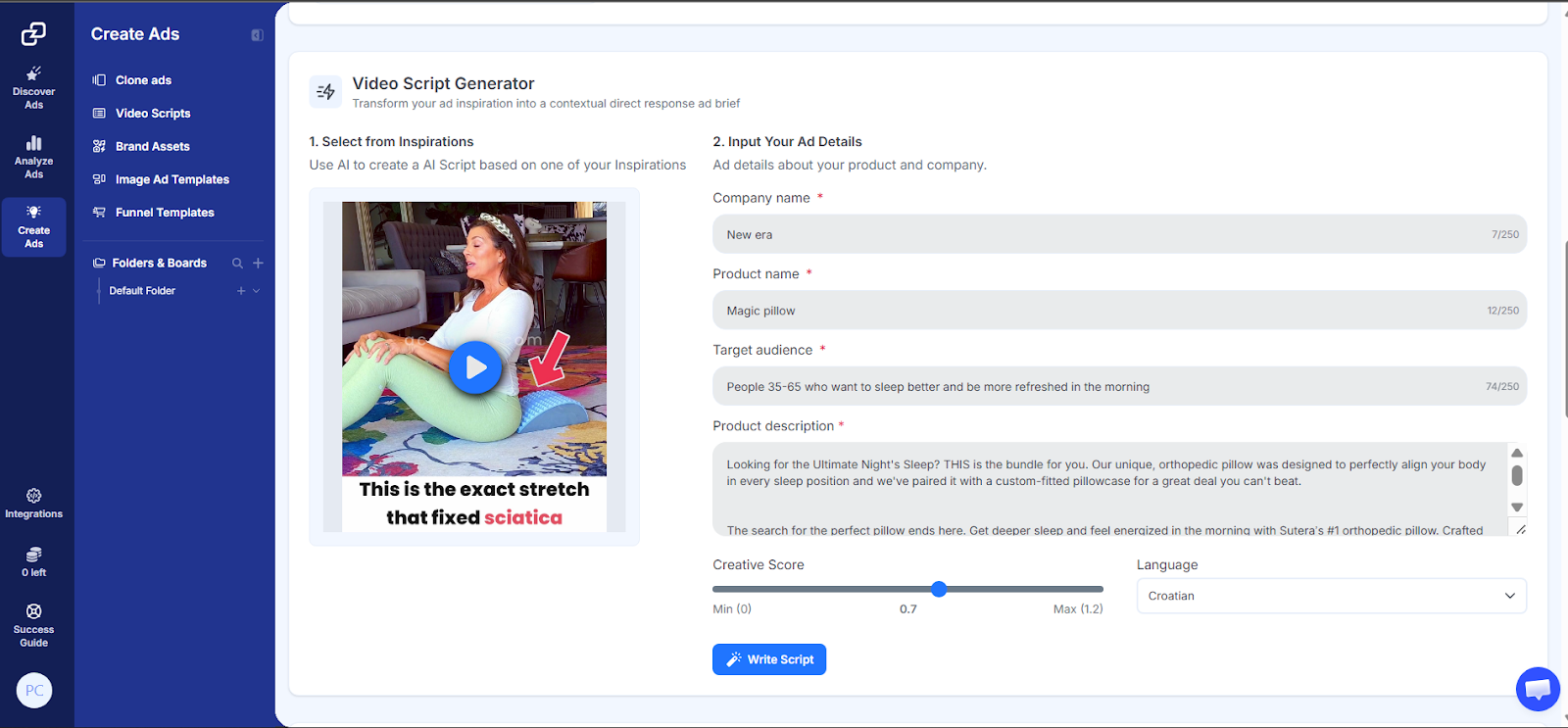
Tools like GetHookd's Video Scripts feature generate hooks, angles, and complete scripts from your product details using direct-response frameworks. This ensures the output is built around conversion from the start rather than defaulting to generic informational content.
AI models are trained on massive datasets of existing content, which makes them very good at producing content that feels polished on the surface but says nothing new.
Beyond clichés, AI pulls patterns from what already exists online. It cannot generate new perspectives, draw from personal experience, or offer a take that has not already been expressed somewhere in its training data.
Use AI as a first draft engine rather than a finished product. After generation, add what AI cannot: proprietary data, client case studies, personal experience, or a take that pushes back on conventional thinking.
AI language models do not know facts. They predict text based on patterns and, when they lack reliable data, generate information that sounds credible rather than acknowledging uncertainty.
Publishing hallucinated content can seriously damage brand credibility. A fake statistic in a high-traffic article can spread across the web before anyone catches it, and in industries like healthcare, finance, or law, the consequences extend well beyond reputational damage.
Every statistic, citation, and named source in AI-generated content must be manually verified before publication. That means cross-referencing claims against primary sources, not just other web articles that may have repeated the same hallucinated figure. Build fact-checking into your content workflow as a fixed, required step.
Ask an AI to write ten pieces without detailed instructions, and you will get ten different brand voices. The problem compounds when multiple team members use AI tools independently, each with their own prompting style, resulting in a fragmented content library.
Readers notice this even if they cannot articulate why, and an inconsistent tone signals unreliability to readers, even when they cannot name exactly why.
Create a documented brand voice guide and include key excerpts directly in every AI prompt you use. Specify tone descriptors, reading level, sentence length preferences, and words or phrases to avoid. For teams using AI at scale, create a standardized prompt template that everyone uses as a starting point.
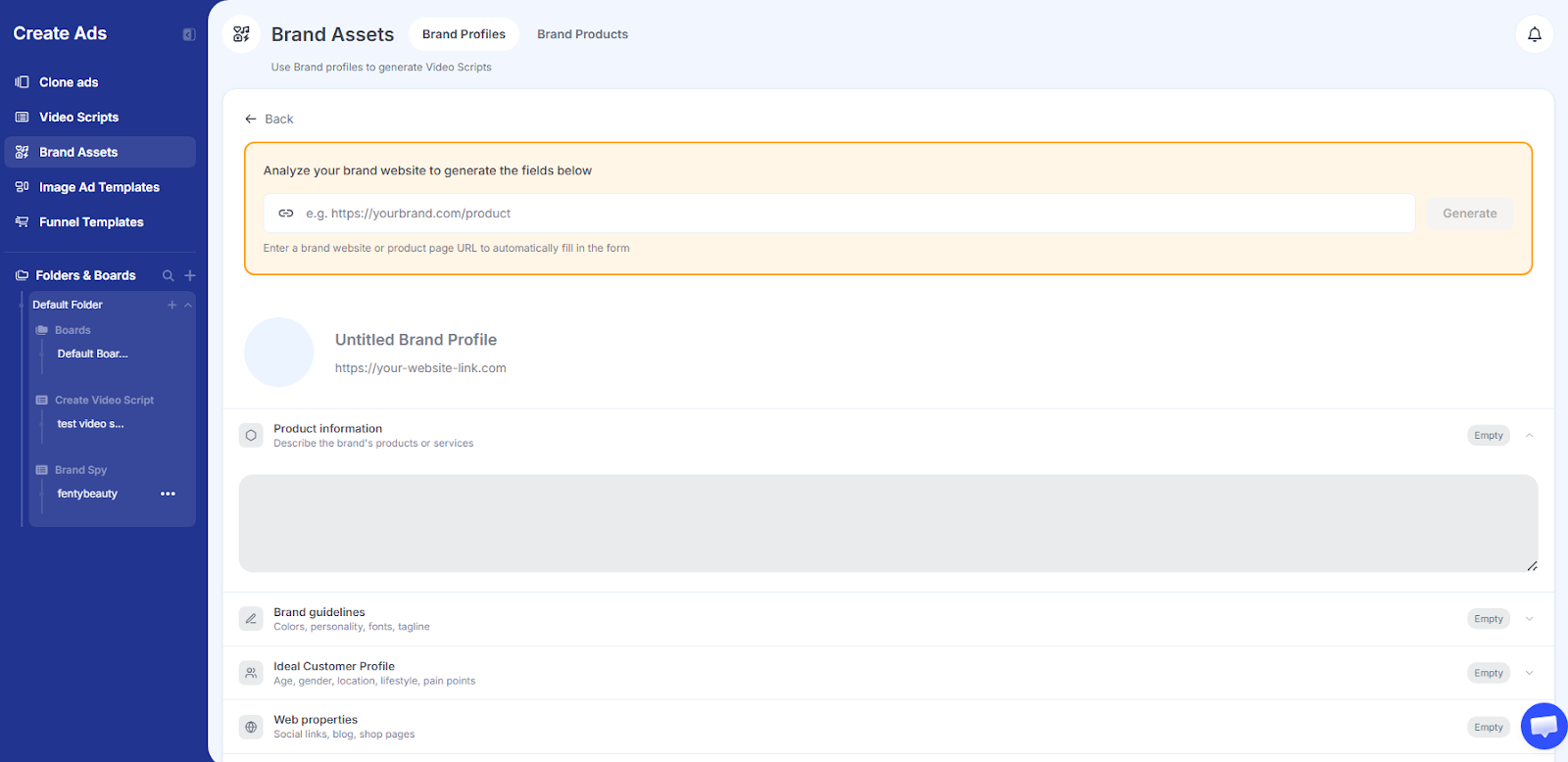
GetHookd's Brand Assets feature allows you to establish both brand profiles and brand products. Brand profiles store your guidelines, ideal customer profile, and product information to generate on-brand video scripts. Brand products store your product details for use in AI image generation, so every creative output uses your brand context.
AI does not know your target audience. Without explicit context in the prompt, it defaults to writing for a generic, middle-of-the-road reader, which means content that is too basic for experts, too vague for decision-makers, and too broad to drive action.
Every prompt should answer three questions before asking the AI to write anything: who is this for, what do they already know, and what do they need to do after reading this. Include a one-sentence audience description and relevant context about where it sits in the buyer journey.
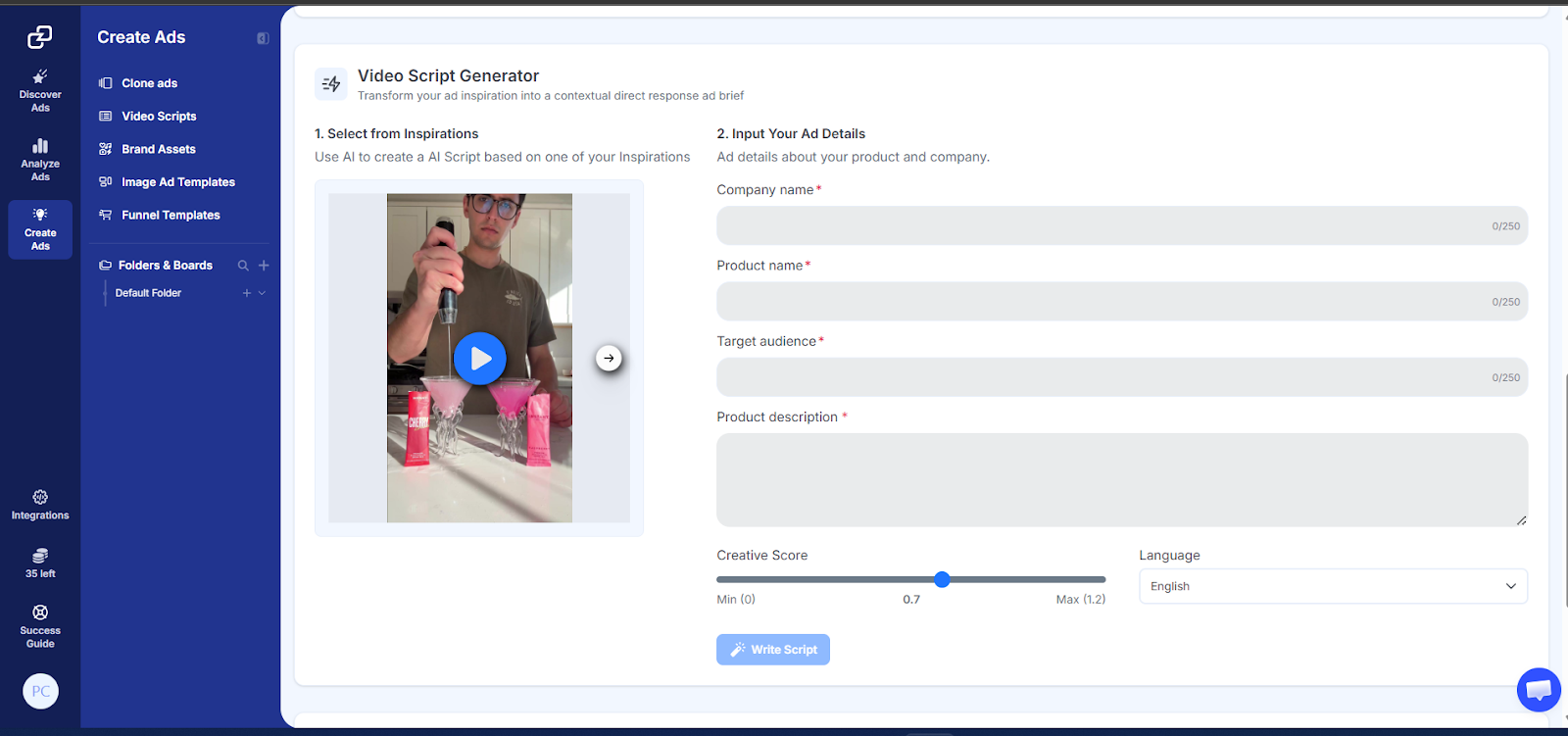
GetHookd's Video Script Generator includes a dedicated target audience field alongside your product details and company name, so audience context is part of the generation process by default, not an afterthought.
Every problem covered in this article comes back to the same root cause: AI gets bad inputs and ships without review. Fix the inputs, build in the review, and the output changes.
GetHookd is built for exactly that workflow. Brand Assets stores your brand profile and product details centrally so every script starts from your actual context. The Video Script Generator prompts you for target audience and product details before generating — so audience context is built in, not bolted on. And Explore Ads and Brand Spy show you what is already converting in your niche before you write a single word, so your AI content starts from intelligence instead of guesswork.
Start your GetHookd free trial today.
AI-generated content is not penalized as long as it is helpful, accurate, and written for humans. The problem is that most AI output published without editing fails that standard through thin content, keyword stuffing, and factual inaccuracies, all of which are known negative ranking signals.
After generating a draft, replace vague generalizations with specific data points, swap passive constructions for active ones, vary sentence length deliberately, and inject at least one original observation per major section. Human writing is full of concrete details, real examples, and personal perspectives that AI naturally glosses over.
AI hallucination occurs when a language model generates information that appears factually correct but is entirely fabricated, including fake statistics, nonexistent studies, and false attributions. The model predicts what a plausible answer looks like based on patterns in its training data, with no built-in mechanism to verify truth. Every specific claim in an AI draft needs to be manually verified against a primary source before publishing.
Every single time without exception. Hallucinations are most dangerous precisely because they look credible, so fact-checking should be a hard rule in your workflow rather than an optional quality check. Pay particular attention to statistics, percentages, dates, named individuals, and any claim that includes a specific number or attribution.
Yes, but only with deliberate, structured prompting. A standardized prompt template that includes your brand voice descriptors, tone guidelines, and examples of existing content ensures output starts from the same baseline regardless of who on your team is doing the prompting. GetHookd's Brand Assets lets you store your brand profile centrally, so every piece of content generated through the platform pulls from the same brand context automatically.
*Note: Pricing and/or product availability mentioned in this post are subject to change. Please check our website for current pricing and stock information before making a purchase.


