
4 Best Moat Ad Search Alternatives to Try in 2026
Key Takeaways
- Since Oracle discontinued Moat Ad Search, digital marketers need robust alternatives to continue tracking competitor advertising strategies across platforms.
- GetHookd offers the most comprehensive ad intelligence with AI-powered features for creative analysis.
- Another alternative, Meta Ad Library, provides free access to Facebook and Instagram ads but lacks the cross-platform capabilities that made Moat valuable.
- Other Moat Ad Search alternatives include Foreplay and MagicBrief.
- The best Moat alternatives combine ad creative libraries with performance metrics and competitive insights to inform your campaign strategy.
What Happened to Moat Ad Search?
Moat Ad Search launched in 2010 as a free search engine for display ads, enabling marketers to search for competitor creatives across the web. Oracle acquired Moat in 2017 and moved most features behind a paywall.
In September 2024, Oracle shut down its entire advertising division, including Moat. The shutdown left marketers without access to display ad tracking, historical ad data, and the heatmap engagement analytics for which Moat was known.
Several alternatives now cover what Moat once offered, from competitor tracking to performance analytics, and some even pair research with creative production. Below are the strongest Moat Ad Search alternatives to consider in 2026.
GetHookd: Turn Competitor Intelligence Into Your Next Winning Ad
65M+ Ads Analyzed | 4.8★ G2 Rating | 4.4★ Trustpilot Rating

Stop Guessing. Start Scaling:
GetHookd reveals which ads your competitors are actively scaling—not just running. Spy on their best-performing creatives, landing pages, and traffic strategies, then turn proven concepts into testable campaigns in seconds with AI-powered script generation and creative cloning.
What You Get:
- ✓ Brand Spy to decode competitor ad strategies in real-time
- ✓ AI script generation and ad cloning for instant variations
- ✓ Performance scoring based on actual ad behavior, not vanity metrics
- ✓ Creative Analyzer to identify and scale your top performers
4 Best Moat Ad Search Alternatives to Try in 2026
Alternative #1: GetHookd
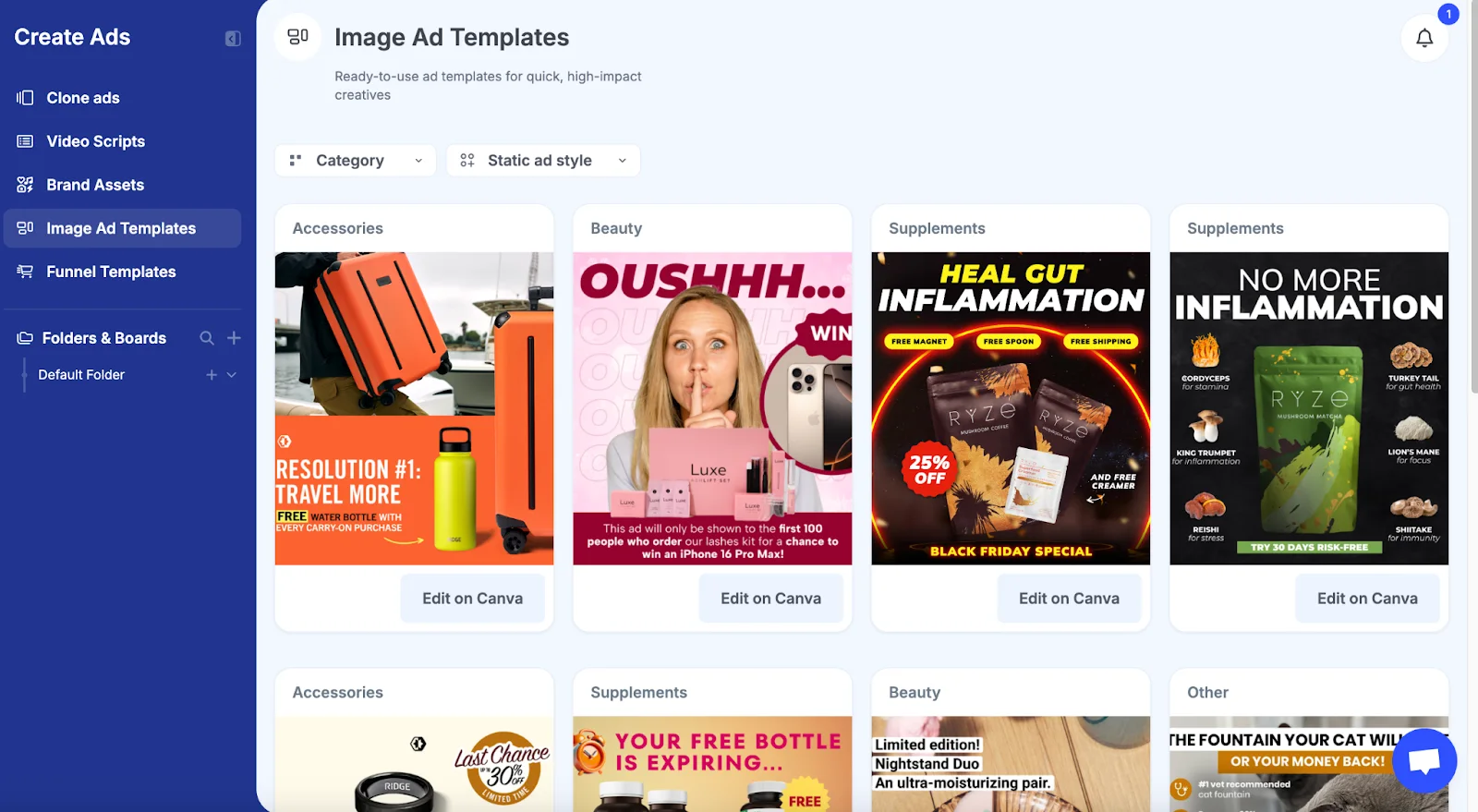
GetHookd pairs ad intelligence with creative production: research and execution in the same dashboard. With 65M+ ads indexed across Meta ads, you can search by vertical, creative type, performance signals, or aesthetic.
The difference from Moat: We don’t stop at showing you what’s running. Our platform goes further by helping you turn that research into ads you can actually launch.
When you find an ad worth studying, you can save it permanently to your own library, organized however you want. If it’s a video ad, the platform transcribes it so you can read the script. From there, AI tools help you write new hooks and angles based on what’s already working.
And if you find a winning static image, you can generate dozens of variations without opening separate design software. Research and production happen in the same place.
GetHookd Key Features
- Explore Ads: Dig through millions of creatives from Facebook and Meta ads. Narrow results by category, media format, engagement indicators, or brand.
- Brand Spy: Enter any brand name and see every Facebook ad they’re currently running. You can also study what hooks they repeat across campaigns, which formats they favor, and where each ad drives traffic.
- Save Ads: Capture ads to a personal library sorted by boards and folders. Unlike Moat, these don’t vanish when the original campaign stops.
- Ads Transcription: Turn video ads into readable scripts. Isolate openers, calls to action, and narrative structure without scrubbing through footage.
- AI Script Generation: Input a reference ad or your product specs. The AI (built on high-spend direct response frameworks) outputs hooks, angles, and full scripts in seconds.
- Clone Ads: Transform a single winning ad into multiple variations. Alternate color palettes, different avatars, adjusted compositions, and fresh formats, without design skills.
Why Choose GetHookd
Testing ads blindly drains your budget fast. GetHookd eliminates that waste by letting you build on creatives already proven to convert. You’re not guessing what might work; you’re iterating on what already does. Less guesswork means fewer wasted dollars and more confidence when you scale.
Alternative #2: Foreplay
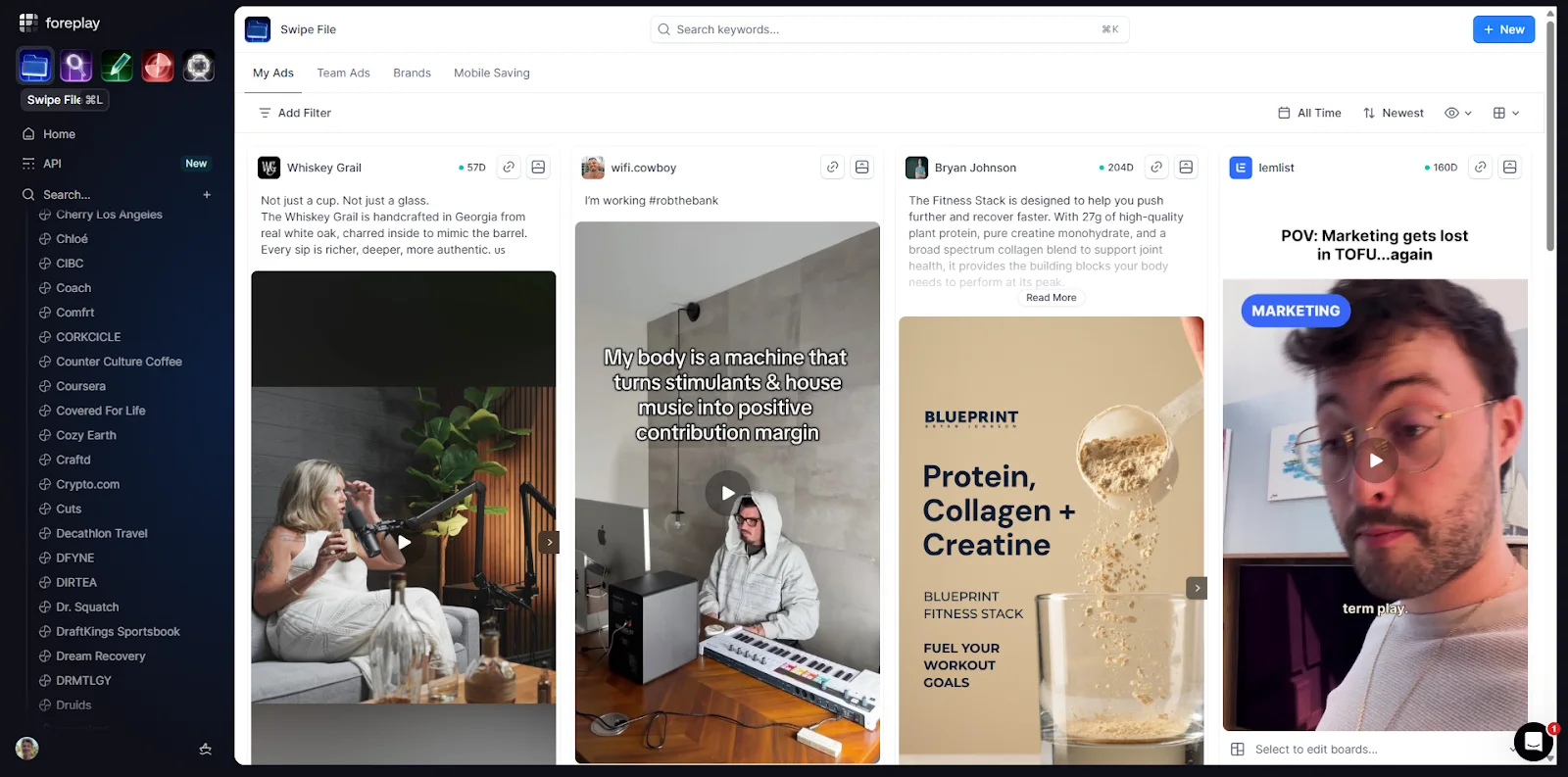
Foreplay is an ad swipe file and competitor tracking tool that focuses on saving, organizing, and sharing ad inspiration from social platforms. It allows users to capture ads to boards and folders without taking screenshots or copying links. Foreplay also includes a brief builder for creating storyboards and generating scripts with AI.
Foreplay Key Features
- Swipe File: Save ads from Facebook, Instagram, and other social networks. Organize by folders, boards, tags, and ratings. Ads include landing page screenshots.
- Discovery: Browse a community-curated library of ads. Filter by platform, format, industry, or use AI search to find specific styles or themes.
- Spyder: Track competitor ad activity over time. See their creative history (up to three years), new launches, and which ads run longest.
- Briefs: Build creative briefs with a modular editor. Generate AI scripts and create storyboards from saved references.
Limitations of Foreplay
Foreplay doesn’t include transcription, so pulling scripts from video ads requires a separate tool. There’s no ad cloning or variation generation. Once you’ve saved inspiration, you’ll need design software such as Figma or Canva to create new creatives from it. For teams running high-volume campaigns, this fragmented workflow adds significant time overhead to every creative iteration.
Also, the competitor tracking feature in Foreplay (also known as Spyder) has brand limits based on your plan, which can cap how many advertisers you can monitor. The platform is built around saving and briefing rather than end-to-end creative production, so there’s a gap between finding an ad and launching your own version.
Alternative #3: MagicBrief
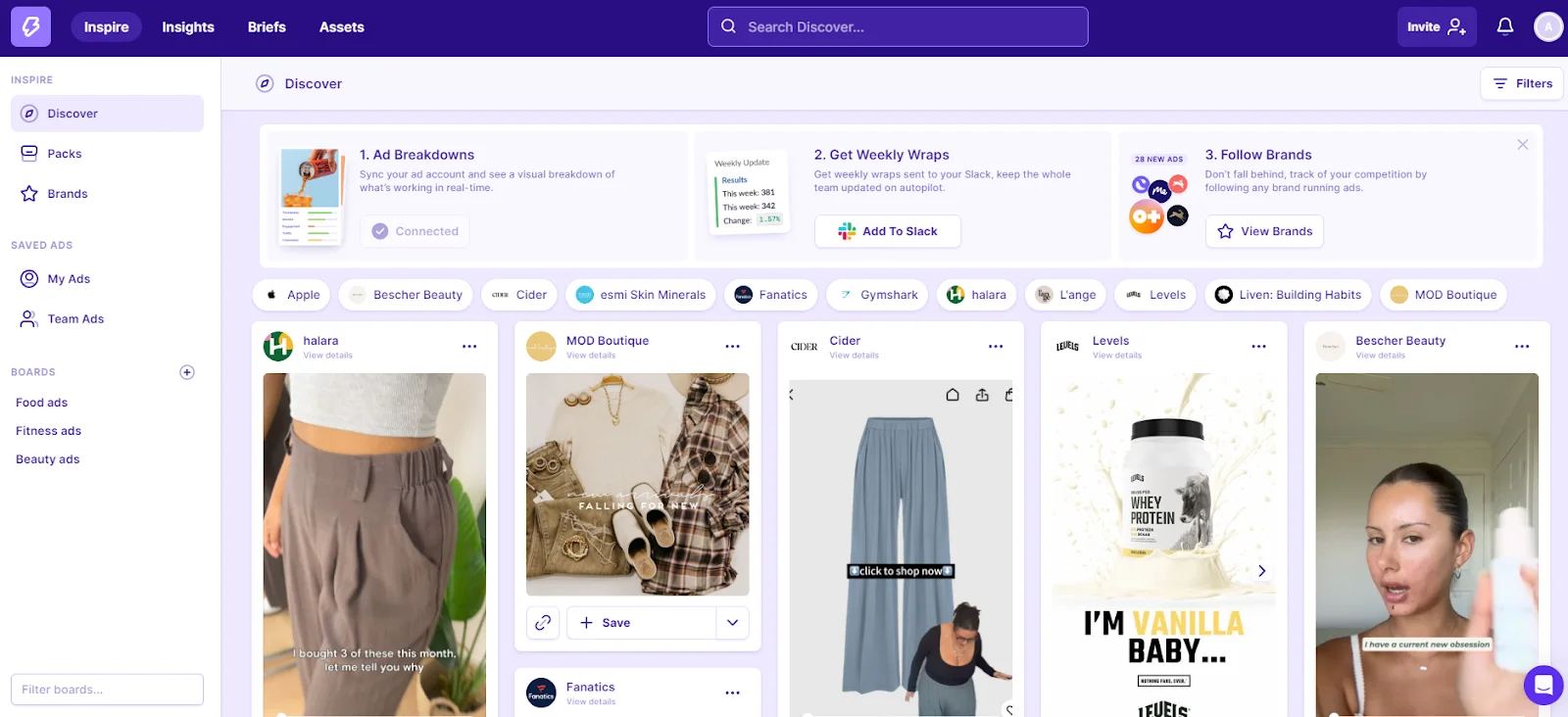
MagicBrief is a creative workflow tool focused on the planning and briefing stage of ad production. The platform combines an ad library with collaboration features, letting teams save references, build storyboards, and align on creative direction before production begins.
The library includes ads searchable by platform, format, or AI-powered queries. MagicAI automatically analyzes video ads, transcribing dialogue and highlighting key frames for storyboarding. Teams can build briefs using a block-based editor, attach references, and collaborate in real time.
MagicBrief Key Features
- Ad Library: Access 12M+ ads from Facebook and Instagram. Search using keywords or AI to surface specific styles, hooks, or themes.
- MagicAI: Automatically transcribes video ads, highlights winning frames, and breaks down scenes for storyboarding.
- Brief Builder: Create detailed creative briefs with a modular editor. Attach saved ads as references, add storyboards, and include technical specs.
- Real-Time Collaboration: Teams can edit briefs simultaneously, leave comments, and share externally via public links.
Limitations of MagicBrief
With 12M+ ads compared to GetHookd’s 65M+ database, the library is significantly smaller, which can limit discovery in niche categories or emerging verticals where ad volume is critical for pattern recognition. While MagicAI handles transcription and scene breakdowns, the AI script generator is available only on higher-tier plans, and there’s no ad cloning to generate variations.
The platform is strongest in briefing and handoffs but falls short in creative production. For marketers who want to move from research to ready-to-launch ads without switching tools, GetHookd covers the full workflow.
Alternative #4: Meta Ad Library
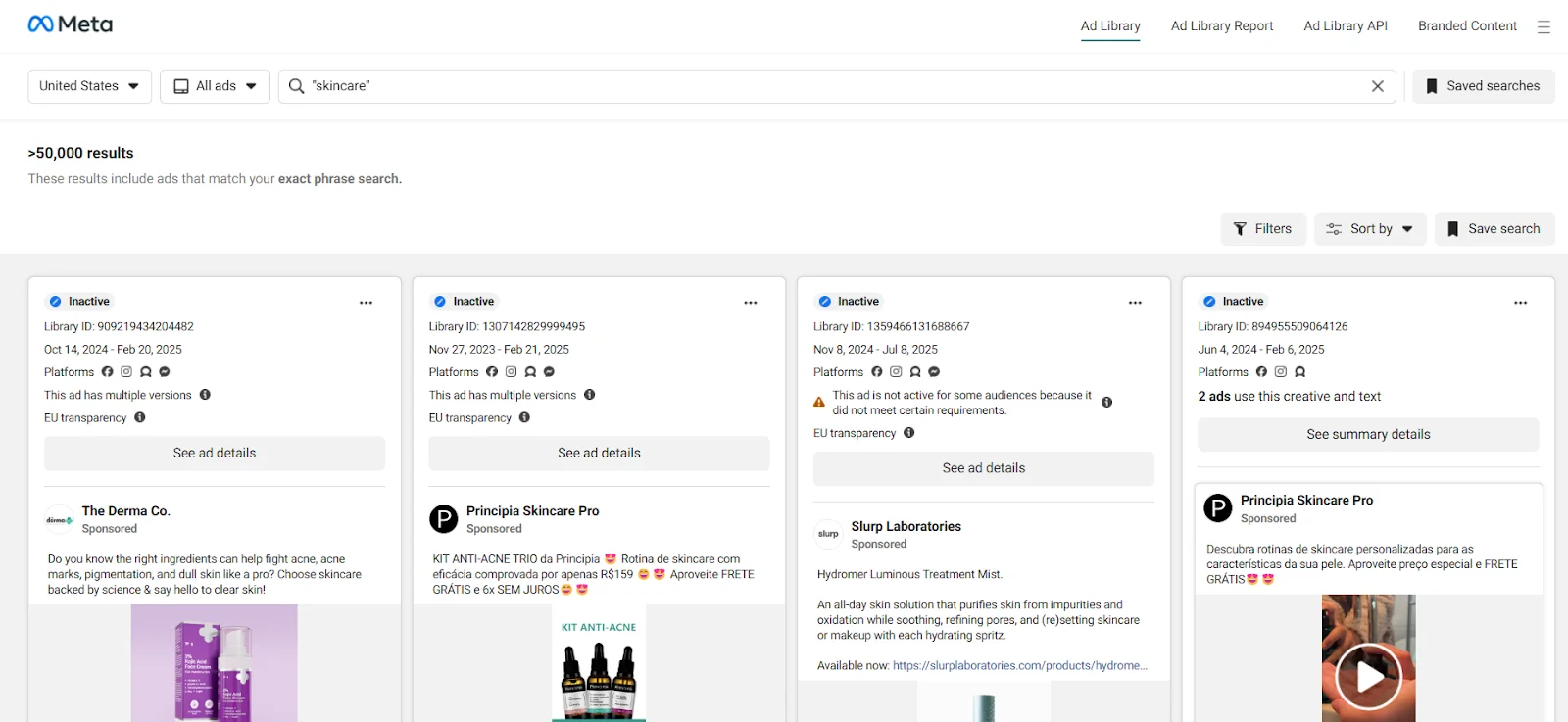
For marketers with limited budgets, Meta Ad Library offers a free alternative for Facebook and Instagram advertising. While lacking the cross-platform capabilities that made Moat valuable, Meta’s offering provides visibility into competitors’ social advertising, with search functionality by brand name, category, or keyword.
Meta Ad Library works best when combined with other tools to analyze and contextualize the data you find. Many marketers use it as a supplementary resource alongside more capable solutions that offer deeper analytics and cross-platform coverage.
Meta Ad Library Key Features
- Search by Advertiser: Enter any brand or page name to see every ad they’re currently running on Facebook and Instagram.
- Keyword and Category Search: Find ads related to specific topics or products without knowing the exact advertiser.
- Filters: Narrow results by country, platform (Facebook or Instagram), media type (image, video, carousel), and active status.
- No Account Required: Access everything without signing up or logging in.
Limitations of Meta Ad Library
Meta Ad Library only shows what’s currently running. Once a campaign ends, the ad disappears, and with it, any reference you didn’t manually save elsewhere.
Each ad displays its start date, but there’s no way to sort by duration or automatically surface the longest-running creatives. Identifying winners takes manual effort. There’s no transcription for video ads, no AI tools, and no way to act on what you find without switching to other software.
For Moat users who valued historical data and structured research workflows, Meta Ad Library feels more like a starting point than a solution. GetHookd lets you save ads, transcribe, and create from them, all in one place.
Best Moat Ad Search Alternatives At a Glance
| Tool | Free Access | Core Strength | Limitations | Best For |
|---|---|---|---|---|
| GetHookd | 7-day trial | Research, competitor tracking, and creative production in one platform | Optimized for Meta ads (where most ecommerce spend occurs) | Marketers and media buyers who want to find ads, save them, and create from them without switching tools |
| Foreplay | 7-day trial | Swipe file organization and competitor tracking | No transcription, no ad cloning, brand limits on competitor tracking | Teams focused on saving inspiration and monitoring competitors |
| MagicBrief | 7-day trial | Briefing, storyboarding, and team collaboration | No AI script generation, no ad cloning | Creative teams prioritizing collaboration and handoffs |
| Meta Ad Library | Free to use | Access to live competitor ads | No save features, no historical data, no creative tools | Quick competitor checks with zero budget |
GetHookd: Best Moat Alternative for Ad Research & Creative Intelligence
Moat gave visibility into competitor advertising at scale. When Oracle shut it down, the search for alternatives often led to fragmented solutions. One platform for browsing ads, another for design software to actually produce something new. That patchwork approach adds friction at every step.
GetHookd consolidates what used to require multiple subscriptions. The research side covers high-quality ads with filters that surface relevant creatives fast. But unlike Moat, which stopped at showing you what existed, we bridge the gap between observation and output.
For marketers, dropshippers, and ecommerce brands who measured Moat’s value by how much time it saved during competitive research, GetHookd delivers that efficiency while extending it further into ad production. The workflow doesn’t end when you find an ad worth studying. It ends when you’ve built and launched an ad from it.
Stop paying for multiple tools that don’t talk to each other. Replace your ad research stack with one platform that actually helps you ship.
Frequently Asked Questions (FAQs)
What happened to Moat Ad Search?
Oracle shut down Moat in September 2024 when it exited the advertising business entirely. The platform is no longer available, even for users who previously had paid access.
What is the alternative to Moat ads?
GetHookd offers the closest replacement for marketers who relied on Moat for competitor research. It has a searchable database of 65M+ high-performing ads across Meta and goes further by allowing you to transcribe videos, generate AI-generated scripts, and create variations from winning concepts.
Who can benefit from using GetHookd?
Anyone running paid ads on Meta who wants to move faster from research to launch can benefit from GetHookd. That includes ecommerce brands testing new creatives weekly, media buyers managing multiple accounts, agencies producing assets for clients, and solo marketers who don’t have a design team but still need to ship variations at volume.
*Note: Pricing and/or product availability mentioned in this post are subject to change. Please check our website for current pricing and stock information before making a purchase.